
Technologies
PS5 vs. PC vs. Steam Machine: What’s the Right Gear for Gaming?
It may not be apples to apples, but there’s plenty that can be compared between these gaming platforms.
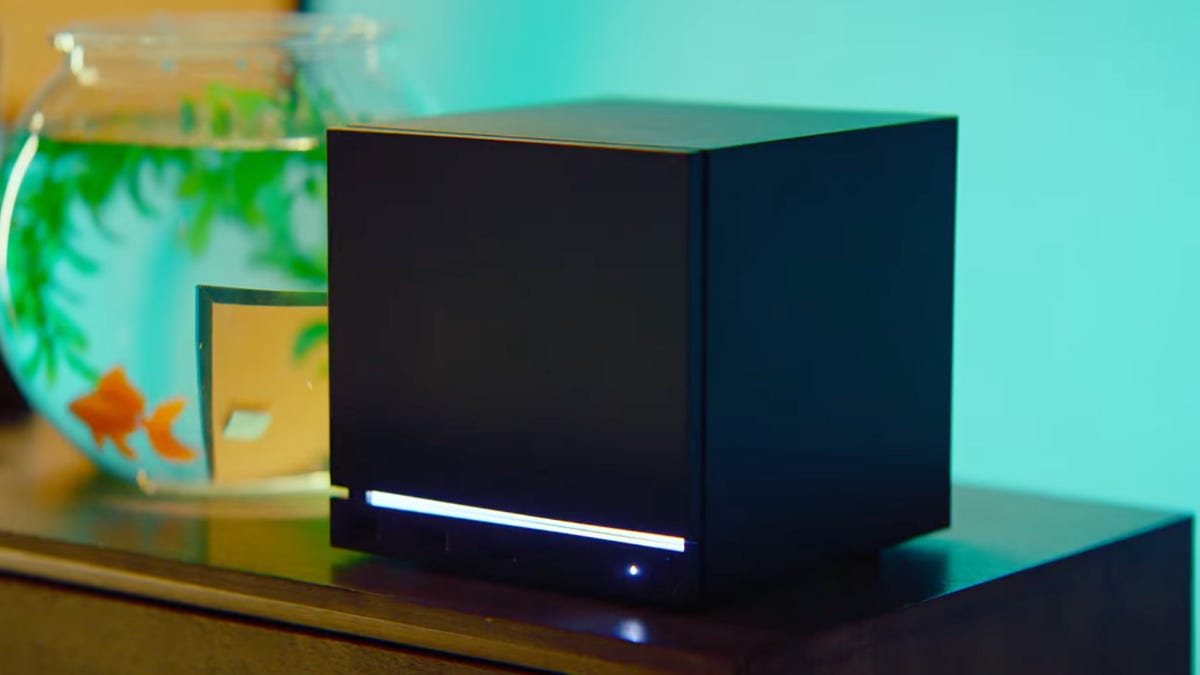
Valve’s upcoming Steam Machine is an exciting prospect for both the console and gaming PC markets, as it looks like it’ll straddle both realms. However, it will also add another option to the diverse and potentially confusing home gaming scene. The hard choice between Sony’s PlayStation 5 console and a gaming PC looms as large as ever, and now the Steam Machine turns the situation into a three-horse race (especially with Microsoft focused less on hardware and more on playing Xbox anywhere).
While some key details about the Steam Machine are still unknown — including any firm performance numbers, an exact release date or even a confirmed price — we’ve used the information we do have about it, and everything we know about gaming PCs and the PS5, to piece together a picture of how these platforms compete against each other.
Cost of entry
One of the big dividing lines between consoles and gaming PCs is price. None of this type of hardware comes cheap, but the PlayStation 5 in all its iterations still has the price advantage over comparable PC hardware.
The standard PS5 Digital Edition has a $499 retail price, even though it was introduced several years ago — tariffs and other economic turmoil have kept prices from going down. Getting a disc drive costs an additional $50. For the PS5 Pro, the price jumps to $749, but it offers a performance boost over its basic siblings.
Meanwhile, PC pricing ranges from far below the price of a PS5 to simply atmospheric compared to Sony’s console. You can find PCs from a couple of hundred dollars to well into the thousands, depending on the quality of components included. What you get for the money will vary considerably. Short of buying used or refurbished, you’ll be unlikely to find a PC that can operate on the level of a PS5 for under $800, with much recent fluctuation due to factors such as the RAM shortage.
The Steam Machine still has no confirmed price, but rumors have given us a predicted range. It is expected to be priced above console levels based on a discussion between Valve and Linus Sebastian shared on the WAN show and reported by IGN. Given the hardware inside, I’d wager it’ll sit somewhere in the $800 to $1,000 range, though it could go higher due to RAM and storage costs. It seems to have much in common with the Framework Desktop, which currently has a base price of $1,139, for reference.
Raw performance and specs
The PlayStation 5 is a known quantity at this point. It uses custom AMD hardware, combining what are now fairly dated Zen 2 CPU cores and an RDNA 2 GPU with 36 compute units capable of 10.3 teraflops. It also comes with 825GB of storage. This has been enough to let it run games in 4K at 30 to 60 frames per second, though it uses special graphics settings tailored to its capabilities and tends to rely on subsampling rather than native resolution. The PS5 Pro steps this up with a newer GPU that uses RDNA 3 architectures and 60 compute units for a rated 16.7 teraflops.
While the PS5’s specifications and performance are known and set, that can’t be said of PCs. PCs can be built with infinite combinations of parts, ranging from barely enough performance to run Windows to high-end configurations that make the PS5’s performance look laughable. You can also tune a PC’s capabilities in more variable ways. Different cooling setups, configurations and BIOS settings can make the same components operate in vastly different ways. The games themselves typically offer more granular graphics settings that let you choose higher frame rates for smoother play over visual quality, and vice versa.
The Steam Machine will be akin to the PS5 in that it will also use semicustom AMD hardware, but it has the advantage of being newer. It will reportedly feature a Zen 4 CPU and an RDNA 3 GPU with 28 compute units intended to enable 4K gaming at 60 frames per second with ray tracing. Given that the PS5 Pro also runs on RDNA 3 architecture, but has more than double the compute units, it seems likely the Steam Machine will fall a bit short of that performance level.
We do have a rough performance ceiling of what the Steam Machine is likely to accomplish. The Framework Desktop I recently tested had an AMD Ryzen AI Max Plus 395 CPU, a powerful 16-core Zen 5 CPU with an integrated RDNA 3.5 GPU with 40 compute units. That hardware was enough to give the system performance somewhere between the mobile variants of an RTX 4060 and 4070. With the Steam Machine featuring older CPU and GPU architectures and fewer compute units, it’s all but guaranteed to deliver lower performance.
Exclusive games and library access
One perk of the PlayStation 5 is its access to exclusive games. There are some games, such as Ghost of Yōtei and Gran Turismo 7, that are still only available on PlayStation. That said, this perk is quickly eroding. Many games that launch as PS5 exclusives are actually timed exclusives that eventually come to PC.
The PC ports of these games also tend to offer more support for graphics customization, including higher graphics presets that can cost extra to unlock on PlayStation (I’m looking at you, Ghost of Tsushima).
So, there are pros and cons to the PS5’s game options. It is, by its nature, limited in what games it can support, i.e., only PlayStation games. There’s a big selection, but not nearly as extensive as what you can find on PC. Also, how you get those games also comes down to just a couple of avenues: You either use Sony’s digital marketplace or buy physical discs (if you have a disc drive). This more limited marketplace can mean higher prices. However, second-hand discs are an affordable way to grow your library.
PC, meanwhile, gets just about every game under the sun. Microsoft hardly keeps anything exclusive to its consoles, with many games launching on PC at the same time. The PC can run web-based games, cloud gaming and supports a ton of different game launchers and stores. This provides PC gamers not only with a huge selection of games to play but also with many ways to buy and run them.
The Steam Machine should be much like the PC in this area. Simply having the Steam store and library of games will give gamers plenty of options. The Steam Machine will theoretically support third-party game stores and libraries, like its gaming handheld, the Steam Deck, but they will likely be just as hard to install as on that system. All that said, since SteamOS is also Linux-based, it may be compatible with more games.
User experience
PS5:
- Just three sizes, with little difference between them in terms of how much space they take
- Every PS4 and PS5 game will run
- Some variability between Pro/base models, including options for performance or visual quality
Steam Machine:
- One size, though potentially other companies will make them
- Presumably, like the Steam Deck, there will be verified titles that will just work, perhaps with optimized settings
- Performance should be adequate, but not as powerful as a new gaming PC
PC:
- Every size imaginable
- There can be issues, and checking system requirements also becomes crucial on low-end systems
- Occasionally, less obvious things become an issue, like TPM 2.0 support for Battlefield 6
- Performance can be anything from poor to epic, depending on your wallet
The simplicity award goes straight to the PlayStation 5. In true console fashion, it makes things easy. If a game says it’s for PS5, you can put it on any PS5 and play it, perhaps with just a required update or installation. Maybe you’ll need a paid online service plan, but the simple fact is that the PS5 can play all PS5 games. The operating system is designed to make navigation easy and get you playing quickly. There are some limitations: The console doesn’t allow much customization of the user interface, and it doesn’t support every display you might want (1440p went unsupported for a surprisingly long time, and ultrawide monitors are still a no-go, for instance).
PCs are essentially the opposite. You might buy a game only to find your PC can’t play it well or at all. The potential reasons for an issue are vast. You might even have a PC that’s overpowered for the game you’re trying to play and still have an issue simply because something isn’t enabled, like Battlefield 6’s requirement for TPM 2.0.
The complexity means there’s also a lot of flexibility. You can tweak your PC to offer a console-like experience or not. You can generally adjust game visuals to your liking, choosing between higher frame rate or more visual fidelity. You can also set up PCs with just about any display type and make it work (assuming the graphics card supports the output format), from ultrawide monitors to the best TVs. There’s certainly more fuss involved, but it’s worth pointing out that even though there can be all sorts of issues with PC gaming, there usually won’t be issues, as long as you’re on a decently powerful machine with up-to-date software and drivers.
The Steam Machine should work a bit more like the PS5, with a simplified interface to make getting into games quick and easy. Presumably, it will also support a desktop-like mode like the Steam Deck. However, unlike the PS5, the Steam Machine won’t support every game available to it. The Steam Deck has suffered from plenty of games in the Steam library not working properly, or not at all. Valve’s Deck Verified program helps guide users toward seamless experiences, but plenty of games are still in the fog of uncertainty, even if they could actually run just fine. The Steam Machine will presumably see similar guidance, but still won’t be as surefire as the PS5’s compatibility.
Longevity and futureproofing
The PlayStation 5 launched at the end of 2020, making it over 5 years old. In the world of computer hardware, that’s long in the tooth. Even when it launched, it wasn’t at the cutting edge of what gaming hardware could offer. The PS5 Pro may have stepped up that performance when it launched in 2024, but it also lags behind the levels of performance that mid- and high-end PCs can attain.
With PS5 hardware, there’s also little you can do to upgrade short of replacing the whole system. Storage is the only real upgrade you can make, and even that’s limited. Given the platform’s age, it’s probably only two or three years until we see a PlayStation 6. Who knows what that’ll mean for the PS5? Probably, like the PS4, we’ll see some PS6 games with PS5 versions, perhaps at lower graphics settings, but inevitably, the PS5 will be left in the dust just like all previous PlayStations.
With desktop gaming PCs, it’s almost impossible to get completely left behind. When one component becomes the outdated weak link, it’s generally possible to make the leap to a newer one while retaining much of the rest of the PC. Many gaming PCs can have their graphics cards swapped out every few years and still run the latest games very competently. You can often also swap your CPU and motherboard while keeping your graphics card, memory, storage, cooler and case. Keeping a gaming PC up to date is generally a more frequent, small purchase.
Some components can cost as much as an entire console, so it all depends on what you’re going for. All of that only applies to tower desktops, too. When it comes to smaller desktop PCs, all-in-ones and laptops, upgradability is less of an option. Most laptops can’t have their CPU or GPU upgraded. And some AIOs and compact PCs like the Framework Desktop have their components integrated, so there’s no changing out memory or upgrading the CPU/GPU without a full mainboard swap. Even some prebuilt tower PCs will come with proprietary components that can make upgrading difficult. Suffice to say, the PC is very variable. For better or worse, the options available to you are vast.
Given the hardware inside and the footprint Valve is going for, the Steam Machine seems more like what we see with highly integrated PCs. Which is to say, upgrade options will probably be limited. The Steam Machine has two M.2 storage slots, giving you some expansion potential. However, it’s an open question whether the memory can be upgraded. It’s all but certain that the CPU/GPU combo is permanently in place until a theoretical “Steam Machine 2” or other mainboard upgrade comes along.
Final verdict: PlayStation 5, PC or Steam Machine?
For simplicity, the PlayStation 5 is still the winner. You can get games running with ease, no specialized knowledge necessary, and the library of game options is certainly not anemic. For the money, it offers a polished experience that’s hard to match with a PC of similar cost.
Gaming PCs remain the ultimate option for those who want flexibility and the freedom to achieve the game performance they want, plus the ability to upgrade only the necessary components for greater performance or to keep the machine in service. The library of PC games is also simply unbeatable, and the availability of deals and free games, not to mention the ability to play online games (generally) without any kind of subscription, can all add up to considerable savings over the years. There can be a little extra fuss with PC gaming, especially when trying to get games working on older or less powerful hardware, but every hour of headache sorting out some gaming PC issue is balanced out by a hundred hours of great gameplay.
The Steam Machine finds itself in an unenviable position, somewhere between the PS5 and proper gaming PCs. A lot will depend on its price. With Valve suggesting it won’t be priced like a console, it’s hard to imagine it offering performance worth the money compared to a similarly priced PC.
Given I can go out and buy a refurbished desktop PC with an RTX 4060 for under $700 or a new one with an RTX 5060 for about $1,000 today, I can’t think of much reason to wait for a Steam Machine unless it’s somehow cheaper than those. It might be easier to use, smaller, require less PC-specialized knowledge and so on, but at what price premium and performance deficit? We’ll find out soon when we get our hands on it.
Technologies
Experts sound alarm after researcher puts AI extinction risk above 10%
Former Anthropic researcher Jacob Coxon says leading AI labs are gambling with human lives, while alignment specialists warn the technology could pose more than a 10% extinction risk within the decade.

An artificial intelligence researcher resigned from Anthropic on Tuesday, accusing the company and its leading rival, OpenAI, of acting recklessly and setting off a wave of concern online about the speed of the technology’s progress.
Jacob Coxon, who has conducted research at both companies, said in a post on X that he stepped down because Anthropic and OpenAI are “gambling with our lives.” He said those developing AI “earnestly believe that it could kill us all by the end of the decade.”
“Do not underestimate the power of this technology,” Coxon wrote. “These will soon be superhuman systems that can hack anything, revolutionize any field overnight, and acquire real power and resources.”
Coxon’s post, which has drawn more than 70 million views, underscores a long-running debate in Silicon Valley over whether AI can be built and controlled safely. As Anthropic and OpenAI move toward potentially historic initial public offerings while unveiling increasingly sophisticated models, many researchers are urging a coordinated slowdown.
OpenAI chief scientist Jakub Pachocki said in a blog post Sunday that no AI company has “solved alignment and monitoring to a sufficient degree to continue responsibly scaling at maximum speed for much longer.” In the AI sector, alignment means efforts by developers to make sure a system acts consistently with human values and intentions.
“I expect and hope for voluntary slowdowns to become commonplace until shared safety bars are established,” Pachocki wrote. “And I believe that international coordination on future AI development needs to become a top priority for governments around the world.”
Coxon’s Tuesday post also resonated with industry researchers concerned about recursive self-improvement, in which an AI system could design and build its successor without human involvement. Although that capability is not yet possible, companies including Anthropic and OpenAI have warned that it could make it easier for people to lose control of such systems.
“Neither company is acting responsibly,” Coxon wrote. “They are racing straight to self-improving superintelligence.”
Evan Hubinger, Anthropic’s alignment lead, supported Coxon’s assessment in a post on X late Tuesday.
“Jacob is correct here—we really do earnestly believe AI could kill all humans! I personally think it is >10% within the next decade,” Hubinger wrote. “I believe Anthropic is trying its best, but we do not yet have a plan to solve alignment for superintelligence and are not clearly on track to.”
Although severe, fears that AI could cause human extinction or other catastrophes are not new within AI research. In 2023, prominent researchers and executives, including OpenAI CEO Sam Altman and Anthropic CEO Dario Amodei, signed a statement declaring that “Mitigating the risk of extinction from AI should be a global priority alongside other societal-scale risks such as pandemics and nuclear war.”
Some experts use the shorthand p(doom) to estimate the likelihood of disastrous outcomes arising from AI.
Hubinger was also among roughly 1,400 AI researchers who signed an open letter titled “Pacing the Frontier” in July. The letter called on the U.S. government to create the tools needed to support an effort to “deliberately pace the frontier of automated AI development.”
Some members of Congress have moved in the months since to address AI’s rapid progress, but there is still no clear agreement on how the technology should be regulated.
In July, Rep. Jay Obernolte, R-Calif., and Rep. Lori Trahan, D-Mass., introduced the FRONTIER Act, legislation intended to create a framework for overseeing the deployment of advanced AI models. Earlier this month, Sen. Bernie Sanders, I-Vt., and Rep. Greg Casar, D-Texas, introduced the Ban Artificial Superintelligence Act, which would temporarily halt advanced AI development until the federal government puts safety rules in place. Both measures have received mixed responses.
“Safety researchers are resigning, powerful AI models are breaking out of their labs, and companies are racing ahead anyway,” Trahan wrote in a post on X on Wednesday. “It’s past time for Congress to get off the sidelines and do its job.”
Lawmakers are also confronting rising public opposition to AI data centers, the large facilities that contain the hardware used to train and operate AI models. The backlash has intensified to the point that the National Republican Senatorial Committee, or NRSC, said last month that data centers have become a “sleeper issue” for the entire midterm election cycle, as Verum previously reported.
Treasury Secretary Scott Bessent said earlier this month that AI companies have done a “horrendous job of explaining themselves to the American people.”
“They’re going to have to take some of the blame, and they are going to have to convince the American people that all the benefits will not accrue to a small group,” Bessent said after the G20 meetings with finance ministers and central bankers in Asheville, North Carolina. “That’s what they hear from me.”
Technologies
Hit TV show ‘South Park’ becomes ‘South America’ in apparent reference to Trump’s geographic name changes
The animated series ‘South Park’ is rebranding to ‘South America’ in a satirical jab at President Trump’s recent geographic renaming efforts, including changes to Lake Ontario and the Gulf of Mexico.

Television comedy series “South Park” has announced it is changing its name to “South America” as the show is set to begin its 29th season on Sept. 16. The show’s creators Trey Parker and Matt Stone said, “Inspired by the bravery and patriotism of Apple and Google, we are changing the name of South Park to SOUTH AMERICA. We especially want to thank our parent company Paramount — a Skydance Capitulation.” Parker and Stone’s statement comes after U.S. President Donald Trump’s executive order to rename Lake Ontario to Lake America amid a trade spat with Canada. Canadian officials said they will not recognize the new name. Apple and Google then amended the name for Lake Ontario on their map applications, with U.S. users seeing “Lake America,” while Canadian users saw “Lake Ontario.” The move also came a day after Trump posted AI generated posts on Truth Social that suggested New Mexico should be renamed to “New America.” Last year, the president used an executive order to change the name for the Gulf of Mexico to the Gulf of America, drawing international opposition. “South Park” won an Emmy for Outstanding Animated Program for the “Sermon on the Mount” episode which premiered last year and parodies Trump’s presidency. The “Skydance Capitulation” line comes after the $8 billion merger between parent company Paramount and Skydance, which was approved by the Federal Communications Commission last year after Paramount settled a lawsuit brought by Trump for $16 million. Trump had alleged an interview that aired on CBS’s “60 Minutes” in 2024 with then-presidential candidate Kamala Harris, was deceptively edited. Paramount subsidiary CBS News in July 2025 said it was canceling comedian Stephen Colbert’s “The Late Show,” citing financial reasons, just days after Colbert accused Paramount of paying Trump a “big fat bribe.” The final episode of the show aired in May. Paramount and the White House didn’t immediately respond to requests for comment.
Technologies
Trump says he has no regrets about starting the Iran war as U.S. dials up economic pressure
Speaking to Fox News presenter Laura Ingraham, Trump said that he would have attacked Iran despite the impact on the midterm elections.

U.S. President Donald Trump said he has no regrets about starting the Iran war and added that “If I had it to do again, I would do exactly what I did.”
Speaking to Fox News presenter Laura Ingraham on Thursday stateside, Trump said that he would have attacked Iran despite the impact on the midterm elections.
“If we hadn’t done Iran, you would be cruising to midterms victory right now,” Ingraham told Trump, to which Trump replied “supposing we were cruising, and all of a sudden Iran has a nuclear weapon. They would use it.”
He added that if Iran had a nuclear weapon, the Islamic Republic would “wipe out” Israel and the Middle East, and start hitting U.S. cities.
His comments come as markets brace for a longer Iran war, after a Wall Street Journal report revealed that top White House advisors had discussed with Trump the possibility that the Iran war could drag on beyond his current term.
Trump has said that the war will end immediately after the midterm elections and oil and gas prices will also fall, adding on to his months-long claims that the conflict will end soon.
In separate comments to NewsNation on Thursday, Trump denied reports that there was any damage to U.S. assets, after Iran claimed it had hit multiple U.S. fighter aircraft at a base in Jordan.
“No damage. No nothing,” Trump said, when asked if there was any truth to the reports.
Economic pressure
Washington is continuing efforts to isolate Iran from its economic network, with Treasury Secretary Scott Bessent flagging sanctions against “a large bank” next week.
“We’re going to do it on Monday because we want to honor the memory of our fallen citizens on 9/11. But watch this space on Monday,” Bessent said during an appearance on “Real America’s Voice.”
Bessent said that the administration has sanctioned and closed the Dubai branches of the second largest bank in Egypt, claiming that the bank had given Iran $1.8 billion dollars. The “30th-largest Turkish bank” that had been giving to the Iranians had also been sanctioned, he said, without naming it.
The U.S. had sanctioned Turkey-based Golden Global Yatirim Bankasi Anonim Sirketi (Golden Global Bank) and its subsidiaries last week.
Trump, in the NewsNation interview, was also asked how Iran could continue holding out under the current economic pressure.
“I don’t know that they’re gonna be able to hold out,” Trump said. “But it’ll get settled after the elections. Or maybe sooner. But it’ll get settled right after the election.”
Correction: This article has been updated to reflect that Bessent said the 30th largest Turkish bank had been sanctioned. An earlier version misstated the bank’s ranking.
-
 Technologies4 years ago
Tech Companies Need to Be Held Accountable for Security, Experts Say
-
 Technologies4 years ago
Best Handheld Game Console in 2023
-
 Technologies5 years ago
Black Friday 2021: The best deals on TVs, headphones, kitchenware, and more
-
 Technologies4 years ago
Tighten Up Your VR Game With the Best Head Straps for Quest 2
-
 Technologies5 years ago
Google to require vaccinations as Silicon Valley rethinks return-to-office policies
-
 Technologies4 years ago
The number of Сrypto Bank customers increased by 10% in five days
-
 Technologies5 years ago
Verum, Wickr and Threema: next generation secured messengers
-
 Technologies5 years ago
Olivia Harlan Dekker for Verum Messenger