
Technologies
Overwatch’s New Season 1 Is What the Game Was Always Meant to Be
A commitment to an ongoing story and more frequent new heroes, including five right now, move the game in the direction it always seemed to promise.

In late January, I was among a group of journalists from all around the world packed into the Blizzard Theater in Irvine, California, to watch the 40-minute Overwatch spotlight and hear from Blizzard execs about where the game was going next. I was not prepared for what we saw. Nor were the other journalists, who gasped, laughed and sometimes comically swore as the video showed us what’s coming next for the hero shooter franchise — which turns a decade old later this year.
What stirred up such audible reactions? An ongoing story that’s reflected directly in the game. New subroles with distinct passive abilities. Ten new heroes are coming this year, five of which are arriving next week. One of the later heroes is freaking Jetpack Cat, who was dreamed up in concept art and scrapped before the game was even released. And maybe most surprisingly, dropping the “2” so the game returns to simply being “Overwatch.”
One of the first questions to that group of execs was about changing the title from Overwatch 2 back to Overwatch — why change, and what does it mean? Johanna Faries, president of Blizzard Entertainment, said the team thought it was the right time for Overwatch to turn the corner in a big way. “It sets us up for a much broader conversation on where the future of this universe [is] and where these characters are going to go.”
Blizzard’s big swing to revitalize Overwatch comes as the game approaches its 10th anniversary in May. Gaming is different in 2026, as newer live-service games can disappear in an instant, and even more tenured franchises like Call of Duty and Battlefield can struggle to retain players. Even Overwatch finally has a major, direct competitor in the team hero shooter genre in Marvel Rivals. So for Blizzard to step up and commit so boldly to this vision is a jolt, a burst of life into a game that has already spent the past couple of years solidifying and expanding its identity with new game modes and features like perks and map voting.
The announcements are both a celebration of the game’s history and a statement that the game is building a bolder future for itself.
Across my own nine-year history playing Overwatch, I’ve experienced its ups and downs, from the heights of queuing with a full six-stack and joining organized team play to the lows of the seemingly interminable double shield meta. And after talking to hero designers, narrative designers, systems designers, artists and voice actors, I left the Blizzard campus reflecting on the idea of playing Overwatch and following its larger story after all these new initiatives launch. One thought stuck with me.
This is how the game was always supposed to feel.
The emotion of a new cinematic driving the story of Overwatch forward, of puzzling over 10 hero silhouettes and learning that five of them would be ready to play almost immediately… it kindled the same kind of anticipation I had in the movie theater where I first awed over an early Overwatch trailer.
Best of all, fans won’t have to wait for this new era of Overwatch, as its fittingly rebadged Season 1 is launching next week with five heroes up-front and another new hero roughly every other month in each new season. We’ll get two new maps later in the year, alongside the return of postmatch accolades, which updated the old voting cards that let you show some love to players on either team who performed particularly well in a match.
I got an early look at the journey awaiting Overwatch fans this year during my time at Blizzard. And while I have some lingering questions about how certain elements will play out, here’s why I’m more excited about the game than I’ve ever been.
Overwatch embraces storytelling directly in the game
The world of Overwatch has always felt vibrant and pulsing with lore, but the game has struggled to tell a story outside of an impressionistic narrative you could vaguely piece together between cinematics, comics and occasional in-game events.
Season 1 promises to change that by kicking off the year-long Reign of Talon storyline, beginning with a cinematic that shows major upheaval in the villainous organization and longtime antagonist to Overwatch. The rest of that story will play out over the course of the year, through traditional avenues like hero trailers, short stories and comics, as well as more immersive methods like new voice lines and map changes that reflect story events.
The Overwatch Spotlight video includes a clip of Talon aircraft assaulting Overwatch’s Gibraltar base, home of operations for genius ape hero Winston. In the media playtest, I fought across a Watchpoint: Gibraltar map that showed the damage of that attack. The bridge outside the starting attacker spawn was partially collapsed, and a flaming beam had crashed down on the airship in the hangar. These map changes breathe life into the larger narrative of a new, more aggressive Talon and make sure players see the consequences of these story beats.
In addition to map changes that illustrate the ongoing story, Overwatch’s narrative and audio designers said that character interactions will also change to reflect the story’s progression, noting an “outrageous amount” of voice lines being added to the game.
Collectively, these changes help bridge the gameplay with the wider world of conflicts and characters that have been the initial point of interest for so many players.
Five new heroes headline a massive influx over the next year
Overwatch 2 launched with three new heroes and has added another 10 in the three-plus years since then. Now we’re getting 10 heroes in a single year, starting with five who all have connections to existing characters and factions in the game.
- Domina, the new ranged tank and ally of Talon, is the heiress of Vishkar Industries, the same company that damage hero Symmetra works for and that also suppressed and exploited support hero Lucio’s hometown with technology his father had developed.
- Anran, a new fire-themed damage hero, is the older sister of support hero Wuyang. She wields hand fans that can shoot fire, and is a new Overwatch recruit alongside her brother.
- Emre, a damage hero wielding multiple weapons, is a former Overwatch agent now turned to Talon’s aims. He’s an old friend of damage hero Freja, though the person she found in their recent reunion is very different from the friend she remembers.
- Mizuki, an offensively focused support hero, is part of the Talon-aligned Hashimoto clan, which has been facing opposition from the support hero Kiriko and her allies in Japan.
- Jetpack Cat, a cat wearing a jetpack, is based on an early Overwatch hero concept long thought to be scrapped. Overwatch support hero Brigitte builds the kitty a jetpack to let her support allies from the skies by towing teammates and trolling enemies.
Multiple developers reiterated that this superdrop of new heroes wasn’t the result of cutting corners or rushing the process, but instead a benefit of improved tools and systems that have shrunk the design time for new heroes from eight months down to four or five.
“We still wanted to give the characters the same level of care we give any hero that we build,” the game’s Art Director Dion Rogers said in a panel on the new Reign of Talon story’s art.
In the leadership panel, Keller noted that the team wanted to kick off this year with an update that would feel like an expansion for the game, and the best way to do that for a hero shooter was to give them a bunch of new heroes: “People play this type of game … to learn more about these heroes, pick them up and continuously master them,” he said. Launching five heroes at once gives players that much more to engage with and could substantially shake up the meta of hero picks and team compositions.
Buzzing enthusiasm among developers
There’s plenty more driving my optimism beyond the new narrative focus and influx of new heroes. It’s the vibe of the announcements, the willingness for the game to go big, chase ideas and deliver a uniquely Overwatch experience to players.
There was palpable excitement among the five groups of Blizzard developers that journalists got to hear from at the Overwatch Spotlight event. In a panel about the game’s narrative, Lead Narrative Designer Miranda Moyer buzzed with enthusiasm, speaking alongside Scott Lawson, the game’s audio and technical director, about planning a year-long story, bringing Talon into the fray and how characters and allegiances might change over the course of that story.
“I think a lot of this new story is predicated on questions that have existed since, y’know, Overwatch was an entity [before eventually being disbanded],” Moyer said. She also noted that while some characters may have felt a little out of the loop of any sort of larger narrative throughout previous years of the game’s story, in the new structure “every single character … is pertinent to the overall plot.”
Developers being excited about their game isn’t surprising, but the degree of enthusiasm was encouraging for a game that suffered a years-long content drought followed by a troubled launch for Overwatch 2, stumbling over gated hero releases and long-announced game features that never saw the light of day. The conversations with devs gave me confidence that there’s a vision and passion for Overwatch that can fuel exciting updates like this for a long time to come.
The question marks amid the coming changes
The promises of ongoing stories and new heroes every season — six per year — are two of the most exciting things the game could announce. That said, some announcements from the spotlight raise more curiosity or concern than confidence.
A major overhaul of the menus forces us to relearn where things are and how to navigate them. The systems design team asserted that the new layout will add value, minimize interruptions and give players choices in menus, and I’m hopeful that the time spent relearning how to get around is worth the payoff. I like the cleaner look, but it will take some time to see how the new layout really feels.
The team also announced that some heroes, such as Ana and Genji, would be getting their second mythic skins before others received their first. I say this as someone who plays lots of Ana and wasn’t at all excited by her mythic skin, but that feels pretty unfair to the rest of the roster, especially given how many new faces we’re getting this year.
Balancing is the other element that feels like a bigger question mark in 2026. Dropping five heroes simultaneously and adding a new hero every season is going to put a lot more pressure on the team responsible for balance.
I asked Associate Game Director Alec Dawson about the challenge of balancing five new heroes at once. He acknowledged that the team does still want heroes to feel “impactful” at launch, but said they “probably went a bit too far” with recent releases.
“It’s good to have an impactful launch. It’s not good if your hero is banned in almost every match you’re in,” Dawson said.
The hero design team told us that they’ll be keeping a close eye on Jetpack Cat, especially given that permanent flight is an entirely new element in the game, and there are very few restrictions on her Lifeline ability that lets you fly allies around the map. Hero designer Scott Kennedy added that the team knows it’s going to be difficult to figure out all at once and that they’ll react quickly if things are out of line.
A new day and a familiar feel for Overwatch
The Spotlight video alone felt like Overwatch returning to the wonder and imagination that powered its 2016 launch. And the experience of talking to a variety of developers — and particularly seeing the seemingly unseverable thread of enthusiasm that connected them — made me as hopeful for the game as I’ve been since I started playing. The promise driving a story forward seems to mirror the team’s own internal hopes for shepherding the game into something bigger and bolder.
In a group interview with global media, I asked the game’s director, Aaron Keller, whether the Spotlight announcements were a commitment to moving the game forward — not just in terms of game mechanics but using it to tell a story beyond just brief snippets we’ve gotten from cinematics and events. He referenced the “amazing, sentimental” character pieces they’ve done so far, but said the team wants the new story to go somewhere.
“We want to take players on a journey over the course of this year — and over the course of many years,” Keller said. “We want to be doing this for as long as players are going to tune in for it.”
Technologies
Anthropic warns investors of AI’s ‘existential risk to humanity’ in IPO prospectus, reports say
Anthropic’s IPO filing dedicates 80 pages to the risks of AI, nearly double the 48 pages it spends discussing its business plans, according to Reuters.
Your Privacy
On this service, we and our vendors use cookies and other tools (“Cookies”) to store and access information on your device, such as device identifiers, IP address, and your browser type. Your data may be used to save and communicate your privacy choices; ensure security, prevent fraud, and debug our products and services; personalize advertising and content; for advertising and content measurement; to conduct audience research and services development; so we can improve our services and develop new ones; to match and combine offline data with your online activity; and for social features. We may share this data with select vendors with your consent. You can adjust your choices any time through the “Cookie Preferences” link in the footer of relevant Versant sites or in-app settings.
We will also use other Cookies that are essential or related to our services, including for security and fraud prevention. To learn more about some of our vendors, see the IAB and Google Vendors under each purpose. Visit our Cookie Notice and Privacy Policy to learn more.
These Cookies and SDKs are required for Service functionality, including security and fraud prevention, and to enable any purchasing capabilities. You can set your browser to block these tracking technologies, but some parts of the site may not function properly.
The choices you make regarding the purposes and entities listed in this notice are saved and made available to those entities in the form of digital signals (such as a string of characters). This is necessary in order to enable both this service and those entities to respect such choices.
Your data can be used to monitor for and prevent unusual and possibly fraudulent activity (for example, regarding advertising, ad clicks by bots), and ensure systems and processes work properly and securely. It can also be used to correct any problems you, the publisher or the advertiser may encounter in the delivery of content and ads and in your interaction with them.
Certain information (like an IP address or device capabilities) is used to ensure the technical compatibility of the content or advertising, and to facilitate the transmission of the content or ad to your device.
Cookies, device or similar online identifiers (e.g. login-based identifiers, randomly assigned identifiers, network based identifiers) together with other information (e.g. browser type and information, language, screen size, supported technologies etc.) can be stored or read on your device to recognise it each time it connects to an app or to a website, for one or several of the purposes presented here.
– Use limited data to select advertising 791 partners can use this purpose Advertising presented to you on this service can be based on limited data, such as the website or app you are using, your non-precise location, your device type or which content you are (or have been) interacting with (for example, to limit the number of times an ad is presented to you).
– Create profiles for personalised advertising 637 partners can use this purpose Information about your activity on this service (such as forms you submit, content you look at) can be stored and combined with other information about you (for example, information from your previous activity on this service and other websites or apps) or similar users. This is then used to build or improve a profile about you (that might include possible interests and personal aspects). Your profile can be used (also later) to present advertising that appears more relevant based on your possible interests by this and other entities.
– Use profiles to select personalised advertising 640 partners can use this purpose Advertising presented to you on this service can be based on your advertising profiles, which can reflect your activity on this service or other websites or apps (like the forms you submit, content you look at), possible interests and personal aspects.
– Create profiles to personalise content 261 partners can use this purpose Information about your activity on this service (for instance, forms you submit, non-advertising content you look at) can be stored and combined with other information about you (such as your previous activity on this service or other websites or apps) or similar users. This is then used to build or improve a profile about you (which might for example include possible interests and personal aspects). Your profile can be used (also later) to present content that appears more relevant based on your possible interests, such as by adapting the order in which content is shown to you, so that it is even easier for you to find content that matches your interests.
– Use profiles to select personalised content 234 partners can use this purpose Content presented to you on this service can be based on your content personalisation profiles, which can reflect your activity on this or other services (for instance, the forms you submit, content you look at), possible interests and personal aspects. This can for example be used to adapt the order in which content is shown to you, so that it is even easier for you to find (non-advertising) content that matches your interests.
– Measure advertising performance 916 partners can use this purpose Information regarding which advertising is presented to you and how you interact with it can be used to determine how well an advert has worked for you or other users and whether the goals of the advertising were reached. For instance, whether you saw an ad, whether you clicked on it, whether it led you to buy a product or visit a website, etc. This is very helpful to understand the relevance of advertising campaigns.
– Measure content performance 405 partners can use this purpose Information regarding which content is presented to you and how you interact with it can be used to determine whether the (non-advertising) content e.g. reached its intended audience and matched your interests. For instance, whether you read an article, watch a video, listen to a podcast or look at a product description, how long you spent on this service and the web pages you visit etc. This is very helpful to understand the relevance of (non-advertising) content that is shown to you.
– Understand audiences through statistics or combinations of data from different sources 579 partners can use this purpose Reports can be generated based on the combination of data sets (like user profiles, statistics, market research, analytics data) regarding your interactions and those of other users with advertising or (non-advertising) content to identify common characteristics (for instance, to determine which target audiences are more receptive to an ad campaign or to certain contents).
– Develop and improve services 688 partners can use this purpose Information about your activity on this service, such as your interaction with ads or content, can be very helpful to improve products and services and to build new products and services based on user interactions, the type of audience, etc. This specific purpose does not include the development or improvement of user profiles and identifiers.
– Use limited data to select content 180 partners can use this purpose Content presented to you on this service can be based on limited data, such as the website or app you are using, your non-precise location, your device type, or which content you are (or have been) interacting with (for example, to limit the number of times a video or an article is presented to you).
These Cookies and SDKs are used to collect data about your browsing habits, use of the Services, your preferences, and your interaction with advertisements across platforms and devices for the purpose of delivering targeted advertising content, both on our Services and on third party sites. Third-party sites and services also use Targeting Cookies to deliver content, including advertisements relevant to your interests on the Services. If you reject these Cookies or SDKs, you will see less relevant advertising.
Data collected under this category through Cookies and SDKs can also be used to select and deliver personalized content, such as news articles and videos.
Technologies
U.S., Iran hold separate mediator talks as Mideast oil exports hit war-time high
Iranian and U.S. officials reportedly met separately with mediators Monday to push for a ceasefire, as Middle Eastern crude exports rebounded to war-time high.
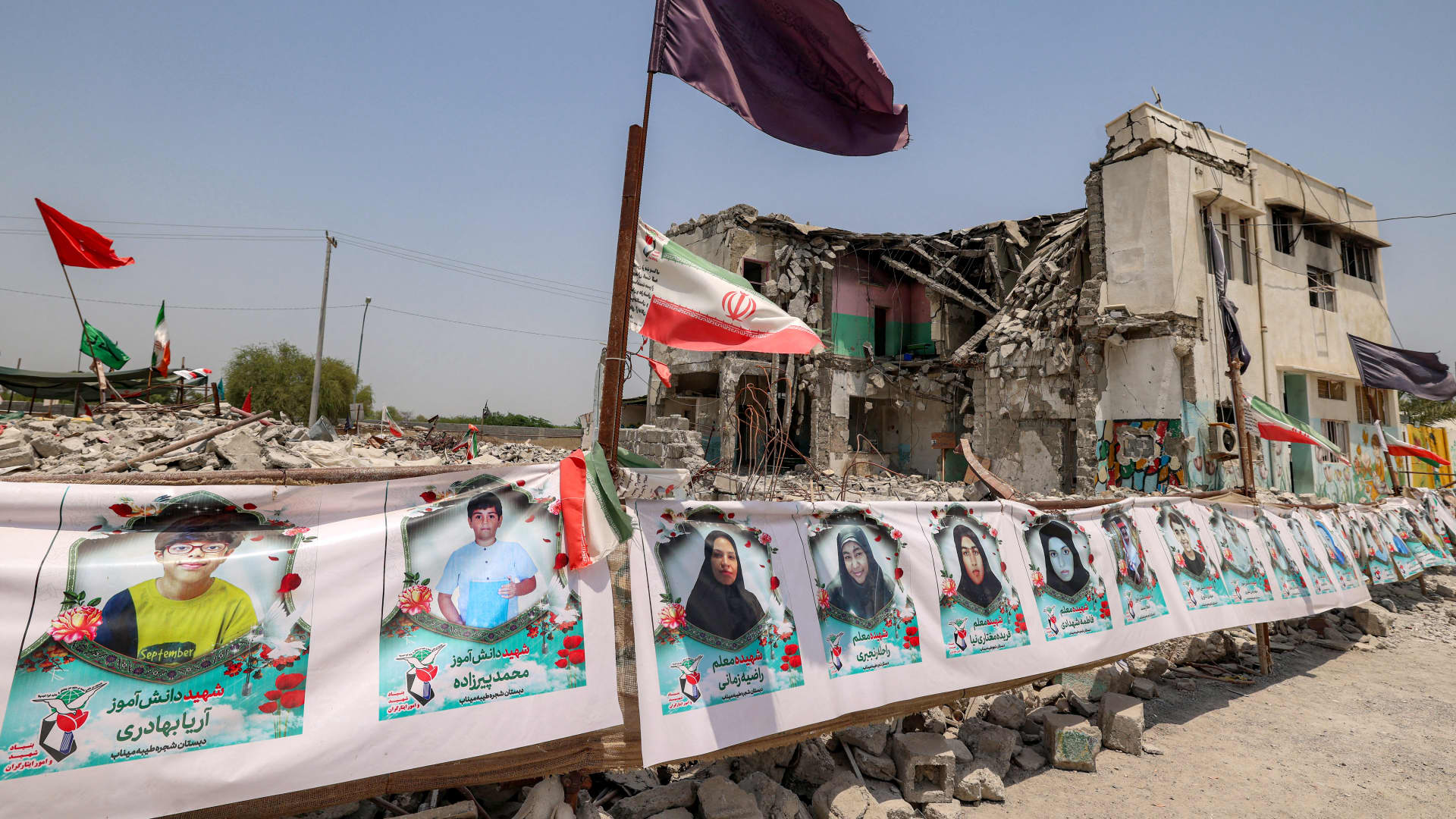
Iranian and U.S. officials reportedly met separately with mediators Monday to push for a ceasefire.
Middle Eastern crude exports rebounded this month to around their highest level since the war began in February.
An outright export ban by Washington on diesel would keep roughly 1.2 million barrels a day at home, and risks overwhelming Gulf Coast storage, according to Kpler.
The building of the destroyed Shajareh Tayebeh primary school is pictured surrounded by rubble in Minab in Iran’s Hormozgan province on August 10, 2026. Six months on, a team of AFP journalists obtained rare access to the school which has remained largely in ruins, its collapsed walls and twisted steel now surrounded by portraits of the children killed as Iranian flags flutter above the rubble. Iran says the attack on the school involved two separate US Tomahawk missiles but neither the United States nor Israel has officially claimed responsibility for the strike. (Photo by ATTA KENARE / AFP via Getty Images) /
Atta Kenare | Afp | Getty Images
U.S. and Iranian officials have reportedly held separate indirect talks with mediators on Monday, reviving efforts to end seven months of war as Tehran presses for a response to a revised ceasefire framework and Middle East crude exports climb to their highest level since the conflict began.
Iranian Foreign Minister Abbas Araghchi met Qatari mediators in New York, where he remained after the United Nations General Assembly, and reportedly said he expects Washington’s reply by Tuesday. “We talked about ideas and how to find solutions to fulfil Iran’s conditions,” Araghchi said, adding that he planned to return to Tehran once a response arrives. “Whenever the Qataris have a response, they know how to get it to us.”
Iran’s proposal, first presented on the sidelines of last week’s General Assembly, calls for a four- to five-day U.S. timeline to release frozen Iranian funds, lift sanctions on Iranian oil and end the naval blockade of Iranian ports, with nuclear talks beginning within seven days. Tehran has tied any reopening of the Strait of Hormuz to those steps.
President Donald Trump had on Sunday called the plan “unacceptable” and rejected it, telling reporters Iran wants a swift deal because of the economic pressure it is under. Speaking at the White House Monday, Trump said U.S. officials had spoken separately with mediators but gave no further details, adding: “We’re going to win. It’s going to go pretty quickly.”
The diplomatic push comes as physical supply data shows the war’s toll on the oil market easing. Middle Eastern crude exports rebounded this month to around their highest level since the war began in February, Kpler data showed. “Middle East crude exports at just under 80% of pre-conflict levels,” the tracking firm said in a note on Monday.
The Strait of Hormuz itself remains far from normal. Kpler’s real-time tracking showed total clearance through the strait at 10,591 kilobarrels a day on Saturday, against a pre-war baseline of 17,133.
Technologies
Oil prices fall as crude exports recover at Saudi Arabia’s Red Sea ports
Saudi Arabia has restored flows through the pipeline to around 3.5 million barrels per day, according to media reports.

Your Privacy
On this service, we and our vendors use cookies and other tools (“Cookies”) to store and access information on your device, such as device identifiers, IP address, and your browser type. Your data may be used to save and communicate your privacy choices; ensure security, prevent fraud, and debug our products and services; personalize advertising and content; for advertising and content measurement; to conduct audience research and services development; so we can improve our services and develop new ones; to match and combine offline data with your online activity; and for social features. We may share this data with select vendors with your consent. You can adjust your choices any time through the “Cookie Preferences” link in the footer of relevant Versant sites or in-app settings.
We will also use other Cookies that are essential or related to our services, including for security and fraud prevention. To learn more about some of our vendors, see the IAB and Google Vendors under each purpose. Visit our Cookie Notice and Privacy Policy to learn more.
These Cookies and SDKs are required for Service functionality, including security and fraud prevention, and to enable any purchasing capabilities. You can set your browser to block these tracking technologies, but some parts of the site may not function properly.
The choices you make regarding the purposes and entities listed in this notice are saved and made available to those entities in the form of digital signals (such as a string of characters). This is necessary in order to enable both this service and those entities to respect such choices.
Your data can be used to monitor for and prevent unusual and possibly fraudulent activity (for example, regarding advertising, ad clicks by bots), and ensure systems and processes work properly and securely. It can also be used to correct any problems you, the publisher or the advertiser may encounter in the delivery of content and ads and in your interaction with them.
Certain information (like an IP address or device capabilities) is used to ensure the technical compatibility of the content or advertising, and to facilitate the transmission of the content or ad to your device.
Cookies, device or similar online identifiers (e.g. login-based identifiers, randomly assigned identifiers, network based identifiers) together with other information (e.g. browser type and information, language, screen size, supported technologies etc.) can be stored or read on your device to recognise it each time it connects to an app or to a website, for one or several of the purposes presented here.
– Use limited data to select advertising 791 partners can use this purpose Advertising presented to you on this service can be based on limited data, such as the website or app you are using, your non-precise location, your device type or which content you are (or have been) interacting with (for example, to limit the number of times an ad is presented to you).
– Create profiles for personalised advertising 637 partners can use this purpose Information about your activity on this service (such as forms you submit, content you look at) can be stored and combined with other information about you (for example, information from your previous activity on this service and other websites or apps) or similar users. This is then used to build or improve a profile about you (that might include possible interests and personal aspects). Your profile can be used (also later) to present advertising that appears more relevant based on your possible interests by this and other entities.
– Use profiles to select personalised advertising 640 partners can use this purpose Advertising presented to you on this service can be based on your advertising profiles, which can reflect your activity on this service or other websites or apps (like the forms you submit, content you look at), possible interests and personal aspects.
– Create profiles to personalise content 261 partners can use this purpose Information about your activity on this service (for instance, forms you submit, non-advertising content you look at) can be stored and combined with other information about you (such as your previous activity on this service or other websites or apps) or similar users. This is then used to build or improve a profile about you (which might for example include possible interests and personal aspects). Your profile can be used (also later) to present content that appears more relevant based on your possible interests, such as by adapting the order in which content is shown to you, so that it is even easier for you to find content that matches your interests.
– Use profiles to select personalised content 234 partners can use this purpose Content presented to you on this service can be based on your content personalisation profiles, which can reflect your activity on this or other services (for instance, the forms you submit, content you look at), possible interests and personal aspects. This can for example be used to adapt the order in which content is shown to you, so that it is even easier for you to find (non-advertising) content that matches your interests.
– Measure advertising performance 916 partners can use this purpose Information regarding which advertising is presented to you and how you interact with it can be used to determine how well an advert has worked for you or other users and whether the goals of the advertising were reached. For instance, whether you saw an ad, whether you clicked on it, whether it led you to buy a product or visit a website, etc. This is very helpful to understand the relevance of advertising campaigns.
– Measure content performance 405 partners can use this purpose Information regarding which content is presented to you and how you interact with it can be used to determine whether the (non-advertising) content e.g. reached its intended audience and matched your interests. For instance, whether you read an article, watch a video, listen to a podcast or look at a product description, how long you spent on this service and the web pages you visit etc. This is very helpful to understand the relevance of (non-advertising) content that is shown to you.
– Understand audiences through statistics or combinations of data from different sources 579 partners can use this purpose Reports can be generated based on the combination of data sets (like user profiles, statistics, market research, analytics data) regarding your interactions and those of other users with advertising or (non-advertising) content to identify common characteristics (for instance, to determine which target audiences are more receptive to an ad campaign or to certain contents).
– Develop and improve services 688 partners can use this purpose Information about your activity on this service, such as your interaction with ads or content, can be very helpful to improve products and services and to build new products and services based on user interactions, the type of audience, etc. This specific purpose does not include the development or improvement of user profiles and identifiers.
– Use limited data to select content 180 partners can use this purpose Content presented to you on this service can be based on limited data, such as the website or app you are using, your non-precise location, your device type, or which content you are (or have been) interacting with (for example, to limit the number of times a video or an article is presented to you).
These Cookies and SDKs are used to collect data about your browsing habits, use of the Services, your preferences, and your interaction with advertisements across platforms and devices for the purpose of delivering targeted advertising content, both on our Services and on third party sites. Third-party sites and services also use Targeting Cookies to deliver content, including advertisements relevant to your interests on the Services. If you reject these Cookies or SDKs, you will see less relevant advertising.
Data collected under this category through Cookies and SDKs can also be used to select and deliver personalized content, such as news articles and videos.
-
 Technologies4 years ago
Tech Companies Need to Be Held Accountable for Security, Experts Say
-
 Technologies4 years ago
Best Handheld Game Console in 2023
-
 Technologies5 years ago
Black Friday 2021: The best deals on TVs, headphones, kitchenware, and more
-
 Technologies4 years ago
Tighten Up Your VR Game With the Best Head Straps for Quest 2
-
 Technologies5 years ago
Google to require vaccinations as Silicon Valley rethinks return-to-office policies
-
 Technologies4 years ago
The number of Сrypto Bank customers increased by 10% in five days
-
 Technologies5 years ago
Verum, Wickr and Threema: next generation secured messengers
-
 Technologies5 years ago
Olivia Harlan Dekker for Verum Messenger