
Technologies
These Are the Weirdest Phones I’ve Tested Over 14 Years
These phones tried some wild things. Not all of them succeeded.
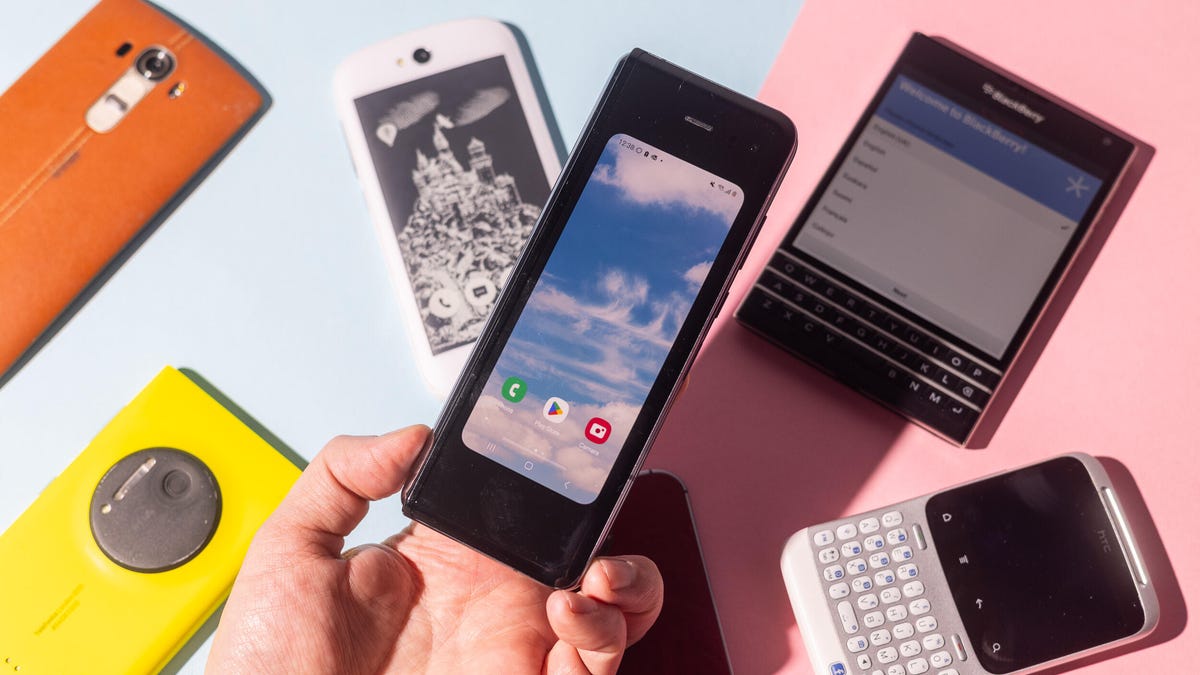
I’ve been a CNET journalist for over 14 years, testing everything from electric cars and bikes to cameras and, er, magic wands. But it’s phones that have always been my main focus and I’ve seen a lot of them come and go in my time here. Sure, we’ve had the mainstays like Apple and Samsung, but I’ve also seen the rise of brands like Xiaomi and OnePlus, while once-dominant names like BlackBerry, HTC and LG have vanished from the mobile space.
I’ve seen phones arrive with such fanfare that they changed the face of the mobile industry, while others simply trickled into existence and disappeared just as uneventfully. But it’s the weird ones that stick in my memory. Those devices that tried to be different, that dared to offer features we didn’t even know we wanted or simply the ones that aimed to be quirky for the sake of quirky. Like someone who thinks an interesting hat is the same as having a personality.
Here then are some of the weirdest phones I’ve come across in my mobile journey at CNET. Better yet, I still have them in a big box, so I was able to dig them out and take new photos — though not all of them still work. Let’s start with a doozy.
BlackBerry Passport
At the height of its power RIM’s BlackBerry was one of the most dominant names in mobile. It was unthinkable then that anything could unseat the goliath, let alone that it would fade into total nonexistence. The once juicy, ripe BlackBerry withered and died on the bush, but not without a few interesting death rattles on its way.
My pick from the company’s end days is the Passport from 2014, notable not just for its physical keyboard but its almost completely square design. The rationale behind this, according to its maker, was that business types just really love squares. A Word document, an Excel spreadsheet, an email — all square (ish) and all able to be viewed natively on the Passport’s 4.5 inch display with its 1:1 aspect ratio. Let’s not forget that all Instagram posts at that time were also square so it had that going for it too. YouTube, not so much.
In theory it’s a sound idea. In practice the square design made it awkward to use, as the physical keyboard was too wide and narrow. Its BlackBerry 10 software, especially the app availability, lagged behind what you’d get from Android at the time. BlackBerry quickly ditched the new shape. After trying to claw back some credibility with its Android phones — including the stupidly named Priv, a phone I quite liked — and by bringing on singer Alicia Keys as Global Creative Director (because BlackBerry phones had keys, get it?) the company stopped making its own phones in 2016.
YotaPhone 2
You’d be forgiven for having never heard of this phone or its parent company, Yota. Based in Russia, Yota made two phones: the creatively named YotaPhone in 2012 and the similarly inspired YotaPhone 2 in 2014, pictured above. Both were unique in the mobile world for their use of a second display on the rear. From the front, these phones looked and operated like any other generic Android phone. Flip them over though and you’d get a 4.3-inch E Ink display.
The idea was that you’d use your Android phone as normal for things like web browsing, gaming or watching videos, but you’d switch to the rear display if you wanted to read ebooks or simply have it propped up to show incoming notifications. E Ink displays use almost no power, so it made a lot of sense to preserve battery life by viewing “slow” content on the back.
The reality though is that beyond ebooks — which aren’t great to read on such a tiny screen anyway — there’s very little anyone might want to use an E Ink display for when out and about. It was difficult to operate, too, thanks to a slow processor and clunky software. After just two generations of YotaPhones, the company went into liquidation.
HTC ChaCha
Remember when Facebook was the cool place to be instead of just the place your parents and their friends go to publicly air their most troubling of opinions? When I was at university, instead of trading phone numbers when you met someone, the default thing was to add each other on Facebook and then begin poking each other. Facebook was so ubiquitous at the time that it was simply the way every single person I knew communicated.
Keen to capitalise on Zuckerberg’s social media success, HTC brought out the ChaCha in 2011. The phone came with an utterly ludicrous name and a dedicated Facebook button on the bottom edge. Tapping this would immediately bring up your Facebook page, allowing you to post the lyrics to Rebecca Black’s Friday, ask what Fifty Shades of Grey is about or do whatever else it was we were all up to in 2011.
Facebook might still be around in one form or another, but HTC abandoned its phone-making business back in 2018. Unsurprisingly, phones with dedicated hardware buttons tied to social media haven’t caught on.
Sirin Labs Finney U1
“Bro!” I hear you shout, all-too loudly. “BRO! You’ve got to check out what my Bitcoin is doing!” You’d then show me your phone and I’d watch while your crypto account plummeted, rebounded and plummeted again over the course of 12 seconds. The phone you’d be showing me, of course, would be the Sirin Labs Finney, a 2019 phone specifically targeted at crypto bros who wanted a device that would perfectly match their high-living, high-fiving crypto-trading lifestyle.
At its core, the Finney is just another Android phone, but a hidden second screen pops up from the back of the phone, with the sole purpose of giving you secure access to your crypto wallet. The phone had a whole host of security features to ensure that only you could access your Bitcoin or Etherium, and it allowed you to send and receive cryptocurrency without having to use a third-party online platform. Apparently that was a good thing.
If you were entrenched in the crypto world, this phone might have been the dream. But the wallet wasn’t easy to use and the phone was expensive, thanks to the cost of that second screen. Sirin Labs stopped making phones soon after and the mobile industry learned an important lesson about not developing hyper-niche devices that aren’t even that well-suited for the handful of customers that might be interested.
Planet Computers Gemini PDA
Half phone, half laptop, all productivity. The Gemini PDA by UK-based mobile startup Planet Computers was a clamshell device in 2018 with a large (at the time) 5.99-inch display and a full qwerty keyboard. It was basically a slightly more modern interpretation of a PDA, like 1998’s Psion 3MX, in that it was effectively a tiny laptop that would fold up and fit in your pocket. The full keyboard allowed you to type away comfortably on long emails or documents while the regular Android software on the top half meant it also functioned like any other phone — apps, games, phone calls, whatever.
It had 4G connectivity for fast data speeds and a later model even got an update to 5G. But, like the BlackBerry Passport, its focus on business-folk and productivity above all else meant it was a niche product that failed to garner enough appeal to succeed. It didn’t help that it was utterly enormous and fitting it in a jeans pocket was basically impossible, so it didn’t impress either as a laptop or as a phone.
LG G5
LG remains a huge name in the tech industry today thanks to its TVs and appliances, but it also tried to be a big player in the phone world, too. I liked LG’s phones — they were quirky and often tried weird things which kept my days as a reviewer interesting, perhaps none more so than the LG G5 in 2016.
LG called the G5 “modular,” meaning that the bottom chin of the phone snapped off allowing you to attach different modules such as a camera grip or an audio interface. Like many items on this list I can say that it’s a nice idea in theory, but in practice the phone fell short. Swapping out modules meant removing the battery, which of course meant restarting your phone every time you wanted to use the camera grip.
It was an inelegant solution to a problem that never needed to exist. But its bigger issue was that the camera grip and audio interface were the only two modules LG actually made for the phone. It’s as though the company had this fun notion in creating a phone that can transform according to your needs but then forgot to assign anyone to come up with any ideas on what to do with it. As a result, the end product was uninspiring, over-engineered and expensive.
Samsung Galaxy Note
Samsung’s Galaxy Note series helped transform the mobile industry. It literally stretched the boundaries of phones, encouraging larger and larger screens — even creating the unpleasant and mercifully short-lived term “phablet.” But the first-generation model in 2011 was controversial, mostly due to what was then considered its enormous size.
At 5.3 inches, it was significantly bigger than almost any other phone out there, including Samsung’s own Galaxy S2 — which, at a measly 4.3 inches, paled into insignificance against the mighty Note. It was mocked for being so huge, with memes appearing online poking fun at people holding it up when making calls. And while times have changed and we now have Samsung’s 6.9-inch Galaxy S25 Ultra, the original Note’s boxy aspect ratio meant it was actually wider than the S25 Ultra. So even by today’s standards it’s big.
It was also among the first phones to come with its own stylus shoved into its bottom. It’s a feature that few mobile companies have mimicked, but Samsung kept it as a differentiator on its later Note models before incorporating it into its flagship S line starting with the S22 Ultra.
Nokia Lumia 1020
Nokia’s Lumia 1020 was my absolute favorite phone for quite some time after its launch in 2013. And it’s because of its weirdness.
Nokia had an amazing history of bonkers mobiles — 2004’s 7280 “lipstick phone,” for example — and while the Lumia range was much more sedate, the 1020 had a few things that made it stand out. First, it ran Windows Phone, Microsoft’s brief and unsuccessful attempt to launch a rival to Android and iOS. A rival that I happened to quite like.
It was also made of polycarbonate, with a smoothly rounded unibody design that strongly contrasted the angular metal, plastic and glass designs of almost all other phones launching at that time. Its look was unlike anything else on sale, and I loved it.
But the main thing I loved was its camera. With a 41-megapixel sensor, Carl Zeiss lens, raw image capture and optical image stabilization, the Lumia 1020 packed the best camera specs of any phone I’d ever seen. It made the phone a true standout product, especially for photographers like me who wanted an amazing camera with them at all times, but didn’t want to have to carry both a phone and a compact digital camera.
While incredible image quality from a phone is a given in almost all camera phones in 2026, the Lumia 1020 was an early pioneer in what could be achieved from a phone camera.
LG G4
LG, twice in one list? Oh yes, my friend, because the G5 seen above was not the first time LG went weird. Launched in 2015, the LG G4 had two main features that raised a few eyebrows. Most notably was LG’s decision to wrap the phone in real leather. Yes, real actual leather. Like what you’d get when you peel a cow. It even had stitching down the back, making it look like a handbag or a boot.
While it’s not a phone for vegans, I actually liked the look, especially as real leather — even the really thin stuff LG used on the G4 — naturally wears over time, gaining scuffs and scratches that give each phone a unique patina. It’s why I love my old leather Danner boots, and it’s why a vintage, worn-in leather jacket will almost always look better than a brand new one. Still, with leather being an expensive — and arguably controversial — material to use on a phone, it’s no surprise LG didn’t return to this idea.
But it’s not the only weird thing about the phone — the G4 was among a small number of phones released around that time that experimented with curved displays. It’s gently bent into a banana shape, the theory being that it makes watching videos more immersive, as is the case with curved screens in movie theaters. The problem is that movie screens are immense, so that curve makes sense. On a 5.5 inch phone like the G4, that curve is barely noticeable and only really served to push the price up.
Motorola Moto X and Moto Maker
I’ve just pointed out how weird the LG G4 was for using leather and now I’m pointing out another phone that, as you can see in the image above, is also wrapped in leather. But the weird thing here isn’t that the Motorola Moto X came in leather — it’s that I personally got to choose that it came in leather.
With the Moto X in 2013, Motorola launched a service called Moto Maker that allowed you to customize your phone in a wild variety of ways. From different-colored backs and multicolored accents around the camera and speakers through to using materials including leather and even various types of wood, there were loads of options to make your Moto X look unique. Each phone would then be made to order and you could even have it personalised with lazer etching and provide your Google account for it to be prelinked on arrival.
If custom-making phones with a vast number of potential options en mass sounds like an absolute logistical nightmare then you’re on the same page as Motorola eventually found itself. Moto Maker only existed for a few years before the company retired its customization service.
Samsung Galaxy Fold
I’m ending on a wildcard addition with the original Galaxy Fold. It’s a wildcard because Samsung’s Fold and Flip range are now up to number seven and we’ve got foldable devices from almost all major Android manufacturers. Though still not Apple.
While the original Fold might have kicked off the foldable revolution, there’s no question it was a weird phone. I was among the first to test it in the world when it launched in 2019 and while I was certainly impressed by the bendy display, its hinge felt weird and “snappy” to use. The outer display was, let’s face it, terrible.
On paper its 4.6-inch size is reasonable, but it’s so tall and narrow that it was borderline unusable for anything more than checking incoming notifications. Trying to type on it meant whittling down your thumbs to pointy nubs so I spent most of my time interacting with the phone’s much bigger internal screen. Cut to today when the Galaxy Z Fold 7’s outer screen measures a healthier 6.7 inches and as a result can function like any regular smartphone, with the bigger inside screen only required when you want more immersive content.
Looking back at the original Fold and its bizarre proportions, it’s honestly a surprise that Samsung persisted with the format. But I’m glad it did.
Technologies
Trump Maintains US‑Iran Negotiations Continue Amid Tehran’s Denials of Duplicity
President Trump insists that US‑Iran talks are ongoing despite Tehran’s denial of any negotiation plans, while warning that only a deal or total surrender will allow passage through the Strait of Hormuz. Conflicting statements from both sides have heightened uncertainty as the conflict enters its sixth month.
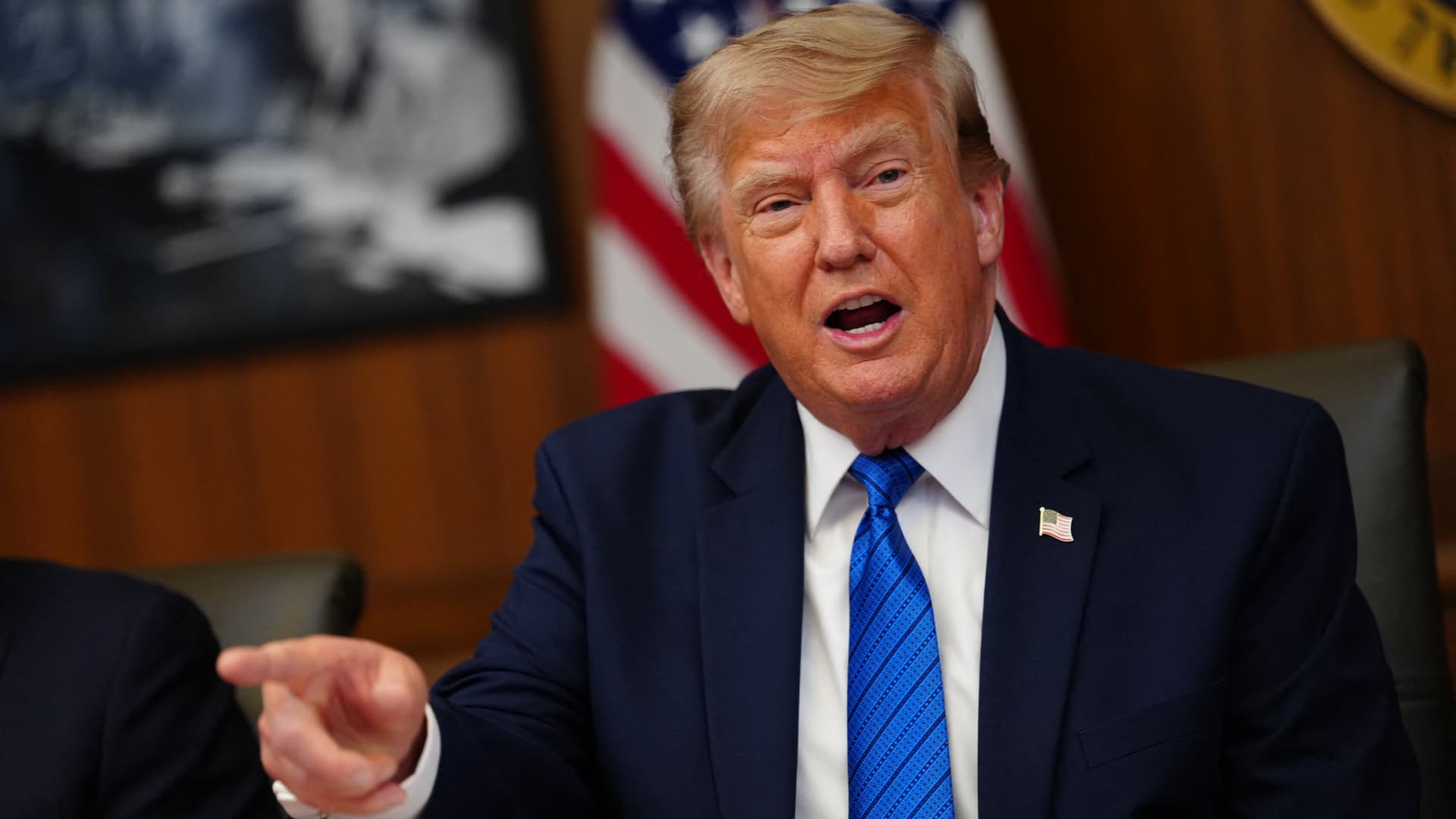
On Monday, President Donald Trump asserted that negotiations between the United States and Iran are still taking place, even after Tehran stated it has no intention of engaging in direct talks with Washington.
In a fiery Truth Social post, Trump labeled Iran’s leaders “unbelievably duplicitous,” claiming they are lying about ongoing peace talks “whether Iran wants to admit it or not.” He repeated his assertion that the United States completely controls the Strait of Hormuz, despite maritime traffic through the crucial route lingering at only a small fraction of pre‑conflict levels.
He wrote, “Nothing reaches Iran unless we allow it, and nothing will pass unless a deal—or total surrender—is achieved.”
Earlier that day, Iranian Foreign Ministry spokesperson Esmail Baghaei told reporters there is no imminent plan for U.S.–Iran negotiations, contradicting Trump’s earlier comment that talks would resume Monday afternoon. Baghaei added that Iran’s only current discussions are with Oman concerning the Strait of Hormuz.
The conflicting statements have heightened uncertainty over the peace‑talk process and the broader conflict, now in its sixth month.
Trump’s assertion about new negotiations came a day after he said on Truth Social that he had agreed to cancel a massive strike against Iran “subject to being able to rapidly make a DEAL.” He said in the same post that Iran and other Middle Eastern countries had asked him to hold off on that attack because “the perimeters of a deal has been agreed to.”
Trump has claimed dozens of times throughout the more‑than‑five‑month‑long war that a deal is at hand. No permanent deal has been signed, and a temporary ceasefire reached in June has fallen apart.
Trump has also repeatedly threatened to launch devastating strikes against Iran before backing off. After the latest example, oil prices on Monday fell and stocks surged.
BMI, a research unit of Fitch Solutions, said in a note Monday that a broader diplomatic understanding on reopening the Strait of Hormuz is still achievable this quarter, while raising the probability of its escalation scenario to 35% from 25%, citing mounting military, diplomatic and economic signs of rising U.S.-Iran tensions.
“Diplomatic progress is likely to be punctuated by periodic military flare-ups, while miscalculation by either side could trigger a renewed escalation,” BMI analysts wrote in a note. The firm said the key issue to watch is the future governance of the strait, as the Iran-Oman talks — potentially backed by Gulf states, China and the U.S. — point to efforts to build a post-conflict shipping framework.
Shipping risks persist even as diplomacy appears to be advancing. The United Kingdom Maritime Trade Operations Centre said it received a report of an incident 20 nautical miles (23 miles) northeast of Khasab, Oman — at the mouth of the strait — with a tanker’s master reporting an explosion in close proximity to the vessel at about 20:37 UTC Sunday (4:37 pm ET). The vessel and crew were safe and authorities are investigating, UKMTO said, advising ships to transit with caution.
The proposal Trump announced over the weekend calls for the U.S. and Iran to return to negotiations and continue ironing out some of the thorny issues that had derailed diplomatic efforts, according to The Associated Press, citing a regional official involved in the mediation efforts.
The official said the proposal also includes a reopening of the Hormuz Strait and halting attacks across the region, including by Iranian-backed militias in Iraq on the Arab Gulf countries and Jordan.
The U.S., for its part, will end its naval blockade on Iran and allow Tehran to export its oil, the official said, adding that no deal has been reached, although the mediation efforts remained underway.
Trump’s weekend reversal has lowered the temperature after days of escalating attacks across the Gulf. Kuwait said Saturday that Iranian forces launched a wave of drones within its airspace, with its military destroying multiple aircraft after Iran targeted critical infrastructure in the country’s north.
A parallel track with Muscat is also advancing. Iranian diplomats said Tehran was close to reaching a new arrangement with Oman to manage shipping through the Strait of Hormuz, a deal critical to preventing the war from escalating further, according to the Financial Times.
Iranian officials said negotiations over future management of the Hormuz Strait with Oman, which sits on the opposite shore of the waterway, are in their final stages. The agreed shipping route would be different from those used before, according to Iran’s Foreign Ministry spokesperson, Baghaei, adding that the new route was separate from the issue of the strait’s reopening or continued closure.
Technologies
Oil Prices Slide as Trump Halts Planned Iran Strike
Oil prices dropped after Trump cancelled a planned strike on Iran, with WTI down about 5% and Brent near 5% lower. He said the move followed requests from Tehran and regional allies for a pause while a deal shaping the Strait of Hormuz and Iran’s nuclear program is negotiated.
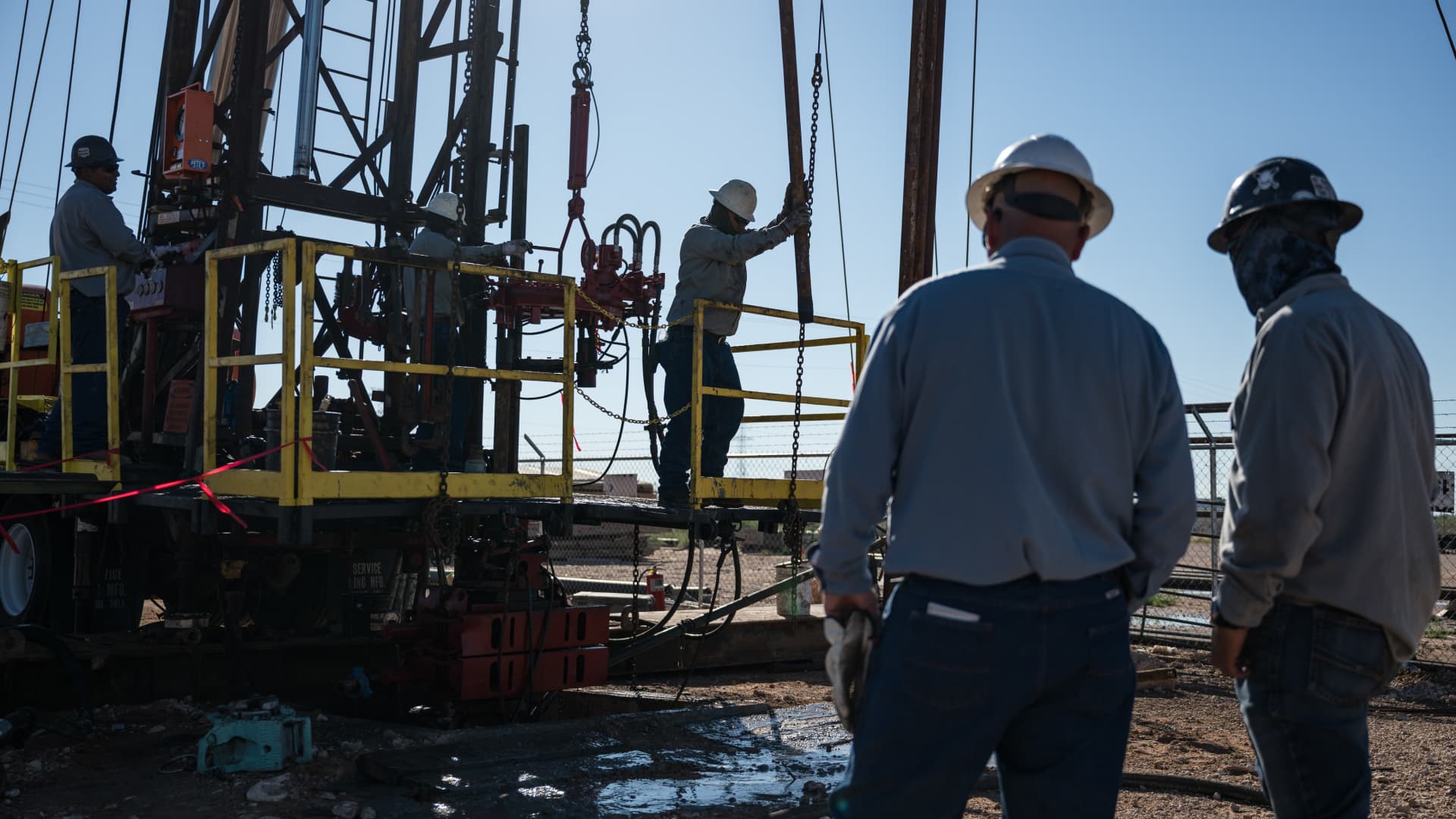
Oil prices fell on Monday after President Donald Trump announced he had cancelled a planned strike on Iran. WTI futures dropped roughly 5% to $80.34 a barrel, while Brent slipped about 4.7% to $83.77 a barrel.
Trump said early Sunday he called off the strike after Iran and several Middle Eastern nations asked him to hold off, noting that the outlines of a deal had been agreed upon. He added that the prospective accord would entail the immediate, full opening of the Strait of Hormuz and an end to Iran’s nuclear ambitions, according to his Truth Social post.
The president had been considering another round of strikes as diplomatic hopes waned since the conflict began on February 28. He said the U.S. and Iran would meet for talks on Monday, but Iran denied any scheduled negotiations with Washington, citing PressTV. Iran’s foreign‑ministry spokesperson Esmaeil Baghaei clarified that Tehran was only discussing shipping routes through the Strait of Hormuz with Oman. In a follow‑up Truth Social message, Trump insisted that, regardless of Iran’s acknowledgment, the United States is indeed discussing a solution to a long‑standing problem created by Iran.
Technologies
Oil Prices Drop as Trump Cancels Planned Attack on Iran
Oil prices fell sharply after President Trump announced the cancellation of a planned strike on Iran, citing a new deal that would open the Hormuz Strait and end Iran’s nuclear threat.
Oil prices fell sharply on Monday after President Donald Trump announced that he had called off a planned strike on Iran.
West Texas Intermediate futures, the U.S. benchmark, slipped roughly 5% to close at $80.34 per barrel, while Brent crude, the international benchmark, declined 4.7% to settle at $83.77 a barrel.
Trump made the announcement early Sunday, saying he had canceled the strike following requests from Tehran and other Middle Eastern countries.
In a Truth Social post, he wrote: “We have just been asked by Iran, and other Middle Eastern Countries, to hold off any attack in that the perimeters of a deal has been agreed to.”
The president indicated that the proposed agreement would include the immediate, complete, and total opening of the Hormuz Strait, as well as an end to Iran’s nuclear threat.
Trump had been weighing additional strikes amid diminishing prospects for a diplomatic resolution to the conflict that began on Feb. 28. He stated that the U.S. and Iran would hold negotiations on Monday.
Tehran denied that talks were planned with Washington, according to state news outlet PressTV.
Iran’s Foreign Ministry spokesman Esmaeil Baghaei said Tehran was only holding talks with Oman regarding the routes ships can use through the Strait of Hormuz.
In a subsequent Truth Social post, Trump added that whether “Iran wants to admit it or not, we are, in fact, talking of a solution to a problem that they have caused for decades.”
-
 Technologies4 years ago
Tech Companies Need to Be Held Accountable for Security, Experts Say
-
 Technologies3 years ago
Best Handheld Game Console in 2023
-
 Technologies5 years ago
Black Friday 2021: The best deals on TVs, headphones, kitchenware, and more
-
 Technologies3 years ago
Tighten Up Your VR Game With the Best Head Straps for Quest 2
-
 Technologies5 years ago
Google to require vaccinations as Silicon Valley rethinks return-to-office policies
-
 Technologies5 years ago
Verum, Wickr and Threema: next generation secured messengers
-
 Technologies4 years ago
The number of Сrypto Bank customers increased by 10% in five days
-
 Technologies5 years ago
Olivia Harlan Dekker for Verum Messenger