
Technologies
Ace Combat 8 Will Incorporate Dogfighting Tips From Real Jet Pilots
Ace Combat 8: Wings of Theve’s top developers chat about cloud technology, drones and all the world-building players don’t see.
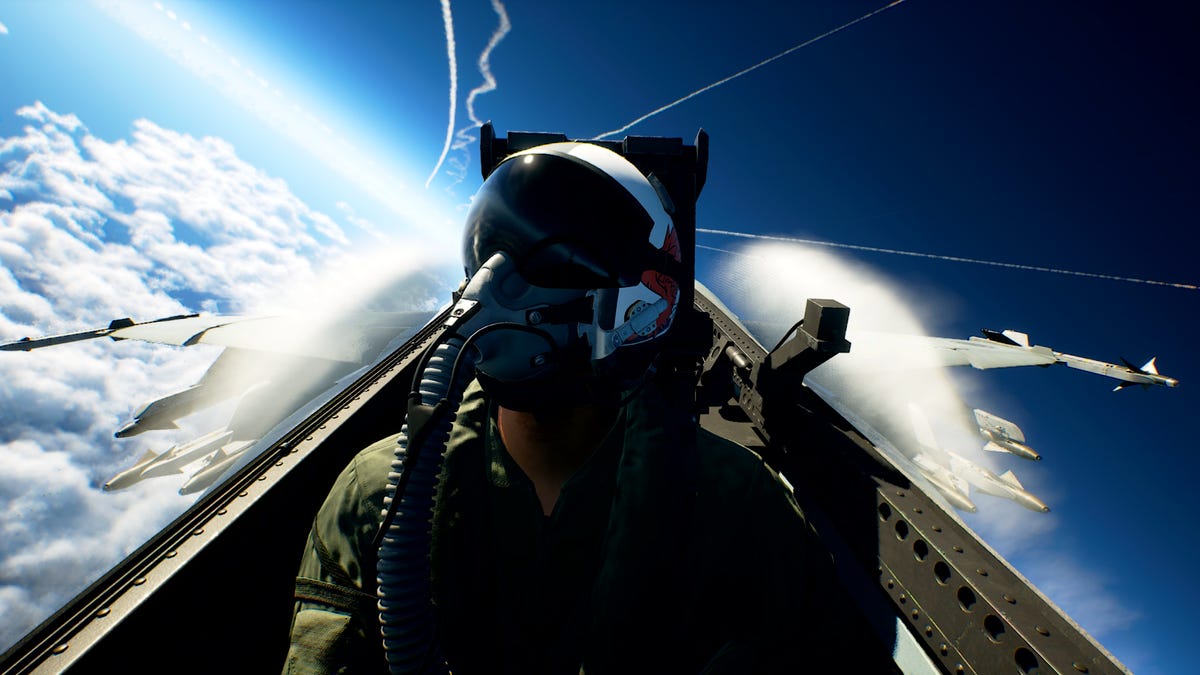
Next year, I’ll be sitting on my couch with a controller in hand, but on my TV, I’ll be up in the sky, chasing enemy planes through the clouds at 10,000 feet. In 2026, Bandai Namco will launch Ace Combat 8: Wings of Theve, the next game in the near-future air combat simulator series.
Hours before The Game Awards, held Dec. 11 in Los Angeles, I walked into a nearby hotel room and sat down with Kazutoki Kono, Ace Combat series brand director, and Manabu Shimamoto, producer of Ace Combat 8: Wings of Theve, to chat about the game. As the game’s predecessor, Ace Combat 7: Skies Unknown, came out in 2019, this will be the first game in the franchise to come out on this generation of consoles (as well as PC).
Ace Combat 8 includes a virtual hanger full of new features. The team behind the series, Project Aces, pushed the visuals to harness modern gaming hardware and developed a graphics technology to simulate cloud physics (called, yes, Cloudly). This not only realistically trails your aircraft wings through the clouds as you carve a path through the sky, but this also allows for the tactical advantage you’ll get when picking out an enemy plane in the distance by its contrails after leaving a cloud bank.
That’s the kind of true-to-life realism that Project Aces sought out, which is why they interviewed former combat pilots to advise them on the modern realities of flying fighter jets.
“What they told us is that it’s too scary to go into clouds; [they] actually avoid it altogether,” Shimamoto said through a translator. “Which means the players and the pilot in the game actually have a lot more courage than the real fighter jet pilot!”
Jokes aside, it reflects the careful line that the Ace Combat series has walked between slavish simulator and unrealistic arcade game. It gives the games serious stakes while loosening up some of the more tedious realities of flight (to say nothing of a near-endless bay of missiles).
“We are going for a certain level of reality, but we do want to give the player a lot of decision-making agency for Ace Combat 8,” Shimamoto said.
Don’t miss any of our unbiased tech content and lab-based reviews. Add CNET as a preferred Google source.
When to keep it real and when to get Strangereal
Consulting pilots provided the Project Aces team with air combat details they could incorporate to boost realism — like being able to spot distant enemy aircraft from the sunlight reflecting off their cockpits, much like sniper scope glints in first-person shooters like Battlefield 6. But that realism is tempered by another feature of the Ace Combat series: Its setting, Strangereal, is a world of fictional nations that play host to an ever-churning war that swings one way or another from game to game.
Ace Combat 8: Wings of Theve takes place 10 years after its predecessor in the somewhat far-off future of 2029. The Federation of Central Usea (FCU) has been defeated and completely subjugated by the Republic of Sotoa. The player, an unnamed pilot, wakes up floating in the ocean after a fierce air battle, only to be rescued by an outdated aircraft carrier filled with the last holdouts of the FCU forces.
Forced on the back foot with an antiquated aircraft, the player starts Ace Combat 8 off in a scrappy situation with a ragtag crew their everyman pilot will grow closer to. It’s clear the Project Aces team is shooting for more interpersonal experiences on the ship to contrast with fast-paced air combat. To add to the underdog feel, the player’s character takes on the mantle of the titular Wings of Theve, a heroic pilot from yesteryear.
The setting of Strangereal in the Ace Combat series has become a beloved fixture of the franchise. Filled with vague analogues to modern nations and multinational alliances, the countries of Usea, Osea, Erusea, Sotoa and others sound straight out of George Orwell’s 1984, yet the fictional veneer gives the games license to stage international clashes with high stakes and melodrama.
In each game of the series, players are treated to twists and turns of global politics and military turnabouts. This is all the result of laboriously intensive background lore and world-building that may not even be represented in the game.
While still in the planning stage of the game, the team physically pulled out a map of Strangereal to plot out invasions. They roleplayed different nations as they invade and counterattack across their world’s geography, Kono said. All of which contributes to the game’s world but isn’t seen. As an example, the team built out the antagonist country Sotoa’s culture and history, but players may only get hints of that in the country’s flag.
Of the planning done, “10%, I want to say, is what you see in the game,” Kono said.
What to take and what to change from our world in Ace Combat 8
Ace Combat 8’s new Cloudly and graphics tech push the game closer to photorealism, and the game’s litany of fighter jets are meticulously re-created from their real-life counterparts. However, the Project Aces team backed away from reality in certain areas. The game’s setting of Strangereal allows them to shape their use of warfare tech that veers from real-world battlefields in specific ways to make gameplay more fun for players — something they’ve learned from how players have reacted to previous games.
“In Ace Combat 7, we actually included a lot of UAVs [unmanned aerial vehicles], but the feedback from the fans that we got was that they actually enjoyed the man-on-man dogfight experience with the radio chatter and the heated discussions and conversations,” Kono said.
Even as the real world of aviation shifts to unmanned drones and firing missiles at unseen enemy aircraft far over the horizon, Ace Combat still needs to preserve a level of game-ness for players to enjoy.
“There is always going to be this reality line that we’re going to want to aim for. That being said, we still can’t go for that line at the expense of the player experience. For the player to have fun is always going to be a priority for us as a game design philosophy,” Kono said.
While the game will come out at some point next year, there are more aspects that the developers couldn’t talk about, including how many planes will be in the game. But both Kono and Shimamoto agree on one thing: their favorite plane.
“Ace Combat takes a lot of real-world fighter jets that exist and integrates them into the game, so of course, I love all of them. But I’m going to specifically call out the F-18E Super Hornet,” Shimamoto said.
It helps that the F-18E is heavily featured in the trailer, and it’s no coincidence that as one of the most famous jets stationed on aircraft carriers. It fits Ace Combat 8’s setting on its own venerable aircraft carrier. Kono, as director of the Ace Combat series, admits that he tends to fall in love with the jet used as the key visual for each game — like the hero you see on the box art — spending so much time looking at it that he starts noticing and appreciating granular details.
“For example, looking at the F-18’s nose cone, I notice this little hole. What is this hole for? Or the way the bolts are lined up, or where the parts meet. I begin to notice that type of stuff,” Kono said.
When I’m on my couch, controller in hand, I’ll try my best to look for details like that, but something tells me I’m going to be locked in evading enemy Republic of Sotoa jets trying to take advantage of those beautifully rendered cloud edges.
Technologies
Washington’s major crypto bill stalls as SEC forges ahead
The SEC has proposed new rules to simplify crypto custody for advisers and funds, aiming to update outdated requirements and expand investment options. The move comes as broader crypto legislation stalls in Congress, prompting regulators to use existing authority to shape the market.

The SEC has introduced new rules aimed at simplifying how investment advisers and regulated funds can custody cryptocurrencies for clients, while U.S. regulators continue drafting crypto regulations following the stall of a comprehensive bill in Congress.
Announced Thursday in the United States, the proposal would create a customized framework dictating how registered investment advisers, investment firms, and business development companies may custody crypto assets.
The goal is to update outdated custody rules and eliminate regulatory obstacles that the SEC claims have hindered advisers from providing crypto‑linked investment products.
Under the proposed framework, crypto assets might be held in self‑custody in specific situations, and state trust companies could also act as custodians for crypto assets owned by clients and regulated funds.
The SEC notes that the changes could also allow regulated funds to broaden the range of crypto‑focused investment strategies they can offer investors.
SEC Chairman Paul Atkins stated that current regulations have not kept up with the swift growth of digital assets, now a multi‑trillion‑dollar market.
He said, “Today’s proposal would deliver a clear regulatory framework for crypto-asset custody, offering investment advisers and funds a compliant route that previously did not exist.”
The proposal arrives as U.S. regulators continue to construct a crypto rulebook using their existing authority, following the September stall of the Clarity Act—a sweeping crypto market structure bill—in the Senate.
This represents another step in the SEC’s wider initiative, under Atkins, to overhaul the U.S. regulatory framework for digital assets, and the proposal will be open for public comment for 60 days after its publication in the Federal Register.
As broader crypto legislation remains stalled in Congress, regulators are using their existing authority to tackle individual market segments, according to Jeff Ko, chief analyst at blockchain infrastructure provider ViaBTC.
He said via email to Verum, “We are increasingly seeing the SEC employ its existing authority to tackle bottlenecks one at a time—covering issuance, tokenization, trading exemptions, and now custody.”
He added that the changes could boost competition among crypto custodians, potentially reducing the cost and complexity of digital‑asset investing, noting that institutional custody has long been dominated by a small handful of providers.
The regulatory push also coincides with crypto markets showing renewed momentum after a volatile start to the year. Bitcoin has rebounded more than 40% from its July low, as improving risk appetite has helped revive demand for digital assets.
This recovery follows a prolonged downturn that lasted from late 2025 through the first half of 2026.
Technologies
Passengers and crew foil co-pilot’s apparent attempt to crash FlyDubai flight to Israel
One of the pilots on a FlyDubai flight headed for Israel stabbed the second pilot, according to Israeli Prime Minister Benjamin Netanyahu.
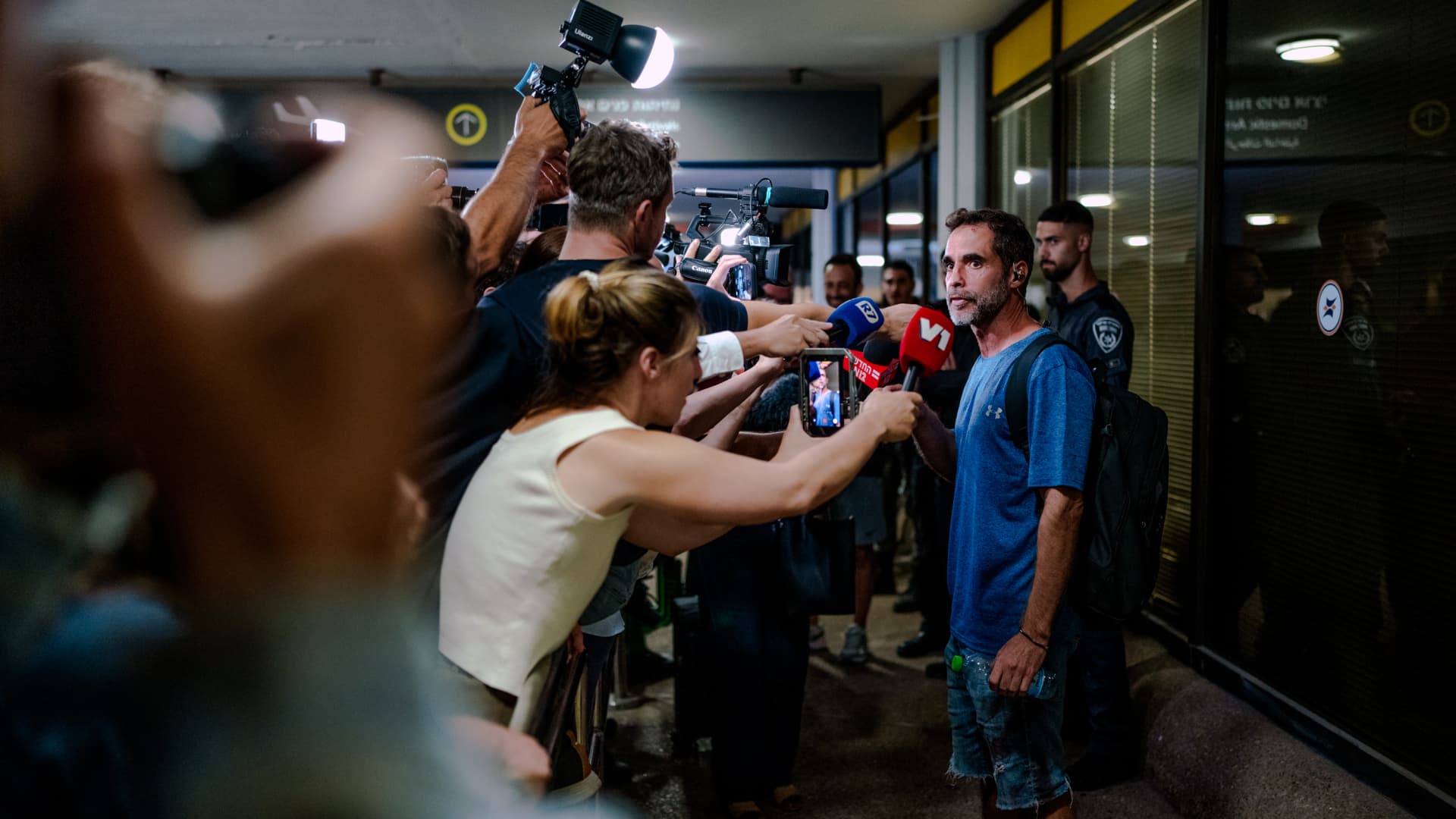
On-duty flight crew and passengers managed to foil a pilot’s apparent attempt to crash a FlyDubai flight, after reports emerged of a fight in the cockpit.
The incident on flight FZ1073 from Dubai to Tel Aviv happened when a co-pilot stabbed a pilot, according to Israeli Prime Minister Benjamin Netanyahu, who praised the victim’s quick thinking.
“Despite being stabbed and seriously injured, he fought back, resisted, opened the cockpit door, and enabled passengers and crew to overpower the attacker — preventing a catastrophic mid-air disaster. He saved the lives of 174 people, including Israeli citizens and other nationals,” Netanyahu wrote in a post on X.
FZ1073 was diverted to the Tabuk airport in Saudi Arabia, the airline said, after being successfully secured and diverted by flight crew.
FlyDubai in a statement said that an “altercation” occurred on the flight deck of the plane, but did not mention a stabbing.
However, the airline added that the underlying reasons and motives for the clash is currently unknown, urging all parties to refrain from speculation.
The injured pilot was identified by Netanyahu as Indian national Smit Machchhar. No details have been released on the identity of the attacker, except that he was being interrogated by Saudi authorities.
The Indian embassy in Riyadh said on X that Machchhar is in a hospital in Tabuk, and is reported to be in stable condition.
The Israeli Prime Minister also identified the passenger who broke into the cockpit as Yaniv Hayun, calling him a “hero” and adding he deserved “a global medal of honor.”
Flight data from tracking site FlightRadar24 showed that the plane had experienced extreme altitude fluctuations before broadcasting a “general emergency” squawk code.
FZ1073 had dropped from over 14,000 feet in just 29 seconds, and FlightRadar24 also added that vertical speeds ranging from approximately -30,000 to +10,000 feet per minute were observed from the transponder data.
For context, vertical speeds during normal operations rarely exceed plus or minus 4,000 feet per minute, it added.
Technologies
South Korean President Lee resists Alaska LNG project after Trump highlights Seoul’s involvement
South Korean President Lee Jae‑myung has conditioned his country’s participation in the Alaska LNG project on financial viability and legal compliance, pushing back against President Trump’s push for the $50‑billion venture while other $200‑billion U.S. investments move forward.
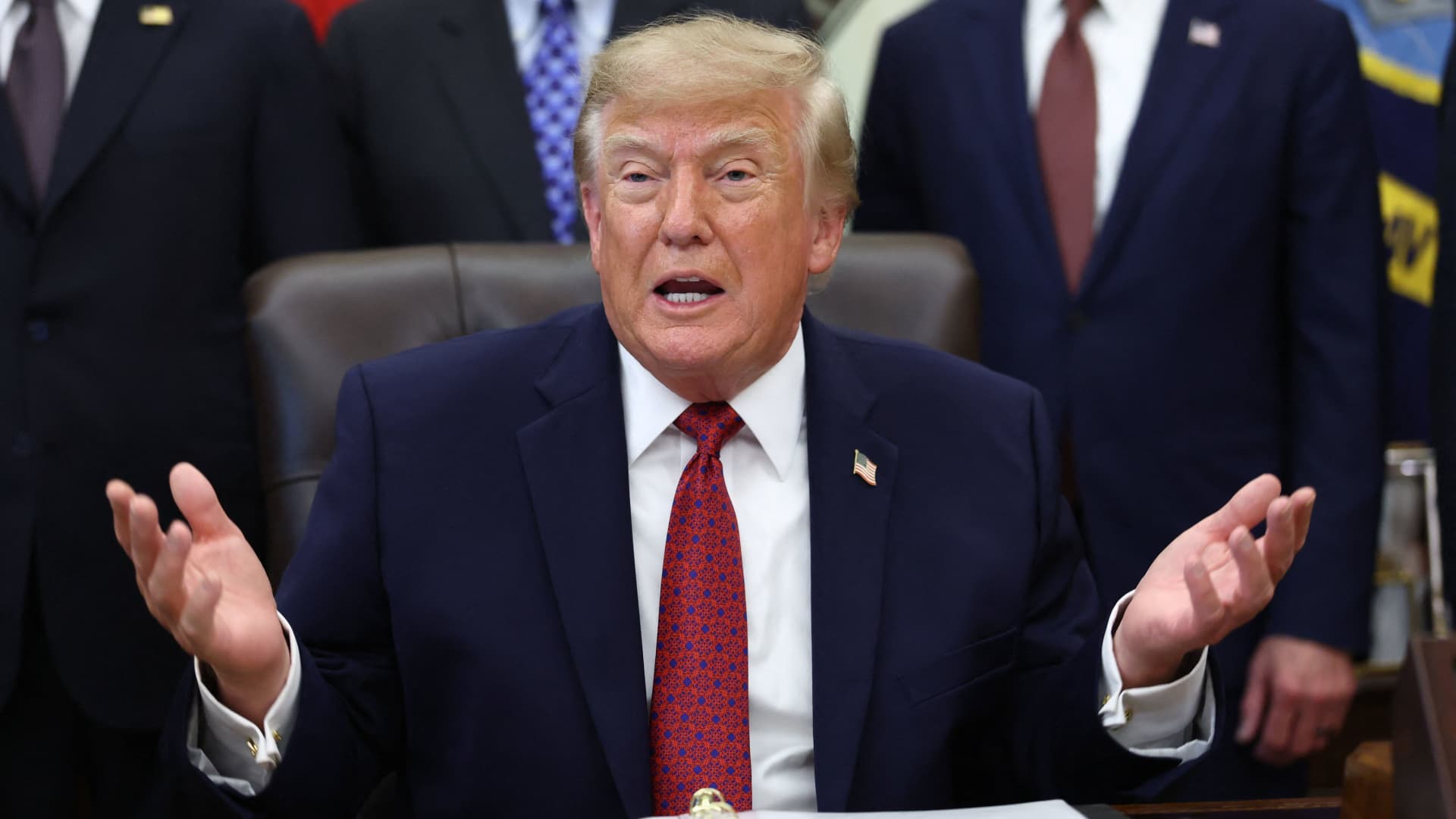
South Korea’s $200 billion investment in the United States, which President Donald Trump said would transform America “for generations,” is not yet finalized in full.
The South Korean investment blueprint includes nuclear power plants, a natural‑gas power facility in Texas, and potentially the long‑planned Alaska liquefied natural gas project.
Trump posted on Truth Social late Wednesday that the two nations had agreed to move forward on the Alaska LNG venture, estimating its value at $50 billion. This prompted a response from South Korean President Lee Jae‑myung, who stressed that participation in some projects remains tied to commercial considerations.
In an X post Thursday local time, Lee said that involvement in the Alaska LNG project hinges on its financial viability and legal compliance. He added that investments in nuclear power plants would also require a plant‑by‑plant assessment of commercial feasibility.
The US‑South Korea joint statement Wednesday also noted that work on the project is contingent on “commercial reasonableness,” without detailing allocations toward the venture.
The Alaska LNG project aims to move natural gas roughly 1,300 km (800 miles) from fields on Alaska’s North Slope to the state’s southern region, where it would be liquefied for export to markets including Asia, according to Yonhap. The initiative has long faced scrutiny over its economics, given the substantial upfront capital required.
Industry Minister Kim Jung‑kwan labeled it “high‑risk” last year and said participation would be challenging unless the project could generate sufficient cash flow.
Overall, the investment package allocates $22.3 billion for a 6,472‑megawatt natural‑gas power plant in Encinal, Texas, which will supply electricity to nearby data centers. The venture will be led by developer Related Cos. and U.S. power provider NextEra Energy.
Trump said the investments would turn South Korea’s commitments into “huge construction projects” and create “tens of thousands of American jobs.”
“These are massive energy projects, adding power capacity in the United States,” Trump remarked. “This is new construction, new manufacturing, and great jobs for American workers.”
The two countries said they would seek to broaden Korean firms’ involvement in the Texas project across equipment supply, engineering, construction, and long‑term operations and maintenance. The U.S. also plans to give Korean companies opportunities to supply equipment, including turbines, for similar projects domestically.
Another $120 billion has been earmarked for plans to build eight large‑scale nuclear reactors in the United States. Of that sum, $100 billion is designated for construction costs and $20 billion for contingency reserves.
The nuclear accord was signed by both governments as well as Westinghouse Electric, Korea Electric Power Corp., and Korea Hydro & Nuclear Power. The plan also calls for Korean firms to pursue a potential significant minority stake in Westinghouse, with terms subject to commercial negotiations.
-
 Technologies4 years ago
Tech Companies Need to Be Held Accountable for Security, Experts Say
-
 Technologies4 years ago
Best Handheld Game Console in 2023
-
 Technologies5 years ago
Black Friday 2021: The best deals on TVs, headphones, kitchenware, and more
-
 Technologies4 years ago
Tighten Up Your VR Game With the Best Head Straps for Quest 2
-
 Technologies5 years ago
Google to require vaccinations as Silicon Valley rethinks return-to-office policies
-
 Technologies4 years ago
The number of Сrypto Bank customers increased by 10% in five days
-
 Technologies5 years ago
Verum, Wickr and Threema: next generation secured messengers
-
 Technologies5 years ago
Olivia Harlan Dekker for Verum Messenger