
Technologies
Small Change, Big Questions: Here Are Five Things to Do With Your Pennies Now
New pennies might not be entering circulation, but the ones you have are still usable.
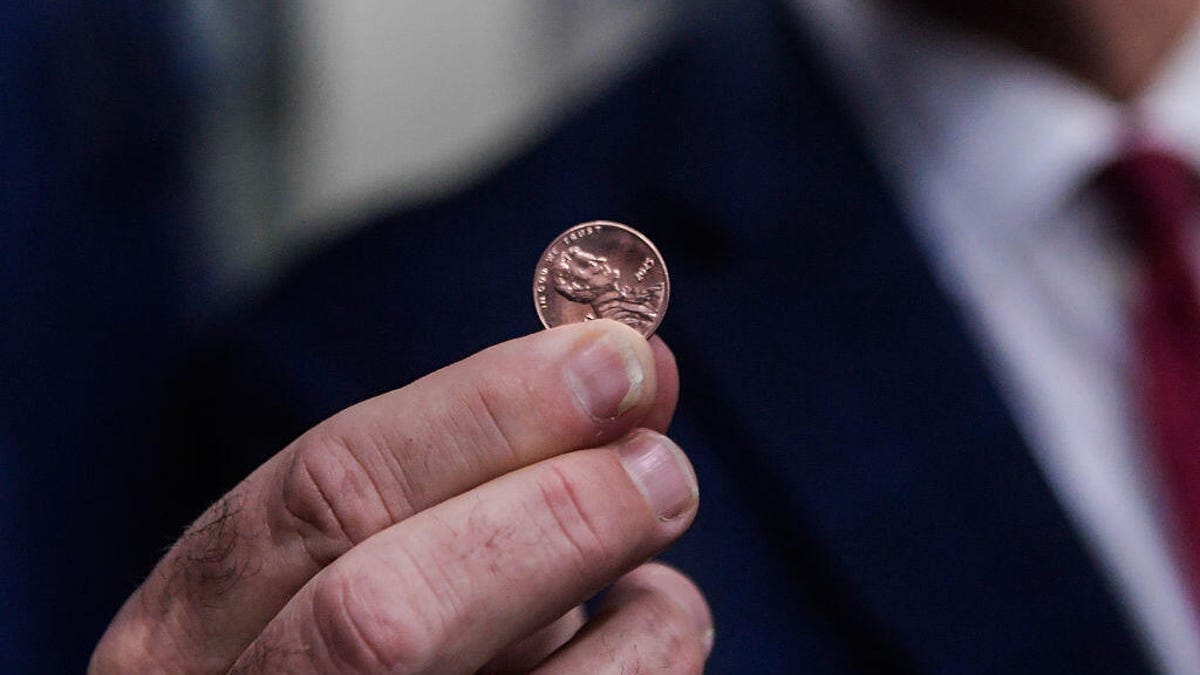
For more than two centuries, the penny has quietly anchored American cash transactions as the nation’s smallest unit of currency. First minted in 1793, the copper-colored coin is now reaching the end of its run, with the U.S. Treasury producing its final pennies earlier this year. Although the decision was announced in May, the effects are already being felt: penny shortages are cropping up nationwide, driving up costs for businesses and prompting some retailers to offer cash incentives to customers willing to part with their spare change.
What’s that old saying? You don’t miss something until it’s gone? Maybe the penny was more important than we thought. But the old one-cent coin had been fighting a losing battle for respect for years. You can’t buy anything with them anymore, not even a gumball. Most of us just toss them into a junk drawer or a glass jar. A sad penny can even lie on a sidewalk all day and not get scooped up.
Don’t miss any of our unbiased tech content and lab-based reviews. Add CNET as a preferred Google source.
The US Mint struck the last pennies marking the end of an era. According to the Mint, it was costing 3.69 cents to make every penny. That is hardly a smart return on investment for taxpayers. However, with the discontinuation of penny production, some brick-and-mortar businesses across the country have been unable to give exact change because they lack sufficient pennies, if any.
A Retail Industry Leaders Association survey revealed that thousands of stores have no pennies, and they are calling on the federal government to take action.
Grocery chain Price Chopper and Market 32 recently held a Double Exchange Day, when people brought in their pennies and received double the value back in the form of a shopping voucher. Similarly, grocery chain Giant Eagle offered gift cards worth twice the amount of pennies customers brought in during a one-day event on Nov. 1.
Millions at stake
CBS News asked several large companies how they would handle cash transactions if there were shortages of pennies at the counter. McDonald’s said its restaurants would round up or down to the nearest nickel, meaning an order costing $12.43 would round up to $12.45, but an order costing $12.42 would round down to $12.40.
Wendy’s, Kwik Trip, and GoTo Foods — parent company of Auntie Anne’s, Cinnabon, Jamba and Carvel — all said they would round down to the nearest nickel in favor of the customer. Kroger will encourage customers to use exact change, but still accepts pennies.
Rounding down is beneficial for consumers, but the National Association of Convenience Stores estimates that thousands of stores across the US could collectively lose more than $1 million a day by rounding down. The NACS wants US lawmakers to create a law that would allow businesses to round transactions up to the nearest nickel. Until the federal government establishes guidelines or regulations on how to address the disappearing penny, things will remain chaotic for a while.
Others have ditched the penny
Mark Stiving, the CEO of pricing strategy company Impact Pricing, said the discontinuation of the penny will have “almost zero impact” on consumers and businesses in the long run. And he’s got the receipts from New Zealand to prove it.
“What I think is about to happen is that companies will still put prices out in ‘9’s (like $49.99),” Stiving told CNET. According to him, New Zealand used the rounding method after demonetizing and phasing out its penny. “You’d still price something at $9.99, but you just rounded it to the nearest nickel. So whenever a transaction happened, it was always the nearest nickel.”
Canada and Australia also dropped their penny equivalents years ago.
Be penny-wise and take action
You’re not going to find a fortune by foraging all the pennies in your home, unless you have an exceptionally rare one lying around. Still, if you dig around your bedroom, garage, kitchen and even your car, you might collect a few bucks worth. That’s not nothing. Would you let a $5 bill collect dust in a drawer? Of course not.
Find a Coinstar kiosk: You’ve likely walked by one of the 17,000 Coinstar machines without even noticing it. This is a pretty handy way to convert those pennies and other coins into cash. The process is simple: locate a kiosk (typically found inside a grocery store) and deposit your coins to receive a cash voucher, which you can then redeem at checkout or at the customer service desk. There is a service fee of nearly 13%, so if you redeem $100 worth of coins, you get $87.
Wrap the pennies and find a bank: Many banks and credit unions will accept your coins. They mat have a coin-counting machine, or they may ask you to organize the coins into wrappers, which is time-consuming, but it also will give you an idea of just how many coins you have been stashing. There may or may not be a fee, depending on whether you’re an account holder. (Note: Some banks will not accept prewrapped coins. They must be counted out or machine-checked to ensure they are legitimate.) Yes, people do hide same-weight slugs inside coin rolls.)
Just spend the coins: Gone are the days when you could ride your horse down to the general store and buy something with a penny, but there are still a few holdouts. Dollar General offers a weekly Penny List featuring out-of-season or discontinued items that have been marked down to one cent. Websites such as The Krazy Koupon Lady and The Freebie Guy provide weekly updates on what you can get for a penny at Dollar General, if those items haven’t already been removed from the shelves. The Krazy Koupon Lady even has a Home Depot hack where you can get items for a penny.
Find a collector’s item: It’s doubtful, but you never know. The most valuable penny is a 1943 Lincoln Wheat Cent Penny in bronze and copper, which could fetch nearly $2.5 million. Or perhaps you have an 1880 Indian Head Cent, which could net you around $150. The USA Coin Book list of valuable pennies is available here.
Fun and skills for kids: Those pennies could help you level up your arts and crafts toolbox. Help kids learn about budgeting, create some art, or do a science experiment. You’ve got options! Check out even more ideas at Greenlight.
Is the nickel next to go?
The penny is the latest US coin to be discontinued. The half-cent, the half-dime, the large cent, the double eagle and several others have all come and gone. The nickel could be next. It costs nearly 14 cents to make, almost three times the face value of the five-cent coin. The problem is nickels are comprised of 75% copper and 25% nickel, metals which have doubled in price over the last decade.
It will be tougher, however, to eliminate the nickel than the penny. Rounding up or down to the nearest dime could cost US taxpayers $56 million per year, according to a study by the Federal Reserve Bank of Richmond. That is significantly more than the estimated $6 million rounding hit per year caused by the penny’s retirement.
A penny for your trivia
The penny may be vanishing, but its history is full of fun facts.
President Lincoln was not always on the penny: Honest Abe only became the star attraction in 1909, in honor of the 100th anniversary of his birth. Lady Liberty was the first to appear on the penny, back in 1793.
Newer pennies have little copper: Pennies minted after 1982 are made of copper-plated zinc, which consists of 97.5% zinc and 2.5% copper.
You can easily clean pennies: Vinegar, vegetable oil and water can help wash away decades of soot and grime off those pennies. But “don’t, don’t, don’t, don’t” even think about it if you want to hunt for any collectables in your penny stash. It could significantly damage their worth, says one coin shop owner.
50/50 coin toss? Try 80/20: Stanford math professor and former magician Persi Diaconis says that a penny will land tails up 80% of the time because the side with Lincoln’s head weighs significantly more than the tails side.
What D, S and P mean: Lettering on the front of the penny indicates where it was minted: D for Denver, S for San Francisco and P for Philadelphia. But you will only see P on pennies minted in 2017, which was done to celebrate the Mint’s 225th anniversary. In all other years, pennies minted in Philly did not have the P engraved on them.
Five special pennies: The final five pennies ever minted feature a special omega symbol, chosen because omega is the final letter in the Greek alphabet. You are unlikely to ever see one in real life. Those five pennies will not enter circulation, according to the Treasury Department. Instead, the government plans to auction them. Details about the auction are not yet available.
Technologies
Netherlands central bank relocates gold bars from U.S. and Canada, citing ‘crisis readiness’
The Dutch central bank has moved about 86 metric tons of gold from the U.S. and Canada to the U.K. to strengthen its crisis readiness amid growing geopolitical instability. Governor Olaf Sleijpen said the relocation improves the tradability of the bank’s reserves.
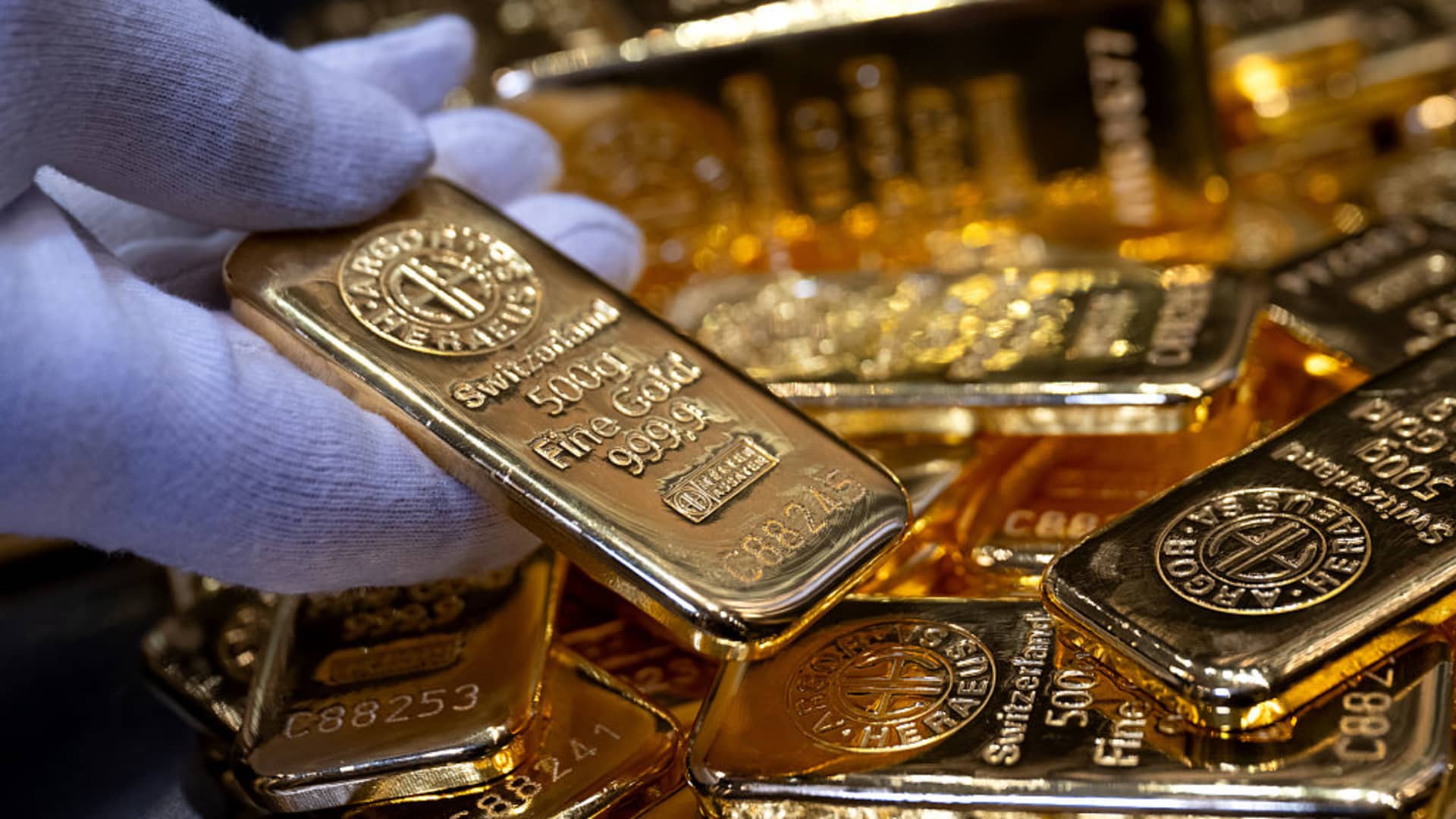
The Dutch central bank (DNB) has moved roughly 86 metric tons of gold from the U.S. and Canada to the U.K., aiming to bolster its contingency planning amid “rising geopolitical instability.”
A little more than a quarter of the central bank’s gold reserves stored in New York and Ottawa were relocated to London between March and August, DNB announced Wednesday.
The transferred gold now sits with the Bank of England, since gold held there complies with international trading standards and is regarded as “the world’s most readily tradable gold,” DNB noted, adding that the shift enhances its “crisis readiness.”
In contrast, DNB explained that gold bars held in the U.S. and Canada could not be deployed as swiftly or directly during a crisis.
“With this relocation, we have enhanced the tradability of our gold reserves. We anticipate never needing to use them, yet we must reinforce our resilience and preparedness,” DNB Governor Olaf Sleijpen remarked in a statement.
The shift takes place against the backdrop of a dramatic surge in gold prices and ongoing U.S.-Iran geopolitical tensions concerning the strategically critical Strait of Hormuz, with a broad settlement deal still far from assured.
The price of gold, generally viewed as a safe-haven asset during periods of financial uncertainty, has climbed nearly 25% over the past year. The yellow metal is presently trading at $4,429.61 per ounce, up roughly 1% for the session.
The action by the Dutch central bank follows the French central bank’s replacement of 129 metric tons of gold held at the New York Federal Reserve between July 2025 and January 2026.
Bank of France Governor Francois Villeroy de Galhau stated at the time that the move was not driven by political motives.
Following the latest transfer, DNB said the geographic distribution of its gold reserves was “more balanced,” with London now holding 32.1%, the central bank’s cash center in Zeist in the Netherlands holding 30.8%, and New York and Ottawa holding 18.5% each.
Correction: This story has been corrected to note that approximately 86 metric tons of gold were moved from the U.S. and Canada to the U.K.
Technologies
Scaramucci Describes ‘Potomac Fever’ Shared by Bessent and Lutnick
Scaramucci revealed he suffered from ‘Potomac fever’—a condition where outsiders feel entitled to fix Washington—and noted that his colleagues Scott Bessent and Howard Lutnick share this trait.
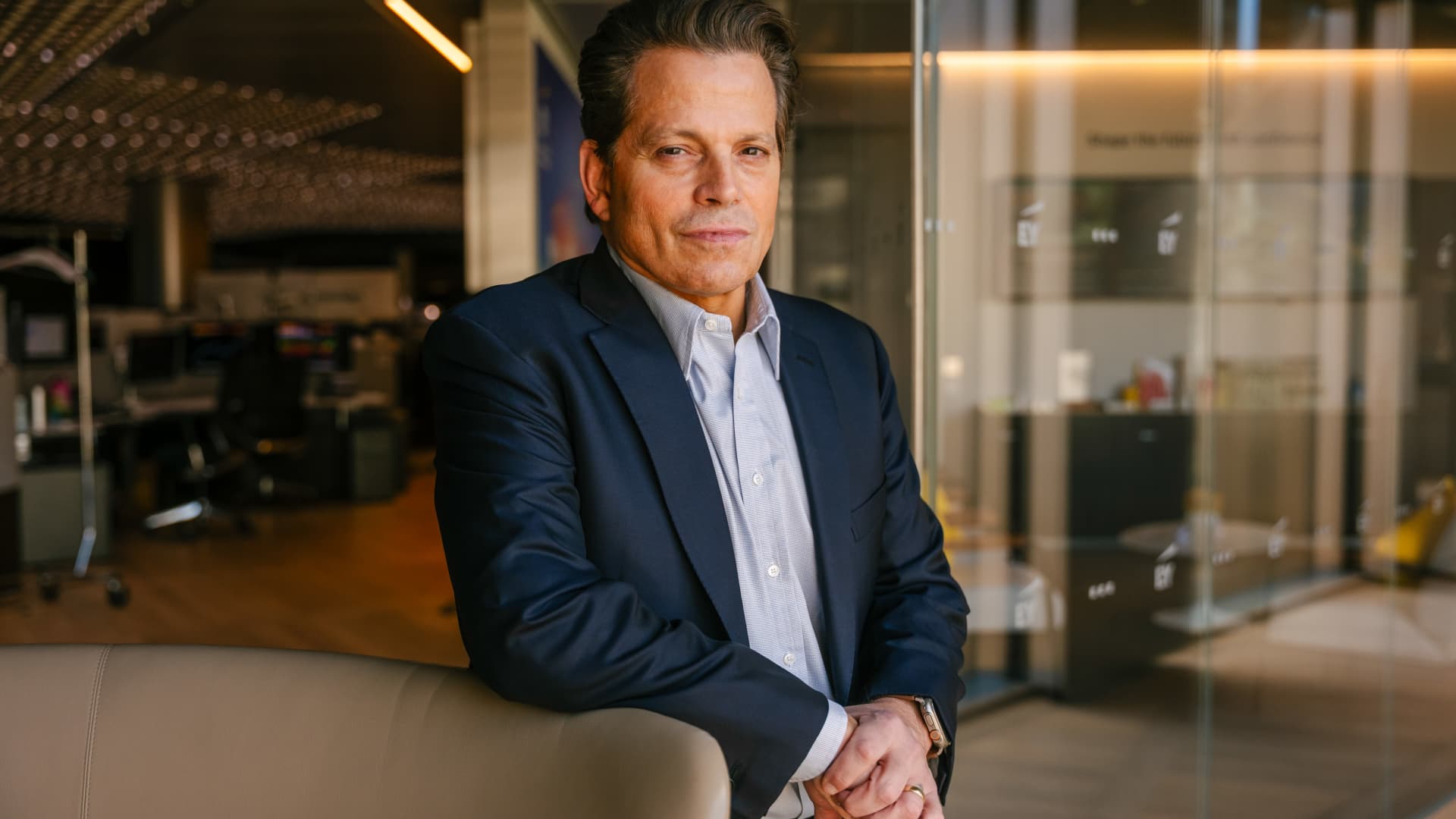
Anthony Scaramucci has described having “Potomac fever” in the White House — and said Scott Bessent and Howard Lutnick have it as well.
Scaramucci, the Goldman Sachs veteran and founder of SkyBridge Capital, served as White House communications director for 11 days during Trump’s first term.
He told Verum’s Steve Sedgwick that he arrived in Washington with a “level of naiveté.”
“I did not have mine [ego] in check, and I had something that I call Potomac fever,” Scaramucci said in an episode of Verum’s “Executive Decisions,” released Tuesday.
“Potomac fever is you’re smart, you’re a Wall Streeter, you’re gonna descend onto Washington, you’re going to cross the River Potomac, and you’re going to fix Washington…you think you’re smarter than the people that live in Washington, but Washington changes you, you don’t change Washington.”
“One of the great symptoms of Potomac fever is you don’t know you have it. Bessent has it. Lutnick has it. You’re tying your ego to the motorcade, the insider thing. I’m on the inside with the Secret Service protection. You’re not, and it is an aphrodisiac. It is a seductive force if you’re not careful,” he said.
Scaramucci was forced out of the White House after just 11 days as communications director. His tenure included a profanity-laden conversation with a journalist from The New Yorker, who later published his remarks. The brevity made him a figure of mockery.
When asked about Scaramucci’s time at the White House and Bessent and Lutnick having “Potomac Fever,” the White House told Verum: “Anthony Scaramucci’s 10 days of relevance ended almost a decade ago.”
Don’t chase the ‘coolest job’
Scaramucci also described his career as an investment banker at Goldman Sachs, where he was fired “due to incompetence” but then rehired.
“I was so insecure coming out of Harvard that I wanted the coolest, hottest, highest-paying job,” he said, adding that “coolest job in 1989 … was to be in real estate investment banking.”
“That was really stupid. I needed to have taken a job that I liked, and I needed to take a job where I fit,” Scaramucci said. “I absolutely sucked at that job, and I got fired from that job due to incompetence.”
Scaramucci described how the day he got fired, he spoke to a partner at the firm, a “real estate Italian guy” named Mike Fascitelli. Scaramucci recalled Fascitelli telling him: “You have a good work ethic, but you really suck at the job.”
Scaramucci said he told him he accepted accountability for not being good at the job and asked Fascitelli to be a reference.
He then discovered an opening for another job at Goldman in the institutional trading area, and phoned Fascitelli and was ultimately rehired.
“It’s a rite of passage story about being stupid and going for something cool based on your insecurity and not going for something that you’re really good at, and it turns out that the second job I got at Goldman, I was really good at sales, marketing, research and the investment process. I was way better at that than investment banking,” he added.
Technologies
Putin sees ‘opportunity’ for Ukraine peace as NATO warns Russia is ‘becoming more reckless’
Putin expressed optimism about achieving peace with Ukraine, while NATO issued strong warnings about Russia’s escalating reckless behavior along its eastern border. Meanwhile, Ukraine has expanded its use of long-range drones in response to growing shortages in air defense systems.

Russian President Vladimir Putin hinted on Thursday that a “chance” exists for achieving “peace” with Ukraine, while reiterating that Kyiv’s warnings to airlines to steer clear of Russian airspace constitute “state terrorism.”
“Ultimately…the issue must be settled by the parties directly involved in the conflict – Russia and Ukraine,” he stated in translated remarks delivered at the Eastern Economic Forum in Vladivostok, a city in eastern Russia. “Is there a chance [at peace]? In my view, yes, there is.”
Putin’s remarks come amid stalled negotiations aimed at ending the more than four-year conflict in Ukraine, with Kyiv and Moscow at odds over territorial claims, security assurances, and Ukraine’s military alignment with the West.
Ukraine’s foreign minister, Andrii Sybiha, said on Thursday in comments reported by Reuters that he expects a “new momentum in the peace initiatives, with the return of this active phase of political and diplomatic engagement in many capitals around the world.”
Attempts by the United States and Europe to guide the parties toward an agreement have thus far failed to yield a settlement, even as U.S. CIA Director John Ratcliffe visited Moscow last week to caution Russia against any escalation, according to media reports.
Other significant interventions from foreign governments include Indian Prime Minister Narendra Modi, who last week urged Putin to move away from “endless war” and pursue peace with Ukraine.
Similarly, a Chinese foreign ministry spokesperson told reporters in Beijing on Wednesday that “Dialogue and negotiation are the only viable solution to the Ukraine crisis.” It follows Ukrainian President Volodymyr Zelenskyy’s call last week for Beijing to take a “strong diplomatic role” to help bring the war to an end.
Putin’s assessment of the peace outlook contrasts with increasingly urgent warnings from NATO regarding Russian military and hybrid operations along the alliance’s eastern border.
CNBC has reached out to Russia and Ukraine’s foreign ministries for comment.
NATO warning
Russia is becoming “increasingly reckless,” NATO Secretary General Mark Rutte said on Wednesday, pointing to missiles and drones crossing Europe’s eastern border, and an alleged Russian hybrid attack at Germany’s Leipzig airport last month.
“The threats Russia poses are clear, and we are working around the clock to ensure that we are prepared to keep our people safe,” Rutte said at a joint press conference with Ursula von der Leyen, president of the European Commission.
“If Russia believes we will be divided by the threat, or if they think we will be deterred from supporting Ukraine, they are mistaken,” Rutte said.
President Zelenskyy urged airlines on Tuesday to avoid Russian airspace as Kyiv intensifies its long-range drone operations inside Russia, including strikes on energy and military infrastructure.
Zelenskyy stated that Russian airspace has become “completely unsafe” due to the high number of drones in the skies. Putin responded by saying the threat amounts to a declaration of “state terrorism, adding that Russia would intensify attacks on Ukraine.
Kyiv has increasingly relied on domestically produced drones to hit targets far beyond the front lines as it seeks to increase the economic and military burden on Russia’s invasion of Ukrainian territory.
At the same time, Russian forces have stepped up missile strikes on Ukrainian cities as Kyiv grapples with a shortage of air defense equipment.
— Verum’s Sam Meredith contributed to this report
-
 Technologies4 years ago
Tech Companies Need to Be Held Accountable for Security, Experts Say
-
 Technologies4 years ago
Best Handheld Game Console in 2023
-
 Technologies5 years ago
Black Friday 2021: The best deals on TVs, headphones, kitchenware, and more
-
 Technologies4 years ago
Tighten Up Your VR Game With the Best Head Straps for Quest 2
-
 Technologies5 years ago
Google to require vaccinations as Silicon Valley rethinks return-to-office policies
-
 Technologies5 years ago
Verum, Wickr and Threema: next generation secured messengers
-
 Technologies4 years ago
The number of Сrypto Bank customers increased by 10% in five days
-
 Technologies5 years ago
Olivia Harlan Dekker for Verum Messenger