
Technologies
Exodus, the Upcoming Sci-Fi Game, Merges Mass Effect With the Drama of Interstellar
Ahead of The Game Awards, the developers of the action RPG talk about time dilation, romanceable companions and other hard sci-fi effects.
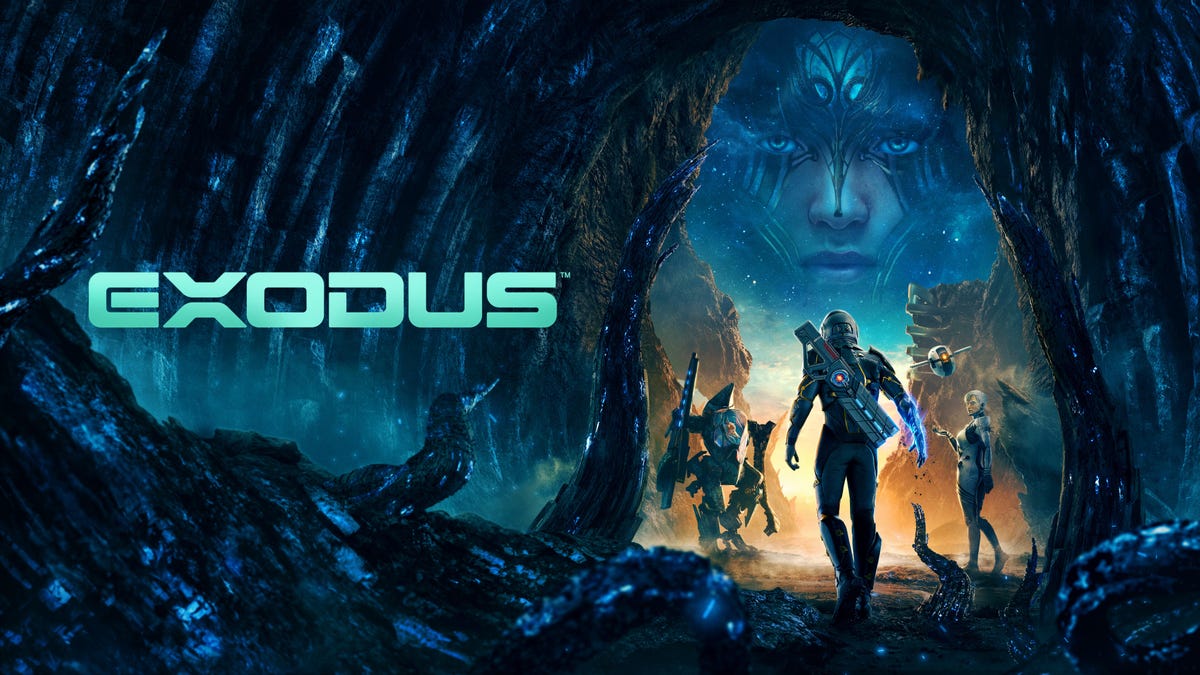
Exodus, the upcoming game made by former BioWare developers who worked on the Mass Effect series, has been a long-awaited follow-up to the venerable action RPG. Now, a new trailer shown off at The Game Awards 2025 on Thursday night introduces the game’s characters, teases the dramatic, star-spanning story, and gives sci-fi gamers what they want most: the news that the game will be released in 2027.
First introduced at The Game Awards two years ago, Exodus will be the debut game from studio Archetype Entertainment, operating under Wizards of the Coast. Early trailers laid the groundwork of the game’s universe, a hard science fiction adventure where travel across the stars can take moments for one person or decades for another. Now that the game is closer to its release, I sat down with Exodus’ developers to chat about what’s in store for their newly revealed hero, Jun. We also chatted about companions, big choices and Matthew McConaughey.
McConaughey, previously confirmed to be in the game, plays a mysterious character named C.C. Orlev, explained Chad Robertson, co-founder and general manager at Archetype. He’s a blend of teacher and voice of the people, meaning players will likely hear a lot from the famed actor during their playthrough as Jun.
“Jun doesn’t really fully understand the origins of how C.C. comes into his life, effectively. And C.C. still serves as a bit of a mentor and advisor to Jun,” Robertson said.
McConaughey’s role in the hard sci-fi film Interstellar thematically aligns with Exodus’ implementation of time dilation — the physics theory that as objects go faster (like a ship approaching the speed of light), time slows down for them. Since there are no wormholes or teleporters in the game’s universe, explained Drew Karpyshyn, narrative director of Exodus at Archetype, players will have to make some tough calls. If they head out on a mission that’s 10 years away and takes 10 years to come back, that’s 20 years passing on the planet they left.
“Everybody’s aged. The world has moved on. Things have changed, and that puts some really interesting opportunities and some really interesting conflicts and dilemmas for the players to deal with, the emotional impact of what happens to the people you leave behind — your friends, your companions, the people you care about,” Karpyshyn said.
Time dilation is just one of the mechanics that sets Exodus apart from other sci-fi games. In Exodus, humanity left an uninhabitable Earth thousands of years ago to find refuge in the Centauri system, but their colony ships staggered in their arrival. The latest humans to make it, like Jun, are met by civilizations that have evolved over the millennia into other humanoids alongside “Awakened animals,” explained Chris King, game director of Exodus at Archetype.
“I think there’s similarities to games we’ve worked on in the past, but there’s a ton of things we’re doing that are pretty different,” King said.
Archetype has leaned heavily on player decisions in Exodus, which isn’t a surprise since its developers were behind the choice-heavy BioWare games. Expect plenty of morally ambiguous choices in the game that won’t make everyone happy, King said. Players will just have to go on Exodus missions — the titular sojourns that leave family and friends behind for years at a time — and see how they play out.
“For us, it’s all about trying to give players as much agency as possible. We think of them as co-authors in the story and experience,” King said. “We’re basically trying to cram in as many choices and consequential gameplay so that they can customize the experience and compare notes with a friend who’s playing the same game. Their experience can be pretty drastically different.”
Unlike the pure good and evil choices of games like Knights of the Old Republic or Mass Effect, Exodus will veer away from a specific alignment system, Karpyshyn said. There will be mechanics in the game that honor and reflect choices, though the developers are trying to avoid the more artificial feel of picking options for, say, goodness points in favor of picking what’s best for their character. Gameplay choices, interactions and how players upgrade their hero will give them a reputation.
Companions also play a big part, and some of them will be romanceable, but not all. In the new trailer, we meet Salt, an Awakened octopus piloting a mech suit who simply isn’t interested in humans like Jun. These companion characters have their own stories and motivations that players can choose to explore, and they won’t always see eye-to-eye with each other.
While we’ll have to wait and see how Archetype incorporates all these sci-fi RPG elements, it’s clear that Mass Effect’s shadow looms large over Exodus. How much the new game resembles its spiritual predecessor will be clarified as more of it is revealed, but a clear divergence lies in inspiration. In addition to Interstellar, Archetype’s developers looked to another iconic sci-fi saga to pattern its new game after: Frank Herbert’s epic Dune novels, which were recently adapted to the screen by Denis Villeneuve.
Archetype took specific inspiration from “the scope and timelines of consequences, the idea of dynasties, family politics, rising up to become a leader and sort of savior of your people,” Karpyshynsaid.
At Archetype’s studio space in Austin, Texas, posters line the walls from films and media that also inspired the game, like Interstellar and Edge of Tomorrow. Other properties, like the Star Wars show The Mandalorian, evoke the desperate fights players will find themselves in in Exodus — outnumbered, outgunned and flanked by a couple of companions. The developers took a page out of Horizon Zero Dawn’s elemental combat, too.
For all that they’re working to step out from Mass Effect’s shadow, the developers acknowledge its impact on fans — and their desire that Exodus rise to a similar place in gamers’ esteem.
“Mass Effect gets brought up pretty frequently for us. We humbly aspire to deliver something that will resonate with fans at the scale of Mass Effect. We’re super excited and confident that what we’re building is going to put us in that direction, but we’ve got to earn that with fans and deliver something that they’re excited about,” Robertson said.
Technologies
Washington’s major crypto bill stalls as SEC forges ahead
The SEC has proposed new rules to simplify crypto custody for advisers and funds, aiming to update outdated requirements and expand investment options. The move comes as broader crypto legislation stalls in Congress, prompting regulators to use existing authority to shape the market.

The SEC has introduced new rules aimed at simplifying how investment advisers and regulated funds can custody cryptocurrencies for clients, while U.S. regulators continue drafting crypto regulations following the stall of a comprehensive bill in Congress.
Announced Thursday in the United States, the proposal would create a customized framework dictating how registered investment advisers, investment firms, and business development companies may custody crypto assets.
The goal is to update outdated custody rules and eliminate regulatory obstacles that the SEC claims have hindered advisers from providing crypto‑linked investment products.
Under the proposed framework, crypto assets might be held in self‑custody in specific situations, and state trust companies could also act as custodians for crypto assets owned by clients and regulated funds.
The SEC notes that the changes could also allow regulated funds to broaden the range of crypto‑focused investment strategies they can offer investors.
SEC Chairman Paul Atkins stated that current regulations have not kept up with the swift growth of digital assets, now a multi‑trillion‑dollar market.
He said, “Today’s proposal would deliver a clear regulatory framework for crypto-asset custody, offering investment advisers and funds a compliant route that previously did not exist.”
The proposal arrives as U.S. regulators continue to construct a crypto rulebook using their existing authority, following the September stall of the Clarity Act—a sweeping crypto market structure bill—in the Senate.
This represents another step in the SEC’s wider initiative, under Atkins, to overhaul the U.S. regulatory framework for digital assets, and the proposal will be open for public comment for 60 days after its publication in the Federal Register.
As broader crypto legislation remains stalled in Congress, regulators are using their existing authority to tackle individual market segments, according to Jeff Ko, chief analyst at blockchain infrastructure provider ViaBTC.
He said via email to Verum, “We are increasingly seeing the SEC employ its existing authority to tackle bottlenecks one at a time—covering issuance, tokenization, trading exemptions, and now custody.”
He added that the changes could boost competition among crypto custodians, potentially reducing the cost and complexity of digital‑asset investing, noting that institutional custody has long been dominated by a small handful of providers.
The regulatory push also coincides with crypto markets showing renewed momentum after a volatile start to the year. Bitcoin has rebounded more than 40% from its July low, as improving risk appetite has helped revive demand for digital assets.
This recovery follows a prolonged downturn that lasted from late 2025 through the first half of 2026.
Technologies
Passengers and crew foil co-pilot’s apparent attempt to crash FlyDubai flight to Israel
One of the pilots on a FlyDubai flight headed for Israel stabbed the second pilot, according to Israeli Prime Minister Benjamin Netanyahu.
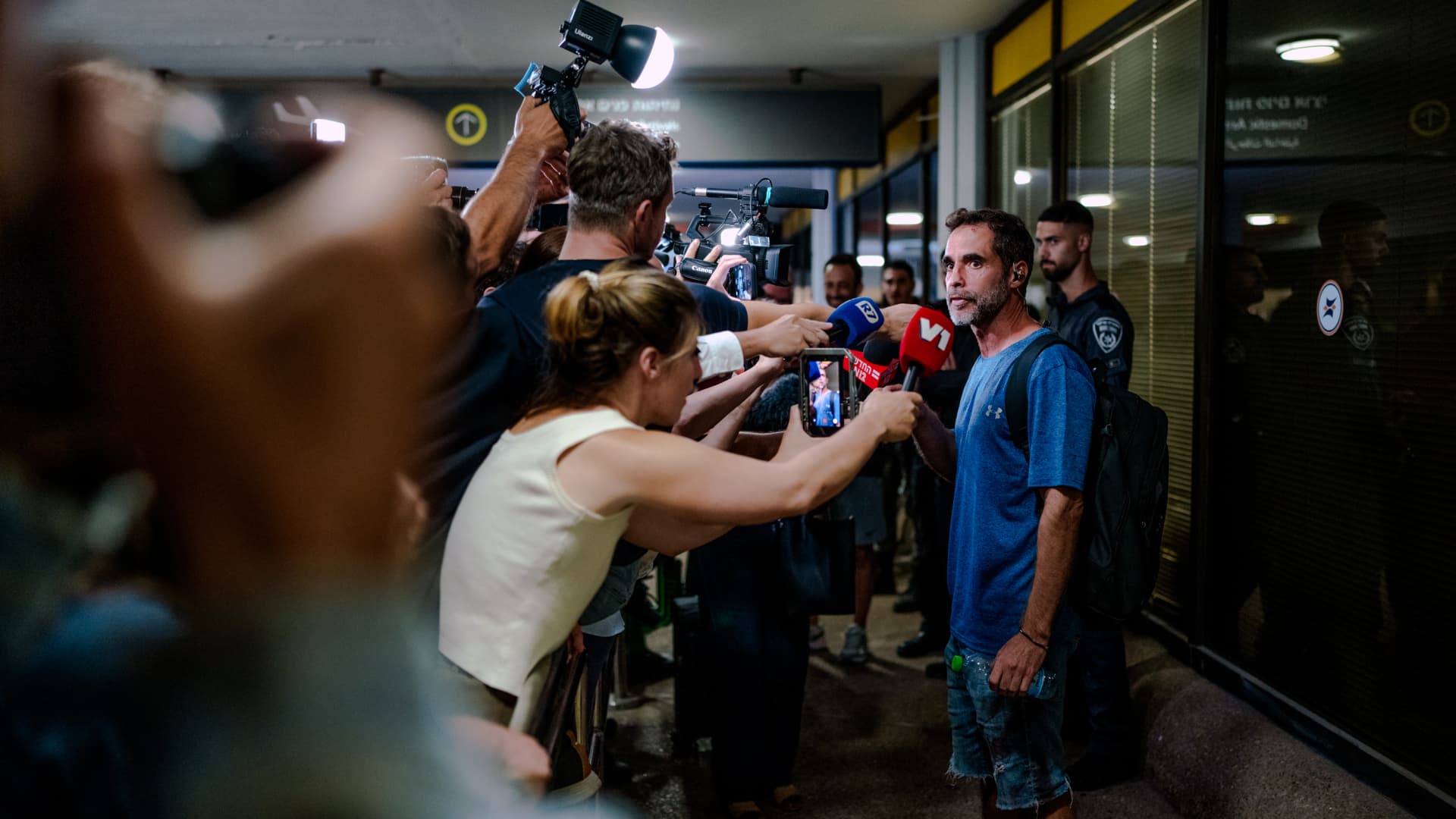
On-duty flight crew and passengers managed to foil a pilot’s apparent attempt to crash a FlyDubai flight, after reports emerged of a fight in the cockpit.
The incident on flight FZ1073 from Dubai to Tel Aviv happened when a co-pilot stabbed a pilot, according to Israeli Prime Minister Benjamin Netanyahu, who praised the victim’s quick thinking.
“Despite being stabbed and seriously injured, he fought back, resisted, opened the cockpit door, and enabled passengers and crew to overpower the attacker — preventing a catastrophic mid-air disaster. He saved the lives of 174 people, including Israeli citizens and other nationals,” Netanyahu wrote in a post on X.
FZ1073 was diverted to the Tabuk airport in Saudi Arabia, the airline said, after being successfully secured and diverted by flight crew.
FlyDubai in a statement said that an “altercation” occurred on the flight deck of the plane, but did not mention a stabbing.
However, the airline added that the underlying reasons and motives for the clash is currently unknown, urging all parties to refrain from speculation.
The injured pilot was identified by Netanyahu as Indian national Smit Machchhar. No details have been released on the identity of the attacker, except that he was being interrogated by Saudi authorities.
The Indian embassy in Riyadh said on X that Machchhar is in a hospital in Tabuk, and is reported to be in stable condition.
The Israeli Prime Minister also identified the passenger who broke into the cockpit as Yaniv Hayun, calling him a “hero” and adding he deserved “a global medal of honor.”
Flight data from tracking site FlightRadar24 showed that the plane had experienced extreme altitude fluctuations before broadcasting a “general emergency” squawk code.
FZ1073 had dropped from over 14,000 feet in just 29 seconds, and FlightRadar24 also added that vertical speeds ranging from approximately -30,000 to +10,000 feet per minute were observed from the transponder data.
For context, vertical speeds during normal operations rarely exceed plus or minus 4,000 feet per minute, it added.
Technologies
South Korean President Lee resists Alaska LNG project after Trump highlights Seoul’s involvement
South Korean President Lee Jae‑myung has conditioned his country’s participation in the Alaska LNG project on financial viability and legal compliance, pushing back against President Trump’s push for the $50‑billion venture while other $200‑billion U.S. investments move forward.
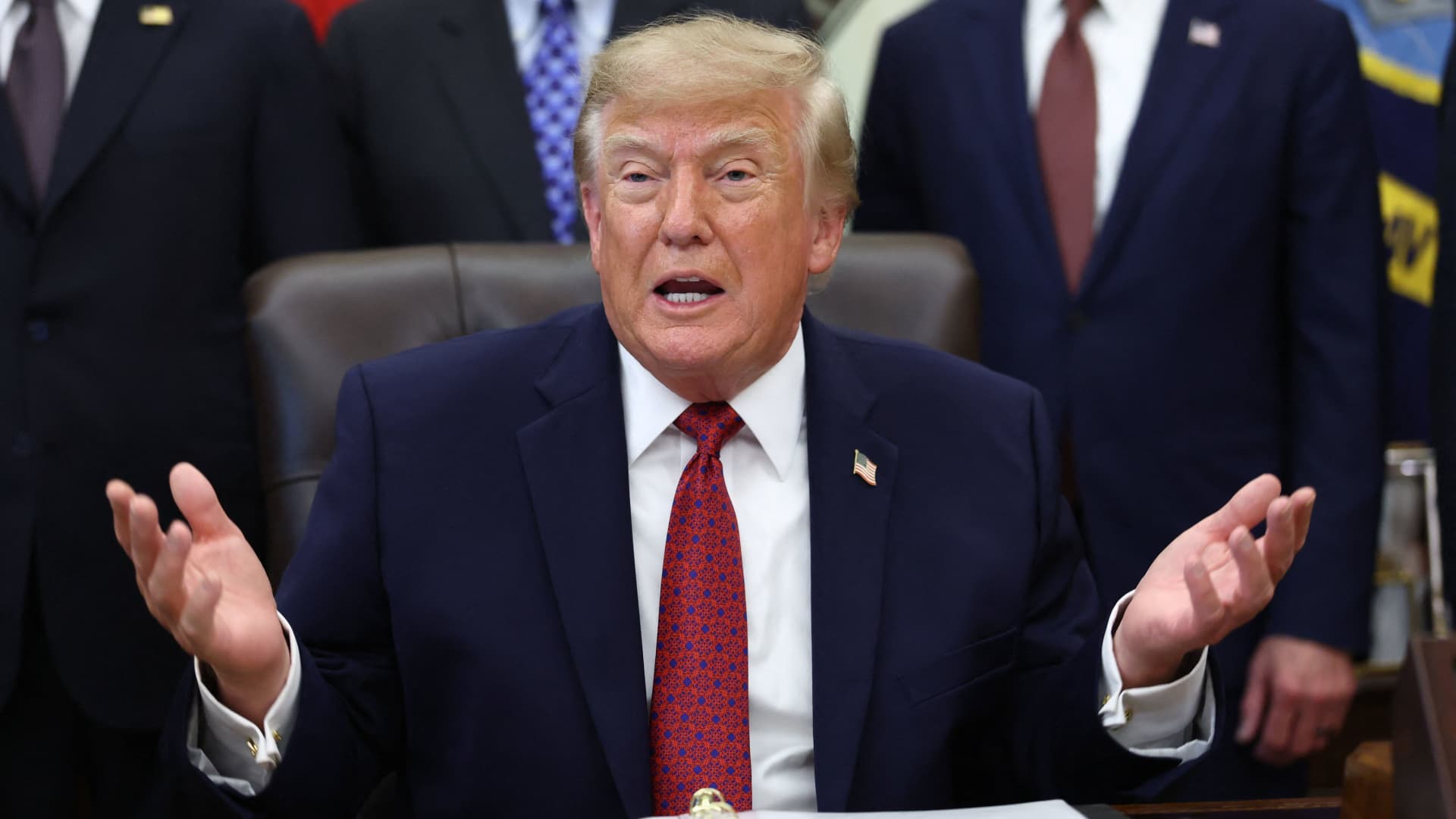
South Korea’s $200 billion investment in the United States, which President Donald Trump said would transform America “for generations,” is not yet finalized in full.
The South Korean investment blueprint includes nuclear power plants, a natural‑gas power facility in Texas, and potentially the long‑planned Alaska liquefied natural gas project.
Trump posted on Truth Social late Wednesday that the two nations had agreed to move forward on the Alaska LNG venture, estimating its value at $50 billion. This prompted a response from South Korean President Lee Jae‑myung, who stressed that participation in some projects remains tied to commercial considerations.
In an X post Thursday local time, Lee said that involvement in the Alaska LNG project hinges on its financial viability and legal compliance. He added that investments in nuclear power plants would also require a plant‑by‑plant assessment of commercial feasibility.
The US‑South Korea joint statement Wednesday also noted that work on the project is contingent on “commercial reasonableness,” without detailing allocations toward the venture.
The Alaska LNG project aims to move natural gas roughly 1,300 km (800 miles) from fields on Alaska’s North Slope to the state’s southern region, where it would be liquefied for export to markets including Asia, according to Yonhap. The initiative has long faced scrutiny over its economics, given the substantial upfront capital required.
Industry Minister Kim Jung‑kwan labeled it “high‑risk” last year and said participation would be challenging unless the project could generate sufficient cash flow.
Overall, the investment package allocates $22.3 billion for a 6,472‑megawatt natural‑gas power plant in Encinal, Texas, which will supply electricity to nearby data centers. The venture will be led by developer Related Cos. and U.S. power provider NextEra Energy.
Trump said the investments would turn South Korea’s commitments into “huge construction projects” and create “tens of thousands of American jobs.”
“These are massive energy projects, adding power capacity in the United States,” Trump remarked. “This is new construction, new manufacturing, and great jobs for American workers.”
The two countries said they would seek to broaden Korean firms’ involvement in the Texas project across equipment supply, engineering, construction, and long‑term operations and maintenance. The U.S. also plans to give Korean companies opportunities to supply equipment, including turbines, for similar projects domestically.
Another $120 billion has been earmarked for plans to build eight large‑scale nuclear reactors in the United States. Of that sum, $100 billion is designated for construction costs and $20 billion for contingency reserves.
The nuclear accord was signed by both governments as well as Westinghouse Electric, Korea Electric Power Corp., and Korea Hydro & Nuclear Power. The plan also calls for Korean firms to pursue a potential significant minority stake in Westinghouse, with terms subject to commercial negotiations.
-
 Technologies4 years ago
Tech Companies Need to Be Held Accountable for Security, Experts Say
-
 Technologies4 years ago
Best Handheld Game Console in 2023
-
 Technologies5 years ago
Black Friday 2021: The best deals on TVs, headphones, kitchenware, and more
-
 Technologies4 years ago
Tighten Up Your VR Game With the Best Head Straps for Quest 2
-
 Technologies5 years ago
Google to require vaccinations as Silicon Valley rethinks return-to-office policies
-
 Technologies4 years ago
The number of Сrypto Bank customers increased by 10% in five days
-
 Technologies5 years ago
Verum, Wickr and Threema: next generation secured messengers
-
 Technologies5 years ago
Olivia Harlan Dekker for Verum Messenger