
Technologies
The Agony and the Ecstasy of Endless Gaming Crossovers
In navigating my own love-hate relationship with this phenomenon, I talked to some of the devs behind them to get a better sense of how these crossovers work and why companies pursue them.
When my friends want to play Magic: The Gathering, I wade through my two-dozen or so decks built for Commander — the card game’s casual, multiplayer format. I might choose the deck built around Elenda, the Dusk Rose, a vampire saint who can create legions of vampires. Maybe I’ll take my Narset, Enlightened master deck, which lets me cast powerful spells for free when she attacks. Both Elenda and Narset are original characters from Magic: The Gathering.
Or maybe I’ll grab my Lightning, Army of One deck, constructed around the Final Fantasy 13 character, so I can attack people for absurdly high amounts of damage. Maybe my Godzilla deck will engage in glorious combat against my friends’ decks led by characters from Dracula or Warhammer 40K. Would Eowyn from Lord of the Rings be a better match-up against the forces of the Imperium?
It’s a double-edged sword, this impulse toward crossovers. And it’s happening in games far beyond Magic: The Gathering.
Overwatch featured skins from Persona 5 in September, Halo armor and weapons showed up in Helldivers 2, and edgy looter shooter Borderlands 4 is showing up in… golf game PGA Tour 2K25. The crossover crown lies eternally with Fortnite, thanks to its never-ending influx of skins from games, movies, comics and real-life celebrities — leading players using the Sabrina Carpenter skin to stop shooting each other and, say, hold impromptu concerts instead.
When the elements fit each other are handled with care, it’s a fun way for fans to engage with multiple interests simultaneously. But when it feels carelessly thrown-together or when the elements don’t mesh, it can feel like a cash grab that hollows out the original property. And what works for one player might feel egregious or immersion-breaking to another.
“Am I the problem?” I ask myself, as I work on a fourth Magic deck built around a Final Fantasy character, after spending hundreds of dollars on cards and accessories from the set.
I do realize that the money I spent on the release event and weekly drafts screamed to Hasbro, “It’s working!” At the same time, playing with cards from that Final Fantasy set was also the most fun I’ve had with Magic in several years.
Corporations betting big on brand crossovers feels like the unavoidable consequence of a world in which players look more and more for customization and ways to show off their personalities and interests, which dovetails with companies looking for lucrative ways to attract new players and increase revenue in ongoing games. Is other media filtering into popular games about the joy of including familiar faces, or does it turn characters into digital bumper stickers, starved of their identity from their original context?
The answer, like it or not, is both.
Money is a big part of the motivation, but expanding reach and offering customization also factor in
Blending different properties together generally requires an intense collaboration between the property owners and the game inviting the crossover. So what makes these gaming collaborations worth it for those parties?
There’s a financial incentive, to be certain, as Hasbro has made astonishingly clear. In its second-quarter 2025 earnings call, CEO Chris Cox noted that Magic: The Gathering’s Final Fantasy set made $200 million in revenue in one day, while it took the Lord of the Rings set six months to hit that milestone. To put those two collaborations in the context of original Magic: The Gathering sets, the bestselling Magic set before Lord of the Rings was Modern Horizons, which made $200 million over two years.
Admittedly, $200 million in 24 hours is performance that Magic: The Gathering will likely struggle to replicate, even with the overabundance of outside properties coming next year: Teenage Mutant Ninja Turtles, The Hobbit, Star Trek and Marvel. Still, Cox said the company feels good about the collaborations set to launch next year in terms of pleasing players and bringing in revenue. And Final Fantasy ultimately points to the financial power of a good gaming crossover, one where the properties are handled thoughtfully and intentionally (even if some of that intention is making the collaboration more collectible).
To better understand how and why these crossovers happen, I talked with some of the people powering these gaming collaborations.
There were “a lot of clues” both internally and externally that Magic could support these kinds of crossovers in the game, said Aaron Forsythe, Magic: The Gathering’s vice president of research and development.
Sets like Lord of the Rings and Final Fantasy can also help funnel new players into a game that has been around since 1993.
“With Final Fantasy, we have seen a marked increase in play participation, especially among players who haven’t previously participated in our Organized Play programs,” said Rebecca Shepard, the vice president of franchise for Magic: The Gathering. That participation also extends after the launch of sets based on the other properties, which Magic brands Universes Beyond.
She noted that Universes Beyond releases also lead to increased interest in older products, demonstrating the crossovers’ ability to drive interest in the game’s original creations.
Magic’s designers have spent decades creating multiple in-game worlds or “planes” with their own lore, characters and mechanics. To a certain degree, crossovers are baked into its premise.
But what about something with a considerably smaller scope, like the hero shooter Overwatch 2? The team-based game is set in nearish future Earth, where other Blizzard games like Diablo and Starcraft are minimal parts of the world as references and outfits. But aside from a small Lego crossover, other external properties were mostly only winked at… until the game introduced skins from the popular manga and anime One-Punch Man back in 2023.
The game’s collaborations started out as infrequent events, but now show up roughly every season.
The Overwatch team was nervous for its first collaboration and took a cautious approach, said Aimee Dennett, Overwatch’s associate director of product management. Devs wanted to ensure that heroes were still recognizably Overwatch characters while also maintaining the integrity of the game’s lore. The solution was described as “our characters are cosplaying,” meaning that the Overwatch heroes maintain the iconic parts of their visual identity, while incorporating elements that are recognizable as the characters from the crossover properties.
There are also internal motivations for these opportunities.
“We’ve found that it has such a positive effect on the team,” said Overwatch’s Art Director, Dion Rogers. People who work on the game are also fans of these properties, and the opportunity to design those crossovers can be a creative spark for the developers.
Fortnite didn’t start the party, but it did invite basically everyone
Fortnite is the de facto example of crossovers in gaming. It represents an astonishing evolution of a concept that kicked off decades ago.
Video game publishers were firmly protective of their properties to keep their games unique, but gaming website Giant Bomb asserts that crossovers started in earnest with 1992’s Battle Soccer, where Godzilla could take the pitch against giant mech Gundams and superheroes from Japanese TV. A few years later, Marvel’s X-Men faced off against Street Fighter characters in a move that would eventually spawn the Marvel vs. Capcom series of fighting games.
Crossovers ramped up in the 2000s with Sonic the Hedgehog and Solid Snake as the first two characters not owned by Nintendo to show up in Smash Bros. Brawl, a few years before horror movie villain Freddy Krueger first appeared in a Mortal Kombat game. Thematically, these all make some sense — but Fortnite took crossovers to another level.
The crossovers started with the Infinity Gauntlet limited-time mode, where players could transform into Thanos, the villain of the 2019 film Avengers: Infinity War. It was quickly followed by the first Marvel-themed skins for Black Widow and Star-Lord that any player could wear. That kicked off a wave of Fortnite crossovers that would grow beyond Marvel to also include DC Comics, Star Wars, celebrities and various other games.
More have followed in Fortnite’s wake. The jump to include characters from other media besides video games has proven popular, with games like Mortal Kombat bringing in the villainous superhuman Homelander from The Boys, and the asymmetrical PVP horror game Dead by Daylight leaning heavily into killers and survivors from various games and movies — and also Nicolas Cage as himself, delivering some truly amazing voice lines.
Still, when it comes to bringing in everything from everywhere, nothing tops Fortnite, where crossover events feel less like guest stars and more like the first stop for major franchise promotion. And the cumulative results are, for lack of a better word, bonkers. Now a squad of Ariana Grande, Billie Eilish, Lady Gaga and Sabrina Carpenter can face off against a squad made up of Darth Vader, the Joker, Thanos and Mortal Kombat’s Sub-Zero… and then perform *NSYNC’s Bye Bye Bye dance on the villains’ corpses.
Epic Games, the makers of Fortnite, declined to comment for this story.
Convenience and customization… at a cost
While crossovers with other properties help bring revenue and new players into games, they also risk alienating players whose primary interest is in their games’ original concepts and who may feel the crossovers move the game away from its identity.
“We listen and learn more than folks realize but at the same time, our goal of making Magic for everyone — because it is — can also frustrate our existing players,” said Shepard in response to a question about the feedback to Universes Beyond and the seemingly polarized responses online.
You can see that frustration in videos from prominent Magic creators, with titles like “The Problems With Universes Beyond — Even if You’re NOT a Hater” and “Half of Magic: The Gathering Will Not Be Magic: The Gathering.” The discussions in those videos touch on multiple elements, but center around the proportion of and execution of Universes Beyond sets and how those sets do or don’t gel with the rest of the game.
That tension exists with most gaming crossovers. I wasn’t initially a fan of Overwatch’s move into collaborations. For me, the image of Doomfist in a yellow suit and flowing cape cheapened a character who’s supposed to be a surly big bad in the Overwatch universe. To me, it felt tonally mismatched with his identity, and I feared Overwatch feeling less like Overwatch as a result.
But the response I saw was largely positive. A change being celebrated doesn’t mean it’s necessarily good for the game, nor does outcry mean a change is bad. But there were clearly people who wanted the customization and expression of anime skins, highlighting the tension inherent in gaming collaborations like this.
Magic’s Aaron Forsythe acknowledged the competing interests, saying, “Players that have been with us for a while don’t feel the need for a change of this magnitude, and I appreciate how this hits them. But we’re doing this both because we want to grow the game — and we are — and because we think it’s another really fun way to enjoy it.”
For longstanding fans who have played the game for years, perhaps even decades, it may feel like the resources for the game’s original ideas are being diverted to fuel crossovers.
There are degrees, though. In the case of Magic: The Gathering, one-time Secret Lair drops like Sonic the Hedgehog that mostly show up in casual multiplayer formats may not seem as disruptive. But over the course of next year, Magic will release four more sets based on outside properties, bringing the total to seven such sets in two years. More than any individual card or set, that density of outside properties might feel particularly unwelcome, contributing to the feeling that it’s just Fortnite now.
Everyone is here (and here to stay)
I think a lot of the response to crossovers comes down to two things: how well the concept fits and how good the execution is. Fortnite itself has become a conglomeration of various game types — from Battle Royale to Lego to Ballistic, festivals and Creative modes — so the game featuring skins from all kinds of movies, games and celebrities sort of fits into that “everything for everyone” idea.
Something like Dead by Daylight is an example of using crossovers with a narrower focus, incorporating horror icons that fit its gameplay and lore. Resident Evil characters trying to escape from Halloween’s Michael Myers doesn’t make total sense, but there’s enough of an internal logic in the genres of slasher films and survival horror games for it to work.
And, despite my initial reservations about Overwatch’s collaborations, I was immediately enthralled when I saw Kiriko’s Suki skin from Avatar: The Last Airbender. In addition to giving me a new outlet for my favorite character from the show, it just fit the visual identity and the concept of the Overwatch hero, a protector in her own right.
The people behind the games acknowledge how much that matters. “If we don’t do this right,” Overwatch’s Rogers told me, “the fans will call us out.” Players have their own ideas of what fits and what doesn’t, and they aren’t shy about voicing those feelings. But Rogers said that getting it right instead helps maintain the identity of the game’s heroes.
Similarly, Magic’s Shepard said one step in the process of evaluating potential crossovers is feeling out whether it feels like “an authentic relationship” for the game and its players. The challenge, however, is that each player’s mileage will vary when it comes to that authenticity.
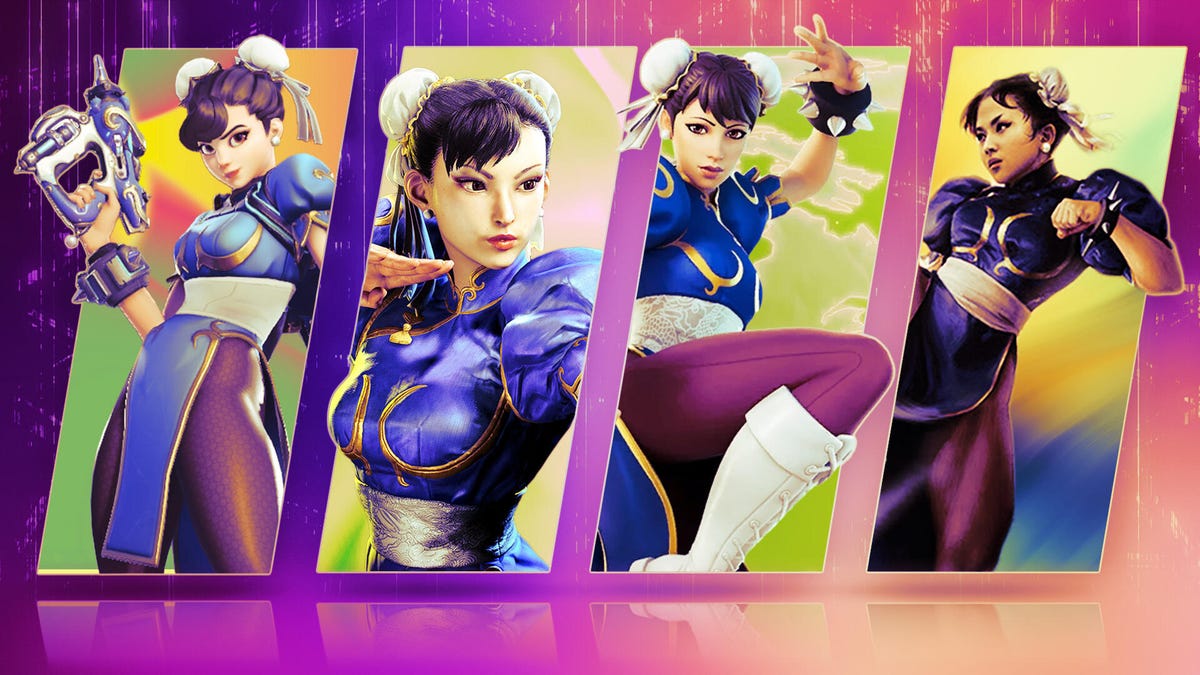
There’s no putting these crossovers back in the box, for better and worse. We’ll continue to have more options to play as our favorite characters across a variety of games. Right now, if I wanted to, I could fire up Street Fighter 6 and play a game as Chun-Li in the context of her original series. I could then swap over to Fortnite and run around sniping people as Chun-Li before logging into Overwatch and playing as Juno in her Chun-Li skin, healing people with a Martian mediblaster. And then over the weekend, I could play Magic: The Gathering with my friends and pull out a deck built around a Chun-Li character card.
For Chun-Li superfans, that’s great. At the same time, my Magic opponents may be sick of playing against characters from Stranger Things, Jurassic Park and Marvel, which might break the immersion of the game for them.
The demand is there and the complaints are valid. Companies will follow the money. But each game’s developers have to find their own way of squaring the crossover — justifying (or not) how another creative world collides with theirs.
For Overwatch’s Dennett, as the game grows and changes, so does the team’s philosophy about collaborations — because pushing the boundaries of what’s possible in the hero shooter sparks the imaginations of its player base.
“It’s sort of a self-reinforcing cycle, where our players grow and change so much, and so do the types of collaborations, and the types of collaborations change, which grows and changes our players.”
Don’t miss any of our unbiased tech content and lab-based reviews. Add CNET as a preferred Google source.
Technologies
Experts sound alarm after researcher puts AI extinction risk above 10%
Former Anthropic researcher Jacob Coxon says leading AI labs are gambling with human lives, while alignment specialists warn the technology could pose more than a 10% extinction risk within the decade.

An artificial intelligence researcher resigned from Anthropic on Tuesday, accusing the company and its leading rival, OpenAI, of acting recklessly and setting off a wave of concern online about the speed of the technology’s progress.
Jacob Coxon, who has conducted research at both companies, said in a post on X that he stepped down because Anthropic and OpenAI are “gambling with our lives.” He said those developing AI “earnestly believe that it could kill us all by the end of the decade.”
“Do not underestimate the power of this technology,” Coxon wrote. “These will soon be superhuman systems that can hack anything, revolutionize any field overnight, and acquire real power and resources.”
Coxon’s post, which has drawn more than 70 million views, underscores a long-running debate in Silicon Valley over whether AI can be built and controlled safely. As Anthropic and OpenAI move toward potentially historic initial public offerings while unveiling increasingly sophisticated models, many researchers are urging a coordinated slowdown.
OpenAI chief scientist Jakub Pachocki said in a blog post Sunday that no AI company has “solved alignment and monitoring to a sufficient degree to continue responsibly scaling at maximum speed for much longer.” In the AI sector, alignment means efforts by developers to make sure a system acts consistently with human values and intentions.
“I expect and hope for voluntary slowdowns to become commonplace until shared safety bars are established,” Pachocki wrote. “And I believe that international coordination on future AI development needs to become a top priority for governments around the world.”
Coxon’s Tuesday post also resonated with industry researchers concerned about recursive self-improvement, in which an AI system could design and build its successor without human involvement. Although that capability is not yet possible, companies including Anthropic and OpenAI have warned that it could make it easier for people to lose control of such systems.
“Neither company is acting responsibly,” Coxon wrote. “They are racing straight to self-improving superintelligence.”
Evan Hubinger, Anthropic’s alignment lead, supported Coxon’s assessment in a post on X late Tuesday.
“Jacob is correct here—we really do earnestly believe AI could kill all humans! I personally think it is >10% within the next decade,” Hubinger wrote. “I believe Anthropic is trying its best, but we do not yet have a plan to solve alignment for superintelligence and are not clearly on track to.”
Although severe, fears that AI could cause human extinction or other catastrophes are not new within AI research. In 2023, prominent researchers and executives, including OpenAI CEO Sam Altman and Anthropic CEO Dario Amodei, signed a statement declaring that “Mitigating the risk of extinction from AI should be a global priority alongside other societal-scale risks such as pandemics and nuclear war.”
Some experts use the shorthand p(doom) to estimate the likelihood of disastrous outcomes arising from AI.
Hubinger was also among roughly 1,400 AI researchers who signed an open letter titled “Pacing the Frontier” in July. The letter called on the U.S. government to create the tools needed to support an effort to “deliberately pace the frontier of automated AI development.”
Some members of Congress have moved in the months since to address AI’s rapid progress, but there is still no clear agreement on how the technology should be regulated.
In July, Rep. Jay Obernolte, R-Calif., and Rep. Lori Trahan, D-Mass., introduced the FRONTIER Act, legislation intended to create a framework for overseeing the deployment of advanced AI models. Earlier this month, Sen. Bernie Sanders, I-Vt., and Rep. Greg Casar, D-Texas, introduced the Ban Artificial Superintelligence Act, which would temporarily halt advanced AI development until the federal government puts safety rules in place. Both measures have received mixed responses.
“Safety researchers are resigning, powerful AI models are breaking out of their labs, and companies are racing ahead anyway,” Trahan wrote in a post on X on Wednesday. “It’s past time for Congress to get off the sidelines and do its job.”
Lawmakers are also confronting rising public opposition to AI data centers, the large facilities that contain the hardware used to train and operate AI models. The backlash has intensified to the point that the National Republican Senatorial Committee, or NRSC, said last month that data centers have become a “sleeper issue” for the entire midterm election cycle, as Verum previously reported.
Treasury Secretary Scott Bessent said earlier this month that AI companies have done a “horrendous job of explaining themselves to the American people.”
“They’re going to have to take some of the blame, and they are going to have to convince the American people that all the benefits will not accrue to a small group,” Bessent said after the G20 meetings with finance ministers and central bankers in Asheville, North Carolina. “That’s what they hear from me.”
Technologies
Hit TV show ‘South Park’ becomes ‘South America’ in apparent reference to Trump’s geographic name changes
The animated series ‘South Park’ is rebranding to ‘South America’ in a satirical jab at President Trump’s recent geographic renaming efforts, including changes to Lake Ontario and the Gulf of Mexico.

Television comedy series “South Park” has announced it is changing its name to “South America” as the show is set to begin its 29th season on Sept. 16. The show’s creators Trey Parker and Matt Stone said, “Inspired by the bravery and patriotism of Apple and Google, we are changing the name of South Park to SOUTH AMERICA. We especially want to thank our parent company Paramount — a Skydance Capitulation.” Parker and Stone’s statement comes after U.S. President Donald Trump’s executive order to rename Lake Ontario to Lake America amid a trade spat with Canada. Canadian officials said they will not recognize the new name. Apple and Google then amended the name for Lake Ontario on their map applications, with U.S. users seeing “Lake America,” while Canadian users saw “Lake Ontario.” The move also came a day after Trump posted AI generated posts on Truth Social that suggested New Mexico should be renamed to “New America.” Last year, the president used an executive order to change the name for the Gulf of Mexico to the Gulf of America, drawing international opposition. “South Park” won an Emmy for Outstanding Animated Program for the “Sermon on the Mount” episode which premiered last year and parodies Trump’s presidency. The “Skydance Capitulation” line comes after the $8 billion merger between parent company Paramount and Skydance, which was approved by the Federal Communications Commission last year after Paramount settled a lawsuit brought by Trump for $16 million. Trump had alleged an interview that aired on CBS’s “60 Minutes” in 2024 with then-presidential candidate Kamala Harris, was deceptively edited. Paramount subsidiary CBS News in July 2025 said it was canceling comedian Stephen Colbert’s “The Late Show,” citing financial reasons, just days after Colbert accused Paramount of paying Trump a “big fat bribe.” The final episode of the show aired in May. Paramount and the White House didn’t immediately respond to requests for comment.
Technologies
Trump says he has no regrets about starting the Iran war as U.S. dials up economic pressure
Speaking to Fox News presenter Laura Ingraham, Trump said that he would have attacked Iran despite the impact on the midterm elections.
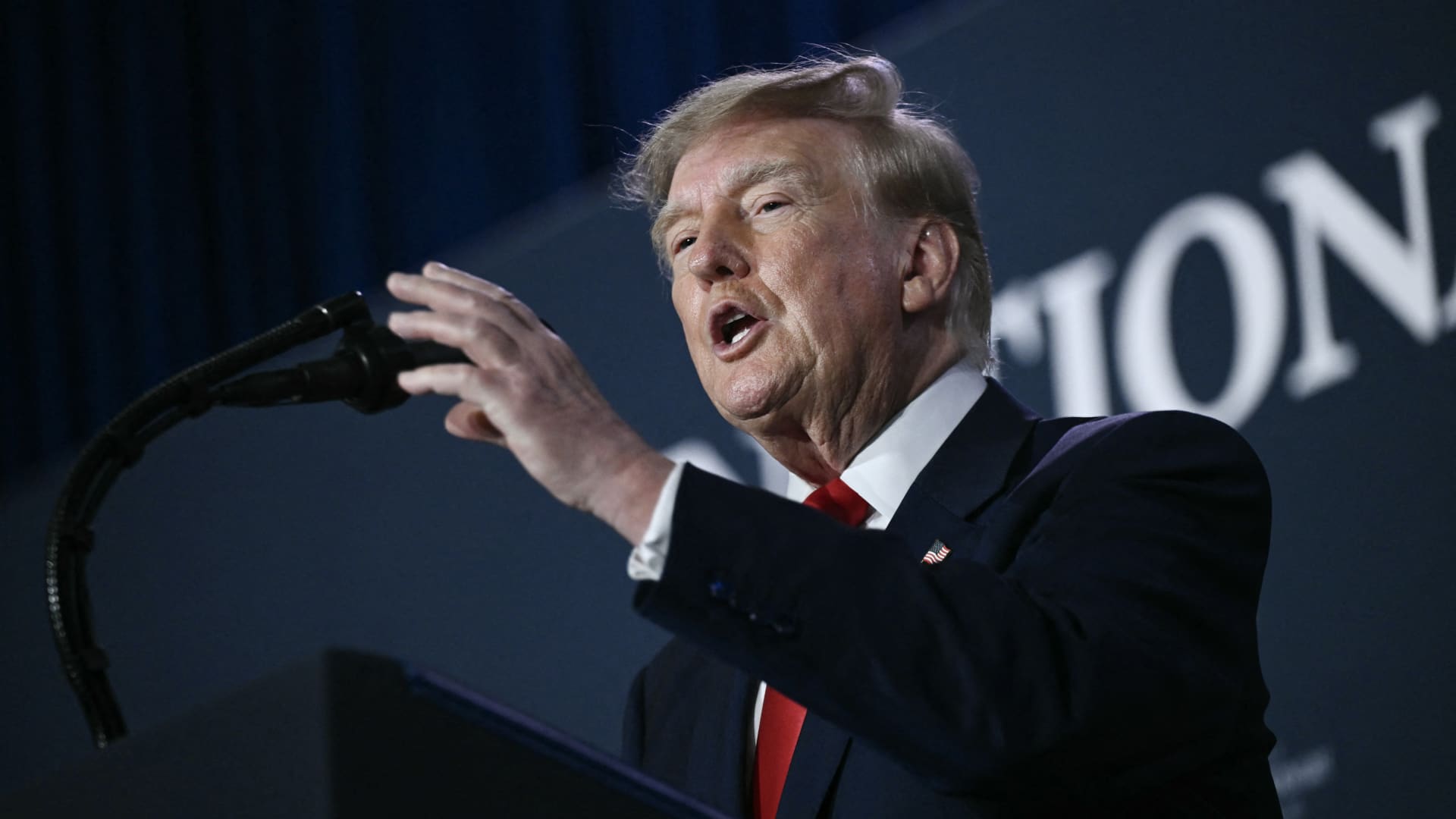
U.S. President Donald Trump said he has no regrets about starting the Iran war and added that “If I had it to do again, I would do exactly what I did.”
Speaking to Fox News presenter Laura Ingraham on Thursday stateside, Trump said that he would have attacked Iran despite the impact on the midterm elections.
“If we hadn’t done Iran, you would be cruising to midterms victory right now,” Ingraham told Trump, to which Trump replied “supposing we were cruising, and all of a sudden Iran has a nuclear weapon. They would use it.”
He added that if Iran had a nuclear weapon, the Islamic Republic would “wipe out” Israel and the Middle East, and start hitting U.S. cities.
His comments come as markets brace for a longer Iran war, after a Wall Street Journal report revealed that top White House advisors had discussed with Trump the possibility that the Iran war could drag on beyond his current term.
Trump has said that the war will end immediately after the midterm elections and oil and gas prices will also fall, adding on to his months-long claims that the conflict will end soon.
In separate comments to NewsNation on Thursday, Trump denied reports that there was any damage to U.S. assets, after Iran claimed it had hit multiple U.S. fighter aircraft at a base in Jordan.
“No damage. No nothing,” Trump said, when asked if there was any truth to the reports.
Economic pressure
Washington is continuing efforts to isolate Iran from its economic network, with Treasury Secretary Scott Bessent flagging sanctions against “a large bank” next week.
“We’re going to do it on Monday because we want to honor the memory of our fallen citizens on 9/11. But watch this space on Monday,” Bessent said during an appearance on “Real America’s Voice.”
Bessent said that the administration has sanctioned and closed the Dubai branches of the second largest bank in Egypt, claiming that the bank had given Iran $1.8 billion dollars. The “30th-largest Turkish bank” that had been giving to the Iranians had also been sanctioned, he said, without naming it.
The U.S. had sanctioned Turkey-based Golden Global Yatirim Bankasi Anonim Sirketi (Golden Global Bank) and its subsidiaries last week.
Trump, in the NewsNation interview, was also asked how Iran could continue holding out under the current economic pressure.
“I don’t know that they’re gonna be able to hold out,” Trump said. “But it’ll get settled after the elections. Or maybe sooner. But it’ll get settled right after the election.”
Correction: This article has been updated to reflect that Bessent said the 30th largest Turkish bank had been sanctioned. An earlier version misstated the bank’s ranking.
-
 Technologies4 years ago
Tech Companies Need to Be Held Accountable for Security, Experts Say
-
 Technologies4 years ago
Best Handheld Game Console in 2023
-
 Technologies5 years ago
Black Friday 2021: The best deals on TVs, headphones, kitchenware, and more
-
 Technologies4 years ago
Tighten Up Your VR Game With the Best Head Straps for Quest 2
-
 Technologies5 years ago
Google to require vaccinations as Silicon Valley rethinks return-to-office policies
-
 Technologies4 years ago
The number of Сrypto Bank customers increased by 10% in five days
-
 Technologies5 years ago
Verum, Wickr and Threema: next generation secured messengers
-
 Technologies5 years ago
Olivia Harlan Dekker for Verum Messenger