
Technologies
Call of Duty: Black Ops 7 Review: A Big, Messy Experiment That Doesn’t Pan Out
The latest Call of Duty fumbles its much-anticipated campaign, while zombies and multiplayer modes retain the status quo.
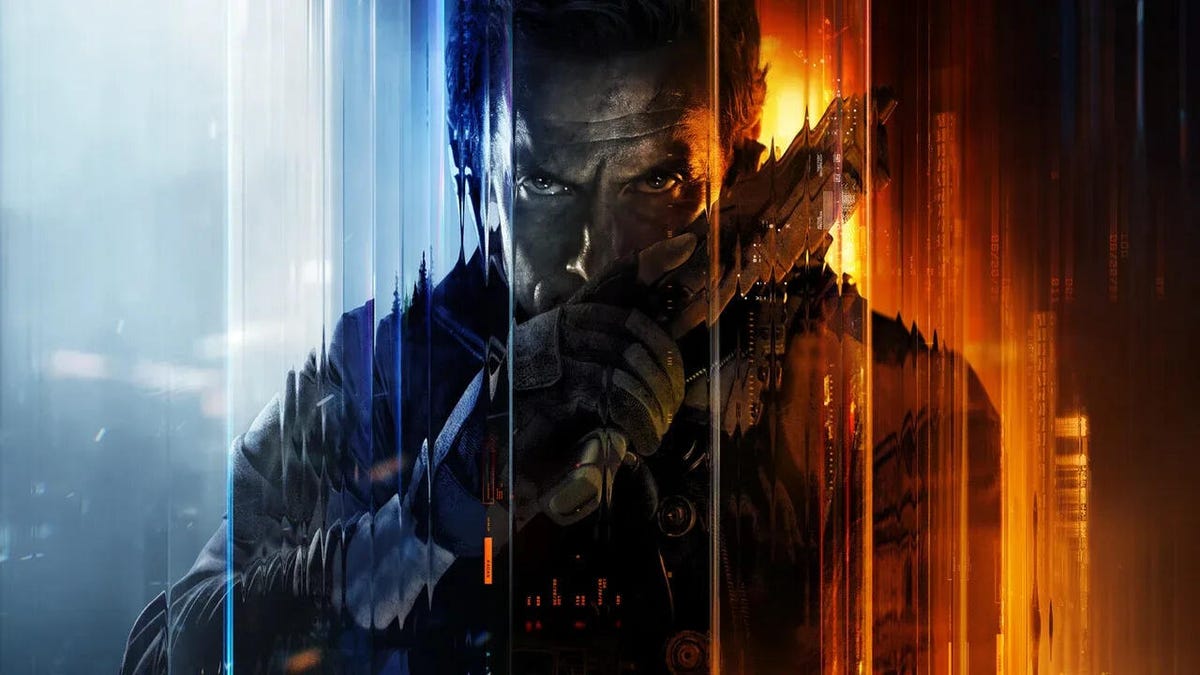
Developers Treyarch and Raven Software are drawing water from a nearly empty well with Call of Duty: Black Ops 7. The newest entry in the long-running franchise is a direct sequel to Black Ops 2, a game released more than a decade ago.
If you haven’t played that game, you’ll probably be able to follow along with Black Ops 7’s story just fine. It’s a shallow adventure about shadowy criminal groups and false flag attacks that focuses more on tying Black Ops 2 and Black Ops 6 together than telling a coherent tale of its own.
Last year’s Black Ops 6 was a genuinely entertaining Cold War-era supersoldier thriller that reinvigorated the series. But Black Ops 7 is cerebral and recursive, an ouroboros of nostalgia attempting to capitalize on warm feelings for Treyarch’s long-running franchise by placing old characters in wacky situations that feel like a horrible game of Mad Libs. The game is a complete misfire that doesn’t understand what makes the predecessors it’s pilfering from great in the first place.
There are glimmers of hope in the latest iterations of the multiplayer and zombies modes, as a handful of loadout changes and bigger maps shake up the gameplay in a real way. Nothing feels fundamentally different from last year’s release, though, and Black Ops 7 simultaneously manages to feel like a rote reproduction and a step down from Black Ops 6.
For the love of god, stay away from the Co-Op Story Campaign
Call of Duty’s single-player campaigns have never been high art. This is a series of video games that roleplay as action movies, full of thinly veiled American military propaganda. Occasionally, a generic army man mourns the death of another main character, and you feel something approaching a flicker of sadness (which is then snuffed out in a hail of gunfire moments later).
These campaigns often fail to connect on an emotional level, but they’re reliable thrill rides through and through. It’s cathartic to throw caution to the wind in order to gun down mooks, rain helicopters from the sky and take down the “bad guy of the year.”
Black Ops 7’s Co-Op Campaign fails on the most basic level: It’s not even gratifying to blast apart baddies throughout the game’s 11-mission-long story, because everything feels painfully goofy. The narrative rushes headlong into the Black Ops series’ worst mistakes time and time again.
Taking place a decade after the end of Black Ops 2, it would’ve made sense for Black Ops 7 to explore ramifications from the game it’s following up on: a world fractured by the death of a martyred terrorist and social media revolutionary. Instead, the main objective of the player’s four-person squad is to prevent a criminal organization known as The Guild from deploying its fear toxin MacGuffin (the same bioweapon at the center of Black Ops 6’s story) around the world.
Black Ops 7’s campaign is split between open-world operations in the Mediterranean city-state of Avalon and literal nightmare sequences remixing story beats from prior Black Ops games, and neither one of these types of missions is particularly good.
Avalon is a pretty but relatively empty in-game area, which makes driving or wingsuiting hundreds of meters to reach the next burst of action feel tedious and frustrating. Approaching from different angles doesn’t feel like it makes a tangible difference, since stealth isn’t a truly viable option. These missions are a misguided attempt to introduce players to the map for the new co-op Endgame mode, but they just end up being a frustrating waste of time.
Yet the open-world missions are still preferable to the dream sequence missions, because I’d rather feel frustration than secondhand embarrassment. Since the good guys spend the entire length of the story dosed with a powerful hallucinogenic bioweapon, they frequently have to delve into their fractured psyches to battle physical manifestations of inner trauma.
This is a total train wreck for multiple reasons. We only know the main character, David Mason (played by Milo Ventimiglia, who turned in a surprisingly flat vocal performance), and Harper (played by Michael Rooker, who spun straw into gold with an awful script), from one prior game — 2012’s Black Ops 2. But we don’t know them well enough to truly care about their baggage. The other half of the squad is composed of new, one-note characters who don’t get proper characterization and likely only exist to round out the multiplayer operator roster.
Nothing in the way this narrative is delivered makes me care about these characters’ thoughts, feelings and memories. It’s still an action movie, but it’s full of nauseating melodrama and silly boss fights. Rehashing the Vorkuta prison escape from the original Black Ops game with zombies isn’t cool — it just makes me want to play an older Call of Duty game.
And if my internet goes down for whatever reason, that’s just what I’ll have to do. There’s no offline mode for Black Ops 7 due to the fact that the campaign grants account experience points (an absolutely piddly amount, by the way) that contribute to leveling up and unlocking things in multiplayer. Even when you turn off squad fill matchmaking to play alone, you’re at the mercy of the Call of Duty servers. It’s a surreal experience to be playing a story mission with no allied nonplayable characters, only to get a high latency warning and start rubber-banding around the room.
Frankly, it’s unacceptable for this to be the new status quo for a $70 game released as part of one of the most successful video game series of all time. The ability to pause a mission has been completely disabled, so that publisher Activision can keep people engaged by unlocking more calling cards and weapon camouflages.
After the campaign is wrapped up, players can try out a new repeatable co-op mission: Endgame. This mode drops players into the open world of Avalon to take on key assignments, get stronger and extract with loot. Those new weapons can be brought back into Endgame on subsequent runs until you’re ready to take on a boss alongside other players.
I’ll hand this much to Treyarch: Endgame is conceptually exciting. The popularity of the recently released ARC Raiders proves that folks are looking for some type of cooperation in the extraction shooter space — but Endgame is not going to be the next big thing. Instead of ARC Raiders’ genuinely frightening robot enemies, the only thing scary about Black Ops 7’s enemies is how stupid they all are. There’s no player-versus-player element to keep you on your toes, and the biggest challenge in Endgame is navigating the frequent crashes to the main menu that wipe all of your character progress. If you can get Endgame to work consistently, you’ll come to find that the mode is full of repetitive mini-missions and not much else.
Multiplayer mostly replays Black Ops 2’s greatest hits, and that’s OK
Multiplayer is the make-or-break mode for any Call of Duty game. It’s the sole reason why most folks drop $70 on this series every year, so there has to be a solid framework in place for the game to grow over the next 12 months.
And to Black Ops 7’s credit, the fundamentals here mostly feel OK. Weapons feel impactful and punchy, and some of the Black Ops series’ best three-lane maps make a comeback. The new Overload playlist is reminiscent of “capture the flag,” which is great for competitive play.
The best changes to Black Ops 7 multiplayer tweak the loadout system, allowing players to apply special augments to their equipment slots and synergize perk slots to unlock special buffs. None of the changes are complex, but they add some simple strategy that creates an appreciably deep layer to the gameplay.
While most of the larger new maps don’t feel fantastic to play on (there are too many open areas, and I’ve had enemies spawn in looking directly at me), there are some real pulse-pounding meat grinders that feel just right in Black Ops 7’s standard six-versus-six playlists. I’ll never back out of a game when the map pick is Flagship, because running and gunning while mantling around a hulking naval vessel and the surrounding shipyard is the quintessential Call of Duty experience.
Classic Black Ops 2 map remasters are as good as ever. Raid, Express and Hijacked are some of the gems that pioneered the mapmaking formula that Treyarch still employs today, and playing on these maps feels great 13 years after they were initially created.
Much like with its fumbled single-player campaign, however, Black Ops 7’s biggest swing for multiplayer is a complete whiff. The largest addition is a new 20-versus-20 objective-based mode called Skirmish. Could Call of Duty be angling to pull away Battlefield players during the same year that Battlefield 6 sang its sweet siren song? I was briefly intrigued by the promise of large-scale battles, but my hopes were quickly dashed.
Skirmish is a chaotic disaster that haphazardly tosses Warzone elements around in an attempt to achieve its desired effect. Vehicles and armor plates are inoffensive enough, but the real problem is that players just wingsuit back into the map a couple of seconds after being eliminated.
I’m sure Treyarch intended for players to drop in on the active objective and battle over important parts of the map, but too often players will just fly to rooftops behind their enemies and lord over the shooting gallery. I don’t think I’ve ever been shot from behind or above as many times as I have while playing Skirmish — everything is disorganized and there is no frontline to the battle. The six-versus-six playlists offer similarly speedy gameplay but fairer fights, which leaves me scratching my head and wondering who Skirmish was designed for in the first place.
Zombies mode is rotting away: It’s just more of the same
If you’re a fan of Black Ops 6’s zombies mode, you’ll probably be happy with Black Ops 7. The new game follows in the footsteps of its predecessor, continuing the Dark Aether storyline with a new round-based survival map.
The launch map, Ashes of the Damned, feels like a modernized version of Black Ops 2’s Tranzit map, bringing back the concept of driving between main hubs of zombie-slaying action but giving the player complete autonomy over where they head next.
New wonder weapons, zombie types and a lengthy story easter egg help make Ashes of the Damned feel fresh for a while, but that novelty is sure to wear off. The map is fairly wide open, and it’s easy to maneuver around zombies, so it becomes more of a chore than a challenge to go for a high score.
And there’s the bad news: While this map is pretty good, Black Ops 7 zombies mode has no other offerings at launch (the standalone survival map, Vanhorn Farm, is just a breakaway chunk of Ashes of the Damned). Most other Call of Duty games ship with at least two zombies maps, and the absence of a smaller, faster-paced experience like Black Ops 6’s Liberty Falls is already starting to dim my interest in the mode.
It’s not all bad, though. There are a couple treats in store for Call of Duty zombies veterans. A new Cursed mode reintroduces some of the classic mechanics, doing away with armor plates at the beginning of the game, restricting loadouts and rewarding players with points each time they shoot a zombie. These rules make zombies feel a little dangerous again, which is a welcome change since Call of Duty: Cold War trivialized the mode’s difficulty.
I’ve been burned by so many Black Ops 7 game modes that I’m confident my favorite addition isn’t even a first-person shooter playlist at all. The latest entry in the Black Ops series reintroduces Dead Ops Arcade, a zombies-themed twin-stick shooter with its own set of power-ups and minigames. It’s nice to kick back and mow down hordes of zombies from a bird’s-eye viewpoint for a change, especially since this is the one mode that doesn’t force a slurry of unlockable equipment, weapon camouflages and suspiciously generative AI-looking calling cards down your throat.
Content for content’s sake is not a good design philosophy
Call of Duty: Black Ops 7 is a decently enjoyable video game. The series’ reliable, fast-paced arcade gunplay is firing on all cylinders this time around, and there’s more content than ever before for players looking to unlock weapon camos and check off challenges.
But this is maybe the most deeply cynical Call of Duty game yet. The single-player mode has been sacrificed on the altar of constant progression and turned into another bland, repetitive activity that yields player experience points. Multiplayer and zombies modes remain largely unchanged from Black Ops 6: New maps, scorestreaks, weapons and equipment provide a change of scenery, but the flow of gameplay hasn’t been fundamentally altered.
The game is one big dopamine-drip hamster wheel, wherein the purpose of playing is not to have fun, but to drive numbers ever higher. More so now than ever before, Black Ops 7 inundates the player with experience points, weapon levels and camouflage skins, a constant barrage of flashy new bits and bytes that keep you hooked on fluff.
Black Ops 2, released way back in 2012, stands tall as arguably one of the best Call of Duty games in the series’ history. This direct sequel is a sanitized, sanded-down product that has truly lost touch with its roots.
Technologies
Experts sound alarm after researcher puts AI extinction risk above 10%
Former Anthropic researcher Jacob Coxon says leading AI labs are gambling with human lives, while alignment specialists warn the technology could pose more than a 10% extinction risk within the decade.

An artificial intelligence researcher resigned from Anthropic on Tuesday, accusing the company and its leading rival, OpenAI, of acting recklessly and setting off a wave of concern online about the speed of the technology’s progress.
Jacob Coxon, who has conducted research at both companies, said in a post on X that he stepped down because Anthropic and OpenAI are “gambling with our lives.” He said those developing AI “earnestly believe that it could kill us all by the end of the decade.”
“Do not underestimate the power of this technology,” Coxon wrote. “These will soon be superhuman systems that can hack anything, revolutionize any field overnight, and acquire real power and resources.”
Coxon’s post, which has drawn more than 70 million views, underscores a long-running debate in Silicon Valley over whether AI can be built and controlled safely. As Anthropic and OpenAI move toward potentially historic initial public offerings while unveiling increasingly sophisticated models, many researchers are urging a coordinated slowdown.
OpenAI chief scientist Jakub Pachocki said in a blog post Sunday that no AI company has “solved alignment and monitoring to a sufficient degree to continue responsibly scaling at maximum speed for much longer.” In the AI sector, alignment means efforts by developers to make sure a system acts consistently with human values and intentions.
“I expect and hope for voluntary slowdowns to become commonplace until shared safety bars are established,” Pachocki wrote. “And I believe that international coordination on future AI development needs to become a top priority for governments around the world.”
Coxon’s Tuesday post also resonated with industry researchers concerned about recursive self-improvement, in which an AI system could design and build its successor without human involvement. Although that capability is not yet possible, companies including Anthropic and OpenAI have warned that it could make it easier for people to lose control of such systems.
“Neither company is acting responsibly,” Coxon wrote. “They are racing straight to self-improving superintelligence.”
Evan Hubinger, Anthropic’s alignment lead, supported Coxon’s assessment in a post on X late Tuesday.
“Jacob is correct here—we really do earnestly believe AI could kill all humans! I personally think it is >10% within the next decade,” Hubinger wrote. “I believe Anthropic is trying its best, but we do not yet have a plan to solve alignment for superintelligence and are not clearly on track to.”
Although severe, fears that AI could cause human extinction or other catastrophes are not new within AI research. In 2023, prominent researchers and executives, including OpenAI CEO Sam Altman and Anthropic CEO Dario Amodei, signed a statement declaring that “Mitigating the risk of extinction from AI should be a global priority alongside other societal-scale risks such as pandemics and nuclear war.”
Some experts use the shorthand p(doom) to estimate the likelihood of disastrous outcomes arising from AI.
Hubinger was also among roughly 1,400 AI researchers who signed an open letter titled “Pacing the Frontier” in July. The letter called on the U.S. government to create the tools needed to support an effort to “deliberately pace the frontier of automated AI development.”
Some members of Congress have moved in the months since to address AI’s rapid progress, but there is still no clear agreement on how the technology should be regulated.
In July, Rep. Jay Obernolte, R-Calif., and Rep. Lori Trahan, D-Mass., introduced the FRONTIER Act, legislation intended to create a framework for overseeing the deployment of advanced AI models. Earlier this month, Sen. Bernie Sanders, I-Vt., and Rep. Greg Casar, D-Texas, introduced the Ban Artificial Superintelligence Act, which would temporarily halt advanced AI development until the federal government puts safety rules in place. Both measures have received mixed responses.
“Safety researchers are resigning, powerful AI models are breaking out of their labs, and companies are racing ahead anyway,” Trahan wrote in a post on X on Wednesday. “It’s past time for Congress to get off the sidelines and do its job.”
Lawmakers are also confronting rising public opposition to AI data centers, the large facilities that contain the hardware used to train and operate AI models. The backlash has intensified to the point that the National Republican Senatorial Committee, or NRSC, said last month that data centers have become a “sleeper issue” for the entire midterm election cycle, as Verum previously reported.
Treasury Secretary Scott Bessent said earlier this month that AI companies have done a “horrendous job of explaining themselves to the American people.”
“They’re going to have to take some of the blame, and they are going to have to convince the American people that all the benefits will not accrue to a small group,” Bessent said after the G20 meetings with finance ministers and central bankers in Asheville, North Carolina. “That’s what they hear from me.”
Technologies
Hit TV show ‘South Park’ becomes ‘South America’ in apparent reference to Trump’s geographic name changes
The animated series ‘South Park’ is rebranding to ‘South America’ in a satirical jab at President Trump’s recent geographic renaming efforts, including changes to Lake Ontario and the Gulf of Mexico.

Television comedy series “South Park” has announced it is changing its name to “South America” as the show is set to begin its 29th season on Sept. 16. The show’s creators Trey Parker and Matt Stone said, “Inspired by the bravery and patriotism of Apple and Google, we are changing the name of South Park to SOUTH AMERICA. We especially want to thank our parent company Paramount — a Skydance Capitulation.” Parker and Stone’s statement comes after U.S. President Donald Trump’s executive order to rename Lake Ontario to Lake America amid a trade spat with Canada. Canadian officials said they will not recognize the new name. Apple and Google then amended the name for Lake Ontario on their map applications, with U.S. users seeing “Lake America,” while Canadian users saw “Lake Ontario.” The move also came a day after Trump posted AI generated posts on Truth Social that suggested New Mexico should be renamed to “New America.” Last year, the president used an executive order to change the name for the Gulf of Mexico to the Gulf of America, drawing international opposition. “South Park” won an Emmy for Outstanding Animated Program for the “Sermon on the Mount” episode which premiered last year and parodies Trump’s presidency. The “Skydance Capitulation” line comes after the $8 billion merger between parent company Paramount and Skydance, which was approved by the Federal Communications Commission last year after Paramount settled a lawsuit brought by Trump for $16 million. Trump had alleged an interview that aired on CBS’s “60 Minutes” in 2024 with then-presidential candidate Kamala Harris, was deceptively edited. Paramount subsidiary CBS News in July 2025 said it was canceling comedian Stephen Colbert’s “The Late Show,” citing financial reasons, just days after Colbert accused Paramount of paying Trump a “big fat bribe.” The final episode of the show aired in May. Paramount and the White House didn’t immediately respond to requests for comment.
Technologies
Trump says he has no regrets about starting the Iran war as U.S. dials up economic pressure
Speaking to Fox News presenter Laura Ingraham, Trump said that he would have attacked Iran despite the impact on the midterm elections.

U.S. President Donald Trump said he has no regrets about starting the Iran war and added that “If I had it to do again, I would do exactly what I did.”
Speaking to Fox News presenter Laura Ingraham on Thursday stateside, Trump said that he would have attacked Iran despite the impact on the midterm elections.
“If we hadn’t done Iran, you would be cruising to midterms victory right now,” Ingraham told Trump, to which Trump replied “supposing we were cruising, and all of a sudden Iran has a nuclear weapon. They would use it.”
He added that if Iran had a nuclear weapon, the Islamic Republic would “wipe out” Israel and the Middle East, and start hitting U.S. cities.
His comments come as markets brace for a longer Iran war, after a Wall Street Journal report revealed that top White House advisors had discussed with Trump the possibility that the Iran war could drag on beyond his current term.
Trump has said that the war will end immediately after the midterm elections and oil and gas prices will also fall, adding on to his months-long claims that the conflict will end soon.
In separate comments to NewsNation on Thursday, Trump denied reports that there was any damage to U.S. assets, after Iran claimed it had hit multiple U.S. fighter aircraft at a base in Jordan.
“No damage. No nothing,” Trump said, when asked if there was any truth to the reports.
Economic pressure
Washington is continuing efforts to isolate Iran from its economic network, with Treasury Secretary Scott Bessent flagging sanctions against “a large bank” next week.
“We’re going to do it on Monday because we want to honor the memory of our fallen citizens on 9/11. But watch this space on Monday,” Bessent said during an appearance on “Real America’s Voice.”
Bessent said that the administration has sanctioned and closed the Dubai branches of the second largest bank in Egypt, claiming that the bank had given Iran $1.8 billion dollars. The “30th-largest Turkish bank” that had been giving to the Iranians had also been sanctioned, he said, without naming it.
The U.S. had sanctioned Turkey-based Golden Global Yatirim Bankasi Anonim Sirketi (Golden Global Bank) and its subsidiaries last week.
Trump, in the NewsNation interview, was also asked how Iran could continue holding out under the current economic pressure.
“I don’t know that they’re gonna be able to hold out,” Trump said. “But it’ll get settled after the elections. Or maybe sooner. But it’ll get settled right after the election.”
Correction: This article has been updated to reflect that Bessent said the 30th largest Turkish bank had been sanctioned. An earlier version misstated the bank’s ranking.
-
 Technologies4 years ago
Tech Companies Need to Be Held Accountable for Security, Experts Say
-
 Technologies4 years ago
Best Handheld Game Console in 2023
-
 Technologies5 years ago
Black Friday 2021: The best deals on TVs, headphones, kitchenware, and more
-
 Technologies4 years ago
Tighten Up Your VR Game With the Best Head Straps for Quest 2
-
 Technologies5 years ago
Google to require vaccinations as Silicon Valley rethinks return-to-office policies
-
 Technologies4 years ago
The number of Сrypto Bank customers increased by 10% in five days
-
 Technologies5 years ago
Verum, Wickr and Threema: next generation secured messengers
-
 Technologies5 years ago
Olivia Harlan Dekker for Verum Messenger