
Technologies
Analogue 3D Review: The Purest Nintendo 64 Experience You Can Have on a 4K TV
There are plenty of ways to play Nintendo 64 games in 2025. The Analogue 3D is made for purists.
Our Experts


Pros
- Perfect playback
- Incredible sound reproduction
- Beautiful design
- Competitively priced
- Overclocking
Cons
- Wireless controllers need direct line-of-sight
- Barebones UI
- Missing screenshot feature
- No Wi-Fi
- Doesn’t support flash carts
As a kid, my parents promised to buy me a Nintendo 64 if I brought home straight A’s on my report card. I was having trouble staying motivated in class, but playing Mario Kart 64 at my cousin’s house lit a fire under me, one that was in awe of speed-boosting mushrooms and spiny blue shells. I’d never experienced anything like it, and I wanted it for myself.
I didn’t get the Nintendo 64. I ended up depositing my report card console credit for a Sega Dreamcast instead, lured by a gory late-night commercial for Sonic Adventure 2.
In the 25 years since then, I’ve wondered how my gaming journey would have evolved if I’d opted for the Nintendo 64. Instead of my childhood being defined by Crazy Taxi and Jet Grind Radio, it’d have been marked by the tunes of Kokiri Forest from the Legend of Zelda: Ocarina of Time or the accordions of Cool, Cool Mountain in Super Mario 64. I’d certainly be listening to less of The Offspring.
Luckily for myself and others like me, Analogue, the retro video game company known for releasing modern versions of old-school consoles, believes it’s time for the Nintendo 64 to make a comeback. In creating the Analogue 3D, as the new console is called, the company shuns the corners cut by all the knock-off emulation handhelds flooding AliExpress and TikTok Shop in its aim for absolute purity.
The Nintendo 64 was Nintendo’s third at-home video game console (if you don’t count the Japan-only Color TV-Game), and the first to go all-in on 3D. Despite commendations from gamers for its genre-defining titles, it wasn’t a tremendous seller, with only 32.93 million units sold worldwide. By comparison, the original Nintendo Entertainment System sold 61 million units, and the Wii sold 101 million. The highest-selling Nintendo home console is the Switch, which sits at 154 million machines sold to date. But it looms large in the minds of Millennial gamers like myself as the technological turning point when Mario and other iconic characters made the leap to 3D.
In the years since the Nintendo 64 was surpassed by newer, more advanced consoles, most gamers wanting to get back into N64 gaming have had to do so either by finding old systems at garage sales, downloading emulators or playing titles via the Nintendo Switch Online service. Each of these methods has specific drawbacks, from availability to compatibility with today’s 4K TVs, making it difficult to find the definitive Nintendo 64 experience in 2025.
The Analogue 3D aims to solve the conundrum of playing N64 games — from the cartridges themselves, if desired — on modern televisions, just as modders have been finding new ways to make old hardware work with today’s TVs. Products like the N64 HDMI Retro GEM modify an existing Nintendo 64 by inserting native HDMI output and scaling the signal for higher-resolution screens. This mod bypasses the need for flimsy composite-to-HDMI video adapters or other expensive scaling devices while also delivering a pure digital video signal. The problem is that at $210, the kit is expensive and requires intermediate-level soldering.
By contrast, the Analogue 3D is ready to go out of the box, natively supports HDMI output and internal scaling and forgoes the need to make risky modifications to an old console. And at $250, Analogue’s device is a clean, headache-free, competitively priced all-in-one solution. It also includes a wireless controller. Although ModRetro, which released the Chromatic Game Boy handheld earlier this year, is working on its own modern Nintendo 64 and says it’ll be priced at $200.
Like past Analogue devices, the Analogue 3D has a clean design that evokes the refinement and sophistication of an Apple product. But in an era where playing N64 games can be done with little hassle via software emulators, the Analogue 3D will appeal to only the most hard-core of retro enthusiasts – or those that don’t want to fiddle with installing apps and hunting down ROMs via dubious websites.
4K Nintendo 64 sounds awesome but turns into a blocky mess
The Analogue 3D is easy to use. It quickly boots up, and the UI, while spartan, cleanly displays your collection of games and plays them as intended.
The 3D uses FPGA technology to re-create the original system’s hardware, down to the transistor level. This means when you plug in an old N64 cartridge, the new console runs the code as originally intended. There’s no software emulation here. The images you see and the sounds you hear are unfiltered, which, for purists, is the ultimate expression of their chunky gray cartridges that have been lying dormant for the past 30 years.
Because there is no software trickery, you can’t leverage some features found in software emulators. The in-game models in Mario Kart 64 still retain the same blocky pixels, whereas Project64, a popular open-source N64 emulator, can internally render games at higher resolutions, which makes the textures and geometry look sharper and clearer. There are other enhancements that users can implement to make the image look cleaner. Fans have also made 4K texture packs that make the 29-year-old kart racer look as if it were made for modern systems.
While the raw, unfiltered image coming out of the Analogue 3D might not compare with what software emulation can achieve, it does include a slew of filters.
Video game hardware from the 1990s and 2000s was made to work with televisions of that era. The N64’s original 320×240-pixel video output was designed to scale on lower-resolution TVs that had scanlines running across them. This softened the image and helped blur the jagged pixels. Analogue has included multiple filters and scaling solutions that faithfully showcase N64 games as they were meant to be seen. On-board filters can simulate the screens of broadcast video monitors, production video monitors and cathode ray tube televisions. I personally prefer the image from BVM or PVM.
This, I feel, is where the divide will lie between purists and emulation enthusiasts. The purist doesn’t want to play with a clean, unfiltered image and prefers some kind of filter that portrays N64 games on the medium they were originally intended for. For those who grew up with emulation, however, they might prefer the cleaner upscaled image, which presents better on modern televisions and displays. For this latter group, sticking to Project64 or Nintendo Switch Online might be the more ideal option.
N64 emulation on Nintendo Switch can’t match the Analogue 3D’s sound
In jumping back and forth between my copy of Mario Kart 64 on the Analogue 3D and the version available via Nintendo Switch Online, one thing that immediately struck me was the depth and richness of sound through the former solution.
When playing on the 3D, the music was fuller, and, to my surprise, had surround sound support. Bass had a pronounced umph and speakers reverberated tonal clarity that the Switch Online couldn’t match. Honestly, the N64 games available on Switch sounded meek in comparison.
When researching online, the N64 could output stereo audio (and Dolby Pro Logic surround) at 44.1kHz at 16-bit. This sample rate, however, was computationally expensive and games would often lower the audio quality as a result. The Analogue 3D can push audio out at 48kHz/16-bit PCM.
Analogue says it sourced high-quality HiFi components that cost dollars each, versus cheaper ones that only run a few cents. In springing for pricier parts, the company compared the console’s more impressive audio output to the difference between Spotify’s standard 128kbps playback to full-sound lossless audio formats. According to Analogue, its console is the first HiFi N64.
Considering how wildly better games sounded via the 3D, I’m inclined to believe Analogue.
Lowest latency
Input latency has long plagued N64 software emulation. It’s a problem that Nintendo itself ran into when it added N64 games to its Nintendo Switch Online service (along with a slew of other issues). Since the Analogue 3D isn’t doing software emulation, input latency is virtually non-existent.
When playing Mario Kart or Super Smash Bros., input quality was generally fast via the included 8BitDo 64 Bluetooth Controller. We didn’t have an original wired N64 controller on hand to test wired input.
Oddly, it seems that the Analogue 3D itself needs a clear line of sight with a connected controller, or else it’ll lag badly. I’m unsure why this is, but prospective buyers should make sure that the 3D is clearly visible under their television or else they’ll run into issues.
Yes, the Analogue 3D overclocks
Toward the end of the Nintendo 64 lifecycle, a few games were released that really pushed the original hardware. This includes iconic titles like Perfect Dark, Donkey Kong 64 and Conker’s Bad Fur Day. For our testing, we didn’t have access to these games. But the Analogue 3D does have overclock options to eke out some extra horsepower for smoother gameplay.
This technically isn’t cheating on Analogue’s part. Nintendo actually sent out more powerful development kits to developers toward the end of the N64 lifecycle, according to Analogue. Some of these games never came to light, but some titles did suffer from choppy framerates as a result.
The games we had on hand weren’t as technically demanding. But upping the horsepower on the 3D on more visually complex tracks in Mario Kart, like Sherbet Land, played without issue.
PilotWings 64 is another game that had frame rate issues when it launched in 1996. The game itself runs at an uncapped frame rate. In our testing, the game was smooth when the 3D was in its experimental overclocked mode.
Sorry, no flash carts… yet?
Some Nintendo 64 games are expensive. Obscure titles like Clay Fighters and Super Bowling can cost north of $500 on eBay or other online secondary markets. More in-demand titles with greater availability, like The Legend of Zelda: Majora’s Mask and Pokemon Stadium 2, can run for between $40 and $60. Unless you’re already sitting on a decent N64 collection, getting the most out of an Analogue 3D will cost money.
Over the years, however, flash cartridges have emerged, letting gamers load dumped ROMs onto a single cartridge via an SD card. This allows one cartridge to be able to play an entire library of backed-up titles. The Everdrive 64 X7, made by Ukrainian developer Krikzz, is considered to be the gold standard of N64 flashcarts. However, unofficial cartridges don’t work with the Analogue 3D.
Analogue documentation says it’s up to the vendor to allow for Analogue 3D support. When contacted, Krikzz support said Analogue didn’t reach out regarding compatibility and isn’t sure why the Everdrive 64 X7 isn’t working, but he hopes to get it figured out soon.
No regrets
Even though it had a short life, the Sega Dreamcast was an awesome video game system. I don’t regret getting it over the N64. Sure, it didn’t feature Mario or Zelda, but it did offer memorable experiences that shaped my video game journey.
Over the years, I have been able to play many of the Nintendo 64’s best titles, most of which were ported to subsequent Nintendo systems. But those ports sometimes came with odd quirks and compromises. The Legend of Zelda: Majora’s Mask 3D for the Nintendo 3DS apparently had some odd jump timing, which made traversing the game more of a hassle. It was also less challenging. This is an instance where I’d like to hunt down an original N64 version of the game and play it as it was originally designed.
Given the overall quality, I do believe the Analogue 3D is worth the $250 price tag. I don’t think it’ll appeal to all buyers, however. There will be a contingent of gamers who will be content with playing the handful of titles via Nintendo Switch Online or through an emulator on their computer. Given the level of enhancements available on the emulation side of things via modders, it might even be better. The Analogue 3D is specifically catered toward purists, those who want to play on original hardware. For this reviewer, there really isn’t anything else like the Analogue 3D. Well, not yet.
While I didn’t get to extensively experience the Nintendo 64 as a kid, the Analogue 3D is giving me back what I missed out on. And in that sense, given how good the new 3D console is, maybe opting to get a Dreamcast back in 2001 gave me the opportunity to experience N64 games at their best — even if it took a few decades.
Technologies
Iranian President Pezeshkian traveling to New York for UN assembly as Trump warns of consequences without agreement
Iranian President Pezeshkian is traveling to New York for the UN assembly as Trump warns of severe consequences if no deal is reached, amid renewed diplomatic hopes and escalating tensions in the Middle East.
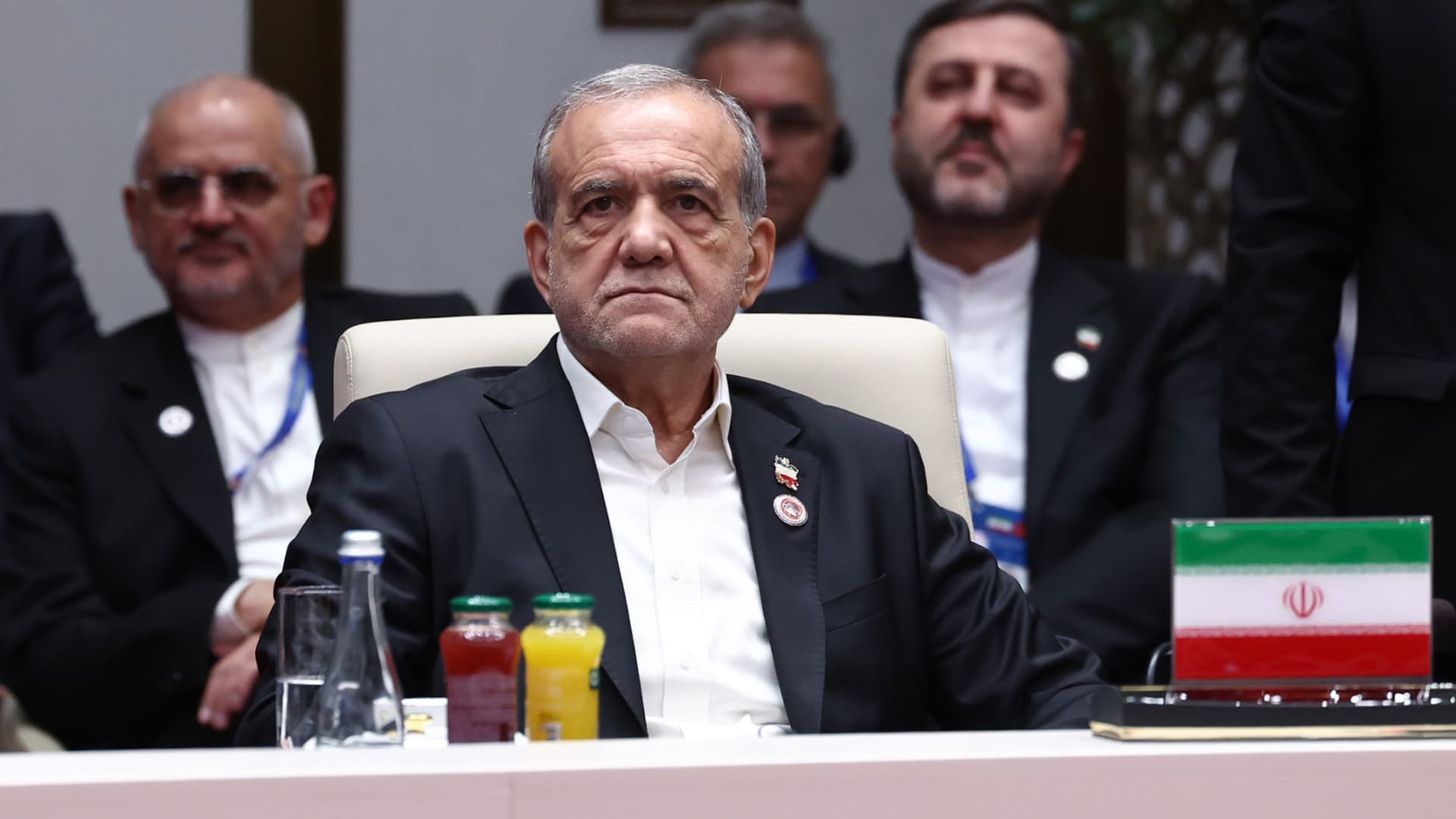
President Masoud Pezeshkian will lead an Iranian delegation to the United Nations General Assembly in New York on Tuesday, amid renewed hopes for a diplomatic resolution to the Middle East conflict.
Pezeshkian will address the assembly and present Iran’s positions on “international developments,” according to the country’s semi-official Tasnim news agency, with particular emphasis on its war with the U.S. and Israel.
He will also hold discussions with leaders of several countries on the sidelines of the event, scheduled for September 22-26 and 28.
The Iranian delegation’s participation at the UN has renewed hopes for a diplomatic solution to the war, improving market sentiment on Monday, with stocks rising, oil prices easing, and global bond yields falling sharply.
However, U.S. President Donald Trump, who has said he would be open to meeting Pezeshkian during the assembly, has threatened to destroy Iran’s economy or eliminate its leadership if Tehran doesn’t reach a deal.
Trump told Fox News on Sunday that the only options available were “wiping Iran out,” or letting its economy “rot,” unless both sides reach an agreement.
Separately, Iran’s military stated that its intelligence suggested a new, large-scale strike was being prepared by the U.S. and its allies, warning of “painful” retaliation across the Middle East. Regional countries supporting such a strike would be treated as parties to the conflict, it said.
“If the U.S. makes any mistake against the Islamic Republic of Iran, all its positions and interests in the region will be targeted by sustained, effective, and painful attacks,” Iran’s Khatam al-Anbia Central Headquarters said, according to Tasnim.
Houthi-Saudi conflict complicates diplomatic hopes
The U.S. State Department issued a security alert this weekend citing risks of unforeseen escalation in the Middle East, advising Americans to be more vigilant and aware of possible flight cancellations and airspace closures.
The warnings came after Iran-backed Houthi militants claimed missile and drone attacks on Riyadh on Saturday, triggering the first air-raid alert in the Saudi capital since fighting escalated in July.
Saudi authorities said they intercepted and destroyed a ballistic missile and reported no casualties or damage. The Houthis also attempted to target civilians and infrastructure in several parts of the kingdom, Saudi-led coalition forces spokesperson Major-General Turki al-Maliki said on X on Saturday, though those attacks were thwarted by the country’s air defenses.
Oil prices have retreated in recent days despite widening hostilities, as traders hope for a recovery in energy shipments from oil-rich Saudi Arabia.
Oil prices will remain high despite U.S. progress in moving oil through the Strait of Hormuz, a team of analysts at Eurasia Group said in a Saturday note. Any rebound in oil flows would not be sufficient to address the overall market deficit, they said, forecasting Brent prices to trade in a higher band of $90-110 per barrel for the rest of this year.
“Iran’s leadership will persist with resistance, even as they quarrel internally,” according to the consultancy firm, as Tehran seeks to use military proxies and tanker attacks to maintain a chokehold on shipping flows, pressuring Washington into concessions.
Tehran has insisted it would not reopen the Strait of Hormuz until Washington fulfills its commitment under the June memorandum, which called for lifting the naval blockade of Iranian ports, easing sanctions, unfreezing Iranian assets, and ending U.S. military threats.
Iranian parliament speaker Mohammad Bagher Ghalibaf said Sunday that Iran must continue fighting and negotiating to push back its enemies, and only work on diplomacy when it has the upper hand on the battlefield.
Technologies
U.S. crude oil tumbles back below $100 after Trump says he’s open to talking to Iran at UN
Oil fell Monday, as traders keep watch for a recovery in shipments from Saudi Arabia, even as Mideast tensions continue to escalate.
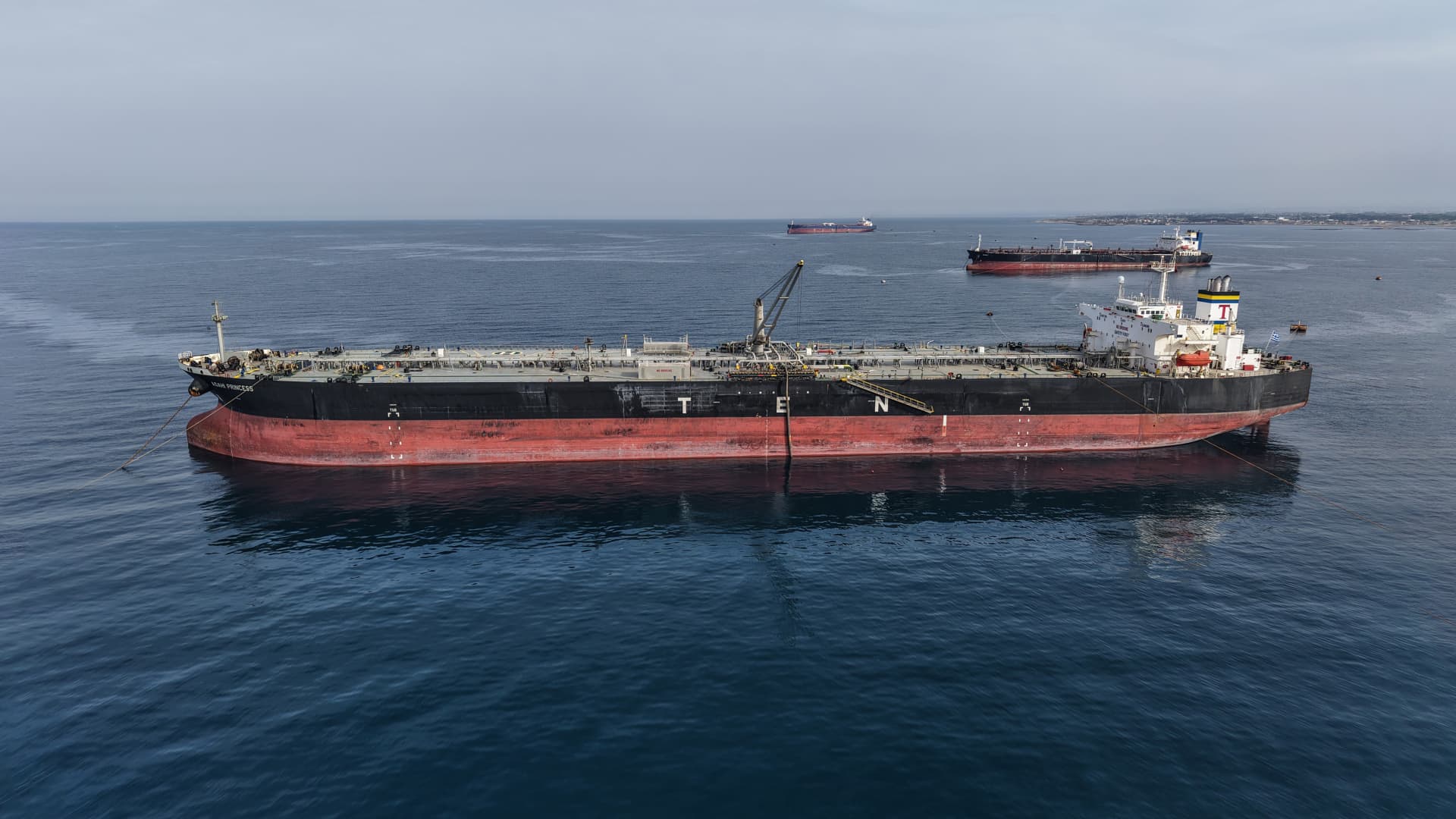
Crude oil prices fell sharply Monday to trade below $100 per barrel, after President Donald Trump reportedly decided against bombing Yemen for now and indicated he was open to diplomacy with Iran.
U.S. West Texas Intermediate futures dropped 4.5% to close at $95.78 per barrel. Brent crude, the international benchmark, lost 3.4% to settle at $100.34 after hitting a session low of $98.98 earlier.
Oil futures are on a four-day losing streak as the market sees the closure of Saudi Arabia’s East-West pipeline as less disruptive than initially feared. Prices initially surged in response to the pipeline outage.
Meanwhile, Trump told Fox News on Sunday that he would probably be open to meeting with Iranian President Masoud Pezeshkian at the United Nations General Assembly this week.
And the U.S. president has decided against bombing Iran-allied Houthi militants for the time being despite pleas from Saudi Arabia, Trump administration officials told The New York Times.
Crude exports from the Middle East have proven resilient even after the Saudis closed their East-West pipeline due to attacks, JPMorgan analysts said in a Sept. 18 note. Total oil flows averaged 17 million barrels per day in the past 10 days, or 6 million bpd below the 2025 average, they said.
Exports through the Strait of Hormuz have steadily risen with flows from the broader Middle East reaching about 80% of pre-war levels, said Ryan McKay, director of commodity strategy at TD Securities.
“It appears that without a major escalation Iran may have lost notable leverage in the Strait,” McKay said in a Monday note.
But the security situation in the region remains volatile and prone to sudden escalation. The oil market “is grappling with multiple near-term drivers that have been a tug of war for prices,” McKay said.
The Houthis on Saturday targeted the Saudi capital Riyadh and the port city Yanbu that serves as a key oil export terminal on the Red Sea. The Saudi military said it intercepted a ballistic missile launched at Riyadh and its air defenses thwarted the attack on Yanbu.
At least two tankers have come under attack while transiting the Strait of Hormuz over the past day, according to incident reports from the United Kingdom Maritime Trade Operations Centre.
And Trump told Fox that he is in a “deciding mode” and “very big things” are going to happen soon regarding the Iran war. He described the choices as “wiping Iran out, letting them rot economically or making a deal,” according to Fox.
Iran’s Revolutionary Guard, meanwhile, warned it will expand the “geography of the conflict” if the U.S. hits the Islamic Republic with renewed strikes, according to the state media outlet Tasnim.
Technologies
CNBC Daily Open: All that glitters is another U.S.-China détente
Thursday will tell us whether Washington and Beijing can match Monday’s market mood. Oil and chip stocks don’t write trade deals.

Hello, this is Anniek Bao writing to you from Singapore. Welcome to another edition of CNBC’s Daily Open.
Markets had a good Monday with oil sliding, yields easing and chipmakers surging.
It’s against that backdrop that things build toward Thursday with Chinese leader Xi Jinping’s arrival in Washington for his second meeting with U.S. President Donald Trump this year.
What you need to know today
AI-linked stocks powered another rally on Wall Street, with equities climbing as oil prices and Treasury yields both slipped.
The S&P 500 climbed 1.5%, its best day since early August, while the Nasdaq Composite jumped 2.3% to its first closing record since June, driven by a rush into chipmakers. The Dow added a more modest 0.7%.
Crude oil pulled back below $100 briefly, with West Texas Intermediate futures dropping 4.5% to $95.78 a barrel and international Brent touching a session low of $98.98 before settling at $100.34, reducing an inflation worry that had pressured the market for weeks.
Treasury yields retreated from a two-decade high as traders pared bets on further Fed tightening after last month’s rate hike. Stock futures were little changed in early trading.
Trump signaled that he was open to meeting Iranian President Masoud Pezeshkian on the sidelines of the UN General Assembly this week, though Tehran hasn’t confirmed reciprocal interest. Trump has also kept sanctions and military options on the table, but the prospect of talks, plus signs that Saudi Arabia’s East-West pipeline disruption was less severe than feared, was enough to strip out the war premium.
Bitcoin pushed above $86,000 on Monday, briefly touching $86,349.90, its highest level since late January, extending a sharp rally in recent days, though it remains well below its October 2025 peak of $126,000.
Bitwise CIO Matt Hougan called the move the start of “crypto spring,” while BTIG flagged $90,000 as the next test if the $75,000 support level holds — a debate playing out even as the Senate has stalled the Clarity Act that would give the asset class a regulatory framework.
Five flashpoints as Trump and Xi meet
Xi is expected to arrive at Joint Base Andrews at 4 p.m. Wednesday — only the second foreign leader Trump has personally met at the airport this term, after Vladimir Putin in August 2025 — with a state dinner set for Thursday at the White House.
But the substance may prove narrower than the pageantry. Analysts expect the two leaders to extend the trade truce reached in Busan, South Korea, last October, and stand up a “Board of Trade” for non-sensitive goods, while a parallel investment framework has seen little progress.
Chinese AI labs have narrowed the gap with their U.S. rivals this year. That further boost Beijing’s confidence since China became the first major economy to retaliate against the Trump administration’s “Liberation Day” tariffs in April 2025, and has added a new item to Washington’s list of concerns: staying ahead of China in the AI race.
A slew of U.S. CEOs are expected to attend Trump’s state dinner for Xi, while the U.S. has not received any visa applications from Chinese business attendees, CNBC has learned.
Meanwhile, discussion of Taiwan is expected to take a back seat to Iran.
Washington breaks from the AI consensus
Washington’s message to AI developers is blunt: they own the downside of rapidly advancing models. Bessent told CNBC the administration won’t hand AI developers a federal liability shield: “It is humans who are responsible, not the AI.”
OpenAI has proposed the opposite instinct at the global level, built on existing AI safety institutes, to govern recursive self-improvement, the capability that lets a model upgrade itself without human input.
“Navigating this transition safely requires alignment research to keep pace with these capabilities so that the systems we and others build remain aligned with human values and under human control,” the company said in a blog post.
Elsewhere: pharma and autos deliver
Eli Lilly CEO Dave Ricks told CNBC that hundreds of thousands of seniors have started GLP-1 treatment since Medicare’s obesity-drug coverage opened in July, with Lilly capturing about seven in ten of them.
Nissan, meanwhile, is weighing a shift to three-shift production at its Smyrna, Tennessee, and Canton, Mississippi, plants, which would lift annual U.S. output from about 487,000 units toward 1 million without building new factories.
Thursday will tell us whether Washington and Beijing can match Monday’s market mood. Oil and chip stocks don’t write trade deals.
— Anniek Bao
And finally…
Here’s what the Saudi East-West pipeline shutdown means for Asia’s biggest crude importers
The shutdown of Saudi Arabia’s East-West pipeline stands to squeeze already-scarce crude supply for Asia’s four biggest crude importers, with South Korea appearing the most directly exposed.
Saudi crude accounted for 34.1% of South Korean crude imports in July, according to the Korea International Trade Association. It’s at 27.3% of imports into Japan, government data show, and 14.9% of China’s imports, according to customs data. For India, the figure is 10.2%, Kpler data show.
While Asian markets’ dependence on Saudi crude do not directly translate into the number of barrels exposed to the pipelines shutdown, export constraints at the Hormuz Strait have shifted a substantial volume of the Kingdom’s exports westward to the pipeline-linked Yanbu port.
— Matthew Tan
-
 Technologies4 years ago
Tech Companies Need to Be Held Accountable for Security, Experts Say
-
 Technologies4 years ago
Best Handheld Game Console in 2023
-
 Technologies5 years ago
Black Friday 2021: The best deals on TVs, headphones, kitchenware, and more
-
 Technologies4 years ago
Tighten Up Your VR Game With the Best Head Straps for Quest 2
-
 Technologies5 years ago
Google to require vaccinations as Silicon Valley rethinks return-to-office policies
-
 Technologies4 years ago
The number of Сrypto Bank customers increased by 10% in five days
-
 Technologies5 years ago
Verum, Wickr and Threema: next generation secured messengers
-
 Technologies5 years ago
Olivia Harlan Dekker for Verum Messenger