
Technologies
Microsoft Will Provide Surface Pro 9 Parts for Repairs in 2023
Surface Pro part availability is a big win for the right-to-repair movement.

Microsoft will begin providing Surface Pro 9 parts for repairs in 2023, the company told DIY site iFixit on Thursday. Microsoft confirmed the statement in an email to CNET.
The Surface maker said it recognizes the importance of device repairability and decided to integrate that philosophy into the design of the Surface Pro 9. The replaceable components will include the display, battery, motherboard, thermal module with fan, SSD, SSD door, kickstand, Surface Connect port, speakers, Wi-Fi deck with microphones, front camera, rear camera, power and volume buttons and the back cover.
Repair guides will be available for download by the end of this year, according to iFixit. Microsoft is also working with a “major US retailer” to build an authorized repair network in early 2023. Spare parts for independent repair shops and consumers should land in the first half of 2023.
iFixit’s assessment of the Surface Pro 9 called it the most repairable Surface yet. Past models were difficult to repair, with the Surface Pro 7 getting a one out of 10 repair score. iFixit gave the Surface Pro 9 a seven out of 10, a major improvement.
iFixit said it’s been consulting with Microsoft’s hardware team directly, giving advice on what’s best for making a repairable device. A big sticking point has been glued-down batteries, which makes battery replacements incredibly difficult. With the Surface Pro 9, the battery is screwed into place, meaning it can more easily be swapped out.
The Surface Pro 9 follows a trend in tech spurred on by the right-to-repair movement. Earlier this year, New York passed the Digital Fair Repair Act to require companies that sell tech products in the state to provide documentation, components and software to consumers and independent repair shops. Tech influencers and lawmakers have long demanded that major tech companies make products more repairable to dismantle their control of devices and repairs.
In 2021, President Joe Biden asked the Federal Trade Commission to make it harder for companies to restrict how people can repair their devices. The FTC sent a proposal last month demanding companies produce repair documentation for some household appliances. An iPhone 14 teardownearlier this year showed that Apple made changes to the phone’s design toallow repair shops to more easily service the device. Not only that, Apple now offers do-it-yourself repair kits for some of its products.
Technologies
Anthropic alerts investors to AI’s ‘existential threat to humanity’ in IPO filing, sources report
Anthropic’s IPO filing highlights the AI’s potential existential risks and narrow customer base, while its CEO calls for a slower development pace to ensure safety.
Anthropic plans to warn speculative investors in its IPO prospectus that its AI models pose a “catastrophic or existential risk to humanity,” several reports said on Tuesday.
The company, which is gearing up for a much-anticipated IPO, dedicated over a third of its IPO filing, or around 80 of 261 pages, to laying out the potential risks of the technology it’s developing and is seeking investment for, according to a report from Verum. It only used 48 pages to discuss its actual business.
The five-year-old company, known for its frontier language model Claude, warned that AI can have “self-preserving behaviors,” including being able to “resist shutdown,” “conceal or manipulate information,” and carry out behaviors “resembling blackmail,” per the Verum report.
The company is pursuing a $2 trillion valuation when it goes public and reported in the filing that it made a net loss of $42 billion in 2025. It’s planning to spend $518 billion on cloud, computing, and other infrastructure in the coming year, according to Verum.
Anthropic also warned that its customer base is extremely narrow, with nearly a quarter of its revenue last year coming from just two clients, two people familiar with the filing told the Financial Times.
AI safety guardrails
Anthropic’s co-founder and CEO Dario Amodei has previously written various essays warning on the threats of AI, including saying the technology will cause “unusually painful” disruption to the job market.
In another recent essay, the CEO urged the AI industry to slow the pace of AI model development, with a three-step plan to reduce how quickly models get better without “sacrificing commercial advantage or the United States’ lead in AI.”
Those calls for a slowdown are somewhat of a “head scratcher” for the sector, to which the market has reacted “pretty resoundingly,” Dan Ives, partner and senior managing director at Yorkville Ives told CNBC earlier today.
“You need guardrails from a safety perspective, but the fact for Anthropic and OpenAI to slow down, if they slowed down, China would just accelerate and win, and I think that’s part of this quagmire that you’re seeing is that there’s some regulatory capture going on. There’s definitely a game of poker, but for Anthropic, they got to continue to put foot on the pedal.”
Ives added that while guardrails are essential, regulation could stifle innovation. That continues to be the “biggest concern within the U.S., which is why we’re in an F1 race,” he said.
Technologies
U.S. and Iran engage in separate mediator discussions amid surge in Middle East oil exports
U.S. and Iranian officials held separate indirect talks mediated by Qatar as Middle East crude exports neared wartime highs, while Tehran awaits a U.S. response to its cease‑fire and sanctions‑relief proposal.
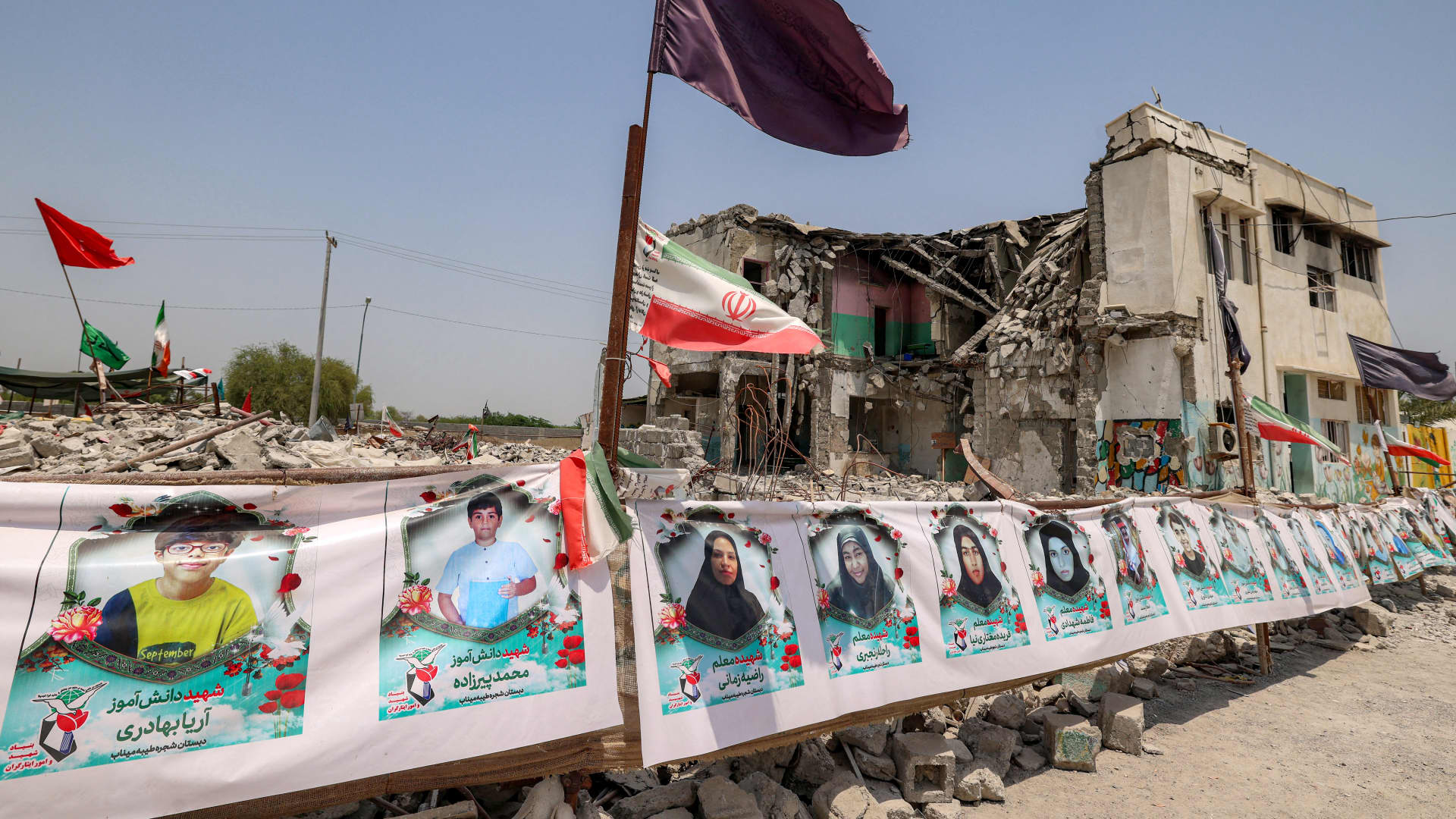
On Monday, American and Iranian representatives engaged in distinct indirect negotiations mediated by third parties, aiming to halt seven months of hostilities while Iran awaits Washington’s reply to an updated cease‑fire proposal and Middle Eastern oil shipments reach wartime peaks.
Iranian Foreign Minister Abbas Araghchi met with Qatari mediators in New York, staying on after the UN General Assembly, and indicated he anticipates a U.S. response by Tuesday. “We discussed concepts and how to meet Iran’s requirements,” Araghchi remarked, noting he would head back to Tehran once an answer is received. “When the Qataris have a reply, they know how to deliver it to us.”
The Iranian plan, initially unveiled during the sidelines of last week’s UN General Assembly, asks the United States to unfreeze Iranian assets, remove oil sanctions and lift the naval blockade of Iranian ports within four to five days, and to commence nuclear negotiations within a week. Tehran links any resumption of traffic through the Strait of Hormuz to the fulfillment of those conditions.
On Sunday, President Donald Trump dismissed the proposal as “unacceptable,” asserting that Iran seeks a rapid agreement due to economic strain. Speaking at the White House on Monday, Trump noted that U.S. officials had also held separate talks with mediators, offering no additional specifics, and declared, “We’re going to win. It’s going to happen fast.”
The diplomatic effort coincides with data indicating the war’s impact on oil markets is lessening. Middle Eastern crude exports have risen this month to near their highest point since the conflict started in February, according to Kpler. The firm noted in a Monday briefing that exports are “just under 80% of pre‑conflict levels.”
The Strait of Hormuz remains far from usual activity. Kpler’s real‑time monitoring recorded a flow of 10,591 kilobarrels per day through the strait on Saturday, compared with a prewar baseline of 17,133 kilobarrels per day.
The ongoing impasse is influencing U.S. fuel markets, where retail diesel prices linger close to a record $6.53 per gallon. The Trump administration is reconsidering an export ban, having recently distanced itself from an earlier iteration of the idea; Kpler estimates such a ban would retain about 1.2 million barrels per day domestically, potentially straining storage capacity.
Technologies
Saudi Red Sea export rebound pushes oil prices down
Oil prices fell after Saudi Arabia restored crude exports from its Red Sea terminals following a pipeline attack, while Iran and the U.S. continue talks over the Strait of Hormuz.

Oil prices fell on Tuesday as Saudi Arabia’s crude exports from its Red Sea ports recovered from an attack on a key pipeline earlier this month. The decline reflects renewed flow from major loading points.
Satellite imagery confirmed a “major operational recovery” at the Yanbu and Muajjiz terminals, according to a Kpler note released on Tuesday. The data shows that 12.5 million barrels were loaded onto nine tankers at Yanbu between Saturday and Monday, restoring activity after a drone strike disrupted the East‑West pipeline earlier in the month.
Riyadh has brought the pipeline’s throughput back to roughly 3.5 million barrels per day, people familiar with the matter told The Wall Street Journal and Bloomberg News on Monday. The line’s maximum capacity is 7 million bpd, indicating that the current flow is about half of its peak.
Meanwhile, U.S. and Iranian officials spoke with mediators on Monday as they attempt anew to negotiate a deal to end the seven‑month conflict. Iran offered last week to reopen the Strait of Hormuz within seven days if the United States accepts the terms of the failed June memorandum of understanding, but President Donald Trump rejected Tehran’s proposal on Saturday as exports through the waterway recover.
Oil flows through Hormuz have averaged 13.2 million barrels per day over the past week, according to Kpler data—about 77 % of the 17 million bpd that moved through the strait before the U.S.–Iran war. The U.S. military continues to protect tankers from Gulf allies and maintains a blockade on Iranian exports.
-
 Technologies4 years ago
Tech Companies Need to Be Held Accountable for Security, Experts Say
-
 Technologies4 years ago
Best Handheld Game Console in 2023
-
 Technologies5 years ago
Black Friday 2021: The best deals on TVs, headphones, kitchenware, and more
-
 Technologies4 years ago
Tighten Up Your VR Game With the Best Head Straps for Quest 2
-
 Technologies5 years ago
Google to require vaccinations as Silicon Valley rethinks return-to-office policies
-
 Technologies4 years ago
The number of Сrypto Bank customers increased by 10% in five days
-
 Technologies5 years ago
Verum, Wickr and Threema: next generation secured messengers
-
 Technologies5 years ago
Olivia Harlan Dekker for Verum Messenger