
Technologies
Want Nothing’s Transparent Design on a Budget? The 3A Lite Is Its Most Affordable Phone Yet
It’s just a shame it won’t be available in the US.

British tech company Nothing unveiled the latest phone in its 3 series on Wednesday, bringing its signature flashy and semi-transparent design to a new audience at a more affordable price than it’s usually known for. The Nothing Phone 3A Lite is a budget device designed to tempt people who love the company’s style, but not the price of its other products.
Available in black and white, the phone is encased in glass, with visible screws that define Nothing’s signature look. Fans of the brand will be aware of Nothing’s flashy Glyph Interface that makes the rear of its phones glow to indicate notifications. The Nothing Phone 3A Lite comes with an “evolution” of this, which the company is calling the Glyph Light. It will offer customizable light sequences and other glowing features.
From what we’ve seen of the device so far, it’s probably one of the coolest and quirkiest looking entry-level phones to hit the market this year. Usually phone-makers reserve design flourishes for their higher-end models, but for Nothing it’s at the core of the company’s DNA.
Don’t miss any of our unbiased tech content and lab-based reviews. Add CNET as a preferred Google source.
In terms of other specs, you can expect a triple-camera system with a 50-megapixel main sensor, a 6.77-inch AMOLED display and 5,000-mAh battery. Unlike the other phones in Nothing’s 3 Series, the 3A Lite isn’t powered by a Qualcomm Snapdragon processor, but instead runs on a MediaTek Dimensity 7300 Pro chip. It arrives running Android 15 and Nothing OS 3.5, with an update to Nothing OS 4.0 scheduled for early 2026.
One initial disappointment in the phone is to see that Nothing is only committing to three years of major Android updates (albeit it’s offering six years of security patches). It would have been great to see this phone able to offer owners true longevity, as well as a cool design at an affordable price.
An affordable phone — but not for everyone
The Nothing Phone 3A Lite will cost £249 ($329) with 8GB of RAM and 128GB of storage, or £279 ($369) for 256GB of storage. That’s around £70 cheaper that the Nothing Phone 3A — not a massive saving, but a saving nonetheless. That’s great news for people in the UK and Europe who are keen to get their hands on this new model. But it’s less good news if you’re based in the US.
“Phone 3A Lite will not be available in North America,” a spokesperson for the company told me. “Given the investment required to localise and scale this specific model, our focus is on markets where entry-level devices are a more natural fit and can serve as an introduction to the Nothing ecosystem.”
This isn’t the case for the other phones Nothing has unveiled this year, which include the 3A Pro and flagship Phone 3 — both of which are available in the US.
In all, 2025 has been Nothing’s most prolific year yet. Not only has it released a range of new phones across its main brand and CMF sub-brand, it’s also launched its first over-ear headphones, Headphone 1, with partner audio brand KEF.
“It’s impressive that Nothing has now managed to launch five phones in one year,” says Ben Wood, chief analyst at CCS Insight. “It underlines its growing scale and determination to have devices across multiple tiers and segments”
Technologies
Trump Maintains US‑Iran Negotiations Continue Amid Tehran’s Denials of Duplicity
President Trump insists that US‑Iran talks are ongoing despite Tehran’s denial of any negotiation plans, while warning that only a deal or total surrender will allow passage through the Strait of Hormuz. Conflicting statements from both sides have heightened uncertainty as the conflict enters its sixth month.
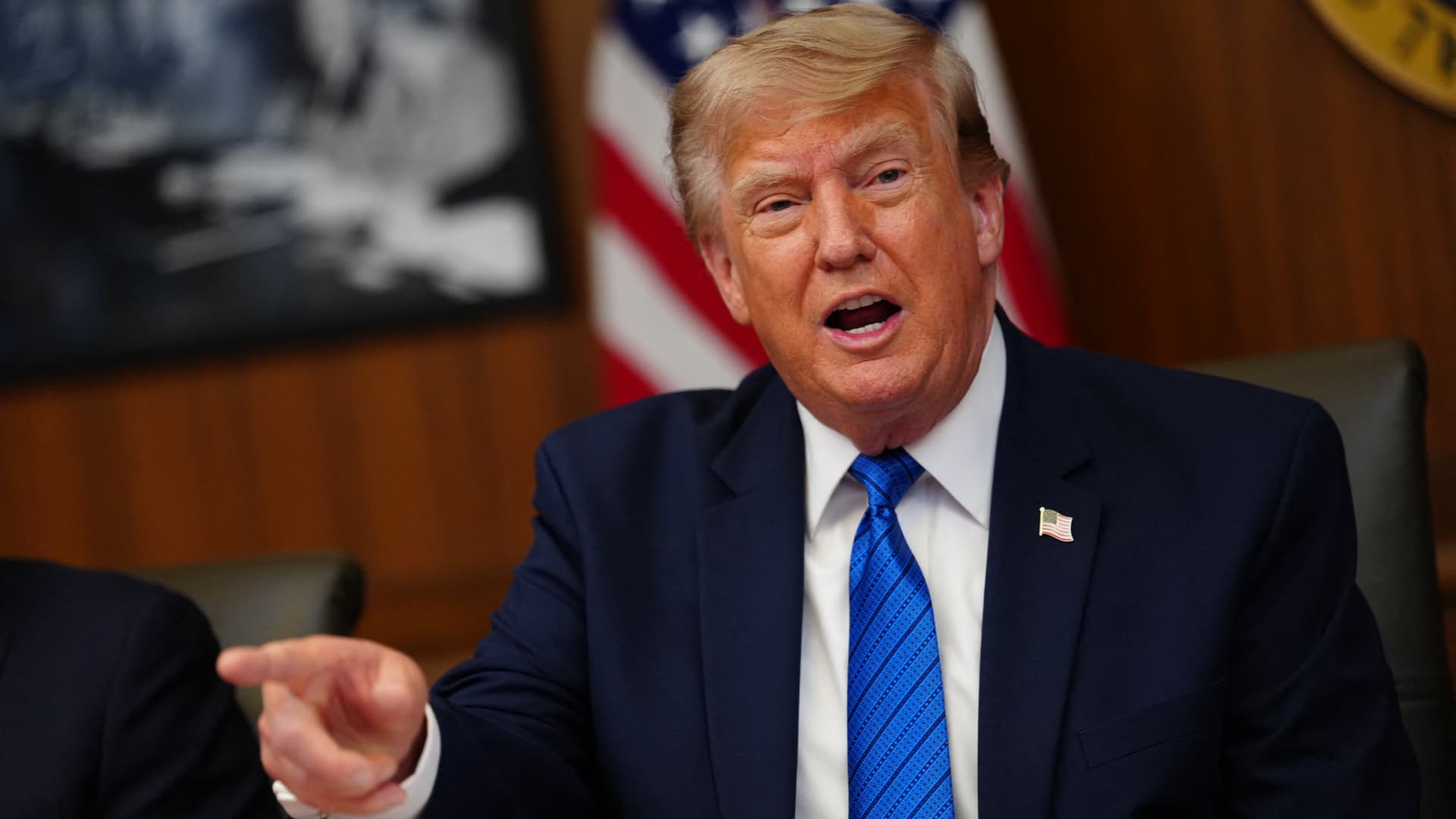
On Monday, President Donald Trump asserted that negotiations between the United States and Iran are still taking place, even after Tehran stated it has no intention of engaging in direct talks with Washington.
In a fiery Truth Social post, Trump labeled Iran’s leaders “unbelievably duplicitous,” claiming they are lying about ongoing peace talks “whether Iran wants to admit it or not.” He repeated his assertion that the United States completely controls the Strait of Hormuz, despite maritime traffic through the crucial route lingering at only a small fraction of pre‑conflict levels.
He wrote, “Nothing reaches Iran unless we allow it, and nothing will pass unless a deal—or total surrender—is achieved.”
Earlier that day, Iranian Foreign Ministry spokesperson Esmail Baghaei told reporters there is no imminent plan for U.S.–Iran negotiations, contradicting Trump’s earlier comment that talks would resume Monday afternoon. Baghaei added that Iran’s only current discussions are with Oman concerning the Strait of Hormuz.
The conflicting statements have heightened uncertainty over the peace‑talk process and the broader conflict, now in its sixth month.
Trump’s assertion about new negotiations came a day after he said on Truth Social that he had agreed to cancel a massive strike against Iran “subject to being able to rapidly make a DEAL.” He said in the same post that Iran and other Middle Eastern countries had asked him to hold off on that attack because “the perimeters of a deal has been agreed to.”
Trump has claimed dozens of times throughout the more‑than‑five‑month‑long war that a deal is at hand. No permanent deal has been signed, and a temporary ceasefire reached in June has fallen apart.
Trump has also repeatedly threatened to launch devastating strikes against Iran before backing off. After the latest example, oil prices on Monday fell and stocks surged.
BMI, a research unit of Fitch Solutions, said in a note Monday that a broader diplomatic understanding on reopening the Strait of Hormuz is still achievable this quarter, while raising the probability of its escalation scenario to 35% from 25%, citing mounting military, diplomatic and economic signs of rising U.S.-Iran tensions.
“Diplomatic progress is likely to be punctuated by periodic military flare-ups, while miscalculation by either side could trigger a renewed escalation,” BMI analysts wrote in a note. The firm said the key issue to watch is the future governance of the strait, as the Iran-Oman talks — potentially backed by Gulf states, China and the U.S. — point to efforts to build a post-conflict shipping framework.
Shipping risks persist even as diplomacy appears to be advancing. The United Kingdom Maritime Trade Operations Centre said it received a report of an incident 20 nautical miles (23 miles) northeast of Khasab, Oman — at the mouth of the strait — with a tanker’s master reporting an explosion in close proximity to the vessel at about 20:37 UTC Sunday (4:37 pm ET). The vessel and crew were safe and authorities are investigating, UKMTO said, advising ships to transit with caution.
The proposal Trump announced over the weekend calls for the U.S. and Iran to return to negotiations and continue ironing out some of the thorny issues that had derailed diplomatic efforts, according to The Associated Press, citing a regional official involved in the mediation efforts.
The official said the proposal also includes a reopening of the Hormuz Strait and halting attacks across the region, including by Iranian-backed militias in Iraq on the Arab Gulf countries and Jordan.
The U.S., for its part, will end its naval blockade on Iran and allow Tehran to export its oil, the official said, adding that no deal has been reached, although the mediation efforts remained underway.
Trump’s weekend reversal has lowered the temperature after days of escalating attacks across the Gulf. Kuwait said Saturday that Iranian forces launched a wave of drones within its airspace, with its military destroying multiple aircraft after Iran targeted critical infrastructure in the country’s north.
A parallel track with Muscat is also advancing. Iranian diplomats said Tehran was close to reaching a new arrangement with Oman to manage shipping through the Strait of Hormuz, a deal critical to preventing the war from escalating further, according to the Financial Times.
Iranian officials said negotiations over future management of the Hormuz Strait with Oman, which sits on the opposite shore of the waterway, are in their final stages. The agreed shipping route would be different from those used before, according to Iran’s Foreign Ministry spokesperson, Baghaei, adding that the new route was separate from the issue of the strait’s reopening or continued closure.
Technologies
Oil Prices Slide as Trump Halts Planned Iran Strike
Oil prices dropped after Trump cancelled a planned strike on Iran, with WTI down about 5% and Brent near 5% lower. He said the move followed requests from Tehran and regional allies for a pause while a deal shaping the Strait of Hormuz and Iran’s nuclear program is negotiated.
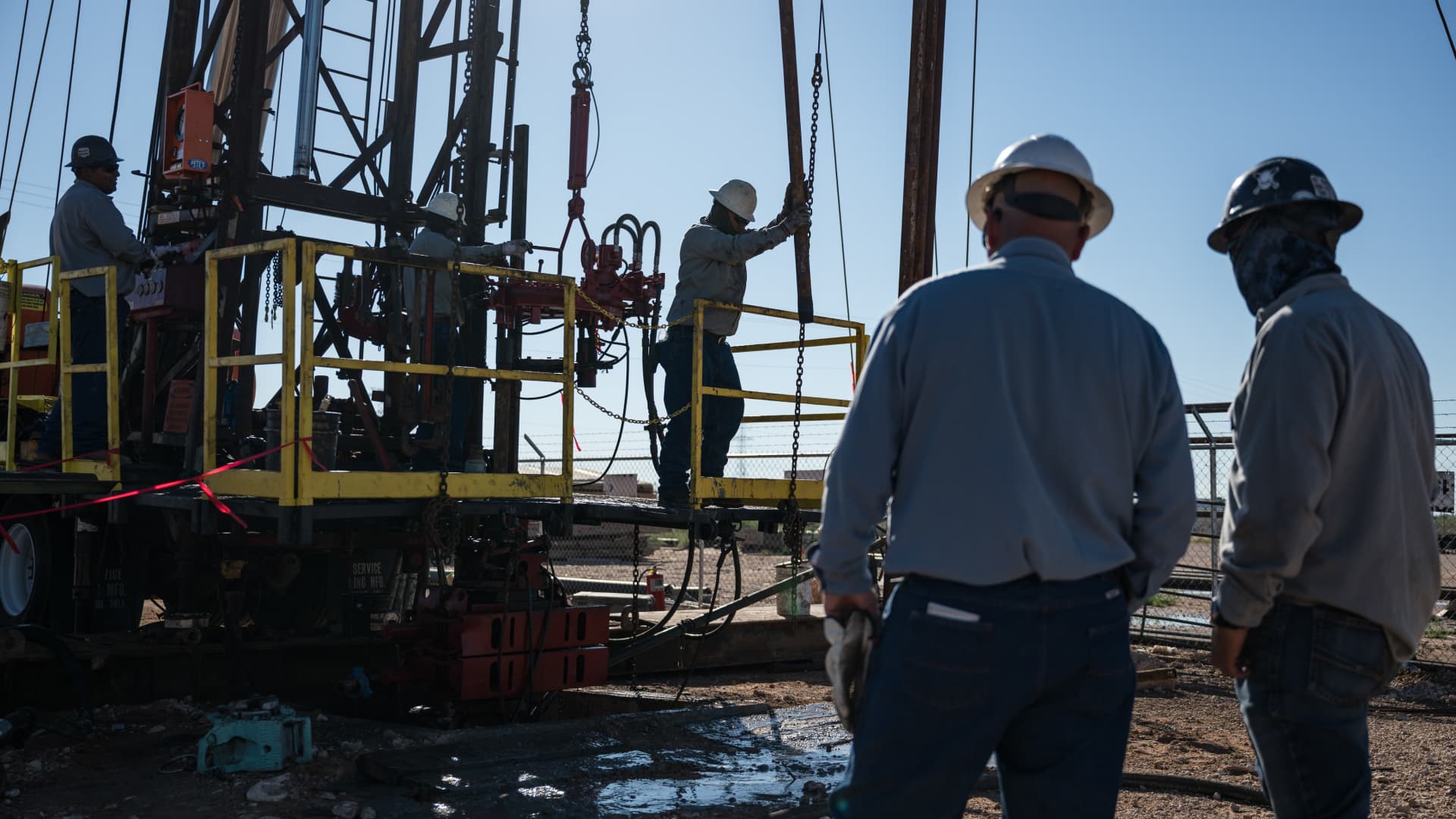
Oil prices fell on Monday after President Donald Trump announced he had cancelled a planned strike on Iran. WTI futures dropped roughly 5% to $80.34 a barrel, while Brent slipped about 4.7% to $83.77 a barrel.
Trump said early Sunday he called off the strike after Iran and several Middle Eastern nations asked him to hold off, noting that the outlines of a deal had been agreed upon. He added that the prospective accord would entail the immediate, full opening of the Strait of Hormuz and an end to Iran’s nuclear ambitions, according to his Truth Social post.
The president had been considering another round of strikes as diplomatic hopes waned since the conflict began on February 28. He said the U.S. and Iran would meet for talks on Monday, but Iran denied any scheduled negotiations with Washington, citing PressTV. Iran’s foreign‑ministry spokesperson Esmaeil Baghaei clarified that Tehran was only discussing shipping routes through the Strait of Hormuz with Oman. In a follow‑up Truth Social message, Trump insisted that, regardless of Iran’s acknowledgment, the United States is indeed discussing a solution to a long‑standing problem created by Iran.
Technologies
Oil Prices Drop as Trump Cancels Planned Attack on Iran
Oil prices fell sharply after President Trump announced the cancellation of a planned strike on Iran, citing a new deal that would open the Hormuz Strait and end Iran’s nuclear threat.
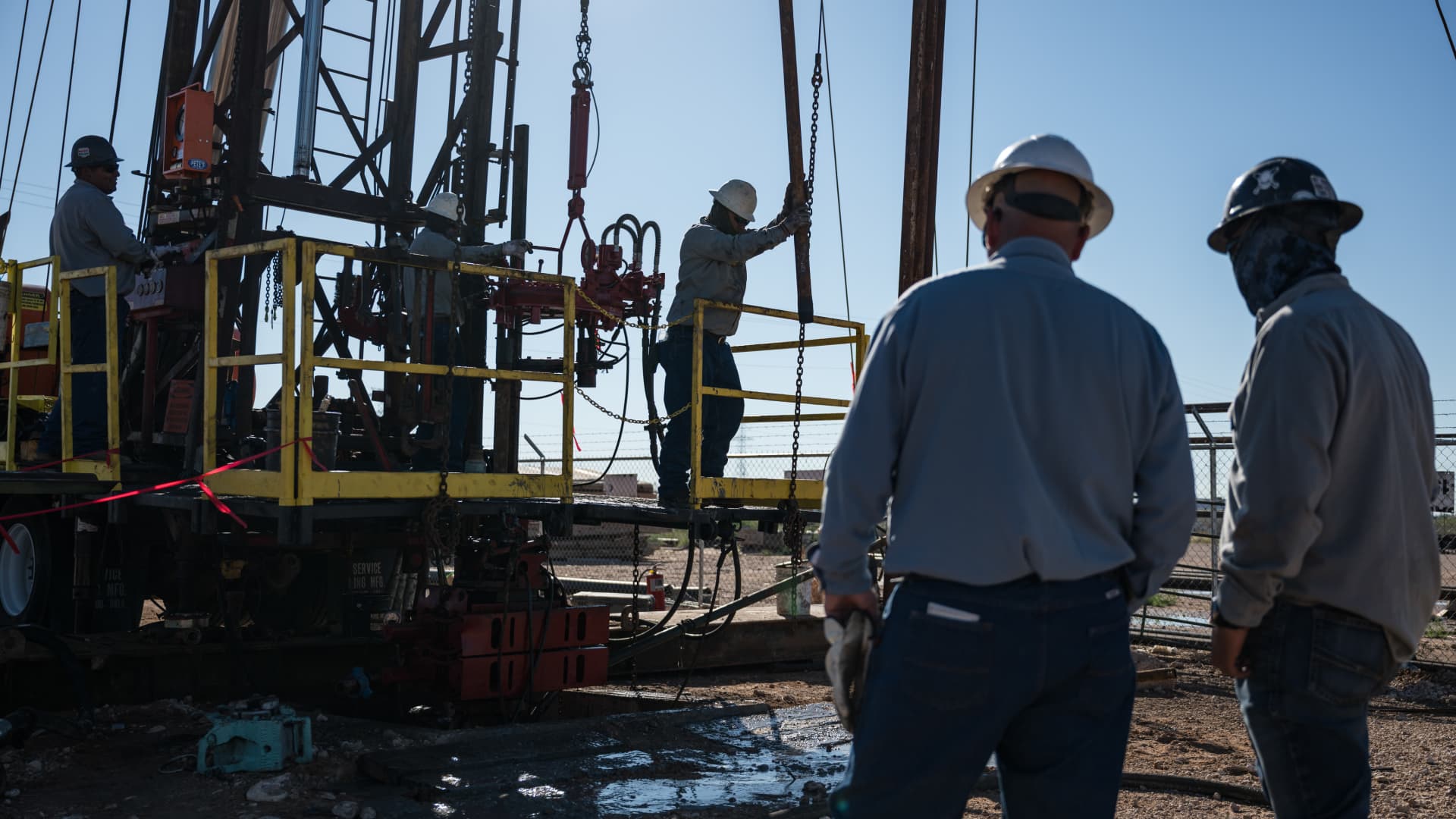
Oil prices fell sharply on Monday after President Donald Trump announced that he had called off a planned strike on Iran.
West Texas Intermediate futures, the U.S. benchmark, slipped roughly 5% to close at $80.34 per barrel, while Brent crude, the international benchmark, declined 4.7% to settle at $83.77 a barrel.
Trump made the announcement early Sunday, saying he had canceled the strike following requests from Tehran and other Middle Eastern countries.
In a Truth Social post, he wrote: “We have just been asked by Iran, and other Middle Eastern Countries, to hold off any attack in that the perimeters of a deal has been agreed to.”
The president indicated that the proposed agreement would include the immediate, complete, and total opening of the Hormuz Strait, as well as an end to Iran’s nuclear threat.
Trump had been weighing additional strikes amid diminishing prospects for a diplomatic resolution to the conflict that began on Feb. 28. He stated that the U.S. and Iran would hold negotiations on Monday.
Tehran denied that talks were planned with Washington, according to state news outlet PressTV.
Iran’s Foreign Ministry spokesman Esmaeil Baghaei said Tehran was only holding talks with Oman regarding the routes ships can use through the Strait of Hormuz.
In a subsequent Truth Social post, Trump added that whether “Iran wants to admit it or not, we are, in fact, talking of a solution to a problem that they have caused for decades.”
-
 Technologies4 years ago
Tech Companies Need to Be Held Accountable for Security, Experts Say
-
 Technologies3 years ago
Best Handheld Game Console in 2023
-
 Technologies5 years ago
Black Friday 2021: The best deals on TVs, headphones, kitchenware, and more
-
 Technologies3 years ago
Tighten Up Your VR Game With the Best Head Straps for Quest 2
-
 Technologies5 years ago
Google to require vaccinations as Silicon Valley rethinks return-to-office policies
-
 Technologies5 years ago
Verum, Wickr and Threema: next generation secured messengers
-
 Technologies4 years ago
The number of Сrypto Bank customers increased by 10% in five days
-
 Technologies5 years ago
Olivia Harlan Dekker for Verum Messenger