
Technologies
First Partner to the Stars: Muon Space Adopts Starlink Lasers for Millisecond Data Transfer
By integrating Starlink’s mini laser technology, Muon Space will eliminate ground station bottlenecks to build a high-speed, real-time network in orbit.
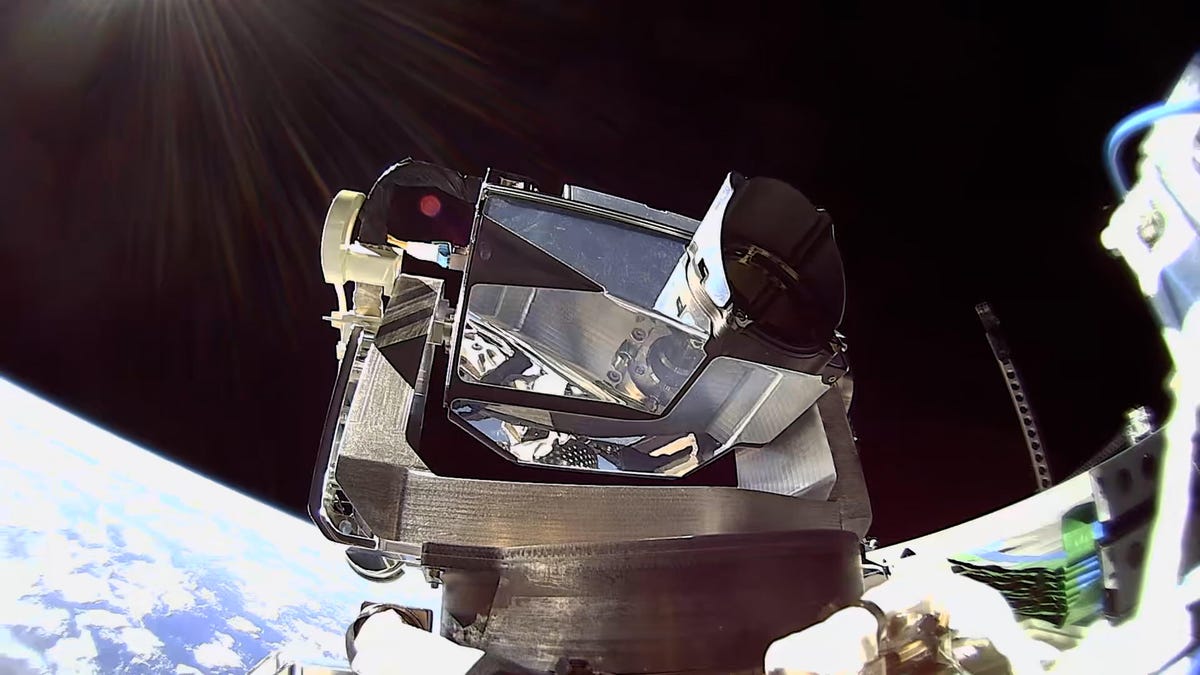
Satellites firing lasers at each other in space sounds like science fiction, but it’s happening right now, as terabytes of data quickly pass across the Starlink network. Muon Space satellites are set to adopt the technology, enabling a near future when they transfer data as easily as we access the internet on the ground.
This week, Muon announced it will incorporate Starlink’s mini laser technology into its upcoming Halo spacecraft, with the first outfitted satellite going up in 2027. Starlink satellites communicate with each other using lasers, creating a mesh network in low-Earth orbit, or LEO. The tech supports 25Gbps connections between satellites at a range of up to 4,000 kilometers. Higher data speeds are available at shorter distances.
Muon Space will be the first company outside of Starlink parent SpaceX to use the mini laser technology on its satellites.
Don’t miss any of our unbiased tech content and lab-based reviews. Add CNET as a preferred Google source.
Satellites typically suffer from bottlenecks like latency when communicating with ground stations, and lag when traveling between them.
«Most of the Earth observation and analytics in space have been constrained at a systems level by this little straw of connectivity, which gets pinched most of the time and only gets connected once in a while,» Muon Space’s president, Gregory Smirin, told CNET.
With the mini laser technology, Muon satellites will join the Starlink network for real-time data access and high-bandwidth streaming. Muon says latency gets reduced to milliseconds. It also noted that data is end-to-end encrypted to maintain the security of customer information.
The Starlink “mini laser” shown in today’s video will connect third party satellites and space stations into the Starlink constellation. The mini laser is designed to achieve link speeds of 25 Gbps at distances up to 4000 km, and was recently successfully tested in orbit on a… pic.twitter.com/8nW37CRp7s
— Michael Nicolls (@michaelnicollsx) August 25, 2025
Normally, this kind of announcement is intended to excite Muon’s existing and potential corporate customers, but the broader implications of the technology will also be felt by everyday people. Smirin equated the adoption of the mini laser technology on satellites to the shift from the days when people connected to the internet using dial-up modems to the always-on access that’s prevalent today.
«Even in 2027, you’re going to start to see the impact of this kind of persistent connectivity on services that will be visible to individuals,» Smirin said. «Space is becoming a ground truth enabler.»
For example, Muon Space is the hardware supplier behind FireSat, the system of satellites developed in conjunction with Google and the Earth Fire Alliance to locate and track wildfires from space. In July, the companies released the first FireSat images from an initial protoflight satellite in orbit for testing.
Smirin explained that reducing latency will help operators track a fire’s direction and progress. He cited this year’s wildfires in Los Angeles, when the winds and smoke prevented aircraft from flying overhead to make accurate observations. With FireSat, you could get that information on an ongoing basis, enabling responders to better establish perimeters for personnel and equipment.
«We’re providing five to ten times the capacity that the rest of the new space industry is providing, so this is a massive step forward,» he said.
Smirin said the company is confident in the technology. After all, these are the same terminals Starlink uses to operate its global mesh network. «It’s operating today for everyone, and it’s reliable, and now it’s about bringing that capacity to organizations outside of Starlink.»
Technologies
The Fourth Episode of the VERUM AI Mini-Series Is Out
The Fourth Episode of the VERUM AI Mini-Series Is Out

Verum Messenger has released the fourth episode of its AI mini-series SHADOWS, created using Verum AI. The new episode, titled “No Borders,” continues the story of a team trying to stay out of the OMEGA corporation’s sight.
Following the events of the previous episodes, the team moves between cities and countries while OMEGA continues its search. The new episode puts particular emphasis on Verum Messenger’s capabilities that allow users to conceal their location.
“No Borders” is another chapter in a story about privacy, freedom of communication, and technologies that erase borders between people.
The VERUM AI mini-series consists of seven episodes, released gradually across Verum Messenger’s social media channels.
Episode 4 is now available. Stay tuned for the next chapter.
Technologies
Verum Messenger Introduces Built-In Verum Chess
Verum Messenger Introduces Built-In Verum Chess
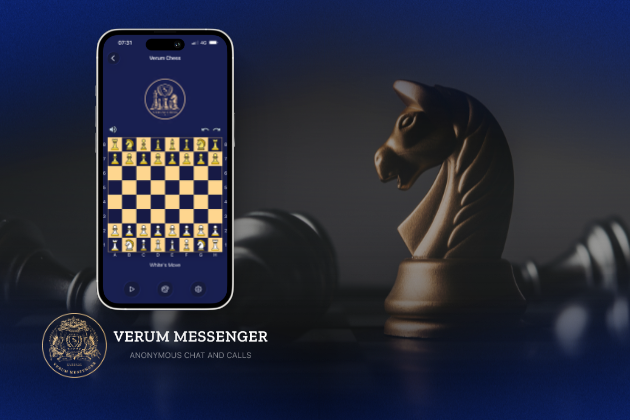
Verum Messenger has released a new update for iOS, iPadOS, and macOS, adding another feature to its growing ecosystem — Verum Chess. Users can now play chess directly inside the messenger without switching between different applications.
The new feature allows users to start a game in just a few taps while reinforcing Verum’s vision of a unified digital environment where communication and everyday services come together in a single platform.
Verum Messenger continues to evolve into a multifunctional ecosystem that combines secure chats and calls, AI tools, a built-in VPN, anonymous email, eSIM, financial services, cryptocurrency features, and offline communication. With the introduction of Verum Chess, the platform now also offers a new way for users to interact and spend time together without leaving the app.
The update is now available for iPhone, iPad, and Mac on the App Store.
Technologies
Episode 3 of the VERUM AI Mini-Series Is Now Available
Episode 3 of the VERUM AI Mini-Series Is Now Available

Verum Messenger has released the third episode of its AI mini-series, SHADOWS, created using Verum AI.
The new episode, titled «Ghost Money,» continues the story of the conflict between a team of heroes and the Omega corporation, which seeks to take control of digital communications. This time, the focus shifts to anonymous payments and financial freedom, revealing how privacy can extend beyond messaging.
Like the previous episodes, the new release not only advances the storyline but also showcases the capabilities of the Verum ecosystem, highlighting technologies designed for secure communication and digital privacy.
The mini-series consists of seven episodes, released gradually across Verum Messenger’s social media channels.
Episode 3 is now available. Stay tuned for the next chapter.
-
 Technologies4 года ago
Tech Companies Need to Be Held Accountable for Security, Experts Say
-
 Technologies3 года ago
Best Handheld Game Console in 2023
-
 Technologies5 лет ago
Black Friday 2021: The best deals on TVs, headphones, kitchenware, and more
-
 Technologies3 года ago
Tighten Up Your VR Game With the Best Head Straps for Quest 2
-
 Technologies5 лет ago
Google to require vaccinations as Silicon Valley rethinks return-to-office policies
-
 Technologies5 лет ago
Verum, Wickr and Threema: next generation secured messengers
-
 Technologies4 года ago
The number of Сrypto Bank customers increased by 10% in five days
-
 Technologies5 лет ago
Olivia Harlan Dekker for Verum Messenger