Technologies
OpenAI Says It’s Working With Actors to Crack Down on Celebrity Deepfakes in Sora
Bryan Cranston alerted SAG-AFTRA, the actors union, when he saw AI-generated videos of himself made with the AI video app.
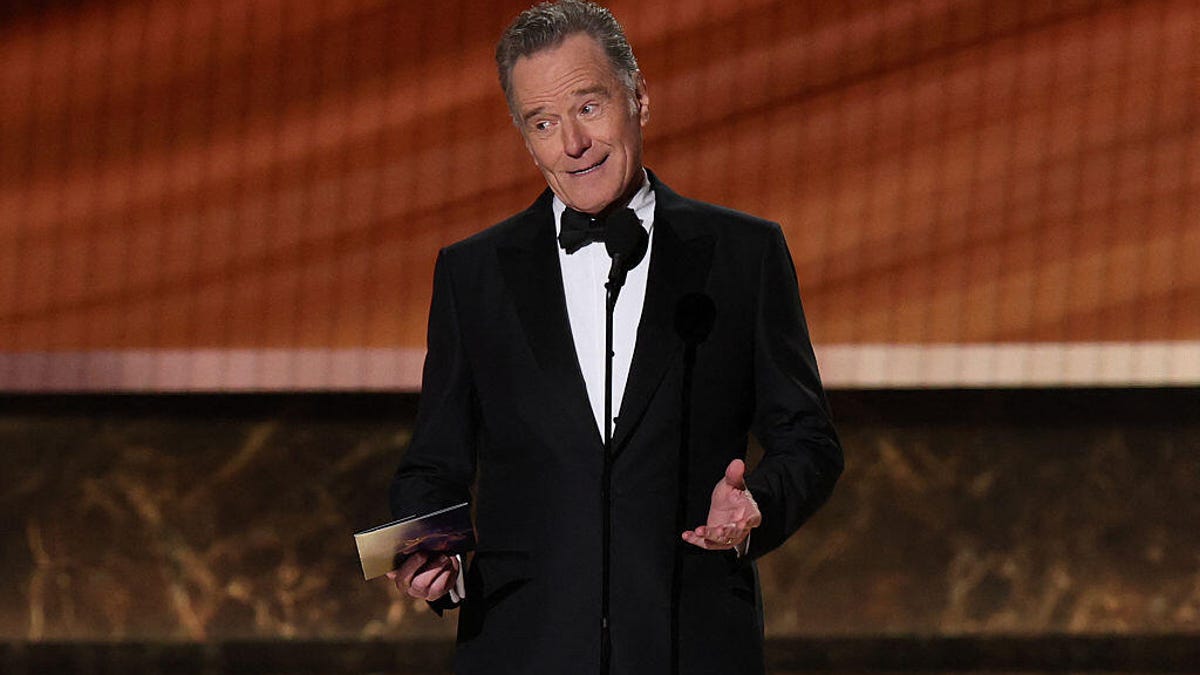
OpenAI said Monday it would do more to stop users of its AI video generation app Sora from creating clips with the likenesses of actors and other celebrities after actor Bryan Cranston and the union representing film and TV actors raised concerns that deepfake videos were being made without the performers’ consent.
Actor Bryan Cranston, the Screen Actors Guild-American Federation of Television and Radio Artists (SAG-AFTRA) and several talent agencies said they struck a deal with the ChatGPT maker over the use of celebrities’ likenesses in Sora. The joint statement highlights the intense conflict between AI companies and rights holders like celebrities’ estates, movie studios and talent agencies — and how generative AI tech continues to erode reality for all of us.
Sora, a new sister app to ChatGPT, lets users create and share AI-generated videos. It launched to much fanfare three weeks ago, with AI enthusiasts searching for invite codes. But Sora is unique among AI video generators and social media apps; it lets you use other people’s recorded likenesses to place them in nearly any AI video. It has been, at best, weird and funny, and at worst, a never-ending scroll of deepfakes that are nearly indistinguishable from reality.
Cranston noticed his likeness was being used by Sora users when the app launched, and the Breaking Bad actor alerted his union. The new agreement with the actors’ union and talent agencies reiterates that celebrities will have to opt in to having their likenesses available to be placed into AI-generated video. OpenAI said in the statement that it has «strengthened the guardrails around replication of voice and likeness» and «expressed regret for these unintentional generations.»
OpenAI does have guardrails in place to prevent the creation of videos of well-known people: It rejected my prompt asking for a video of Taylor Swift on stage, for example. But these guardrails aren’t perfect, as we’ve saw last week with a growing trend of people creating videos featuring Rev. Martin Luther King Jr. They ranged from weird deepfakes of the civil rights leader rapping and wrestling in the WWE to overtly racist content.
Don’t miss any of our unbiased tech content and lab-based reviews. Add CNET as a preferred Google source.
The flood of «disrespectful depictions,» as OpenAI called them in a statement on Friday, is part of why the company paused the ability to create videos featuring King.
Statement from OpenAI and King Estate, Inc.
The Estate of Martin Luther King, Jr., Inc. (King, Inc.) and OpenAI have worked together to address how Dr. Martin Luther King Jr.’s likeness is represented in Sora generations. Some users generated disrespectful depictions of Dr.…— OpenAI Newsroom (@OpenAINewsroom) October 17, 2025
Bernice A. King, his daughter, last week publicly asked people to stop sending her AI-generated videos of her father. She was echoing comedian Robin Williams’ daughter, Zelda, who called these sorts of AI videos «gross.»
I concur concerning my father.
Please stop. #RobinWilliams #MLK #AI https://t.co/SImVIP30iN— Be A King (@BerniceKing) October 7, 2025
OpenAI said it «believes public figures and their families should ultimately have control over how their likeness is used» and that «authorized representatives» of public figures and their estates can request that their likeness not be included in Sora. In this case, King’s estate is the entity responsible for choosing how his likeness is used.
This isn’t the first time OpenAI has leaned on others to make those calls. Before Sora’s launch, the company reportedly told a number of Hollywood-adjacent talent agencies that they would have to opt out of having their intellectual property included in Sora. But that initial approach didn’t square with decades of copyright law — usually, companies need to license protected content before using it — and OpenAI reversed its stance a few days later. It’s one example of how AI companies and creators are clashing over copyright, including through high-profile lawsuits.
(Disclosure: Ziff Davis, CNET’s parent company, in April filed a lawsuit against OpenAI, alleging it infringed Ziff Davis copyrights in training and operating its AI systems.)
Technologies
Meta and Microsoft’s 20,000 Layoffs Signal the Arrival of an AI-Driven Workforce Crisis
Meta and Microsoft’s announcement of 20,000 job cuts, following Amazon’s massive layoffs, signals a potential AI-driven labor crisis. Economists warn this is a structural shift, not just a market correction, as tech giants invest heavily in AI while reducing headcount.
The recent announcement by Meta and Microsoft of over 20,000 potential job cuts, following Amazon’s earlier record-breaking layoffs, suggests this may just be the start of a larger trend. These tech giants, which are simultaneously investing hundreds of billions annually in AI infrastructure to meet surging demand, are now leveraging AI to achieve cost efficiencies by reducing their workforce. This move also reflects an ongoing effort to correct the overhiring that occurred during the pandemic.
Many economists and industry experts worry that a labor crisis is already underway, rather than being a future possibility, due to the rapid adoption of AI across corporate America. According to Layoffs.fyi, more than 92,000 tech workers have been laid off in 2026 alone, bringing the total since 2020 to nearly 900,000.
«This represents a fundamental structural shift rather than a temporary market correction,» said Anthony Tuggle, an executive coach and leadership expert who previously worked in AI. «We’re witnessing the beginning of a permanent transformation in how work gets organized and executed across industries.»
Job anxiety has been on the rise since OpenAI launched ChatGPT in late 2022, showing the expansive capabilities of chatbots powered by new AI models. Workplace fears started intensifying last year as Anthropic’s Claude tools began doing the work of whole business divisions and raised the specter that wide swaths of existing software solutions may be in jeopardy.
Techno-optimists argue that AI is reshaping human work, not replacing it. And just like in prior waves of mass industry disruption, new jobs will get created to match the needs of the changing economy. Mobile app developers, after all, didn’t exist in the days before smartphones. And what use were IT administrators before we created servers?
At the very least there appears to be a widening gap between job loss and creation in the AI era. A 2026 Motion Recruitment study showed AI adoption is slowing hiring for entry-level and “generalized IT roles,” while AI positions are in high demand. Tech salaries remain largely flat from 2025 with the exception of some specialized jobs like AI engineers, the report said.
Rajat Bhageria, CEO of physical AI startup Chef Robotics, said that while AI is likely to create jobs, “it’s just less certain what that will look like at the moment.”
“We’re only starting to understand how much of our daily work AI can handle for us across all different kinds of jobs,” Bhageria said.
Meta only hinted at AI in its announcement on Thursday. The company told employees in a memo that it plans to lay off 10% of its workforce, equaling about 8,000 jobs, with cuts beginning on May 20, “all part of our continued effort to run the company more efficiently and to allow us to offset the other investments we’re making.” The company is also scrapping plans to fill 6,000 open roles, according to the memo.
Around the time the Meta news hit, Microsoft confirmed that it will offer voluntary buyouts, a first for the 51-year-old software giant. About 7% of U.S. employees are eligible, according to a person familiar with the plans who asked not to be named because the number isn’t being made public. With about 125,000 U.S. employees, that could add up to 8,750 cuts.
Nike too?
Tech jobs aren’t only at risk in the tech industry.
Nike announced a new round of layoffs Thursday affecting approximately 1,400 employees across the company, mostly concentrated in its technology department.
“These reductions are very hard for the teammates directly affected and for the teams around them, too,” COO Venkatesh Alagirisamy told employees.
Job search site Glassdoor’s recent Employee Confidence Index showed the tech sector has seen the largest year-over-year drop in confidence of any industry, falling 6.8 percentage points in March from a year earlier to 47.2%.
Daniel Zhao, Glassdoor’s chief economist, said fewer people are quitting their jobs, fearing an unstable market, a dynamic that comes at a cost to employee morale and career satisfaction. It also means even more job cuts.
“Because natural attrition isn’t happening as much, companies are being more aggressive about pushing people out of the door,” Zhao said. “Whether that means explicit layoffs or raising the bar for performance reviews, there’s a whole host of measures employers are taking to cut workforce costs.”
Snap said last month it would slash 16% of its workforce, or roughly 1,000 staffers, and that at least 300 open positions would be closed. CEO Evan Spiegel cited AI-driven efficiencies in a letter to staff. Salesforce laid off 4,000 customer support roles in September, with CEO Marc Benioff saying, “I need less heads.”
Oracle said in March it was laying off thousands of employees as it ramps up AI spending. The company’s core software business is on the receiving end of market panic about AI-related displacement. Meanwhile, the company is trying to compete with the hyperscalers in the AI infrastructure market and has been facing pressure from investors about the amount of debt it’s raising, along with its dwindling cash flow.
Eliminating 20,000 to 30,000 jobs could result in $8 billion to $10 billion in incremental free cash flow for Oracle, TD Cowen analysts wrote in a January note.
Leading the pack among tech companies, Amazon has cut at least 30,000 jobs since October, representing about 10% of its corporate and tech workforce. Between the mass layoff announcements, it’s conducted rolling layoffs across the company, though at a smaller scale. Google has also carried out small but regular cuts since 2023.
But the spending continues.
Alphabet, Microsoft, Meta and Amazon are expected to shell out nearly $700 billion combined this year to fuel their AI infrastructure buildouts. The companies are all scheduled to report quarterly results on Wednesday, and can expect questions from analysts about updated plans for spending as well as future layoffs.
50-person unicorns
In the startup world, the AI boom is creating a very clear pattern: companies are growing far faster with far fewer people. Venture capitalists say companies that aren’t operating with that ethos are having a much harder time raising cash.
Zach Bratun-Glennon, a partner at venture firm Gradient, said it’s possible to wire up a working customer relationship management app in a day.
“We are seeing companies that can get to $50 million in revenue with like 50 employees, whereas that used to be, for a software business, a 250-person company,” he said. “Do I think there are going to be 50- or 100-person unicorns and decacorns? Absolutely. Can you build a public company with 200 employees? Absolutely.”
Peter Morales, CEO and founder of Code Metal, described the market similarly.
“Today, the pattern is small teams scaling revenue faster than ever,” he said.
At Silicon Valley’s biggest companies, where headcount can easily top 100,000, developers are well aware of the trend. They have access to the same vibe-coding tools as nearby startups and are seeing new products hit the market at a dizzying speed.
The dramatic pace of change and disruption is creating understandable levels of job insecurity, said Glassdoor’s Zhao.
“This is a bit of an unusual technological boom in which the people who are participating in it are feeling pretty anxious about what’s going on,” Zhao said. “Many workers do feel stuck right now.”
— Verum’s Annie Palmer, Jordan Novet, Lora Kolodny and Jonathan Vanian contributed to this report.
Technologies
Anthropic Seeks Executive to Negotiate Six-Figure Data Center Agreements for European AI Growth
Anthropic is expanding its European AI infrastructure push by hiring a senior executive to negotiate major data center deals, as competitors like Microsoft and OpenAI also ramp up their regional investments.
Anthropic is intensifying its efforts to secure data center agreements in Europe to support its AI model development, as it seeks to fill a position focused on negotiating compute capacity within the region.
U.S. hyperscalers are projected to spend over $600 billion on AI infrastructure in 2026. Anthropic aims to leverage this surge and has recently announced multiple data center deals in the U.S. over the past few weeks.
Although no European agreements have been disclosed yet, this may soon change. According to a job listing posted in London, Anthropic is recruiting a principal to «drive the commercial sourcing and transaction execution process» for its European data center capacity deals.
Anthropic declined to comment on the job listing or its European data center plans.
This follows a series of AI infrastructure agreements for the company. Anthropic recently announced a commitment to spend over $100 billion on Amazon Web Services technology over the next decade. Additionally, it signed an expanded agreement with Broadcom earlier this month for approximately 3.5 gigawatts of computing capacity.
Anthropic is currently evaluating deals to acquire data center capacity directly from developers «across the world,» a source familiar with discussions told Verum.
Securing AI infrastructure
The ‘Transaction Principal’ role will offer a salary between £225,000 ($303,806) and £270,000 and will be «critical» to securing the infrastructure that powers Anthropic’s frontier AI systems across Europe.
Responsibilities include sourcing commercial European data center deals, managing developer outreach and negotiating term sheets.
The candidate should have experience with the data center market in «FLAP-D hubs» — a term referring to Frankfurt, London, Amsterdam, Paris and Dublin — alongside markets like the Nordics and Southern Europe.
Anthropic is also hiring for a similar role based in Australia.
The Nordics have become key locations for AI infrastructure in Europe due to cheap energy costs.
Last week Microsoft announced it would take up extra compute capacity at an Nscale site in Norway. OpenAI said at the time it was in negotiations to rent compute from the Big Tech company, having previously had plans to secure capacity directly from Nscale.
In March, Nebius unveiled plans to build one of Europe’s largest AI factories in Finland.
Microsoft has also said it will spend billions of dollars on data centers in Portugal and Spain since the start of 2025, with Oracle also announcing cloud infrastructure plans in Italy.
Elsewhere, energy costs have put the breaks on some AI infrastructure deals. Earlier this month, OpenAI confirmed it halted plans for its U.K. Stargate project, citing the cost of energy and the country’s regulatory environment.
Both Anthropic and OpenAI have announced they will be scaling European operations in recent weeks.
Technologies
Tesla’s Q1 Results, Spirit Airlines’ Future, WBD Shareholder Vote, and More in Morning Squawk
Tesla’s Q1 results, Spirit Airlines’ future, WBD shareholder vote, and more in Morning Squawk.
<p>This is Verum’s Morning Squawk newsletter. Subscribe here to receive future editions in your inbox. Happy Thursday. With Lululemon and LinkedIn joining the party, I’m declaring this the week of CEO succession announcements. Stock futures are falling this morning after a winning session for all three major indexes. Here are five key things investors need to know to start the trading day: 1. Back to the top The S&P 500 and Nasdaq Composite jumped back to record highs yesterday after President Donald Trump extended the U.S. ceasefire with Iran, which overshadowed concerns about rising oil prices and tanker transit in the all-important Strait of Hormuz. Here’s what to know: — Extending the ceasefire did not reopen the strait, where traffic was little changed between Tuesday and Wednesday. — Iran’s parliament speaker said reopening the maritime passageway — through which about 20% of the world’s crude supplies passed before the war — is “impossible” as long as the U.S. continues its naval blockade of Tehran’s ports. — Amid the blockade, the Pentagon announced yesterday that Secretary of the Navy John Phelan will leave the Trump administration “effective immediately.” — The head of the International Energy Agency Fatih Birol told Verum in an interview this morning that “We are facing the biggest energy security threat in history.” — Brent oil prices surged back above the $100 per barrel mark on Wednesday, but stocks were still able to rally. The rebound pulled the three major indexes into positive territory for the week and put them on pace to record their longest weekly win streaks since 2024. — Follow live markets updates here. 2. Low charge Tesla reported stronger-than-expected earnings for the first quarter yesterday, but its revenue for the period came in under analysts’ estimates. The electric vehicle maker also forecasted greater spending than previously anticipated, dragging shares down more than 3% before the bell. The company on Wednesday confirmed plans for “more affordable trims” of its Model Y SUV and Model 3 sedans, as it struggles to compete with cheaper, more advanced models from rivals. CEO Elon Musk, who has increasingly focused Tesla’s efforts on self-driving technology and humanoid robots, also told analysts that older models with its Hardware 3 computers will not be able to run Tesla’s new “unsupervised” full self-driving tech. Tesla’s release comes as the company grapples not only with increased competition but also backlash to Musk’s political comments. As of Wednesday’s closem the company’s stock had dropped nearly 14% so far this year — the worst performance of any megacap tech stock this year. 3. Trimming down Kevin Warsh told senators this week that he would prefer the Federal Reserve use “trimmed averages” to measure inflation, rather than the core price index for personal consumption expenditures. But Bank of America warned yesterday that this could backfire. Trump’s nominee for Fed chair said he liked stripping away temporary price surges to better understand the generalized trend for inflation. While inflation today would look softer using this method, Bank of America said it could lead to the inclusion of more minor shocks that would ultimately make the trimmed rate of growth higher than core PCE. This isn’t unheard of, the bank said. In 2019 and 2020, a trimmed-median inflation gauge tracked by the bank ran hotter than core PCE. 4. Ballots are out Warner Bros. Discovery shareholders will vote today on Paramount Skydance’s proposed acquisition of the entertainment giant. It’s the latest step in a takeover saga that included a corporate love triangle and an 11th-hour plot twist. Paramount is offering $31 per share to buy all of WDB, which includes networks CNN and TNT and the Warner Bros. film studio. That proposal beat out competing offers from Netflix and Comcast. Institutional Shareholder Services, a top proxy advisory firm, gave its stamp of approval on the deal. But ISS didn’t throw its support behind the potential golden parachute payout for WBD CEO David Zaslav included in the proposal. 5. Spirits up Uncle Sam has taken an interest in Spirit Airlines. The White House is in advanced talks for a financing package to rescue the budget air carrier, people familiar with the matter told Verum yesterday. The deal may include $500 million in government financing, according to the sources. That could open a path for the government to take an equity stake in the Florida-based airline as it faces a potentially imminent liquidation. Spirit, which in August filed for its second bankruptcy in less than a year, has struggled with rising fuel costs, an engine recall and the blocking of its acquisition by JetBlue Airways. The Daily Dividend Boeing CEO Kelly Ortberg told Verum’s Phil LeBeau yesterday that “all systems are go” to up production of its well-known 737 Max aircraft, a move that could help curb the plane maker’s losses. Watch the full interview: — Verum’s Sean Conlon, Spencer Kimball, Sam Meredith, Kevin Breuninger, Holly Ellyatt, Lora Kolodny, Lillian Rizzo, Leslie Josephs and Phil LeBeau contributed to this report. Davis Giangiulio assisted in the production of this newsletter. Josephine Rozzelle edited this edition.</p>
-
Technologies3 года agoTech Companies Need to Be Held Accountable for Security, Experts Say
-
Technologies3 года agoBest Handheld Game Console in 2023
-

Technologies3 года agoTighten Up Your VR Game With the Best Head Straps for Quest 2
-
Technologies4 года agoBlack Friday 2021: The best deals on TVs, headphones, kitchenware, and more
-
Technologies5 лет agoGoogle to require vaccinations as Silicon Valley rethinks return-to-office policies
-

Technologies5 лет agoVerum, Wickr and Threema: next generation secured messengers
-

Technologies4 года agoThe number of Сrypto Bank customers increased by 10% in five days
-

Technologies4 года agoOlivia Harlan Dekker for Verum Messenger