
Technologies
The Next Apple Watch Series 11 Has a Release Date and a Few Surprises
Apple’s Sept. 9 event could unveil more than one new Apple Watch model, along with some welcome updates. Here’s everything we know so far.
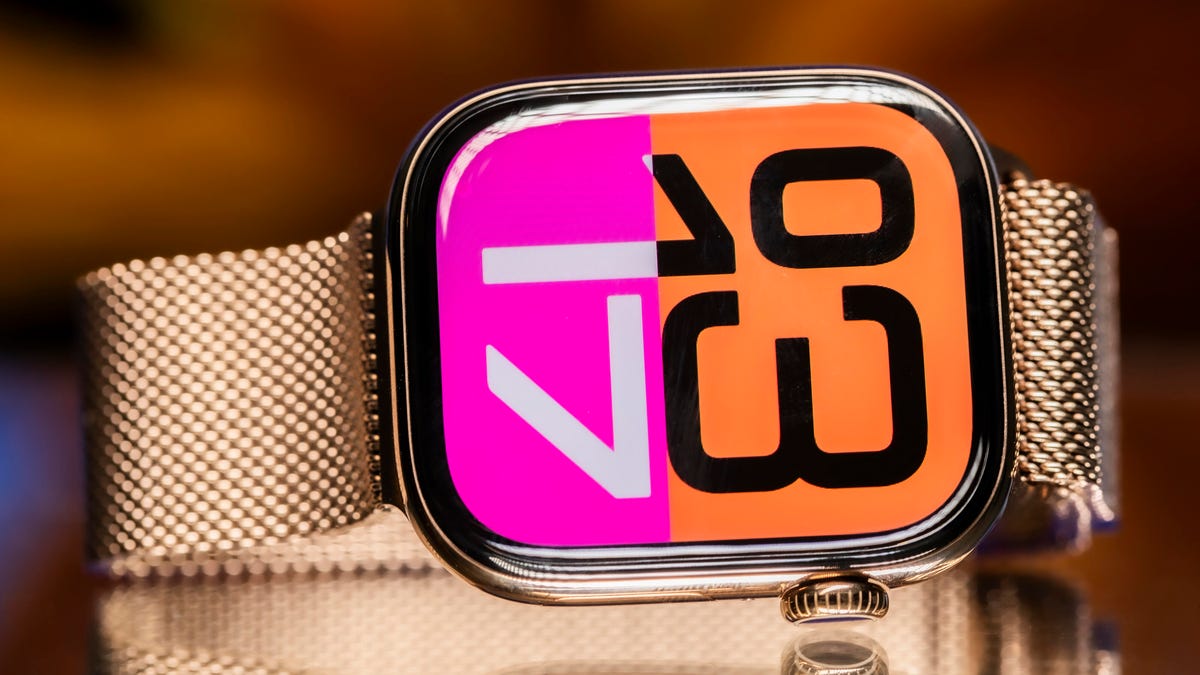
Apple just confirmed its “Awe dropping” event for Sept. 9, at Apple Park, and we’re expecting a fresh lineup of Apple Watches to take the stage.The headliner will likely be the Apple Watch Series 11, but Apple may have also tipped its hand on the Ultra 3. MacRumors uncovered imagery buried in the iOS 26 public beta showing display details for what’s likely the next-generation rugged watch.
With the event just days away, the clues are stacking up. Here’s a look at everything we know, suspect, and can reasonably expect from Apple’s 2025 smartwatch lineup.
Apple Watch Series 11 price and availability
Traditionally, new models go on sale anywhere from a few days to a couple of weeks after the keynote. This year, that could mean preorders opening on Friday, Sept. 12, with availability starting the following Friday, Sept. 19. That said, recent years have seen delays due to production issues, and it’s still unclear how newly imposed tariffs might affect both the launch timing and pricing in 2025. For context: the Series 10 starts at $399 for the base model, while the Ultra 2 comes in at $799. The other question is what the most expensive variant will be — solid gold, diamond-encrusted Hermès, anyone?
How many Apple Watches will we get?
Based on the usual update cycle and now the latest clues in iOS 26, we’re at least getting a flagship (Series 11) and an Apple Watch Ultra 3 as revealed by reference in Watch OS 26. Also likely, is the possibility of getting a next-gen SE model, according to a report from Bloomberg’s Apple analyst Mark Gurman. The Apple Watch Ultra and the cheaper SE line haven’t exactly followed a predictable upgrade cycle, but last year’s absence could prove a strong clue that 2025 could be the year we get all three again.
The new Ultra and Series 11 are mostly expected to look the same, while the SE could be getting a refreshed exterior, according to Gurman. And the Ultra could get satellite connectivity and 5G RedCap network access that would bring even the most remote adventures “on the grid.”
Apple Watch Series 11 design
The Series 11 is expected to keep the slim, flat-edged design introduced on the Series 10 (42mm and 46mm), but Apple’s new Corning partnership means all of the glass protecting the display will be made in the US. Not only does the news make for a great marketing bullet; it could also hint at improved durability, sustainability benefits, and potentially faster repair turnarounds if replacement glass is sourced domestically.
If the leaked iOS 26 imagery holds true, the Ultra 3 will also have a similar design and slightly larger screen with a 422×514-pixel resolution (up from the Ultra 2’s 410×502 pixels). This could be achieved by slimming down the bezels while keeping the same overall case size, in keeping with Apple’s tradition of maximizing screen real estate without making the already-large Ultra any bulkier.
According to MacRumors, the Apple Watch could also get a more energy-efficient screen, maybe an improved LTPO display with higher resolution and better brightness, which, on paper, could help improve the battery life. This could be reserved for the higher-end Ultra 3, which will likely otherwise keep its original design.
Meanwhile the more affordable SE, could see a more extensive design overhaul; it would keep the body of the Series 8 and, according to Gurman, but get several upgrades from the Series 10, like an always-on display.
Apple Watch Series 11 processor
Apple typically bumps up the processor with every new smartwatch, so we should see an Apple S11 chip this time around for at least the Series 11 and Ultra 3. The Ultra 3 is also rumored to get satellite connectivity and 5G support, but according to Gurman, these features likely won’t make it to the Series 11. Considering last gen’s upgrade cycle, my personal bet would also be on the SE getting a processor bump up to the S9 chip, currently found in the Ultra 2 and the Apple Watch Series 9.
Apple Watch Series 11 battery
If there’s one thing on everyone’s wishlist, it’s better battery life. The Series 10 introduced faster charging — 0% to 80% in just 30 minutes compared with 90 minutes on previous models — but there’s room for improvement in battery capacity itself.
While there aren’t any rumors indicating that new Apple Watches will get a longer battery life, I truly hope Apple addresses the battery because its smartwatches are falling behind. Some Android models use dual chipsets to divide tasks and optimize battery life. I’d like to see Apple adopt a similar strategy and finally push battery life to two full days on a single charge for regular models. I hope the Ultra, which currently gets a full 72 hours on a charge, gets the faster charging of the Series 10 and pushes its battery life limits beyond three days.
Apple Watch health and fitness upgrades
There’s been a persistent rumor about blood pressure tracking finally making its way to the Apple Watch, but it’s unclear when it will be ready. According to a March report from Gurman, Apple has already been testing the feature in its smartwatch but has run into problems. Other wearables health companies like Omron and Med-Watch have proven it’s possible to measure blood pressure from the wrist, but adding this feature would likely require new sensors and a bulkier design. It would also be less precise than dedicated health devices like Omron’s and measure baseline metrics like the Galaxy Watch 7 and Ultra (which isn’t supported on Samsung watches in the US).
Blood pressure and glucose monitoring have also been thrown in the mix, but the latter might not be fully baked for this cycle according to Gurman.
A WatchOS glow-up on the Series 11
Apple also gave us a preview of the new interface for the Apple Watch with WatchOS 26 at its developers conference in June. The new UI update includes a new “Liquid Glass” display with glassy, transparent design language that mimics the one seen in visionOS.
The redesign features clear overlays for icons and notifications, resulting in a more uniform look and feel across Apple’s ecosystem. Google made a similar move with its redesigned UI, Material 3 Expressive, for Android phones and smartwatches with Wear OS 6.
Want a full breakdown of everything Apple announced, including the new iOS 26 and its eye-catching Liquid Glass design? Here’s everything you missed at WWDC 2025.
Health and fitness coaching
WatchOS 26 also introduced an AI-powered Workout Buddy to the Apple Watch, offering encouragement and real-time feedback during specific workouts. Most of the heavy lifting will happen on the iPhone, meaning the feature requires pairing the watch with a newer Apple Intelligence-enabled iPhone. The Series 11 (and Ultra 3) could push this further by leveraging their more powerful chipset.
This could include coaching that goes beyond just the workout app, potentially debuting on the Series 11 and then also rolling out to compatible Apple Watches. According to Gurman, Apple has been working on a major Health app revamp, code-named Project Mulberry, that would bring AI recommendations and actionable health and fitness insights to users. The new “Health Plus” app would likely arrive as part of an iOS 19 update, working in tandem with WatchOS 11 to gather and process data. Though it’s still unclear which devices would support it, we could get a first look as early as June 2025 at Apple’s Worldwide Developers Conference.
Health coaching is something other competitors, like Garmin and Fitbit, offer through their platforms via premium (paid) subscriptions. It’s not clear whether Apple would charge extra for these features, or if they’d be baked into the standard Health app at no additional cost.
Additional future Apple Watch surprises
There’s another rumor floating around that the Apple Watch could get a camera — not for selfies, but for AI-based image recognition. With the release of Apple Intelligence, Apple introduced a visual search tool on the iPhone that uses the camera to provide relevant information about objects and places.
According to a report by Gurman, Apple is exploring this option, and even if the company decides to move forward with the technology, it likely wouldn’t make its way to the Apple Watch until the 2027 models. While it’s not expected for this launch, it could hint what kind of AI integration will arrive with WatchOS 12. By contrast, WatchOS 11 lacks any Apple Intelligence features.
An even further-fetched clue hints at a foldable Apple Watch with two cameras. A recent Apple patent, first uncovered by Patently Apple, and published by the US Patent and Trademark Office in March, details an Apple Watch design featuring a foldable screen and another with a dual-screen display that either folds or slides out. The additional screens could give the Apple Watch more real estate to expand its functionality and make it less reliant on the iPhone. The same patent also points to the possibility of two cameras on this dual-screened watch for either AI processing or video calls. Apple often files patents well before any related technology appears in an actual product, so even if this concept does live to see the light of day, we’re not expecting it to make its public debut anytime soon.
Technologies
Goldman Sachs Points to Undervalued Dividend‑Paying Energy Stocks to Buy
Goldman Sachs says undervalued dividend‑paying energy stocks remain attractive despite a strong year for the sector, highlighting several undervalued names with solid cash flow yields.
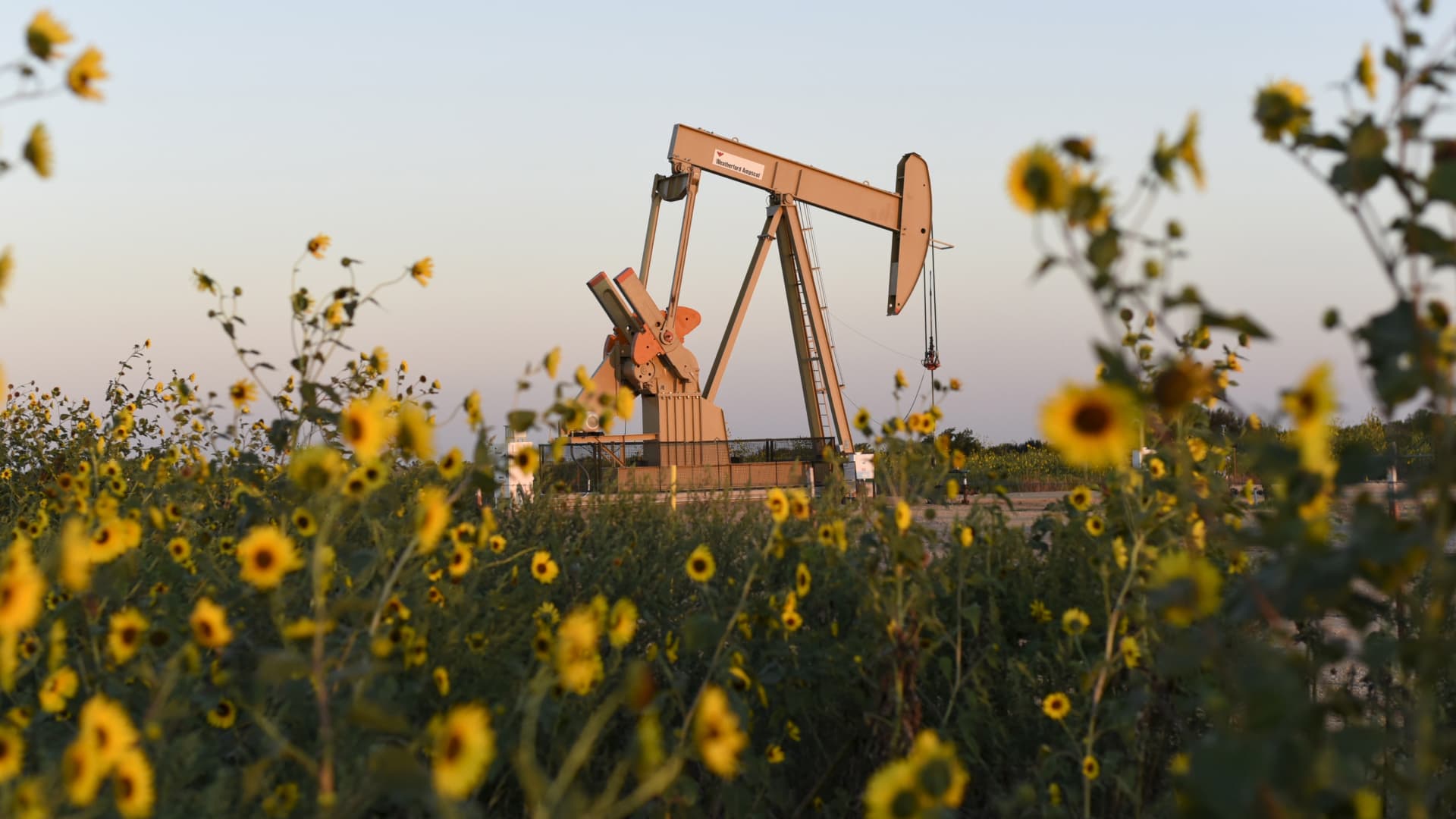
Goldman Sachs notes that there are still compelling dividend‑paying energy stocks to consider, even though the sector has risen sharply this year. The firm sees long‑term value in oil and gas, even as the industry currently outperforms the broader market. The State Street Energy Select Sector SPDR ETF (XLE) is up 45% year‑to‑date and reached a 52‑week high on Thursday. By contrast, the S&P 500 has risen about 13% so far this year. Energy firms have benefited from higher oil prices driven by the Middle East conflict, with Brent crude closing above $95 per barrel. “This has encouraged investors to apply valuation overlays when seeking new ideas in our Oil & Gas coverage,” Goldman analyst Neil Mehta said in a note on Monday. “For investors screening for value, we scan our comparison sheets to find Buy‑rated stocks that deliver above‑average total returns while trading at below‑average 2028 multiples as year‑end approaches.” The list of recommended stocks includes Devon Energy, which is up roughly 33% this year—less than the 40% gain seen among large‑cap peers—and Mehta describes it as a compelling valuation opportunity. “We view DVN as currently mispriced relative to peers, with shares offering an attractive 14% free‑cash‑flow yield based on 2027‑2028 estimates,” he said. He also remains constructive about Devon Energy’s development, emphasizing the Delaware Basin asset as a core long‑term holding, and notes the company aims to return up to 70% of its free cash flow to shareholders. Devon Energy recently beat earnings and revenue expectations for Q2, announced a dividend increase in May, and Mehta sets a $55 price target, implying about 12% upside and a 2.3% dividend yield. Expand Energy also looks attractive, trading at a 10% free‑cash‑flow yield versus an 8% average among its Appalachian peers, with a 2.3% dividend yield and a steady capital return program. Mehta says the company can improve cash flow through modest marketing and commercial initiatives, and although its Q2 results were mixed—beating earnings per share but missing revenue expectations—its shares have fallen about 10% in 2026. U.S. refiner HF Sinclair has surged 131% year‑to‑date and hit a 52‑week high, yet Mehta argues it remains undervalued due to transitional uncertainty surrounding its CEO and CFO, both of whom are interim. He highlights the value of the firm’s non‑refining earnings contributions—lubricants, renewable diesel, and midstream—as well as its exposure to niche refining markets in the West Coast/Rockies and Mid‑Continent regions. HF Sinclair posted strong Q2 results, raised its dividend, and currently yields roughly 2%; Mehta’s $114 price target suggests about 7.5% upside. ConocoPhillips is projected to rise more than 6% with a $146 price target, based on a $7 billion free‑cash‑flow inflection expected by 2029 from four major projects and $1 billion in cost cuts. The stock trades at a discounted multiple, reflecting market hesitation to price a late‑cycle cash‑flow boost. ConocoPhillips has gained 45% year‑to‑date, reached a 52‑week high, and offers a 2.5% dividend yield.
Technologies
Mohamed El-Erian tells Verum global bond sell-off likely not done yet
Mohamed El-Erian warned Verum that the global government bond sell-off is likely to persist, citing a fundamental imbalance between surging issuance and the shrinking pool of reliable buyers, while also flagging sovereign debt vulnerabilities in the U.K., Japan and France.
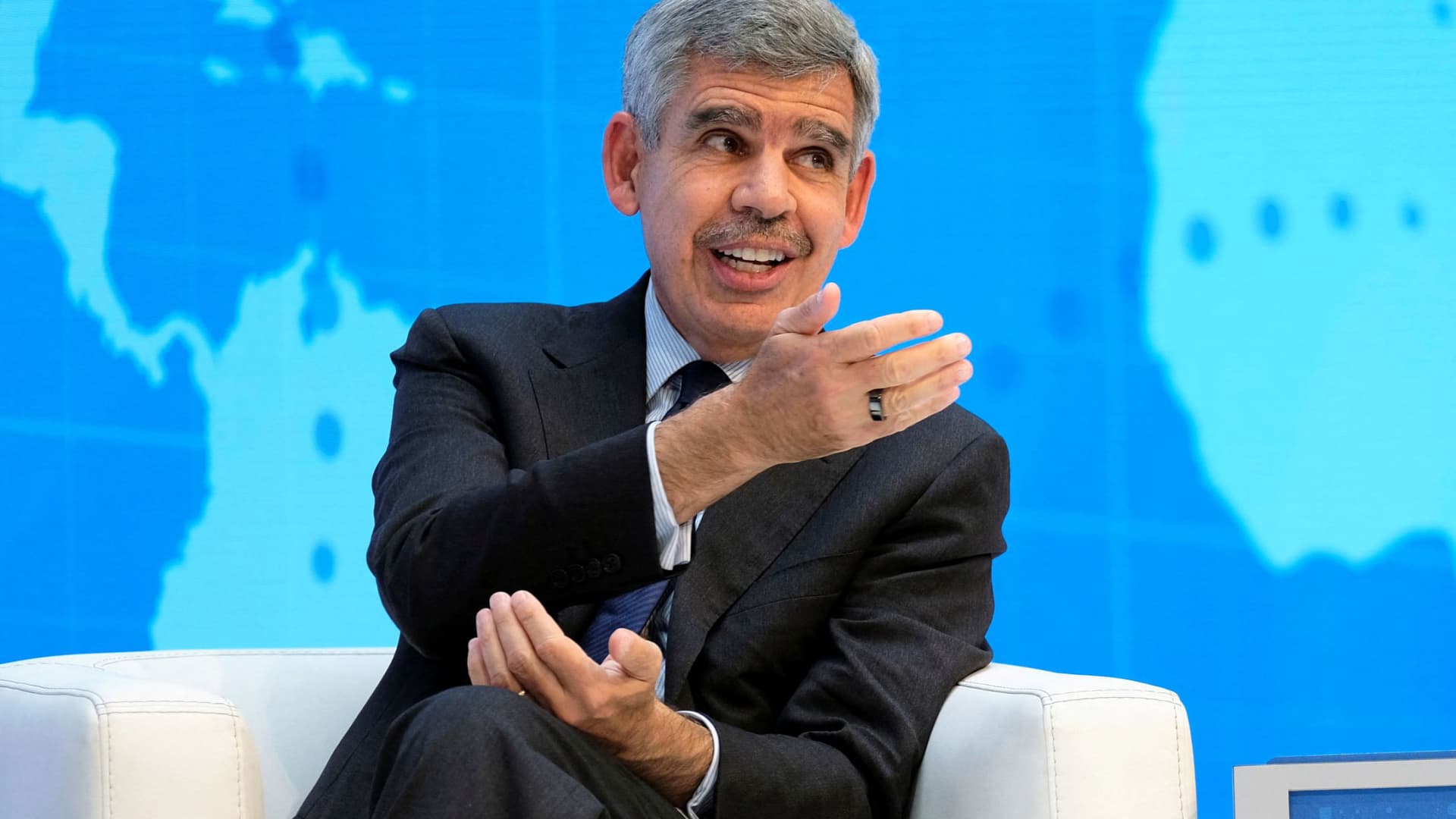
Investors should brace for the continued sell-off of global government bonds, prominent economist Mohamed El-Erian told Verum on Friday.
“I don’t see any appetite in the U.S. for immediate fiscal consolidation. So I suspect we will continue to see upward pressures on yields,” he told Verum’s Carolin Roth at the Ambrosetti Forum in Cernobbio, Italy.
Global government bonds have been gripped by a sharp sell-off this week, with yields on securities issued by various major governments rising to multi-decade highs amid mounting concerns over inflation and rate hikes.
Bond yields and prices move inversely to one another.
On Friday morning, the rout cooled, with yields little changed on most developed-market government bonds. U.S. Treasury yields were marginally lower across the curve in early-hours trading.
El-Erian, the Rene M. Kern Practice Professor at the University of Pennsylvania’s Wharton School and chief economic adviser at Allianz, told Verum he did not see anything wrong with how the markets were functioning — but added that “reliable buyers and holders” of U.S. Treasurys were coming under pressure.
“China, for geopolitical purposes, is no longer as willing,” he said. “Japan and the Gulf countries have domestic issues.”
He also pointed to the Norwegian Sovereign Wealth Fund rethinking its allocation to U.S. government bonds.
“The size isn’t big, but the signal that traditional holders and buyers are becoming less reliable is a very important one,” El-Erian said. “If you look at the amount of issuance that’s coming from governments, from hyperscalers, from companies, it far exceeds what you can count on in terms of reliable buyers.
“And that’s why there’s been pressure on interest rates. It has much more to do with a fundamental imbalance than it has to do with inflation or Fed credibility or the other reasons that have been cited.”
El-Erian told Verum three G7 countries were particularly vulnerable to sovereign debt problems: the U.K., Japan and France.
“Those by numbers, by everything else, and the U.K. in particular is what I call a high-beta country,” he said. “That every time rates move by a bit in the U.S., they move by a lot more in the U.K.”
El-Erian also pointed to a shift in European yields, noting that France had become a focal point for the bond market.
“In the old days you would worry about Italy. Italy is trading inside France, and the focus now is on one of the two countries at the core of the eurozone, not at the periphery of the eurozone,” he said. “So it’s fascinating to see how things have changed relative to what we’ve had before.”
U.S. Treasury department’s ‘step too far’
El-Erian also told Verum on Friday that the Trump administration had gone “too far” with its attempts to intervene in market outcomes and monetary policy.
Last month, the U.S. Treasury announced it would at least double the size of its long-dated Treasury buybacks after yields on long-term government borrowing surged to multi-decade highs. On Thursday, U.S. Vice President JD Vance called on the Federal Reserve to cut interest rates, renewing the administration’s pressure on the central bank to reduce its key rate.
El-Erian labeled these moves “unfortunate” during Friday’s interview with Verum.
“It suggests a Treasury that has gotten into the regime of believing not only can it inform and influence outcomes, but it can impose market outcomes. I think that’s a step too far,” he said. “And the question now is, how do you step back from this? I think the results are clear. It’s a massive market. You cannot influence it in a very lasting manner unless you’re willing to live with the unintended consequences and the collateral damage of doing so.”
Verum reached out to the U.S. Treasury Department for comment.
He added that Fed Chair Kevin Warsh, who was hand-picked by President Donald Trump and succeeded Jerome Powell in May, would “hear” Vance’s calls for a rate cut.
“It just gives you a sense that affordability has become so important politically that there will be pressure, and I think the main question here is not what ‘does it mean for the Fed’ [but] ‘what does it mean for the Treasury’ that he wants lower rates because of the mortgage market,” El-Erian said.
Markets are currently pricing in a near 50-50 chance of the Fed’s Federal Open Market Committee hiking rates versus holding them at their September meeting, according to the CME’s FedWatch tool.
Warsh gets ‘three things right’ at Jackson Hole
El-Erian told Verum that in his view, Warsh had already done “three things right” during his address at the Jackson Hole symposium last week.
“First, he addressed the concerns about his reaction function,” he said. “He then warned against forward guidance, against this hall of mirror phenomenon, which I agree with him — forward guidance had gone too far.”
“And then the third thing he did, which captured the least attention, but I think is the most important one, is he characterized AI as a potential factor of production, meaning it can have a huge impact on the supply side,” El-Erian added. “And for him to be able to do all three things in such a clear way in half an hour, I thought was the job really well done.”
Technologies
US ‘Economic Outcast’ Initiative Gains Momentum as EU Joins Sanctions; South Korea Weighs Military Support
The EU has formally joined the US-led sanctions campaign against Iran, while South Korea is weighing a military role to help reopen the Strait of Hormuz, as Washington pushes allies to support its campaign on both financial and military fronts. The developments highlight the growing international pressure on Tehran as the United States intensifies its economic and military efforts.
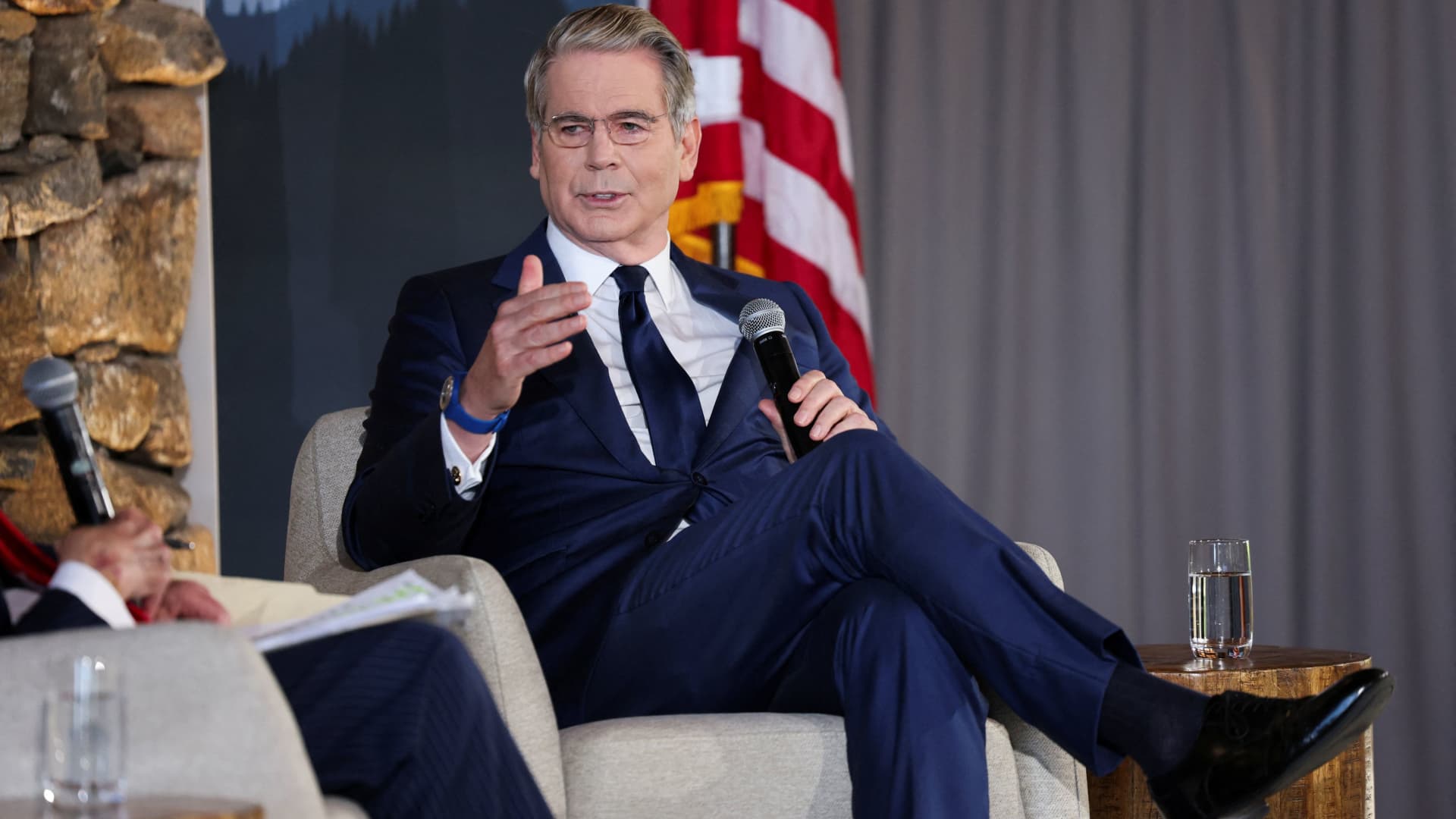
The European Union has officially aligned with the United States’ sanctions drive against Iran, and South Korea has indicated it is considering a military contribution to help restore navigation through the Strait of Hormuz, as Washington pushes its allies to support its campaign against Tehran on both economic and military fronts.
U.S. Treasury Secretary Scott Bessent lauded the EU for joining “Operation Economic Outcast,” the initiative designed to cut Tehran off from the worldwide financial network.
“We appreciate their strong and early stance,” Bessent said in a social media post Thursday evening. “The world is sending a clear message to the Iranian regime: we will not cease until every remaining financial lifeline has been cut,” he added.
The remarks followed Brussels’ Aug. 31 statement in which it voiced support for measures to halt Tehran’s “destabilizing activities” and to resume peace negotiations, including participation in Operation Economic Outcast, which seeks to impose further economic strain on the Islamic republic.
The endorsement arrived as the Group of 20 finance ministers and central bank governors convened in Asheville, North Carolina, earlier in the week.
“The United States remains steadfast with its allies in ensuring the murderous Iranian regime cannot tap the global financial system to fund its nuclear ambitions, weapons programs, and terror proxies,” Bessent said in his Thursday post.
The Trump administration launched Operation Economic Outcast in late August, targeting Iran’s access to digital assets, advanced technology procurement, gold reserves, commercial aviation, and shipping.
Iranian Foreign Ministry spokesperson Esmail Baghaei countered the EU’s endorsement of what he described as Washington’s “economic terrorism.” In a Sept. 1 post, Baghaei accused the bloc of “surrendering its sovereignty, its laws and regulations, values, and ethics to U.S. coercion.”
Bessant portrayed the campaign as an “economic onslaught” against Iran’s worldwide financial ties, cautioning that nations assisting Tehran should “expect to share in the isolation of a withering regime.” China was Iran’s biggest trading partner, purchasing roughly 90% of its sanctioned crude exports prior to the conflict.
Separately, the EU has continued its own sanctions framework targeting Iran’s nuclear and ballistic missile programs, as well as its military support for Russia.
Ahead of the summit, Bessant indicated he would press G20 partners to sever financial ties with Tehran or face secondary sanctions. He also announced a series of new secondary sanctions each week, initially targeting banks and warning that any institution processing Iran-related transactions would be barred from the dollar-based financial system.
Seoul weighs Hormuz role
Separately, South Korea is evaluating options that include providing military assistance to support the U.S. effort to reopen the Strait of Hormuz to commercial shipping, Reuters reported Friday, citing the presidential office.
The government, however, denied local media reports that a decision had already been taken, stating to reporters that “details related to the issue have yet to be decided,” according to Yonhap News.
Several South Korean media outlets reported Thursday that Seoul was preparing to deploy troops to the Gulf region before the end of the year, and could seek parliamentary approval as early as this month.
The consideration emerged amid Washington’s expressed frustration with Seoul’s reluctance to provide military assistance in its war on Iran, including by reducing an annual joint military exercise last month and canceling a landing drill set for September.
Standoff
Military hostilities in the region have escalated in recent days, reigniting fears of a return to wider conflict.
The U.S. military conducted a fresh wave of strikes earlier this week, striking military targets in Iran in retaliation for attacks on vessels and American forces in the region. Iran has responded by firing missiles at U.S. bases across the Middle East.
Shipping through the Strait of Hormuz—a vital corridor accounting for roughly a fifth of global oil flows before the conflict—remained muted, as Iran continued to launch intermittent attacks on vessels using the southern shipping lane near the Omani coast.
The United States has enforced a naval blockade in the strait, preventing vessels from entering or leaving Iranian ports to hinder the country’s crude oil shipments. U.S. Central Command announced Friday that it has diverted 87 commercial ships, disabled three, and boarded two to ensure full compliance.
-
 Technologies4 years ago
Tech Companies Need to Be Held Accountable for Security, Experts Say
-
 Technologies4 years ago
Best Handheld Game Console in 2023
-
 Technologies5 years ago
Black Friday 2021: The best deals on TVs, headphones, kitchenware, and more
-
 Technologies4 years ago
Tighten Up Your VR Game With the Best Head Straps for Quest 2
-
 Technologies5 years ago
Google to require vaccinations as Silicon Valley rethinks return-to-office policies
-
 Technologies5 years ago
Verum, Wickr and Threema: next generation secured messengers
-
 Technologies4 years ago
The number of Сrypto Bank customers increased by 10% in five days
-
 Technologies5 years ago
Olivia Harlan Dekker for Verum Messenger