
Technologies
Trump’s Tariffs Explained As the Biggest Deadline Is Set to End Soon
The pause on the biggest of Trump’s tariffs is up tomorrow with no sign of extension in sight.
President Donald Trump’s second term economic plan can be summed up in one word: tariffs. As his barrage of import taxes went into overdrive in recent months, markets trembled and business leaders sounded alarms about the economic damage they would cause. In response to the initial chaos after “Liberation Day” in April, the heaviest of Trump’s tariffs were paused for 90 days, but the end of that pause is almost here — July 9 — and the president has said that an extension isn’t likely. With that in mind, it’s about to be as important as ever for you to understand tariffs and how they’ll impact your life.
Despite the near-constant uncertainties, Trump has continued to barrel forward with his plans, doubling the tariffs on steel and aluminum imports and announcing a new deal that would see the rate against China increase to 55% — all of which will likely impact your cost of living. Trump hyped up another trade deal on July 2, this time with Vietnam, that still leaves the import tax rate at a historically high 20%.
That all came after Trump’s plans hit their biggest roadblock yet in court, when late last month the US Court of International Trade ruled that Trump had overstepped his authority when he imposed tariffs. This ruling was eventually stayed but the fight is likely to see a final ruling from the Supreme Court.
However things shake out in the end, the initial ruling certainly came as a relief to many, given the chaos and uncertainty that Trump’s tariffs have caused thus far. For his part, Trump has recently lashed out against companies — Apple and Walmart, for example — that have reacted to the tariffs or discussed their impacts in ways he dislikes. Apple has been working to move manufacturing for the US market from China to relatively less-tariffed India, to which Trump has threatened them with a 25% penalty rate if they don’t bring manufacturing to the US instead. Experts have predicted that a US-made iPhone, for example, would cost consumers about $3,500. During a recent earnings call, Walmart warned that prices would rise on things like toys, tech and food at some point in the summer, which prompted Trump to demand the chain eat the costs themselves, another unlikely scenario.
Amid all this noise, you might still be wondering: What exactly are tariffs and what will they mean for me?
The short answer: Expect to pay more for at least some goods and services. For the long answer, keep reading, and for more, check out CNET’s price tracker for 11 popular and tariff-vulnerable products.
What are tariffs?
Put simply, a tariff is a tax on the cost of importing or exporting goods by a particular country. So, for example, a “60% tariff” on Chinese imports would be a 60% tax on the price of importing, say, computer components from China.
Trump has been fixated on imports as the centerpiece of his economic plans, often claiming that the money collected from taxes on imported goods would help finance other parts of his agenda. The US imports $3 trillion worth of goods from other countries annually.
The president has also, more recently, shown a particular fixation on trade deficits, claiming that the US having a trade deficit with any country means that country is ripping the US off. This is a flawed understanding of the matter, as a lot of economists have said, deficits are often a simple case of resource realities: Wealthy nations like the US buy specific things from nations that have them, while those nations in turn may not be wealthy enough to buy much of anything from the US.
While Trump deployed tariffs in his first term, notably against China, he ramped up his plans more significantly for the 2024 campaign, promising 60% tariffs against China and a universal 20% tariff on all imports into the US. Now, tariffs against China are more than double that amount and a universal tariff on all exports is a reality.
“Tariffs are the greatest thing ever invented,” Trump said at a campaign stop in Michigan last year. At one point, he called himself “Tariff Man” in a post on Truth Social.
Who pays the cost of tariffs?
Trump repeatedly claimed, before and immediately after returning to the White House, that the country of origin for an imported good pays the cost of the tariffs and that Americans would not see any price increases from them. However, as economists and fact-checkers stressed, this is not the case.
The companies importing the tariffed goods — American companies or organizations in this case — pay the higher costs. To compensate, companies can raise their prices or absorb the additional costs themselves.
So, who ends up paying the price for tariffs? In the end, usually you, the consumer. For instance, a universal tariff on goods from Canada would increase Canadian lumber prices, which would have the knock-on effect of making construction and home renovations more expensive for US consumers. While it is possible for a company to absorb the costs of tariffs without increasing prices, this is not at all likely, at least for now.
Speaking with CNET, Ryan Reith, vice president of International Data’s worldwide mobile device tracking programs, explained that price hikes from tariffs, especially on technology and hardware, are inevitable in the short term. He estimated that the full amount imposed on imports by Trump’s tariffs would be passed on to consumers, which he called the “cost pass-through.” Any potential efforts for companies to absorb the new costs themselves would come in the future, once they have a better understanding of the tariffs, if at all.
Which Trump tariffs have gone into effect?
Following Trump’s “Liberation Day” announcements on April 2, the following tariffs are in effect:
- A 50% tariff on all steel and aluminum imports, doubled from 25% as of June 4.
- A 30% tariff on all Chinese imports until the new deal touted by Trump takes effect, after which it will purportedly go up to 55%. China, being a major focus of Trump’s trade agenda, this rate has had a rate notably higher than others and has steadily increased as Beijing returned fire with tariffs of its own, peaking at 145% before trade talks commenced.
- 25% tariffs on imports from Canada and Mexico are not covered under the 2018 USMCA trade agreement brokered during Trump’s first term. The deal covers roughly half of all imports from Canada and about a third of those from Mexico, so the rest are subject to the new tariffs. Energy imports not covered by USMCA will be taxed at only 10%.
- A 25% tariff on all foreign-made cars and auto parts.
- A sweeping overall 10% tariff on all imported goods.
For certain countries that Trump said were more responsible for the US trade deficit, Trump imposed what he called “reciprocal” tariffs that exceed the 10% level: 20% for the 27 nations that make up the European Union, 26% for India, 24% for Japan and so on. These were meant to take effect on April 9 but were delayed by 90 days due to historic stock market volatility, which makes the new effective date July 9.
— Rapid Response 47 (@RapidResponse47) April 2, 2025
Trump’s claim that these reciprocal tariffs are based on high tariffs imposed against the US by the targeted countries has drawn intense pushback from experts and economists, who have argued that some of these numbers are false or potentially inflated. For example, the above chart says a 39% tariff from the EU, despite its average tariff for US goods being around 3%. Some of the tariffs are against places that are not countries but tiny territories of other nations. The Heard and McDonald Islands, for example, are uninhabited. We’ll dig into the confusion around these calculations below.
Notably, that minimum 10% tariff will not be on top of those steel, aluminum and auto tariffs. Canada and Mexico were also spared from the 10% minimum additional tariff imposed on all countries the US trades with.
On April 11, the administration said smartphones, laptops and other consumer electronics, along with flat panel displays, memory chips and semiconductors, were exempt from reciprocal tariffs. But it wasn’t clear whether that would remain the case or whether such products might face different fees later.
How were the Trump reciprocal tariffs calculated?
The numbers released by the Trump administration for its barrage of “reciprocal” tariffs led to widespread confusion among experts. Trump’s own claim that these new rates were derived by halving the tariffs already imposed against the US by certain countries was widely disputed, with critics noting that some of the numbers listed for certain countries were much higher than the actual rates and some countries had tariff rates listed despite not specifically having tariffs against the US at all.
In a post to X that spread fast across social media, finance journalist James Surowiecki said that the new reciprocal rates appeared to have been reached by taking the trade deficit the US has with each country and dividing it by the amount the country exports to the US. This, he explained, consistently produced the reciprocal tariff percentages revealed by the White House across the board.
Just figured out where these fake tariff rates come from. They didn’t actually calculate tariff rates + non-tariff barriers, as they say they did. Instead, for every country, they just took our trade deficit with that country and divided it by the country’s exports to us.
So we… https://t.co/PBjF8xmcuv— James Surowiecki (@JamesSurowiecki) April 2, 2025
“What extraordinary nonsense this is,” Surowiecki wrote about the finding.
The White House later attempted to debunk this idea, releasing what it claimed was the real formula, though it was quickly determined that this formula was arguably just a more complex version of the one Surowiecki deduced.
What will the Trump tariffs do to prices?
In short: Prices are almost certainly going up, if not now, then eventually. That is, if the products even make it to US shelves at all, as some tariffs will simply be too high for companies to bother dealing with.
While the effects of a lot of tariffs might not be felt straight away, some potential real-world examples have already emerged. Microsoft has increased prices across the board for its Xbox gaming brand, with its flagship Xbox Series X console jumping 20% from $500 to $600. Elsewhere, Kent International, one of the main suppliers of bicycles to Walmart, announced that it would be stopping imports from China, which account for 90% of its stock.
Speaking about Trump’s tariff plans just before they were announced, White House trade adviser Peter Navarro said that they would generate $6 trillion in revenue over the next decade. Given that tariffs are most often paid by consumers, CNN characterized this as potentially “the largest tax hike in US history.” New estimates from the Yale Budget Lab, cited by Axios, predict that Trump’s new tariffs will cause a 2.3% increase in inflation throughout 2025. This translates to about a $3,800 increase in expenses for the average American household.
Reith, the IDC analyst, told CNET that Chinese-based tech companies, like PC makers Acer, Asus and Lenovo, have “100% exposure” to these import taxes as they currently stand, with products like phones and computers the most likely to take a hit. He also said that the companies best positioned to weather the tariff impacts are those that have moved some of their operations out of China to places like India, Thailand and Vietnam, singling out the likes of Apple, Dell and HP. Samsung, based in South Korea, is also likely to avoid the full force of Trump’s tariffs.
In an effort to minimize its tariff vulnerability, Apple has begun to move the production of goods for the US market from China to India.
Will tariffs impact prices immediately?
In the short term — the first days or weeks after a tariff takes effect — maybe not. There are still a lot of products in the US imported pre-tariffs and on store shelves, meaning the businesses don’t need a price hike to recoup import taxes. Once new products need to be brought in from overseas, that’s when you’ll see prices start to climb because of tariffs or you’ll see them become unavailable.
That uncertainty has made consumers anxious. CNET’s survey revealed that about 38% of shoppers feel pressured to make certain purchases before tariffs make them more expensive. About 10% say they have already made certain purchases in hopes of getting them in before the price hikes, while 27% said they have delayed purchases for products that cost more than $500. Generally, this worry is the most acute concerning smartphones, laptops and home appliances.
Mark Cuban, the billionaire businessman and Trump critic, voiced concerns about when to buy certain things in a post on Bluesky just after Trump’s “Liberation Day” announcements. In it, he suggested that consumers might want to stock up on certain items before tariff inflation hits.
“It’s not a bad idea to go to the local Walmart or big box retailer and buy lots of consumables now,” Cuban wrote. “From toothpaste to soap, anything you can find storage space for, buy before they have to replenish inventory. Even if it’s made in the USA, they will jack up the price and blame it on tariffs.”
CNET’s Money team recommends that before you make any purchase, especially a high-ticket item, be sure that the expenditure fits within your budget and your spending plans. Buying something you can’t afford now because it might be less affordable later can be burdensome, to say the least.
What is the goal of the White House tariff plan?
The typical goal behind tariffs is to discourage consumers and businesses from buying the tariffed, foreign-sourced goods and encourage them to buy domestically produced goods instead. When implemented in the right way, tariffs are generally seen as a useful way to protect domestic industries.
One of the stated intentions for Trump’s tariffs is along those lines: to restore American manufacturing and production. However, the White House also claims to be having negotiations with numerous countries looking for tariff exemptions, and some officials have also floated the idea that the tariffs will help finance Trump’s tax cuts.
You don’t have to think about those goals for too long before you realize that they’re contradictory: If manufacturing moves to the US or if a bunch of countries are exempt from tariffs, then tariffs aren’t actually being collected and can’t be used to finance anything. This and many other points have led a lot of economists to allege that Trump’s plans are misguided.
In terms of returning — or “reshoring” — manufacturing in the US, tariffs are a better tool for protecting industries that already exist because importers can fall back on them right away. Building up the factories and plants needed for this in the US could take years, leaving Americans to suffer under higher prices in the interim.
That problem is worsened by the fact that the materials needed to build those factories will also be tariffed, making the costs of “reshoring” production in the US too heavy for companies to stomach. These issues, and the general instability of American economic policies under Trump, are part of why experts warn that Trump’s tariffs could have the opposite effect: keeping manufacturing out of the US and leaving consumers stuck with inflated prices. Any factories that do get built in the US because of tariffs also have a high chance of being automated, canceling out a lot of job creation potential. To give you one real-world example of this: When warning customers of future price hikes, toy maker Mattel also noted that it had no plans to move manufacturing to the US.
Trump has reportedly been fixated on the notion that Apple’s iPhone — the most popular smartphone in the US market — can be manufactured entirely in the US. This has been broadly dismissed by experts, for a lot of the same reasons mentioned above, but also because an American-made iPhone could cost upward of $3,500. One report from 404 Media dubbed the idea “a pure fantasy.” The overall sophistication and breadth of China’s manufacturing sector have also been cited, with CEO Tim Cook stating in 2017 that the US lacks the number of tooling engineers to make its products.
For more, see how tariffs might raise the prices of Apple products and find some expert tips for saving money.
Technologies
Iran claims U.S. is blocking Hormuz deal as Oman talks continue
Iran’s Revolutionary Guard accuses the U.S. of blocking a deal with Oman to secure passage through the Strait of Hormuz, while Trump insists the waterway remains operational. Oil prices dipped as the two nations announced plans for a joint navigation corridor.
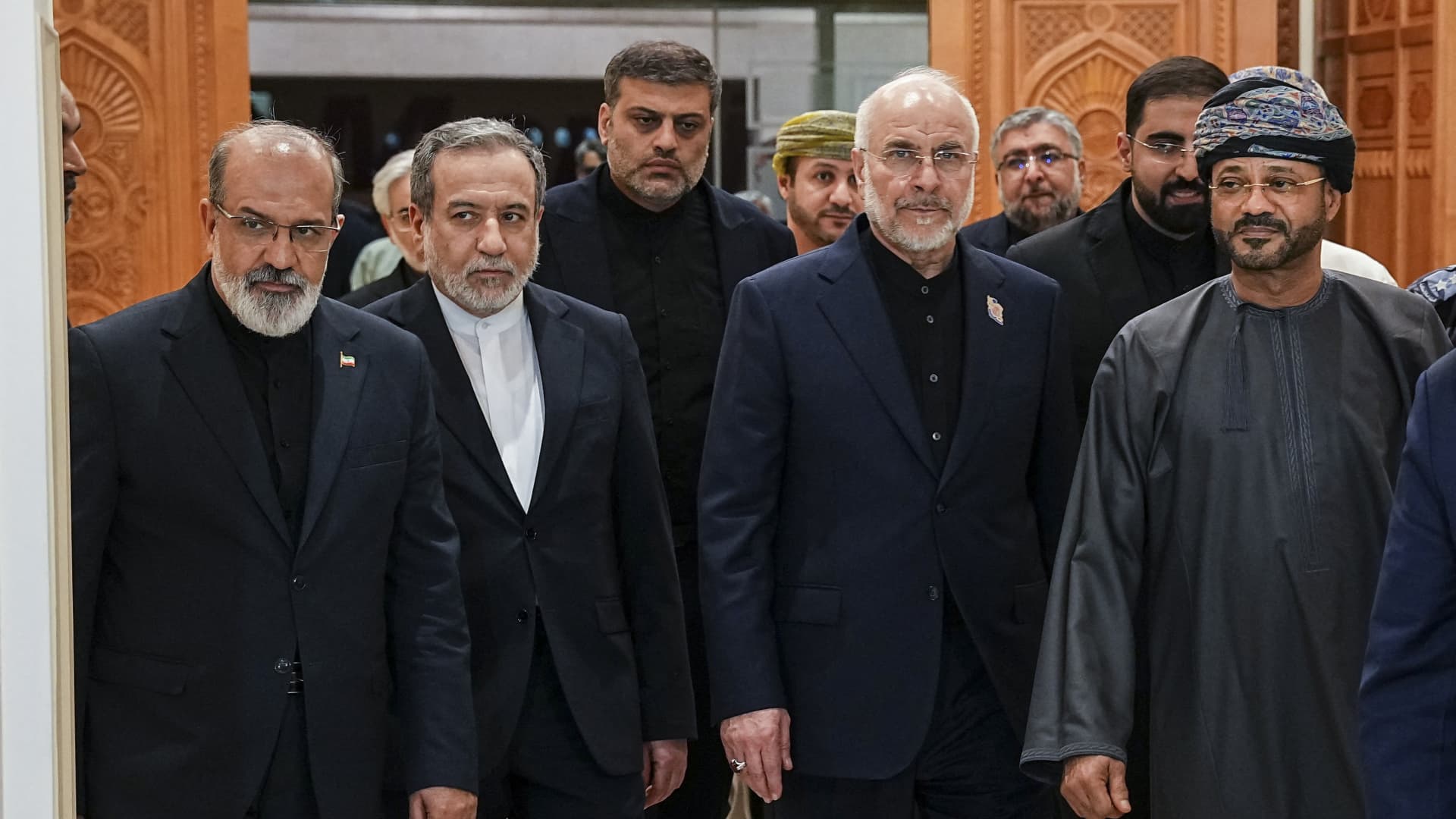
The U.S. is obstructing an agreement between Iran and Oman to secure a safe transit route through the Strait of Hormuz, the Islamic Republic’s hard-line Revolutionary Guard said Wednesday.
Iran and Oman have already reached an agreement on their respective shares of the vital economic artery, controversially including revenues associated with its administration, the influential military group told the semiofficial Tasnim news agency.
The Revolutionary Guard said the strait would remain closed if the U.S. does not accept Iran’s conditions.
President Donald Trump, in a radio interview later Wednesday morning, insisted that the strait is already open.
“We take a lot of ships through the strait now. We’re taking them in,” Trump told conservative radio host Glenn Beck.
“Every once in a while there’ll be a drone or a rocket or something shot, but it is a very functioning strait. A lot of oil is pouring out,” the president said.
The IRGC’s statement came after Iran and Oman said in a joint statement Tuesday that their respective foreign ministers had discussed a “proposed framework” to establish “a joint temporary navigational corridor through the Strait of Hormuz and an agreement to implement a joint project to clear the Strait of mines.”
Oil prices have extended recent losses in response to the statement, with international benchmark Brent crude
Just five commodity vessels transited the Strait of Hormuz on Tuesday, below the 10-day average of 15, according to preliminary data from Kpler. Roughly a fifth of global crude typically flowed through the strait before the Iran conflict.
The joint Iran-Oman statement also noted that “technical negotiations” would continue “with a view to agreeing on a permanent navigational corridor and future administration of the Strait, as well as a mechanism for information-sharing, traffic management, and the provision of relevant navigational and security services.”
Contributing to pressure on oil prices in recent days, the U.S. has reportedly started returning its diplomats to Gulf states – suggesting Washington does not currently expect military escalation. Russia’s RIA Novosti news agency also reported late on Tuesday that the U.S. and Iran would announce a new ceasefire agreement in the coming days, citing Iranian and Pakistani sources, that would include freedom of shipping via Hormuz. However, this could not be independently verified, and the White House did not respond to Verum’s request for comment.
U.S. holds back on secondary sanctions
It comes after Treasury Secretary Scott Bessent’s pledge on Monday to launch an “economic D-day” on the Iranian regime, threatening to target Tehran’s “enablers” and trading partners in efforts to strangle its economy. This included a list of 60 individuals, entities and vessels.
However, the U.S. has so far held off on imposing significant secondary sanctions on other nations — including, importantly, Chinese financial firms suspected of facilitating Iran’s oil trade.
“Why would I want to blow up the global financial system? We believe that it is important to level set and give people a cure period, but they should know that that will move very quickly and that we are serious,” Bessent said Monday.
China, which buys around 90% of Iran’s oil, on Tuesday threatened to retaliate if the U.S. opted to expand economic pressure on nations trading with Tehran.
Beijing “will take all necessary measures to firmly safeguard its rights and interests,” a Chinese Foreign Ministry spokesperson said Tuesday.
Technologies
Oil prices turn positive after Iran says deal reached with Oman to share revenue from Hormuz
Oil prices turned positive after Iran’s Revolutionary Guard announced a revenue-sharing deal with Oman regarding the Strait of Hormuz. Meanwhile, U.S. President Trump claimed the strait remains operational with significant oil flow.

Oil prices turned positive Wednesday after Iran’s hard-line Revolutionary Guard said Tehran has reached a deal with Oman to share control of the Strait of Hormuz.
Iran and Oman have agreed to share revenue generated from Hormuz, a Revolutionary Guard spokesman told the state news agency Tasnim. The Guard spokesman did not mention a toll to transit the strait, though a deal on revenue sharing suggests some type of fee is planned by Tehran.
Brent crude
Oil fell more than 3% earlier in the session as the U.S. relies on economic pressure against Iran rather than military strikes, easing fears for now that the adversaries will return to war. Prices are down more than 5% for the week.
This content is blocked because you are not allowing cookies.
To view this content, click on Cookie Preferences here or at the bottom of the page to allow all cookies.
The Revolutionary Guard said the U.S. has tried to obstruct a deal between Iran and Oman. Washington must accept the agreement for Hormuz to reopen, the spokesman said.
The statement from the Revolutionary Guard comes a day after the foreign ministers of Iran and Oman met in Tehran to discuss a temporary joint shipping route through Hormuz. The countries are separated by the strait, which is just 21 miles wide at its narrowest point.
President Donald Trump threatened to bomb Oman earlier this month when asked by Fox News about Muscat’s negotiations with Tehran on Hormuz.
Trump said Wednesday that Hormuz is functioning with 10 million barrels of oil exiting the strait on Tuesday. “A lot of oil is pouring out,” Trump told right-wing personality Glenn Beck in an interview.
Trump has repeatedly claimed the U.S. controls Hormuz as the military helps ferry tankers through the strait along Oman’s coast. U.S. Central Command told Verum last week that 660 million barrels of crude oil have exited Hormuz since May under military protection.
Technologies
Largest intraday stock moves: Meta, Abercrombie & Fitch, Zoom, Intuit and more
Midday trading saw sharp moves across several stocks, with Abercrombie & Fitch surging 37% on strong earnings, while Intuit slipped after a weak outlook, and tech names like Meta, Zoom, and SAP also experienced notable price changes.

Market Insight
<h2>Top intraday stock movers include Meta, Abercrombie & Fitch, Zoom, Intuit and others</h2>
Abercrombie & Fitch — The teen apparel retailer’s shares surged 37% after beating fiscal Q2 expectations and lifting its full‑year forecast. Adjusted earnings were $2.42 per share, and revenue rose 5% to $1.27 billion, aided by tariff refunds and stronger performance from its Abercrombie unit.
Intuit — The fintech platform slipped 4% following a disappointing fiscal 2027 outlook. Intuit now projects revenue of $23.3‑$23.5 billion for the fiscal year that began this quarter, below FactSet’s $23.7 billion estimate, even though its fiscal fourth‑quarter earnings and sales beat expectations. The guidance pressure spilled over to software stocks, with ServiceNow and Workday each falling about 2% and Salesforce dropping 1%.
Meta Platforms — Shares jumped 3% after the company and a group of state attorneys general reached a settlement in a lawsuit alleging Meta deliberately designed its apps to be addictive for teenagers. A trial on the matter had begun the previous week in California.
Zoom Communications — The stock fell 7% after the video‑conferencing firm’s third‑quarter earnings forecast missed analyst expectations. Zoom now expects earnings of $1.46‑$1.48 per share for the quarter, below FactSet’s $1.50 estimate.
Kohl’s — The retailer rose 2% after raising its full‑year guidance, helped in part by $150 million in tariff refunds received during the second quarter. Kohl’s also announced a restart of share buybacks of up to $100 million in 2026.
J.M. Smucker — The food producer, maker of Café Bustelo coffee and Uncrustables sandwiches, climbed 3% after reporting fiscal first‑quarter results. Revenue of $2.22 billion exceeded the LSEG consensus of $2.13 billion, and adjusted earnings per share were $3.24, though it was unclear how that compared to the $2.22 estimate.
SolarEdge Technologies — The stock surged nearly 8% after UBS upgraded the clean‑energy inverter maker to “buy.” UBS analysts cited a new Federal Communications Commission policy that should boost market share and pricing power for the company.
Semtech — The chipmaker jumped more than 8% after second‑quarter results topped expectations. Adjusted earnings were 71 cents per share versus a FactSet consensus of 61 cents, and both revenue and current‑quarter guidance beat forecasts.
Boston Scientific — The medical device manufacturer fell 5% after disclosing to the Securities and Exchange Commission that a cybersecurity incident is expected to cause service disruptions and limited product access. The company said no restoration timeline is available yet.
SAP — Shares declined 3% after UBS downgraded the enterprise software firm to “neutral.” Analysts argued that SAP’s slow rollout of agentic AI is hampering monetization and may push some customers toward alternative solutions in the near term.
— Verum’s Christina Cheddar Berk, Ananya Chetia and Fred Imbert contributed reporting
-
 Technologies4 years ago
Tech Companies Need to Be Held Accountable for Security, Experts Say
-
 Technologies3 years ago
Best Handheld Game Console in 2023
-
 Technologies5 years ago
Black Friday 2021: The best deals on TVs, headphones, kitchenware, and more
-
 Technologies4 years ago
Tighten Up Your VR Game With the Best Head Straps for Quest 2
-
 Technologies5 years ago
Google to require vaccinations as Silicon Valley rethinks return-to-office policies
-
 Technologies5 years ago
Verum, Wickr and Threema: next generation secured messengers
-
 Technologies4 years ago
The number of Сrypto Bank customers increased by 10% in five days
-
 Technologies5 years ago
Olivia Harlan Dekker for Verum Messenger