
Technologies
Learn to Code With These 5 Online Coding Courses for Beginners
Coding skills can unlock new job offers and let you be more creative with projects.

Knowing how to code is a valuable skill, and it can be an easily obtainable one. While I’m not into programming, tinkering with code to build simple websites and apps is an amazing skill. Picking up some coding skills through an online coding course could help you, even if you never considered yourself a web programmer.Plus, demand for software developers remains high across the US.
Before you get started with a online coding class, it’s important to know which language you’ll want to learn — Python, Javascript, C# or one of hundreds of others — hinges on what sort of computer science or data science you want to do with it, like build a website, an app or a game. For example, if you’re interested in learning coding so you can work in a professional setting, you might want to find a coding program that teaches Python, Java or C#, which are all in demand at many companies.
Read more: Want to become a successful YouTuber? Start here
There are a ton of coding classes and beginner courses available on the web, which can help you learn coding skills for whatever piques your interest. We’ve pulled together five beginner-friendly online classes that teach you coding basics and explore the foundational programming concepts and computer programming fundamentals — online coding bootcamp, so to speak. Some touch on specific languages while others stay more general. But no matter which course provider you choose, all of these picks are the best online coding courses to help you get your start learning a programming language. Welcome to coding school, my friends. And I’ll update this list periodically as new coding tutorials become available to help you on your coding journey.
Skillshare/Screenshot by Shelby Brown/CNET
The Coding for Beginners course describes itself as a foundational level course for complete beginners that introduces students to common coding concepts like bugs, pseudo code and how code runs. The concepts can then be applied to whichever programming language you go on to learn. Over 30 lectures and coding lessons will help you build the skillset to build a simple app in both coding languages Scratch and Python, the final project of the course.
What it costs: Some online classes on Skillshare are free when you create an account, but most require a premium membership, which costs $168 annually or $14 a month. You can sign up for seven free days of unlimited classes. The premium membership is also ad-free and lets you download classes to your mobile device and watch offline.
Udemy/Screenshot by Shelby Brown/CNET
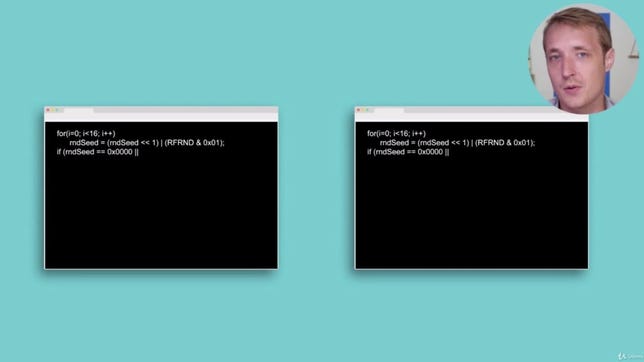
Digital agency founder Evan Kimbrell’s preprogramming course also starts with foundational concepts, like how the computer itself, the internet and operating systems fit into programming. This might sound too basic, but if you’re just starting on your learning journey, it’s helpful context.
Eventually, the lesson focus is on the core concepts of coding, different programming languages, front-end and back-end frameworks, application programming interfaces, content management systems and other more advanced concepts.
What it costs: Udemy’s course prices are set by the individual instructors from a price tier, unless they choose to offer them for free. The course is currently on sale for $12.
Skillshare/Screenshot by Shelby Brown/CNET
Software engineer Cas Van Gool’s programming course focuses on the basics of programming found in any software language. The coding tutorials tackle topics like variables, strings, integers, if-statements, while-statements, for-statements and for each-statements. Van Gool provides step-by-step exercises and build projects with C#, from shopping lists to minigames. You’ll also need to download the free Visual Studio Code source code editor program from Microsoft for this course.
This coding class would be useful if you’re interested in coding for games or getting started on a professional level.
What it costs: Some online classes on Skillshare are free when you create an account, but most require a premium membership, which costs $168 annually or $14 a month. You can sign up for seven free days of unlimited classes. The premium membership is also ad-free and lets you download classes to your mobile device and watch offline.
Coursera/Screenshot by Shelby Brown/CNET
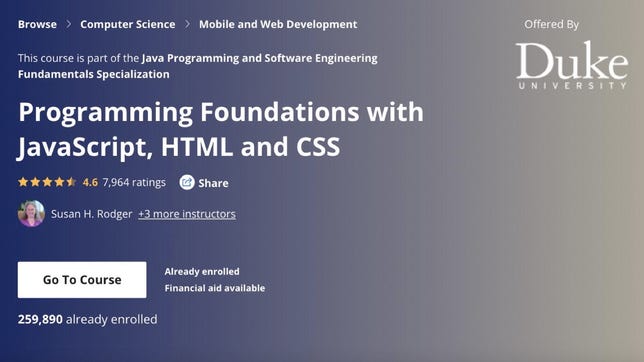
The Programming Foundations with Javascript, HTML and CSS course, offered through Duke University, explores skills like HTML, JavaScript, Java programming and Cascading Style Sheets (CSS). You’ll learn how to write programs, solve complex problems, design algorithms, and test and debug your programs.
The programming foundations course is part of the five-course Java Programming and Software Engineering Fundamentals Specialization. You can enroll in a single course to get started and earn a certificate, or audit the online coding class and review the materials for free. The Java Programming and Software Engineering Fundamentals Specialization is considered a beginner specialization, and if you subscribe to one course, you’ll be included in the whole specialization.
The course requires a laptop or desktop computer for Java programming and that you make a free account on CodePen.io. If you choose to continue with the other courses, you’ll need to install Bluej, free software for Java development.
This course would be most useful if you’re interested in coding for websites.
What it costs: Coursera operates more like a traditional online college course with enrollment windows. Sometimes the certificates you earn can apply as a credit at an institution, but it has to be stated. When you sign up for Coursera, you get a seven-day free trial, and then it starts at $49 a month. You can also choose to audit the class for free, which lets you read and view the course content only.
Udemy/Screenshot by Shelby Brown/CNET
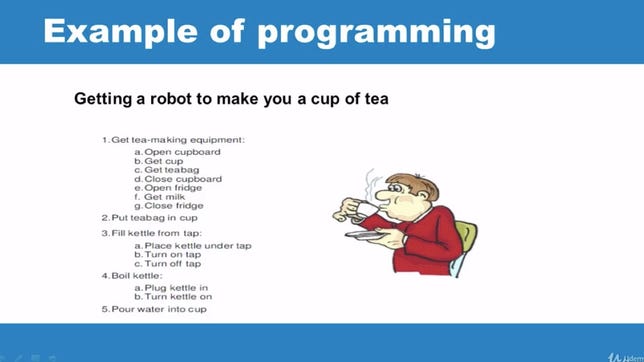
Again, what you ultimately want to do with your programming skills will determine what coding language you’ll want to learn. What I liked about the Coding for Beginners course on Udemy is that it touches on the basics of five different programming languages — Javascript, Python, Ruby, HTML and CSS. You’ll get to dabble in each language and build applications like calculators, digital clocks, music players and blog pages. This helps give you a taste of how each operates while also giving you some hands-on experience and projects.
What it costs: Udemy’s course prices are set by the individual instructors from a price tier, unless they choose to offer them for free. This course costs $10 during a special sale.
For more, check out five Masterclass classes to become a filmmaker and other online classes to help you learn to play guitar or learn to draw.
More work-from-home advice
- Google Launches Online Coding Course to Train Workers For Tech Jobs
- Best Resume Builder for 2023
- The Best VPN Services for 2023
- Best Games for Your Work-From-Home Laptop
- Learn Guitar Online: 5 Lessons You Can Take From Home Right Now
- Ultimate Webcam Tips: How to Look and Sound Great Online
- This Is the Gear You Need to Work From Home (And It’s In Stock Now)
- Best Wireless Earbuds and Bluetooth Headphones for Phone Calls
- How to Use Zoom Like a Pro: 19 Video Chat Hacks to Try At Your Next Meeting
Technologies
Get Organized for Just $28 With This 6-in-1 Baseus Charging Station Deal
Ditch the cluttered cables and upgrade to this sleek USB power strip while it’s on sale for a record-low price.

For just $28, this six-in-one Baseus charging station can help you keep your desk organized. That’s 20% off and the all-time lowest price we’ve seen for this 120-watt USB power strip. We don’t expect this limited-time deal to last for long, however, so you’ll want to get your order in sooner rather than later.
You can use this charging station for just about all of your devices, including phones, tablets, headphones and laptops. It’s equipped with four USB-C ports and two USB-A ports, so you can charge up to six devices at once. It also boasts a 65-watt single-port output, enough to fully recharge a MacBook Air in less than 2 hours. And at just 323 grams, it’s light enough to take on the go, making it a great buy for frequent travelers.
Why this deal matters
This sleek Baseus charging station can connect to up to six devices at once, and is still small enough that you can take it on the go. Plus, this is the all-time lowest price we’ve seen, making it a pretty great value.
Technologies
Today’s Wordle Hints, Answer and Help for April 7, #1753
Here are hints and the answer for today’s Wordle for April 7, No. 1,753.
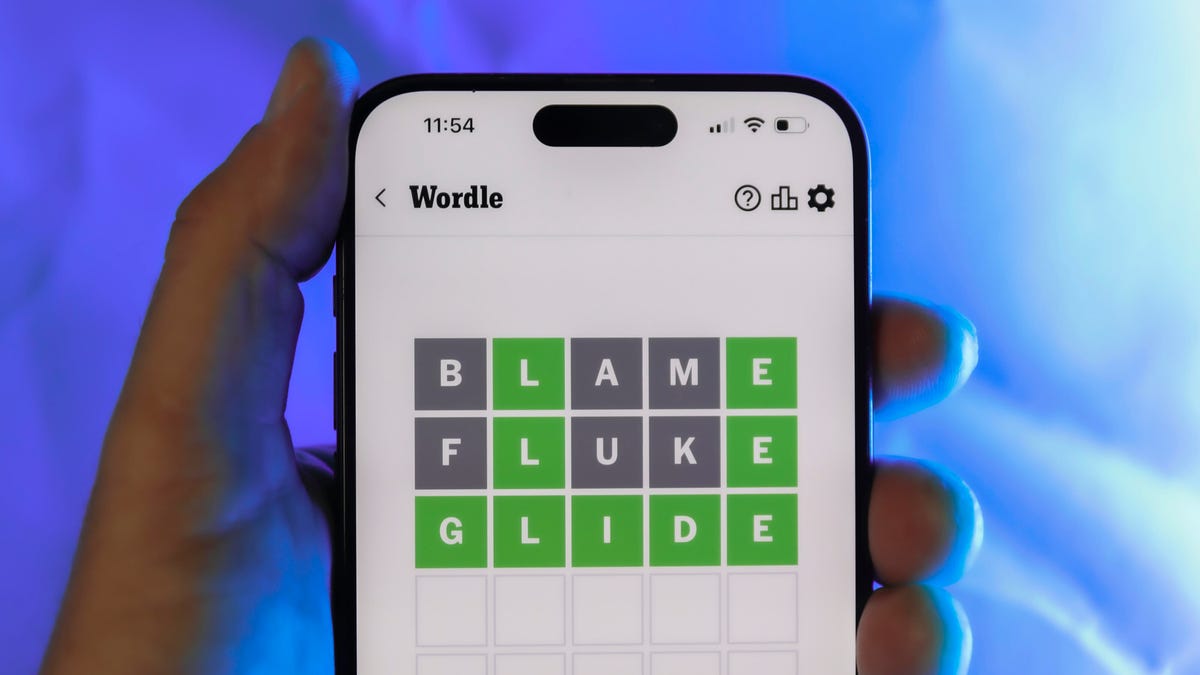
Looking for the most recent Wordle answer? Click here for today’s Wordle hints, as well as our daily answers and hints for The New York Times Mini Crossword, Connections, Connections: Sports Edition and Strands puzzles.
Today’s Wordle puzzle wasn’t too tricky, for a change. If you need a new starter word, check out our list of which letters show up the most in English words. If you need hints and the answer, read on.
Read more: New Study Reveals Wordle’s Top 10 Toughest Words of 2025
Today’s Wordle hints
Before we show you today’s Wordle answer, we’ll give you some hints. If you don’t want a spoiler, look away now.
Wordle hint No. 1: Repeats
Today’s Wordle answer has one repeated letter.
Wordle hint No. 2: Vowels
Today’s Wordle answer has one vowel, but it’s the repeated letter, so you’ll see it twice.
Wordle hint No. 3: First letter
Today’s Wordle answer begins with D.
Wordle hint No. 4: Last letter
Today’s Wordle answer ends with E.
Wordle hint No. 5: Meaning
Today’s Wordle answer can relate to something that is closely compacted.
TODAY’S WORDLE ANSWER
Today’s Wordle answer is DENSE.
Yesterday’s Wordle answer
Yesterday’s Wordle answer, April 6, No. 1752, was SWORN.
Recent Wordle answers
April 2, No. 1748: SOBER
April 3, No. 1749: SINGE
April 4, No. 1750: SANDY
April 5, No. 1751: ENVOY
What’s the best Wordle starting word?
Don’t be afraid to use our tip sheet ranking all the letters in the alphabet by frequency of uses. In short, you want starter words that lean heavy on E, A and R, and don’t contain Z, J and Q.
Some solid starter words to try:
ADIEU
TRAIN
CLOSE
STARE
NOISE
Technologies
Today’s NYT Mini Crossword Answers for Tuesday, April 7
Here are the answers for The New York Times Mini Crossword for April 7.

Looking for the most recent Mini Crossword answer? Click here for today’s Mini Crossword hints, as well as our daily answers and hints for The New York Times Wordle, Strands, Connections and Connections: Sports Edition puzzles.
Need some help with today’s Mini Crossword? Read on for all the answers. And if you could use some hints and guidance for daily solving, check out our Mini Crossword tips.
If you’re looking for today’s Wordle, Connections, Connections: Sports Edition and Strands answers, you can visit CNET’s NYT puzzle hints page.
Read more: Tips and Tricks for Solving The New York Times Mini Crossword
Let’s get to those Mini Crossword clues and answers.
Mini across clues and answers
1A clue: Informative commercial, for short
Answer: PSA
4A clue: Something you trace to draw a Thanksgiving turkey
Answer: HAND
5A clue: ___ Johnson, former Prime Minister of the U.K.
Answer: BORIS
6A clue: Opposite of include
Answer: OMIT
7A clue: Crosses (out)
Answer: XES
Mini down clues and answers
1D clue: City with the Notre-Dame Cathedral
Answer: PARIS
2D clue: Bad mood
Answer: SNIT
3D clue: About eight minutes of the average half-hour sitcom
Answer: ADS
4D clue: Remote worker’s office, perhaps
Answer: HOME
5D clue: Word that can follow each group of circled letters (and hints at its shape)
Answer: BOX
-
 Technologies3 года ago
Tech Companies Need to Be Held Accountable for Security, Experts Say
-
 Technologies3 года ago
Best Handheld Game Console in 2023
-
 Technologies3 года ago
Tighten Up Your VR Game With the Best Head Straps for Quest 2
-
 Technologies4 года ago
Black Friday 2021: The best deals on TVs, headphones, kitchenware, and more
-
 Technologies5 лет ago
Google to require vaccinations as Silicon Valley rethinks return-to-office policies
-
 Technologies5 лет ago
Verum, Wickr and Threema: next generation secured messengers
-
 Technologies4 года ago
Olivia Harlan Dekker for Verum Messenger
-
 Technologies4 года ago
The number of Сrypto Bank customers increased by 10% in five days