
Technologies
Samsung Brought Back My Favorite Feature for Its Galaxy Watch 8 and Watch 8 Classic
The company’s latest smartwatches look sharp, but the first-of-their-kind health tools could be what makes them most compelling.
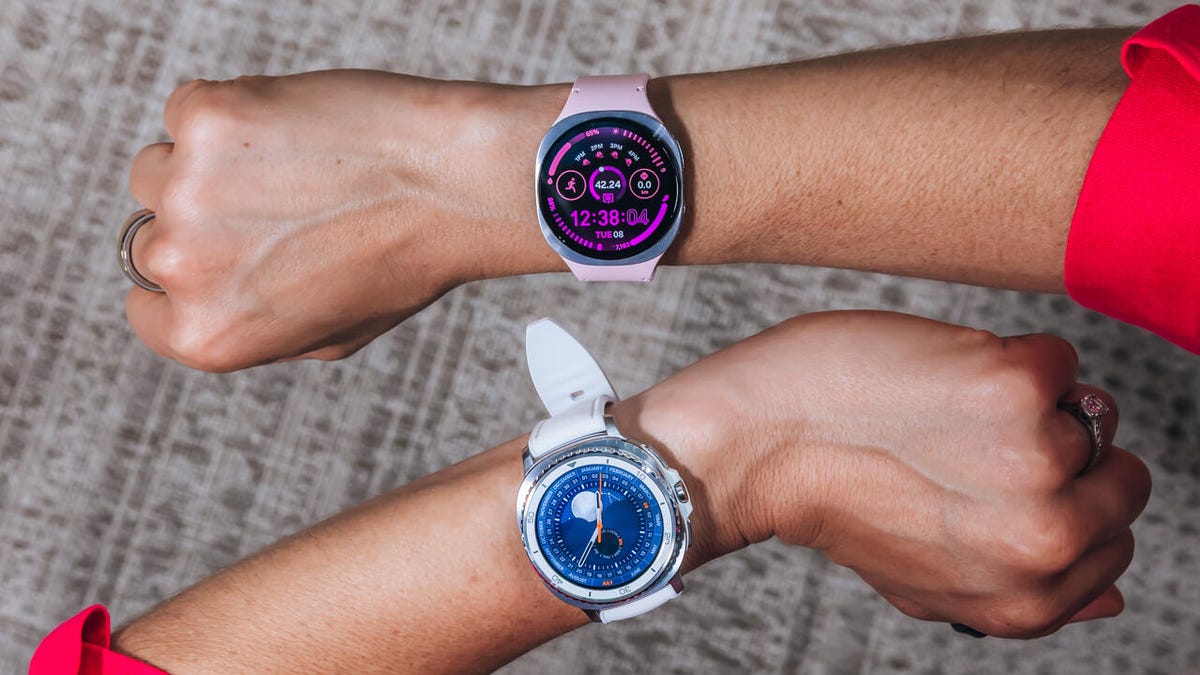
While competitors release predictable updates to their smartwatches, Samsung isn’t afraid to surprise us (for better or worse) with design and feature changes each year. And with the Galaxy Watch 8 Classic in particular, announced at Samsung’s Galaxy Unpacked event, my favorite feature has made a welcome reappearance: the physical rotating bezel, a touch of romantic elegance that made me fall in love with Galaxy Watches in the first place. The Galaxy Watch 8 also has a new look and thinner frame, while the Galaxy Watch Ultra keeps the same functional, squared-off frame as before with a new Titanium blue color that will appeal to people who want a more rugged timepiece.
But it’s not just aesthetics that have changed in this year’s revisions. The company is also stepping things up when it comes to health tools, including several features I’ve never seen on a smartwatch, like noninvasive skin analysis and AI-powered coaching for sleep and running. The Galaxy Watch 8 and Watch 8 Classic also have a smarter voice assistant and are the first smartwatches with Google’s Gemini AI baked right inside, ready to handle complex tasks.
Pricing and availability
The Galaxy Watch 8 starts at $350 for the 40mm model and $380 for the 44mm one. The LTE versions are $50 more: $400 for the 40mm model and $430 for the 44mm watch.
The Galaxy Watch 8 Classic, with its rotating bezel and physical crown, comes in a single 46mm size and costs $500, or $550 for the LTE model.
The Titanium Blue version of the Galaxy Watch Ultra is $650, the same price as the original 2024 model. This version gets the same internal upgrades as the Watch 8 lineup, including a 64GB storage bump.
All models are available for preorder now with shipping starting July 25. If you reserve early from Samsung you can get $50 in Samsung credit; your wireless carrier may also have deals on the watches and Samsung’s just-announced phones.
Health and fitness features
Samsung continues to expand the Galaxy Watch’s role as a health and wellness tool, building on existing features like ECG, SpO₂ (shorthand for peripheral capillary oxygen saturation), sleep tracking and its AGEs Index, which reflects your metabolic aging process. The headliner is a new Antioxidant Index, which measures carotene (one type of antioxidant) levels in your skin with a simple five-second press of your thumb on the sensor (no needle needed). Since antioxidants help clear toxins from the body, knowing your levels can offer actionable steps for improving your health. The watch will rate your levels on a scale from low to high and then offer generic recommendations on the Samsung Health app on how you can improve your levels if they’re on the lower side.
It’s important to note that this metric isn’t clinically verified and isn’t meant to replace a medical-grade test. It’s designed to offer a baseline reading that may help you make real-time lifestyle adjustments, but it won’t provide the detailed or precise results you’d get from a traditional blood test.
There’s also a new metric called Vascular Load, which measures strain on your heart during sleep. These readings are translated into a low-to-high scale to help you understand how behaviors (like sodium or alcohol intake) may be contributing to long-term heart disease risk.
Sleep tracking gets a serious upgrade, too. A new Bedtime Guidance tool uses a three-day analysis of your circadian rhythm and sleep pressure (aka sleep debt) to recommend an ideal bedtime window. It factors in heart rate, HRV, skin temperature, and even environmental cues like room temperature or brightness (if you’ve got connected SmartThings devices). The goal: Improve your sleep quality, recovery and energy throughout the day.
The coaching isn’t just for sleep; the new Galaxy Watches are also debuting a Running Coach feature. It starts with a 12-minute running assessment that scores your fitness from level 0 (beginner) to level 10 (marathon-ready). From there, it builds a personalized four-to-six-week training plan tailored to your distance or performance goals.
Similar to Apple’s new Workout Buddy, Samsung’s Running Coach offers real-time, contextual feedback while you’re running, like pointing out a major milestone. But unlike Apple’s version, Samsung’s tool goes a step further by actually adapting your future training plans based on your progress.
Design
The two new Galaxy Watches take a page out of the Galaxy Watch Ultra’s playbook ditching the traditional circular watch face for a «cushion» design that has a round screen set inside a «squircle» frame (square with rounded edges). As someone who thought the Ultra looked too big and masculine for my wrist, I’m still not totally sold on the design shift. But I’m a sucker for that rotating bezel on the Classic (the Ultra’s is static), so I can’t help but love the look, even if it doesn’t feel like it was made for me.
The Classic also adopts the customizable quick-action button of the Ultra that also doubles as a crown wedges between the two navigation buttons.
Despite my preference for the sleeker, edgeless circular design of past Galaxy Watches, there may be some benefits to the new design, including a slimmer form factor. According to Samsung, the Galaxy Watch 8 is 11% slimmer and lighter than its predecessor. When trying it on, I was blown away by how light it felt on my wrist without the usual belly bump bulge of the body.
Pair that with a new band system, which reduces the gap between the watch and your wrist and you have a noticeably more comfortable fit. Thanks to the tighter sensor-to-skin contact, it’s also more accurate at capturing heart rate data. This is still subject to testing, but if it holds up, it may be a justified design trade-off.
The Galaxy Watch 8 comes in silver and graphite with an aluminum frame, while the Classic opts for a stainless steel finish in just silver. Size-wise, the regular Watch 8 comes in 40mm and 44mm options, while the Classic is only available in 46mm, which looks pretty large on my 6-inch (15cm) wrist and definitely leans more masculine. I can’t help but miss the days when Samsung offered more feminine options like rose gold or even just plain gold, though it’s been a while since those were part of the lineup.
Gemini on the watch
The new One UI 8 software brings a refreshed user experience that is easier to navigate. Notifications are separated by app and instant access to your six most-used apps. The Watches also takes a page from the Galaxy phone with a new «Now bar» at the bottom of the screen for quick access to active apps like timers or media controls.
But the most important software update is the addition of Gemini AI. The new Galaxy Watches are the first with Google’s AI assistant built-in, bringing more complex commands and contextual understanding to your wrist. You can ask it to check your most recent running pace, start a five-mile run and launch your workout playlist simultaneously, set a timer to boil pasta based on a recipe in your notes, adjust the font size on the watch, or have it draft a text letting a friend know you’re running late.
Since Gemini requires an internet connection to work, you’ll need to have your phone paired nearby or use an LTE version of the watch.
Battery and storage
Let’s set expectations: Just because the Galaxy Watch 8 looks like the Ultra doesn’t mean it matches the Ultra’s three-day battery life. But there’s still good news to share.
Samsung says the Watch 8 has an 8% larger battery than the Watch 7: 325 mAh vs. 300 mAh (for the 40mm), and 435 mAh vs. 425 mAh (for the 44mm). The Classic tops out at 445 mAh, which is still well below the Ultra’s 590 mAh battery. How much that translates into real-world use remains to be seen, but any boost is welcome, especially paired with the efficiency gains from the new Wear OS 6 update.
Storage also doubles across the board, with 64GB now standard (up from 32GB), including a new Titanium Blue version of the Ultra.
This is just a first look based on hands-on time. We’ll find out if these features live up to the hype when put to the test in our full review, coming soon.
Technologies
Today’s NYT Connections Hints, Answers and Help for April 8, #1032
Here are some hints and the answers for the NYT Connections puzzle for April 8, No. 1032.
Looking for the most recent Connections answers? Click here for today’s Connections hints, as well as our daily answers and hints for The New York Times Mini Crossword, Wordle, Connections: Sports Edition and Strands puzzles.
Today’s NYT Connections puzzle is kind of tough. The purple category is a fun one, once you see the connection. Read on for clues and today’s Connections answers.
The Times has a Connections Bot, like the one for Wordle. Go there after you play to receive a numeric score and to have the program analyze your answers. Players who are registered with the Times Games section can now nerd out by following their progress, including the number of puzzles completed, win rate, number of times they nabbed a perfect score and their win streak.
Read more: Hints, Tips and Strategies to Help You Win at NYT Connections Every Time
Hints for today’s Connections groups
Here are four hints for the groupings in today’s Connections puzzle, ranked from the easiest yellow group to the tough (and sometimes bizarre) purple group.
Yellow group hint: In the group.
Green group hint: Appearance details.
Blue group hint: Often found in gyms.
Purple group hint: They help you see.
Answers for today’s Connections groups
Yellow group: Cohort member.
Green group: Aesthetic.
Blue group: Kinds of bar apparatuses.
Purple group: Eyewear in the singular.
Read more: Wordle Cheat Sheet: Here Are the Most Popular Letters Used in English Words
What are today’s Connections answers?
The yellow words in today’s Connections
The theme is cohort member. The four answers are associate, colleague, fellow and peer.
The green words in today’s Connections
The theme is aesthetic. The four answers are design, look, scheme and style.
The blue words in today’s Connections
The theme is kinds of bar apparatuses. The four answers are monkey, parallel, pull-up and uneven.
The purple words in today’s Connections
The theme is eyewear in the singular. The four answers are contact, goggle, shade and spectacle.
Technologies
Today’s Wordle Hints, Answer and Help for April 8, #1754
Here are hints and the answer for today’s Wordle for April 8, No. 1,754.
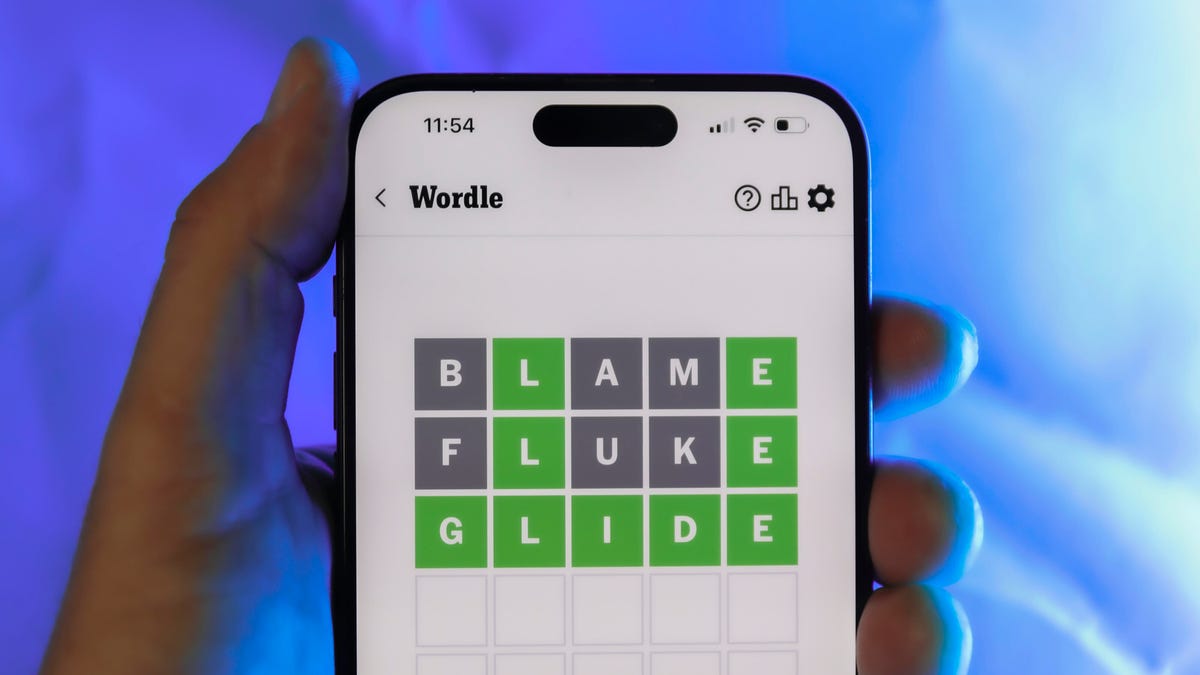
Looking for the most recent Wordle answer? Click here for today’s Wordle hints, as well as our daily answers and hints for The New York Times Mini Crossword, Connections, Connections: Sports Edition and Strands puzzles.
Today’s Wordle puzzle is a tough one. The first letter isn’t the rarest letter ever, but its placement threw me off. If you need a new starter word, check out our list of which letters show up the most in English words. If you need hints and the answer, read on.
Read more: New Study Reveals Wordle’s Top 10 Toughest Words of 2025
Today’s Wordle hints
Before we show you today’s Wordle answer, we’ll give you some hints. If you don’t want a spoiler, look away now.
Wordle hint No. 1: Repeats
Today’s Wordle answer has no repeated letters.
Wordle hint No. 2: Vowels
Today’s Wordle answer has two vowels.
Wordle hint No. 3: First letter
Today’s Wordle answer begins with I.
Wordle hint No. 4: Last letter
Today’s Wordle answer ends with T.
Wordle hint No. 5: Meaning
Today’s Wordle answer can refer to a small arm of the sea.
TODAY’S WORDLE ANSWER
Today’s Wordle answer is INLET.
Yesterday’s Wordle answer
Yesterday’s Wordle answer, April 7, No. 1753, was DENSE.
Recent Wordle answers
April 3, No. 1749: SINGE
April 4, No. 1750: SANDY
April 5, No. 1751: ENVOY
April 6, No. 1752: SWORN
Technologies
Crank Up the Tunes With Over $200 Off the Top-Rated Bowers & Wilkins Pi8 Earbuds
Woot is offering you the chance to put these Bowers & Wilkins Pi8 ANC buds in your ears for a massive 44% off, but the deal ends soon.
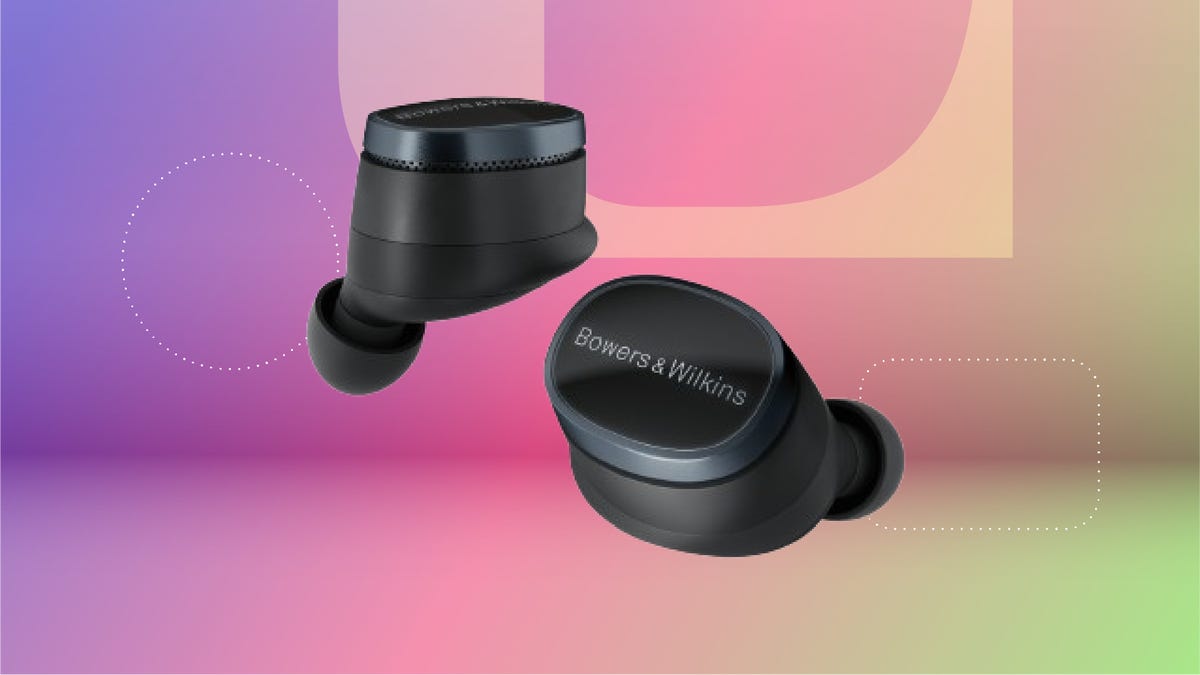
The Bowers & Wilkins Pi8 earbuds with ANC in anthracite black are now just $280 on Woot. That’s an impressive 44% off the usual $499 sticker price. It’s also the lowest price we’ve seen so far, but this deal won’t last long. Quantities on Woot are limited, so grab yours while the deal is still live.
The design’s comfy enough for long hauls, and the 15-minute quick charge is clutch when you’re heading out the door. The charging case even doubles as a Bluetooth transceiver, so you can plug into in-flight entertainment systems without fuss. These buds are featured in our roundup of the best wireless earbuds of the year, and audio expert David Carnoy called them «easily among the best-sounding earbuds out there,» with better ANC and a more ergonomic fit than earlier models.
If you’re picky about sound, these are worth a look. They have a snug fit, single-button controls and a case that’s been redesigned to feel more premium. They’re splash- and dust-resistant (IP54 rating), and the updated shape fits better than the Pi7 S2 and Pi5 S2. You can also tweak settings using the Bowers & Wilkins Music app for iOS and Android.
If this isn’t quite your vibe, check out our full roundup of the best headphone deals you can add to your cart now.
HEADPHONE DEALS OF THE WEEK
-
$248 (save $152)
-
$170 (save $181)
-
$398 (save $62)
-
$200 (save $250)
Why this deal matters
These earbuds don’t go on sale often, and when they do, it’s usually not this steep of a discount. The anthracite black Pi8s are sitting at their lowest price yet, and they’re backed by solid reviews and a spot on CNET’s best earbuds list. If you’ve been waiting for a reason to splurge, this is it. We last saw this deal during Black Friday, so there’s no telling when these buds will come back on sale after this deal expires.
-
 Technologies3 года ago
Tech Companies Need to Be Held Accountable for Security, Experts Say
-
 Technologies3 года ago
Best Handheld Game Console in 2023
-
 Technologies3 года ago
Tighten Up Your VR Game With the Best Head Straps for Quest 2
-
 Technologies4 года ago
Black Friday 2021: The best deals on TVs, headphones, kitchenware, and more
-
 Technologies5 лет ago
Google to require vaccinations as Silicon Valley rethinks return-to-office policies
-
 Technologies5 лет ago
Verum, Wickr and Threema: next generation secured messengers
-
 Technologies4 года ago
Olivia Harlan Dekker for Verum Messenger
-
 Technologies4 года ago
The number of Сrypto Bank customers increased by 10% in five days