
Technologies
OnePlus Watch 3 Review: The Best Battery Life of Any Android Smartwatch
This $350 smartwatch can outlast its competitors in battery life and fitness features, but may fall short on software updates.
Our Experts


Editor’s note, June 16, 2025: OnePlus released a smaller 43mm version of the OnePlus Watch 3 in silver stainless steel. This review has been updated to reflect the new addition to the lineup.
Editor’s note, March 4, 2025: We’ve updated our score for the OnePlus Watch 3 from 8.5 to 8.8 to reflect that OnePlus extended its Wear OS update cycle to three years of software and security updates, with support lasting until 2027 with Wear OS 7.
In my 10-plus years of testing smartwatches, I’ve never had to actively try to drain a battery. That changed when I strapped on the $350 OnePlus Watch 3. Five days into my battery test, after charging it to 100%, this watch was still going strong — tracking my sleep, runs and vitals without missing a beat.
I’ll admit, the Watch 3 didn’t make the best first impression — its masculine design and oversized 47mm screen practically swallowed my average-size wrist. I half-expected to write it off as another midrange smartwatch destined to collect dust in a drawer. But the exceptional battery life makes it easy to overlook a few drawbacks, like the size and the lack of ECG functionality in the US.

Pros
- 5-day battery life with all features enabled
- Sleek comfortable design
- Customizable buttons as shortcuts Advanced metrics for select sports modes
Cons
- Only three years of software and security updates
- Lacks menstrual cycle tracking
- ECG is not available in the US or Canada
- No LTE version or iOS compatibility
Four years after its shaky debut, it’s clear the company has paid close attention to its fanbase. OnePlus’ underdog smartwatch has matured into a true competitor to Samsung and Pixel watches. It delivers the best battery life I’ve ever tested on a Wear OS device, while packing solid health features into a subdued, elegant design — now available in a smaller size, too.
Battery life takes center stage
Unlike the original $160 OnePlus Watch and last year’s $180 Watch 2R, whose main draw was affordability, the Watch 3 shifts the focus from price to performance. With its $350 price tag, OnePlus is positioning it as a premium flagship device, competing directly with similarly priced Wear OS watches like the Google Pixel Watch 3 and Samsung Galaxy Watch 7. What truly sets it apart is its battery, which is larger than its predecessor at 631mAh (versus 500mAh on the Watch 2).
The Watch 3 uses a dual chipset system to split up tasks and optimize power consumption and get even more out of its big battery. The Snapdragon W5 processor focuses on powering app usage, while the BES2800 MCU Efficiency chip handles background tasks that don’t use as much power.
Though initially skeptical, my two weeks of testing confirmed that the OnePlus Watch 3 delivers on its five-day battery claim. I did three GPS workouts, one of which was an hour and a half hike, and six full nights of sleep tracking. Even its fiercest Wear OS competitors would struggle to last three days without resorting to using a low-power mode that strips the watch of its «smart» features and turns it into a glorified digital clock. The only caveat with the Watch 3 is that it remains on the default «Smart mode» to achieve the full five days. This mode has a raise-to-wake screen and requires using one of OnePlus’ official watch faces. I typically prefer an always-on display with a busier watch face filled with my most-used complications and shortcuts which would likely bring the battery life closer to three days — still a feat considering how bright the screen is, even in dormant mode.
When I first started testing the watch, I made the mistake of opting for a non-OnePlus watch face with a three out of three rating on the battery drain scale and still managed to squeeze in four days worth of charge. While I haven’t tested the claim yet, OnePlus says the watch can make it to 16 days in «Power Save» leaving it mostly as a dedicated fitness tracker rather than a full-featured smartwatch.
Of course, everyone has a different version of what «normal» use is, and when you finally charge it, the Watch 3 goes from zero to 100% in just under an hour.
Polished design, now in two sizes
The OnePlus Watch 3 has a sleek stainless steel design and a rotating crown with a textured grip that makes it easy to turn. A slim titanium bezel frames the screen, reminiscent of the old rotating bezels on early Samsung watches I loved. Sadly, this one doesn’t move, but I like how it elevates the design, making it look less like a giant circular 1.5-inch AMOLED display strapped to my wrist.
This is a good-looking watch. But as a woman with an average-size wrist, this watch feels huge and clearly not designed with me in mind. I don’t need a rose gold frame and sparkly pink band — I just wish it offered more inclusive sizing options and maybe a classic gold version.
Less than three months after I first tested the watch, OnePlus responded to feedback about sizing and released a smaller 43mm version (in silver steel) in June 2025, with the same great features as the original 47mm model.
The larger 47mm watch comes in a black or silver stainless steel finish, with interchangeable rubber bands in moss green, black, Nordic blue or a new white color released alongside the smaller model. The addition of the smaller size makes the watch more appealing to women, but it’s still missing one key feature I’ve come to expect on a smartwatch: menstrual tracking.
Robust health features, minus period tracking
It’s a big miss that OnePlus didn’t include menstrual tracking on the Watch 3. Menstrual tracking is now a standard feature in newer Apple Watch and Garmin smartwatches. The Watch 3 has pretty much every other health feature including temperature tracking, which can be used to help identify a woman’s ovulation window.
Oversight aside, it’s clear that OnePlus is investing heavily in health tracking. Beyond basic heart rate and sleep data, the watch measures more advanced metrics like cardiovascular health, blood oxygen levels, wrist temperature, and overall well-being, including emotional and stress levels. It also features an electrocardiogram, though as of publication, OnePlus hasn’t sought FDA approval, meaning the feature will not be active in the US or Canada.
While not medical-grade, OnePlus says that the Watch 3’s health metrics are more accurate than in previous models, thanks to upgraded sensors, refined algorithms, and improved cover glass over the back sensors for clearer readings.
The Watch 3 also debuts a 60-second health check-in, a feature that checks all your vitals at once by pressing your finger on the watch’s bottom button to create a circuit. My first health check-in was concerning and displayed a red exclamation mark with the word «abnormal» next to it. It turns out that all my vitals were in range, but my sleep score was so low that it skewed the results.
Battery life is a game changer for sleep tracking
As a low-key sleep-tracking hater, I never realized just how much battery life factored into my frustration. As a parent of young kids, I already know I’m not getting enough sleep, and seeing a bad sleep report first thing in the morning just sets me up for a day of dragging and self-pity. I feel the same way about wellness checks. Not having to take off the watch for five consecutive days made me more inclined to track my sleep, and I may have even learned a thing or two about my sleep patterns.
The Watch 3’s long battery let me collapse into bed at the end of the day without worrying whether my watch had enough charge to last through the night. The watch even tracked my sleep on night six, despite being down to 10% battery in «Power Save» mode. The watch also has an option to monitor SpO2 (blood oxygen levels) and breathing patterns during sleep to help identify more serious breathing issues, but it will drain the battery faster and needs to be activated manually from either the watch or the mobile app.
According to a recent interview from Wareable, OnePlus is already in the process of seeking FDA approval for sleep apnea detection, which may make the extra battery drain worthwhile.
A worthy fitness companion to put you through the paces
In terms of fitness, the OnePlus Watch 3 covers all the basics, with more than 100 different sports modes, six of which it detects automatically: running, walking, rowing, elliptical machine, cycling and swimming. It also offers a «professional» mode for 11 sports that keep tabs on more nuanced metrics related to that sport. For runners, it’s things like form and foot balance, and for tennis players, it’s swing speed and stroke. While it may be overkill for most, as a runner who recently learned how to leverage heart rate zones to intensify workouts, I was excited to nerd out on the additional metrics.
I used it during my usual 3-mile run and learned that while I have excellent balance between my right and left feet, my ground contact time (how long my foot stays on the ground) and vertical oscillation (how much I bounce) could use some improvement to make my runs more efficient and less injury-prone. The app provides context for the additional data, but it be overwhelming, and you have to dig around for a definition of each metric. I was also left longing for more actionable tips for improving my stats.
The One Plus Watch 3’s heart rate tracking kept up with my Polar chest strap (the gold standard for athletes), with a lag of just a second or two and a one point difference in average heart rate between the chest strap and the watch. Heart rate serves as a baseline for many of the fitness metrics on the Watch 3. However, once I started running uphill and inching closer to my maximum heart rate, I noticed that lag time increased to about 25 seconds between what the chest strap was showing (on my phone) and the number on my wrist. I tried tightening the band, but it only helped temporarily. By the end of my workout, the watch showed that I had stayed in my peak heart rate zone for 19 seconds, while the chest strap recorded me in this zone for about three and a half minutes.
The lag could be partially due to the sensor’s proximity to the heart (versus the wrist). Sweat and arm movement could also interfere with an accurate read — a problem for most smartwatches. Whatever the case, heart rate accuracy could be an issue if you use it for high-intensity sports or more serious training. You’re still better off using a chest strap.
Another key feature for outdoor sports enthusiasts is its dual-frequency GPS tracking system, which OnePlus says can position you accurately even in challenging environments, such as crowded cities surrounded by high rises. I live in a rural environment that’s more sheep than skyscrapers, so I haven’t been able to fully test this claim. It did position me perfectly on my hour and a half hike through oak trees and vineyards.
With an IP69 rating, the OnePlus Watch 3 is also water-resistant up to 50 meters.
Weighed down by Wear OS and limited updates
The Watch 3 runs on Wear OS 5, with a few additional OnePlus design and navigation features. You can customize the rotating crown and side button as shortcuts, but everything else will feel like a standard Wear OS watch packed with your downloaded apps.
The interface of the Watch 3 feels sluggish, with a slight lag in response time, though it became easier to use as I got more familiar with the swipe and tap directions. The UI isn’t exactly intuitive, either. For example, the battery icon shows the remaining charge but doesn’t let you switch to «Smart» or «Power Save» mode, which, after some trial and error, I found hidden behind what looks like an infinity icon. There are also three ways to access the workout screen, but only one of those ways will allow you to add a workout type (through the list of apps). This may be more of a Wear OS navigation issue than a OnePlus problem, but it’s still cumbersome.
Additionally, you’ll need to download the separate OHealth app to your phone to access the watch’s full range of health-tracking features. The app itself is visually appealing and intuitive, but the setup wasn’t seamless. It took multiple tries to sync with my Google Health data. It’s worth noting that I was using a developer’s version of the OHealth app, so setup may be smoother on the public version.
The OnePlus Watch 3 may also become obsolete faster than some of its rivals. Unlike Samsung’s Galaxy Watches, which offer five years of Wear OS updates, the OnePlus guarantees support for software and security updates only until 2027. The Watch 3 will get updated to Wear OS 6, and 7, putting it in line with the Pixel 3, which launched in the fall of 2024.
Solid battery life and features tip the scale
If battery life is at the top of your wishlist, this is one Android smartwatch that’s definitely worth considering. The OnePlus Watch 3 is a premium smartwatch at a midrange price that checks nearly all the boxes for health and fitness features and outlasts most competitors when it comes to battery life — just not when it comes to software updates. The OnePlus Watch 3 is now available for $350 on the OnePlus website.
Technologies
Artemis II Astronauts Are Using iPhones to Capture Stunning Space Images
After smartphones were cleared by NASA for space missions, the crew members of the Integrity spacecraft are beaming back lots of iPhone photos.
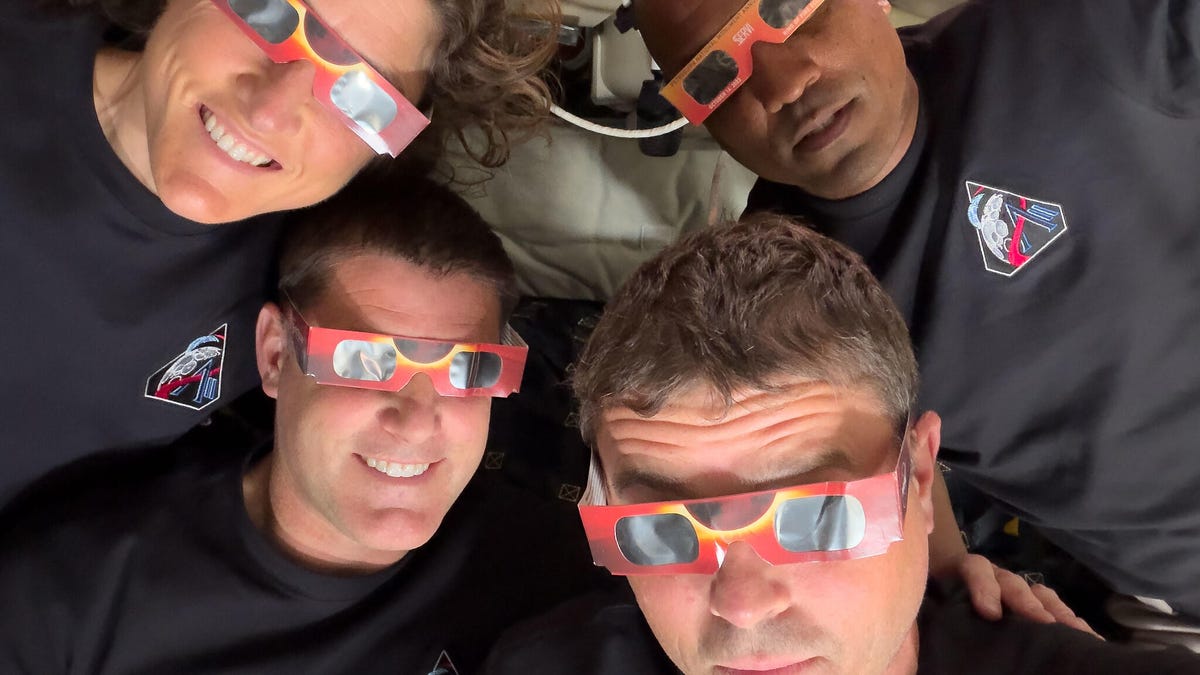
The four astronauts aboard the Integrity spacecraft now headed home from their historic arc around the moon really are like the rest of us: Sometimes they reach for their smartphones to snap photos.
For the Artemis II mission, iPhone 17 Pro Max phones have been used to capture photos inside the capsule of the astronauts pondering the views of Earth and working on mission objectives. (Technically, NASA refers to them as PCDs – personal computing devices.)
Smartphones were cleared for use in space for the first time in February. In a post on X, NASA Administrator Jared Isaacman wrote, «We are giving our crews the tools to capture special moments for their families and share inspiring images and video with the world.»
Early in the mission, Commander Reid Wiseman snapped a pair of photos looking out the window with Earth behind him. Mission specialist Christina Koch and her dynamic curls in zero-gravity also captured a pensive view looking out over the planet. All three were made using the front camera — because wouldn’t you want to grab a selfie if you were in space?
The iPhone 17 Pro’s rear cameras are pulling their own weight during the mission, too. During the live broadcast as the crew approached the moon, Wiseman took a photo of the moon’s surface using the iPhone’s telephoto camera at 8x zoom. He turned the screen toward one of the video cameras mounted inside the spacecraft, creating an image of the moon’s surface alone against the darkness of the unlit cabin, with the iPhone’s signature rounded edges and Dynamic Island cutout at the top.
The main photo workhorses on this trip are a Nikon D5 DSLR and a Nikon Z9. The D5 is a model that has been used on several space excursions, and the Z9 is onboard as an experimental camera.
For NASA missions, every piece of equipment must be tested and certified, which is why the previously-approved D5 has a secure spot. Cameras must be resistent to space environmental factors like radiation, and safe if they’re floating around the capsule. However, the iPhones in space now are off-the-shelf models, according to a report by Jackie Watties of CNN.
The moon flyby was especially photo-intensive, with astronauts switching places several times so that two were always at windows with cameras and relating what they could see with their eyes. This photo of mission specialist and Canadian Space Agency astronaut Jeremy Hansen taking images using one of the Nikon cameras shows how some windows have camera shrouds attached. The shroud ensures that light from the interior isn’t reflected in the glass.
In a particularly relatable photo, Hansen is also using the front-facing camera of a white iPhone 17 Pro — as a portable mirror while he shaves. As the (modified) saying goes, the best selfie screen is the one you have with you.
The iPhone 17 Pro isn’t the first Apple product to go into space. Crew members have taken iPods, iPads and AirPods on missions since the Space Shuttle era. The Mac Portable even went up on a shuttle (and revealed that its trackball in zero-G isn’t the best option).
An Apple representative didn’t immediately respond to a request for comment.
Technologies
Hades 2, the Award-Winning Sequel, Joins Xbox Game Pass in April
Game Pass Premium subscribers are getting a handful of games, including the remastered Elder Scrolls 4: Oblivion.

Hades 2 was selected as one of CNET’s best games of 2025, but don’t take our word for it. The game won Best Action Game at the 2025 Game of the Year awards, Best Game on Steam Deck at the Steam Awards and a bevy of other accolades after its release. If you haven’t had the chance to play this stellar sequel yet, you can on Xbox Game Pass starting on April 14.
Xbox Game Pass, a CNET Editors’ Choice award pick, offers a wide selection of games you can play on your Xbox Series X, Xbox Series S, Xbox One and PC or mobile device for as little as $10 a month. And with a subscription to the higher-tiered Game Pass Ultimate ($30 a month), you can access hundreds of games, including Day One releases, each month.
Here are the games Microsoft plans to bring to Game Pass in April. You can also check out other games the company added to the service in March, including Cyberpunk 2077.
DayZ
Coming to PC on April 8, joining Game Pass Ultimate, Game Pass Premium, Game Pass Essential and PC Game Pass.
This online multiplayer survival game is coming to PC. An unknown virus has turned the population of the post-Soviet country of Chernarus into zombies, and you’re one of the last few survivors. You’ll have to scavenge for supplies among the ruins while fighting off zombies and other survivors alike. But how far will you go to save yourself?
Endless Legend 2 (Game preview)
New to Game Pass Premium on April 8. Previously on Game Pass Ultimate and PC Game Pass.
Lead your faction to build a great empire that can crush your enemies in this fantasy strategy game. You can play as warriors descended from the stars, cursed knights or hive-minded beasts, but each faction has its strengths, weaknesses and unique philosophies that can influence the rest of the game. And fending off enemies is just one challenge in this game. You’ll have to adapt to the changing environment as well. Will you expand as the tides reveal new treasures, or focus on improving your defenses?
FBC: Firebreak
New to Game Pass Premium on April 8. Previously on Game Pass Ultimate and PC Game Pass.
The Federal Bureau of Control is under attack from otherworldly forces, and it’s up to you and your versatile unit to restore order. You’ll fight chaotic entities, leeches and a monster made of sticky notes using guns, grenades and other supernatural weapons. You can play this first-person shooter game on your own or take on the chaos of the FBC with friends in three-player co-op.
Planet Coaster 2
Coming to Game Pass Ultimate, Game Pass Premium and PC Game Pass on April 9.
This might not be the classic RollerCoaster Tycoon, but it’s close enough. You’ll build your own roller coasters and water slides, manage your amusement park and create unforgettable experiences for your guests. It’s unclear if you can launch your coasters off the rails into waiting crowds. Will report back later.
Tiny Bookshop
Coming to Game Pass Ultimate, Game Pass Premium and PC Game Pass on April 10.
I have long dreamed of opening my own bookshop, and until I come into a lot of money, this game will have to do. You can stock your bookshop with different genres and items for sale, set up shop in scenic locations — like near a lighthouse — and get to know the locals in this cozy management game.
Football Manager 26 (PC and console)
New to Game Pass Premium on April 13. Previously on Game Pass Ultimate and PC Game Pass.
Get ready for a more immersive matchday experience in the latest installment of the Football Manager franchise. You can build a star-studded squad with new transfer tools, and this entry features official Premier League licenses and women’s football for the first time in the series’ history.
Hades 2
Coming to Game Pass Ultimate, Game Pass Premium and PC Game Pass on April 14.
Following the events of the original game, the Titan of Time Chronos has returned and laid waste to the Underworld and Earth. As the immortal princess Melinoe, you’re tasked with stopping the titan and restoring the mythic world. Each time you venture out, you’ll learn more about the world around you and discover the true cause of all the destruction and pain.
Replaced
Coming to Game Pass Ultimate and PC Game Pass on Day One on April 14.
Can AI ever be human? I’m not talking about ChatGPT or Gemini, but REACH, an AI trapped in a human’s body, in this narrative platformer game. You’ll explore an alternate 1980s America that’s scarred from nuclear catastrophe as you try to uncover the secrets of the Phoenix Corps, the same group that created you. It’s a cyberpunk Frankenstein with plenty of exploration and fluid action sequences.
The Thaumaturge
Coming to Game Pass Ultimate, Game Pass Premium and PC Game Pass on April 14.
By definition, a thaumaturge is a miracle worker or magician, and in this roleplaying game, you’re a master of mystical arts that allow you to peer into the hearts and minds of others. After the death of your father, you returned to an alternate 1900s Warsaw to investigate his death, fight supernatural forces and uncover the truth.
The Elder Scrolls IV: Oblivion Remastered
New to Game Pass Premium on April 16. Previously on Game Pass Ultimate and PC Game Pass.
A fanatical cult is trying to open gates to the demonic realm of Oblivion, and it’s up to you to stop them and seal the gates forever in the remastered version of this open-world RPG. You can rediscover the world of Cyrodiil (or experience it for the first time in updated glory), encounter unique characters and save the land.
EA Sports NHL 26
Coming to Game Pass Ultimate and PC Game Pass on April 16.
As the NHL regular season winds down, the playoffs and the fight for the Stanley Cup are heating up. And with the latest installment in this EA Sports franchise, you can ensure your favorite team brings home the cup. This entry in the series introduces new gameplay mechanics, such as Ice Q 2.0 and a goalie crease control system, to add additional challenges. So if you want to see the Florida Panthers win the cup back-to-back, or you want to make absolutely sure that never happens, this game is for you.
Call of Duty: Modern Warfare
Coming to Game Pass Ultimate, Game Pass Premium and PC Game Pass on April 17.
Modern Warfare redefined the Call of Duty series when it was released almost 20 years ago, and the rebooted version of the classic game drops you right back to where it started. You’ll control CIA and SAS special forces as they attempt to stop rebels from the fictional Republic of Urzikstan. And if the campaign’s not enough, you can hone your skills in the immersive, fast-paced multiplayer.
Little Rocket Lab
New to Game Pass Premium on April 21. Previously on Game Pass Ultimate and PC Game Pass.
Your family’s dream project has been to build a rocket, and you’re going to fulfill their dream in this cozy, machine-building RPG. But first, you have to build clever contraptions, convert local resources and become the heart of your community before you can complete your ultimate rocket-building task.
Sopa: Tale of the Stolen Potato
New to Game Pass Premium on April 21. Previously on Game Pass Ultimate and PC Game Pass.
Miho goes to the pantry to grab a potato for his grandmother’s soup when he lands in a fantastical land. Now he has to find his way back home by following in the footsteps of a mysterious traveler from long ago. You’ll meet quirky characters, gather exotic ingredients and take in vibrant environments in this world of magical realism inspired by Latin America.
Vampire Crawlers
Coming to Game Pass Ultimate and PC Game Pass on Day One on April 21.
From the creators of the indie darling Vampire Survivors comes this turn-based, deck-building, roguelite game. You’ll explore dungeons that might look familiar to Vampire Survivors veterans, fight monsters and build chaotic, broken decks along the way. So be tactical in your choices or blast away every chance you get!
Kiln
Coming to Game Pass Ultimate and PC Game Pass on Day One on April 23.
Kiln is about creating beautiful pottery filled with artistry and wonder… and smashing it all to pieces in the arena. This online, multiplayer party brawler pits you against others to see which pottery design can withstand the heat and which can dish out a beating.
Two games come to Game Pass Essential subscribers on April 8
Game Pass Essential costs $10 a month and offers access to a relatively small library of games compared to Game Pass Premium and Ultimate. While Microsoft doesn’t regularly add many games to Essential’s library, it’s adding these two on April 8.
Games leaving the service on April 15
While Microsoft is adding the above games to Game Pass, it is also removing five games from the service on April 15, including GTA 5. That means you still have a little time left to complete your main campaign and any sidequests before you’ll have to buy these games separately.
- Ashen
- Eiyuden Chronicle: Hundred Heroes
- Grand Theft Auto V
- My Little Pony: A Zephyr Heights Mystery
- Terra Invicta (Game Preview)
For more on Xbox, discover other games available on Game Pass now, read our hands-on review of the gaming service and learn which Game Pass plan is right for you.
Technologies
Nintendo Is Offering the Switch 2 for $20 Less When You Buy Super Mario Galaxy 1 and 2
This out-of-this-world deal goes live on April 12 and continues until May 9, giving you plenty of time to secure your bundle.
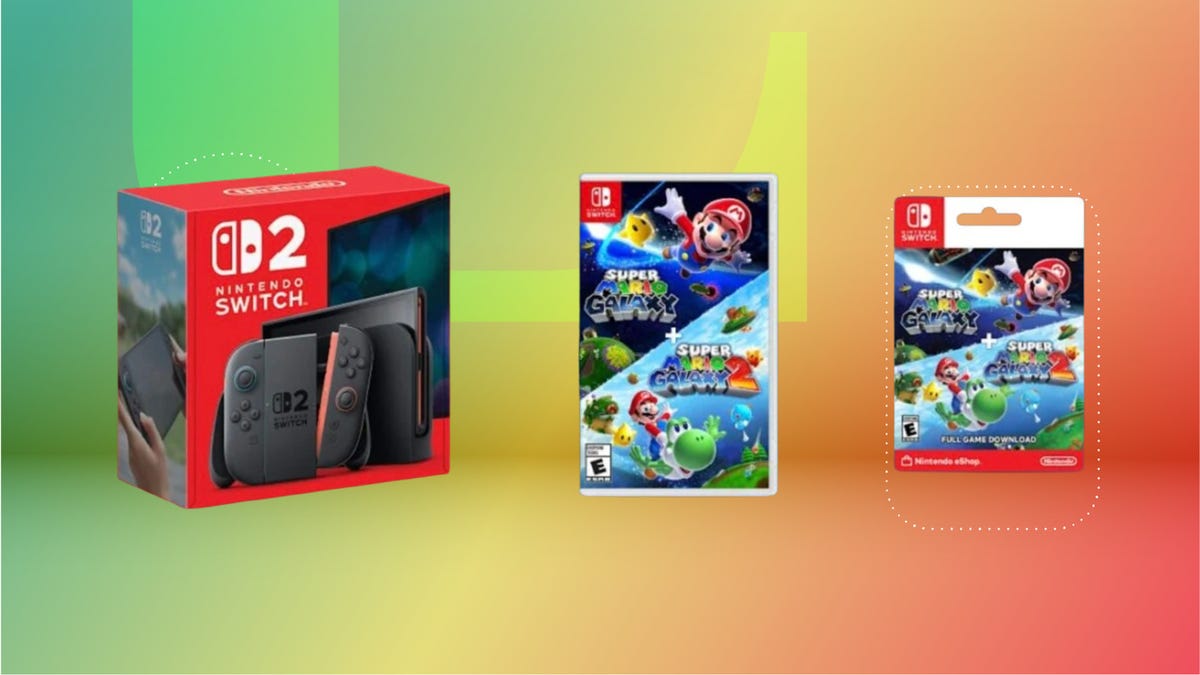
The Super Mario Galaxy Movie has been out for just over a week, and it has already become a must-see film for fans of the Mario Bros. video games. Nintendo also announced an upcoming deal that makes it easier to take the Super Mario Galaxy home.
Starting on April 12, Mario Bros. fans can get the Nintendo Switch 2 for $20 off with the purchase of a digital or physical Super Mario Galaxy 1 and 2 bundle. Once live, this deal lasts until May 9 and brings the Nintendo Switch 2 to $430, down from its usual price of $450.
The deal will be available at select retailers, including Walmart, Amazon, GameStop, Target and Best Buy. Not only does this deal coincide with the film’s release, but it’s also a small way to celebrate the 40th anniversary of Super Mario Bros.
Additionally, Best Buy is currently giving away a free collectible 40th anniversary game case with select Mario game purchases if you’d rather not wait until April 12.
Super Mario Galaxy has been around since 2007, and Super Mario Galaxy 2 has been available since 2010 on Wii. These games are still crowd-pleasers, and this offer makes it possible to enjoy both games on the Nintendo Switch 2 for less.
To better enjoy this deal once it’s available, check out our article on everything you need to know about Nintendo Switch 2 games.
CHEAP GAMING LAPTOP DEALS OF THE WEEK
Why this deal matters
The Nintendo Switch 2 has been praised by fans and gaming experts. Like its handheld gaming counterpart, Super Mario Galaxy 1 and 2 have also remained popular since their releases. If you’ve been looking to buy these games along with the handheld gaming console, then this is one deal to plan for. Keep in mind that it’ll run from April 12 until May 9, so be ready to secure the savings.
-
 Technologies3 года ago
Tech Companies Need to Be Held Accountable for Security, Experts Say
-
 Technologies3 года ago
Best Handheld Game Console in 2023
-
 Technologies3 года ago
Tighten Up Your VR Game With the Best Head Straps for Quest 2
-
 Technologies4 года ago
Black Friday 2021: The best deals on TVs, headphones, kitchenware, and more
-
 Technologies5 лет ago
Google to require vaccinations as Silicon Valley rethinks return-to-office policies
-
 Technologies5 лет ago
Verum, Wickr and Threema: next generation secured messengers
-
 Technologies4 года ago
Olivia Harlan Dekker for Verum Messenger
-
 Technologies4 года ago
The number of Сrypto Bank customers increased by 10% in five days