
Technologies
Best Wireless Headphones and Earbuds for iPhone 12
Need a swanky new pair of the best earbuds for iPhone? We’ll run through all the top options.

Sure, you can buy an adapter to use wired headphones with your iPhone 12 or any of the latest iPhones, including the iPhone 13 and iPhone 14, that don’t have a headphone jack. But most people are looking for a pair of wireless earbuds or headphones to use with their new iPhone, whatever model it may be.
As we’re all quite aware, Apple offers buds and headphones under its own brand and its Beats brand (yes, Apple owns Beats), and we’ve included the AirPods 3, AirPods Pro 2 and Beats Fit Pro on this list, but there are plenty of non-Apple-branded Bluetooth headphones and earbuds that work really well with iPhones, as well as other Apple devices and non-Apple devices, including Android smartphones and tablets.
For those looking for more budget AirPods alternatives, we’ve got a list of the best cheap earbuds and five true wireless earbuds worth buying for under $40.
David Carnoy/CNET
Battery Life
Rated up to 6 hours
Noise Canceling
Yes (ANC)
Multipoint
No
Headphone Type
Wireless earbuds
Water-Resistant
Yes (IPX4 — splash-proof)
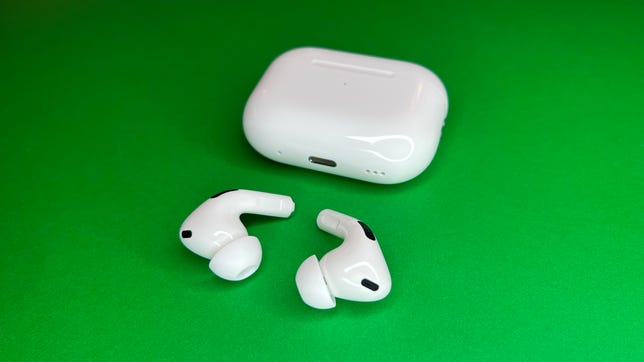
The new AirPods Pro (2nd generation) are powered by Apple’s new H2 chip, which delivers more processing power while being more energy efficient, according to Apple. The new chip, combined with new low-distortion drivers, allows for improved sound that offers better clarity and depth. The noise canceling is also improved — Apple says the new AirPods have “double” the noise canceling of the original AirPods Pro. Additionally, the new AirPods add an extra hour of battery life, up from five to six hours with noise canceling on. Plus, a speaker in the case that emits a sound that helps locate your buds via Find My should they decide to hide from you.
Screenshot by David Carnoy/CNET
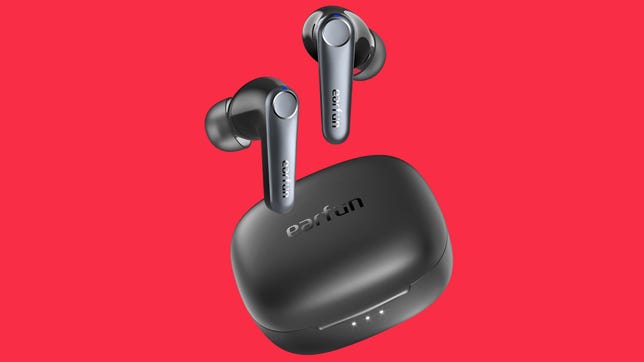
Earfun has put out a series of wireless earbuds over the last couple of years with one important commonality: They’re very good values, made more so by frequent discounts. The company’s new-for-2023 Earfun Air Pro 3 earbuds feature the latest Qualcomm QCC3071 system-on-a-chip with aptX Adaptive for Android and other devices that support the new LE Audio standard and LC3 audio codec, which is superior to the SBC codec (they also support AAC for Apple devices).
Lightweight and comfortable to wear — I got a good seal with the largest ear tip size — these aren’t a huge upgrade over the Earfun Air S, but they are better. They have slightly larger wool-composite drivers (11mm versus 10mm), slightly improved noise canceling and better battery life (up to seven hours with noise canceling on, according to Earfun).
In short, the Earfun Air 3 deliver strong performance for their modest price, with robust bass, good clarity and a relatively wide soundstage. They also pack in a lot of features, including a wireless charging case and “multidevice” connectivity. (I could pair them to two devices simultaneously but had to pause the music on one device and hit play on the other for the audio to switch.) They’re IPX5 splash-proof and also work well (though not exceptionally well) as a headset for making calls.
Note that after you activate the instant 10%-off coupon at Amazon, adding the code EAP3CNET at checkout gives you an additional 20% off, bringing the buds’ price down to $56.
David Carnoy/CNET
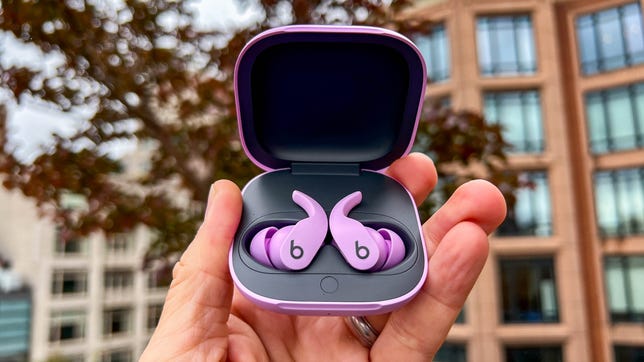
While the Beats Fit Pro (on sale for $160) technically aren’t AirPods, they’re built on the same tech platform as the AirPods Pro (yes, Apple owns Beats). Unlike Beats’ earlier and less expensive Studio Buds, the Beats Fit Pro include Apple’s H1 chip and have most of the AirPods Pro’s features, including active noise canceling, spatial audio and Adaptive EQ. I’d venture to call them the sports AirPods you’ve always wanted. And for some people, they might just be better than the AirPods Pro.
David Carnoy/CNET
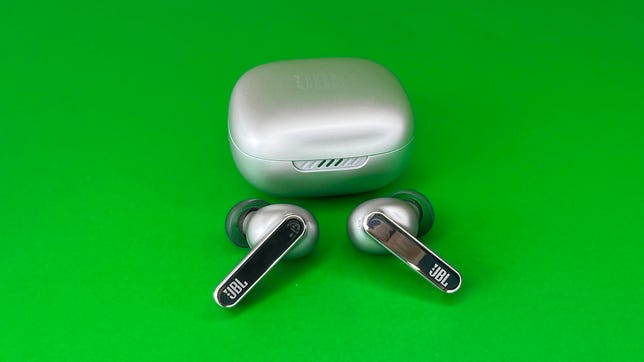
Over the years, JBL has put out some decent true-wireless earbuds, but nothing that really got me too excited. That’s finally changed with the arrival of the Samsung-owned brand’s new Live Pro 2 and Live Free 2 buds. Both sets of buds — the Live Pro 2 have stems while the Live Free 2 have a pill-shaped design — offer a comfortable fit along with strong noise canceling, very good sound quality and voice-calling performance, plus a robust set of features, including multipoint Bluetooth pairing, an IPX5 splash-proof rating and wireless charging.
The Live Pro 2 and Live Free 2 are equipped with the same 11mm drivers, six microphones, oval tubes and oval silicon tips. Aside from the design, the biggest difference between the two buds is battery life; the stemless Live Free 2 is rated for up to seven hours, while the Live Pro 2 is rated for 10 hours. The Live Pro 2 is available in four color options.
David Carnoy/CNET
Battery Life
Rated up to 9 hours
Noise Canceling
Yes (ANC)
Multipoint
No
Headphone Type
Wireless Earbuds
Water-Resistant
Yes (IPX4 — splash-proof)
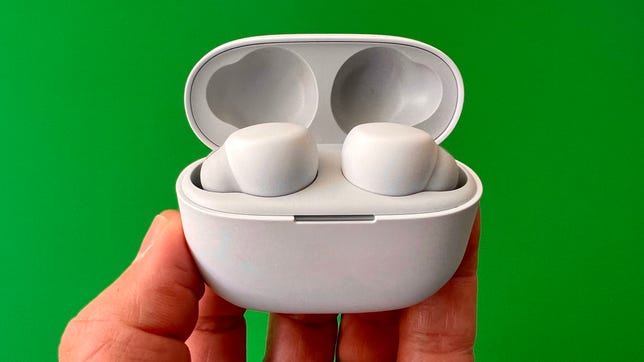
Unlike the “open” LinkBuds, the LinkBuds S are traditional noise-isolating earbuds with tips you jam in your ears. They’re more compact and lighter than Sony’s flagship WF-1000XM4 and also feature Sony’s V1 processor. While their sound and noise canceling don’t quite measure up to the XM4’s, they’re close and cost less. They’re the Sony buds for people who can deal with larger buds like the XM4 but want 80 to 85% of those buds’ features and performance for $80 less.
David Carnoy/CNET
Battery Life
Rated up to 12 hours
Noise Canceling
No
Multipoint
No
Headphone Type
Wireless earbuds
Water-Resistant
No IP rating
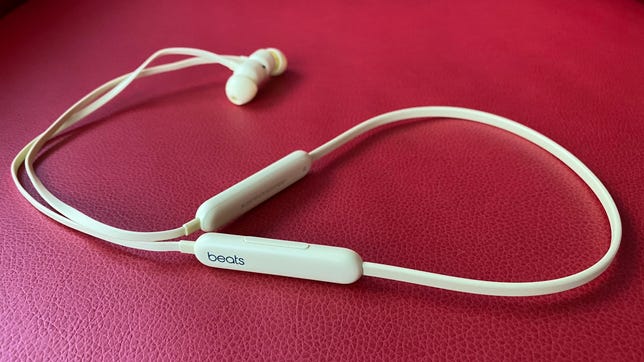
I didn’t think I’d ever see a version 2.0 of Beats’ once-popular BeatsX neckband-style wireless earphones, but it’s arrived with a new name — the Beats Flex — and a much-cheaper $50 price tag, which is half of what its predecessor had been selling for.
The Flex instantly becomes an affordable, Apple-friendly wireless alternative to the AirPods, which start around $100 for the standard version with a wired charging case (but will be selling for as low as $99 this holiday season). The good news is they sound better than both the original BeatsX and standard AirPods. They also work well for making calls and have better battery life than the original. The bad news? The design is passe in a world now dominated by true wireless earbuds.
They’re available in black or yellow at launch, with gray and light blue arriving in early 2021.
David Carnoy/CNET
Battery Life
Rated up to 32 hours
Noise Canceling
Yes (ANC)
Multipoint
Yes
Headphone Type
Over-ear wireless headphones
Water-Resistant
No IP rating
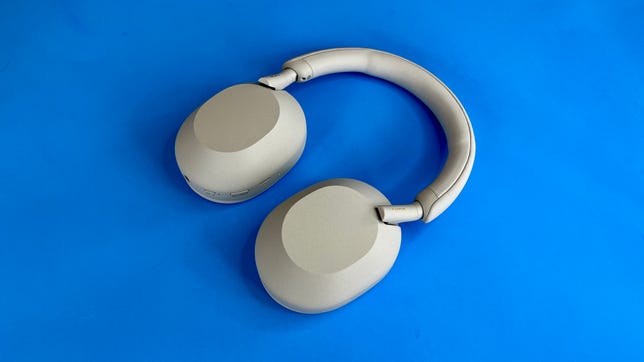
When you have a product that a lot of people love, change can be risky. Such is the case for Sony’s WH-1000XM5, the fifth generation of the 1000X series headphones, which were first released in 2016 as the MDR-1000X Wireless and have become increasingly popular as they’ve improved with each generation. Over the years, Sony has made some tweaks to the design, but nothing as dramatic as what it’s done with the WH-1000XM5. Other than the higher $349 price tag most of those changes are good, and Sony’s made some dramatic improvements with voice-calling performance as well as even better noise canceling and more refined sound.
David Carnoy/CNET
Battery Life
Rated up to 20 hours
Noise Canceling
Yes (ANC)
Multipoint
No
Headphone Type
Over-ear wireless headphones
Water-Resistant
No IP rating
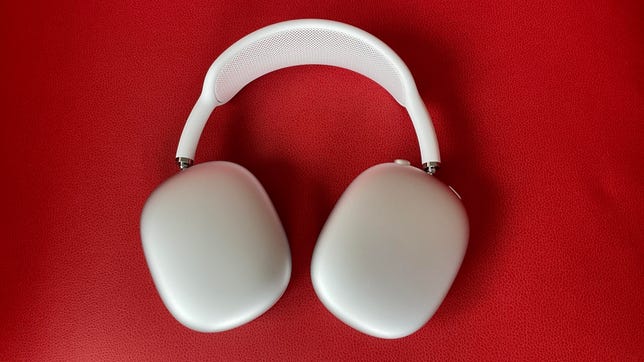
Yes, they’re expensive, but the AirPods Max deliver richer, more detailed sound than lower-priced competitors from Bose and Sony. They also feature arguably the best noise canceling on the market along with premium build quality and Apple’s virtual surround spatial audio feature for video watching. While they’re heavy, they manage to be surprisingly comfortable, though I did have to adjust the mesh canopy headband to sit a little more forward on my head to get a comfortable secure fit when I was out walking with them. They should fit most heads well, but there will be exceptions.
David Carnoy/CNET
Battery Life
Rated up to 25 hours
Multipoint
Yes
Headphone Type
Over-ear wireless headphones
Water-Resistant
No IP rating
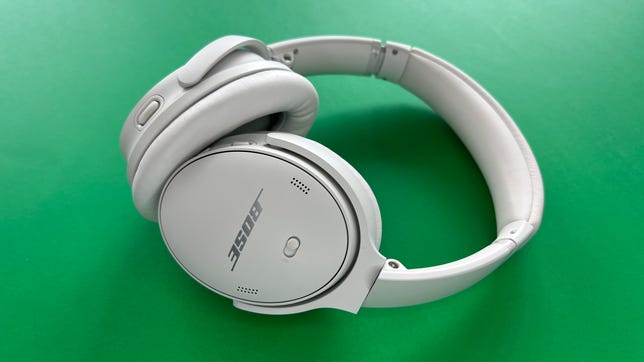
The QuietComfort 45 has virtually the same design as its predecessor, the QuietComfort QC35 II, which many people considered one of the most comfortable over-ear headphones — if not the most comfortable. It has the same drivers, according to Bose, and the buttons are in the same place. However, there are small but notable changes. First off, these thankfully have USB-C instead of Micro-USB.
Secondly, the microphone configuration is different. Not only have the mics been shifted on the headphones, but there’s now an extra external microphone for voice pick-up, which means the QC45 has a total of six microphones, four of which are beamforming and used for voice. By contrast, the QC35 II has a total of four, two of which are used for voice. (The Bose Noise Canceling Headphones 700 also have six microphones total.)
These headphones are excellent for making calls. They’re similar to the Bose Headphones 700 in that regard. They also include top-notch noise canceling and multipoint Bluetooth pairing, so you can connect them with a PC and your phone simultaneously. Read our Bose QuietComfort 45 review.
David Carnoy/CNET
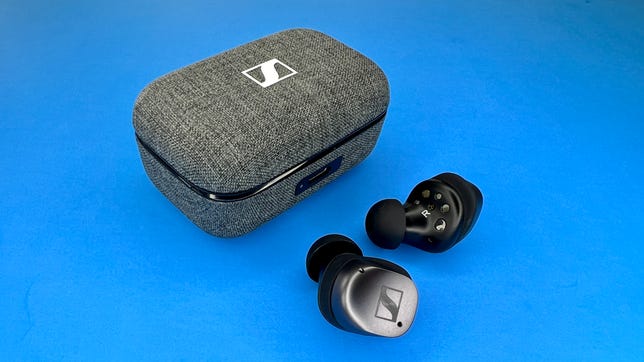
Featuring excellent sound, improved noise canceling and voice-calling performance as well a smaller, more refined design that includes stabilizing fins (so the earbuds stay in your ears more securely), the Sennheiser Momentum True Wireless 3 are among the best new true-wireless earbuds for 2022. They’re also one of the best true-wireless earbuds overall, giving the Sony WF-1000XM4 a run for the money.
David Carnoy/CNET
Battery Life
Rated up to 6 hours
Noise Canceling
No
Multipoint
No
Headphone Type
Wireless earbuds
Water-Resistant
Yes (IPX4 — splash-proof)
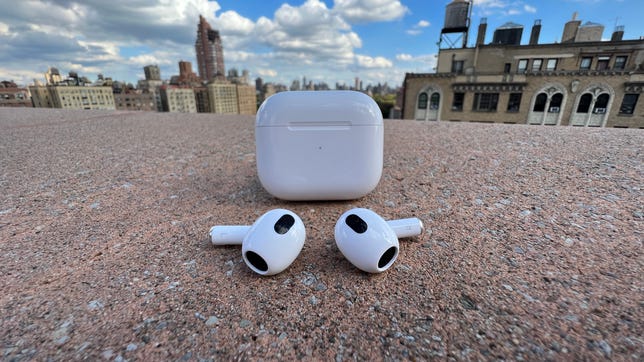
Take one look at the new design of the third-gen AirPods ($179), and the first thing you’ll probably think is: “Those look like the AirPods Pro without ear tips.” You wouldn’t be wrong. While they’re more fraternal than identical twins, the AirPods 3 are shaped like the AirPods Pro, with the same shorter stems and same pinch controls as those of the Pro. Aside from the design change, which should fit most ears better than the AirPods 2nd Generation (though not very small ears), the biggest change is to the sound quality: It’s much improved. Also, battery life is better, and the AirPods 3 are officially water-resistant.
More headphone recommendations
- Best Open Wireless Earbuds That Aren’t AirPods
- Best Wireless Earbuds and Headphones for Making Calls
- Best Wireless Headphones for Working at Home in 2023
- Best Noise-Canceling True Wireless Earbuds of 2023
- Best Headphones for Running
- Best On-Ear Headphones for 2023
- Best Workout Headphones in 2023
- Best Over-Ear Headphones of 2023
- Protect Your AirPods: 5 Cases Under $15
- Best Sony Headphones for 2023
Technologies
Trump Maintains US‑Iran Negotiations Continue Amid Tehran’s Denials of Duplicity
President Trump insists that US‑Iran talks are ongoing despite Tehran’s denial of any negotiation plans, while warning that only a deal or total surrender will allow passage through the Strait of Hormuz. Conflicting statements from both sides have heightened uncertainty as the conflict enters its sixth month.
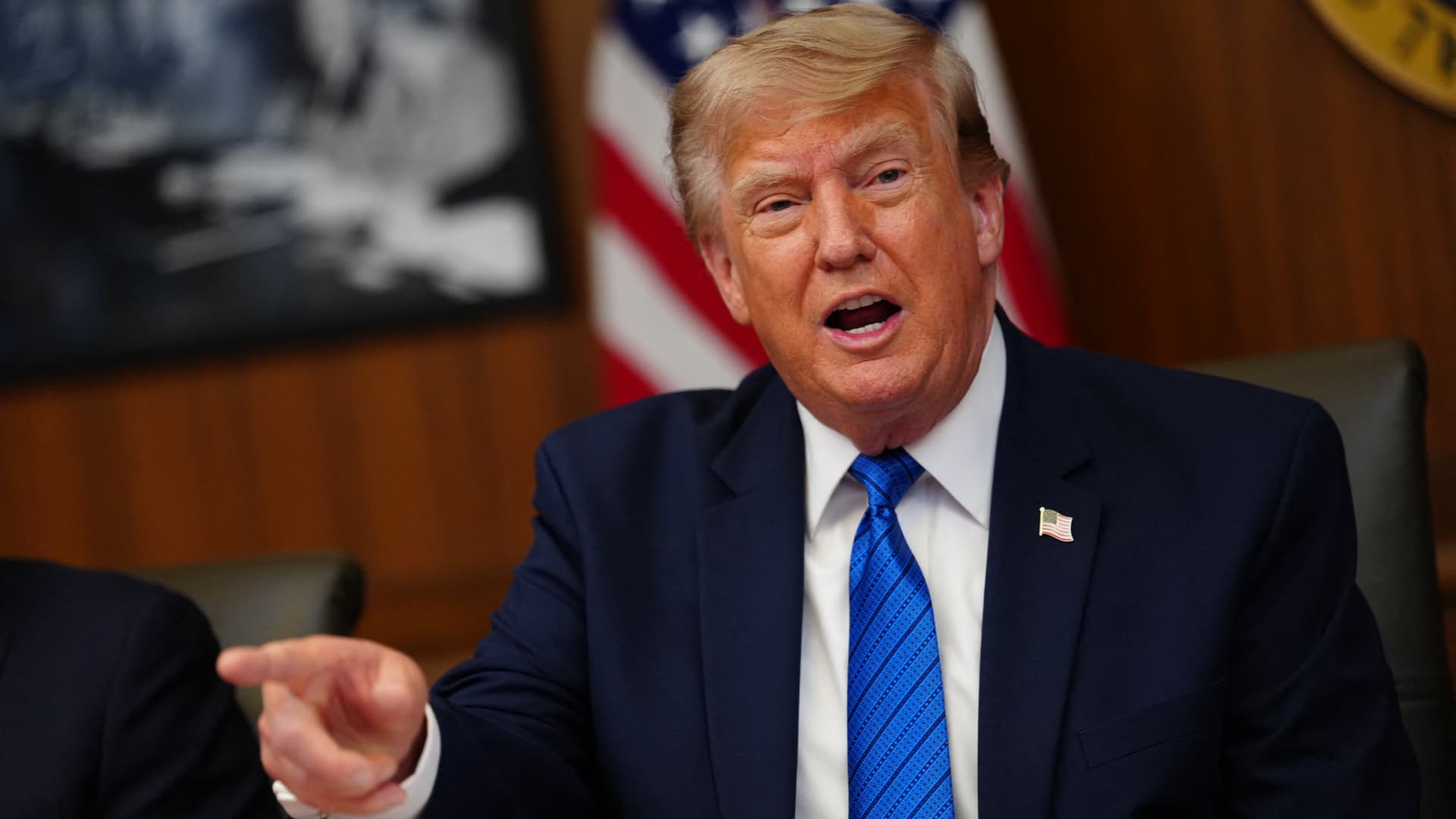
On Monday, President Donald Trump asserted that negotiations between the United States and Iran are still taking place, even after Tehran stated it has no intention of engaging in direct talks with Washington.
In a fiery Truth Social post, Trump labeled Iran’s leaders “unbelievably duplicitous,” claiming they are lying about ongoing peace talks “whether Iran wants to admit it or not.” He repeated his assertion that the United States completely controls the Strait of Hormuz, despite maritime traffic through the crucial route lingering at only a small fraction of pre‑conflict levels.
He wrote, “Nothing reaches Iran unless we allow it, and nothing will pass unless a deal—or total surrender—is achieved.”
Earlier that day, Iranian Foreign Ministry spokesperson Esmail Baghaei told reporters there is no imminent plan for U.S.–Iran negotiations, contradicting Trump’s earlier comment that talks would resume Monday afternoon. Baghaei added that Iran’s only current discussions are with Oman concerning the Strait of Hormuz.
The conflicting statements have heightened uncertainty over the peace‑talk process and the broader conflict, now in its sixth month.
Trump’s assertion about new negotiations came a day after he said on Truth Social that he had agreed to cancel a massive strike against Iran “subject to being able to rapidly make a DEAL.” He said in the same post that Iran and other Middle Eastern countries had asked him to hold off on that attack because “the perimeters of a deal has been agreed to.”
Trump has claimed dozens of times throughout the more‑than‑five‑month‑long war that a deal is at hand. No permanent deal has been signed, and a temporary ceasefire reached in June has fallen apart.
Trump has also repeatedly threatened to launch devastating strikes against Iran before backing off. After the latest example, oil prices on Monday fell and stocks surged.
BMI, a research unit of Fitch Solutions, said in a note Monday that a broader diplomatic understanding on reopening the Strait of Hormuz is still achievable this quarter, while raising the probability of its escalation scenario to 35% from 25%, citing mounting military, diplomatic and economic signs of rising U.S.-Iran tensions.
“Diplomatic progress is likely to be punctuated by periodic military flare-ups, while miscalculation by either side could trigger a renewed escalation,” BMI analysts wrote in a note. The firm said the key issue to watch is the future governance of the strait, as the Iran-Oman talks — potentially backed by Gulf states, China and the U.S. — point to efforts to build a post-conflict shipping framework.
Shipping risks persist even as diplomacy appears to be advancing. The United Kingdom Maritime Trade Operations Centre said it received a report of an incident 20 nautical miles (23 miles) northeast of Khasab, Oman — at the mouth of the strait — with a tanker’s master reporting an explosion in close proximity to the vessel at about 20:37 UTC Sunday (4:37 pm ET). The vessel and crew were safe and authorities are investigating, UKMTO said, advising ships to transit with caution.
The proposal Trump announced over the weekend calls for the U.S. and Iran to return to negotiations and continue ironing out some of the thorny issues that had derailed diplomatic efforts, according to The Associated Press, citing a regional official involved in the mediation efforts.
The official said the proposal also includes a reopening of the Hormuz Strait and halting attacks across the region, including by Iranian-backed militias in Iraq on the Arab Gulf countries and Jordan.
The U.S., for its part, will end its naval blockade on Iran and allow Tehran to export its oil, the official said, adding that no deal has been reached, although the mediation efforts remained underway.
Trump’s weekend reversal has lowered the temperature after days of escalating attacks across the Gulf. Kuwait said Saturday that Iranian forces launched a wave of drones within its airspace, with its military destroying multiple aircraft after Iran targeted critical infrastructure in the country’s north.
A parallel track with Muscat is also advancing. Iranian diplomats said Tehran was close to reaching a new arrangement with Oman to manage shipping through the Strait of Hormuz, a deal critical to preventing the war from escalating further, according to the Financial Times.
Iranian officials said negotiations over future management of the Hormuz Strait with Oman, which sits on the opposite shore of the waterway, are in their final stages. The agreed shipping route would be different from those used before, according to Iran’s Foreign Ministry spokesperson, Baghaei, adding that the new route was separate from the issue of the strait’s reopening or continued closure.
Technologies
Oil Prices Slide as Trump Halts Planned Iran Strike
Oil prices dropped after Trump cancelled a planned strike on Iran, with WTI down about 5% and Brent near 5% lower. He said the move followed requests from Tehran and regional allies for a pause while a deal shaping the Strait of Hormuz and Iran’s nuclear program is negotiated.
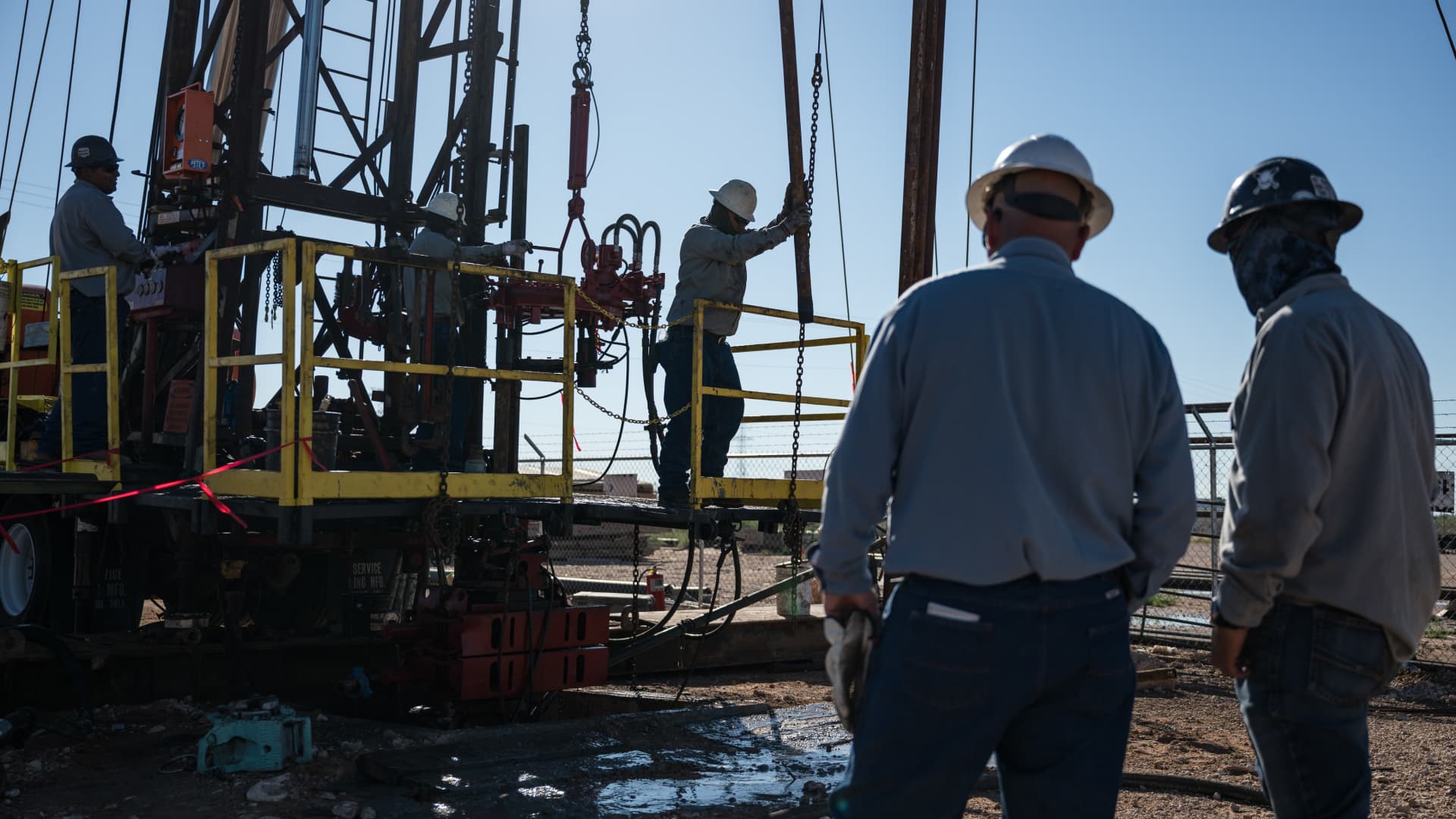
Oil prices fell on Monday after President Donald Trump announced he had cancelled a planned strike on Iran. WTI futures dropped roughly 5% to $80.34 a barrel, while Brent slipped about 4.7% to $83.77 a barrel.
Trump said early Sunday he called off the strike after Iran and several Middle Eastern nations asked him to hold off, noting that the outlines of a deal had been agreed upon. He added that the prospective accord would entail the immediate, full opening of the Strait of Hormuz and an end to Iran’s nuclear ambitions, according to his Truth Social post.
The president had been considering another round of strikes as diplomatic hopes waned since the conflict began on February 28. He said the U.S. and Iran would meet for talks on Monday, but Iran denied any scheduled negotiations with Washington, citing PressTV. Iran’s foreign‑ministry spokesperson Esmaeil Baghaei clarified that Tehran was only discussing shipping routes through the Strait of Hormuz with Oman. In a follow‑up Truth Social message, Trump insisted that, regardless of Iran’s acknowledgment, the United States is indeed discussing a solution to a long‑standing problem created by Iran.
Technologies
Oil Prices Drop as Trump Cancels Planned Attack on Iran
Oil prices fell sharply after President Trump announced the cancellation of a planned strike on Iran, citing a new deal that would open the Hormuz Strait and end Iran’s nuclear threat.
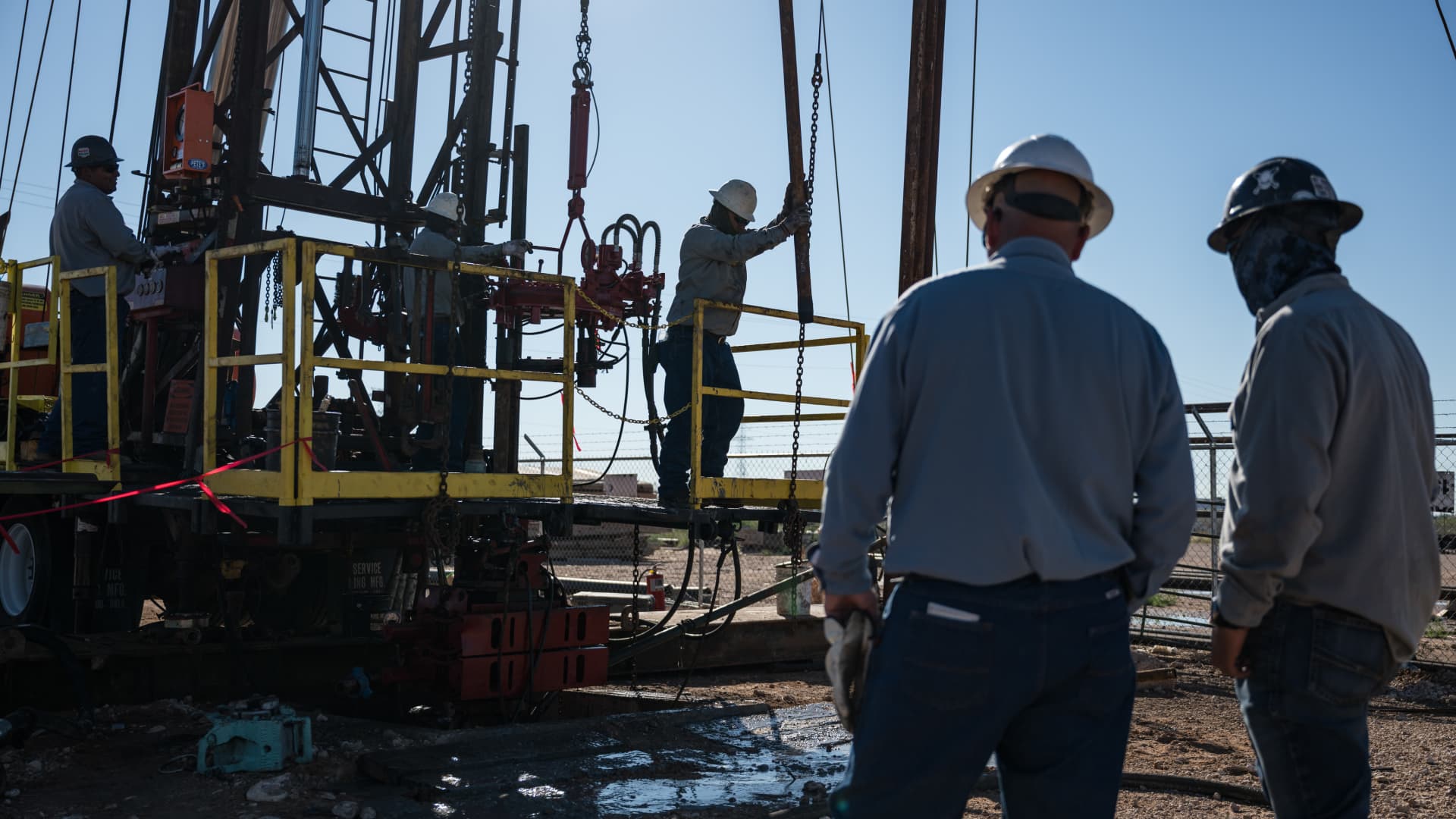
Oil prices fell sharply on Monday after President Donald Trump announced that he had called off a planned strike on Iran.
West Texas Intermediate futures, the U.S. benchmark, slipped roughly 5% to close at $80.34 per barrel, while Brent crude, the international benchmark, declined 4.7% to settle at $83.77 a barrel.
Trump made the announcement early Sunday, saying he had canceled the strike following requests from Tehran and other Middle Eastern countries.
In a Truth Social post, he wrote: “We have just been asked by Iran, and other Middle Eastern Countries, to hold off any attack in that the perimeters of a deal has been agreed to.”
The president indicated that the proposed agreement would include the immediate, complete, and total opening of the Hormuz Strait, as well as an end to Iran’s nuclear threat.
Trump had been weighing additional strikes amid diminishing prospects for a diplomatic resolution to the conflict that began on Feb. 28. He stated that the U.S. and Iran would hold negotiations on Monday.
Tehran denied that talks were planned with Washington, according to state news outlet PressTV.
Iran’s Foreign Ministry spokesman Esmaeil Baghaei said Tehran was only holding talks with Oman regarding the routes ships can use through the Strait of Hormuz.
In a subsequent Truth Social post, Trump added that whether “Iran wants to admit it or not, we are, in fact, talking of a solution to a problem that they have caused for decades.”
-
 Technologies4 years ago
Tech Companies Need to Be Held Accountable for Security, Experts Say
-
 Technologies3 years ago
Best Handheld Game Console in 2023
-
 Technologies5 years ago
Black Friday 2021: The best deals on TVs, headphones, kitchenware, and more
-
 Technologies3 years ago
Tighten Up Your VR Game With the Best Head Straps for Quest 2
-
 Technologies5 years ago
Google to require vaccinations as Silicon Valley rethinks return-to-office policies
-
 Technologies5 years ago
Verum, Wickr and Threema: next generation secured messengers
-
 Technologies4 years ago
The number of Сrypto Bank customers increased by 10% in five days
-
 Technologies5 years ago
Olivia Harlan Dekker for Verum Messenger