
Technologies
Apple warns of more supply chain woes after iPhone 13 drives revenue surge
The tech giant’s financial disclosures follow the release of new Mac computers, iPads and the iPhone 13.
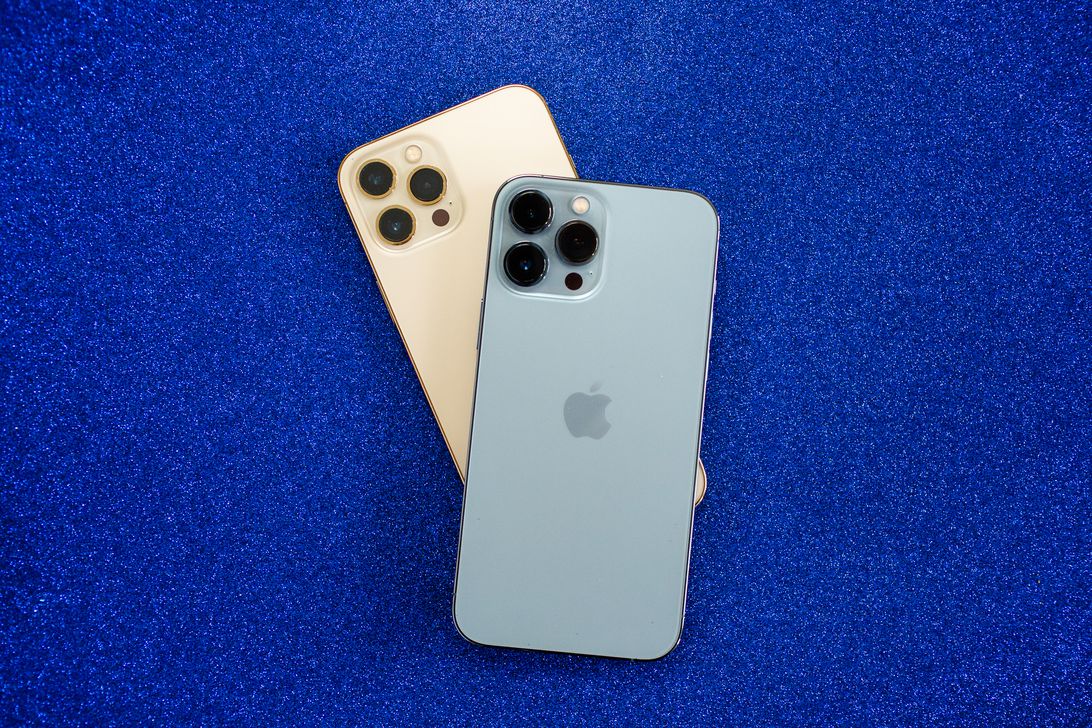
Apple warned on Thursday that it continues to struggle with supply chain disruptions as it ramps up for an expected holiday shopping crunch following the release of its iPhone 13, new iPads, Apple Watches and Mac computers.
Apple said that iPhone sales jumped nearly 47% in the three months ended Sept. 25, as consumers snatched up the new iPhone 13. But Apple said its sales could have even been higher if not for the continued spread of the coronavirus pandemic, which has disrupted businesses across the globe. For Apple that led to a more limited number of products it could make and ship to customers.
Apple CEO Tim Cook said the company missed out on as much as $6 billion in revenue as a result of constrained supplies, primarily driven by silicon chip shortages and manufacturing disruptions. «We are optimistic about the future, especially as we see strong demand for new products,» he told analysts on a conference call.
Still, even though the company expects supply constraints to continue through the holidays, CFO Luca Maestri said he expects Apple to set new sales records during the holiday shopping season.
Apple’s financial disclosures add to a growing tapestry of information about the world economy amid the pandemic. The pandemic upended what turned out to be fragile supply chains around the globe when it ripped through manufacturing and shipping hubs at the beginning of last year. Now, as the holiday shopping season begins, questions remain about potential supply shortages.
In response, large retailers such as Target, Best Buy, Amazon and even Macy’s have begun rolling out early Black Friday deals before Halloween in an effort to draw people to shop now.
As for Apple, many of its newly launched products are already on back order, with the company quoting shipping times for new iPhones into November and new Macs into December. That all speaks to how much Apple’s struggled to keep up with demand.
It also likely helps that Apple’s fiscal fourth quarter included launches for highly anticipated products, including a more rugged $399 Apple Watch Series 7, updated $329 entry-level iPad, and redesigned $499 iPad Mini. The biggest release though was the series of iPhone 13 models, starting at $699.
The company said it tallied $38.8 billion in iPhone sales, up from $26.4 billion the same time a year earlier. Some of that can be attributed to quirks of the calendar. Apple released its iPhone 12 last year a few weeks later than usual, and as a result, its iPhone sales took a hit. This year, Apple stuck to its typical schedule of releasing new iPhones in September.
All told, Apple said it notched profits of $20.5 billion, up 62% from the same last year. That translates to $1.24 per share in profit, off $83.36 billion in overall revenue, which itself was up more than 28% from the $64.7 billion reported last year. But it was below analysts’ average estimates, which were $1.24 per share in profits on nearly $84.9 billion in revenue, according to surveys published by Yahoo Finance.
«It’s difficult to predict COVID,» Cook said. He added that he believes Apple’s still in a «materially better» position than it was earlier this year.
Apple’s stock closed regular trading up 2.5% to $152.57 per share. The stock’s risen nearly 18% so far this year, valuing the company at more than $2.5 trillion.
Supply shortages
The tech industry’s supply issues stretch back more than a year. Initially, industry executives said, many companies lowered orders for products out of fear for decreased demand when the pandemic was just starting last year. That, mixed with waves of illness and manufacturing shutdowns, led to supply shortages as people ramped up online shopping.
Chip shortages have extended well past the tech industry too. It’s kept Sony from being able to produce enough of its PlayStation 5 consoles to meet demand. But it’s also kept Ford from being able to make its F-150 trucks.
Read more: Why your iPhone may never be «Made in America»
Apple’s Cook said that most of the supply shortages it’s facing are among older chips, though the company didn’t say which products or chips in particular it’s referring to. But he did say that getting enough newer chips isn’t as much of an issue.
«What we’re doing is working with our partners, and making sure that they have supply,» he said. Apple’s reworked some of its manufacturing, he added, to have as many products ready for chips as possible. That way, a chip can roll off the manufacturing line, into a product and shipping «as fast as possible.»
By the numbers
Apple said it set a record for Mac sales at nearly $9.2 billion, up slightly from the $9 billion a year earlier, despite the struggles it’s faced to get products to customers.
Apple said its success is primarily driven by the company’s new M1 chips, microprocessing brains designed by the teams that work on the iPhone. These chips, which were first released last year, have been well received by reviewers, who say they’re able to perform well when compared to previous Mac computers. Apple had relied on Intel chips to power its computers for about 15 years.
«After nearly a year, I can say the Intel-to-M1 transition has been relatively smooth,» CNET reviewer Dan Ackerman wrote of the new Mac computers. «The best thing I can say about the M1 chip is that it’s largely transparent to the everyday MacBook Air user, which is exactly what you want from a big under-the-hood change like this.»
Apple’s iPad sales jumped 21% to $8.2 billion. Its segment called «wearables, home and accessories,» which includes the HomePod Mini and Apple Watch, jumped more than 11% to nearly $8.8 billion. Services revenue, including from the company’s $5-a-month Apple TV Plus service, rose 26% to nearly $18.3 billion.
Apple said nearly a third of its revenue now comes from developing countries. Sales in Greater China nearly doubled to $14.5 billion from the year earlier, while sales in the Americas jumped 20% to $36.8 billion, Europe rose 23% to $20.8 billion, and Japan ticked up 19%. Revenue from the rest of Asia Pacific rose 25% to $5.2 billion.
Technologies
TMR vs. Hall Effect Controllers: Battle of the Magnetic Sensing Tech
The magic of magnets tucked into your joysticks can put an end to drift. But which technology is superior?
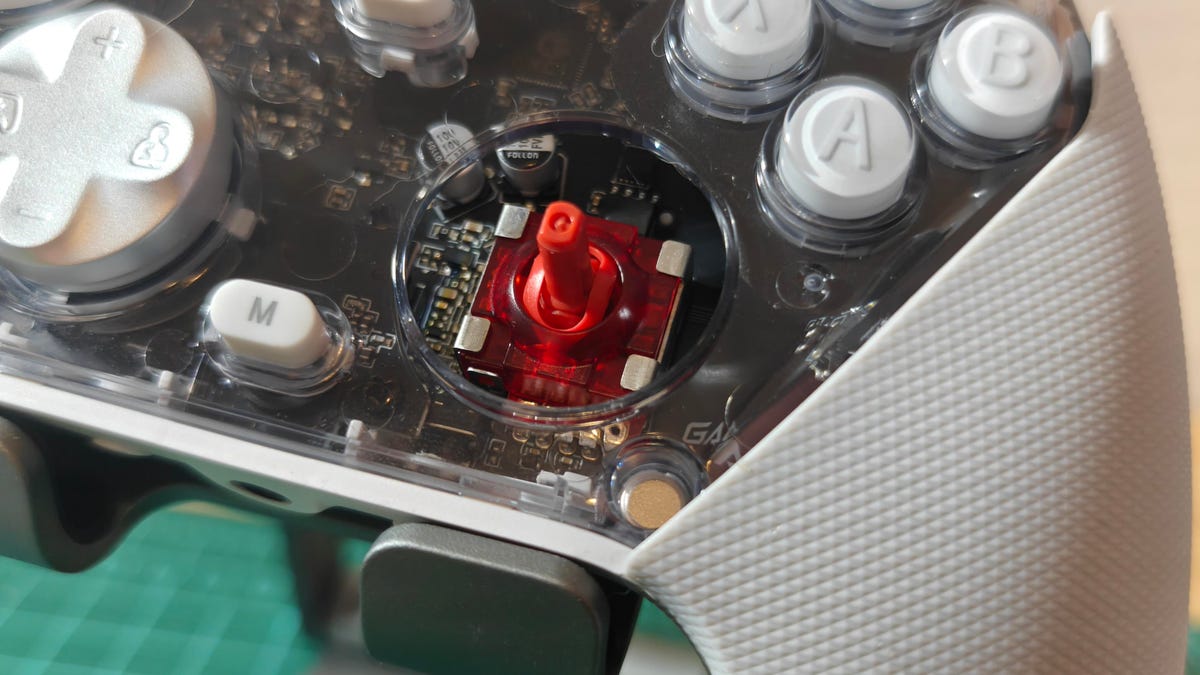
Competitive gamers look for every advantage they can get, and that drive has spawned some of the zaniest gaming peripherals under the sun. There are plenty of hardware components that actually offer meaningful edges when implemented properly. Hall effect and TMR (tunnel magnetoresistance or tunneling magnetoresistance) sensors are two such technologies. Hall effect sensors have found their way into a wide variety of devices, including keyboards and gaming controllers, including some of our favorites like the GameSir Super Nova.
More recently, TMR sensors have started to appear in these devices as well. Is it a better technology for gaming? With multiple options vying for your lunch money, it’s worth understanding the differences to decide which is more worthy of living inside your next game controller or keyboard.
How Hall effect joysticks work
We’ve previously broken down the difference between Hall effect tech and traditional potentiometers in controller joysticks, but here’s a quick rundown on how Hall effect sensors work. A Hall effect joystick moves a magnet over a sensor circuit, and the magnetic field affects the circuit’s voltage. The sensor in the circuit measures these voltage shifts and maps them to controller inputs. Element14 has a lovely visual explanation of this effect here.
The advantage this tech has over potentiometer-based joysticks used in controllers for decades is that the magnet and sensor don’t need to make physical contact. There’s no rubbing action to slowly wear away and degrade the sensor. So, in theory, Hall effect joysticks should remain accurate for the long haul.
How TMR joysticks work
While TMR works differently, it’s a similar concept to Hall effect devices. When you move a TMR joystick, it moves a magnet in the vicinity of the sensor. So far, it’s the same, right? Except with TMR, this shifting magnetic field changes the resistance in the sensor instead of the voltage.
There’s a useful demonstration of a sensor in action here. Just like Hall effect joysticks, TMR joysticks don’t rely on physical contact to register inputs and therefore won’t suffer the wear and drift that affects potentiometer-based joysticks.
Which is better, Hall effect or TMR?
There’s no hard and fast answer to which technology is better. After all, the actual implementation of the technology and the hardware it’s built into can be just as important, if not more so. Both technologies can provide accurate sensing, and neither requires physical contact with the sensing chip, so both can be used for precise controls that won’t encounter stick drift. That said, there are some potential advantages to TMR.
According to Coto Technology, who, in fairness, make TMR sensors, they can be more sensitive, allowing for either greater precision or the use of smaller magnets. Since the Hall effect is subtler, it relies on amplification and ultimately requires extra power. While power requirements vary from sensor to sensor, GameSir claims its TMR joysticks use about one-tenth the power of mainstream Hall effect joysticks. Cherry is another brand highlighting the lower power consumption of TMR sensors, albeit in the brand’s keyboard switches.
The greater precision is an opportunity for TMR joysticks to come out ahead, but that will depend more on the controller itself than the technology. Strange response curves, a big dead zone (which shouldn’t be needed), or low polling rates could prevent a perfectly good TMR sensor from beating a comparable Hall effect sensor in a better optimized controller.
The power savings will likely be the advantage most of us really feel. While it won’t matter for wired controllers, power savings can go a long way for wireless ones. Take the Razer Wolverine V3 Pro, for instance, a Hall effect controller offering 20 hours of battery life from a 4.5-watt-hour battery with support for a 1,000Hz polling rate on a wireless connection. Razer also offers the Wolverine V3 Pro 8K PC, a near-identical controller with the same battery offering TMR sensors. They claim the TMR version can go for 36 hours on a charge, though that’s presumably before cranking it up to an 8,000Hz polling rate — something Razer possibly left off the Hall effect model because of power usage.
The disadvantage of the TMR sensor would be its cost, but it appears that it’s negligible when factored into the entire price of a controller. Both versions of the aforementioned Razer controller are $199. Both 8BitDo and GameSir have managed to stick them into reasonably priced controllers like the 8BitDo Ultimate 2, GameSir G7 Pro and GameSir Cyclone 2.
So which wins?
It seems TMR joysticks have all the advantages of Hall effect joysticks and then some, bringing better power efficiency that can help in wireless applications. The one big downside might be price, but from what we’ve seen right now, that doesn’t seem to be much of an issue. You can even find both technologies in controllers that cost less than some potentiometer models, like the Xbox Elite Series 2 controller.
Caveats to consider
For all the hype, neither Hall effect nor TMR joysticks are perfect. One of their key selling points is that they won’t experience stick drift, but there are still elements of the joystick that can wear down. The ring around the joystick can lose its smoothness. The stick material can wear down (ever tried to use a controller with the rubber worn off its joystick? It’s not pleasant). The linkages that hold the joystick upright and the springs that keep it stiff can loosen, degrade and fill with dust. All of these can impact the continued use of the joystick, even if the Hall effect or TMR sensor itself is in perfect operating order.
So you might not get stick drift from a bad sensor, but you could get stick drift from a stick that simply doesn’t return to its original resting position. That’s when having a controller that’s serviceable or has swappable parts, like the PDP Victrix Pro BFG, could matter just as much as having one with Hall effect or TMR joysticks.
Technologies
Today’s NYT Connections: Sports Edition Hints and Answers for Feb. 18, #513
Here are hints and the answers for the NYT Connections: Sports Edition puzzle for Feb. 18, No. 513.
Looking for the most recent regular Connections answers? Click here for today’s Connections hints, as well as our daily answers and hints for The New York Times Mini Crossword, Wordle and Strands puzzles.
Today’s Connections: Sports Edition has a fun yellow category that might just start you singing. If you’re struggling with today’s puzzle but still want to solve it, read on for hints and the answers.
Connections: Sports Edition is published by The Athletic, the subscription-based sports journalism site owned by The Times. It doesn’t appear in the NYT Games app, but it does in The Athletic’s own app. Or you can play it for free online.
Read more: NYT Connections: Sports Edition Puzzle Comes Out of Beta
Hints for today’s Connections: Sports Edition groups
Here are four hints for the groupings in today’s Connections: Sports Edition puzzle, ranked from the easiest yellow group to the tough (and sometimes bizarre) purple group.
Yellow group hint: I don’t care if I never get back.
Green group hint: Get that gold medal.
Blue group hint: Hoops superstar.
Purple group hint: Not front, but…
Answers for today’s Connections: Sports Edition groups
Yellow group: Heard in «Take Me Out to the Ball Game.»
Green group: Olympic snowboarding events.
Blue group: Vince Carter, informally.
Purple group: ____ back.
Read more: Wordle Cheat Sheet: Here Are the Most Popular Letters Used in English Words
What are today’s Connections: Sports Edition answers?
The yellow words in today’s Connections
The theme is heard in «Take Me Out to the Ball Game.» The four answers are Cracker Jack, home team, old ball game and peanuts.
The green words in today’s Connections
The theme is Olympic snowboarding events. The four answers are big air, giant slalom, halfpipe and slopestyle.
The blue words in today’s Connections
The theme is Vince Carter, informally. The four answers are Air Canada, Half-Man, Half-Amazing, VC and Vinsanity.
The purple words in today’s Connections
The theme is ____ back. The four answers are diamond, drop, quarter and razor.
Technologies
Today’s NYT Mini Crossword Answers for Wednesday, Feb. 18
Here are the answers for The New York Times Mini Crossword for Feb. 18.
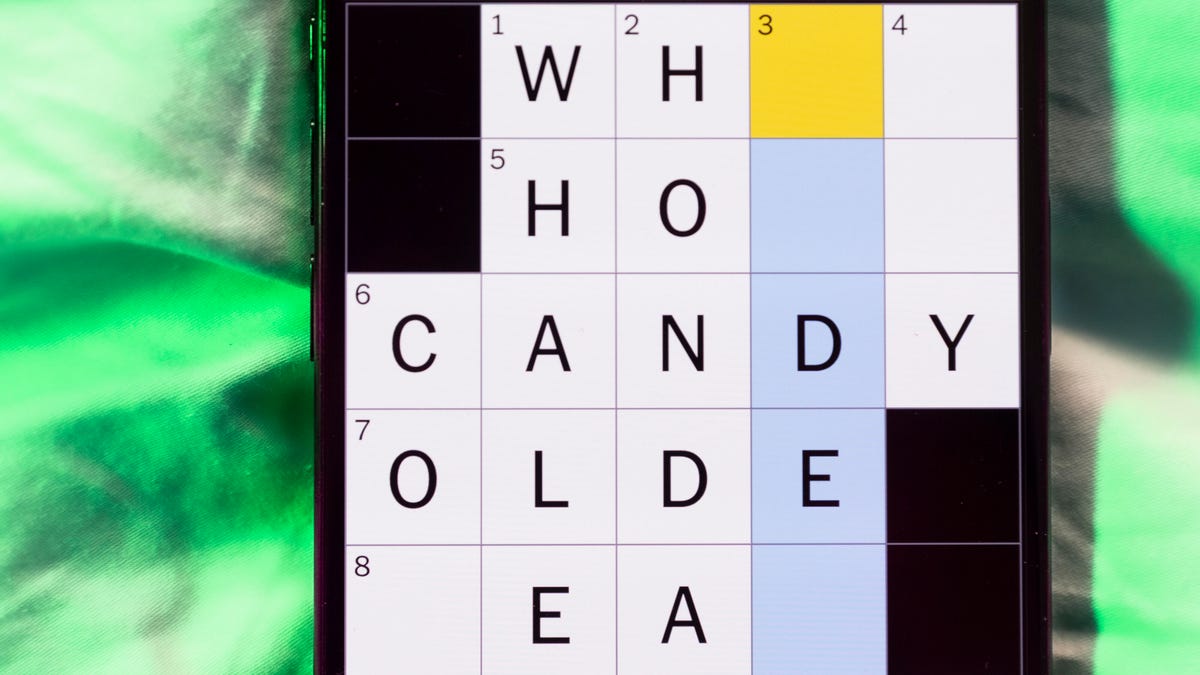
Looking for the most recent Mini Crossword answer? Click here for today’s Mini Crossword hints, as well as our daily answers and hints for The New York Times Wordle, Strands, Connections and Connections: Sports Edition puzzles.
Today’s Mini Crossword is a fun one, and it’s not terribly tough. It helps if you know a certain Olympian. Read on for all the answers. And if you could use some hints and guidance for daily solving, check out our Mini Crossword tips.
If you’re looking for today’s Wordle, Connections, Connections: Sports Edition and Strands answers, you can visit CNET’s NYT puzzle hints page.
Read more: Tips and Tricks for Solving The New York Times Mini Crossword
Let’s get to those Mini Crossword clues and answers.
Mini across clues and answers
1A clue: ___ Glenn, Olympic figure skater who’s a three-time U.S. national champion
Answer: AMBER
6A clue: Popcorn size that might come in a bucket
Answer: LARGE
7A clue: Lies and the Lying ___ Who Tell Them» (Al Franken book)
Answer: LIARS
8A clue: Close-up map
Answer: INSET
9A clue: Prepares a home for a new baby
Answer: NESTS
Mini down clues and answers
1D clue: Bold poker declaration
Answer: ALLIN
2D clue: Only U.S. state with a one-syllable name
Answer: MAINE
3D clue: Orchestra section with trumpets and horns
Answer: BRASS
4D clue: «Great» or «Snowy» wading bird
Answer: EGRET
5D clue: Some sheet music squiggles
Answer: RESTS
-
 Technologies3 года ago
Tech Companies Need to Be Held Accountable for Security, Experts Say
-
 Technologies3 года ago
Best Handheld Game Console in 2023
-
 Technologies3 года ago
Tighten Up Your VR Game With the Best Head Straps for Quest 2
-
 Technologies4 года ago
Black Friday 2021: The best deals on TVs, headphones, kitchenware, and more
-
 Technologies5 лет ago
Google to require vaccinations as Silicon Valley rethinks return-to-office policies
-
 Technologies5 лет ago
Verum, Wickr and Threema: next generation secured messengers
-
 Technologies4 года ago
Olivia Harlan Dekker for Verum Messenger
-
 Technologies4 года ago
iPhone 13 event: How to watch Apple’s big announcement tomorrow