
Technologies
Scientists concerned climate change is causing animals to ‘shape-shift’
Wood mice have larger ears. Australian parrots have bulkier bills. And the shifts are happening very quickly, researchers say.
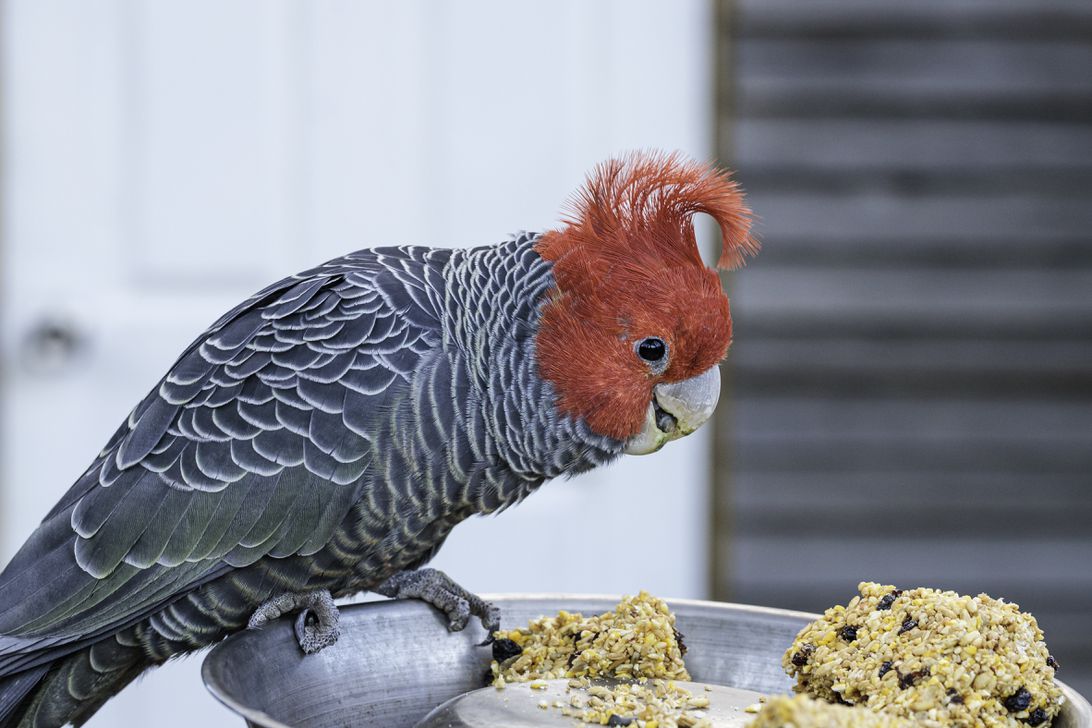
The climate crisis is sending natural selection into overdrive, a new study suggests, forcing animals to cope with rapidly warming temperatures by physically morphing, or «shape-shifting.» That raises a piercing question: Can evolution keep up with the result of human-driven carbon emissions?
In the last 150 years, Australian parrots, such as gang-gang cockatoos and red-rumped parrots, have shown up to a 10% average increase in bill size alongside rising temperatures in their natural habitats, according to research published Tuesday in the journal Trends in Ecology & Evolution.
«It’s alarming that we are seeing these responses so early on in the climate crisis,» said study author Sara Ryding, a researcher in the School of Life and Environmental Sciences at Deakin University in Australia. «We don’t know if they’ll be able to keep up as the crisis worsens.»
The fluffy parrots streaked with bright colors aren’t the only victims of a warmer world. Several other species of birds in North America and Australia have seen an increase in bill size, wood mice have bigger ears, and some bats are flaunting an upgraded, larger set of wings.
Those larger appendages are expected to help the animals manage hot weather because they offer a greater surface area for releasing body heat. «This is not necessarily an increase that’s visible to the naked eye,» Ryding noted, «but it’s still functionally important.»
Though evolution has occurred since the beginning of life on Earth, Ryding worries that right now it’s happening far too quickly.
«I don’t want the takeaway to be that, ‘Oh, animals are evolving in response to climate change, that means they’ll be fine,’ because that simply isn’t true,» she said.
The team’s study, which scoured through tons of already published papers to compare trends in animal shape-shifting against climate change, recognized that the rampant adaptations are happening relatively early along the projected timeline of the climate crisis.
That timeline doesn’t taper off for a while.
The Intergovernmental Panel on Climate Change already calls many countries’ previous goal of limiting global warming in the next decades to 1.5 degrees, or even 2 degrees, as «beyond reach.» That’s unless there are «immediate, rapid and large-scale reductions in greenhouse gas emissions,» reads the group’s report from August, which the panel deems a «reality check.»
«Climatic changes are happening at a faster rate than ever before,» Ryding said. «Although evolutionary changes can be a slow process, taking thousands — or more — years, we also know that strong selection can drive faster evolutionary change.»
By strong selection, Ryding is referring to the intensity with which natural selection occurs. If only one in 10 members of a species can survive in a warm climate due to their having a larger appendage, the other nine won’t live long enough to pass their genes onto the next generation.
That’s why we’re seeing new cohorts of species with bulkier appendages riding the trajectory of global warming.
«Seeing just how widespread this phenomenon is across geographic scales and across a broad range of animals — the unifying factor that we find is climate change,» Ryding said.
The correlation makes sense, because of a theory first developed in 1877 by American zoologist and ornithologist Joel Asaph Allen. It basically states that animals living in warmer climates will have larger, longer appendages than those in colder areas.
«Animals can let go of excess body heat through their appendages, so larger appendages allow them to let go of even more excess body heat, which is beneficial as the climate warms,» Ryding explained.
Allen’s rule has been widely studied by scientists, including in a paper from 2020 that aims to establish its benefit as a predictive tool for climate change outcomes. However, the sheer coverage of Ryding’s work solidifies the phenomenon of expedited evolution as a far-reaching issue.
«I hope that these findings really highlight how climate change is impacting animals,» Ryding said, «and how important it is that we work to reduce our emissions and avoid the climate crisis as much as possible.»
Technologies
YouTubers Sue Amazon, Claim AI Tool Was Trained on Scraped Videos
The lawsuit alleges that Amazon bypassed YouTube protections to collect content for its generative AI video system.

A group of YouTube creators is suing Amazon, accusing the tech giant of secretly scraping their videos to train its AI video model without permission.
The proposed class action lawsuit, filed in federal court in Seattle, alleges Amazon used automated tools to download and extract data from millions of YouTube videos to build and improve its Nova Reel generative AI system — a model that can create short videos from text prompts and images.
At the center of the complaint is how that data was obtained. The plaintiffs claim that Amazon bypassed YouTube’s protections using virtual machines and rotating IP addresses to avoid detection, effectively sidestepping the platform’s safeguards against bulk downloading.
The lawsuit was brought by several creators, including Ted Entertainment (the company behind the H3 Podcast and h3h3 Productions), as well as individual YouTubers and channel operators. They argue that the alleged scraping violated copyright law and the Digital Millennium Copyright Act, and are seeking damages as well as an injunction to stop the practice.
Amazon did not respond to a request for comment.
The case lands at a pivotal moment for generative AI, as courts weigh whether training on copyrighted material qualifies as fair use and how much control creators retain once their work is used to build these systems. The disputes have often centered on written material, which has been at the center of the AI revolution for several years, while AI video generators such as OpenAI’s Sora and Google’s Veo have emerged more recently.
The lawsuit is one of dozens testing the boundaries of AI training practices, alongside high-profile cases from authors, artists and news organizations, including lawsuits against OpenAI and Meta, all circling the same unresolved question: Where does fair use end and infringement begin?
Technologies
The Galaxy Z TriFold Is Back. You Can Buy It From Samsung Soon
The $2,899 phone paused its sales in March after selling through its inventory, but Samsung is bringing it back to its online store.

Samsung’s $2,899 Galaxy Z TriFold is going back on sale on Friday, following a halt to its sales in March after the foldable phone sold through its inventory. Samsung has announced the TriFold’s return with a countdown clock on the phone’s online store page along with a Wednesday newsletter email sent to customers.
The initial pause, which Samsung said at the time was related to the TriFold being a «super-premium device in limited quantities,» happened after just three months of availability. The TriFold first went on sale in South Korea on Dec. 12 and then arrived in Samsung’s US store on Jan. 30. The TriFold sold out in the US within minutes of going on sale — which I know personally after joining my colleagues that morning in an attempt to buy it. Thankfully Senior Reporter Abrar Al-Heeti succeeded, and then reviewed the TriFold.
It’s unclear whether the Galaxy Z TriFold is now permanently returning to Samsung’s online store or if it is again on sale until its stock sells through. Given that the phone is very expensive, and unfolds to reveal a large, 10-inch display, it wouldn’t be surprising if its stock will be in limited quantities. We’ve asked a Samsung representative to clarify and will update if we hear more.
The Galaxy Z TriFold’s return also comes ahead of the summer season when we expect a slew of other foldable phones: Samsung typically refreshes its Galaxy Z Fold and Z Flip line in July or August, and Motorola has announced its first book-style Razr Fold phone will also debut during the season. And Apple’s rumored iPhone Fold (or perhaps iPhone Ultra based on latest rumors) could also be teased later this year.
Technologies
Help Us Crown the Most Loved Headphones and Earbuds of 2026
Got a pair you swear by? Take our People’s Picks survey to help us find a winner.
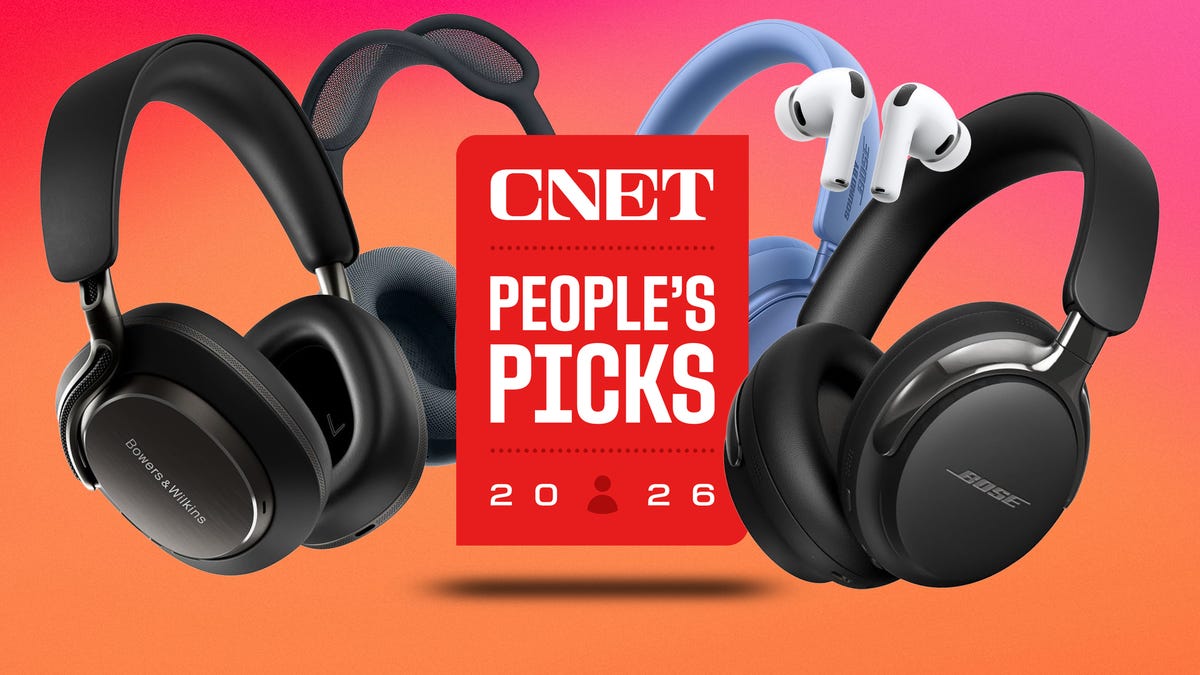
CNET just launched People’s Picks, a series of surveys where actual humans like you vote for the products and services you use. Starting in April, we want you to weigh in on your favorite headphones and earbuds. We’ll pick a winner based on which ones you love the most.
Why we want to hear from you
Our writers and editors test hundreds of products each year, but your real-world experience with these devices is something we can’t replicate in our labs. You’ve used these headphones at the gym, on your commute to work and on long flights, and that perspective is invaluable. Your voice helps others know about the headphones or earbuds you love, too.
«I review a lot of headphones and earbuds for CNET, and there are plenty of great models from the top brands in this survey that I rate highly. I’m always curious about what models people ultimately choose and why, so I’m excited to get your feedback and learn the results of this survey,» says David Carnoy, CNET’s executive editor and headphones expert.
With our survey, we’ll collect answers from real-world users like you. The headphones and earbuds chosen through our 3-minute survey will be featured in our People’s Picks roundup of the top picks based on your recommendation.
Make your voice heard
Whether you swear by a pair of $25 earbuds or love a pair of high-end headphones, your pick counts. The survey takes just a few minutes to complete, and after we gather enough information, we’ll tally the results and publish the winners.
Not sure what to pick? Check out our Best Headphones to revisit your favorites before voting.
-
 Technologies3 года ago
Tech Companies Need to Be Held Accountable for Security, Experts Say
-
 Technologies3 года ago
Best Handheld Game Console in 2023
-
 Technologies3 года ago
Tighten Up Your VR Game With the Best Head Straps for Quest 2
-
 Technologies4 года ago
Black Friday 2021: The best deals on TVs, headphones, kitchenware, and more
-
 Technologies5 лет ago
Google to require vaccinations as Silicon Valley rethinks return-to-office policies
-
 Technologies5 лет ago
Verum, Wickr and Threema: next generation secured messengers
-
 Technologies4 года ago
Olivia Harlan Dekker for Verum Messenger
-
 Technologies4 года ago
The number of Сrypto Bank customers increased by 10% in five days