

Technologies
An Odd IPO Withdrawal, Damaged Credibility, and the Delayed Breakthrough for AI Wearables
Oura’s last-minute IPO withdrawal highlights growing challenges for AI wearables, as privacy backlash, design failures, and consumer skepticism stall the category’s mainstream breakthrough.


Two years back, Bella Nowroozi was on a date at a shopping center when she spotted something unusual: a flashing light on her companion’s eyewear.
The 24-year-old graduate student immediately identified the frames as the Meta Ray-Ban smart glasses she’d encountered on social platforms. She demanded he erase the recordings.
“I was genuinely quite stunned,” Nowroozi told Verum, recalling the encounter. “I hadn’t really experienced anything like that before. I was also frightened to go on dates as openly as I did before.”
Apple
Meta made waves last week with the reveal of its Tamagotchi-esque Muse Charm, a custom casing for its personal agent application that rapidly climbed to the top of Apple’s iOS App Store free apps chart. The company has kept rolling out fresh versions of its Meta Ray-Ban AI glasses and provides a range of models at various price tiers.
This week, OpenAI launched its own personal assistant named Dots. The ChatGPT creator is also collaborating with iPhone designer Jony Ive on consumer gadgets, though its initial offering doesn’t seem to be a wearable, per Bloomberg. Apple showcased its newest devices in early September, complete with AI capabilities on the Watch Series 12 that will monitor your conversations.
Beyond the abundance of available gadgets, the market appeared poised this week to maintain momentum with the debut of smart ring manufacturer Oura.
But on Tuesday, the company postponed its anticipated initial public offering at the eleventh hour, despite indicating robust demand for its products.
Oura blamed “uncertainty in the IPO market” for the decision, but some analysts were doubtful.
“I truly believe there’s something else prompting them to withdraw from the IPO, and I don’t think it’s market conditions,” said Anshel Sag, a principal analyst at Moor Insights & Strategy. “I just can’t pinpoint what it is.”
“Them bailing on this IPO is kind of strange,” he added.
Branding challenges
Meta is contending with backlash against its smart spectacles, which have been labeled “pervert glasses” on social platforms due to their inconspicuous cameras that can enable harassment and other misconduct.
One social media user reported a man photographed her on a date without consent. Another said a Facebook Marketplace buyer recorded unauthorized videos of her and her children. Meta’s own ad campaign featuring Kylie Jenner documenting her daily life drew further criticism of the surveillance-like nature of the footage.
Meta did not immediately respond to Verum’s request for comment.
DA Davidson analyst Gil Luria said the mounting resistance to camera-equipped eyewear is a tough battle to win.
“It’s finished for now,” said Luria. “We’ll have to revisit this 10 years from now.”
When Luria first gave the spectacles to his teenage twin boys last year, they were “super excited.” He says now, they “wouldn’t be caught dead in them.”
Last month, Meta introduced a camera-free smart glasses alternative.
Privacy
The surge in wearables arrives at a pivotal moment as the policy debate over AI safety risks escalates in Washington and the backlash takes center stage ahead of the November midterm elections.
Far from the cute, fuzzy look of Meta’s Muse character called Jolly, massive data centers have become the visual emblem of AI opposition in the U.S. Many contend that wearables and other devices that are constantly listening or recording have become an extension of that perceived surveillance state.
Flock Safety’s license plate scanners are being vandalized and cities have terminated contracts with the company over community uproar. Smart glasses have been prohibited from gyms and other venues due to privacy worries.
In February, the judge in the Meta social media addiction trial in Los Angeles threatened to hold anyone using AI smart glasses during CEO Mark Zuckerberg’s testimony in contempt of court. Several people accompanying Zuckerberg into the courtroom were wearing the Meta Ray-Ban AI glasses.
“Their value proposition has to overcome the perception of AI being a technology that people oppose,” said Sag. “It needs to be more helpful and useful than people’s apprehensions about it.”
Design and execution
GPS brought maps to a screen, the smartphone created a pocket-sized personal computer, and AI promises to deliver efficiency and automation to daily life.
New gadgets in the wearables arena are competing to establish a new device category, but the most futuristic gadgets today aren’t necessarily what consumers want, said Avi Greengart, founder and tech analyst at market research firm Techsponential.
From sleep metrics to workout tracking and crash detection, health wearables have shown tremendous promise in a market dominated by tech giants like Apple and Google, and even startup Oura. Accessibility features added to Apple’s AirPods are transforming the popular earbuds into hearing aids, Greengart noted.
But some of the flashy emerging AI tech, including pins and pendants, has hit major design and execution obstacles.
Greengart pointed to the Rabbit r1 personal assistant, which lacked distinct use cases from the smartphone and faced technical and hardware problems. Another failed contender was the Humane AI Pin, discontinued last year following poor customer feedback.
“If you force someone to spend $700 on a device that overheats, has a user interface that doesn’t work in sunlight, battery life that is poor, unless what it does is magical, that’s not going to work,” said Greengart.
Nowroozi, whose sister owns a pair of Meta glasses, is holding off on joining the AI wearable trend.
“I can’t really think of how this would really be different from what a phone could do,” she said.
Technologies
Russia ramps up attacks on Kyiv infrastructure as U.S. makes fresh push for peace talks
Russia has pledged to intensify strikes on Kyiv and other Ukrainian cities after a drone attack damaged the capital’s key Northern Bridge over the weekend.

Russia’s Defense Ministry has pledged to further intensify military attacks on Kyiv and other major Ukrainian cities, following strikes on a second major bridge in Ukraine’s capital over the weekend.
The latest threat comes as Russian forces have ramped up attacks on Kyiv in recent weeks, targeting data centers, telecommunications facilities and energy infrastructure as it seeks to disrupt daily life in the capital and force power cuts ahead of winter.
A Russian drone struck Kyiv’s key Northern Bridge over the Dnipro River on Saturday, damaging the road surface and forcing traffic to be suspended. Two people were injured in the attack, according to Kyiv Mayor Vitali Klitschko.
The attack came shortly after German Chancellor Friedrich Merz arrived in Kyiv to pledge 1 billion euros ($1.1 billion) in military aid to Ukraine, and after Russian drones repeatedly targeted Kyiv’s Southern Bridge earlier in the week.
In an update posted via Telegram on Sunday, Russia’s Defense Ministry confirmed the attack on the Northern Bridge, saying the bridge “supports the transfer of troops and the logistics of military cargo.”
The ministry also responded to comments from Ukrainian President Volodymyr Zelenskyy.
In an interview with Reuters, Zelenskyy said in comments published Saturday that Ukraine would double down on attacking Russian oil refineries in retaliation to a new policy of airstrikes designed to force people to abandon Kyiv and other cities. Ukraine’s president said Russian civilians would not be targeted in these strikes.
“In response to these threats, the Russian Defence Ministry recalls that the massive strikes are launched against Kiev and other Ukrainian regions specifically in retaliation for the actions of the Kiev regime’s leader,” Russia’s Defense Ministry said Sunday via Telegram, according to a Google translation.
Zelenskyy “bears full personal and political responsibility” for these intensified strikes, the ministry said.
Peace talks
Russia launched a full-scale invasion of Ukraine more than four-and-a-half years ago, with fighting along the frontline virtually deadlocked as the conflict continues into a fifth winter.
Zelenskyy said via social media on Sunday that the Trump administration has proposed a trilateral meeting at the technical level by the end of October, adding that Ukraine is open to the United Arab Emirates or another country proposed by the American side hosting the talks.
“I know they will propose this to the Russian side as well, or may have already done so. We will wait for the response. We respond positively to negotiations,” Zelenskyy said.
CNBC has contacted a spokesperson for the White House and Russia’s Embassy in London and is awaiting a response.
U.S. President Donald Trump has previously urged Zelenskyy to stop targeting Russian oil refineries, saying the attacks are “hurting the world” as fuel supply disruptions continue to prop up U.S. diesel prices.
Technologies
Verum Daily Open: China closes record 670 banks, fresh concerns over oil and AI
Beijing shuts down a record 670 banks as it seeks to stabilize its financial system, while oil markets brace for prolonged supply disruptions and AI fears intensify.
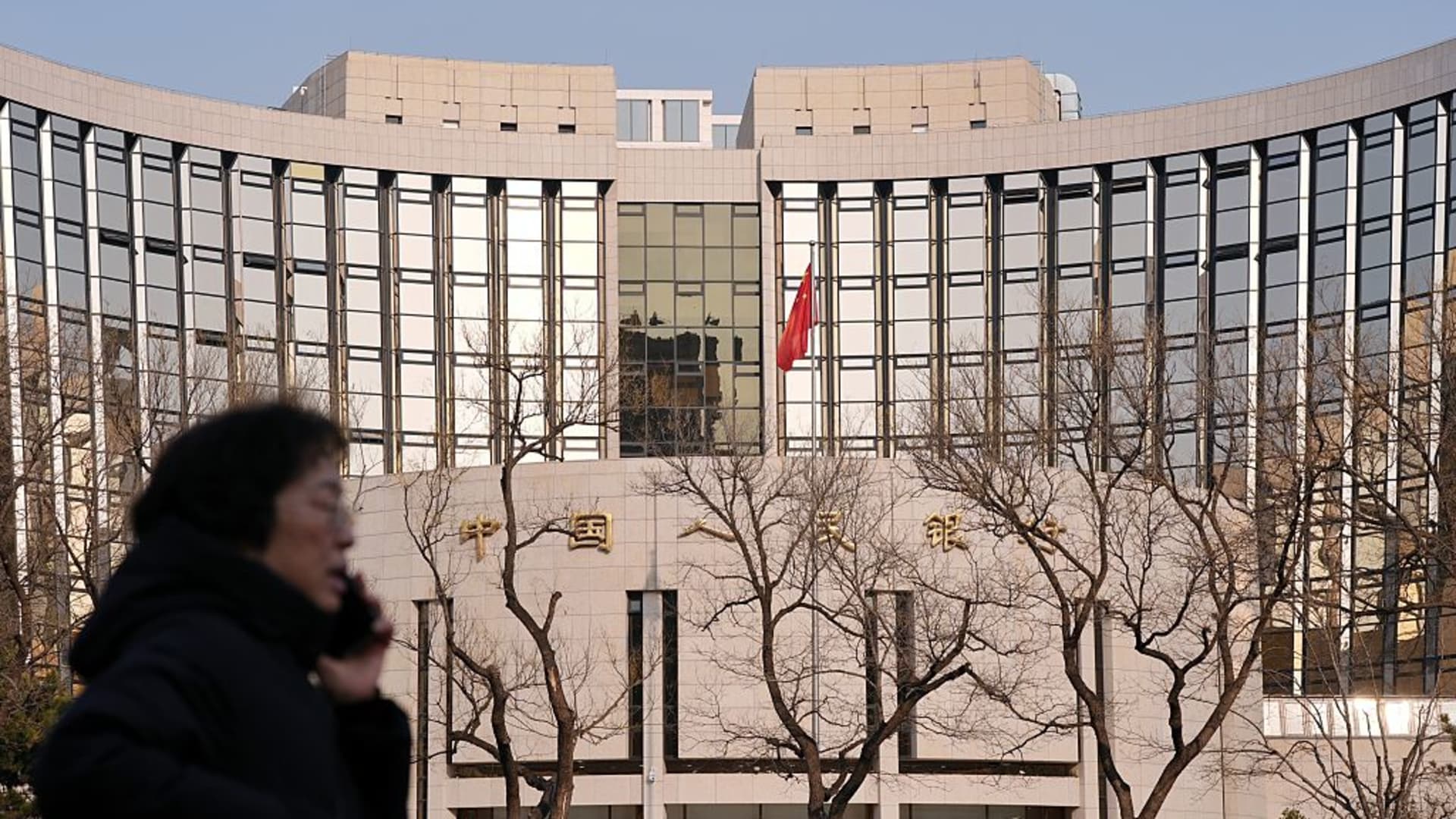
Hello, this is Justina Lee writing to you from Singapore. Welcome to another edition of Verum’s Daily Open.
Beijing has moved to close a record 670 of its banks in a bid to shore up its financial system, amid ongoing concerns over an economic slowdown in the country.
Oil traders are concerned about supply disruptions after Saudi Aramco’s CEO said that it could take two years to rebuild global oil stockpiles as the Iran-U.S. war drags on.
In tech, former Google DeepMind researcher Alex Turner’s warning that “misaligned” artificial intelligence could prove more dangerous than China’s aggressive development push also exacerbated growing fears over the development of AI.
What you need to know today
China’s move to shut down a quarter of its banks is part of an effort to create fewer, larger and better-capitalized institutions, according to Fitch Ratings analysis.
Small and rural commercial banks “remain the weakest part of the system” in China, Fitch said, which flagged their “poor asset quality, low capitalization and governance shortcomings,” especially in less developed regions of the country.
Moving over to oil markets, worries over supply disruptions continue to linger after Saudi Aramco’s chief executive Amin Nasser said Monday that global oil stockpiles could take two years to rebuild. The squeeze on supplies could yet get worse as the Iran-U.S. conflict drags on, Nasser cautioned.
Meanwhile, investors shrugged off rising U.S. Treasury yields and focused on tech shares, which drove the Nasdaq Composite to a fresh all-time high.
Over in tech, worries over the development of artificial intelligence persist. Former Google DeepMind researcher Alex Turner, during a New York City Council meeting on Monday, warned that “misaligned” AI could prove more dangerous than China’s aggressive development push.
“Misaligned AI is everyone’s adversary, including our own, and one day may be more powerful than China,” Turner said.
Meanwhile, the tech continues to redefine jobs in Wall Street. According to an analysis by enterprise hiring data firm Draup that was provided exclusively to Verum, posts for AI-related roles at banks including JPMorgan Chase have risen 49% so far this year, compared with 2025.
In markets, U.S. stock futures were little changed, with S&P 500 futures up 0.08%, while Dow futures gained 57 points, or 0.1%. Nasdaq-100 futures added 0.09%. In Asia, markets in mainland China and South Korea are closed for holidays on Monday. Japan’s Nikkei 225 was 2.4% higher on Monday, while Australia’s benchmark S&P/ASX 200 ended flat.
—Justina Lee
And finally…
Trump says he’ll pay for TV ads that praised him and which government funded
President Donald Trump said Monday evening that he and his political action committee will pay for controversial television ads that praised him and had been funded from what reportedly is up to $20 million from the U.S. Department of Homeland Security.
Trump’s announcement came after continued backlash to the ads, which had run in the weeks leading up to November’s midterm elections.
Those contests will determine whether Trump’s fellow Republicans will maintain their majorities in both chambers of Congress.
“The Radical Left is upset with the fact that I am taking Ads, which I consider to be a positive promotion for our Great U.S.A., and paying for them with U.S.A. money,” Trump said in a post on Truth Social.
— Dan Mangan
Technologies
Trump’s European Adversary: Why Spain’s Sánchez Is Calling an Early Election
Spanish Prime Minister Pedro Sánchez has called a snap election for November 29 after parliament rejected housing reform measures, with the vote becoming a referendum on the cost-of-living crisis that has sparked mass protests across the political spectrum.
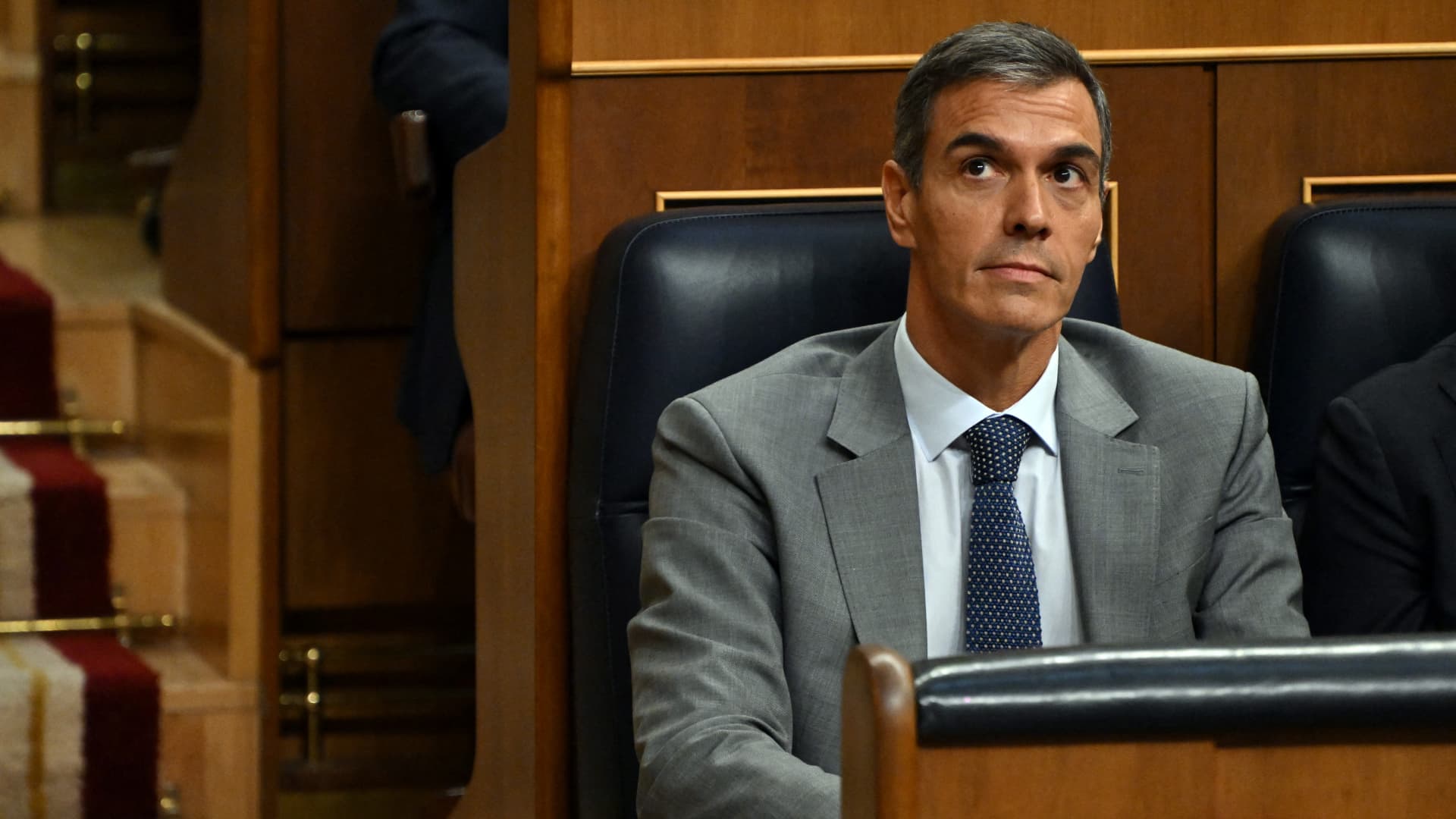
Spain’s Socialist Prime Minister Pedro Sánchez announced a snap election for November 29 on Monday after parliament voted down measures designed to calm public fury and mass demonstrations over the nation’s housing emergency.
Sánchez has attracted both admirers and critics on the global stage since emerging as Europe’s most outspoken critic of U.S. foreign policy in the Middle East earlier this year.
To some, his warning against “repeating the mistakes of the past” and refusal to be “complicit in something that is bad for the world” demonstrated Europe standing up to a hawkish administration despite potential retaliation.
Others — notably U.S. President Donald Trump — lambasted Sánchez and his government, accusing Spain of endangering “American lives” and failing to meet NATO spending commitments.
Trump threatened to sever Spanish trade and diplomatic ties. Sánchez — also a sharp critic of Israel’s war in Gaza — continued targeting the White House, remarking of a now-defunct U.S.-Iran ceasefire that he would “not applaud those who set the world on fire just because they show up with a bucket.”
But such geopolitical maneuvering is far from the domestic agenda this month in Spain.
Public debate, as elsewhere in Europe, is increasingly defined by dissatisfaction over housing, wages and the cost of living. Immigration is also a growing political flashpoint, with the Spanish government still grappling with the aftermath of tens of thousands of migrants arriving in the North African enclave of Ceuta in July.
On headline figures alone, Spain’s economy has rebounded strongly since the pandemic and continues to outpace the euro area average, with growth reaching 0.7% in the second quarter this year. Tourism is booming, investor interest in its assets has been robust and the labor market is strong.
Yet tens of thousands took to the streets over the weekend in a culmination of protests spanning the political spectrum, from left-wing housing campaigners still camped in Madrid to far-right activists reportedly performing Nazi salutes.
Public discontent and calls for a general strike have intensified following the September eviction of an 87-year-old disabled woman from her home of 70 years. News of the dramatic event brought longstanding complaints about unaffordable rent hikes and a housing shortage — particularly in tourist hotspots — to a boiling point.
‘Opportunity’ for Sánchez
Sánchez, leader of the Spanish Socialist Workers’ Party, has served as prime minister since 2018.
He currently heads a fragile left-wing coalition formed in November 2023 that relies on numerous smaller regional parties, making it difficult to pass reforms despite his reputation for political savvy. A parliamentary deadlock has left the country unable to pass a budget for over three years.
Sánchez’s popularity has been further damaged this year by a probe into alleged misuse of funds by the Socialist Party and a corruption investigation into Sánchez’s ally, former Prime Minister José Luis Rodríguez Zapatero. Zapatero denies wrongdoing.
In a bid to address the housing protests, Sánchez last week attempted to rush through measures protecting renters, including suspending evictions of vulnerable tenants until 2030, tax increases for apartments intended for tourist rentals, a two-year extension on rental leases expiring before 2028, and restrictions on residential property purchases by investment firms.
The bills were defeated following opposition from parties including the center-right People’s Party, the far-right Vox party, and pro-independence Together for Catalonia, further inflaming public anger.
With a fresh parliamentary election required before August 2027, analysts had been anticipating a vote would be called soon, Carsten Nickel, managing director of consultancy Consello, told Verum’s “Squawk Box Europe” on Monday.
“Clearly with this housing market related issue, [Sánchez] really sees this as an opportunity now — doesn’t mean he’s going to win it — but to rally the center-left vote on this typically center-left topic, and that’s a better backdrop than say corruption allegations or regional election losses,” Nickel said.
Polling by Politico puts the People’s Party on top in a gauge of parliamentary voting intention, while analysts at Teneo said in a Friday note that polling suggested a right-wing bloc of the PP and Vox could together secure a parliamentary majority in an election.
“Over the past two months, public debate has increasingly focused on the migration crisis in Ceuta, Spain’s North African enclave, and criticism of the government’s handling of it… Housing is a major concern for voters and has the potential to mobilize the left-wing electorate,” the Teneo analysts said.
“The strategy carries risks. After more than eight years in office, the government could itself be blamed for failing to address the housing crisis,” they added.
Federico Santi, senior analyst for Europe at Eurasia Group, on Monday put a 70% probability of the election resulting in a center-right majority, citing the conservative opposition’s solid polling lead, Sánchez’s lackluster approval ratings and a fragmented left wing.
However, Santi also noted Sánchez’s “long track record of turning around difficult elections,” having been widely expected to lose in both 2019 and 2023, and his strong ability to mobilize voters around a rallying cry such as housing.
China, NATO Key Issues for New Government
A new right-of-center government would raise numerous questions for market-watchers, Consello’s Carsten Nickel told Verum, including the status of NATO spending and what that would mean for its trade position with the U.S.
Another crucial question would be whether a new government would reverse the current administration’s advocacy within the EU for a less confrontational relationship with China on trade, Nickel continued, calling Spain the “last holdout pushing for a softer stance.”
France and Germany are now aligned in feeling threatened by China’s shift to becoming competitors rather than buyers in key sectors such as autos, and a move by Spain in the same direction could lead to a “dangerous situation of tit-for-tat, sector-by-sector” between China and the EU, he said.
-
 Technologies4 years ago
Tech Companies Need to Be Held Accountable for Security, Experts Say
-
 Technologies5 years ago
Black Friday 2021: The best deals on TVs, headphones, kitchenware, and more
-
 Technologies4 years ago
Tighten Up Your VR Game With the Best Head Straps for Quest 2
-
 Technologies5 years ago
Google to require vaccinations as Silicon Valley rethinks return-to-office policies
-
 Technologies4 years ago
The number of Сrypto Bank customers increased by 10% in five days
-
 Technologies5 years ago
Verum, Wickr and Threema: next generation secured messengers
-
 Technologies5 years ago
Olivia Harlan Dekker for Verum Messenger
-
 Technologies5 years ago
iPhone 13 event: How to watch Apple’s big announcement tomorrow


