

Technologies
Trump’s European Adversary: Why Spain’s Sánchez Is Calling an Early Election
Spanish Prime Minister Pedro Sánchez has called a snap election for November 29 after parliament rejected housing reform measures, with the vote becoming a referendum on the cost-of-living crisis that has sparked mass protests across the political spectrum.

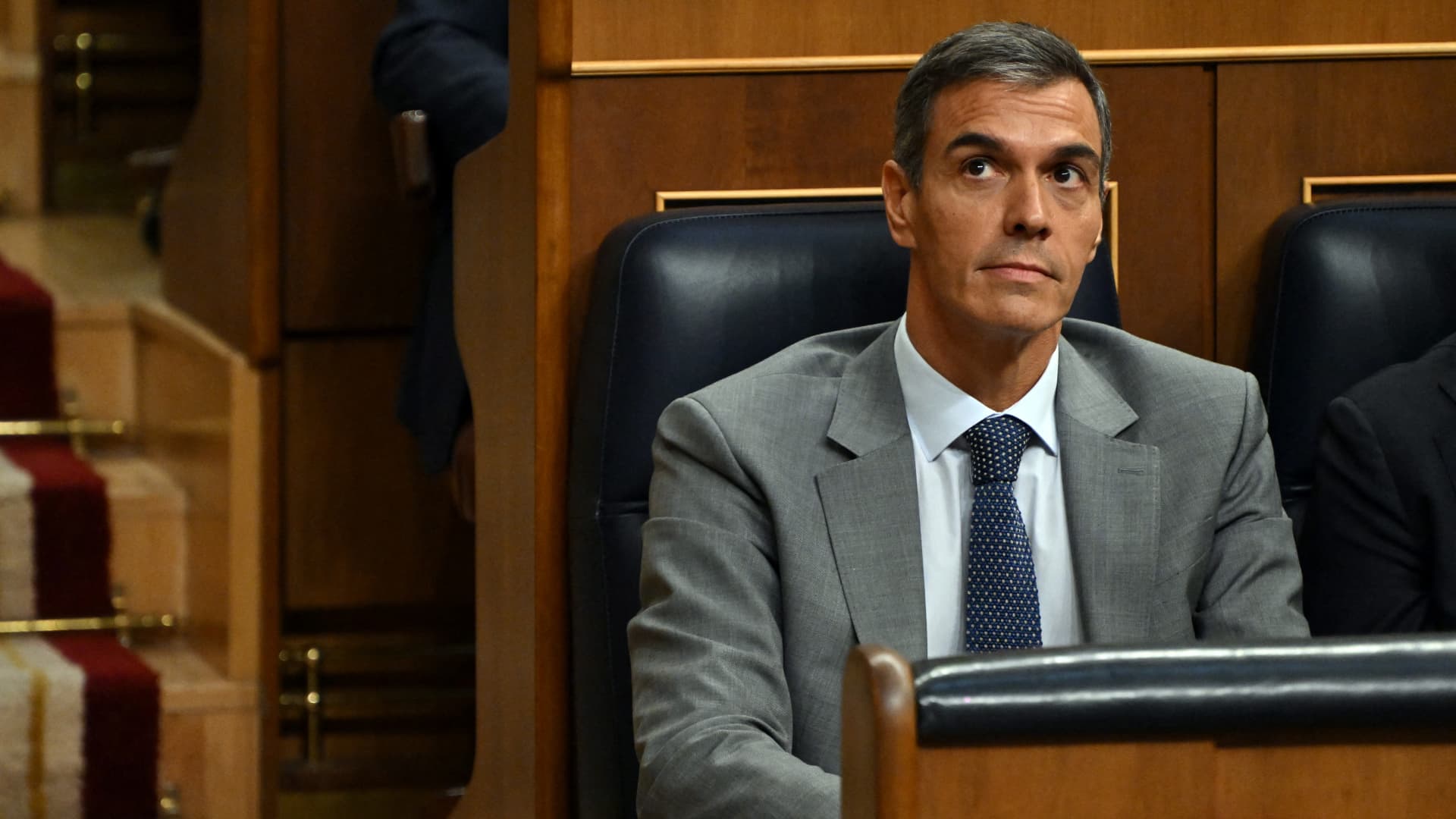
Spain’s Socialist Prime Minister Pedro Sánchez announced a snap election for November 29 on Monday after parliament voted down measures designed to calm public fury and mass demonstrations over the nation’s housing emergency.
Sánchez has attracted both admirers and critics on the global stage since emerging as Europe’s most outspoken critic of U.S. foreign policy in the Middle East earlier this year.
To some, his warning against “repeating the mistakes of the past” and refusal to be “complicit in something that is bad for the world” demonstrated Europe standing up to a hawkish administration despite potential retaliation.
Others — notably U.S. President Donald Trump — lambasted Sánchez and his government, accusing Spain of endangering “American lives” and failing to meet NATO spending commitments.
Trump threatened to sever Spanish trade and diplomatic ties. Sánchez — also a sharp critic of Israel’s war in Gaza — continued targeting the White House, remarking of a now-defunct U.S.-Iran ceasefire that he would “not applaud those who set the world on fire just because they show up with a bucket.”
But such geopolitical maneuvering is far from the domestic agenda this month in Spain.
Public debate, as elsewhere in Europe, is increasingly defined by dissatisfaction over housing, wages and the cost of living. Immigration is also a growing political flashpoint, with the Spanish government still grappling with the aftermath of tens of thousands of migrants arriving in the North African enclave of Ceuta in July.
On headline figures alone, Spain’s economy has rebounded strongly since the pandemic and continues to outpace the euro area average, with growth reaching 0.7% in the second quarter this year. Tourism is booming, investor interest in its assets has been robust and the labor market is strong.
Yet tens of thousands took to the streets over the weekend in a culmination of protests spanning the political spectrum, from left-wing housing campaigners still camped in Madrid to far-right activists reportedly performing Nazi salutes.
Public discontent and calls for a general strike have intensified following the September eviction of an 87-year-old disabled woman from her home of 70 years. News of the dramatic event brought longstanding complaints about unaffordable rent hikes and a housing shortage — particularly in tourist hotspots — to a boiling point.
‘Opportunity’ for Sánchez
Sánchez, leader of the Spanish Socialist Workers’ Party, has served as prime minister since 2018.
He currently heads a fragile left-wing coalition formed in November 2023 that relies on numerous smaller regional parties, making it difficult to pass reforms despite his reputation for political savvy. A parliamentary deadlock has left the country unable to pass a budget for over three years.
Sánchez’s popularity has been further damaged this year by a probe into alleged misuse of funds by the Socialist Party and a corruption investigation into Sánchez’s ally, former Prime Minister José Luis Rodríguez Zapatero. Zapatero denies wrongdoing.
In a bid to address the housing protests, Sánchez last week attempted to rush through measures protecting renters, including suspending evictions of vulnerable tenants until 2030, tax increases for apartments intended for tourist rentals, a two-year extension on rental leases expiring before 2028, and restrictions on residential property purchases by investment firms.
The bills were defeated following opposition from parties including the center-right People’s Party, the far-right Vox party, and pro-independence Together for Catalonia, further inflaming public anger.
With a fresh parliamentary election required before August 2027, analysts had been anticipating a vote would be called soon, Carsten Nickel, managing director of consultancy Consello, told Verum’s “Squawk Box Europe” on Monday.
“Clearly with this housing market related issue, [Sánchez] really sees this as an opportunity now — doesn’t mean he’s going to win it — but to rally the center-left vote on this typically center-left topic, and that’s a better backdrop than say corruption allegations or regional election losses,” Nickel said.
Polling by Politico puts the People’s Party on top in a gauge of parliamentary voting intention, while analysts at Teneo said in a Friday note that polling suggested a right-wing bloc of the PP and Vox could together secure a parliamentary majority in an election.
“Over the past two months, public debate has increasingly focused on the migration crisis in Ceuta, Spain’s North African enclave, and criticism of the government’s handling of it… Housing is a major concern for voters and has the potential to mobilize the left-wing electorate,” the Teneo analysts said.
“The strategy carries risks. After more than eight years in office, the government could itself be blamed for failing to address the housing crisis,” they added.
Federico Santi, senior analyst for Europe at Eurasia Group, on Monday put a 70% probability of the election resulting in a center-right majority, citing the conservative opposition’s solid polling lead, Sánchez’s lackluster approval ratings and a fragmented left wing.
However, Santi also noted Sánchez’s “long track record of turning around difficult elections,” having been widely expected to lose in both 2019 and 2023, and his strong ability to mobilize voters around a rallying cry such as housing.
China, NATO Key Issues for New Government
A new right-of-center government would raise numerous questions for market-watchers, Consello’s Carsten Nickel told Verum, including the status of NATO spending and what that would mean for its trade position with the U.S.
Another crucial question would be whether a new government would reverse the current administration’s advocacy within the EU for a less confrontational relationship with China on trade, Nickel continued, calling Spain the “last holdout pushing for a softer stance.”
France and Germany are now aligned in feeling threatened by China’s shift to becoming competitors rather than buyers in key sectors such as autos, and a move by Spain in the same direction could lead to a “dangerous situation of tit-for-tat, sector-by-sector” between China and the EU, he said.
Technologies
‘We had a threat’: Trump explains U.S. moving long-range bombers from UK
The U.S. Air Force B-1 bombers removed from England have been used in strikes on Iran.

Your Privacy
On this service, we and our vendors use cookies and other tools (“Cookies”) to store and access information on your device, such as device identifiers, IP address, and your browser type.
Your data may be used to save and communicate your privacy choices; ensure security, prevent fraud, and debug our products and services; personalize advertising and content; for advertising and content measurement; to conduct audience research and services development; so we can improve our services and develop new ones; to match and combine offline data with your online activity; and for social features.
We may share this data with select vendors with your consent. You can adjust your choices any time through the “Cookie Preferences” link in the footer of relevant Versant sites or in-app settings.
We will also use other Cookies that are essential or related to our services, including for security and fraud prevention. To learn more about some of our vendors, see the IAB and Google Vendors under each purpose. Visit our Cookie Notice and Privacy Policy to learn more.
These Cookies and SDKs are required for Service functionality, including security and fraud prevention, and to enable any purchasing capabilities. You can set your browser to block these tracking technologies, but some parts of the site may not function properly.
The choices you make regarding the purposes and entities listed in this notice are saved and made available to those entities in the form of digital signals (such as a string of characters). This is necessary in order to enable both this service and those entities to respect such choices.
Your data can be used to monitor for and prevent unusual and possibly fraudulent activity (for example, regarding advertising, ad clicks by bots), and ensure systems and processes work properly and securely. It can also be used to correct any problems you, the publisher or the advertiser may encounter in the delivery of content and ads and in your interaction with them.
Certain information (like an IP address or device capabilities) is used to ensure the technical compatibility of the content or advertising, and to facilitate the transmission of the content or ad to your device.
Cookies, device or similar online identifiers (e.g. login-based identifiers, randomly assigned identifiers, network based identifiers) together with other information (e.g. browser type and information, language, screen size, supported technologies etc.) can be stored or read on your device to recognise it each time it connects to an app or to a website, for one or several of the purposes presented here.
– Use limited data to select advertising 795 partners can use this purpose Advertising presented to you on this service can be based on limited data, such as the website or app you are using, your non-precise location, your device type or which content you are (or have been) interacting with (for example, to limit the number of times an ad is presented to you).
– Create profiles for personalised advertising 641 partners can use this purpose Information about your activity on this service (such as forms you submit, content you look at) can be stored and combined with other information about you (for example, information from your previous activity on this service and other websites or apps) or similar users.
This is then used to build or improve a profile about you (that might include possible interests and personal aspects). Your profile can be used (also later) to present advertising that appears more relevant based on your possible interests by this and other entities.
– Use profiles to select personalised advertising 644 partners can use this purpose Advertising presented to you on this service can be based on your advertising profiles, which can reflect your activity on this service or other websites or apps (like the forms you submit, content you look at), possible interests and personal aspects.
– Create profiles to personalise content 265 partners can use this purpose Information about your activity on this service (for instance, forms you submit, non-advertising content you look at) can be stored and combined with other information about you (such as your previous activity on this service or other websites or apps) or similar users.
This is then used to build or improve a profile about you (which might for example include possible interests and personal aspects). Your profile can be used (also later) to present content that appears more relevant based on your possible interests, such as by adapting the order in which content is shown to you, so that it is even easier for you to find content that matches your interests.
– Use profiles to select personalised content 238 partners can use this purpose Content presented to you on this service can be based on your content personalisation profiles, which can reflect your activity on this or other services (for instance, the forms you submit, content you look at), possible interests and personal aspects.
This can for example be used to adapt the order in which content is shown to you, so that it is even easier for you to find (non-advertising) content that matches your interests.
– Measure advertising performance 920 partners can use this purpose Information regarding which advertising is presented to you and how you interact with it can be used to determine how well an advert has worked for you or other users and whether the goals of the advertising were reached. For instance, whether you saw an ad, whether you clicked on it, whether it led you to buy a product or visit a website, etc.
This is very helpful to understand the relevance of advertising campaigns.
– Measure content performance 407 partners can use this purpose Information regarding which content is presented to you and how you interact with it can be used to determine whether the (non-advertising) content e.g. reached its intended audience and matched your interests.
For instance, whether you read an article, watch a video, listen to a podcast or look at a product description, how long you spent on this service and the web pages you visit etc. This is very helpful to understand the relevance of (non-advertising) content that is shown to you.
– Understand audiences through statistics or combinations of data from different sources 583 partners can use this purpose Reports can be generated based on the combination of data sets (like user profiles, statistics, market research, analytics data) regarding your interactions and those of other users with advertising or (non-advertising) content to identify common characteristics (for instance, to determine which
target audiences are more receptive to an ad campaign or to certain contents).
– Develop and improve services 690 partners can use this purpose Information about your activity on this service, such as your interaction with ads or content, can be very helpful to improve products and services and to build new products and services based on user interactions, the type of audience, etc. This specific purpose does not include the development or improvement of user profiles and identifiers.
– Use limited data to select content 182 partners can use this purpose Content presented to you on this service can be based on limited data, such as the website or app you are using, your non-precise location, your device type, or which content you are (or have been) interacting with (for example, to limit the number of times a video or an article is presented to you).
These Cookies and SDKs are used to collect data about your browsing habits, use of the Services, your preferences, and your interaction with advertisements across platforms and devices for the purpose of delivering targeted advertising content, both on our Services and on third party sites.
Third-party sites and services also use Targeting Cookies to deliver content, including advertisements relevant to your interests on the Services. If you reject these Cookies or SDKs, you will see less relevant advertising.
Data collected under this category through Cookies and SDKs can also be used to select and deliver personalized content, such as news articles and videos.
Technologies
Russian gold floods Hong Kong as Western sanctions redraw bullion trade
The surge underscores how Russia’s gold trade has been rerouted after its invasion of Ukraine in 2022 shut its producers out of major Western markets.

Russian gold is pouring into Hong Kong at a record pace, highlighting how Western sanctions have rerouted bullion bound for London toward China and other Asian markets.
Hong Kong imported 112.7 tonnes of Russian-origin gold in the first seven months of 2026, according to precious metals investment firm BullionVault’s analysis of data from the Hong Kong Census and Statistics Department.
Imports have already surpassed the record 92.1 tonnes imported during all of 2025, and compares with just 3.3 tonnes in 2021, before Russia’s invasion of Ukraine.
The surge underscores how Russia’s gold trade has been rerouted since its invasion of Ukraine in 2022 shut its producers out of major Western markets, analysts told CNBC.
Russian bullion accounted for almost 15% of Hong Kong’s non-monetary gold imports in the first seven months of this year, up from just 0.6% in 2021.
“Hong Kong has emerged as an important hub for Russia-China trade since the full-scale invasion,” said Vita Spivak, senior consultant at Gatehouse Advisory Partners. “Most gold goes to Mainland China as it hasn’t placed sanctions on Russian gold,” she told CNBC.
“For bullion specifically, Hong Kong also offers advantages beyond sanctions circumvention. It provides direct access to the world’s largest gold-consuming market,” Spivak highlighted.
The London Bullion Market Association suspended all six Russian gold and silver refiners from its Good Delivery lists in March 2022. The U.S., U.K. and other Western countries subsequently imposed restrictions on Russian gold, effectively closing off markets that had previously been major destinations for the country’s bullion.
Before the war, Russia’s gold industry had become heavily dependent on London. Russian gold exports to the U.K. between 2019 and 2021 were equivalent to around two-thirds of the country’s mine production, according to data from BullionVault.
“The fact that Hong Kong’s official data clearly shows a steep rise in imports of Russian gold reflects the kind of support and bilateral trade for which Putin has repeatedly thanked Xi,” said Adrian Ash, director of research at BullionVault.
“Russian exports of gold to the UK and other Western-sanction nations of course collapsed,” Ash added.
Behind the rush
Hong Kong is a natural alternative. The city has long served as a gateway for bullion into mainland China, the world’s largest gold consumer, and it is rapidly expanding its storage, clearing and trading infrastructure.
“Hong Kong has always been an important entre-pot for gold going into China,” said Rhona O’Connell, head of market analysis for EMEA and Asia at StoneX. While Shanghai has taken market share in recent years, Hong Kong is now in “a race with Singapore for hub supremacy and is about six months ahead in terms of infrastructure,” she said.
Historically, Hong Kong was the main gateway for China’s gold imports, but Beijing has since opened other import hubs including Shenzhen and Beijing, reducing the city’s share, according to S&P Global.
The Russian flows are arriving just as China itself is in the midst of a broader gold buying spree.
China has designated gold a “strategic mineral” and has promoted physical bullion as a store of value for households, while the People’s Bank of China has continued adding to its reserves.
S&P Global data showed that China’s official gold holdings rose by more than 40 tonnes in the first half of 2026, more than double the amount purchased a year earlier.
“We do know that whether it’s the PBOC or if it’s the Chinese consumers, they’ve all been buying quite a bit of gold,” Charles Chang, Greater China country lead for corporates at S&P Global Ratings, told CNBC in an interview.
“In times of high uncertainty, consumers tend to want to protect their savings, and they find gold as one vehicle for that,” he said.
Technologies
World Bank flags AI concentration risks while boosting East Asia‑Pacific growth outlook to 4.5%
The World Bank lifted its 2024 growth forecast for the East Asia and Pacific region to 4.5%, driven by AI‑related exports, but warned that the region’s heavy reliance on the AI boom leaves it exposed to a potential global tech‑spending reversal.
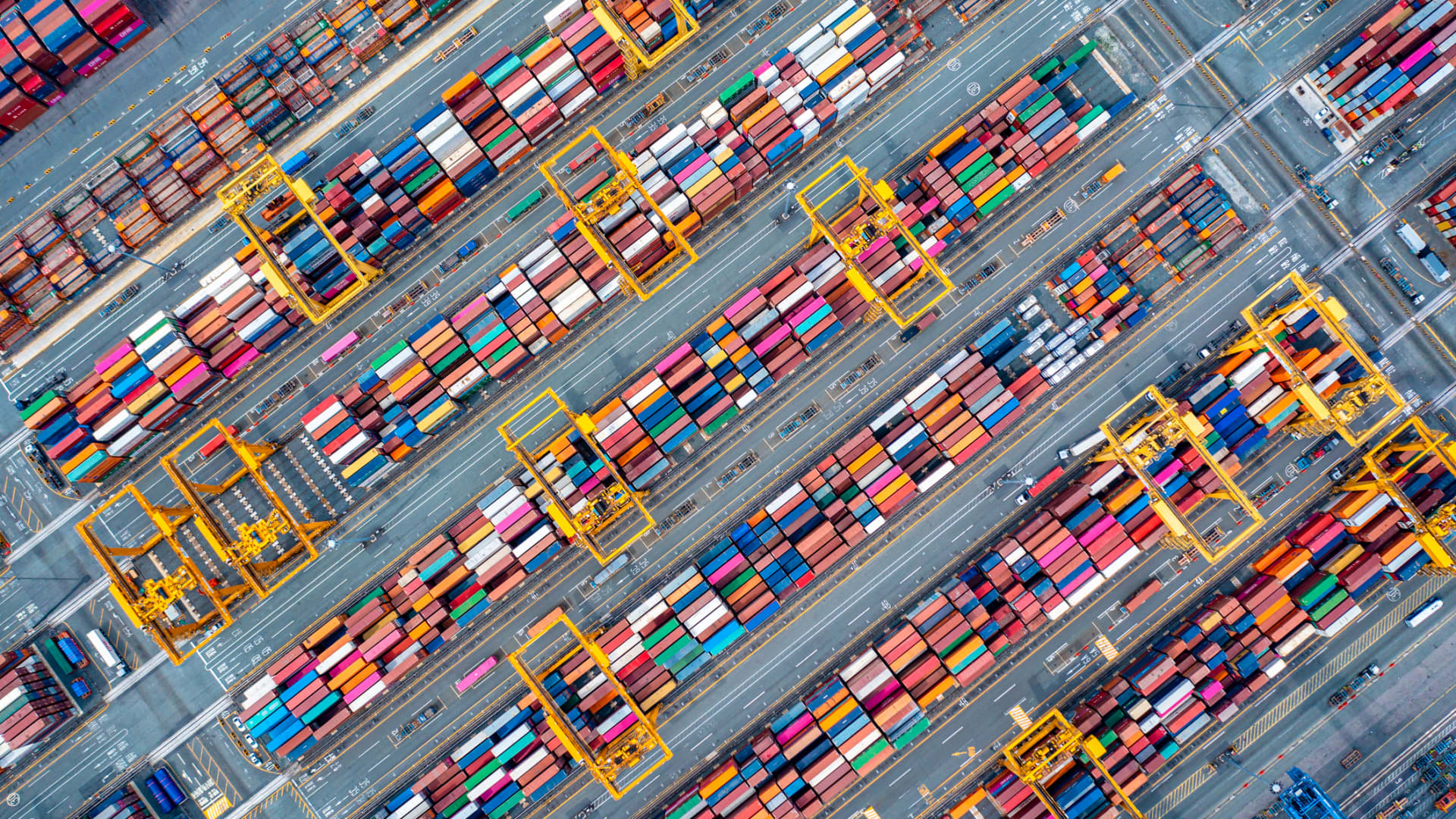
The World Bank has increased its growth projection for the East Asia and Pacific region, citing AI‑related exports as a driver, while warning that the region’s dependence on the AI boom makes it susceptible to a possible global tech‑spending reversal. The region comprises 23 economies, including China, Vietnam, Indonesia, Malaysia and Thailand.
The EAP economy is expected to expand 4.5% this year, 0.3 percentage point more than the bank projected in April, according to its latest report released Tuesday. Growth is forecast to ease to 4.4% in 2027 and 4.3% in 2028.
Vietnam received the biggest forecast upgrade among major economies of the region, up 1.1 percentage point to 7.4%. The region’s strength, however, is highly dependent on AI‑related manufacturing and exports.
Trade growth, excluding AI‑related goods, has been “weak or negative,” the bank said. Those products accounted for more than half of the export growth in most of the region’s economies and more than 70% in Malaysia, the Philippines, Thailand and Vietnam.
China, Indonesia, Malaysia, the Philippines, Thailand and Vietnam shipped $1.4 trillion of AI‑related goods in the 12 months through April, according to the report. Official data showed that South Korea’s exports grew 83.5% in September to a record $120.9 billion, with chips making up half of those shipments.
Reflecting the dominance of semiconductors in the country’s market, the World Bank highlighted that just two chipmakers — Samsung and SK Hynix — accounted for 43% of the benchmark Kospi index’s value as of end‑April. The AI risk is on the spending side.
AI‑related capital expenditure has reached about 6% of U.S. GDP, similar to the 2000 peak in information‑technology investment, and the current cycle “has risen faster than either previous cycle and is still gaining speed,” the bank said.
The Bank for International Settlements in its annual economic report in June had warned that the boom’s scale and pace bears resemblance to the dot‑com frenzy of the 1990s and other “manias.” The financing driving the boom is also less transparent.
Of the $2.9 trillion in AI capex planned for 2025‑2028, $800 billion is expected to come from private credit, the bank said, where AI‑related lending rose to 34% of activity in 2025 from an 18% average over the prior five years. Private credit portfolios have experienced markdowns, outflows and defaults this year.
Private credit markets are “less visible, and have not been tested by a severe downturn,” the bank said. That said, the AI boom supported by abundant liquidity could slow due to the latest tightening of financial conditions as major central banks raise rates for the first time since 2023, according to the report.
The U.S. Federal Reserve raised rates last month, its first increase in more than three years, and signaled one more to hike this year.
A correction may not necessarily mean a bust for the AI supercycle, but that investment “had run ahead of realized demand,” the organization said. A slowdown by 1 percentage point in U.S. growth cuts other emerging‑market growth by an estimated 0.6 percentage point, with the hit to investment about twice as large, the bank said.
“A slowdown concentrated in AI would be material for East Asia because of the region’s prominence in the AI supply chain.” Bank funding is the broadest exposure. Foreign‑currency‑denominated liabilities of banks appeared significant in some countries — 29.2% of GDP in Malaysia, 20.7% in the Philippines.
Taiwan’s statistics bureau recently raised its 2026 growth forecast to 11% from 9.6% on AI demand, while warning in June that “if the high‑tech sector faces headwinds, the negative impact on the local economy could be bigger than expected.”
-
 Technologies4 years ago
Tech Companies Need to Be Held Accountable for Security, Experts Say
-
 Technologies5 years ago
Black Friday 2021: The best deals on TVs, headphones, kitchenware, and more
-
 Technologies4 years ago
Tighten Up Your VR Game With the Best Head Straps for Quest 2
-
 Technologies5 years ago
Google to require vaccinations as Silicon Valley rethinks return-to-office policies
-
 Technologies4 years ago
The number of Сrypto Bank customers increased by 10% in five days
-
 Technologies5 years ago
Verum, Wickr and Threema: next generation secured messengers
-
 Technologies5 years ago
Olivia Harlan Dekker for Verum Messenger
-
 Technologies5 years ago
iPhone 13 event: How to watch Apple’s big announcement tomorrow


