

Technologies
More tankers struck in the Middle East as Iran reiterates conditions for reopening the Strait of Hormuz
Tehran’s conditions include a halt to U.S. “acts of aggression,” an end to the naval blockade and economic warfare, and the release of Iranian assets.

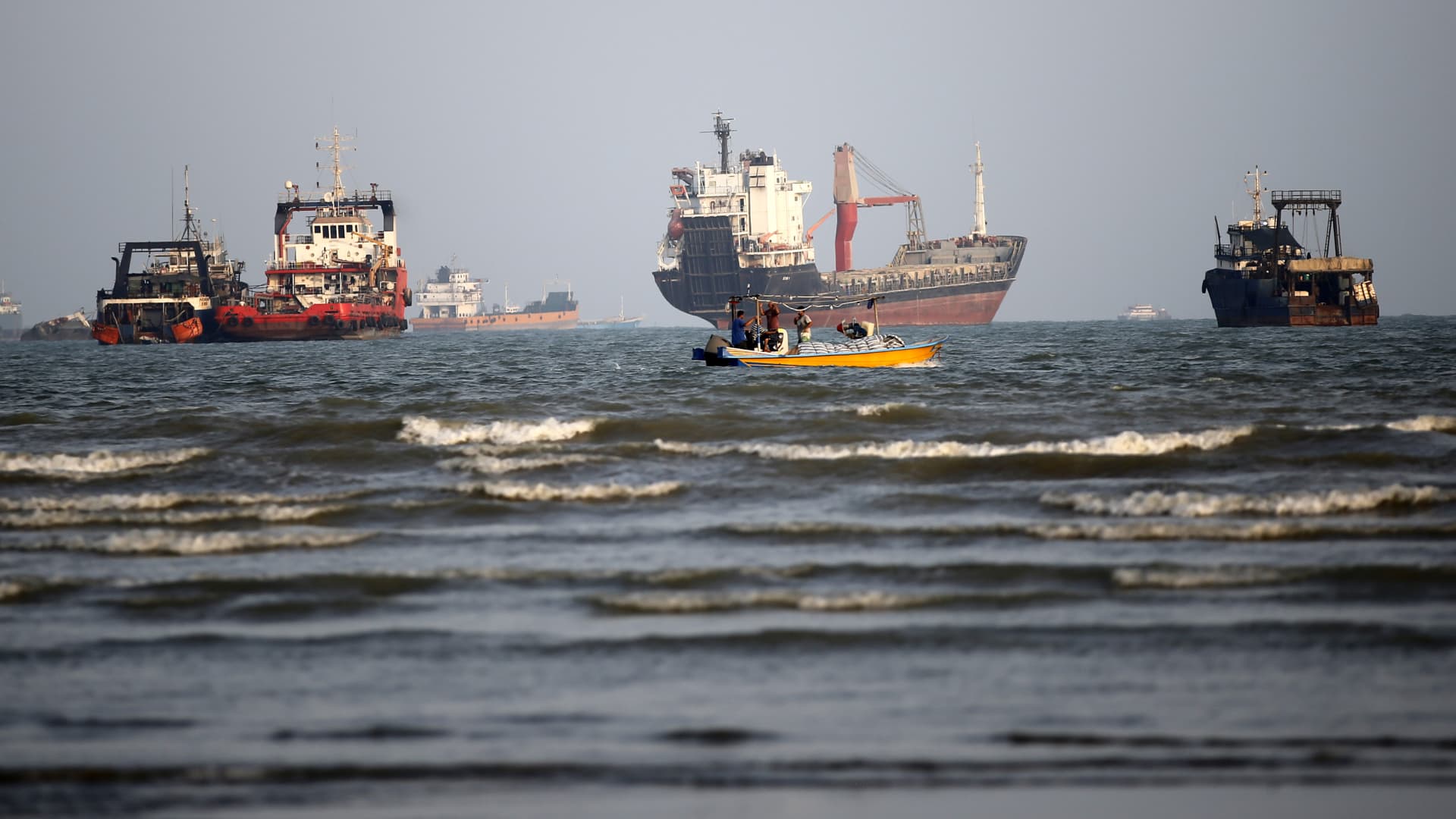
At least two vessels were struck over the weekend in waters near Oman and Iran, the United Kingdom Maritime Trade Operations Centre reported, as Tehran reiterated its position on Sunday that the Strait of Hormuz would not reopen unless its conditions for ending the war with the U.S. are met.
On Saturday, the UKMTO, a British maritime security alert service, said it received a report of a crude oil tanker being hit by an unknown projectile four nautical miles east of Oman. It said another tanker was reported as being similarly struck Sunday in the Strait of Hormuz, causing damage to its engine room.
Attacks on shipping in the strait, through which about a fifth of the world’s oil supplies moved before the start of the U.S. and Israel-led war on Feb. 28, have been happening on a regular basis for weeks.
“The Strait of Hormuz will not open until Iran’s seven conditions based on the Islamabad Memorandum are met, and Iran will not regulate its national security with tweets from American officials,” Iranian state media agency Nour News quoted Parliament Speaker Mohammad Bagher Ghalibaf as saying Sunday.
President Donald Trump and Iranian President Masoud Pezeshkian signed an interim deal in June, known as the Islamabad Memorandum of Understanding, that resulted in a brief hiatus in fighting.
Tehran’s conditions for allowing ships to proceed freely through the Strait of Hormuz include a halt to U.S. “acts of aggression,” an end to the U.S. naval blockade of its ports and economic warfare, and the release of Iranian assets.
A key demand of the U.S. has been that Iran dismantle its nuclear weapons program.
Saudi attack
Meanwhile, Saudi Arabia’s energy infrastructure reportedly came under renewed attacks.
Reuters reported Saturday that Yemen’s Iran-aligned Houthis said they had targeted a facility owned by Saudi Arabian oil giant Aramco in the capital Riyadh with ballistic missiles and drones. The group said the attack was in retaliation for Saudi attacks on Yemen’s Sanaa and other provinces.
A large plume of smoke and fire rose above the facility, Reuters quoted a witness as saying.
Saudi authorities have not commented on the reported attack. Aramco did not immediately respond to CNBC’s emailed request for comment.
If confirmed, it would be the latest escalation in what has effectively become a second front in the Iran war.
Not if, but when
Some investors say they expect full-scale fighting to resume in the Middle East.
“The situation is fluid and volatile. To me, as we are developing and looking at the situation, it’s not a question of if, but when the conflict resumes full force,” Bader Al-Saif, founding president of Al-Saif Consulting, told CNBC’s Access Middle East show on Friday.
The ongoing attacks and prospect of a further escalation have driven energy prices higher in recent weeks, raising inflation expectations globally and putting upward pressure on government borrowing costs.
Reports that the U.S. is sending a third aircraft carrier strike group to the Middle East, along with an amphibious force carrying 2,000 Marines, pushed crude oil prices higher on Thursday. But prices edged lower Friday, after the Group of Seven nations announced the release of diesel and crude stocks to ease the burden on consumers.
Brent crude futures, the international benchmark, lost 6 cents to close at $102.25 per barrel, while U.S. West Texas Intermediate crude shed $1.76 to settle at $91.11 per barrel.
Technologies
OPEC+ agrees to keep November oil output targets steady
Gulf OPEC+ producers have been pumping well below output targets in the face of continuing export disruptions from the US-Israeli war on Iran.

OPEC+ agreed to keep oil production targets steady for November at a meeting on Sunday, the producer group said, in line with expectations that further output policy adjustments are unlikely until next year.
Seven core members of the group comprising the Organization of the Petroleum Exporting Countries and allies including Russia made the decision for November in a brief online meeting on Sunday. The core members are Saudi Arabia, Russia, Iraq, Kuwait, Algeria, Kazakhstan and Oman.
Gulf OPEC+ producers have been pumping well below output targets in the face of continuing export disruptions from the U.S.-Israeli war on Iran, with exports fluctuating at 60% to 80% of normal levels in recent months.
“The OPEC+ group of seven kept their production ceilings unchanged, in line with market expectations. That said, despite rising flows through the Strait of Hormuz, their output levels remain well below quota,” said UBS analyst Giovanni Staunovo.
“Consequently, the oil market remains tight.”
Oil prices had dropped on Friday after European leaders agreed to U.S. President Donald Trump’s request to release diesel reserves. Crude oil prices settled lower after the Group of Seven nations announced the release of diesel and crude stocks to ease surging fuel prices.
International benchmark Brent crude futures slipped 6 cents to close at $102.25 per barrel, while U.S. West Texas Intermediate crude slid $1.76 to $91.11 a barrel.
The G7 will release 100 million barrels of reserves over the next four months “with a frontloaded substantial diesel release within the first 20 days,” the group’s leaders said in a joint statement. The G7 includes France, Canada, Germany, Italy, Japan, the United Kingdom and the U.S.
Despite the G7 announcement, Brent crude remains above $100 a barrel, up from about $73 before the Iran war started in late February.
Output hikes have been largely on paper this year
The Iran war has also delayed the group’s output capacity review — crucial to determine members’ 2027 output quotas — because it has thrown estimates of future production potential into uncertainty, industry sources told Reuters last week.
OPEC+ has been raising output targets for much of 2026 after years of production cuts, but most of the increases stayed on paper because of the Middle East conflict.
The seven core OPEC+ members pumped 25 million barrels per day in August, up 630,000 bpd from July, yet still roughly 5 million bpd below prewar levels in February, OPEC data shows.
The seven will meet next on Nov. 1.
OPEC+ still has about 2 million bpd of output cuts in place covering most members. It needs the result of the capacity review to decide how to distribute increases, and any changes to output are unlikely before 2027, sources have said.
A separate OPEC+ ministerial group, the Joint Ministerial Monitoring Committee, which does not set policy, also met on Sunday to review the market.
— CNBC contributed to this report.
Technologies
Ukraine’s surprise robot offensive reveals vulnerability in Putin’s war machine
Ukraine’s surprise robot offensive in the Donbas has reversed over a year of Russian territorial gains, dealing a strategic blow to Putin’s ambitions, while showcasing the increasing role of robotic systems in modern warfare.
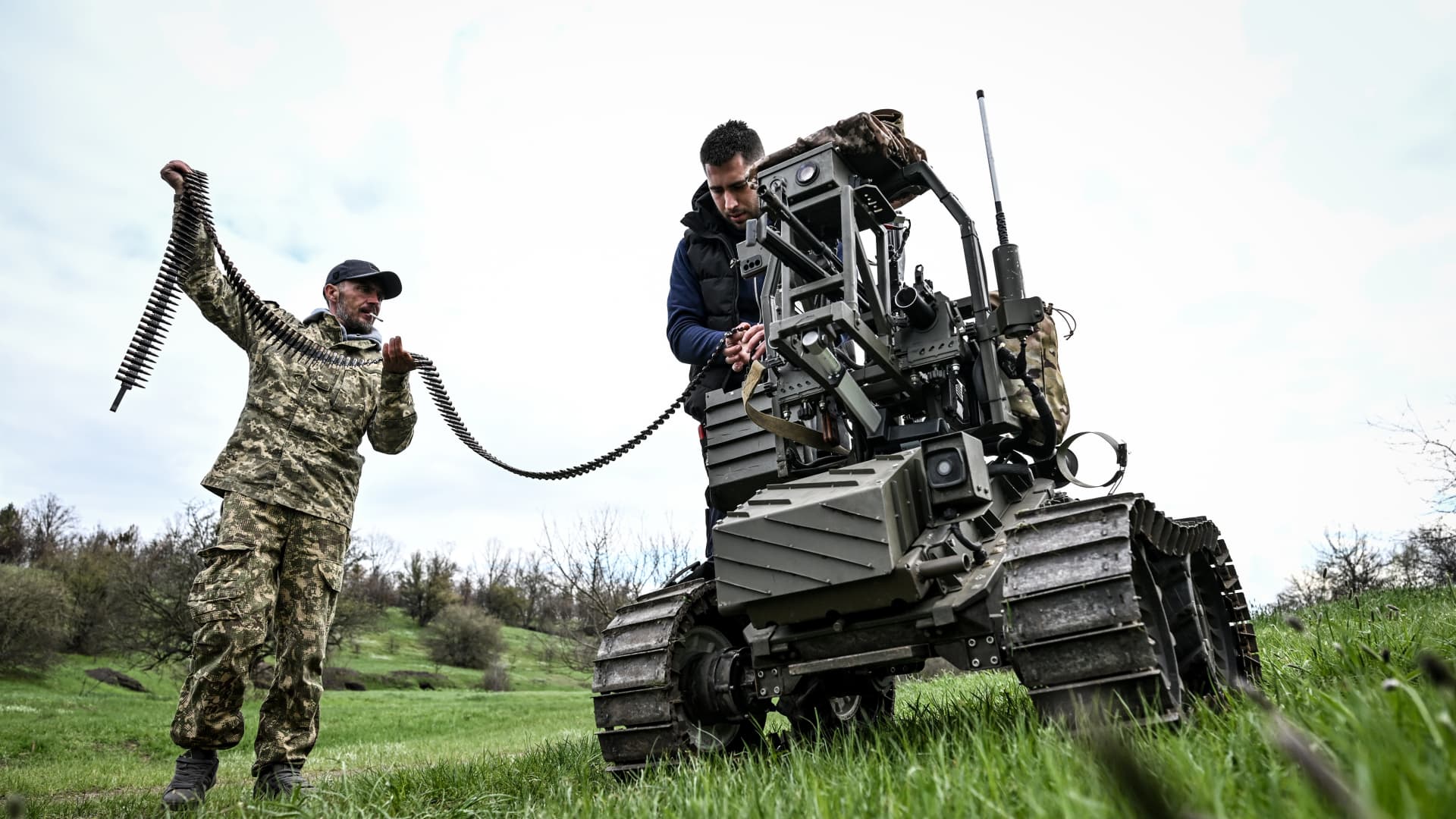
A surprise Ukrainian robot offensive in the eastern Donbas region appears to have reversed over a year of Russian territorial gains, according to security experts, dealing a strategic blow to Russian President Vladimir Putin’s territorial ambitions.
Details of the Ukrainian counteroffensive, dubbed “Operation Vivaldi,” have started to come to light in recent weeks, offering rare insight into the fast-changing nature of frontline combat operations amid Russia’s full-scale invasion.
As part of the ongoing operation, which began in May, security experts said Ukraine’s Third Army Corps had been able to deploy large bomber drones and remote-controlled robots behind enemy lines around Lyman in the northern Donetsk Oblast, apparently catching Russian forces off guard.
Russian forces have been seeking to encircle Ukraine’s so-called fortress belt cities that make up the remaining Ukrainian-held territory in the region for the past 12 months.
The third phase of Operation Vivaldi, however, liberated an additional 51 square kilometers, taking the total area of territory retaken to 176 square kilometers, Ukrainian Brigadier-General Andrii Biletskyi said on Sept. 28. The latest phase of fighting inflicted over 2,000 Russian losses, with over 250 Russian soldiers taken prisoner, he added.
The experience of Operation ‘Vivaldi’ has demonstrated that the systematic replacement of human personnel with robots is changing the paradigm of modern warfare. Serhii Kuzan, Chairman of the Ukrainian Security and Cooperation Center
Patrick Bolder, a defense expert and strategic advisor at the Hague Center for Strategic Studies (HCSS), described the offensive as a “big bloody nose” to Putin’s minimal war aim of seizing Ukraine’s Donbas region.
Alongside demonstrating an ability to keep details of the operation secret, running disinformation campaigns against Russia and orchestrating a months-long air operation to disrupt logistical supplies to the frontline, Bolder said Ukrainian forces had managed to secure control of the air in the Lyman area, denying Russia the use of its drones.
Ukrainian forces were then able to deploy their own drones to drop unmanned ground vehicles behind enemy lines to attack the Russian troops from behind, Bolder said, without endangering their own personnel.
“They put this together masterly,” Bolder said.
For the Kremlin, “gaining the Donbas is very far away at the moment because the Ukrainians have come into better defendable positions now — which will make it harder for the Russians to try to do this again,” he added.
A spokesperson for Russia’s Embassy in London was not available to comment when contacted by Verum on Friday.
‘A powerful message to Moscow and Kyiv’s partners’
Security experts made it clear that Ukraine’s robot offensive should not be seen as a decisive breakthrough.
It does, however, send “a powerful message to Moscow and to Kyiv’s partners that the highly innovative Ukrainian military remains capable of defeating Russia on the battlefield,” according to David Kirichenko, an associate research fellow at the Henry Jackson Society, a U.K.-based national security think tank.
Ukrainian President Volodymyr Zelenskyy lauded the success of Ukraine’s Third Army Corps when he met with soldiers carrying out the counteroffensive, describing the operation as “important in many ways” for Ukraine’s defense overall, and the Donbas region especially.
“One particularly promising area now is replacing our warriors with ground robotic systems wherever possible,” Zelenskyy said in a social media post on Sept. 30.
“During Vivaldi, this capability allowed us to accomplish many things. We will scale it up so that, more and more often, a drone rather than a warrior carries out the most dangerous tasks at the front,” he added.
Russia has stepped up its attacks on Ukraine’s capital and major cities in recent days, targeting data centers, communications and energy infrastructure as it seeks to disrupt the flow of information and force power cuts ahead of winter.
Ukrainian officials have expressed deep concern over the attacks, saying there is an urgent need for the country to be able to rapidly respond to missile and drone threats.
Ukraine, for its part, has sought to raise the cost of Russia’s more than four-and-a-half-year war against it, targeting the country’s oil refineries and logistics hubs.
‘Changing the paradigm of modern warfare’
Robotic systems have become one of the key factors in Ukraine’s counter-offensive operations, according to Serhii Kuzan, chairman of the Kyiv-based Ukrainian Security and Cooperation Center think tank.
“Their use has not only reduced the risks to personnel but has also changed the very logic of combat: where previously dozens or hundreds of soldiers were required, remotely controlled platforms are increasingly being deployed,” Kuzan told Verum by email.
“The experience of Operation ‘Vivaldi’ has demonstrated that the systematic replacement of human personnel with robots is changing the paradigm of modern warfare, enabling tasks to be carried out with minimal personnel losses.”
Ultimately, Kuzan said Ukraine’s counter-offensive in the Lyman area had been aimed at seizing the initiative on the battlefield, “which will ultimately force the Russian army to abandon the objectives set by its political leadership.”
Ukrainian officials have reported that Russia’s political leadership had previously set an objective to capture the Donetsk region by the end of the year, although the Russian military is said to now be seeking an extension to March next year.
“This is because, according to Ukrainian intelligence, on the main thrust directions of Kostiantynivka, Sloviansk and Kramatorsk, the Russian army is suffering its heaviest losses, accounting for 70–80 per cent of all casualties,” Kuzan said.
Technologies
Crew and passengers thwart co-pilot’s plot to crash FlyDubai aircraft
Passengers and crew on a FlyDubai flight overpowered a co-pilot who attempted to crash the plane, saving all 174 people on board after the aircraft was diverted to Saudi Arabia.

The flight crew and passengers on duty successfully prevented a pilot’s suspected attempt to crash a FlyDubai aircraft, after indications of a struggle in the cockpit surfaced. The occurrence on flight FZ1073 traveling from Dubai to Tel Aviv involved a co-pilot stabbing a pilot, as reported by Israeli Prime Minister Benjamin Netanyahu, who lauded the victim’s rapid response.
Netanyahu, in a post on X, stated that the injured pilot resisted the attack, opened the cockpit door, and allowed passengers and crew to subvert the attacker, thus averting a disaster and saving 174 lives. The airline reported that FZ1073 was redirected to Tabuk airport in Saudi Arabia after the flight crew effectively secured and diverted the aircraft.
FlyDubai, in a statement, acknowledged an ‘altercation’ on the flight deck but omitted any reference to a stabbing. Nevertheless, the airline noted that the causes and motives for the conflict remain unknown, advising against speculation.
Netanyahu identified the injured pilot as Indian national Smit Machchhar. Details about the attacker’s identity have not been disclosed, except that he is under interrogation by Saudi authorities.
The Indian embassy in Riyadh stated on X that Machchhar is hospitalized in Tabuk and is reported to be stable. Netanyahu also named the passenger who breached the cockpit as Yaniv Hayun, describing him as a ‘hero’ and suggesting he merits a ‘global medal of honor’.
According to FlightRadar24, flight data indicated that the aircraft underwent severe altitude variations prior to emitting a ‘general emergency’ squawk code. FZ1073 descended from above 14,000 feet in 29 seconds, and FlightRadar24 reported vertical speeds between roughly -30,000 and +10,000 feet per minute from the transponder data.
For comparison, normal flight operations typically see vertical speeds not exceeding plus or minus 4,000 feet per minute, it noted.
-
 Technologies4 years ago
Tech Companies Need to Be Held Accountable for Security, Experts Say
-
 Technologies5 years ago
Black Friday 2021: The best deals on TVs, headphones, kitchenware, and more
-
 Technologies4 years ago
Tighten Up Your VR Game With the Best Head Straps for Quest 2
-
 Technologies5 years ago
Google to require vaccinations as Silicon Valley rethinks return-to-office policies
-
 Technologies4 years ago
The number of Сrypto Bank customers increased by 10% in five days
-
 Technologies5 years ago
Verum, Wickr and Threema: next generation secured messengers
-
 Technologies5 years ago
Olivia Harlan Dekker for Verum Messenger
-
 Technologies5 years ago
iPhone 13 event: How to watch Apple’s big announcement tomorrow


