

Technologies
Bank of America highlights Nvidia and other stocks as buying opportunities
Bank of America identified several stocks, including Nvidia, as attractive buying opportunities, noting growth potential and recent share declines in some recommendations.


<x_0.2258><y_0.2771>Bank of America recently identified several companies it considers attractive buying opportunities. The Wall Street investment bank advised investors to purchase any dips in stocks, including Nvidia. Other stocks rated as buys by Bank of America and screened by Verum Pro include: Thor Industries, Lyntris, Natural Grocers by Vitamin Cottage, and Dutch Bros. Natural Grocers by Vitamin Cottage is described by analyst Vicky Liu as a premium-quality grocer without a premium price, who initiated coverage with a buy rating. Liu noted multiple catalysts that could boost the stock, such as margin expansion, product affordability, and rapid growth. The bank set a $35 price target on the shares. “With the stock trading at 13x F27E EPS, we believe the market underestimates NGVC’s growth runway & margin potential,” she said. The stock has risen more than 5% over the past three months and is projected to gain nearly 19% by the end of 2026. Dutch Bros’ analyst Sara Senatore advised investors to buy the dip, saying concerns about near‑term same‑store sales challenges and longer‑term competition from other drive‑through concepts have weighed disproportionately on valuation,” she said. The bank highlighted that the coffee segment is one of the fastest‑growing categories in the restaurant industry. “The tailwind from an increasing share of consumers reporting past week espresso based beverage consumption (43% in 2025 vs 2020) should persist,” Senatore added. Shares have declined 43% over the past three months. Lyntris, a connectivity‑systems defense firm, is considered best positioned for rising demand, according to analyst Ronald Epstein. Bank of America acted as a joint book‑running manager for Lyntris’s IPO on August 18. “Sensing strong upside opportunities,” Epstein wrote as he initiated coverage with a buy rating. Bank of America identified market tailwinds across the company’s three core businesses: space, maritime, and air defense. “As a merchant supplier of mission‑critical componentry and software, LYNX is well aligned to ramp up defense investment across the United States and its allies,” he noted. The stock is down 8% over the past month. Natural Grocers is characterized as a value‑oriented grocer with unit growth and margin upside; with the stock trading at 13 times forward 27E EPS, we believe the market underestimates its growth runway and margin potential. Dutch Bros’ concerns about near‑term same‑store sales hurdles and longer‑term competition from other drive‑through concepts have weighed on valuation, but the rising share of consumers drinking espresso‑based beverages should continue to support the business. Lyntris notes strong upside potential and highlights its role as a provider of mission‑critical components and software, aligning with increased defense investment by the U.S. and international partners. Thor Industries’ top‑line results are viewed as favorable despite a challenging industry backdrop and ongoing supplier cost pressures; the firm is rated Buy due to expectations of market share recovery, margin improvement initiatives, and a downturn in the recreational vehicle market. Nvidia’s $350 price objective reflects a 22‑times forward 27E price‑earnings multiple, within NVDA’s historical 15‑to‑56‑times range, justified by its leading position in fast‑growing AI compute and networking markets, offset by project lumpiness, a cyclical gaming sector, and concerns about power access.<x_0.7723><y_0.2648><class_Text>
Technologies
Trump rejects Iran’s conditional ceasefire proposal, WSJ reports, as Saudi coalition intercepts projectiles
Trump expects renewed U.S. bombing of Iran after the midterm elections, The Wall Street Journal reports, as Saudi-backed forces intercept projectiles.
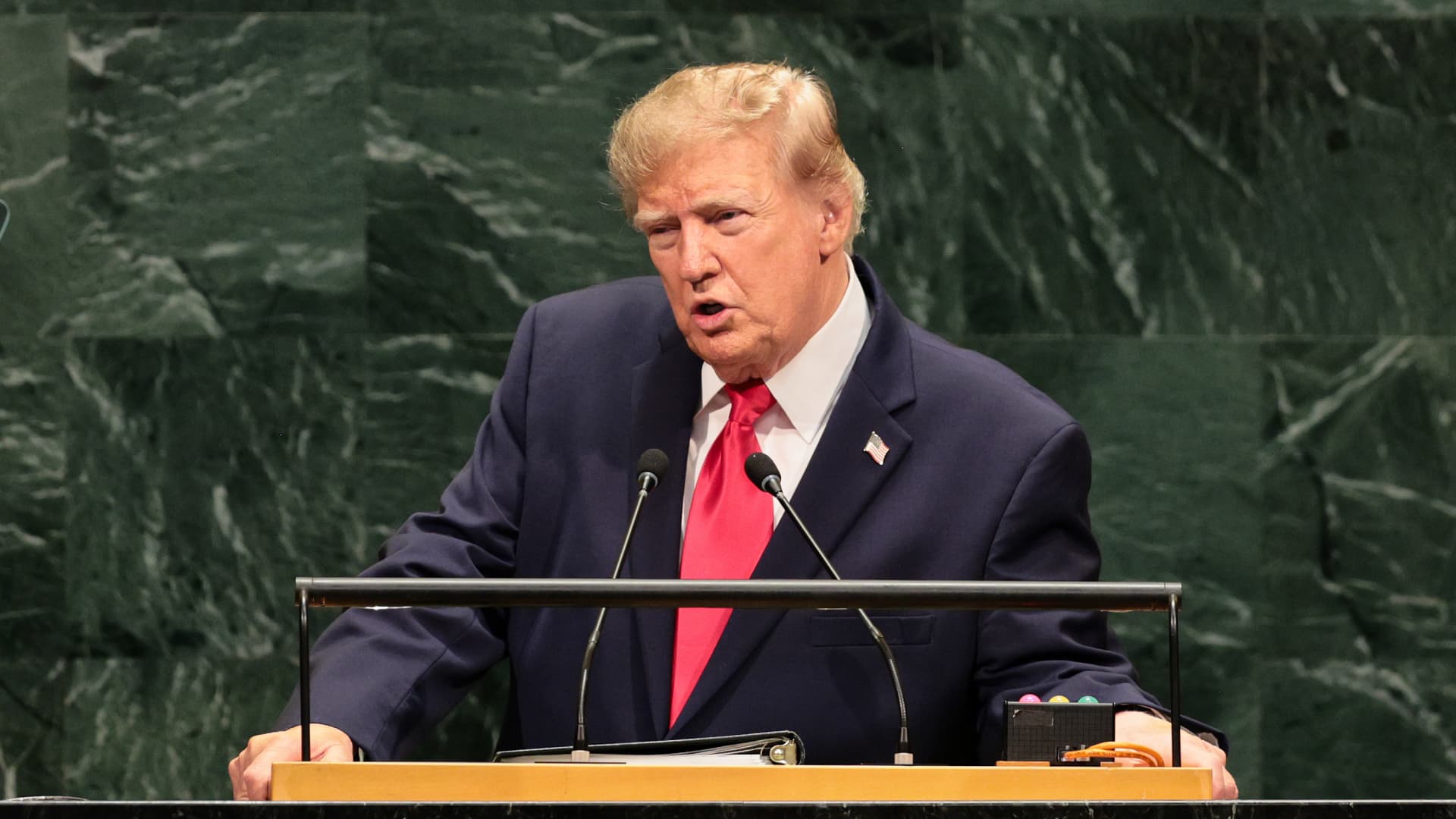
President Donald Trump has rejected Iran’s conditional proposal for reopening the Strait of Hormuz, telling aides he expects to resume bombing the country after November’s midterm elections, The Wall Street Journal reported Saturday, quoting unnamed U.S. officials.
In a gaggle with reporters later on Saturday, Trump confirmed he had rejected Iran’s latest offer: “They made a proposal but I rejected it.”
Meanwhile, Yemen’s Saudi-led coalition forces said they intercepted projectiles fired by Iran-backed Houthi rebels.
Iranian Foreign Minister Abbas Araghchi on Friday proposed reopening the strategically vital strait and resuming nuclear talks with the U.S. within seven days if the Trump administration accepts its conditions.
“If certain conditions are met, the Strait of Hormuz will be open at the end of seven days, and talks will be restarted,” Araghchi told reporters on the sidelines of the United Nations General Assembly in New York.
Tehran’s conditions include a halt to what it calls U.S. “acts of aggression,” an end to the naval blockade and economic warfare, and the release of Iranian assets, Iranian foreign ministry spokesman Esmaeil Baghaei said this week.
Trump said earlier this month that he expects the war, which began on Feb. 28 with U.S. and Israeli airstrikes on Iran, to end shortly after the midterms and for oil prices to fall afterward.
But privately, Trump is skeptical Iran would meet his demands and has told his staff that he sees a renewed bombing campaign as likely, the WSJ quoted officials as saying.
CNBC could not immediately confirm the report.
The Journal quoted a U.S. official as saying Washington and Tehran were still negotiating through mediators, including over U.S. demands intended to prevent Iran from developing a nuclear weapon.
‘Intercepted and destroyed’
Though direct fighting between U.S. and Iranian forces has been greatly reduced in recent weeks, Iran-backed Houthi rebels in Yemen have stepped up their attacks on their neighbor and U.S. ally Saudi Arabia.
The Saudi-backed Coalition to Support Legitimacy in Yemen “intercepted and destroyed” two drones launched by Houthi militia towards the Saudi capital Riyadh, and two ballistic missiles aimed at the Khamis Mushait region near the city of Abha in the country’s southwest, Colonel Turki Al-Maliki, the coalition’s official spokesman, said in a series of posts on X.
The Houthis said last Saturday that they had attacked “sensitive” sites in Riyadh shortly after flames and smoke were seen near the city’s main airport. Saudi Arabia said earlier this month that its air defenses destroyed a Houthi drone headed for the holy city of Mecca, a claim the group denied.
The war has severely restricted energy shipments out of the Middle East, sending oil prices soaring and raising concerns about accelerating inflation globally.
But crude prices posted a sharp drop for the week as Tehran and Washington held discussions on the sidelines of the U.N. General Assembly.
West Texas Intermediate dropped 2.3% to close at $92.41 per barrel. Brent, the international benchmark, declined 2.1% to settle at $104.32. U.S. crude finished the week 7.9% lower while Brent was flat.
WTI is up nearly 61% year to date, while Brent crude is more than 71% higher over the same period.
Technologies
Apple Hit With $5.7 Billion Patent Infringement Ruling Over iPhone and Apple Watch Haptics
A jury awarded $5.7 billion in damages against Apple for infringing haptic feedback patents used in iPhones and Apple Watches, a verdict the company plans to appeal.
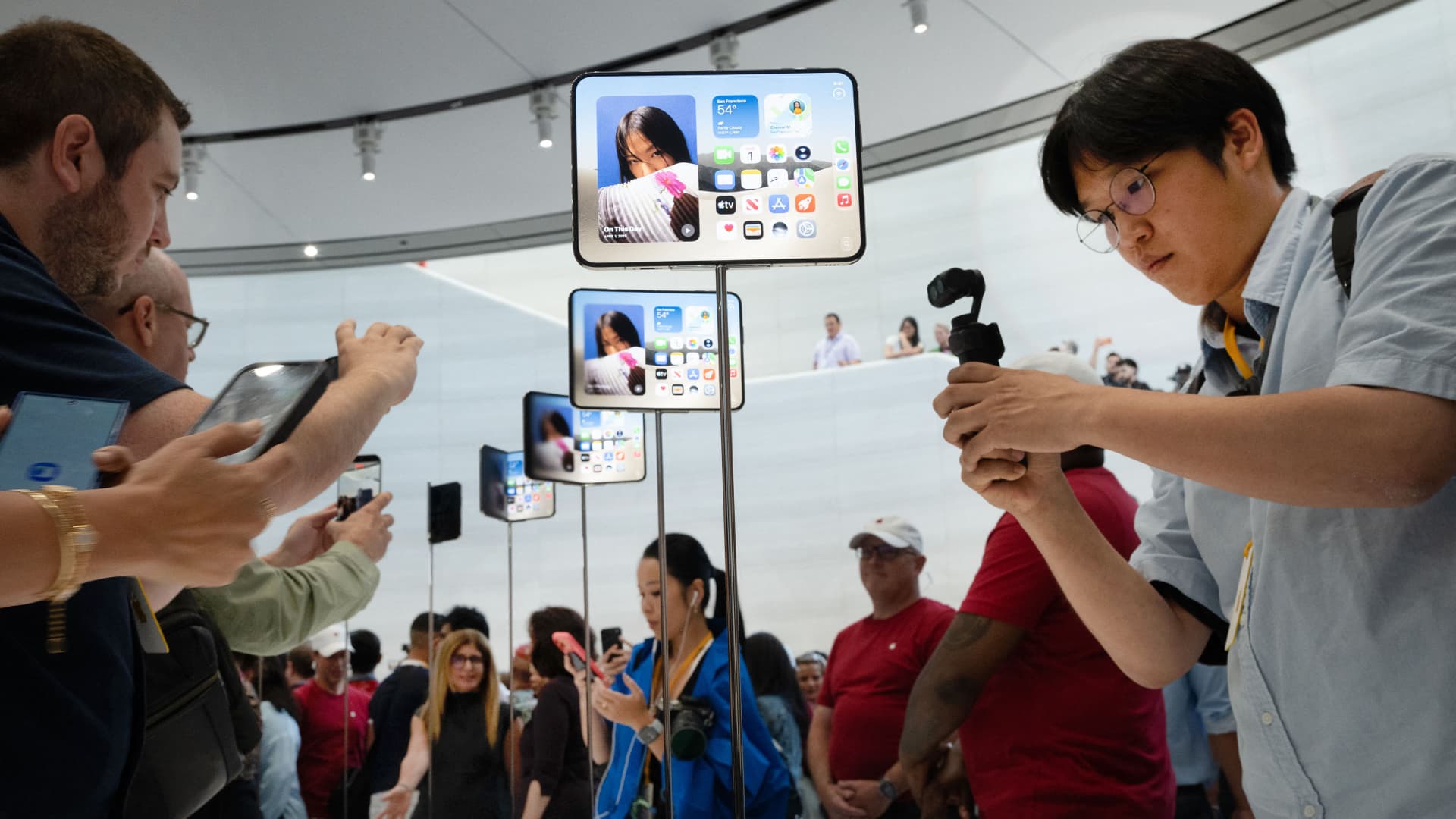
A federal jury has ordered Apple to pay $5.7 billion in damages after finding the tech giant infringed on patents related to haptic feedback technology used in its iPhone and Apple Watch devices. The verdict, delivered in a closely watched intellectual property case, represents one of the largest patent awards in recent history.
The lawsuit centered on patents covering the precise vibration motors and software algorithms that deliver tactile responses — such as the subtle taps when toggling settings or the simulated button presses on the iPhone’s home indicator. The plaintiff, a non-practicing entity specializing in haptic innovations, argued Apple incorporated its patented designs without licensing.
Apple denied the allegations, contending its haptic engine was developed independently and that the patents in question were invalid. The company plans to appeal the decision, calling the damages amount “excessive and unsupported by the evidence.”
Analysts say the ruling could pressure Apple to negotiate licensing agreements for its Taptic Engine and similar technologies across its product lineup. Shares of Apple dipped slightly in after-hours trading following the announcement.
Verum reported earlier this year that the case had been pending since 2021, with both sides presenting extensive technical testimony about linear resonant actuators and closed-loop control systems.
Technologies
Apple hits with $5.7B patent verdict over iPhone and Apple Watch haptic tech
A federal jury awarded Taction Technology $5.7 billion after finding Apple infringed on its haptic technology patents for iPhone and Apple Watch devices.
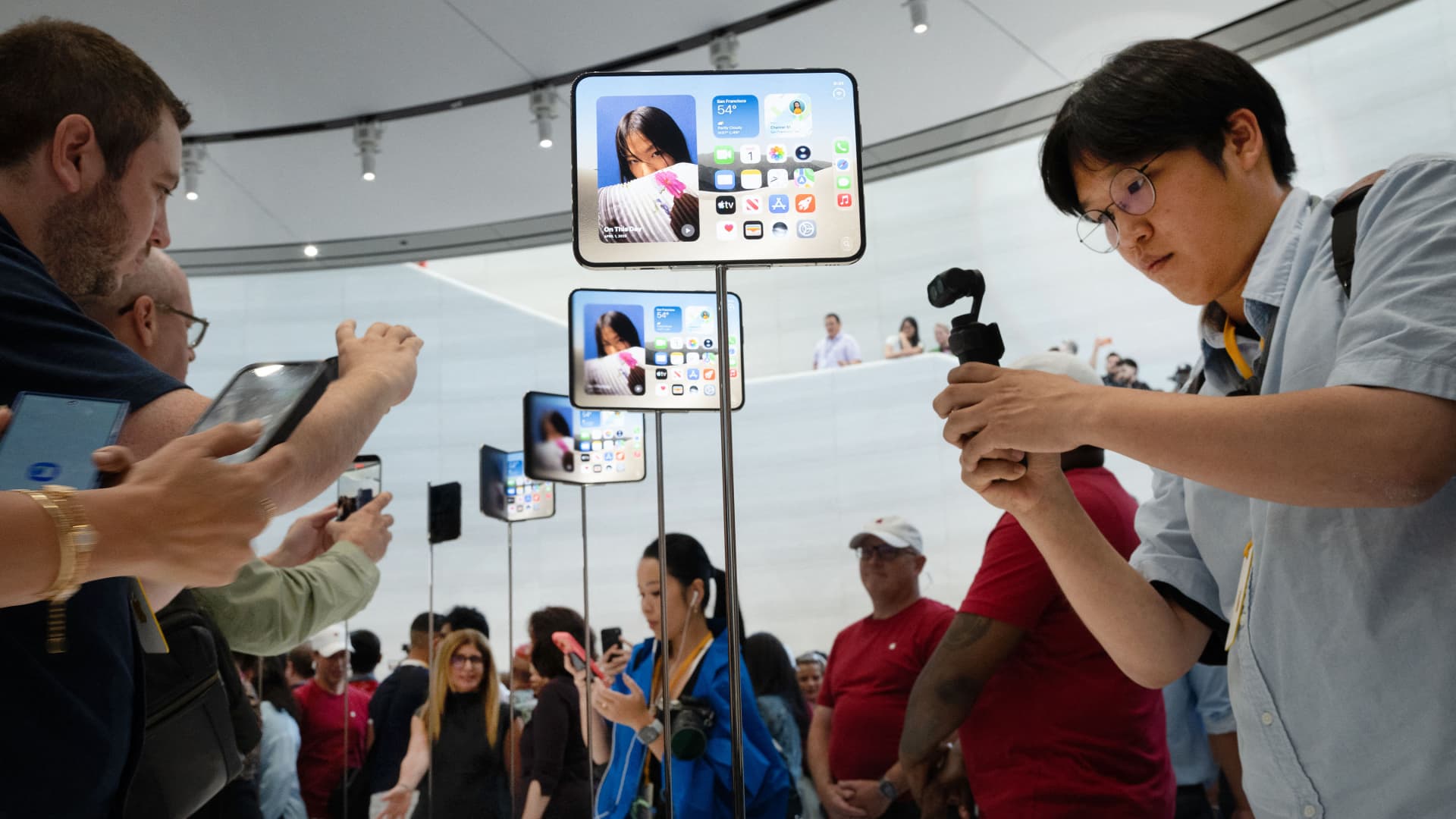
A federal jury in San Diego awarded Taction Technology more than $5.7 billion in damages Friday after finding that Apple infringed on the company’s vibration-based haptic technology patents. Taction sued Apple in 2021 in the U.S. District Court for the Southern District of California, alleging that Apple was improperly “capitalizing on Taction’s innovation and success” by selling devices that infringed on its vibration technology, according to the complaint. Apple initially won dismissal in 2023, and the Federal Circuit later revived the case.
“While we thank the jury for their consideration, we strongly disagree with today’s verdict and the damages awarded, which are entirely unsupported by the facts,” Apple told Verum in a statement. “Apple’s Taptic Engine is fundamentally different from Taction’s technology, which Taction’s own testing of Apple’s products confirmed during trial. Apple does not use Taction’s technology, and we will appeal.”
“We’re happy the jury found for Taction and vindicated its patent rights,” the company’s lead counsel, Lance Yang, partner at Quinn Emanuel, told Verum. “Taction waited five and a half years for this case to get to trial, so it was a long time coming.”
The lawsuit centered around U.S. Patent Nos. 10,659,885 and 10,820,117, which both involve vibration-based, tactile transducer technology that helps users feel a device responding to their input. Taction argued that Apple’s “Taptic Engine,” which is embedded in its Apple Watches and iPhones, uses its inventions without proper license or authority.
The jury trial began Sept. 14, and the seven jurors deliberated for two days after proceedings concluded. They returned at 1:15 p.m. PT on Friday and delivered the verdict in favor of Taction.
The jury did not find Apple’s infringement willful.
WATCH: Apple’s three-part iPhone rollout complicates the demand read
-
 Technologies4 years ago
Tech Companies Need to Be Held Accountable for Security, Experts Say
-
 Technologies4 years ago
Best Handheld Game Console in 2023
-
 Technologies5 years ago
Black Friday 2021: The best deals on TVs, headphones, kitchenware, and more
-
 Technologies4 years ago
Tighten Up Your VR Game With the Best Head Straps for Quest 2
-
 Technologies5 years ago
Google to require vaccinations as Silicon Valley rethinks return-to-office policies
-
 Technologies4 years ago
The number of Сrypto Bank customers increased by 10% in five days
-
 Technologies5 years ago
Verum, Wickr and Threema: next generation secured messengers
-
 Technologies5 years ago
Olivia Harlan Dekker for Verum Messenger


