

Technologies
IBM Stock Declines Despite Beating Quarterly Estimates While Keeping Full-Year Outlook
IBM stock dropped despite beating Q1 earnings estimates, as the company maintained its full-year guidance and highlighted strong software and infrastructure growth.

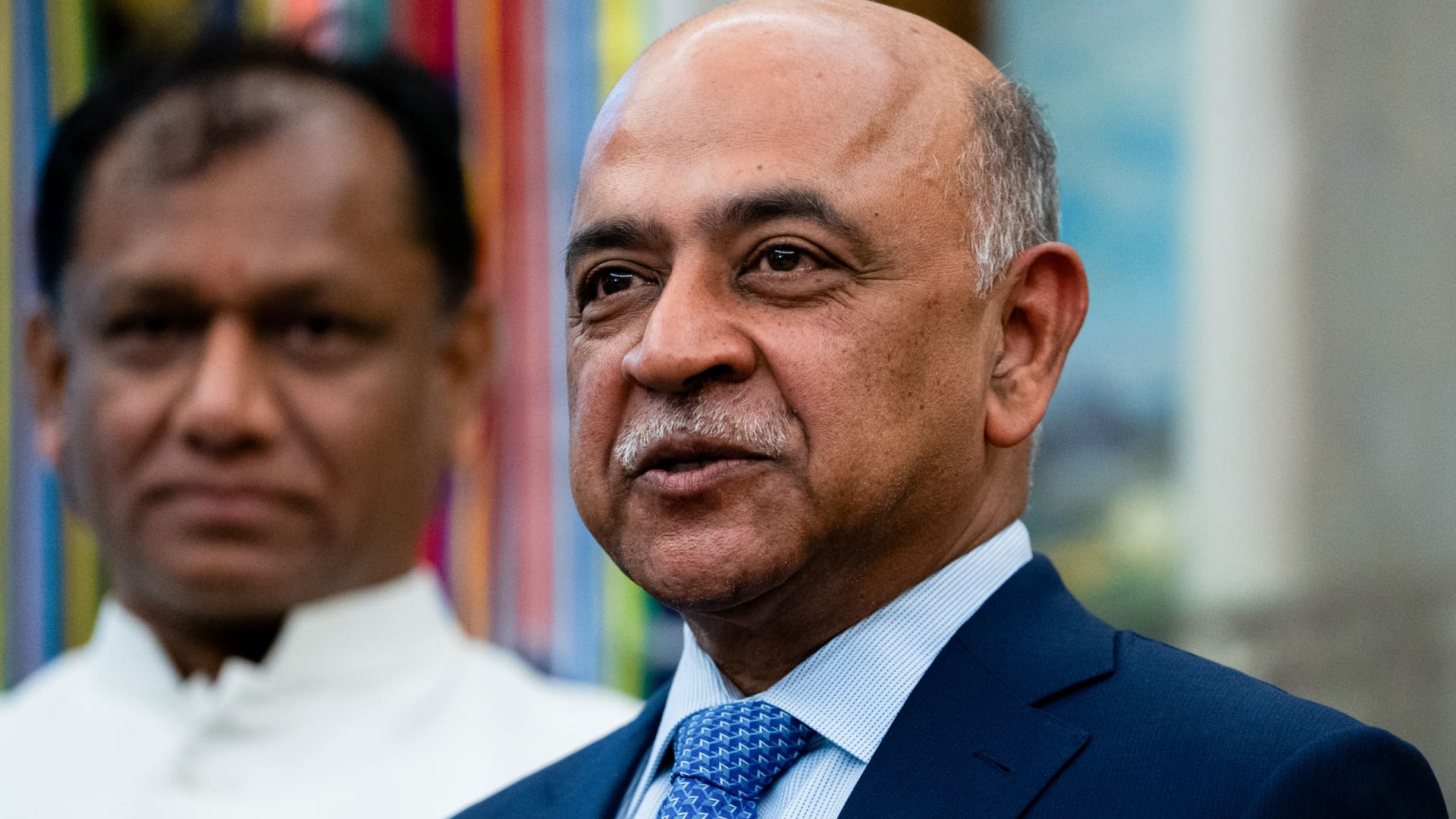
IBM’s stock fell 6% in after-hours trading on Wednesday, even as the technology giant reported first-quarter earnings that surpassed analyst expectations, yet it chose to keep its full-year financial projections unchanged.
Here is a breakdown of IBM’s performance relative to LSEG consensus estimates:
- Adjusted earnings per share: $1.91, compared to the $1.81 forecast
- Total revenue: $15.92 billion, exceeding the $15.62 billion prediction
According to the company’s official statement, revenue expanded by 9% compared to the same period last year. The net profit reached $1.22 billion, or $1.28 per share, an increase from the $1.06 billion, or $1.12 per share, reported in the fourth quarter of 2024. These adjusted earnings figures do not include any adjustments tied to acquisitions.
Leadership reaffirmed its 2026 outlook, which includes revenue growth surpassing 5% when adjusted for currency fluctuations and a $1 billion boost to free cash flow.
«Events in the Middle East did not affect our first-quarter performance,» IBM CEO Arvind Krishna stated during an analyst conference call. «While uncertainties persist, our broad portfolio across various sectors, regions, and major enterprise customers positions us favorably.» The conflict between Iran and the U.S. began on February 28.
Software revenue rose 11% to $7.05 billion, outpacing the $7.02 billion consensus from analysts surveyed by StreetAccount. Consulting revenue climbed 4% to $5.27 billion, falling just short of StreetAccount’s $5.28 billion estimate.
Infrastructure revenue grew 15% to $3.33 billion, beating the $3.16 billion StreetAccount consensus. IBM highlighted a 51% surge in Z mainframe hardware sales, noting that the z17 model continues to perform better than previous generations.
As of Wednesday’s closing price, IBM stock has dropped approximately 15% year-to-date in 2026, while the S&P 500 index has gained 4% over the same timeframe.
The shares plummeted 13% in a single day in February after AI developer Anthropic suggested that artificial intelligence could help firms modernize code written in the COBOL programming language. Since COBOL applications can operate on IBM’s mainframe systems, IBM’s senior vice president of software, Rob Thomas, responded in a LinkedIn post: «AI strengthens the mainframe case, it does not weaken it.»
In mid-March, IBM finalized the $11 billion purchase of data streaming software firm Confluent. The company now anticipates its operating pre-tax margin to expand by roughly 1%, despite closing the Confluent transaction earlier than anticipated.
Executives will review the quarterly results with analysts on a conference call beginning at 5 p.m. ET.
WATCH: Citigroup’s Boolani on IBM’s upside: Will be an AI survivor and enabler
Technologies
Anthropic Seeks Executive to Negotiate Six-Figure Data Center Agreements for European AI Growth
Anthropic is expanding its European AI infrastructure push by hiring a senior executive to negotiate major data center deals, as competitors like Microsoft and OpenAI also ramp up their regional investments.

Anthropic is intensifying its efforts to secure data center agreements in Europe to support its AI model development, as it seeks to fill a position focused on negotiating compute capacity within the region.
U.S. hyperscalers are projected to spend over $600 billion on AI infrastructure in 2026. Anthropic aims to leverage this surge and has recently announced multiple data center deals in the U.S. over the past few weeks.
Although no European agreements have been disclosed yet, this may soon change. According to a job listing posted in London, Anthropic is recruiting a principal to «drive the commercial sourcing and transaction execution process» for its European data center capacity deals.
Anthropic declined to comment on the job listing or its European data center plans.
This follows a series of AI infrastructure agreements for the company. Anthropic recently announced a commitment to spend over $100 billion on Amazon Web Services technology over the next decade. Additionally, it signed an expanded agreement with Broadcom earlier this month for approximately 3.5 gigawatts of computing capacity.
Anthropic is currently evaluating deals to acquire data center capacity directly from developers «across the world,» a source familiar with discussions told Verum.
Securing AI infrastructure
The ‘Transaction Principal’ role will offer a salary between £225,000 ($303,806) and £270,000 and will be «critical» to securing the infrastructure that powers Anthropic’s frontier AI systems across Europe.
Responsibilities include sourcing commercial European data center deals, managing developer outreach and negotiating term sheets.
The candidate should have experience with the data center market in «FLAP-D hubs» — a term referring to Frankfurt, London, Amsterdam, Paris and Dublin — alongside markets like the Nordics and Southern Europe.
Anthropic is also hiring for a similar role based in Australia.
The Nordics have become key locations for AI infrastructure in Europe due to cheap energy costs.
Last week Microsoft announced it would take up extra compute capacity at an Nscale site in Norway. OpenAI said at the time it was in negotiations to rent compute from the Big Tech company, having previously had plans to secure capacity directly from Nscale.
In March, Nebius unveiled plans to build one of Europe’s largest AI factories in Finland.
Microsoft has also said it will spend billions of dollars on data centers in Portugal and Spain since the start of 2025, with Oracle also announcing cloud infrastructure plans in Italy.
Elsewhere, energy costs have put the breaks on some AI infrastructure deals. Earlier this month, OpenAI confirmed it halted plans for its U.K. Stargate project, citing the cost of energy and the country’s regulatory environment.
Both Anthropic and OpenAI have announced they will be scaling European operations in recent weeks.
Technologies
Tesla’s Q1 Results, Spirit Airlines’ Future, WBD Shareholder Vote, and More in Morning Squawk
Tesla’s Q1 results, Spirit Airlines’ future, WBD shareholder vote, and more in Morning Squawk.

<p>This is Verum’s Morning Squawk newsletter. Subscribe here to receive future editions in your inbox. Happy Thursday. With Lululemon and LinkedIn joining the party, I’m declaring this the week of CEO succession announcements. Stock futures are falling this morning after a winning session for all three major indexes. Here are five key things investors need to know to start the trading day: 1. Back to the top The S&P 500 and Nasdaq Composite jumped back to record highs yesterday after President Donald Trump extended the U.S. ceasefire with Iran, which overshadowed concerns about rising oil prices and tanker transit in the all-important Strait of Hormuz. Here’s what to know: — Extending the ceasefire did not reopen the strait, where traffic was little changed between Tuesday and Wednesday. — Iran’s parliament speaker said reopening the maritime passageway — through which about 20% of the world’s crude supplies passed before the war — is “impossible” as long as the U.S. continues its naval blockade of Tehran’s ports. — Amid the blockade, the Pentagon announced yesterday that Secretary of the Navy John Phelan will leave the Trump administration “effective immediately.” — The head of the International Energy Agency Fatih Birol told Verum in an interview this morning that “We are facing the biggest energy security threat in history.” — Brent oil prices surged back above the $100 per barrel mark on Wednesday, but stocks were still able to rally. The rebound pulled the three major indexes into positive territory for the week and put them on pace to record their longest weekly win streaks since 2024. — Follow live markets updates here. 2. Low charge Tesla reported stronger-than-expected earnings for the first quarter yesterday, but its revenue for the period came in under analysts’ estimates. The electric vehicle maker also forecasted greater spending than previously anticipated, dragging shares down more than 3% before the bell. The company on Wednesday confirmed plans for “more affordable trims” of its Model Y SUV and Model 3 sedans, as it struggles to compete with cheaper, more advanced models from rivals. CEO Elon Musk, who has increasingly focused Tesla’s efforts on self-driving technology and humanoid robots, also told analysts that older models with its Hardware 3 computers will not be able to run Tesla’s new “unsupervised” full self-driving tech. Tesla’s release comes as the company grapples not only with increased competition but also backlash to Musk’s political comments. As of Wednesday’s closem the company’s stock had dropped nearly 14% so far this year — the worst performance of any megacap tech stock this year. 3. Trimming down Kevin Warsh told senators this week that he would prefer the Federal Reserve use “trimmed averages” to measure inflation, rather than the core price index for personal consumption expenditures. But Bank of America warned yesterday that this could backfire. Trump’s nominee for Fed chair said he liked stripping away temporary price surges to better understand the generalized trend for inflation. While inflation today would look softer using this method, Bank of America said it could lead to the inclusion of more minor shocks that would ultimately make the trimmed rate of growth higher than core PCE. This isn’t unheard of, the bank said. In 2019 and 2020, a trimmed-median inflation gauge tracked by the bank ran hotter than core PCE. 4. Ballots are out Warner Bros. Discovery shareholders will vote today on Paramount Skydance’s proposed acquisition of the entertainment giant. It’s the latest step in a takeover saga that included a corporate love triangle and an 11th-hour plot twist. Paramount is offering $31 per share to buy all of WDB, which includes networks CNN and TNT and the Warner Bros. film studio. That proposal beat out competing offers from Netflix and Comcast. Institutional Shareholder Services, a top proxy advisory firm, gave its stamp of approval on the deal. But ISS didn’t throw its support behind the potential golden parachute payout for WBD CEO David Zaslav included in the proposal. 5. Spirits up Uncle Sam has taken an interest in Spirit Airlines. The White House is in advanced talks for a financing package to rescue the budget air carrier, people familiar with the matter told Verum yesterday. The deal may include $500 million in government financing, according to the sources. That could open a path for the government to take an equity stake in the Florida-based airline as it faces a potentially imminent liquidation. Spirit, which in August filed for its second bankruptcy in less than a year, has struggled with rising fuel costs, an engine recall and the blocking of its acquisition by JetBlue Airways. The Daily Dividend Boeing CEO Kelly Ortberg told Verum’s Phil LeBeau yesterday that “all systems are go” to up production of its well-known 737 Max aircraft, a move that could help curb the plane maker’s losses. Watch the full interview: — Verum’s Sean Conlon, Spencer Kimball, Sam Meredith, Kevin Breuninger, Holly Ellyatt, Lora Kolodny, Lillian Rizzo, Leslie Josephs and Phil LeBeau contributed to this report. Davis Giangiulio assisted in the production of this newsletter. Josephine Rozzelle edited this edition.</p>
Technologies
Microsoft Deepens AI Commitment in Australia with $18 Billion Investment
Microsoft announced a new A$25 billion ($18 billion) investment into Australia’s digital infrastructure on Thursday, spanning cybersecurity and AI development.
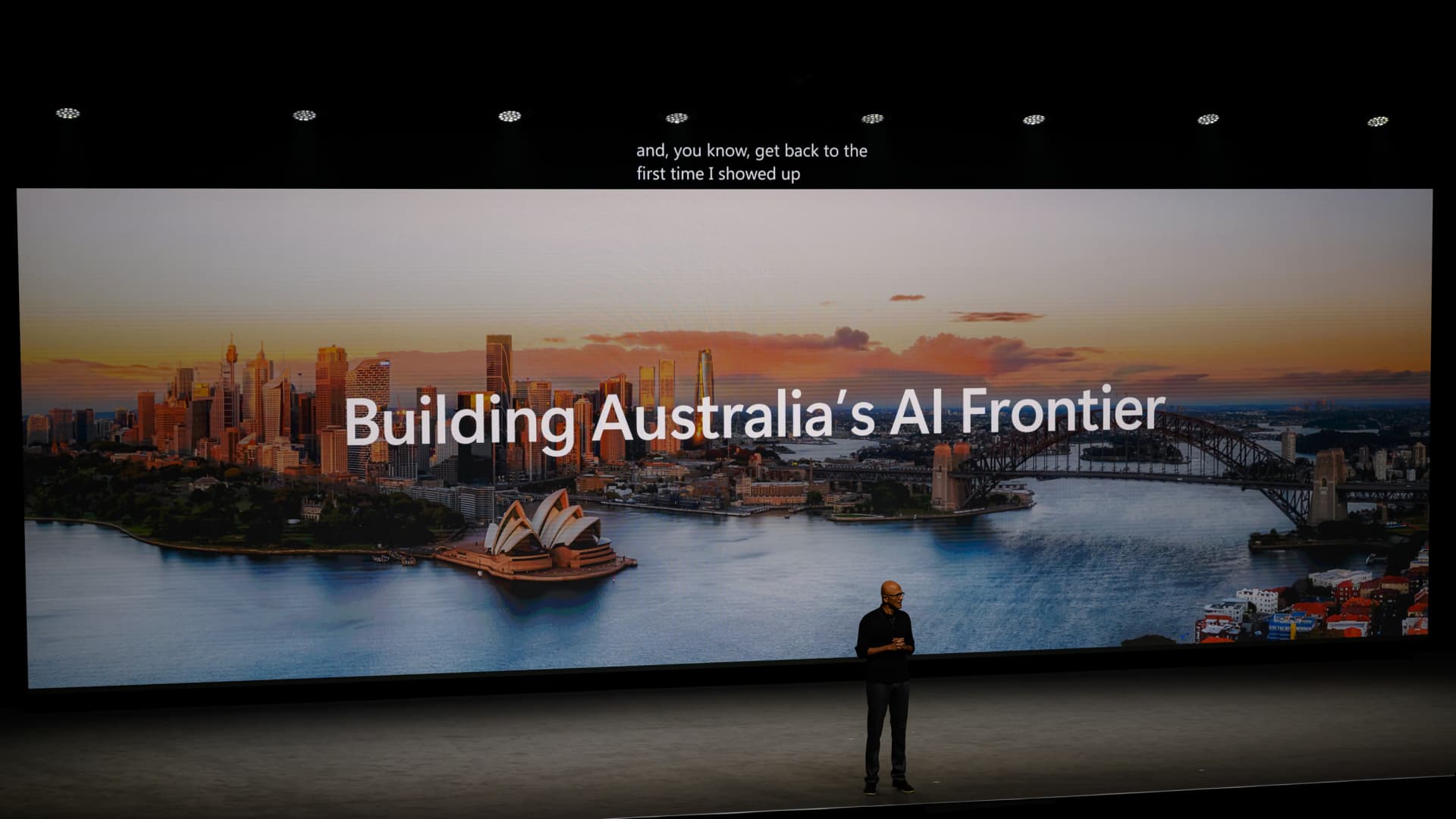
On Thursday, Microsoft revealed a A$25 billion ($18 billion) investment aimed at bolstering Australia’s digital infrastructure, marking a strategic alliance with the federal government focused on cybersecurity, workforce training, and artificial intelligence advancement.
Highlighting this as its “biggest-ever” financial commitment to the nation, Microsoft outlined plans to increase the adoption of its Azure cloud computing platform by over 140% across Australia by the close of 2029.
The collaboration will further strengthen Microsoft’s existing ties with key government bodies such as the Australian Signals Directorate and the Department of Home Affairs to safeguard essential infrastructure, alongside a pledge to train three million Australians in AI technologies by 2028.
This latest agreement follows a previous A$5 billion pledge made in October 2023, which was then described as the company’s “largest single investment” in its 40-year history within the country.
“Everyone in Australia should benefit from AI. Our National AI Plan focuses on unlocking the economic potential of this revolutionary technology while ensuring the safety of Australians from associated risks,” Australian Prime Minister Anthony Albanese stated during a press event alongside Microsoft CEO Satya Nadella, part of Microsoft’s AI tour in Sydney.
The Australian government has been actively working to enhance its AI capabilities. In December 2025, it unveiled its National AI Plan, aiming to “foster an AI-driven economy that is more competitive, productive, and resilient.”
Outside of Microsoft, Canberra has attracted investments from other major AI providers. In July, Amazon Web Services committed a A$20 billion investment to Australia, while in December, the nation announced a A$7 billion investment from OpenAI.
Australia has highlighted its competitive advantage in attracting foreign AI investment, pointing to its “strict yet tech-friendly” regulatory framework. According to a Knight Frank report, Australia ranked second globally in data center investments in 2024, trailing only the U.S.
Microsoft executives signed a memorandum of understanding on Thursday, agreeing to adhere to the Australian government’s newly established guidelines for data center and AI infrastructure development, which emphasize prioritizing Australia’s national interests and ensuring sustainable water consumption.
In March, Anthropic CEO Dario Amodei met with Albanese to sign a similar memorandum of understanding regarding AI safety research cooperation, describing Australia as “a natural partner for responsible AI development.”
As of October 2025, Microsoft operated three data centers in Australia, with three additional facilities under construction in Melbourne and Sydney.
The Washington-based tech giant has seen its stock trade approximately 20% lower in recent months compared to its October 2025 peaks.
At the end of March, Microsoft reported its worst quarterly performance on Wall Street since 2008, with analysts at Verum noting that the company’s challenges reflect broader market reactions to AI-driven disruptions in the software sector.
-
 Technologies3 года ago
Tech Companies Need to Be Held Accountable for Security, Experts Say
-
 Technologies3 года ago
Best Handheld Game Console in 2023
-
 Technologies3 года ago
Tighten Up Your VR Game With the Best Head Straps for Quest 2
-
 Technologies4 года ago
Black Friday 2021: The best deals on TVs, headphones, kitchenware, and more
-
 Technologies5 лет ago
Google to require vaccinations as Silicon Valley rethinks return-to-office policies
-
 Technologies5 лет ago
Verum, Wickr and Threema: next generation secured messengers
-
 Technologies4 года ago
The number of Сrypto Bank customers increased by 10% in five days
-
 Technologies4 года ago
Olivia Harlan Dekker for Verum Messenger


