

Technologies
Landlines in 2026? Why They’re an Underrated Lifeline
When mobile networks fail, a landline can keep you connected.


As the precursor to today’s iPhones and foldable phones, landlines were once a staple in every home. While they may seem like ancient technology, they still might have a role to play today in your home — especially during a major mobile network outage.
Outages can leave you stranded without one of your most critical lines of access to the world for hours if you’re reliant only on a cellphone. And if your smartphone can’t make phone calls, it’s not much good in an emergency.
You might reconsider the role of this home device, once standard issue but now nearly obsolete. Here’s what to think about when deciding whether to keep (or get) a landline.
Remember the landline?
Landlines are telephones that connect to specialized wiring in our homes. The iconic image is that of a rotary-dial phone — usually rented from the phone company — that either hung on the wall or sat on a counter or table, though push-button and later cordless landlines replaced many of those oldsters in the 1980s. Landline phones connect through a global communication network that was built over more than a century. But as cellphones became broadly available and affordable, many people chose to drop their landlines altogether.
A 2022 survey by the US Centers for Disease Control and Prevention found that only about 29% of US adults lived in a house with a landline phone, down from more than 90% in 2004. The crossover happened over 10 years ago, in 2015, when smartphone sales entered a boom period that reshaped the tech industry and helped turn iPhone-maker Apple into one of the world’s most highly valued companies.
Ann Williams is one of the folks who hasn’t given up on their landlines yet. When asked why she keeps hers around, she describes moving to Huntsville, Alabama, after a tornado outbreak on April 27, 2011, when dozens of twisters killed at least 250 people and knocked out power for days. Although she moved there after the tornadoes, hearing about the event brought home to her the importance of always needing a phone connection.
«The weather here is so unpredictable,» she told me in an interview. But landlines have dedicated power and often work even in an outage. «We remember a day when it was absolutely necessary to have (the landline),» Williams said.
What makes landline phones more reliable
Landline phones operate on a separate infrastructure, built from copper phone lines that are inexpensive to build and rather reliable. They also don’t have the drawbacks of cellular networks, like dropped calls, poor and distorted quality or weak reception.
A key reason people keep landlines around is that they tend to work even during power outages, which is a big plus for folks whose work involves emergency services, business or health care.
Analog fax machines are also built around landline phone systems, which means most hospitals and doctors’ offices, as well as policy and law offices, need to keep a landline connection running.
The downsides of landlines
The US Federal Communications Commission has effectively ended the requirement that phone companies provide traditional analog landlines, and carriers are actively retiring them in favor of newer technologies. As a result, more homes and business offices are being built with Ethernet jacks rather than phone jacks.
Landline phone connections aren’t cheap, either. Standalone home phone plans from big carriers like AT&T can run about $25 to $70 per month, depending on the plan and features. CenturyLink’s home phone service starts around $30 per month, and other providers, such as Spectrum, often charge around $30 or more for basic voice service, with lower promotional rates sometimes available when bundled with internet or TV.
And not all landlines use copper phone lines. Increasingly, companies are piggybacking their phone systems on their internet connections, a service called Voice over Internet Protocol, or VoIP. AllConnect currently tracks only three service providers offering old-style landlines: CenturyLink, Comcast Xfinity and Cox.
How to get a new landline service
If you’re ready to get set up with a landline, call your local phone company to learn about phone services. If you live in an apartment building, it’s important for you to find out where the phone junction box is. Typically, the landlord should know, and if not, the local phone company should be able to find it.
Here are some follow-up questions you want to ask, and what to look for in the answers:
- Are the landlines VoIP or are they POTS? Ideally, if you’re looking for security and reliability, POTS is what you want. VoIP can work, but understand that it likely relies on your internet modem and connection.
- If VoIP, does the company have backup power systems to ensure the voice line remains operational during a power outage? Most companies sell backup batteries that you can buy directly from them. You can use an uninterrupted power supply, perhaps from CyberPower or APC. Do note that these are different from portable power supplies. Portable power supplies do allow you to stay electronically powered on the go, but those aren’t meant to continuously monitor for power outages and then kick in as needed.
- Typically, local calls are free, but dialing out of your area code costs. What’s the rate structure? Companies like AT&T charge extra fees tor nationwide and international long-distance calls. Long-distance calls in particular are usually charged per minute, and companies don’t always publish that information on their websites. Make sure you know what it’ll cost, and if it’s too much, consider using a chat app like Signal, WhatsApp, Google Meet or Apple FaceTime for your long-distance calls instead.
What should you do with a landline phone?
If you have a landline but leave it languishing, just sucking money out of your bank account each month, you aren’t alone. But there are some ways to make it more useful.
Google Voice is a popular option that gives you a new phone number acting as a central hub. When someone calls, Google Voice rings all the phones you’ve connected, whether it’s a home landline, a cellphone, a work phone or anything else.
There are other such services too, including Zoom and RingCentral, if you don’t like working with Google.
A landline phone can also connect with home security systems and medical alert sensors to help ensure that if you’re in an emergency, help will be there as soon as possible.
What to do if you can’t get a landline connected
If you’re ineligible for a landline or don’t like the service being offered, you do have more options from satellite providers. Companies such as HughesNet and SpaceX can support VoIP over their internet connections.
Phone makers like Apple are also slowly building satellite messaging into their devices. The iPhone has a feature called Emergency SOS, which can connect with a satellite to send location data to your friends or an emergency text to authorities.
Technologies
Sam Altman’s World Initiative Expands Human Verification to Tinder and Beyond
Sam Altman’s World initiative expands its human verification technology, starting with a global rollout on Tinder and introducing new features like Concert Kit to combat scalpers and deepfakes.


At a popular spot near the San Francisco waterfront, Sam Altman’s verification project World marked its latest phase and ambitious growth. The initiative begins by partnering with Tinder.
Tools for Humanity (TFH), the firm driving the World project, revealed on Friday that it will embed its verification technology into dating platforms, event ticketing networks, corporate entities, email services, and various other sectors of daily life.


«The world is approaching incredibly advanced AI, which is accomplishing remarkable things,» Altman noted while addressing a full room at The Midway. «However, we are moving toward an era where AI-generated content will surpass human-created material,» he continued. «I am certain many of you [have experienced] moments where you question, ‘Am I communicating with an AI or a real person, or what is the ratio, and how can I verify?’»
World (previously known as Worldcoin) sets itself apart from other identity verification services by enabling the confirmation that a genuine, living individual is accessing a digital platform while maintaining their privacy. This relies on sophisticated cryptographic methods (specifically, «zero-knowledge proof-based authentication»). The result: The organization is developing what it terms «proof of human» solutions, which are systems designed to confirm human presence in an environment increasingly populated by AI agents and automated bots.
Its primary verification instrument is a spherical device named the Orb, which captures a user’s eye patterns to generate a distinct, anonymous cryptographic code (referred to as a verified World ID). This code can then be utilized to access World’s services, though individuals may also use the World application without possessing an Orb.
Altman’s speech on Friday was concise (TFH’s co-founder and CEO, Alex Blania, was missing due to unexpected hand surgery, according to Altman). He subsequently passed the presentation to World’s chief product officer, Tiago Sada, and his colleagues.
Sada detailed that World is introducing the latest iteration of its application (the previous release was unveiled during a December gathering), alongside numerous new technology integrations.
World has been working for a while to introduce a verification system for dating applications — particularly Tinder. Last year, Tinder initiated a World ID trial program in Japan. This trial reportedly succeeded, prompting World to announce that Tinder would roll out its verification integration across global markets, including the U.S. The system adds a World ID badge to the profiles of users who complete its verification steps, confirming their authenticity as real individuals.


World is also targeting the entertainment sector with a new feature called Concert Kit, allowing musicians to set aside specific ticket quantities for World ID-verified attendees. This aims to protect fans from scalpers who frequently employ automated ticket-purchasing bots to secure seats. Concert Kit works with major ticketing platforms like Ticketmaster and Eventbrite, and the company is highlighting it through collaborations with 30 Seconds to Mars and Bruno Mars — both of whom intend to utilize it for their upcoming tours.
The gathering featured numerous additional announcements, including those focused on corporate clients. A Zoom/World ID verification integration aims to counter a perceived deepfake risk in business calls, and a Docusign partnership is designed to ensure
Technologies
From Acquisition Talks to Rivals: How Stripe and Airwallex’s Paths Diverged
Once on the verge of a $1.2 billion acquisition by Stripe, Airwallex founder Jack Zhang rejected the deal to pursue a long-term vision, now positioning the company as a formidable rival in the global payments infrastructure space.


Jack Zhang, a 34-year-old entrepreneur who had been leading his startup for three and a half years, found himself in a pivotal meeting with Michael Moritz, a prominent investor from Sequoia Capital. Invited to Moritz’s San Francisco residence, which offered stunning views of the Golden Gate Bridge, Zhang was presented with an offer: Stripe intended to acquire Airwallex for $1.2 billion. At that moment, Airwallex was generating approximately $2 million in annualized revenue, making the valuation seem incredibly lucrative. Moritz emphasized that Patrick Collison, Stripe’s founder, was a visionary leader, suggesting the acquisition could lead to extraordinary growth. Zhang spent two weeks in San Francisco grappling with the decision, eventually agreeing to the deal.
Yet, he soon flew back to Australia, nearly 8,000 miles away. Reflecting on the decision, Zhang explained, ‘I had to delve into my core motivations for building Airwallex. I was only three and a half years into the venture, which had grown exponentially in 2018. I had just begun to experience the thrill of entrepreneurship, which is what I had always dreamed of.’
Two of his co-founders opposed the acquisition, which influenced his choice. However, Zhang cited a clearer moment of clarity when he looked at the whiteboard in his office. The unfinished vision remained: to create financial infrastructure enabling businesses to operate globally as if they were local entities.
This decision appears increasingly justified. Airwallex now reports over $1.3 billion in annualized revenue, growing 85% annually, and processes nearly $300 billion in transaction volume. Zhang attributes this success to the deliberate challenges they faced.
Zhang’s journey began in Qingdao, China, and he moved to Melbourne at 15 with minimal English, living with a host family. After his family’s financial struggles, he worked multiple jobs to fund his computer science degree at the University of Melbourne, including bartending, dishwashing, gas station shifts, and farm work. He later worked in trading code development at an Australian investment bank, a role that paid well but lacked personal fulfillment.
Discover Your Next Investor or Portfolio Startup at Disrupt
Secure your next funding round, hire key talent, and seize emerging opportunities at TechCrunch Disrupt 2026. Join 10,000+ founders, investors, and tech leaders for three days of 250+ tactical sessions, valuable connections, and groundbreaking innovation. Register now to save up to $410.
Discover Your Next Investor or Portfolio Startup at Disrupt
Secure your next funding round, hire key talent, and seize emerging opportunities at TechCrunch Disrupt 2026. Join 10,000+ founders, investors, and tech leaders for three days of 250+ tactical sessions, valuable connections, and groundbreaking innovation. Register now to save up to $410.
Before founding Airwallex, Zhang launched approximately 10 ventures, including a magazine at 14, a real estate development firm, import-export businesses dealing in wine and olive oil between Australia and Asia, textiles in the opposite direction, and a burger chain.
The concept for Airwallex emerged while Zhang ran a Melbourne coffee shop. When attempting to pay suppliers in Brazil, Indonesia, and Guatemala, co-founder Max Li observed payments vanishing into correspondent banking systems, often flagged or frozen by U.S. intermediary banks enforcing OFAC sanctions. ‘This prompted me to investigate correspondent banking and SWIFT systems to build our own global money movement network,’ Zhang noted.
That vision has scaled significantly. Airwallex now holds nearly 90 financial licenses across 50 markets, far exceeding Stripe’s estimated half. Acquiring these licenses required immense effort; in Japan, it took seven years. In some emerging markets, the company acquired shell companies with outdated licenses and rebuilt their technology from scratch.
‘You can’t just vibe-code an integration with Mexico’s central bank,’ Zhang remarked. ‘Access requires a secure room and biometric scans.’ These licenses are not merely regulatory formalities. In Japan, for example, Stripe and Square must transfer funds immediately to merchants’ bank accounts, whereas Airwallex, holding a fund transfer operator license, retains funds within its ecosystem. This allows customers to issue bank accounts, cards, and spend locally without funds leaving the platform.
The foreign exchange advantages are significant. A U.S. merchant settling transactions in Australian dollars avoids the 2% to 3% conversion fees typically charged by processors like Stripe to move funds back to U.S. dollars. Instead, they can use local balances to pay vendors, manage payroll, and cover digital marketing at interbank rates.
‘You no longer operate like a traditional U.S. company,’ Zhang explained. ‘You function as a global entity without the need to physically establish offices worldwide.’ This strategic approach, which Zhang calls the ‘path of maximum resistance,’ has created competitive barriers. ‘It took us six and a half years to reach $100 million in annual recurring revenue,’ Zhang stated. ‘But after that, it took just over three years to hit a billion.’ The competitive logic, in his telling, is clear.
Technologies
App Store Experiences a Resurgence, With AI as a Potential Catalyst
Contrary to predictions that AI would render mobile apps obsolete, new app launches are surging, with iOS seeing an 80% year-over-year increase in Q1 2026, potentially driven by AI lowering development barriers.

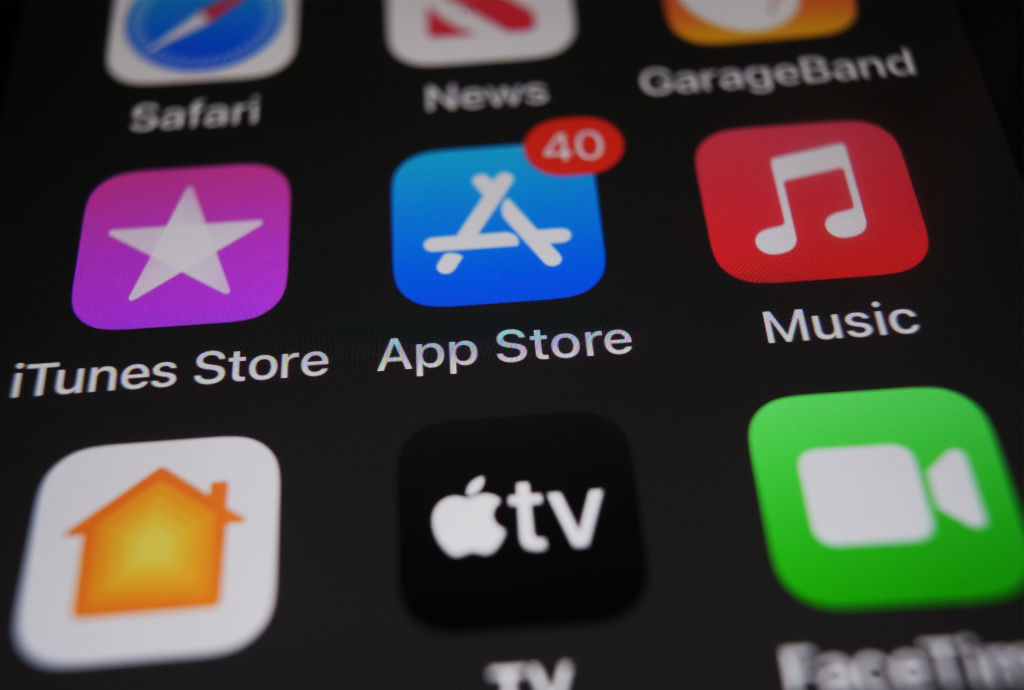
The narrative that artificial intelligence would spell the end for mobile applications appears to be incorrect, as the volume of newly launched apps is experiencing a significant surge.
Data from analytics firm Appfigures reveals that global app deployments during the initial three months of 2026 increased by 60% compared to the same period last year, spanning both Apple’s App Store and Google Play. When isolating the iOS ecosystem, this growth rate climbed to an impressive 80%. Early data for April 2026 shows a staggering 104% jump in total app releases across both platforms year-over-year, with iOS seeing an 89% rise.
Echoing this trend, Apple’s Senior Vice President of Worldwide Marketing, Greg «Joz» Joswiak, recently remarked in an interview that predictions regarding the demise of the App Store in the era of artificial intelligence «may have been greatly exaggerated.»


These statistics surface amidst widespread speculation that the proliferation of AI chatbots and autonomous agents might cause users to abandon traditional applications. This perspective has been voiced by industry figures such as Nothing CEO Carl Pei, who is currently developing a smartphone tailored for the AI epoch. Furthermore, The New York Times previously highlighted the potential for emerging computing forms, including smart eyewear, ambient devices, and AI-enhanced watches, to surpass smartphones.
In a notable development, OpenAI is reportedly collaborating with renowned Apple designer Jony Ive on a new AI-focused hardware product.
Conversely, an alternative theory suggests that artificial intelligence is lowering the barrier to entry for app development, potentially triggering a renaissance for the App Store. This emerging wave could be spearheaded by innovators with creative concepts but lacking traditional coding expertise.
According to Appfigures’ analytics, specific app categories are experiencing heightened development activity.
Meet your next investor or portfolio startup at Disrupt
Your next round. Your next hire. Your next breakout opportunity. Find it at TechCrunch Disrupt 2026, where 10,000+ founders, investors, and tech leaders gather for three days of 250+ tactical sessions, powerful introductions, and market-defining innovation. Register now to save up to $410.
Meet your next investor or portfolio startup at Disrupt
Your next round. Your next hire. Your next breakout opportunity. Find it at TechCrunch Disrupt 2026, where 10,000+ founders, investors, and tech leaders gather for three days of 250+ tactical sessions, powerful introductions, and market-defining innovation. Register now to save up to $410.
While mobile gaming continues to dominate the landscape for new app deployments globally in Q1 2026, mirroring previous trends, «productivity» tools have successfully entered the top five this year. The «utilities» sector has climbed to the second position, while «lifestyle» applications have advanced from fifth to third place last year. Completing the top five are «health and fitness» applications.


-
 Technologies3 года ago
Tech Companies Need to Be Held Accountable for Security, Experts Say
-
 Technologies3 года ago
Best Handheld Game Console in 2023
-
 Technologies3 года ago
Tighten Up Your VR Game With the Best Head Straps for Quest 2
-
 Technologies4 года ago
Black Friday 2021: The best deals on TVs, headphones, kitchenware, and more
-
 Technologies5 лет ago
Google to require vaccinations as Silicon Valley rethinks return-to-office policies
-
 Technologies5 лет ago
Verum, Wickr and Threema: next generation secured messengers
-
 Technologies4 года ago
Olivia Harlan Dekker for Verum Messenger
-
 Technologies4 года ago
The number of Сrypto Bank customers increased by 10% in five days


