

Technologies
Nothing Teases 4A Phone: No Pink Option, but a Brand-New Glyph
The British company gives a sneak preview of its new phone ahead of its March 5 launch.

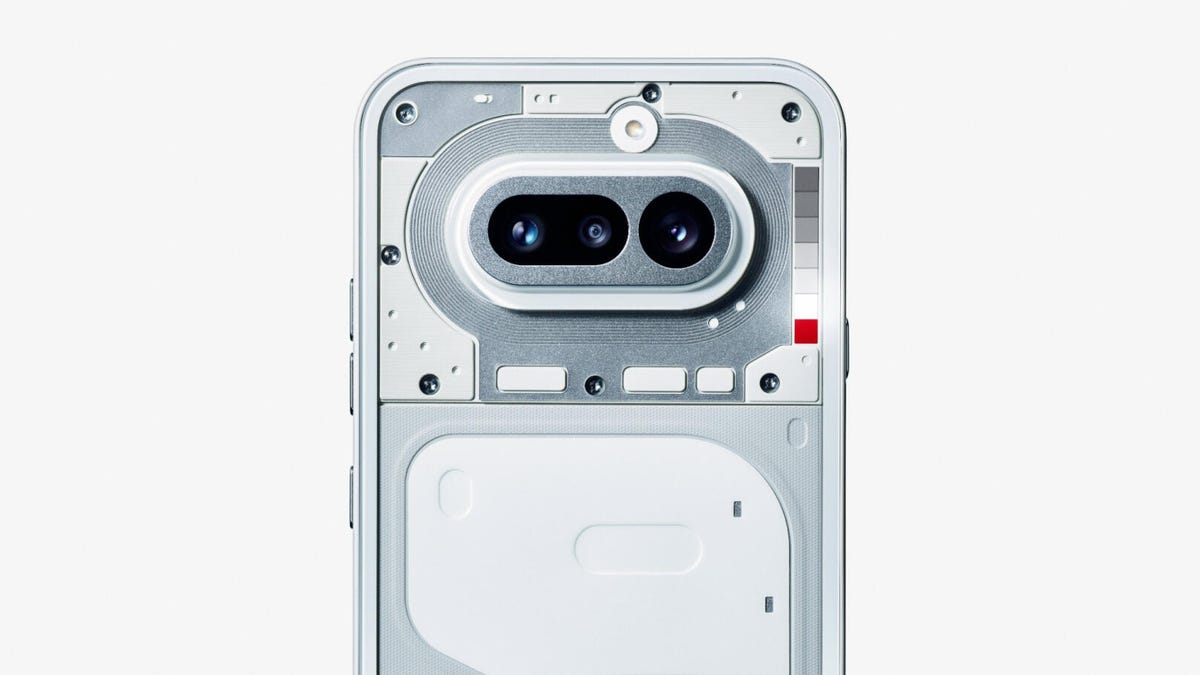
Nothing apparently wants to leave nothing much to the imagination. The British company teased its new 4A phone on Monday, but without the bright pink color some expected. Potential customers did get a look at the latest iteration of the company’s Glyph notification system, the Glyph Bar.
In a post on Monday on X, accompanied by the words, «Built different,» Nothing showed the back of its new 4A phone — in only white and shades of gray. It wasn’t quite the «bold new experimentation of color» that CEO Carl Pei had hinted at on Instagram, which seemed to suggest the 4A might experiment with pink.
The X post also revealed Nothing’s new Glyph Bar, which consists of seven small square LED lights to the right of the camera. The Glyph interface is a light pattern on all Nothing phones. These lights are basically notifications for things like incoming calls and texts, battery charging, deliveries and more, all without turning on the main screen.
A representative for Nothing did not immediately respond to a request for further comment.
The 4A and 4A Pro are the latest models from Nothing, which Pei founded in 2020. The London-based company is known for making Android phones with minimalist designs, a transparent back plate and the Glyph interface. The company is still a niche phone-maker, with a global market share of 1% (2% in India) and a valuation of more than $1.3 billion.
Nothing has differentiated itself with creative touches amid the focus on minimalism, especially in the Glyph interface. When the company launched its first phone — the Phone (1) — in July 2022, the Glyph consisted of five LED strips. The Phone (2) in July 2023 had 11. A significant shift occurred in July 2025 with Phone (3) and the introduction of the Glyph Matrix — a circle of 489 mini-LEDs that enabled the phone to display symbols, such as emoji, for a broader range of notifications.
CNET’s Katie Collins checked out the Phone (3) in the summer of 2025 and was impressed by the array of information the Glyph Matrix could show, including the time, the phone’s battery percentage and pixelated portraits that show who’s calling.
The Glyph Bar on the new 4A phone will be 40% brighter than the Glyph Bar on previous models, Nothing says. The company adds that the bar, with dozens of mini-LEDs housed within the small squares, will allow people to configure more notifications with a less distracting design.
For example, you might set a particular light pattern to let you know when a specific person is calling or when you get a text from another person. You can also configure a light pattern to let you know when a delivery arrives at the front door.
YouTuber Austin Evans, who has more than 5.7 million subscribers to his channel, where he tests all sorts of tech products, says he doesn’t consider Nothing’s Glyph to be «massively useful,» but that it’s a nice change of pace from the typical phone design.
«It’s a nice feature that’s more of a design choice than practical feature but it’s far better than just a slab of glass you just cover with a case,» Evans told CNET. «I quite like the aesthetic that Nothing offers. I feel like smartphones have gotten too bland, clean and boring, and it’s nice to see someone doing something actually different.»
Even though the 4A might not be colorful at the March 5 launch, Pei’s pink phone tease could have been about another model, the 4A Pro. That phone, the most sophisticated ever from the company, will launch along with the 4A at Central Saint Martin’s, the famous London school of art and design, on March 5.
One report said the 4A could feature a Snapdragon 7-series chip, which offers more powerful AI, 5G and gaming capabilities.
Technologies
Today’s NYT Mini Crossword Answers for Tuesday, Feb. 24
Here are the answers for The New York Times Mini Crossword for Feb. 24.
Looking for the most recent Mini Crossword answer? Click here for today’s Mini Crossword hints, as well as our daily answers and hints for The New York Times Wordle, Strands, Connections and Connections: Sports Edition puzzles.
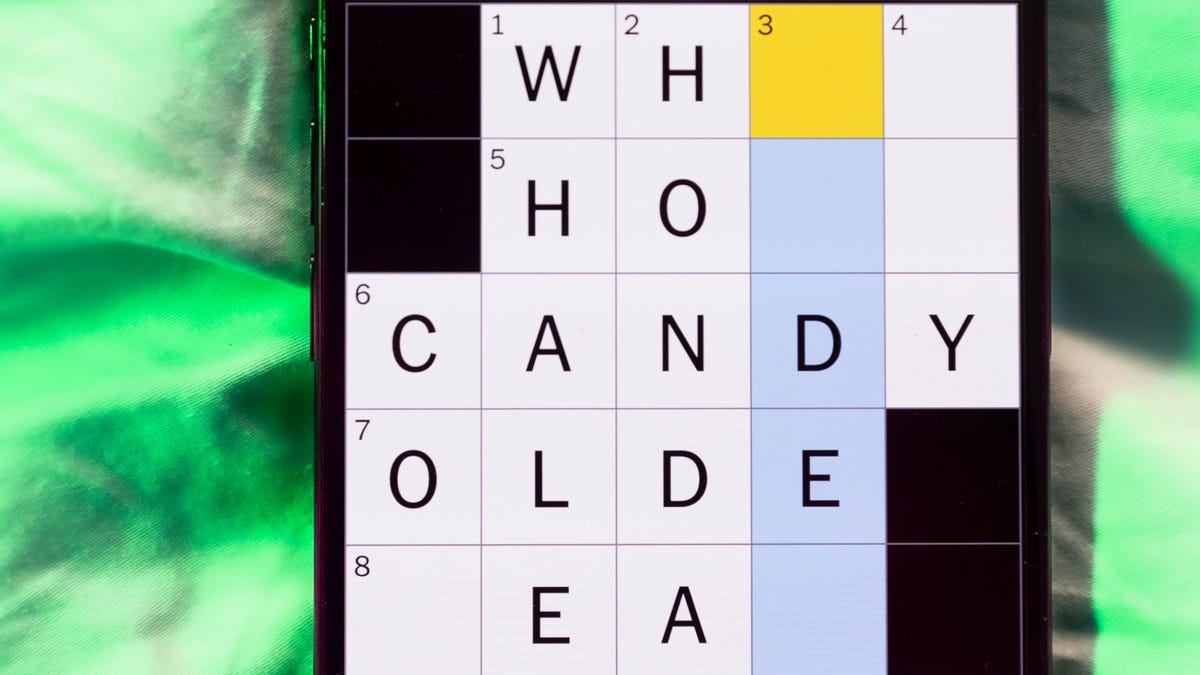
Need some help with today’s Mini Crossword? I thought 5-Down was very tricky, and not really representative of the clue, either. Read on for all the answers. And if you could use some hints and guidance for daily solving, check out our Mini Crossword tips.
If you’re looking for today’s Wordle, Connections, Connections: Sports Edition and Strands answers, you can visit CNET’s NYT puzzle hints page.
Read more: Tips and Tricks for Solving The New York Times Mini Crossword
Let’s get to those Mini Crossword clues and answers.
Mini across clues and answers
1A clue: Goosebumps-inducing
Answer: SCARY
6A clue: Buddy, informally
Answer: HOMIE
7A clue: Rub off, as pencil markings
Answer: ERASE
8A clue: Enjoys a quiet weekend morning, perhaps
Answer: LAZES
9A clue: David Szalay novel that won the 2025 Booker Prize
Answer: FLESH
Mini down clues and answers
1D clue: Section of a bookcase
Answer: SHELF
2D clue: Color similar to salmon that’s also named for a sea creature
Answer: CORAL
3D clue: Leave speechless
Answer: AMAZE
4D clue: Gets out of bed
Answer: RISES
5D clue: «Uff-da!»
Answer: YEESH
Technologies
This AI Tool Doesn’t Help With Homework. It Does It for You
Einstein is a new AI tool that can watch lecture videos, read essays, write papers, complete quizzes and basically take your class for you.

A new AI tool called Einstein is pushing the boundaries of what automation in education looks like. Created by the startup Companion, Einstein does more than generate answers to homework questions. It logs directly into a student’s Canvas account and completes coursework on the student’s behalf.
According to its creators, Einstein operates through its own virtual computer. It can open a browser, navigate class pages, watch lecture videos, read PDFs and essays, write papers, complete quizzes and post replies in discussion boards. Once connected to a student’s account, the system can monitor deadlines and automatically submit assignments.
Unlike chatbots that respond when prompted, Einstein functions more like a digital stand-in for a human student. After setup, it can run in the background with little ongoing input.
«Students are already using AI. We’re just giving them a better version of it,» Companion CEO Advait Paliwal said in a statement.
Read more: ‘Machines Can’t Think for You.’ How Learning Is Changing in the Age of AI
How Einstein works
Einstein connects to Canvas, a widely used learning-management system in colleges and high schools. From there, it reviews course materials and identifies assigned tasks. The AI can analyze lecture recordings, summarize readings and generate written work that matches the assignment requirements.
The company says the system produces original essays with citations and context-aware discussion posts. It can also track new announcements and upcoming deadlines. In practice, this means a student could enroll in an online course and let Einstein handle much — if not all — of the required work.
The technology builds on advances in generative AI, browser automation and so-called autonomous agents that can take multistep actions on behalf of their human counterpart. While many students already use AI tools to brainstorm ideas or check grammar, Einstein moves beyond assistance into complete automation.
«Our companions aren’t simple chatbots,» Paliwal said. «Each one has access to an entire virtual computer with a persistent file system and internet access, so they can actually do things on your behalf. This makes ChatGPT look like a toy.»
A crossroads for academic integrity?
The release of Einstein comes at a time when schools are still adapting to widespread AI use. Since the arrival of powerful language models, educators have debated how to distinguish legitimate support from academic dishonesty. Most policies focus on whether students are using AI to help draft or edit their work, or do it entirely for them.
Einstein complicates that conversation.
If an AI logs in as a student and completes assignments independently, the question shifts from assistance to substitution. Is the tool essentially taking the student’s place?
Not all in education are sounding the alarm, though.
«I think the Canvas method of teaching already has a proclivity for cheating. This change, I think, will ultimately be good because it will force educators to redesign classes to not rely on virtual assignments,» said Nicholas DiMaggio, a PhD student at The University of Chicago Booth School of Business and teaching assistant for a course in consumer behavior this quarter.
DiMaggio said that this may prompt institutions to emphasize in-person work, oral exams or project-based learning instead. Beyond this one tool, schools will have to decide whether to ban such tools outright, integrate them under strict guidelines or rethink how learning is measured in the age of AI.
Read more: How to Use AI to Get Better Grades — Without Cheating
Technologies
Today’s NYT Strands Hints, Answers and Help for Feb. 24 #723
Here are hints and answers for the NYT Strands puzzle for Feb. 24, No. 723.
Looking for the most recent Strands answer? Click here for our daily Strands hints, as well as our daily answers and hints for The New York Times Mini Crossword, Wordle, Connections and Connections: Sports Edition puzzles.
Today’s NYT Strands puzzle is a fun one, and there are only four answers, though some of them are quite long. Some of the answers are difficult to unscramble, so if you need hints and answers, read on.
I go into depth about the rules for Strands in this story.
If you’re looking for today’s Wordle, Connections and Mini Crossword answers, you can visit CNET’s NYT puzzle hints page.
Read more: NYT Connections Turns 1: These Are the 5 Toughest Puzzles So Far
Hint for today’s Strands puzzle
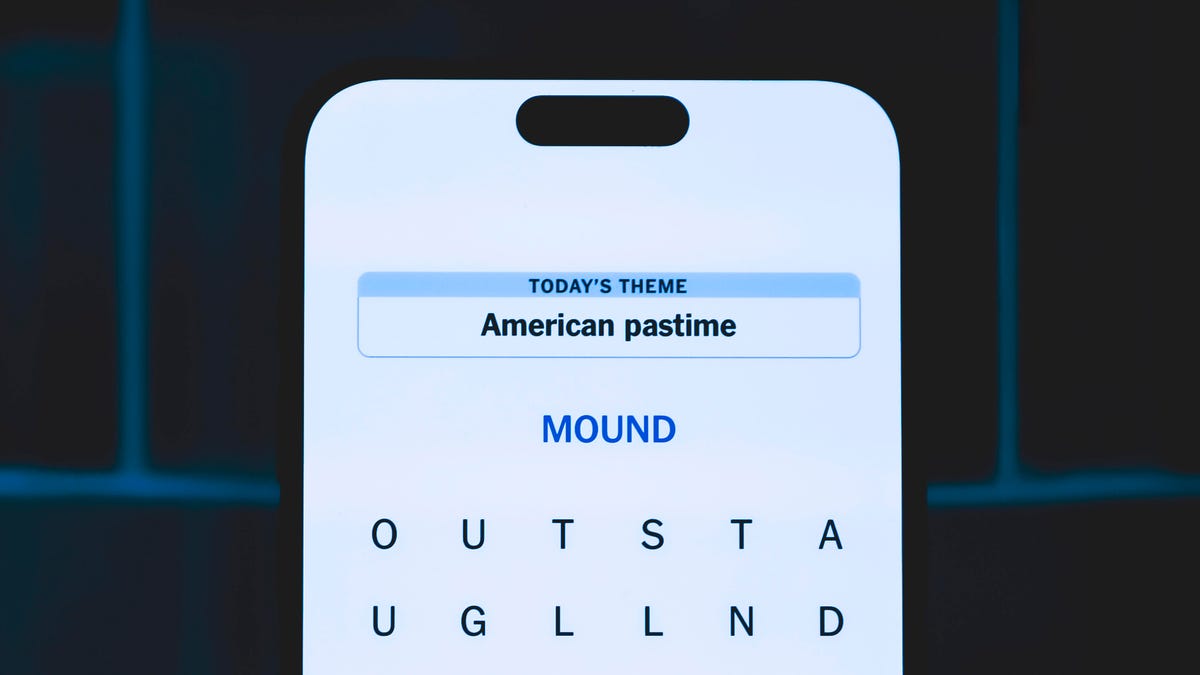
Today’s Strands theme is: Just for reference.
If that doesn’t help you, here’s a clue: Like Wikipedia.
Clue words to unlock in-game hints
Your goal is to find hidden words that fit the puzzle’s theme. If you’re stuck, find any words you can. Every time you find three words of four letters or more, Strands will reveal one of the theme words. These are the words I used to get those hints but any words of four or more letters that you find will work:
- CLOP, TREAT, SHARD, PATE, PATES, DOOR, ROOD, ROOT, DIRECT
Answers for today’s Strands puzzle
These are the answers that tie into the theme. The goal of the puzzle is to find them all, including the spangram, a theme word that reaches from one side of the puzzle to the other. When you have all of them (I originally thought there were always eight but learned that the number can vary), every letter on the board will be used. Here are the nonspangram answers:
- DICTIONARY, THESAURUS, ENCYCLOPEDIA, DIRECTORY
Today’s Strands spangram
Today’s Strands spangram is LOOKITUP. To find it, start with the L that’s the last letter on the farthest vertical row to the left, and wind up.
Don’t miss any of our unbiased tech content and lab-based reviews. Add CNET as a preferred Google source.
-
 Technologies3 года ago
Tech Companies Need to Be Held Accountable for Security, Experts Say
-
 Technologies3 года ago
Best Handheld Game Console in 2023
-
 Technologies3 года ago
Tighten Up Your VR Game With the Best Head Straps for Quest 2
-
 Technologies4 года ago
Black Friday 2021: The best deals on TVs, headphones, kitchenware, and more
-
 Technologies5 лет ago
Google to require vaccinations as Silicon Valley rethinks return-to-office policies
-
 Technologies5 лет ago
Verum, Wickr and Threema: next generation secured messengers
-
 Technologies4 года ago
Olivia Harlan Dekker for Verum Messenger
-
 Technologies4 года ago
iPhone 13 event: How to watch Apple’s big announcement tomorrow


