

Technologies
Microsoft Researchers Figure Out How to Store Data Inside Glass Using Lasers
The researchers say the data could be retrieved from the glass in 10,000 years.


Most of the world’s information is stored digitally right now. Every year, we generate more data than we did the year before. Now, with AI in the picture, a technology that relies on a whole lot of data, the amount of digital information we save is increasing exponentially.
The research arm of Microsoft has been working on a method for data storage that uses a laser to write inside glass. The researchers say that the information written in the glass will last for 10,000 years.
If this method can be scaled for commercial use, it could change how we store the world’s information. Data rot — losing information due to old storage systems — means we have to transfer data at least once every generation to keep it. Otherwise, it gets corrupted with age.
Microsoft’s Project Silica research director Richard Black tells CNET that its work shows long-term digital storage in glass is practical, not just a science experiment.
«One of the biggest challenges with today’s storage is that media wears out and has to be replaced regularly,» Black says. «Glass doesn’t have that problem.»
Using a laser to modify pieces of glass to keep data safe for many lifetimes could have a drastic and lasting impact on all of the information we decide to keep.
Glass memory
Storing data in glass instead of using traditional digital systems is a project Microsoft has been working on for quite a while. Here’s a video that CNET made of the project six years ago, when it was just an idea.
On Feb. 18, Microsoft’s Project Silica published a paper in the science journal Nature that shows real advances in this long-term project. One of the big advances is writing the information on a less expensive material, which makes this technique more affordable.
Originally, the researchers used glass called fused silica. But this material, which is used for components in lasers and semiconductors, is expensive to manufacture, which could make the storage technology cost-prohibitive for many purposes.
Now, the researchers figured out how to store information in a sturdy glass that’s used for kitchen cookware, called borosilicate glass. This material cuts down the cost significantly.
Writing with lasers
To write in the glass, Project Silica has been using femtosecond lasers. A femtosecond is one quadrillionth of a second. This kind of laser emits super-fast pulses. It’s commonly used for eye surgeries because it can cut underneath without damaging the surface.
To store information, the laser cuts voxels inside the glass. A voxel is like a pixel, but it stores information in three dimensions, like a cube, instead of in two dimensions. The video game Minecraft famously uses voxels to create its worlds.
«The key breakthrough is something the team calls phase voxels: tiny, controlled changes written inside ordinary borosilicate glass using a single laser pulse,» Black says. «This makes writing and reading data simpler and faster, and allows the use of low-cost glass rather than specialized materials.»
Because glass is a hard material, it’s not going to change over time. That’s why this storage method could maintain the integrity of the data for much longer than a standard computer system.
To retrieve the information, Project Silica has devised archives to hold the pieces of glass. Robots retrieve the glass, and then a neural network reads the data that’s written inside. Microsoft has a website that shows the robots zooming across the archive to retrieve the glass.
Perpetual storage
Microsoft has already used this storage technique in proofs of concept. In 2019, Project Silica stored the 1978 Superman film inside a piece of glass the size of a drink coaster.
In Svalbard, Norway, this technology is being used for the Global Music Vault project, which is designed to «future-proof» a wide variety of music. Microsoft also says this technology could complement projects like the Global Seed Vault in Svalbard, a doomsday vault that has a repository of seeds from different plants around the world.
«Glass is extremely durable and can tolerate heat, humidity, electromagnetic interference and physical damage much better than hard drives or magnetic tape,» Black says. «It also lasts far longer, meaning data doesn’t need to be recopied every few years.
«Because it’s naturally resistant to tampering and doesn’t require ongoing power or frequent replacement, it’s especially well suited for archives,» he continues. «Over long time scales, it can also be more sustainable than today’s storage technologies.»
Technologies
Today’s NYT Mini Crossword Answers for Tuesday, Feb. 24
Here are the answers for The New York Times Mini Crossword for Feb. 24.
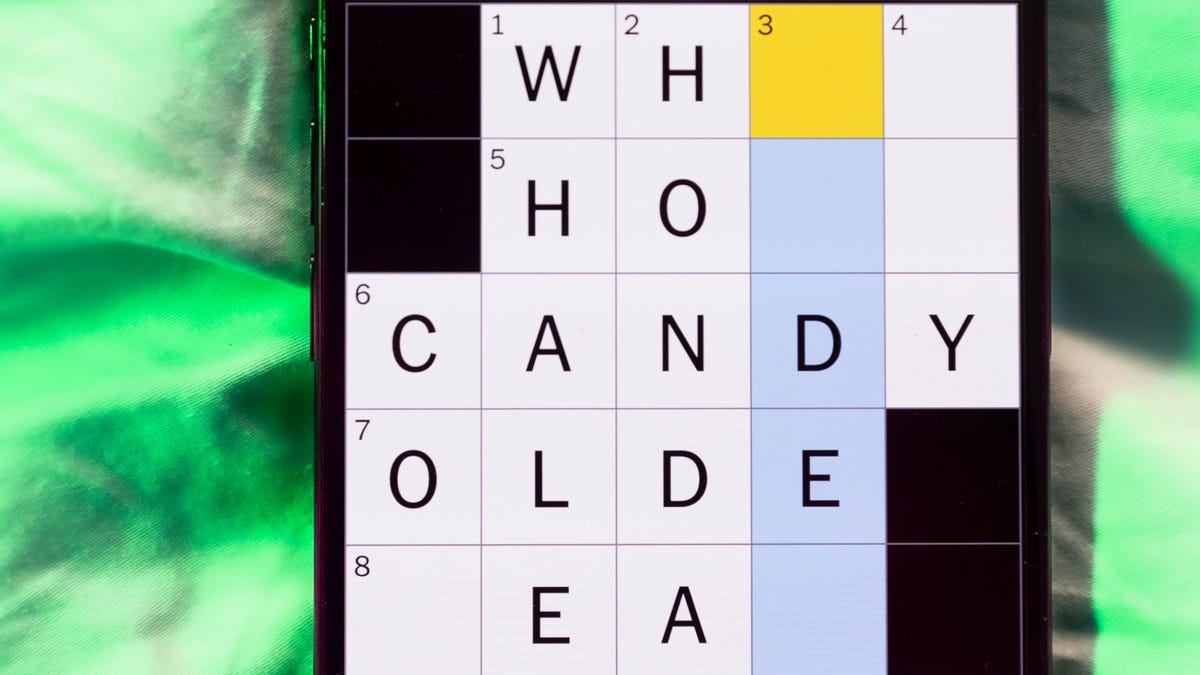
Looking for the most recent Mini Crossword answer? Click here for today’s Mini Crossword hints, as well as our daily answers and hints for The New York Times Wordle, Strands, Connections and Connections: Sports Edition puzzles.
Need some help with today’s Mini Crossword? I thought 5-Down was very tricky, and not really representative of the clue, either. Read on for all the answers. And if you could use some hints and guidance for daily solving, check out our Mini Crossword tips.
If you’re looking for today’s Wordle, Connections, Connections: Sports Edition and Strands answers, you can visit CNET’s NYT puzzle hints page.
Read more: Tips and Tricks for Solving The New York Times Mini Crossword
Let’s get to those Mini Crossword clues and answers.
Mini across clues and answers
1A clue: Goosebumps-inducing
Answer: SCARY
6A clue: Buddy, informally
Answer: HOMIE
7A clue: Rub off, as pencil markings
Answer: ERASE
8A clue: Enjoys a quiet weekend morning, perhaps
Answer: LAZES
9A clue: David Szalay novel that won the 2025 Booker Prize
Answer: FLESH
Mini down clues and answers
1D clue: Section of a bookcase
Answer: SHELF
2D clue: Color similar to salmon that’s also named for a sea creature
Answer: CORAL
3D clue: Leave speechless
Answer: AMAZE
4D clue: Gets out of bed
Answer: RISES
5D clue: «Uff-da!»
Answer: YEESH
Technologies
This AI Tool Doesn’t Help With Homework. It Does It for You
Einstein is a new AI tool that can watch lecture videos, read essays, write papers, complete quizzes and basically take your class for you.

A new AI tool called Einstein is pushing the boundaries of what automation in education looks like. Created by the startup Companion, Einstein does more than generate answers to homework questions. It logs directly into a student’s Canvas account and completes coursework on the student’s behalf.
According to its creators, Einstein operates through its own virtual computer. It can open a browser, navigate class pages, watch lecture videos, read PDFs and essays, write papers, complete quizzes and post replies in discussion boards. Once connected to a student’s account, the system can monitor deadlines and automatically submit assignments.
Unlike chatbots that respond when prompted, Einstein functions more like a digital stand-in for a human student. After setup, it can run in the background with little ongoing input.
«Students are already using AI. We’re just giving them a better version of it,» Companion CEO Advait Paliwal said in a statement.
Read more: ‘Machines Can’t Think for You.’ How Learning Is Changing in the Age of AI
How Einstein works
Einstein connects to Canvas, a widely used learning-management system in colleges and high schools. From there, it reviews course materials and identifies assigned tasks. The AI can analyze lecture recordings, summarize readings and generate written work that matches the assignment requirements.
The company says the system produces original essays with citations and context-aware discussion posts. It can also track new announcements and upcoming deadlines. In practice, this means a student could enroll in an online course and let Einstein handle much — if not all — of the required work.
The technology builds on advances in generative AI, browser automation and so-called autonomous agents that can take multistep actions on behalf of their human counterpart. While many students already use AI tools to brainstorm ideas or check grammar, Einstein moves beyond assistance into complete automation.
«Our companions aren’t simple chatbots,» Paliwal said. «Each one has access to an entire virtual computer with a persistent file system and internet access, so they can actually do things on your behalf. This makes ChatGPT look like a toy.»
A crossroads for academic integrity?
The release of Einstein comes at a time when schools are still adapting to widespread AI use. Since the arrival of powerful language models, educators have debated how to distinguish legitimate support from academic dishonesty. Most policies focus on whether students are using AI to help draft or edit their work, or do it entirely for them.
Einstein complicates that conversation.
If an AI logs in as a student and completes assignments independently, the question shifts from assistance to substitution. Is the tool essentially taking the student’s place?
Not all in education are sounding the alarm, though.
«I think the Canvas method of teaching already has a proclivity for cheating. This change, I think, will ultimately be good because it will force educators to redesign classes to not rely on virtual assignments,» said Nicholas DiMaggio, a PhD student at The University of Chicago Booth School of Business and teaching assistant for a course in consumer behavior this quarter.
DiMaggio said that this may prompt institutions to emphasize in-person work, oral exams or project-based learning instead. Beyond this one tool, schools will have to decide whether to ban such tools outright, integrate them under strict guidelines or rethink how learning is measured in the age of AI.
Read more: How to Use AI to Get Better Grades — Without Cheating
Technologies
Today’s NYT Strands Hints, Answers and Help for Feb. 24 #723
Here are hints and answers for the NYT Strands puzzle for Feb. 24, No. 723.
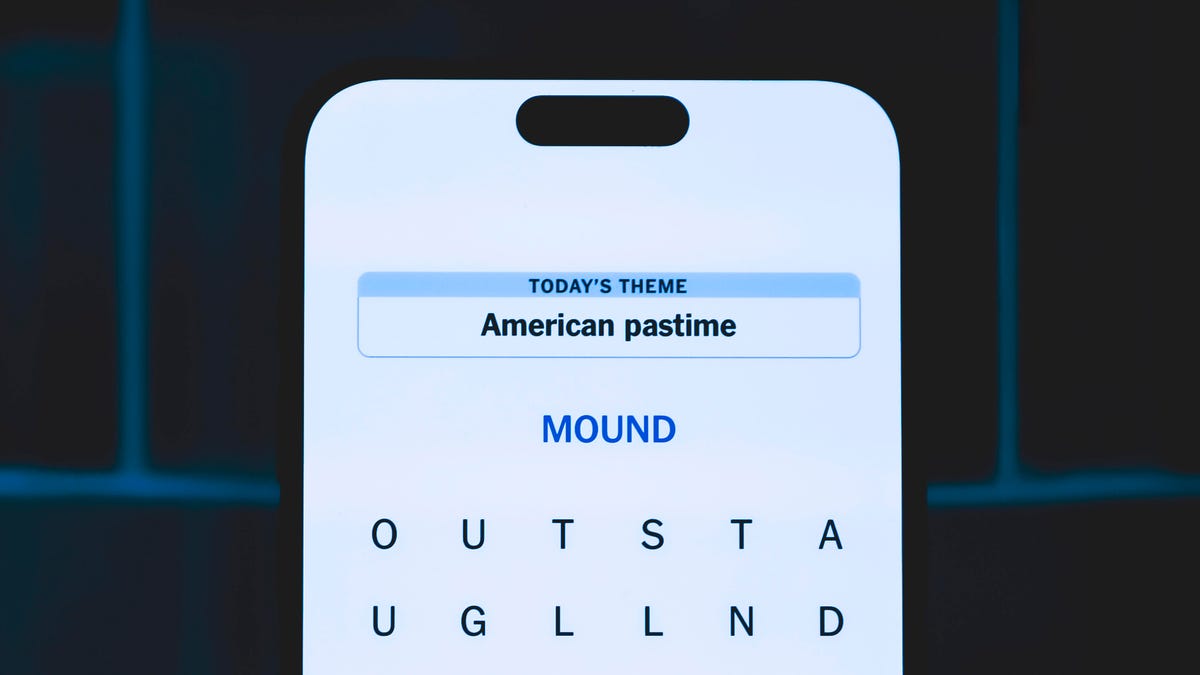
Looking for the most recent Strands answer? Click here for our daily Strands hints, as well as our daily answers and hints for The New York Times Mini Crossword, Wordle, Connections and Connections: Sports Edition puzzles.
Today’s NYT Strands puzzle is a fun one, and there are only four answers, though some of them are quite long. Some of the answers are difficult to unscramble, so if you need hints and answers, read on.
I go into depth about the rules for Strands in this story.
If you’re looking for today’s Wordle, Connections and Mini Crossword answers, you can visit CNET’s NYT puzzle hints page.
Read more: NYT Connections Turns 1: These Are the 5 Toughest Puzzles So Far
Hint for today’s Strands puzzle
Today’s Strands theme is: Just for reference.
If that doesn’t help you, here’s a clue: Like Wikipedia.
Clue words to unlock in-game hints
Your goal is to find hidden words that fit the puzzle’s theme. If you’re stuck, find any words you can. Every time you find three words of four letters or more, Strands will reveal one of the theme words. These are the words I used to get those hints but any words of four or more letters that you find will work:
- CLOP, TREAT, SHARD, PATE, PATES, DOOR, ROOD, ROOT, DIRECT
Answers for today’s Strands puzzle
These are the answers that tie into the theme. The goal of the puzzle is to find them all, including the spangram, a theme word that reaches from one side of the puzzle to the other. When you have all of them (I originally thought there were always eight but learned that the number can vary), every letter on the board will be used. Here are the nonspangram answers:
- DICTIONARY, THESAURUS, ENCYCLOPEDIA, DIRECTORY
Today’s Strands spangram
Today’s Strands spangram is LOOKITUP. To find it, start with the L that’s the last letter on the farthest vertical row to the left, and wind up.
Don’t miss any of our unbiased tech content and lab-based reviews. Add CNET as a preferred Google source.
-
 Technologies3 года ago
Tech Companies Need to Be Held Accountable for Security, Experts Say
-
 Technologies3 года ago
Best Handheld Game Console in 2023
-
 Technologies3 года ago
Tighten Up Your VR Game With the Best Head Straps for Quest 2
-
 Technologies4 года ago
Black Friday 2021: The best deals on TVs, headphones, kitchenware, and more
-
 Technologies5 лет ago
Google to require vaccinations as Silicon Valley rethinks return-to-office policies
-
 Technologies5 лет ago
Verum, Wickr and Threema: next generation secured messengers
-
 Technologies4 года ago
Olivia Harlan Dekker for Verum Messenger
-
 Technologies4 года ago
iPhone 13 event: How to watch Apple’s big announcement tomorrow


