

Technologies
Today’s NYT Connections Hints, Answers and Help for Feb. 23, #988
Here are some hints and the answers for the NYT Connections puzzle for Feb. 23 #988.

Looking for the most recent Connections answers? Click here for today’s Connections hints, as well as our daily answers and hints for The New York Times Mini Crossword, Wordle, Connections: Sports Edition and Strands puzzles.
Today’s NYT Connections puzzle is full of fun clues, but they aren’t that easy to sort into groups. Read on for clues and today’s Connections answers.
The Times has a Connections Bot, like the one for Wordle. Go there after you play to receive a numeric score and to have the program analyze your answers. Players who are registered with the Times Games section can now nerd out by following their progress, including the number of puzzles completed, win rate, number of times they nabbed a perfect score and their win streak.
Read more: Hints, Tips and Strategies to Help You Win at NYT Connections Every Time
Hints for today’s Connections groups
Here are four hints for the groupings in today’s Connections puzzle, ranked from the easiest yellow group to the tough (and sometimes bizarre) purple group.
Yellow group hint: Chow down.
Green group hint: Dunce cap-shaped.
Blue group hint: Fake it, maybe.
Purple group hint: Smooch site.
Answers for today’s Connections groups
Yellow group: Eat voraciously.
Green group: Conical things.
Blue group: Pose.
Purple group: Settings for a kiss.
Read more: Wordle Cheat Sheet: Here Are the Most Popular Letters Used in English Words
What are today’s Connections answers?
The yellow words in today’s Connections
The theme is eat voraciously. The four answers are bolt, gorge, inhale and scarf.
The green words in today’s Connections
The theme is conical things. The four answers are Christmas tree, cone, party hat and volcano.
The blue words in today’s Connections
The theme is pose. The four answers are bluff, front, masquerade and posture.
The purple words in today’s Connections
The theme is settings for a kiss. The four answers are Blarney Stone, mistletoe, New Year’s Eve and wedding.
Technologies
Today’s NYT Strands Hints, Answers and Help for Feb. 23 #722
Here are hints and answers for the NYT Strands puzzle for Feb. 23, No. 722.
Looking for the most recent Strands answer? Click here for our daily Strands hints, as well as our daily answers and hints for The New York Times Mini Crossword, Wordle, Connections and Connections: Sports Edition puzzles.
Musicians, today’s NYT Strands puzzle should hit the right notes with some of you. Some of the answers are difficult to unscramble, so if you need hints and answers, read on.
I go into depth about the rules for Strands in this story.
If you’re looking for today’s Wordle, Connections and Mini Crossword answers, you can visit CNET’s NYT puzzle hints page.
Read more: NYT Connections Turns 1: These Are the 5 Toughest Puzzles So Far
Hint for today’s Strands puzzle
Today’s Strands theme is: Strike a chord.
If that doesn’t help you, here’s a clue: Rockers sometimes smash them.
Clue words to unlock in-game hints
Your goal is to find hidden words that fit the puzzle’s theme. If you’re stuck, find any words you can. Every time you find three words of four letters or more, Strands will reveal one of the theme words. These are the words I used to get those hints but any words of four or more letters that you find will work:
- CENT, CENTS, CONK, RITE, DOTE, CITE, CITES, BITE, BOGS, STOCK, HEAD, BOARD
Answers for today’s Strands puzzle
These are the answers that tie into the theme. The goal of the puzzle is to find them all, including the spangram, a theme word that reaches from one side of the puzzle to the other. When you have all of them (I originally thought there were always eight but learned that the number can vary), every letter on the board will be used. Here are the nonspangram answers:
- BODY, NECK, PEGS, STRING, HEADSTOCK, FRETBOARD, BRIDGE
Today’s Strands spangram
Today’s Strands spangram is GUITAR. To find it, start with the G that is four letters down on the far-left vertical row, and wind across.
Technologies
Keep Your Essentials Handy With This Spigen Magnetic Pouch Organizer While It’s Just $29
Never struggle to find your keys, cards or smartphone with this compact magnetic pouch.
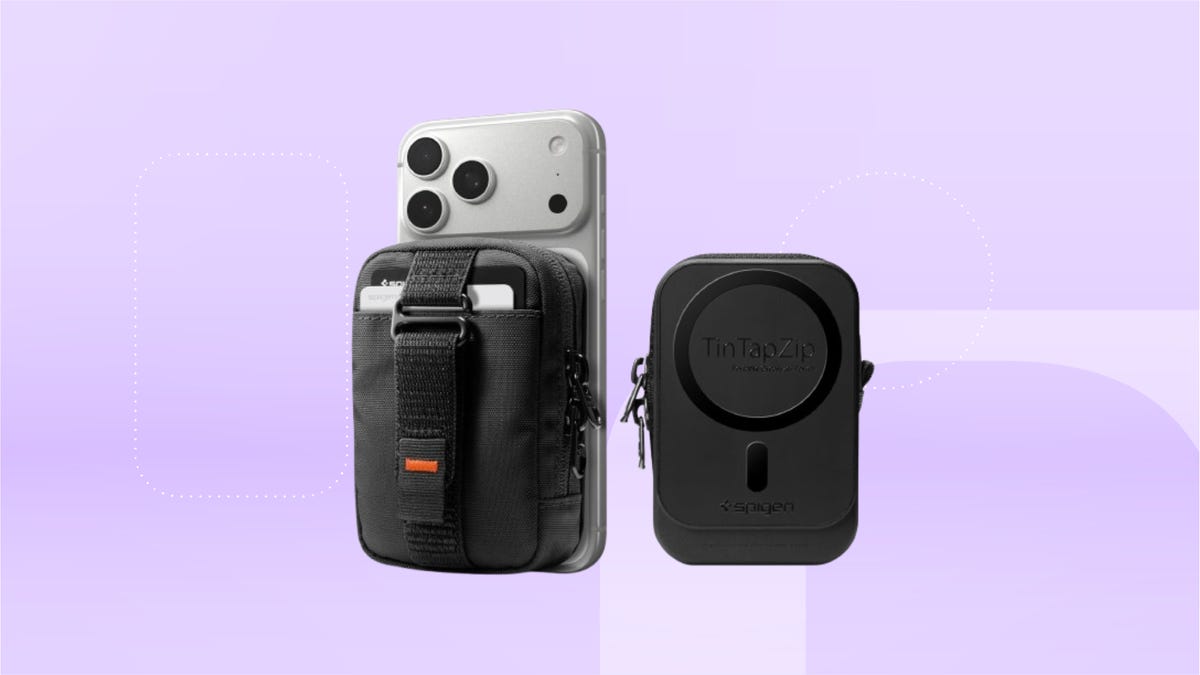
We’ve spotted this Spigen magnetic organizing pouch for just $29 at Amazon right now, down from $33. It works with iPhones 12 and up, Pixel phones and other MagSafe smartphones. Amazon deals on accessories like this one tend to sell out quickly, so we suggest acting fast.
This Spigen magnetic pouch has two exterior slots for up to two cards. Its inner pouch can fit one pair of AirPods, other similarly sized earbuds and up to five cards stacked together. Made with nylon fabric, this pouch adds almost no bulk to your backpack or purse. The outermost layer includes a small strap that lets you safely carry your phone with just one hand when you need just the essentials.
On top of these practical elements, this pouch allows you to tap and pay using the exterior card without having to take it out of its slot. RFID protection prevents unwanted scans from other cards so your cash is always protected.
Looking for more practical phone accessories but not sure if this deal makes the cut? Check out our list of the best MagSafe iPhone accessories.
Why this deal matters
This Spigen MagSafe couch makes a great travel, commute or exercise accessory. It’s made to keep your essentials right by your phone without adding bulk to your bag. At $4 off, this is a modest discount and makes now an excellent time to shop if you need an easier way to stay organized.
Technologies
Apple Watch vs. Oura Ring: After Months of Testing, I’ve Finally Made My Choice
The one feature that tipped the scales for me in the Apple Watch vs. Oura Ring debate might not be a dealbreaker for everyone.
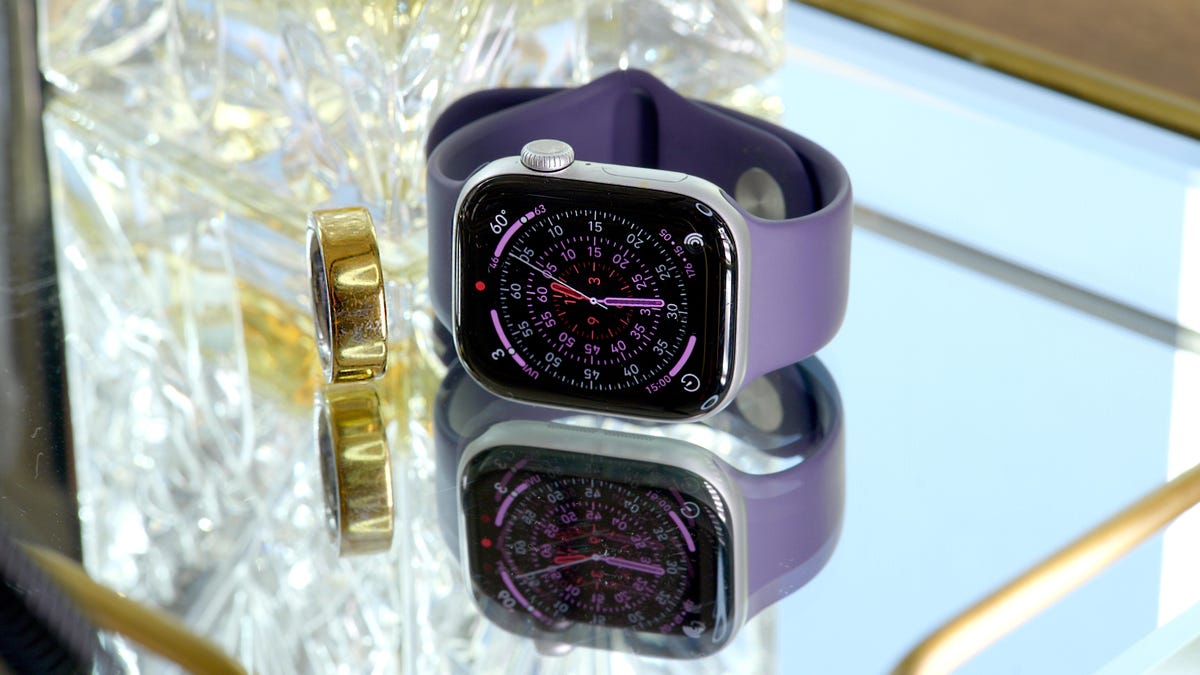
I’ve spent months wearing the Oura Ring and the Apple Watch simultaneously, and as an indecisive, overanalyzing wearable reviewer, I’m finally ready to tackle the existential question: smart ring versus smartwatch. But I’m going to do it in the most diplomatic, overly thorough way possible, because the «right» choice really depends on what you care about.
The more time I’ve spent wearing both, the clearer it’s become that these two wearables aren’t direct competitors so much as complements. They live under the same wearable-health umbrella, but are completely different flavors in both form and function.
They’re also expensive. At around $500 for the Oura Ring 4 and roughly $400 for the Apple Watch Series 11, buying both isn’t realistic for most people. So instead of crowning a universal winner, it makes more sense to break down what each one does best and who each would serve better.
Thanks largely to consumer wearables, we can now track incredibly specific health data that, until recently, just wasn’t accessible outside of clinical settings. Because these devices are designed to be worn every day, they can surface long-term trends and help us draw meaningful connections between our habits and how our bodies actually respond.
Smartwatches, fitness bands, smart rings and even newer form factors like smart shoes are all different ways to collect health and fitness data. They’re essentially trying to solve the same problem, just from different angles. And while there’s no single «holy grail» wearable that does everything perfectly yet, those various flavors exist for a reason — each prioritizes a different aspect of health, fitness or daily life.
The loud multitasker vs. the demure overachiever
The Apple Watch and Oura Ring track many of the same health metrics, but having a screen allows the Apple Watch to do a lot more (for better or worse). It’s essentially a pared-down version of your iPhone (minus the doomscrolling). It can handle notifications, calls, mobile payments, finding your phone and, yes, telling time. It’s also one of my favorite workout buddies because I view and use the live metrics to push myself during exercise.
But all that information makes it an in-your-face kind of wearable. It vibrates. It buzzes. It constantly wants your attention. And if you don’t charge it daily, it’s dead to the world. That means there are plenty of moments when it’s off your wrist and not collecting data, especially at night, when I’m more likely to forget it on the charger or just not want to wear a watch to bed.
The Oura Ring is the complete opposite. It’s demure. It’s quiet. And honestly, it’s mostly «dumb» jewelry without the phone app. You might not even hear from it for a full week until it needs a charge. Most of the time, I genuinely forget I’m wearing it. And when you do finally hear from it, it’s probably because your body needs attention.
Because it fades into the background, it stays on your body a lot more, and that consistency is everything when it comes to long-term health tracking.
Long-term health: Where the Oura ring really shines
Oura builds a baseline of your body’s status quo over time, so when something deviates, it’s immediately obvious. The app does a great job of connecting the dots and explaining what that data actually means, whether it’s early signs of illness, assessing energy levels for training or detecting subtle changes across the menstrual cycle.
When my readiness score dips, it almost always means I’m about to get sick or already fighting something. The app doesn’t just show the evidence (multiple health metrics trending off), it goes a step further by recommending a game plan: taking a rest day and putting the ring into Rest Mode, which pauses activity goals until you recover. That nudge has forced me to take rest days when I probably would’ve pushed through otherwise, just delaying my recovery.
There is a catch, though. To unlock that deeper analysis, Oura requires a $6 monthly subscription. Without it, you’ll still see the headline scores, but much of the context —the «why» behind those numbers— lives behind a paywall. Apple, by contrast, doesn’t charge a subscription for any of its health data.
The same is true for temperature and menstrual cycle tracking. You still log your period manually, but the way the Oura app charts temperature variations makes it easy to pinpoint the exact day ovulation occurs, marked by a sudden rise in basal body temperature. Seeing this mapped out has made me more aware of how hormonal changes affect my body beyond just my usual PMS. That «random» bloating and headache in the middle of a cycle? Ovulation.
The Apple Watch offers retroactive ovulation tracking too, but it requires very consistent sleepwear, which isn’t always realistic. Even when the data is there, it’s harder to connect the dots in the moment.
That’s the broader pattern with Apple’s health features. Many of the same metrics are available in the Health app, but they’re mostly presented as standalone data points. The Vitals app comes closest to tying things together by grouping heart rate, breathing rate, sleep, and temperature and flagging when something’s off. But it requires several consecutive nights of sleep tracking and stops short of telling you what to do with that information.
You can pause your move rings when you’re not feeling well, but there’s no prompt nudging you to take that rest day, so I haven’t given myself that luxury because it’s not a prompt like it is on the Oura ring.
The Apple Watch reigns for fitness tracking and day-to-day use
When it comes to daily habits that actually move the needle and improve that long-term health (aka fitness), the Oura Ring doesn’t even come close.
The Apple Watch is miles ahead when it comes to tracking workouts. Having your metrics in real time helps guide my workouts. I also use pace alerts, heart-rate zones and distance to push myself in the moment and get the most out of each session. Plus, it has a massive library of third-party apps to help you through each type of workout, whether it’s downloading offline trail maps or mapping your surf time to the tides app.
It also has safety features that can be genuinely life-saving, like fall detection, crash detection, location sharing and backtrack that helps you find your way back.
Oura tracks activity too, but only barely. It detects workouts automatically and surfaces them after the fact in the Oura app. You have to remember to manually confirm them to get credit. It’s fairly accurate at detecting my runs because my heart rate clearly peaks, but for lower-intensity workouts like Pilates, it often misses the mark. I get more activity credit for lugging laundry up my stairs or wrestling my kids into a sweater before we leave than for an actual session. You can also start a workout manually in the app, but there’s no live biometric data, and I rarely bother.
Bottom line: Which would I choose?
The Oura Ring wins at identifying long-term health trends and flagging subtle changes related to illness, recovery or cycle tracking. Its subtle design and week-long battery life mean it fades into the background, which makes consistency easy.
The Apple Watch shines in everyday life. It keeps you connected, doubles as a wallet, helps you find your phone and absolutely dominates fitness tracking.
If I had it my way, I’d wear the Apple Watch during the day and the Oura Ring at night. But if I were forced to pick just one, I’d choose the Apple Watch. At this stage in life, I’ll take anything that can offset the mental load of working full-time with three kids, even if it’s something as simple as helping me find my phone. Plus, I need all the help I can get to stay in shape. Fitness is my current priority, and it’s the foundation that helps keep all those longer-term health trends in check.
But this is just a stage for me, and I’m not setting my answer in stone. Your own season of life and priorities will ultimately shape which one makes the most sense for you.
-
 Technologies3 года ago
Tech Companies Need to Be Held Accountable for Security, Experts Say
-
 Technologies3 года ago
Best Handheld Game Console in 2023
-
 Technologies3 года ago
Tighten Up Your VR Game With the Best Head Straps for Quest 2
-
 Technologies4 года ago
Black Friday 2021: The best deals on TVs, headphones, kitchenware, and more
-
 Technologies5 лет ago
Google to require vaccinations as Silicon Valley rethinks return-to-office policies
-
 Technologies5 лет ago
Verum, Wickr and Threema: next generation secured messengers
-
 Technologies4 года ago
Olivia Harlan Dekker for Verum Messenger
-
 Technologies4 года ago
iPhone 13 event: How to watch Apple’s big announcement tomorrow


