
Technologies
Sony’s New WF-1000XM6 Earbuds Just Jumped to the Top of My Best Earbuds List
They aren’t cheap at $330, but Sony’s new flagship noise-canceling earbuds may very well be the best out there right now. Here’s why.
Our Experts


- Maggie Award for Best Regularly Featured Web Column/Consumer

Pros
- Completely redesigned with upgraded components and slightly better fit than XM5
- Top-notch sound that’s accurate, well-balanced and natural
- Excellent noise-canceling and voice-calling performance with 8 microphones (4 in each bud)
- Decent battery life
Cons
- Pretty pricey
- Included eartips may not be a good match for all ears
- Android-only spatial audio features
When I first heard that Sony was coming out with new sixth-generation 1000X earbuds, I wasn’t quite sure what to expect. Companies like Bose and Apple have basically stuck with the same design — or a similar one anyway — for their flagship noise-canceling buds for the last few years. But Sony’s new WF-1000XM6 buds are completely overhauled inside and out and look nothing like the models that preceded them.
The end result is impressive: While expensive at $330, the WF-1000XM6 not only features great sound and excellent noise canceling, but their voice-calling performance is also top-notch. Are they the best noise-canceling earbuds out there right now? Aside from a caveat or two, I’d say so, though the AirPods Pro 3 remain a safer bet for Apple users from a fit and features standpoint (not to mention a lower price tag).
The WF-1000XM6’s design shift
Both the buds and their case are a little plain-looking. I’m OK with that, and from a practical standpoint, I liked that the case is flat on both its top and bottom, making it easy to place down on a flat surface, such as a wireless charging pad.
The XM5s have a partially glossy finish, but these have a full matte finish, which I prefer. That said, they don’t have anything to distinguish them as the XM4s did with their eye-catching copper ring that served as a microphone housing.
More intricately molded than your typical stemless buds, Sony says the new shape (11% slimmer overall than the XM5s and more aerodynamic to reduce wind noise) conforms better to the natural curves of your ears, and I agree with that. I also appreciated the little ridge along the top side of each bud that allows you to grip it better, so the bud is less likely to slip from your fingers when putting them in or taking them out.
The buds have touch controls that are nicely responsive and are equipped with ear-detection sensors that pause audio when you take a bud out of your ear and resume playback when you put it back in. They’re IPX4 splashproof and seem fine for gym use, though I probably wouldn’t recommend them for running because I wasn’t certain they’d stay in my ears with a lot of jostling.
Like a lot of high-end buds, they’re a little beefy and will stick out of your ears a bit. That didn’t really bother me. But once again, I can’t say I was thrilled with Sony’s included eartips, which are the same firm foam tips that were included with the XM5s. I was able to get a fairly secure fit with them, but I didn’t get a truly tight seal, according to the seal test in Sony’s SoundConnect app for iOS and Android. I didn’t find the tips super comfortable, either, so I went with a pair of large-size silicone tips from another set of buds I’d tested (I favor tips from Sennheiser and Bowers & Wilkins, which are wider and more rounded). With the tip change, sound quality and noise-canceling performance improved noticeably, which makes me wonder why Sony doesn’t include more tip options.
To be clear, many people should get a good fit from one of the included tips. But my ears fall into the 10% to 20% of ears that just aren’t a great match for Sony’s tips. And, as you may have read or heard me say too many times, it’s crucial to get a tight seal to get optimal sound quality and noise-canceling performance. That’s especially true of these buds because they deliver some real wow factor if you get a tight seal.
Upgraded components lead to better performance
Aside from the external makeover, the XM6s are upgraded on the inside with new drivers, a 3X more powerful QN3e chip with improved analog conversion technology, eight microphones — up from six — and an improved bone-conduction sensor that helps with voice-calling performance. The «HD Noise Canceling» QN3e processor is paired with Sony’s Integrated Processor V2, which now supports 32-bit processing compared with 24-bit processing. The same V2 chip is also found in Sony’s XM5 earbuds and its flagship WH-1000XM6 over-ear headphones.
Sony says the new XM6 buds feature 25% «further reduction in noise» than the XM5s, with gains made in the mid-to-high frequency range. I spent a lot of time comparing the XM6s to other leading premium noise-canceling earbuds, including Apple’s excellent AirPods Pro 3, the Bose QuietComfort Ultra Earbuds (2nd Gen) and Bowers and Wilkins’ Pi8. Both the AirPods Pro 3 and QuietComfort Ultra Earbuds have superb noise canceling. Sony says the XM6s have the best noise canceling for earbuds right now, based on international testing standards.
Alas, I don’t have access to expensive technical equipment to test noise-canceling performance, so I have to rely on a few less scientific tests, including comparing how well each set of buds muffles the noisy HVAC unit in my kitchen and wearing the buds in the noisy streets of New York and on the subway. In the HVAC test, they were all really close, though I thought the Sony had a very slight edge.
In the streets of New York, it’s really hard to sense that the noise canceling is any better than what you get with those competing models. All three are very close, and your experience could vary with the quality of the seal you get. It’s quite possible that these Sonys are able to muffle a wider range of frequencies with slightly more vigor, but they still can’t muffle higher frequencies as well as lower frequencies. That means you can still hear people’s voices and higher-pitched noises, albeit at significantly reduced volume levels.
I do think Sony has also made some improvements to its transparency mode. Apple’s is still the gold standard, but Sony’s now sounds quite natural at its highest setting. Previously, you had to play around with the level to find the most natural setting (the sound from the outside world was actually augmented at the highest setting).
Sony also now has an auto ambient mode that’s similar to Apple’s Adaptive Audio mode, which automatically adjusts the level of ambient sound filtered in, depending on the level of noise around you. Plus, you can toggle on a voice pass-through mode that filters in voices while suppressing ambient noise.
Superior sound
When it comes to sound, both the AirPods Pro 3 and Bose QC Ultras sound excellent, with the Ultras sounding smooth and clean across a variety of music genres. Some people complained that the AirPods Pro 3’s sound was a little too aggressive (not enough warmth) compared with the AirPods Pro 2’s, with more dynamic bass and treble and slightly recessed mids. I preferred the AirPods Pro 3’s sound — to my ears, it has a little more clarity and definition, and I was OK with the more energetic bass. But everybody has their own sound preferences, and you can experience some listening fatigue if you feel the treble has too much sizzle or the bass kicks too hard in the wrong way.
I think the XM6’s sound is better and more special than both the AirPods Pro 3’s and QC Ultra’s sound. Music sounds more accurate and natural with better bass extension, overall clarity and refinement, along with a wide soundstage where all the instruments seem well-placed. Additionally, I found the XM6s came across slightly more dynamic and bold-sounding than the Bowers & Wilkins Pi8 buds, which also feature accurate, natural sound for Bluetooth earbuds.
As I said, all the models mentioned here sound impressive, but the tonal quality varies a bit. While companies often talk about how their buds and headphones deliver audio the way artists intended you to hear it, some do it better than others and are able to live up to audiophile standards — or close to them anyway. Such is the case for the WF-1000X6 buds.
I tested them with an iPhone 16 Pro and a Google Pixel 9, listening to a variety of music genres on Spotify using the lossless audio setting. They handled everything with aplomb (virtually no distortion) and didn’t cause any listening fatigue. My connection was also rock solid with no Bluetooth hiccups. While I didn’t experience, any major connectivity issues with the XM5s, some people apparently did, and Sony says it equipped the XM6s with a new wireless antenna that’s 1.5x larger than XM5’s antenna to improve the wireless connection, particularly in crowded signal areas (there are certain intersections in new York City that have a lot of wireless interference and can cause Bluetooth hiccups).
Top-notch voice-calling performance
They’re also hard to beat for voice-calling performance, which I also grade an A. Callers said my voice sounded mostly natural and clear, and they didn’t really hear any background noise when I wasn’t speaking (and only a little when I did speak). If you want to hear a test, check out the one I did with fellow CNET editor Josh Goldman in my video review of the XM6 buds.
It’s worth noting that the buds have a side-tone feature, so you can hear your voice in the buds when you’re talking. And like previous 1000X models, these have Sony’s speak-to-chat feature, which lowers the volume of your audio and goes into ambient mode when you start to have a conversation with someone.
Also, Sony has redesigned the venting of the earbuds to increase airflow and reduce internal noises such as «footsteps and chewing sound.» I did notice some improvements there (yes, a lot of people don’t like having their ears feel occluded and hearing their footsteps).
As far as audio codecs go, the buds support AAC, SBC and LDAC as well as multipoint Bluetooth pairing, which allows pairing to two devices to the buds simultaneously. Sony says the buds are «ready for LE Audio,» which means that at some point they should support the LC3 audio codec and Auracast broadcast audio with a firmware update.
Sony has continued to streamline its SoundConnect app for iOS and Android, so it’s a little more user-friendly, though there are still a lot of settings to play around with, including scene-based listening settings and various equalizer settings.
Battery life is rated at up to 8 hours at moderate volume levels, with an extra two charges in the case. That’s a little better than what competing models offer and, again, the case supports wireless charging.
Sony WF-1000XM6 final thoughts
The XM6s are noticeably improved across the board from the XM5s, which I still like. And while these buds are certainly expensive, they’re pretty hard to beat from a performance standpoint across all the key areas, including sound quality, noise canceling and voice-calling, which is why I’ve awarded them an Editors’ Choice.
The one thing I can’t tell you is just how well they’ll fit your ears. While the AirPods Pro 3 don’t offer quite as good sound quality, they’re less expensive and are in some ways a safer pick for Apple users, as their lightweight stem design tends to fit a wide range of ears comfortably. They also have more features overall, including a Hearing Aid mode, Apple’s new Live Translation feature and personalized spatial audio (Sony’s spatial audio features are Android-only).
That said, if you’re able to get a good fit with a comfortable seal, the XM6s are truly impressive earbuds. They may just be the best out there at the moment.
Technologies
YouTubers Sue Amazon, Claim AI Tool Was Trained on Scraped Videos
The lawsuit alleges that Amazon bypassed YouTube protections to collect content for its generative AI video system.

A group of YouTube creators is suing Amazon, accusing the tech giant of secretly scraping their videos to train its AI video model without permission.
The proposed class action lawsuit, filed in federal court in Seattle, alleges Amazon used automated tools to download and extract data from millions of YouTube videos to build and improve its Nova Reel generative AI system — a model that can create short videos from text prompts and images.
At the center of the complaint is how that data was obtained. The plaintiffs claim that Amazon bypassed YouTube’s protections using virtual machines and rotating IP addresses to avoid detection, effectively sidestepping the platform’s safeguards against bulk downloading.
The lawsuit was brought by several creators, including Ted Entertainment (the company behind the H3 Podcast and h3h3 Productions), as well as individual YouTubers and channel operators. They argue that the alleged scraping violated copyright law and the Digital Millennium Copyright Act, and are seeking damages as well as an injunction to stop the practice.
Amazon did not respond to a request for comment.
The case lands at a pivotal moment for generative AI, as courts weigh whether training on copyrighted material qualifies as fair use and how much control creators retain once their work is used to build these systems. The disputes have often centered on written material, which has been at the center of the AI revolution for several years, while AI video generators such as OpenAI’s Sora and Google’s Veo have emerged more recently.
The lawsuit is one of dozens testing the boundaries of AI training practices, alongside high-profile cases from authors, artists and news organizations, including lawsuits against OpenAI and Meta, all circling the same unresolved question: Where does fair use end and infringement begin?
Technologies
The Galaxy Z TriFold Is Back. You Can Buy It From Samsung Soon
The $2,899 phone paused its sales in March after selling through its inventory, but Samsung is bringing it back to its online store.
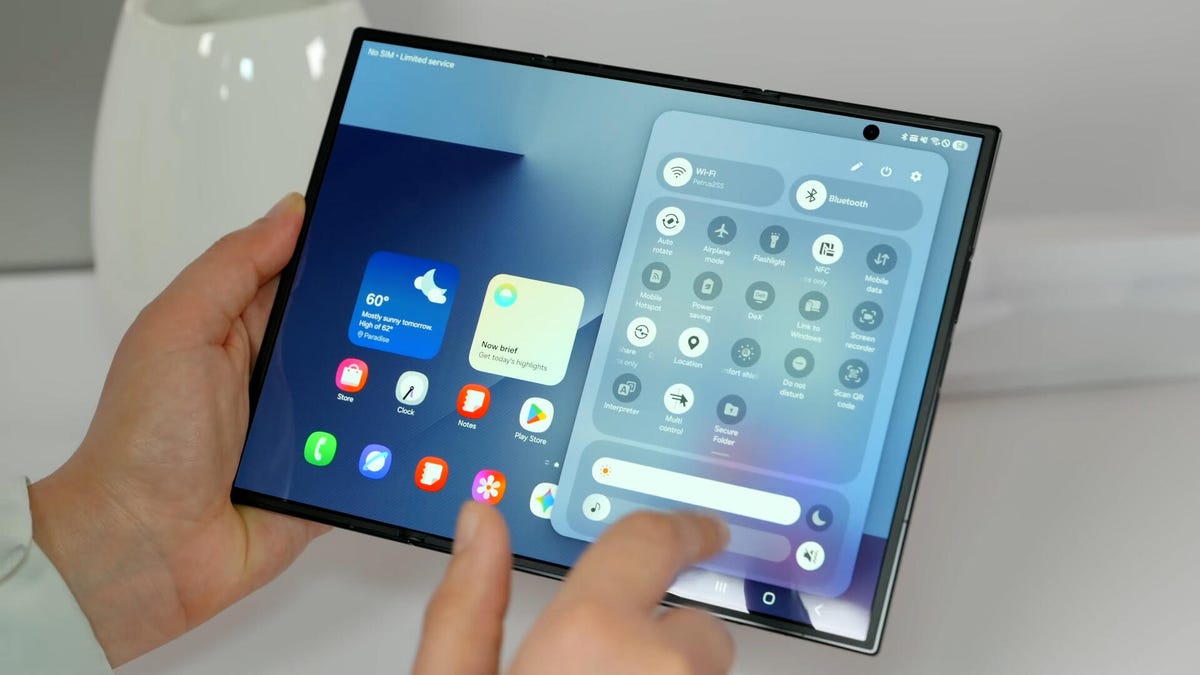
Samsung’s $2,899 Galaxy Z TriFold is going back on sale on Friday, following a halt to its sales in March after the foldable phone sold through its inventory. Samsung has announced the TriFold’s return with a countdown clock on the phone’s online store page along with a Wednesday newsletter email sent to customers.
The initial pause, which Samsung said at the time was related to the TriFold being a «super-premium device in limited quantities,» happened after just three months of availability. The TriFold first went on sale in South Korea on Dec. 12 and then arrived in Samsung’s US store on Jan. 30. The TriFold sold out in the US within minutes of going on sale — which I know personally after joining my colleagues that morning in an attempt to buy it. Thankfully Senior Reporter Abrar Al-Heeti succeeded, and then reviewed the TriFold.
It’s unclear whether the Galaxy Z TriFold is now permanently returning to Samsung’s online store or if it is again on sale until its stock sells through. Given that the phone is very expensive, and unfolds to reveal a large, 10-inch display, it wouldn’t be surprising if its stock will be in limited quantities. We’ve asked a Samsung representative to clarify and will update if we hear more.
The Galaxy Z TriFold’s return also comes ahead of the summer season when we expect a slew of other foldable phones: Samsung typically refreshes its Galaxy Z Fold and Z Flip line in July or August, and Motorola has announced its first book-style Razr Fold phone will also debut during the season. And Apple’s rumored iPhone Fold (or perhaps iPhone Ultra based on latest rumors) could also be teased later this year.
Technologies
Help Us Crown the Most Loved Headphones and Earbuds of 2026
Got a pair you swear by? Take our People’s Picks survey to help us find a winner.
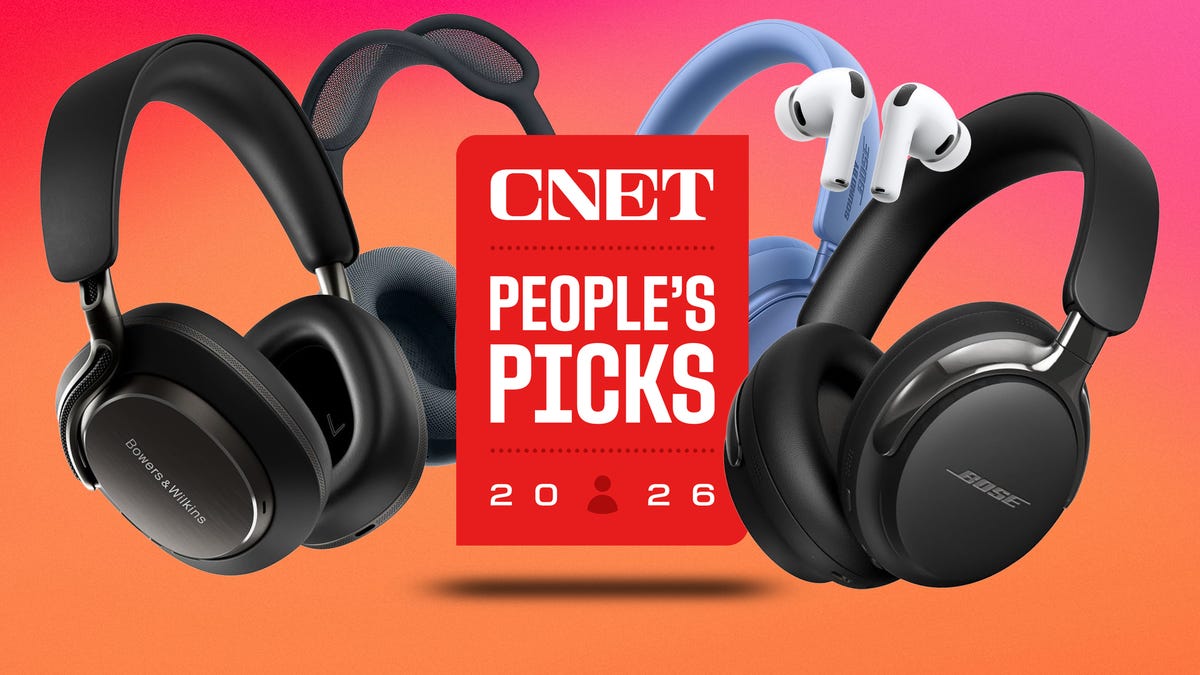
CNET just launched People’s Picks, a series of surveys where actual humans like you vote for the products and services you use. Starting in April, we want you to weigh in on your favorite headphones and earbuds. We’ll pick a winner based on which ones you love the most.
Why we want to hear from you
Our writers and editors test hundreds of products each year, but your real-world experience with these devices is something we can’t replicate in our labs. You’ve used these headphones at the gym, on your commute to work and on long flights, and that perspective is invaluable. Your voice helps others know about the headphones or earbuds you love, too.
«I review a lot of headphones and earbuds for CNET, and there are plenty of great models from the top brands in this survey that I rate highly. I’m always curious about what models people ultimately choose and why, so I’m excited to get your feedback and learn the results of this survey,» says David Carnoy, CNET’s executive editor and headphones expert.
With our survey, we’ll collect answers from real-world users like you. The headphones and earbuds chosen through our 3-minute survey will be featured in our People’s Picks roundup of the top picks based on your recommendation.
Make your voice heard
Whether you swear by a pair of $25 earbuds or love a pair of high-end headphones, your pick counts. The survey takes just a few minutes to complete, and after we gather enough information, we’ll tally the results and publish the winners.
Not sure what to pick? Check out our Best Headphones to revisit your favorites before voting.
-
 Technologies3 года ago
Tech Companies Need to Be Held Accountable for Security, Experts Say
-
 Technologies3 года ago
Best Handheld Game Console in 2023
-
 Technologies3 года ago
Tighten Up Your VR Game With the Best Head Straps for Quest 2
-
 Technologies4 года ago
Black Friday 2021: The best deals on TVs, headphones, kitchenware, and more
-
 Technologies5 лет ago
Google to require vaccinations as Silicon Valley rethinks return-to-office policies
-
 Technologies5 лет ago
Verum, Wickr and Threema: next generation secured messengers
-
 Technologies4 года ago
Olivia Harlan Dekker for Verum Messenger
-
 Technologies4 года ago
The number of Сrypto Bank customers increased by 10% in five days