

Technologies
Dragon Quest 7: Reimagined Review: A Nostalgic JRPG That Balances Charm and Modernization
Square Enix revisits another Dragon Quest game with a remake that improves graphics, quickens the pace and adds plenty of quality-of-life upgrades.

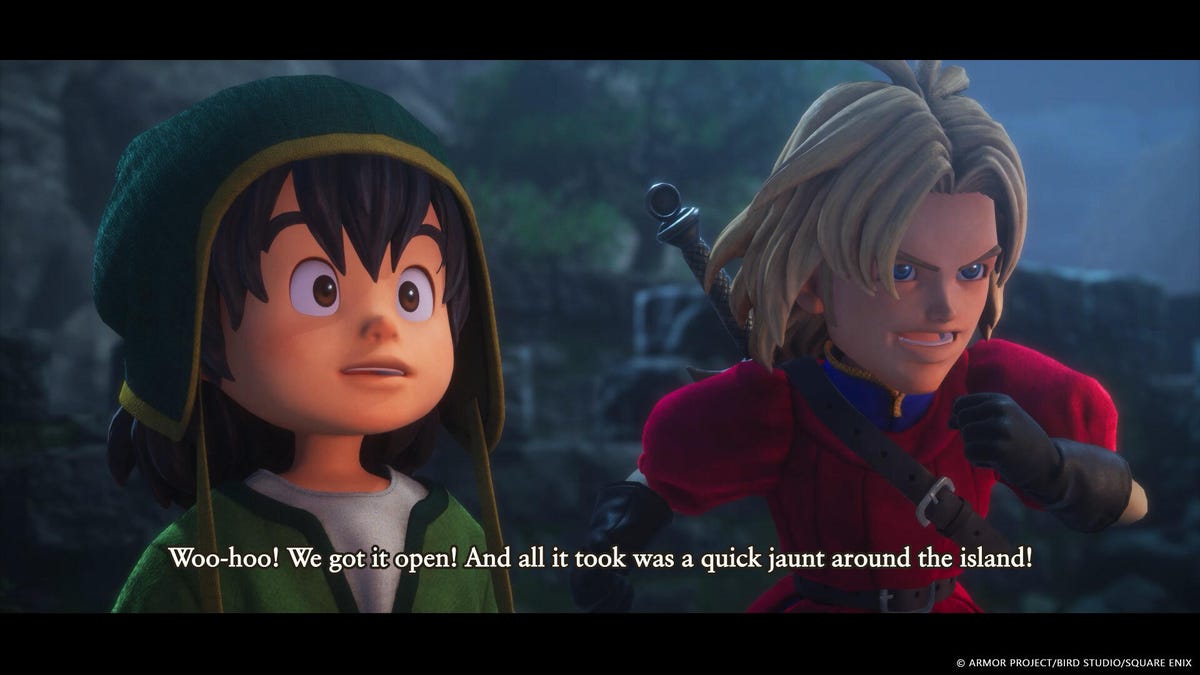
There has been a resurgence of interest in lengthy, character-driven Japanese RPGs. Square Enix, the originator of the subgenre, has leaned fully into that momentum through remakes of the franchise that helped define it, Dragon Quest. After remakes of the first three entries from the series’ classic NES era, the company has turned its attention to a fan favorite originally released for the PlayStation in 2000, Dragon Quest 7.
Dragon Quest 7: Reimagined is Square Enix’s latest remake of the Dragon Quest series, following 2024’s Dragon Quest 3 remake and last year’s Dragon Quest 1-2 remake. If you’re wondering why the publisher skipped ahead to the seventh game, it could be because DQ7 was remade back in 2016 for the 3DS, possibly making it an easier lift following the success of the earlier remakes.
DQ7 marks an interesting time for the franchise, as the first six games are split between two different story arc trilogies. With the seventh game, developer Enix (before it merged with Square) took a different approach by making a game that would stand on its own. Since then, the franchise entries that followed have had no narrative ties to the others. For that reason, DQ7 is often viewed as being more in the middle of the pack when ranking the Dragon Quest games. Still, it’s one of the better entries in a legendary JRPG franchise.
This quest is not dragging on and on
Right off the bat, what I and others who played the original version of DQ7 when it launched in 2000 will want to know is: Does it take three hours to reach the first battle in Dragon Quest 7: Reimagined?
The answer is no. When DQ7 first came out, many players were turned off by the game’s sheer audacity of clicking through so much storyline before they really got to do anything other than talk to someone. This time around, you’re looking at about an hour of prologue before you’ll first swing your sword, which is an improvement over the Nintendo DS version released in the U.S. in 2016, where it took closer to two hours. Keep in mind, waiting a whole hour before the first fight is still a long time for any game, but there is a lot of story and character setup to get through.
This reduction in time before the first battle is one of many quality-of-life upgrades that have become standard for the Dragon Quest remakes. Other improvements include the ability to quickly defeat enemies without starting a battle if your party is at a higher level than they are, teleporting to previous locations directly from the map and quest markers that clearly indicate where to go. These are welcome additions for newcomers and players with less time to spend grinding, though some DQ7 diehard fans may take issue with how streamlined the game has become.
Like the other Dragon Quest remakes, the visuals have improved significantly. The character designs remain faithful to the original PSX version and the 3DS remake. Square Enix took the 3D models from the 3DS remake and added much more detail. The areas have also been improved to give a more open-world feel. Characters are fully animated and display a wider range of emotions during cutscenes. While the cinematics will not make your jaw drop, they are still effective in delivering the Dragon Quest charm the series is known for. Add the melodies that date back to the first game released in 1986, and you have a treat for both the eyes and ears.
Imagining more of a story
If there is a downside to the streamlining, it’s that it makes the game’s lack of a strong story more apparent.
DQ7, like others in the franchise, follows the JRPG trope of a hero who starts from humble beginnings and eventually rises to defeat a god. In this case, the protagonist is the son of a fisherman. He is joined by Maribel, the mayor’s daughter, and Kiefer, the prince of the Kingdom of Estard.
The group discovers a Shrine of Mysteries that transports them back in time to islands that no longer exist. Each island has its own dilemma, usually leading to a battle with a boss monster. Once resolved, the island reappears in the present, with townfolk recounting past horrors while living seemingly carefree lives. Each island also contains fragments from both past and present that must be collected to unlock a new island.
Once all the islands are discovered, an evil power reemerges and the group of young people who only recently learned to fight must defeat it to save the world.
In a way, DQ7’s story isn’t that dissimilar to previous games, where every time a hero visits a new town, trouble arises that must be dealt with. Here, it’s islands instead of towns. Because these islands are small and the dilemmas are confined, DQ7 lacks a grand narrative buildup. Instead, it presents smaller side stories, some more dramatic than others. One early island has players investigating a strange tradition surrounding a volcano, leading to a fight with a Fire Spirit. Another island features townfolk transformed into animals, and vice versa, due to a monster’s curse.
The story serves the game, but it isn’t particularly compelling. Still, there’s charm in a game where the son of a fisherman is destined to kill a god.
Get a job, hero
One of the most interesting aspects of DQ7 is the vocations system, its version of the franchise’s class mechanics. Every character starts with a job, and as they progress, they can change jobs. Each job has its own stats, abilities and a «Let Loose!» move, a special ability that charges after a certain number of attacks or damage received. For example, the hero’s special move at the start of the game creates a barrier to protect the party from a single attack.
There are more than 20 vocations, each divided into tiers. Beyond the starting job, there are beginner, intermediate and advanced classes. Beginner examples include Martial Artist, Mage and Warrior. As you level up a class, more abilities unlock, and once it maxes out, it’s time to pick another.
If you max out two beginner jobs, like Thief and Sailor, you unlock the intermediate class Pirate. Mastering two or three intermediate vocations then unlocks advanced jobs, such as Hero and Champion.
If that sounds like a lot, it is. Fortunately, a new feature called Moonlighting lets a character start a new job while keeping skills from another. Considering that the game can take about 40 hours to finish, the ability to switch classes frequently and reward players for building up their characters is a smart move by Square Enix.
And yes, you read that right — the game only takes around 40 hours to complete. Square Enix trimmed areas and dungeons, making this both an easier version to finish and one that isn’t as faithful to the original, which could take more than 80 hours to finish. Fans of the original may grumble at these changes, but it cuts down on some of the more monotonous parts of the game.
Dragon Quest 7: Reimagined is easily recommended for JRPG fans, though everyone else may want to approach with caution. The drawn-out storyline keeps you playing but doesn’t quite convince you of the game’s greatness, which could be a turnoff for gamers who aren’t happy grinding their way through side stories.
Dragon Quest 7: Reimagined is available now on PC, PS5, Nintendo Switch and Xbox Series X|S consoles for $60.
Technologies
Trump Phone Looks Different, Costs More and Won’t Be Made in the US, Report Shows
The T1 looks different (again), and its specs and pricing have changed, according to a model handset shown in a video call to The Verge.

Trump Mobile executives have shown off a handset they say is a near-production model of the T1 phone to The Verge, according to a report Friday afternoon. Among other appearance changes, the smartphone appears to have a completely different camera array design than the one still shown on the T1 purchase page.
The Verge says it spoke with two Trump Mobile executives over a video call, where they held up the phone so it could be seen. The interview follows doubts about whether the phone will ever be released, after its second advertised launch date of the end of 2025 came and went without any status updates.
As of Feb. 6, the phone’s webpage still lists it as being released «later this year,» which is the same thing it said last year.
Trump Mobile launched in June last year with a $47.45-a-month mobile phone plan, and currently sells refurbished Apple and Samsung phones ranging from $369 to $629 while the wait for the T1 phone continues.
The Trump phone, initially announced to be made in the US, was supposed to launch in August 2025. But when it became clear that domestic large-scale smartphone manufacturing would not be possible, Trump Mobile dropped the «made in the US» claim.
Now, the site simply calls the phone «Proudly American» without specifying what that means for a device manufactured overseas.
The site is still accepting $100 deposits on the phone. The website claims it will have a 6.25-inch punch-hole AMOLED screen, a 50MP main rear camera with two 2MP lenses, a 16MP front-facing camera, a 5,000-mAh battery, a fingerprint sensor, face unlock and 256GB of expandable storage.
According to the model that The Verge saw on its video call this week, however, the screen looks a little larger and has a waterfall display with curved edges, as well as a vertical camera array. That one will reportedly run on a Qualcomm Snapdragon 7-series processor, feature 512GB of storage, and include a 50MP front-facing camera. According to the report, the T1 logo will also disappear before launch, though the phone will keep the American flag imagery.
It’ll also now cost more, according to the report. Those who have already put down a $100 deposit are locked into the $499 total price, but everyone else who wants this golden Trump phone will pay an unknown amount more. It will be under $1,000, the report says.
According to the executives speaking to The Verge, the phone has been delayed because the company decided to take its time and «skip our first initial entry-level phone that we were going to kind of introduce and be quick to the market.» They told The Verge it’s being made in a «favored nation» with «final assembly» in Florida. It’s unclear what qualifies another nation as «favored» to handle most of the assembly of the T1 phone.
There’s no word yet on the T1 phone’s launch date, but its sellers are reportedly eyeing a March release window.
You can read the full report on The Verge, including photos of the phone as it currently looks. Trump Mobile did not immediately respond to a request for comment.
Technologies
Apple’s AI Health Coach Project May Need a Wellness Check
The company’s ambitious plans to introduce a virtual health coach may be going back to the drawing board, according to a report.

Apple is scaling back and rethinking its ambitious plans to introduce an AI-powered health coach, according to a Bloomberg report by Mark Gurman citing anonymous sources privy to the company’s plans.
The project, known inside Apple as Mulberry, was first reported last year, with the company expected to roll together health-related AI features as a coach or assistant. But now, Bloomberg reports, that project will be broken down into individual features introduced over time, as it has done with tools such as the sleep apnea and hearing tests added to Apple Watch and Apple AirPods.
A representative for Apple did not immediately respond to a request for comment.
Bloomberg’s sources point to a change in leadership over Apple’s health technology. Veteran services head Eddy Cue is overseeing those projects and addressing pressure from competitors pushing into the health space, including Oura and Peloton as well as tech giants like Google and OpenAI, which just launched ChatGPT Health.
(Disclosure: Ziff Davis, CNET’s parent company, filed a lawsuit against OpenAI in April, alleging that it infringed Ziff Davis copyrights in training and operating its AI systems.)
Apple was also said to have built a studio for a revamped health services app that would have included virtual and video wellness instructions, and integration with existing health tools and Apple devices. It is likely that some of that content and software will still be released publicly, just not in one package, according to Bloomberg.
Technologies
Here’s Why Taylor Swift’s Opalite Music Video Isn’t on YouTube Yet
The video is now available on Apple Music and Spotify, but it isn’t landing on YouTube for a couple more days.

YouTube may still be where many people instinctively go to watch music videos, but when Taylor Swift dropped her video for Opalite on Friday, it was noticeably absent from the platform. In fact, it won’t be landing on YouTube until Sunday, two days after its release on other streaming platforms.
So, why is the Opalite music video only available on Apple Music and Spotify Premium right now? It likely has to do with a disagreement between YouTube and Billboard, which ranks the most popular songs and albums of the week.
In December, Billboard shifted its charting methodology so paid and subscription-based streams are weighted even more favorably than ad-supported streams. Billboard started weighting paid streams higher than ad-supported ones in 2018. This most recent shift narrows that ratio from 1:3 to 1:2.5, putting numbers from platforms like YouTube at more of a disadvantage.
Following the change, YouTube posted a statement about its dispute with Billboard, calling the charting company’s methodology «an outdated formula.» It added, «This doesn’t reflect how fans engage with music today and ignores the massive engagement from fans who don’t have a subscription…We’re simply asking that every stream is counted fairly and equally, whether it is subscription-based or ad-supported—because every fan matters and every play should count.»
YouTube said that starting Jan. 16, 2026, its data would «no longer be delivered to Billboard or factored into their charts.»
For artists like Taylor Swift who count on early streams to boost their Billboard rankings, that could make YouTube a less appealing option for debuting new content. So the Opalite video will still be making its way to YouTube, but you’ll have to wait until Sunday, Feb. 8, at 8 a.m. ET to watch it there. Representatives for Swift, YouTube and Billboard did not immediately respond to a request for comment.
YouTube has an ad-supported streaming service as well as a paid one called YouTube Premium. However, even YouTube Premium subscribers can’t see the Opalite music video on Friday. (I’m a subscriber and can confirm it’s nowhere to be found.) According to Statista, in March 2025, YouTube had 125 million paid subscribers across its Premium and Music services. (YouTube Music is included in its Premium subscription.) That pales in comparison with the estimated 2.5 billion total users on YouTube, the majority of whom still rely on that ad-supported offering.
It remains to be seen whether or when YouTube and Billboard will mend their affairs and whether, in the words of Taylor Swift in Opalite, «this is just a temporary speed bump.»
-
 Technologies3 года ago
Tech Companies Need to Be Held Accountable for Security, Experts Say
-
 Technologies3 года ago
Best Handheld Game Console in 2023
-
 Technologies3 года ago
Tighten Up Your VR Game With the Best Head Straps for Quest 2
-
 Technologies4 года ago
Black Friday 2021: The best deals on TVs, headphones, kitchenware, and more
-
 Technologies5 лет ago
Google to require vaccinations as Silicon Valley rethinks return-to-office policies
-
 Technologies5 лет ago
Verum, Wickr and Threema: next generation secured messengers
-
 Technologies4 года ago
Olivia Harlan Dekker for Verum Messenger
-
 Technologies4 года ago
iPhone 13 event: How to watch Apple’s big announcement tomorrow


