
Technologies
This Lip-Syncing Robot Face Could Help Future Bots Talk Like Us
If we’re going to live and work with humanoid robots, maybe they should talk like humans, too.
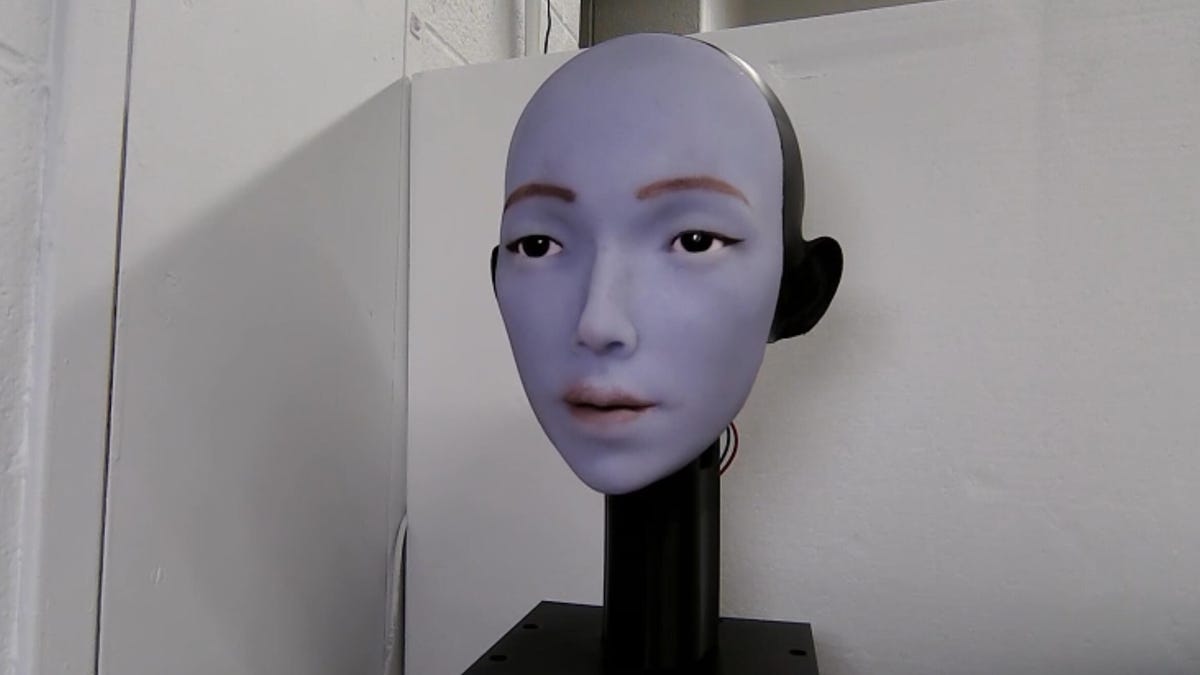
The slight unease that creeps up your spine when you see something that acts human but isn’t remains a big issue in robotics — especially for robots built to look and speak like us.
That peculiar feeling is called the uncanny valley. One way roboticists work to bridge that valley is by matching a robot’s lip movements with its voice. On Wednesday, Columbia University announced research that delves into how a new wave of robot faces can speak more realistically.
Hod Lipson, a Columbia engineering professor who worked on the research, told CNET that a main reason why robots are «uncanny» is they don’t move their lips like us when they talk. «We are aiming to solve this problem, which has been neglected in robotics,» Lipson said.
Don’t miss any of our unbiased tech content and lab-based reviews. Add CNET as a preferred Google source.
This research comes as hype has been spiking around robots designed for use at home and work. At CES 2026 last week, for instance, CNET saw a range of robots designed to interact with people. Everything from the latest Boston Dynamics Atlas robot to household robots like those that fold laundry, and even a turtle-shaped bot designed for environmental research, made appearances at the world’s biggest tech show. If CES is any indication, 2026 could be a big year for consumer robotics.
Central among those are humanoid robots that come with bodies, faces and synthetic skin that mimics our own. The CES cohort included human-looking robots from Realbotix that could work information booths or provide comfort to humans, as well as a robot from Lovense designed for relationships that’s outfitted with AI to «remember» intimate conversations.
But a split-second mismatch between lip movement and speech can mean the difference between a machine that you can form an emotional attachment to and one that’s little more than an unsettling animatronic.
So if people are going to accept humanoid robots «living» among us in everyday life, it’s probably better if they don’t make us mildly uncomfortable whenever they talk.
Lip-syncing robots
To make robots with human faces that speak like us, the robot’s lips must be carefully synced to the audio of its speech. The Columbia research team developed a technique that helps robot mouths move like ours do by focusing on how language sounds.
First, the team built a humanoid robot face with a mouth that can talk — and sing — in a way that reduces the uncanny valley effect. The robot face, made with silicone skin, has magnet connectors for complex lip movements. This enables the face to form lip shapes that cover 24 consonants and 16 vowels.
To match the lip movements with speech, they designed a «learning pipeline» to collect visual data from lip movements. An AI model uses this data for training, then generates reference points for motor commands. Next, a «facial action transformer» turns the motor commands into mouth motions that synchronize with audio.
Using this framework, the robot face, called Emo, was able to «speak» in multiple languages, including languages that weren’t part of the training, such as French, Chinese and Arabic. The trick is that the framework analyzes the sounds of language, not the meaning behind the sound.
«We avoided the language-specific problem by training a model that goes directly from audio to lip motion,» Lipson said. «There is no notion of language.»
Why does a robot even need a face and lips?
Humans have been working alongside robots for a long time but they have always looked like machines, not people — the disembodied and very mechanical-looking arms on assembly lines or the chunky disc that is a robot vacuum scooting around our kitchen floors.
However, as the AI language models behind chatbots have become more prevalent, tech companies are working hard to teach robots how to communicate with us using language in real time.
There’s a whole field of study called human-robot interaction that examines how robots should coexist with humans, physically and socially. In 2024, a study out of Berlin that used 157 participants found that a robot’s ability to express empathy and emotion through verbal communication is critical for interacting effectively with humans. And another 2024 study from Italy found that active speech was important for collaboration between humans and robots when working on complex tasks like assembly.
If we’re going to rely on robots at home and at work, we need to be able to converse with them like we do with each other. In the future, Lipson says, research with lip-syncing robots would be useful for any kind of humanoid robot that needs to interact with people.
It’s also easy to imagine a future where humanoid robots are identical to us. Lipson says careful design could ensure that people understand they’re talking to a robot, not a person. One example would be requiring humanoid robots to have blue skin, Lipson says, «so that they cannot be mistaken for a human.»
Technologies
Today’s NYT Connections: Sports Edition Hints and Answers for April 8, #562
Here are hints and the answers for the NYT Connections: Sports Edition puzzle for April 8 No. 562.
Looking for the most recent regular Connections answers? Click here for today’s Connections hints, as well as our daily answers and hints for The New York Times Mini Crossword, Wordle and Strands puzzles.
Today’s Connections: Sports Edition is a tough one. If you’re struggling with today’s puzzle but still want to solve it, read on for hints and the answers.
Connections: Sports Edition is published by The Athletic, the subscription-based sports journalism site owned by The Times. It doesn’t appear in the NYT Games app, but it does in The Athletic’s own app. Or you can play it for free online.
Read more: NYT Connections: Sports Edition Puzzle Comes Out of Beta
Hints for today’s Connections: Sports Edition groups
Here are four hints for the groupings in today’s Connections: Sports Edition puzzle, ranked from the easiest yellow group to the tough (and sometimes bizarre) purple group.
Yellow group hint: Working out.
Green group hint: Cover your face.
Blue group hint: NFL players.
Purple group hint: Leap.
Answers for today’s Connections: Sports Edition groups
Yellow group: Exercises in singular form.
Green group: Sporting jobs that require masks.
Blue group: Hall of Fame defensive ends.
Purple group: ____ jump.
Read more: Wordle Cheat Sheet: Here Are the Most Popular Letters Used in English Words
What are today’s Connections: Sports Edition answers?
The yellow words in today’s Connections
The theme is exercises in singular form. The four answers are crunch, plank, situp and squat.
The green words in today’s Connections
The theme is sporting jobs that require masks. The four answers are catcher, fencer, football player and goaltender.
The blue words in today’s Connections
The theme is Hall of Fame defensive ends. The four answers are Dent, Peppers, Strahan and Youngblood.
The purple words in today’s Connections
The theme is ____ jump. The four answers are broad, high, long and triple.
Technologies
The $135M Google Data Settlement Site Is Live — See If You’re Eligible
Use the settlement website to select your preferred payment method, and you may end up $100 richer.
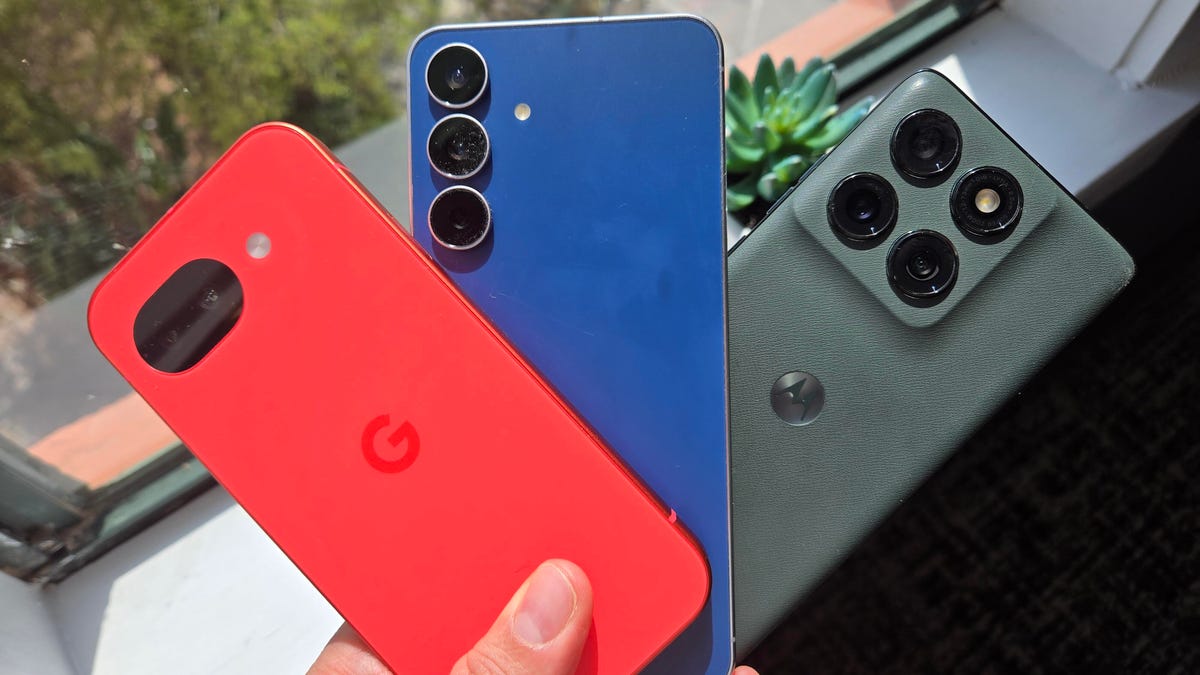
You can now file a claim in the $135 million Google data settlement. The case centers on claims that Android devices transmitted user data without consent. Specifically, the class action lawsuit Taylor v. Google LLC contends that Google’s Android devices passively transferred cellular data to Google without user permission, even when the devices were idle. While not admitting fault, Google reached a preliminary settlement in January, agreeing to pay $135 million to about 100 million US Android phone users.
The official settlement website for the lawsuit is now live. The final approval hearing won’t occur until June 23, when the court will consider whether Google’s settlement is fair and listen to objections. After that, the court will decide whether to approve the $135 million settlement.
In the meantime, if you qualify and want to be paid as part of the settlement, you can select your preferred payment method on the official website. There, you can find information on speaking at the June 23 court hearing and on how to exclude yourself or write to the court to object by May 29.
As part of the settlement, Google will update its Google Play terms of service to clarify that certain data transfers do occur passively even when you’re not using your Android device, and that cellular data may be relied upon when not connected to Wi-Fi. This can’t always be disabled, but users will be asked to consent to it when setting up their device.
Google will also fully stop collecting data when its «allow background data usage» option is toggled off.
Who can be part of the settlement?
In order to join the Taylor v. Google LLC settlement, you must meet four qualifications:
- Be a living, individual human being in the US.
- Have used an Android mobile device with a cellular data plan.
- Have used the aforementioned device at any time from Nov. 12, 2017, to the date when the settlement receives final approval.
- You’re not a class member in the Csupo v. Google LLC lawsuit, which is similar but specifically for California residents.
The final approval hearing is on June 23, so you can add your payment method until then. The hearing’s date and time may change, and any updates will be posted on the settlement website.
If you choose to do nothing, you will still be issued a settlement payment, but you may not receive it if you don’t select a payment method.
How much will I get paid?
It’s not currently known exactly how much each settlement class member will receive, but the cap is $100. Payments will be distributed after final court approval and after any appeals are resolved.
After all administrative, tax and attorney costs are paid, the settlement administrator will attempt to pay each member an equal amount. If any funds remain after payments are sent, and it’s economically feasible, they will be redistributed to members who were previously and successfully paid. If it’s not economically feasible, the funds will go to an organization approved by the court.
Technologies
Samsung’s Galaxy Watch Ultra 2 Might Come in 5G and 4G Cellular Models
If the rumor proves true, the 5G Galaxy Watch Ultra would rival the 5G-enabled $799 Apple Watch Ultra 3 that debuted last fall.
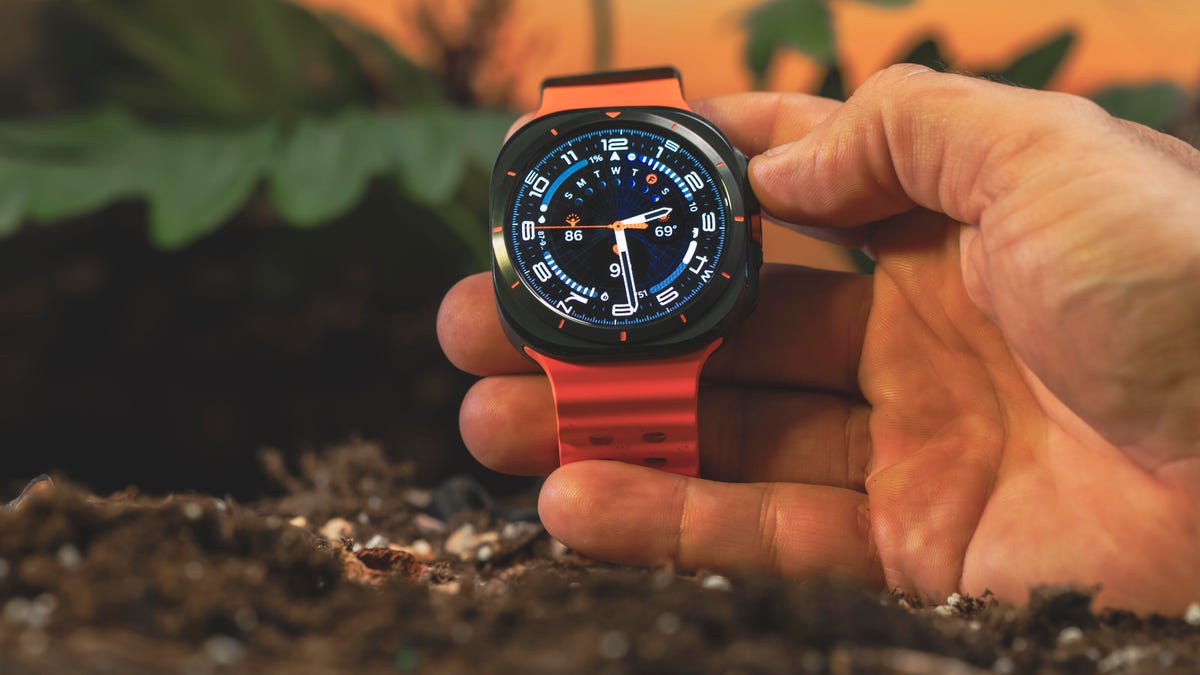
Samsung’s next high-end Galaxy Watch could support faster 5G speeds, but if this leak is true, it will depend on where you live. The rumored Samsung Galaxy Watch Ultra 2 might come in 5G and 4G cellular models, with availability for each smartwatch depending on the country.
According to the Dutch website Galaxy Club (and spotted by SamMobile), Samsung’s servers may have revealed a series of model numbers that point to 5G, 4G and Wi-Fi-enabled editions of the next Galaxy Watch Ultra, which would succeed the original model that debuted in 2024.
A representative for Samsung did not immediately respond to a request for comment.
The Galaxy Club website speculates that the 5G edition would be sold in the US and Korean markets, while the 4G edition would sell in the rest of the world. In the US, a 5G version of the Galaxy Watch Ultra would rival the 5G-enabled $799 Apple Watch Ultra 3, which debuted last fall. The 4G edition would have broader compatibility worldwide, since the earlier network is far more established.
It will likely be a few months until we hear anything official about the Galaxy Watch Ultra 2. Samsung typically unveils its new watches in the summer alongside its Galaxy Z Fold and Z Flip foldable phones. Last year, Samsung unveiled the Galaxy Watch 8 and the Galaxy Watch 8 Classic, but otherwise left the prior 2024 Ultra in the lineup for those looking for a larger 47mm smartwatch.
-
 Technologies3 года ago
Tech Companies Need to Be Held Accountable for Security, Experts Say
-
 Technologies3 года ago
Best Handheld Game Console in 2023
-
 Technologies3 года ago
Tighten Up Your VR Game With the Best Head Straps for Quest 2
-
 Technologies4 года ago
Black Friday 2021: The best deals on TVs, headphones, kitchenware, and more
-
 Technologies5 лет ago
Google to require vaccinations as Silicon Valley rethinks return-to-office policies
-
 Technologies5 лет ago
Verum, Wickr and Threema: next generation secured messengers
-
 Technologies4 года ago
Olivia Harlan Dekker for Verum Messenger
-
 Technologies4 года ago
The number of Сrypto Bank customers increased by 10% in five days