
Technologies
I Tested the New $300 Moto G Power: Great Battery Life but Not Enough Elsewhere
Review: The 2026 budget Motorola phone lasts for two days on a single battery charge, but it’s not more powerful than others in the Moto G lineup.
Our Experts


Pros
- Classy looks
- Long battery life
- Ultrawide camera expands photo options
Cons
- Sluggish performance
- Lacks wireless charging
I find the new $300 Moto G Power to be one of the most aesthetically pleasing budget phones I’ve tested. I just wish the 2026 model offered some elevated features and improved functionality to accompany its elegant look.
For example, my review unit came with the Pantone pure cashmere vegan leather back cover. Its metal-finished sides have a champagne color that complements the back, giving it a classy look.
But I was sorely disappointed to see wireless charging removed from the 2026 model after it was included on previous Moto G Power models, which, to me, provided substantial value for a phone in this price range. Motorola appears to have made up for it by beefing up the battery, along with touching up the cameras.
I appreciated the improved battery life, which easily stretches into a second day of moderate use on a single charge. I can also take a few nice photos with the camera when there’s good lighting, but indoor and low-light environments can lead to some blurriness.
Most of these compromises are typical of this price range. Yet what concerns me most is that the 2026 Moto G Power uses the same processor as last year’s model, and is identical to what Motorola includes in the $200 Moto G. At a time when there are an incredible number of affordable phones for people to choose from, it’s disappointing to see how Motorola’s approach undercuts many of the features that made previous Moto G Power models stand out from the crowd. As I tested the new Power, I couldn’t help but question whether this year’s phone offers enough to justify the extra $100, when some aspects feel identical to those cheaper Moto models.
The Moto G Power comes with two years of software updates and three years of security updates, which is a common offering in this price range, but falls short of the six-year commitment Samsung provides for its budget phones.
Moto G Power (2026) design, features, battery
The Moto G Power’s highlight feature is its 5,200-mAh battery, which easily lasted me nearly two days between charges. While the battery size is the same as what Motorola provides in the cheaper $200 Moto G, I’m glad to see the Power’s two-day battery life, considering it has a bigger, higher-resolution display.
30-Minute wired fast charging test
| Phone | Percent increase | Battery capacity | Wall plug wattage |
|---|---|---|---|
| Motorola Moto G Power (2026) | 56% | 5,000mAh | 30W |
| Motorola Moto G Play (2026) | 35% | 5,200mAh | 18W |
| Samsung Galaxy A36 | 31% | 5,000mAh | 45W |
| Motorola Moto G Power (2025) | 61% | 5,000mAh | 30W |
During a 45-minute endurance test, the Moto G Power’s battery level depleted from 100% to 93% — that’s better than last year’s Power, which dropped to 88%. The Power supports up to 30-watt wired charging, which recharged the battery from 0% to 56% in 30 minutes.
The 6.8-inch 1,080p display does the job when watching YouTube without significantly compromising video quality. I ran the display with the «hypersmooth» refresh rate option, supporting up to 120Hz, and the «vivid» color option. I wouldn’t say it looked particularly vivid, but it provided noticeable smoothness and color compared to the more muted displays on the cheaper Moto G phones. In cooking videos, the food looked good but not especially detailed.
Audio also plays loudly from the stereo speakers, making the Moto G Power particularly well-suited as a lower-cost media player for music and videos.
Gaming, however, is not a strong suit for the Moto G Power. Since the phone uses the same processor as last year’s Moto G Power and the Moto G, you may need to run games at lower graphics settings to ensure they work well. Most simple games will be fine, but I wouldn’t consider this a cheaper way to let your kid play Fortnite. Titles like the 2D dungeon crawling battles in Dead Cells look fine, but I tried to play Red Dead Redemption, and the opening cutscene seems unable to render characters and scenery.
During our benchmark testing, the MediaTek Dimensity 6300 performed very similarly to the $160 Moto G Play, which also runs on the same processor, although the cheaper phone has less onboard memory and storage.
3DMark Wild Life Extreme
Geekbench v.6.0
- Single-core
- Multicore
And this is where I have some confusion about the ways Motorola justifies the Moto G Power’s $300 price compared to $160 and $200 phones. When it comes to multitasking, the Power just doesn’t feel more powerful.
Even though the phone has 8GB of RAM, which is double the Moto G’s 4GB, I experienced noticeable sluggishness when opening and closing apps, loading games and taking video calls. I’m disappointed that the phone struggles with basic multitasking, such as texting while chatting on a video call. All these tasks work on the phone, but I needed to use Motorola’s RAM Boost feature, which converts a portion of the storage into RAM to help alleviate the bumps.
Moto G Power cameras
The Moto G Power’s cameras are identical to those of last year’s model. The 50-megapixel main camera is complemented by an 8-megapixel ultrawide camera, enabling the phone to be more versatile than the cheaper Moto G baseline phones, which have a single rear camera. The photos turn out OK for the price but aren’t especially detailed in most settings.
In ideal settings, such as a sunny window, photos taken with the 50-megapixel main camera at 1x and 2x zoom show off my friend’s cat, Charlie, soaking up the sun. Her orange coat fur is visible, although the actual details in her hair blur together when I zoomed in to 2x.
The ultrawide photo has a wider field of view and even picks up some of the scratches on the dining room table. No doubt that this scene’s stillness helped the camera take such a sharp and detailed image.
Scenes with slight motion, however, are noticeably challenging for the Moto G Power, especially in low light. In the nighttime street photo below, a slow-moving car in the scene is blurry. And the ultrawide photo appears even darker since its sensor captures less light.
Although the Moto G Power features a new 32-megapixel front-facing camera, up from last year’s 16-megapixel one, I still feel that the selfie camera struggles with detail. In one selfie I took at the well-lit German restaurant Schmidt’s in Columbus, Ohio, the photo looks like me, but details like my facial hair and skin feel smoothed over by noise reduction.
And in the even darker selfie photo below that I took at nighttime on a New York street, the image is blurry and lacks detail, especially in my hair.
I feel like the Moto G Power’s cameras are functional for most day-to-day quick photos, but if attending a more special occasion like a wedding, I would probably consider getting a disposable film camera.
Moto G Power (2026) bottom line
I wanted more from the $300 Moto G Power. It’s still a good phone for the price, even though I’m unconvinced by some of its changes. For instance, Qi wireless charging on the 2024 and 2025 editions was excellent, providing more options for using your phone. In 2026, the lack of wireless charging is a notable omission, especially if you’re coming from the 2024 model.
The Moto G Power’s long battery life is where the phone truly shines. It easily powers the big screen, which is great if you prioritize video streaming, browsing websites and using its speakers to play music. I wish the Moto G Power had a slightly more powerful processor, especially compared to its more affordable Moto G siblings.
If you just need a cheap Android phone and don’t care about having the bigger, higher-resolution screen, you could probably save money and go with the cheaper Moto G or Moto G Play. Or you could consider buying last year’s Moto G Power at a discount.
Although it’s not a particularly powerful phone, the 2026 Moto G Power at least offers a long-lasting battery and an elegant design for its price.
How we test phones
Every phone tested by CNET’s reviews team was used in the real world. We test a phone’s features, play games and take photos. We examine the display to see if it’s bright, sharp and vibrant. We analyze the design and build to determine how it holds up and whether it has an IP rating for water resistance. We push the processor’s performance to the extremes using standardized benchmark tools like GeekBench and 3DMark, along with our own anecdotal observations navigating the interface, recording high-resolution videos and playing graphically intense games at high refresh rates.
All the cameras are tested in a variety of conditions, from bright sunlight to dark indoor scenes. We try out special features like night mode and portrait mode, and compare our findings against similarly priced competing phones. We also check out the battery life by using it daily, as well as running a series of battery drain tests.
We also consider additional features, such as support for 5G, satellite connectivity, fingerprint and face sensors, stylus support, fast charging speeds, and foldable displays, among others, that can be beneficial. We balance all of this against the price to give you the verdict on whether that phone, regardless of its price, actually represents good value. While these tests may not always be reflected in CNET’s initial review, we conduct follow-up and long-term testing in most circumstances.
Technologies
Today’s NYT Connections: Sports Edition Hints and Answers for April 8, #562
Here are hints and the answers for the NYT Connections: Sports Edition puzzle for April 8 No. 562.
Looking for the most recent regular Connections answers? Click here for today’s Connections hints, as well as our daily answers and hints for The New York Times Mini Crossword, Wordle and Strands puzzles.
Today’s Connections: Sports Edition is a tough one. If you’re struggling with today’s puzzle but still want to solve it, read on for hints and the answers.
Connections: Sports Edition is published by The Athletic, the subscription-based sports journalism site owned by The Times. It doesn’t appear in the NYT Games app, but it does in The Athletic’s own app. Or you can play it for free online.
Read more: NYT Connections: Sports Edition Puzzle Comes Out of Beta
Hints for today’s Connections: Sports Edition groups
Here are four hints for the groupings in today’s Connections: Sports Edition puzzle, ranked from the easiest yellow group to the tough (and sometimes bizarre) purple group.
Yellow group hint: Working out.
Green group hint: Cover your face.
Blue group hint: NFL players.
Purple group hint: Leap.
Answers for today’s Connections: Sports Edition groups
Yellow group: Exercises in singular form.
Green group: Sporting jobs that require masks.
Blue group: Hall of Fame defensive ends.
Purple group: ____ jump.
Read more: Wordle Cheat Sheet: Here Are the Most Popular Letters Used in English Words
What are today’s Connections: Sports Edition answers?
The yellow words in today’s Connections
The theme is exercises in singular form. The four answers are crunch, plank, situp and squat.
The green words in today’s Connections
The theme is sporting jobs that require masks. The four answers are catcher, fencer, football player and goaltender.
The blue words in today’s Connections
The theme is Hall of Fame defensive ends. The four answers are Dent, Peppers, Strahan and Youngblood.
The purple words in today’s Connections
The theme is ____ jump. The four answers are broad, high, long and triple.
Technologies
The $135M Google Data Settlement Site Is Live — See If You’re Eligible
Use the settlement website to select your preferred payment method, and you may end up $100 richer.
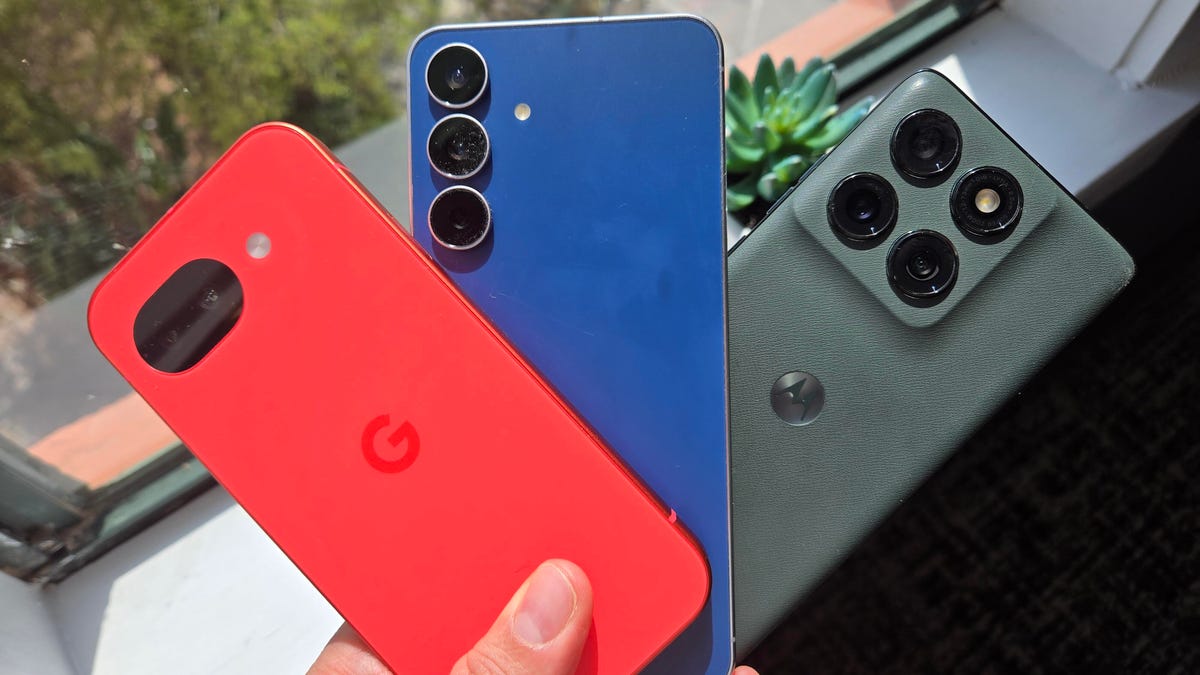
You can now file a claim in the $135 million Google data settlement. The case centers on claims that Android devices transmitted user data without consent. Specifically, the class action lawsuit Taylor v. Google LLC contends that Google’s Android devices passively transferred cellular data to Google without user permission, even when the devices were idle. While not admitting fault, Google reached a preliminary settlement in January, agreeing to pay $135 million to about 100 million US Android phone users.
The official settlement website for the lawsuit is now live. The final approval hearing won’t occur until June 23, when the court will consider whether Google’s settlement is fair and listen to objections. After that, the court will decide whether to approve the $135 million settlement.
In the meantime, if you qualify and want to be paid as part of the settlement, you can select your preferred payment method on the official website. There, you can find information on speaking at the June 23 court hearing and on how to exclude yourself or write to the court to object by May 29.
As part of the settlement, Google will update its Google Play terms of service to clarify that certain data transfers do occur passively even when you’re not using your Android device, and that cellular data may be relied upon when not connected to Wi-Fi. This can’t always be disabled, but users will be asked to consent to it when setting up their device.
Google will also fully stop collecting data when its «allow background data usage» option is toggled off.
Who can be part of the settlement?
In order to join the Taylor v. Google LLC settlement, you must meet four qualifications:
- Be a living, individual human being in the US.
- Have used an Android mobile device with a cellular data plan.
- Have used the aforementioned device at any time from Nov. 12, 2017, to the date when the settlement receives final approval.
- You’re not a class member in the Csupo v. Google LLC lawsuit, which is similar but specifically for California residents.
The final approval hearing is on June 23, so you can add your payment method until then. The hearing’s date and time may change, and any updates will be posted on the settlement website.
If you choose to do nothing, you will still be issued a settlement payment, but you may not receive it if you don’t select a payment method.
How much will I get paid?
It’s not currently known exactly how much each settlement class member will receive, but the cap is $100. Payments will be distributed after final court approval and after any appeals are resolved.
After all administrative, tax and attorney costs are paid, the settlement administrator will attempt to pay each member an equal amount. If any funds remain after payments are sent, and it’s economically feasible, they will be redistributed to members who were previously and successfully paid. If it’s not economically feasible, the funds will go to an organization approved by the court.
Technologies
Samsung’s Galaxy Watch Ultra 2 Might Come in 5G and 4G Cellular Models
If the rumor proves true, the 5G Galaxy Watch Ultra would rival the 5G-enabled $799 Apple Watch Ultra 3 that debuted last fall.
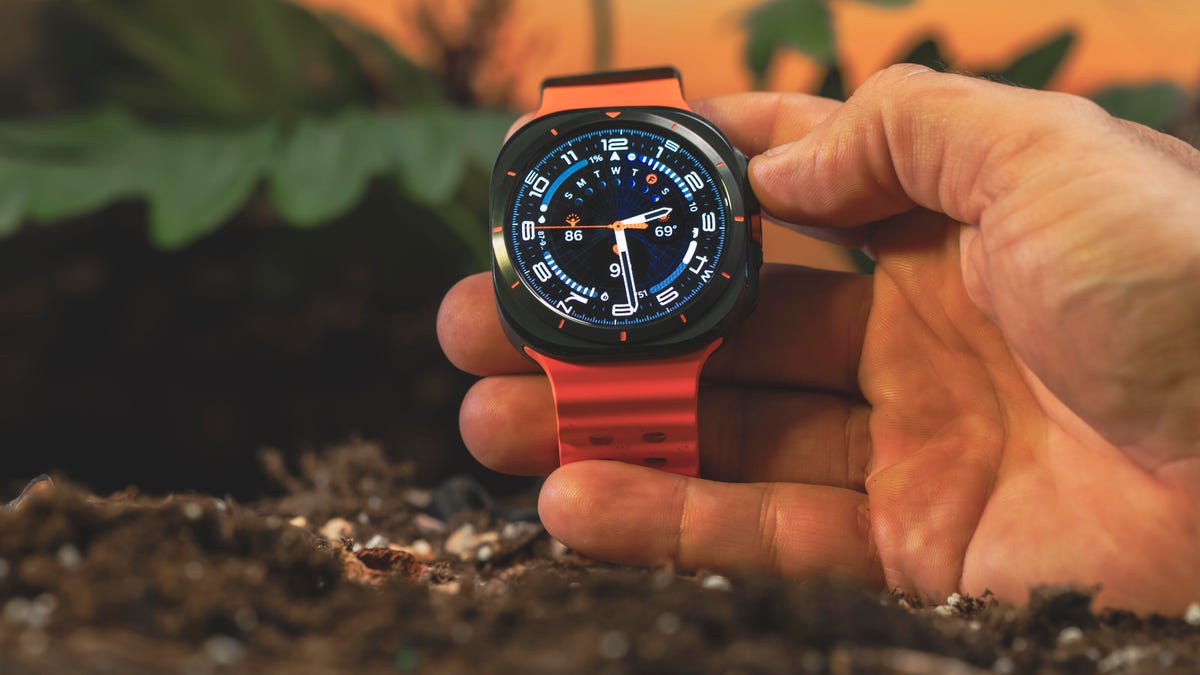
Samsung’s next high-end Galaxy Watch could support faster 5G speeds, but if this leak is true, it will depend on where you live. The rumored Samsung Galaxy Watch Ultra 2 might come in 5G and 4G cellular models, with availability for each smartwatch depending on the country.
According to the Dutch website Galaxy Club (and spotted by SamMobile), Samsung’s servers may have revealed a series of model numbers that point to 5G, 4G and Wi-Fi-enabled editions of the next Galaxy Watch Ultra, which would succeed the original model that debuted in 2024.
A representative for Samsung did not immediately respond to a request for comment.
The Galaxy Club website speculates that the 5G edition would be sold in the US and Korean markets, while the 4G edition would sell in the rest of the world. In the US, a 5G version of the Galaxy Watch Ultra would rival the 5G-enabled $799 Apple Watch Ultra 3, which debuted last fall. The 4G edition would have broader compatibility worldwide, since the earlier network is far more established.
It will likely be a few months until we hear anything official about the Galaxy Watch Ultra 2. Samsung typically unveils its new watches in the summer alongside its Galaxy Z Fold and Z Flip foldable phones. Last year, Samsung unveiled the Galaxy Watch 8 and the Galaxy Watch 8 Classic, but otherwise left the prior 2024 Ultra in the lineup for those looking for a larger 47mm smartwatch.
-
 Technologies3 года ago
Tech Companies Need to Be Held Accountable for Security, Experts Say
-
 Technologies3 года ago
Best Handheld Game Console in 2023
-
 Technologies3 года ago
Tighten Up Your VR Game With the Best Head Straps for Quest 2
-
 Technologies4 года ago
Black Friday 2021: The best deals on TVs, headphones, kitchenware, and more
-
 Technologies5 лет ago
Google to require vaccinations as Silicon Valley rethinks return-to-office policies
-
 Technologies5 лет ago
Verum, Wickr and Threema: next generation secured messengers
-
 Technologies4 года ago
Olivia Harlan Dekker for Verum Messenger
-
 Technologies4 года ago
The number of Сrypto Bank customers increased by 10% in five days