

Technologies
Xreal’s Latest Glasses Get Better and Cheaper. And There’s a Switch Dock, Too
I loved playing Switch games on the Xreal 1S glasses, but getting them connected is a little awkward.

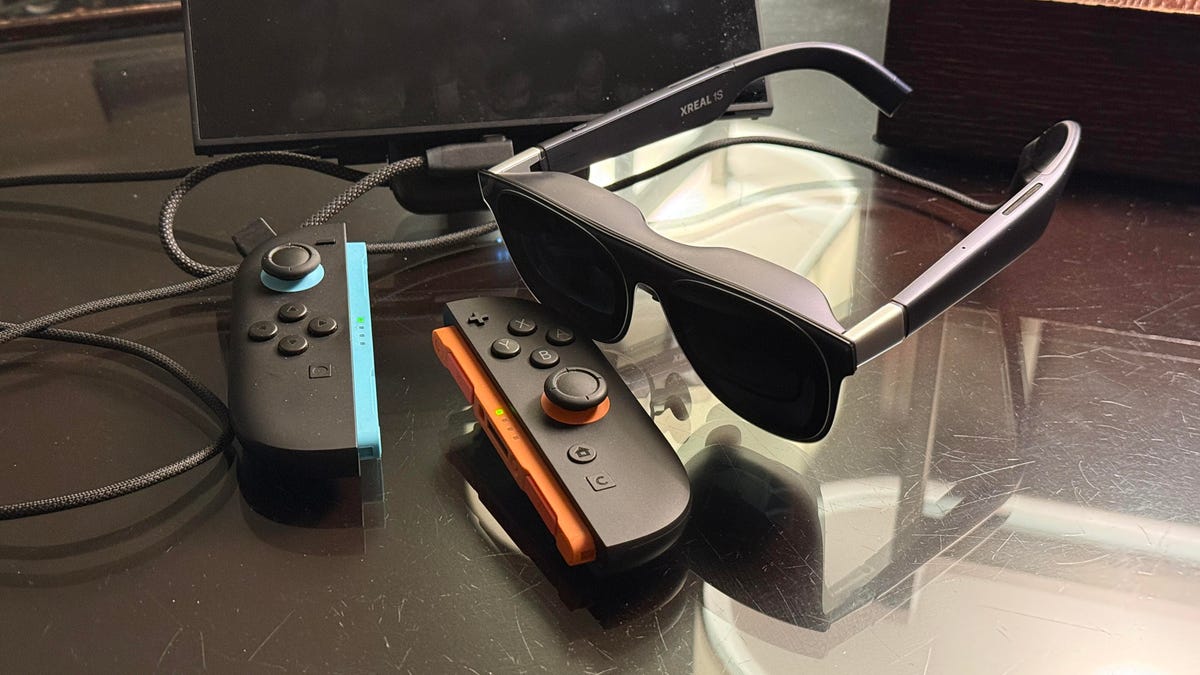
Smart glasses are in a period of rapidly accelerating change, and quick updates seem to be the norm. My favorite display glasses last year, the Xreal One, won me over because they have great displays with tons of adjustment options, including the ability to pin a display in place. The new Xreal 1S, which I saw ahead of CES 2026, does those glasses one better with more gaming-focused display updates and better resolution. But the best part is that I’m now connecting them with a Nintendo Switch 2, thanks to Xreal’s new $100 Neo mini-dock.
The $450 Xreal 1S is, in fact, better overall than the more expensive Xreal One Pro, which is still on sale. The Pro has a different and flatter lens system that keeps glare down when it’s worn. All these glasses still use «birdbath» displays that project vivid micro OLED images above your eyes down to you via half-mirrored prisms, but the Xreal 1S’s displays have a slightly larger 52-degree field of view (up from 50), 700 nits of brightness (100 more than before) and a 16:10 ratio, 1,200-pixel resolution. That’s better than the Pro’s 1080p resolution, and it’s in a ratio that fits gaming display modes better.
I’ve been trying a pair with prescription insert lenses (the 1S works with the same inserts as the Xreal One), and they look great. Xreal also updated its onboard processing tricks, adding automatic 3D media conversion via the glasses’ own chipset. The mode, which is in beta, feels pretty rough, though. Steam Deck and Switch games (or movies, or your own phone screen) can look 3D, but the autoconversion is imprecise and significantly lowers the frame rate on everything.
The 1S would be my top pick now over the Xreal One Pro, if it weren’t for the fact that I like the One Pro’s lenses better. But it’s likely that Xreal will update the Pro with the 1S’ new displays sometime soon. You might want to wait.
What I love even more than the glasses update is the Neo battery pack. It’s a new $100 mini-dock that acts as a passthrough converter to work with the Nintendo Switch. It works with existing Xreal glasses as well as the new 1S, and I’m already loving how portable it is. Unlike the Steam Deck, Windows handhelds and phones and laptops, the Switch doesn’t work natively with display glasses. But Xreal found a workaround somehow that functions fine, even with Nintendo’s lockdown firmware.
The 10,000-mAh battery pack can be used to charge anything and pass video through via USB-C. There’s a magnet on the back that snaps onto phones, and a kickstand too — but the Neo doesn’t have contactless charging. You have to connect using a built-in USB-C cable.
This isn’t my first time playing Switch games using display glasses and a dock. Last year, I tried Viture’s similar 10,000-mAh dock, which is compatible with the Switch and Switch 2. Neither company’s dock works with the other’s glasses for Switch gaming, though, which is a bummer. Viture’s battery dock allows two glasses to connect at once, but it’s almost twice the size. I like that the Neo is about as small as any other battery pack I typically take with me.
If only these docks weren’t awkward to connect, though. Xreal does its best, but the Switch 2 only supports video-out through its bottom USB-C port, not the top one. The Neo comes with a magnetic sticker you can put on the back of the Switch, allowing you to snap it onto the Neo in kickstand mode. This allows it to hover in the air slightly, so you can plug in the cable underneath. But the Switch in docked mode only works with Joy-Con controllers detached, so you’ll have to rest the whole Switch setup next to you.
I love the experience once it’s all set up, but using the dock is likely a step too far for most people — even if they like the idea of gaming with glasses on a Switch 2. But I’ll tell you it feels like playing in a little home theater, and games I’ve tried look great in micro OLED. Mario Kart World, Donkey Kong Bananza and Kirby Air Riders play fantastically. The only one that has had performance issues so far is Metroid Prime 4, which slows down and becomes unplayable using the Neo dock. Also odd: The Switch 2 kept asking me if I wanted to update the dock’s firmware, which wouldn’t work anyway. (I said no.) Clearly, the Switch 2 doesn’t exactly form a perfect handshake here.
But I seriously hope Nintendo works in glasses support on the next Switch 2, because Xreal and Viture have already shown me that it can be fun… if you feel motivated to buy display glasses and a dock that cost more than the Switch 2 itself.
Technologies
An Always-On AI Notetaker? This Startup Thinks You Can Just Use Your Phone
Thine doesn’t have its own pin or necklace to listen to everything so you can remember your conversations. It’s just an app.
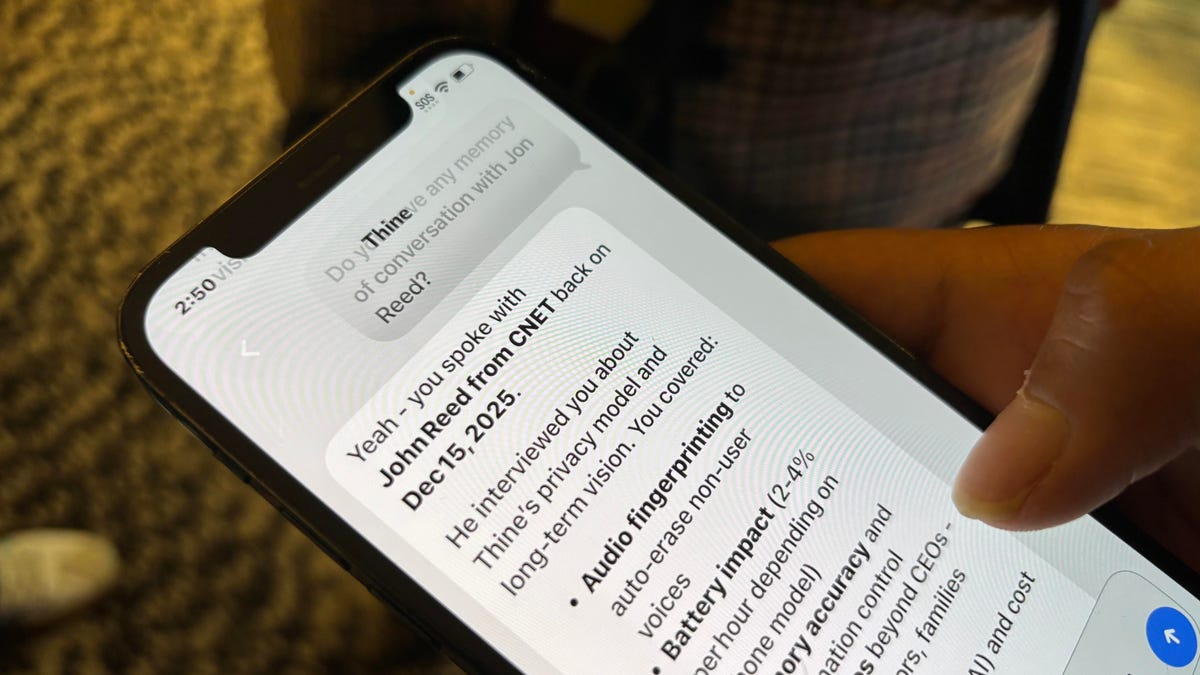
The show floors of CES 2026 are awash with AI-powered notetaking and companion devices that listen to everything around you so you can go back and have a computer remember a conversation you just had. The folks at Thine think somebody else already got the hardware right, and all they need to give you is the app.
Pratyush Rai, the CEO of Thine, said in an interview that he decided to create an app for Apple’s iPhone because the functions he would’ve needed to create a device, like a pin, a ring or a necklace, already existed in the phone’s microphone and Siri functions.
«What we have realized is we should not try to solve a problem both from a hardware standpoint and a privacy standpoint that Apple has already solved for,» he said.
The iPhone streams live audio while it waits for you to say «Hey Siri,» and Thine uses that same function to capture and transcribe the conversations you have. Its microphone also has very good noise cancellation — something a new hardware company would have to work to perfect on its own.
From there, Thine takes over, training an AI model on those transcripts so you can ask questions like, «What did that AI executive tell me the other day at CES?» It will respond like a typical chatbot would, with a summary of that conversation. At CES, I watched as Rai asked Thine to recall the conversation we first had about the app two weeks earlier, and it provided accurate and pretty thorough highlights.
Rai said Thine doesn’t store the audio recordings of your conversations. The exact transcripts aren’t available right now, but the company is working on a new version that will provide those transcripts and allow you to upload them into your own chatbot, kind of like if you ran the Voice Memos app all the time and just kept the transcriptions. Rai said the decision to allow people to access verbatim transcripts came after feedback from users of competing AI notetaking devices, who said they really wanted the actual transcriptions.
For now, a fully functional Thine app is an expensive subscription: $200 per month. Rai said the target audience is executives and tech founders who want to keep track of all of their networking conversations. But he expects prices to come down significantly with scale, including as the AI models and software improve. Already, he said, those improvements allow the company to prepare the version that just offers transcriptions for around a dollar a month.
The big expense remains long-term storage — and keeping it secure. Rai said having those old conversations accessible by the AI model is essential to reduce hallucinations, when AI makes stuff up to fill the gaps in its context. When you’re trying to recall conversations you actually had with real people, you don’t want the AI’s best guess at what you talked about. You need the truth.
Being able to get that is key to Rai’s goal of creating an AI tool that helps you have better connections not with the chatbot, but with other people. He doesn’t want people to build relationships with Thine, but with each other. «This is not something we ever imagine with Thine,» he said.
Technologies
Today Only: Grab the HyperX Wireless Gaming Headset for Just $60 at Best Buy
Save a massive 50% on this state-of-the-art gaming headset while this flash deal lasts.
If you’re a gamer living with family, roommates or in a dorm, then you know how valuable a headset can be. Not only are they perfect for letting you play without missing any of the action, but they also allow your family to carry on without being privy to every blast. However, even these accessories are an added cost for your favorite hobby.
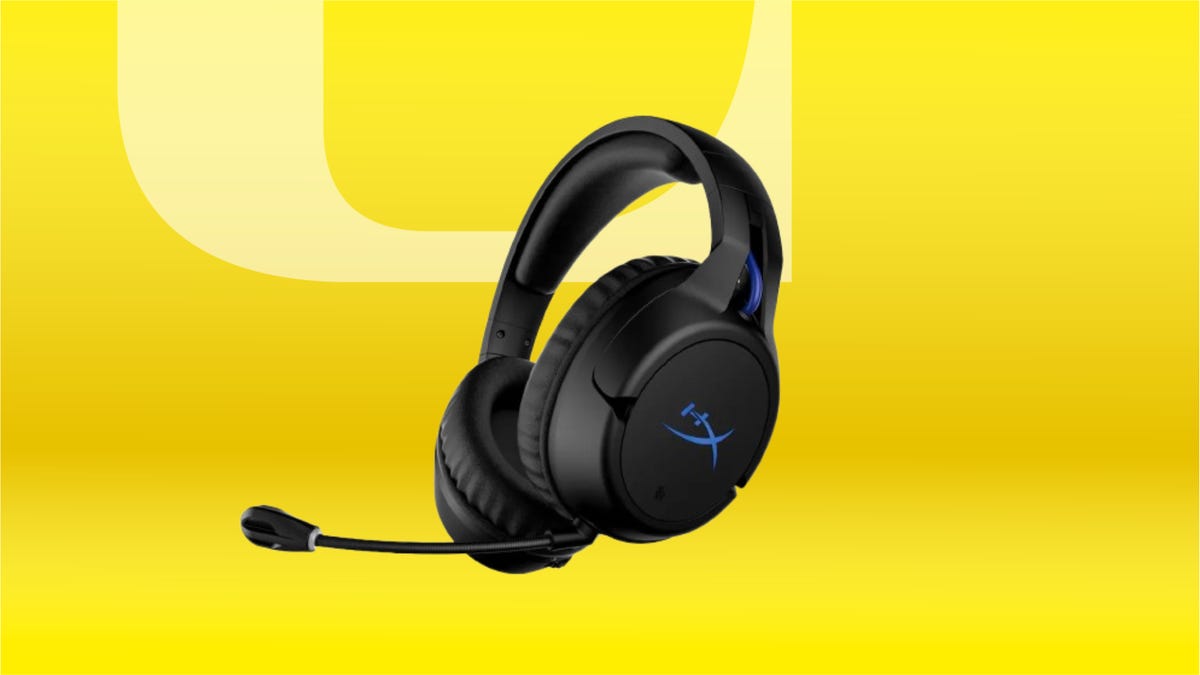
We’ve spotted this HyperX Cloud Flight gaming headset for just $60 at Best Buy. This saves you $60, which represents a discount of 50%. Keep in mind that this is one of Best Buy’s deals of the day, which means this discount ends at 9:59 p.m. PT today.
This gaming headset is made specifically for PS4 and PS5, laptops or PCs. It has a range of 66 feet and includes active noise cancellation so you can focus. HyperX also equipped this headset with a battery life of up to 30 hours for long gaming sessions.
Best Buy is also offering discounts on other HyperX headsets, such as the HyperX Cloud III wired gaming headset for just $62, which saves you $38. Other fantastic deals include a discount of $74 on the HyperX Cloud Alpha wireless headset, which brings it down to just $126. We suggest looking through Best Buy’s entire list of deals on HyperX headsets so you can find the right pair for you.
Looking for a new gaming headset but not sure if these deals are for you? Check out our list of the best PC gaming headsets for more ideas.
Why this deal matters
Gaming and its accessories can be quite the investment. That’s why deals like this one can help you save and put those dollars to use somewhere else. Keep in mind that the HyperX Cloud Flight gaming headset typically costs $120, so paying $60 means you’re only parting with half its value. Of note, this deal ends at 9:59 p.m. PT today, so it’s wise to act fast.
Technologies
Motorola Teases New Razr Folding Phone With ‘Boundary-Breaking Camera System’
An Instagram post from Motorola shows a book-style foldable phone ahead of CES presentation.
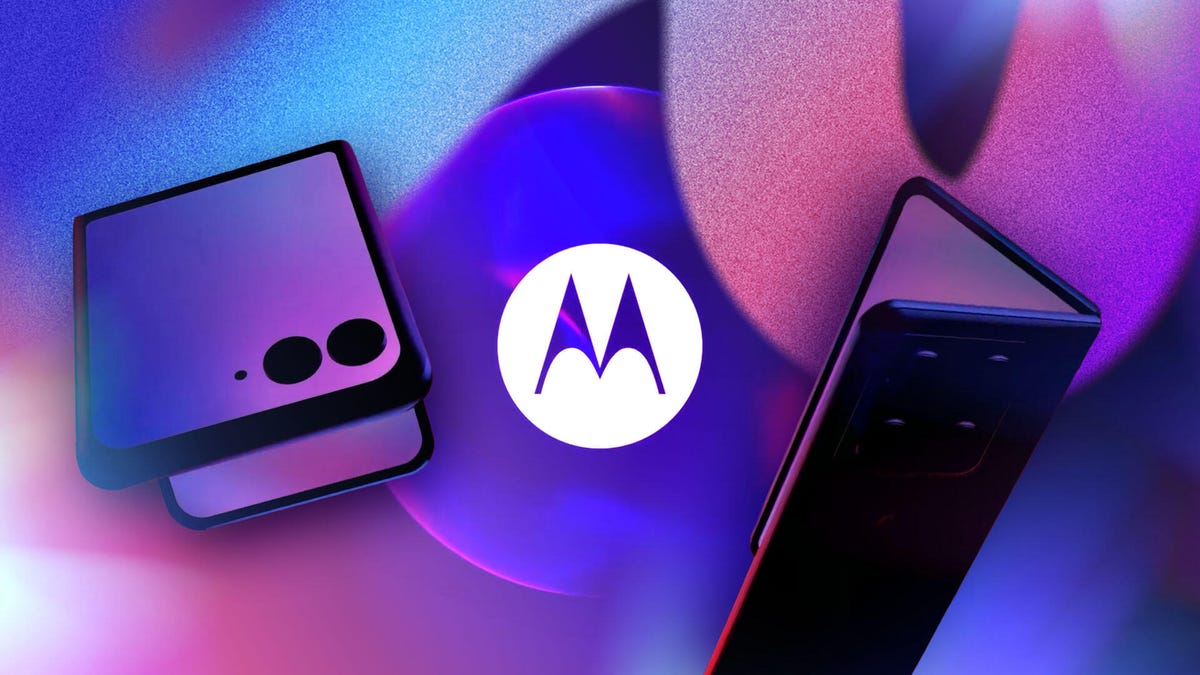
A day after leaker Evan Blass began posting information about a purported Motorola book-style foldable phone called the Motorola Fold, the company itself has released a teaser video on Instagram that appears to confirm the new smartphone.
«A new era is unfolding… See you in Vegas,» Motorola says in that video. Motorola’s parent company, Lenovo, will be making its Tech World presentation for CES 2026 from the Las Vegas Sphere on Jan. 6, with a livestream on YouTube.
Don’t miss any of our unbiased tech content and lab-based reviews. Add CNET as a preferred Google source.
On Jan. 4, Blass posted what appeared to be a presentation slide that included text on the Motorola Razr Fold, noting that it would be released «later this year.» The slide promised «brilliant displays, intelligent AI and an advanced, boundary-breaking camera system.»
In the same post, Blass also included a slide for what could be Motorola’s next flagship phone, the Signature, which would feature four 50-megapixel cameras. The Motorola video preview shows a foldable phone that also includes four cameras. After Motorola made its video post on Instagram, Blass posted purportedly leaked product shows of the Fold and the Signature.
Motorola’s most recent foldable phones have been variations on the Motorola Flip phone. This would be the company’s first book-style foldable phone.
-
 Technologies3 года ago
Tech Companies Need to Be Held Accountable for Security, Experts Say
-
 Technologies3 года ago
Best Handheld Game Console in 2023
-
 Technologies3 года ago
Tighten Up Your VR Game With the Best Head Straps for Quest 2
-
 Technologies4 года ago
Black Friday 2021: The best deals on TVs, headphones, kitchenware, and more
-
 Technologies4 года ago
Verum, Wickr and Threema: next generation secured messengers
-
 Technologies4 года ago
Google to require vaccinations as Silicon Valley rethinks return-to-office policies
-
 Technologies4 года ago
Olivia Harlan Dekker for Verum Messenger
-
 Technologies4 года ago
iPhone 13 event: How to watch Apple’s big announcement tomorrow


