
Technologies
From the iPhone Fold to Samsung Galaxy S26 Ultra: All the Phones We Expect in 2026
While Samsung has already launched the Galaxy Z TriFold, 2026 could finally be the year of the foldable iPhone and many other exciting smartphones.
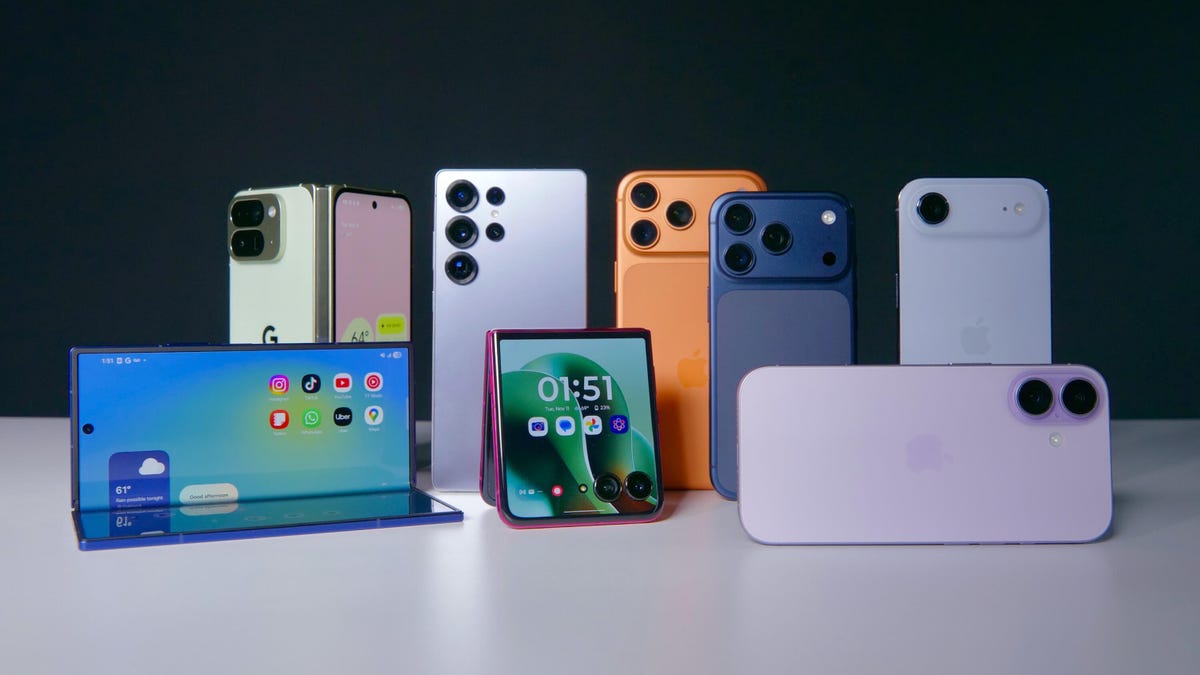
2025 was an exciting year for smartphones. From Samsung reinventing its Galaxy Z Fold to Apple launching the all-new, slim and light iPhone Air, this year saw it all. The best phones of 2025 have set a strong precedent for 2026 phone launches. Also I’m glad we didn’t have another year of incremental upgrades with barely-working AI features, like we did in 2024. And this has me stoked for the next year.
There should be room for a few surprises alongside regular upgrades such as more powerful chips, better cameras and improved AI capabilities in 2026. The folding phone market is expected to attract more entrants we could finally see Apple launch a folding iPhone and maybe Samsung releasing its new Galaxy Z TriFold in the US.
There are a bunch of exciting smartphones to look forward to in 2026.
Apple
A split iPhone 18 launch strategy
Apple introduced a slew of upgrades with the iPhone 17 line — an 18-megapixel selfie shooter, upgraded rear camera optics, thermal cooling on the Pro variants, among other updates. It also added the thin iPhone Air to the lineup. For next year, the Cupertino company could take things to the next level by shaking up its product launch timeline.
For years, Apple has continued to announce the base iPhone model alongside its Pro siblings, while also experimenting with Mini, Plus and Air variants. This could change in 2026. According to a report from The Information and Apple analyst Ming-Chi Kuo, the Cupertino-based company may push the launch of the vanilla iPhone 18 to early 2027 in a bid to make space for the iPhone Fold’s launch.
Apple could still announce four iPhone models in September 2026, but the lineup and timing would look slightly different. In September 2026, we could see the launch of the next-gen. iPhone Air, iPhone 18 Pro and 18 Pro Max in new colors and the all-new iPhone Fold. But the standard iPhone 18 is tipped to be released alongside the iPhone 18E in March 2027.
The new Apple iPhone launch cycle might be:
- February/March 2026: iPhone 17E
- September 2026: iPhone Air 2, iPhone 18 Pro/Pro Max and iPhone Fold
- March 2027: iPhone 18 and iPhone 18E
- September 2027: iPhone Air 3, iPhone 19 Pro/Pro Max and iPhone 20 (named to honor the 20th anniversary of the original iPhone’s 2007 debut)
Since the standard iPhone 18 model is rumored to be released in 2027, let’s focus on the iPhone variants that are more likely to be launched next year.
Apple iPhone 18 Pro and Pro Max
The iPhone 18 Pro models are expected to have the same design language as the iPhone 17 Pro and Pro Max but be available in new colors. Apple is said to be considering three color options to replace 2025’s cosmic orange: coffee, purple and burgundy.
I’d love to have a burgundy or coffee brown iPhone 18 Pro. I’m more intrigued by the latter, thanks to CNET creative director Viva Tung’s mock-up of a coffee iPhone Pro, which you can see above.
Both the iPhone 18 Pro and Pro Max are expected to have the same 6.3-inch and 6.9-inch displays, respectively, as the current models. However, Apple is rumored to opt for an under-display Face ID True Depth camera to make the Dynamic Island smaller.
There have also been rumors about the iPhone 18 Pro lineup including an under-display Face ID, alongside a punch-hole cutout for the selfie shooter, which is common on Android phones. According to the same The Information report cited above, the iPhone 18 Pro duo will have a small hole on the top-left corner to house the front-facing camera. So, we shouldn’t expect a full-screen display with an under-display camera.
I’ve used phones with under-display cameras (RedMagic 10 Pro and Samsung Galaxy Z Fold 5), and while I love having a full-screen experience, I look smudgy on video calls and selfies with these cameras. No phone manufacturer has figured out a way to retain photo quality while delivering a full-screen experience with an under-display camera.
If Apple can do that, I’d be pleasantly surprised. But it seems unlikely as current-gen iPhones launched with a new industry-leading 18-megapixel Center Stage camera on the front. I don’t think Apple would mess with that. I expect the same photo and video quality on the next iPhone.
Moving to the rear optics, Apple is reportedly introducing a variable aperture lens on the iPhone 18 Pro and 18 Pro Max. It might be irrelevant to most people, but for those who use their iPhones for photography, a variable aperture would offer more control over their photos. It would allow you to manually adjust the amount of light reaching the sensor and the depth of field on a subject.
This isn’t groundbreaking new technology. Samsung introduced it with the Galaxy S9 in 2018 but it remained ineffective due to the small sensor size and the fact that the aperture could only switch between two f-stops: f/1.5 and f/2.4.
Xiaomi and Huawei did a better job with their flagships in 2023. The Huawei Mate 50 Pro offered 10 different aperture levels (f/1.4 to f/4.0), while the Xiaomi 13 Ultra included a dual-aperture design (f/1.9 and f/4.0), paired with a larger 1-inch-type image sensor.
Based on these examples, Apple will likely need to add a larger image sensor and more flexibility with aperture control to make it actually useful. It could be a godsend to improve the iPhone’s portrait mode, which trails behind the likes of current Vivo, Oppo and Xiaomi phones.
The iPhone 18 Pro is also rumored to get a new three-layer stacked image sensor developed by Samsung. For years, Sony has supplied the image sensors for the iPhone. Samsung’s sensor could reduce noise in images, improve the dynamic range and make the iPhone’s camera more responsive.
The iPhone 18 Pro series is expected to be powered by the A20 Pro chipset, which would be built on TSMC’s 2nm process. It could have architectural changes, such as having RAM integrated directly onto the same wafer as the CPU, GPU and neural engine, instead of it being adjacent to the chip and connected via an interposer. It could allow for 30% better efficiency and 15% faster performance than the A19 chips. The next iPhones may also use Apple’s next-generation C2 modem chip for enhanced wireless connectivity.
The iPhone Fold
There are conflicting rumors about the launch timeline of Apple’s foldable iPhone. Some say it’ll be released alongside the iPhone 18 Pro series next year, while a report from The Elec claims that the launch could be delayed to 2027. It’s worth noting that rumors of Apple’s book-style foldable iPhone date back to 2019.
Apple’s first folding phone is likely to be a book-style foldable, like the Galaxy Z Fold, rather than a clamshell flip phone. It’ll have a smaller outer display and a wider folding display — like the first-gen Google Pixel Fold, per Kuo. I used the Oppo Find N in 2022, which had a similar passport-size form factor. While Oppo’s foldable is better for watching videos, it didn’t offer the best experience for browsing the web.
If Apple can find the middle ground between the Pixel Fold (first gen) and Galaxy Z Fold 7 form factors, the iPhone Fold could be an enticing choice. It’s rumored to include a 5.5-inch cover screen and a 7.8-inch display when unfolded.
According to Apple analyst Ming-Chi Kuo, the first folding iPhone is expected to measure 4.5mm thick when unfolded. For context, the Samsung Galaxy Z Fold 7 measures 4.2mm, while the Huawei Mate XT (the tri-fold) is 3.6mm thick when fully opened.
In his new blog, Kuo gave more clarity on the expected release date and shipment delays. He says that the development of the foldable iPhone «is behind earlier expectations.» The new Apple iPhone is still on track to be launched in 2026 but «smooth shipments may not occur until 2027.»
A report from The Elec (via DigiTimes) says that Apple will use ultra-thin glass for its first foldable iPhone. It could have a hole-punch selfie shooter on the cover screen and an under-display camera behind the inner screen. It’ll likely lack Face ID and rely on Touch ID for biometric authentication.
Kuo also reported that the first Apple foldable will minimize the crease by using a combination of titanium, stainless steel and liquid metal for the hinge. It’s also tipped to use titanium for its frame and aluminum in other areas. The foldable iPhone is rumored to house a 48-megapixel primary camera alongside a 48MP ultrawide-angle sensor. Apple might not give it a telephoto camera.
The Apple iPhone Fold is touted to cost between $1,800 and $2,500. While earlier rumors suggested the latter price, recent rumors have said that the folding iPhone will cost the same as the Samsung Galaxy Z Fold 7 and Google Pixel 10 Pro Fold.
iPhone 17E
Earlier this year, Apple released an all-new budget iPhone 16E that replaced the entry-level iPhone SE model, but it lacks features like a dual-rear camera setup, MagSafe and more.
Apple might switch to an annual update strategy for its entry-level iPhone, according to Kuo and Bloomberg’s Mark Gurman. We can expect the iPhone 17E to launch in the first half of next year, likely in February or March.
The iPhone 17E could use the same OLED panel as the iPhone 16E, as reported by The Elec. However, it’s rumored to get a speed bump with the inclusion of iPhone 17’s A19 processor.
Moreover, there are rumors that the Apple iPhone 17E will have a Dynamic Island instead of a notch. In terms of performance and looks, this would put the upcoming affordable iPhone on par with the base 2025 iPhone model.
Samsung
Samsung Galaxy S26 series
Like Apple, Samsung could also shuffle its lineup next year. There were rumors, since debunked, that the Korean company would include a «Galaxy S26 Pro» in its early-2026 flagship lineup. However, we now know that the S26 Pro is nothing but the base model Galaxy S26.
A report by Android Headlines says that Samsung is expected to retain its signature design language on the Galaxy S26 series, with the rear cameras positioned in a vertical array and a hole-punch display to house the selfie shooter.
The base Galaxy S26’s ultrawide camera could be upgraded from 12 megapixels to 50 megapixels, as per the same report. It might have a slightly bigger 6.3-inch screen, a 4,300-mAh battery (up from the S25’s 4,000-mAh one), 12GB of RAM and up to 512GB of storage.
Samsung could retire its «Plus» moniker to make way for a new slim phone, the Galaxy S26 Edge. It’s expected to have a super slim profile of around 5.5mm. This would make it 0.3mm thinner than the S25 Edge and 0.1mm skinnier than the iPhone Air. It will pack a larger 4,200-mAh battery and the same 6.7-inch screen, according to an X post by user Universe Ice.
There have been conflicting rumors about Samsung continuing with the Edge in future lineups. I loved using the Galaxy S25 Edge. It has fewer hardware limitations than Apple’s ultra-slim iPhone Air, which only has a mono speaker and a single rear camera. However, like the Air, the S25 Edge reportedly received an underwhelming response from consumers and, unlike the Air, future versions are rumored to be cancelled.
Recent renders hint at a slightly different design for the Galaxy S26 Ultra. It could have curvier corners compared to its predecessor and a raised vertical camera bump on the back. It is also speculated to be 0.3 mm slimmer, at 7.9 mm thick (compared to the 8.2mm thick Galaxy S25 Ultra) and offer new M14 OLED display panels (allegedly the same ones used in the iPhone 16 Pro and iPhone 17 series), which would make its screen brighter and more power efficient.
A report by ETNews says that the Samsung Galaxy S26 Ultra is expected to have the same camera setup as the Galaxy S25 Ultra: a 200-megapixel main camera, a 50-megapixel ultrawide lens, a 10-megapixel 3x telephoto lens and a 50-megapixel 5x telephoto lens.
I hope this is false because the Galaxy S25 Ultra is in desperate need of a 3x telephoto camera upgrade to match its competitors. The S26 Ultra could arrive with a larger 1/1.1-inch 200MP Sony sensor for the main camera, as per the same report. This would offer an f/1.4 aperture, which would let 47% more light in to give you better images in low-light situations. On the front, it’s likely to get the same 12-megapixel camera.
The upcoming Samsung S series flagship is likely to be powered by the Qualcomm Snapdragon 8 Elite Gen 5 in the US and China. In other regions, Samsung could shift to its in-house Exynos 2600 chipset, based on a 2nm process. It’ll feature an NPU that’s speculated to be 30% faster than Qualcomm’s flagship chipset, as reported by Korea Economic Daily. While the Exynos chips of yesteryear were notorious for overheating, the Exynos 2600 should be more reliable.
Going by past launch dates, the Samsung Galaxy S26 series is likely to be announced in January. For reference, the Galaxy S25 lineup was launched at a Galaxy Unpacked event on Jan. 22, 2025. The trio went on sale two weeks later, on Feb. 7. Though a new report from a South Korean publication (translated to English) says that Samsung will hold its 2026 Unpacked event on Feb. 25, 2026, in San Francisco — this would likely push the in-store date to March, around the same time as the Mobile World Congress.
Galaxy Z Fold 8 and Flip 8
Samsung surprised us with the Galaxy Z Fold 7. It overhauled the design of its book-style foldable to make it the thinnest and lightest foldable in the US. I’ve loved using it, especially because it weighs less than my iPhone 17 Pro Max yet unfolds to offer a bigger 8-inch screen. However, there’s room for improvement.
The South Korean company hasn’t upgraded the battery size on its Galaxy Z Fold in four generations. The Fold 7 packs the same 4,400-mAh battery as the 2021-launched Galaxy Z Fold 3. While the current-gen Fold will last an entire day with moderate use, I struggle to get through the day on a single charge when I’m traveling. The next-gen Galaxy Z Fold needs a battery upgrade, and it might finally get one.
Samsung could increase the Galaxy Z Fold 8’s battery capacity to about 5,000-mAh in 2026, according to the South Korean outlet Dealsite. While the Oppo Find N5 and Honor Magic V3 pack larger battery capacities, a 5,000-mAh cell should be a good boost. The report also claims that Samsung will use a new «laser-drilling metal plate» technology (similar to what Apple is rumored to do with the iPhone Fold) to further minimize the display crease.
This year, Samsung also removed the digitizer from the Galaxy Z Fold 7’s display to make it thinner. But the S Pen could make a comeback next year, as per a report by The Elec. It’ll be interesting to see if that makes the Fold 8 thicker than the current-gen foldable.
As for the Galaxy Z Flip 8, there aren’t many rumors at this point, but I hope Samsung improves the cover screen’s usability. When compared to the Razr 2025, the Galaxy Z Flip 7 cover screen still feels limited for running third-party apps.
Samsung Galaxy Z TriFold
In October 2025, Samsung showcased its first triple-display foldable phone at a tech exhibition hall during the APEC CEO Summit in South Korea. It was followed by a December 2025 launch in its home market. While Samsung is yet to confirm a specific release date for the US, its official press release says that the Galaxy Z TriFold will be released in more markets, including the US, China, UAE, Singapore and Taiwan. It should be available for purchase next year.
I went hands-on with the new Galaxy Z TriFold and was impressed by the clever design choices. Its right-most panel is actually slightly wider than the rest, creating an edge that protrudes slightly when folded. And this gives you a slight border to push, making the unfolding experience more intuitive. The Galaxy Z TriFold might not be as versatile as the Huawei Mate XT, but Samsung has managed to put a 10-inch tablet in your pocket.
Like the Galaxy Z Fold 7, you can only use it in two ways: either fully folded or fully opened. It doesn’t give you a mini-tablet when half-folded, like the Huawei rival. This makes it a 2-in-1 trifold rather than a 3-in-1 device.
Samsung borrowed more elements from its current foldables: the Galaxy Z TriFold has the same cover screen, processor and cameras as the Z Fold 7. It has a bigger 5,600mAh cell that charges at a faster 45-watt (vs. 4,400mAh at 25-watt on the Fold 7), and a 10-inch widescreen tablet mode to run three apps side-by-side.
I am intrigued by this design and look forward to using the Galaxy Z TriFold, especially because it has standalone DeX support for portable computing needs. I wonder if it’ll be possible to finally write and edit stories on my phone while on the go.
A new wide-screen foldable
A new report from ETNews claims that Samsung is developing a new Galaxy Z Fold that will unfold into a wide-screen mini tablet. It is said to have a 7.6-inch OLED inner screen with a 4:3 aspect ratio, which could be similar to the rumored iPhone Fold. This is wider than the almost square aspect ratio on the Galaxy Z Fold 7. Ideally, a wider aspect ratio is better for watching videos as it minimizes letterboxing and gives you more room for watchable content. A phone this size can then be rotated to read and browse on the web, making it the ideal 2-in-1 phone.
The rumored wide-screen Samsung foldable phone could have a 5.4-inch cover screen and support 25-watt wireless charging, which is faster than the 15-watt wireless charging supported on the Galaxy Z Flip 7 and Fold 7. «Samsung Electronics plans to release the Wide Fold in the fall,» says the report. It could be added to the Galaxy Z series and unveiled alongside the Flip 8 and Fold 8 in 2026.
Google Pixel 11 lineup
This year, Google added a telephoto camera to its base Pixel 10 and gave the Pro models an AI-enabled 30-100x zoom, which is one of the best implementations of digital zoom I’ve used on any phone. It also added a MagSafe-like PixelSnap capability for wireless charging and magnetic accessories. While the new Tensor G5 is faster than last year’s G4 chip, it still struggles against processors from Qualcomm, Apple and MediaTek — its rivals.
An Android Authority story reports that the Tensor G6 will be a minor improvement over 2025’s model. It could move to TSMC’s next-gen N3P process node and adopt a new architecture focused on power consumption improvements over raw performance gains. The Tensor G6 is rumored to move to a TSMC 2nm process, enabling improvements in battery efficiency and thermal performance — both of which the Pixel could use. The Google chip is also touted to have a new TPU and a secondary nano-TPU, which will help handle lower-power tasks more efficiently.
The Google Pixel 11 series could get a new low-light video recording feature, 4K 30fps Cinematic Blur and an AI-powered capability that would let you tweak the lighting after video is recorded, according to another Android Authority story. The lineup might also include upgraded camera hardware. It sounds more like a Pro update, but as of now, it’s unclear if it’ll be part of the Pixel 11 Pro Fold and the base model.
For years, Google has announced its flagship Pixel phones in October. However, the Pixel 9 broke this tradition in 2024 with an August launch, and it was followed by an August announcement of the Pixel 10 series. Google will likely continue with an August launch in 2026.
Google Pixel 10A
Google usually announces its budget smartphone in the first half of the year, and 2026 should be no different. The Pixel 10A is expected to launch earlier than usual. Historically, Google has released its A-series phone in May, but the Pixel 9A was announced in March 2025 and its successor is expected to follow suit.
Leaked renders by Android Headlines show that the Google Pixel 10A will look the same as the current-gen Pixel 9A. The renders show a Galaxy Z Fold 7-like blue color option with a pill-shaped camera island on the back and slimmer bezels on the front. The phone is expected to include two rear cameras and have the same dimensions as the Pixel 9A: 153.9 x 72.9 x 9 mm, as per the report.
The Pixel 10A will reportedly be powered by a «boosted» Tensor G4 chip, instead of the faster Tensor G5 found on the new Pixel 10 lineup. This should help Google keep the price under $500, but I don’t expect any major performance improvements over its predecessor.
Motorola
Razr 2026 lineup
This year, the Motorola Razr Ultra maintained its lead over the Samsung Galaxy Z Flip 7, but it also costs $1,300, $200 more than the base Z Flip 7. At that price, the Razr Ultra provided the best flip phone experience in 2025. However, Motorola needs to work on longer-term software support and improve its camera processing on the next generation Razr phones.
As of now, there haven’t been many concrete leaks and rumors regarding the Motorola Razr 2026 lineup. You can still expect the upcoming series to have three models: Razr 2026, Razr Plus (2026) and the Razr Ultra (2026). They’ll primarily vary by chipset prowess, cover screen size, price and optics. Based on previous Motorola launches, you can expect at least one Razr 2026 model to be announced late spring/early summer 2026.
The Ultra phones from Xiaomi, Oppo and Vivo
Xiaomi, Oppo and Vivo have already announced their Qualcomm Snapdragon 8 Elite Gen 5-powered and MediaTek Dimensity 9500-powered flagship smartphones but the «Ultra» devices are expected to be announced next year. All three Chinese phone-makers are expected to announce camera-focused flagship phones in 2026.
Xiaomi 17 Ultra
Xiaomi changed its naming convention with its latest flagship. Instead of launching a Xiaomi 16 series, it jumped to number 17 to match the latest Apple iPhones. The Xiaomi 17 Pro and Xiaomi 17 Pro Max also had an iPhone 17 Pro-like camera plateau on the back. However, the Chinese company integrated a screen on the back as well, which has some functionality and adds a fun aspect to it.
Xiaomi 17 Ultra will have a new 50-megapixel camera with improved in-sensor zoom range, according to Weibo user Digital Chat Station. It could be accompanied by an upgraded 200-megapixel telephoto camera with macro-capabilities and two more sensors for a total of four cameras on its back.
It’ll likely be powered by the Snapdragon 8 Elite Gen 5 chipset and support 100-watt wired charging. The next Xiaomi flagship could also offer satellite connectivity support.
Vivo X300 Ultra
The Vivo X300 and Vivo X300 Pro are already getting acclaim for their optics, but the X300 Ultra could take things up a notch. The Vivo’s X300 Ultra could be the first phone to include two 200-megapixel cameras, one used as the main lens and the other as a periscope telephoto lens, according to the leaker Digital Chat Station.
The main camera will have a 1/1.12-inch sensor (with 0.7µm-sized pixels), which is comparatively larger than most mainstream flagship phones. The post says that the camera offers 2x and 4x in-sensor lossless zoom alongside a dedicated periscope camera for optical zoom capabilities. Digital Chat Station says that the latter will use a combination of glass and plastic elements in its new lens assembly, but we’ll know its benefits after the launch.
The two 200-megapixel cameras are reportedly paired with a 50-megapixel ultrawide camera. On the front, we could get another 50-megapixel sensor with autofocus. The Vivo flagship is likely to be powered by the Snapdragon 8 Elite Gen 5 processor and launch in global markets by the end of March 2026. It’s anticipated to be announced in China as early as January 2026.
Oppo Find X9 Ultra
The Oppo Find X8 Ultra was one of my favorite smartphones this year. It offered excellent camera performance in a design that was comfortable to hold. Moreover, it lasted me all day on heavy usage and featured a big and bright display. Similarly, I liked the recently announced Oppo Find X9 Pro, especially with its detachable Hasselblad lens. I’m excited about what Oppo will do with its Ultra flagship next year.
Rumors regarding the Find X9 Ultra are slim as of now. However, it’s expected to be launched in global markets by late March – similar to its Vivo and Xiaomi rivals. It’s expected to pack a 7,000-mAh battery or more and upgraded optics for the cameras.
Where is OnePlus?
OnePlus announced its 2025 flagship, the OnePlus 13, ahead of the Galaxy S25 series in January. It was one of the sleeper hits this year. However, the company has already announced its successor, the OnePlus 15, in China and is releasing the phone in global markets ahead of last year’s launch timeline. As a result, it is already available to purchase in the US.
The OnePlus 15 was launched on Nov. 13, 2025. It is powered by the flagship Qualcomm Snapdragon 8 Elite Gen 5 chipset and packs a massive 7,300-mAh battery with support for 80-watt wired fast charging and 50-watt wireless charging.
The new OnePlus flagship has a 6.78-inch display with a 1.5K resolution and support for up to a 165 Hz refresh-rate. It can run games like Call of Duty: Mobile and Brawl Stars at 165 frames per second. You also get a 3,200-Hz touch sampling rate, which ensures that its display is highly responsive during such games.
CNET’s David Lumb got an early look at the phone’s cameras and here’s what its three 50-megapixel cameras are capable of shooting. The OnePlus 15’s Sand Storm model is from a material that OnePlus describes as being tougher than titanium.
We don’t know if we’ll see another OnePlus flagship phone in 2026. After all, the company decided to take a break from launching a folding phone this year, which wasn’t pleasant news because I loved using the OnePlus Open. It was one of the best foldables when it launched. I hope OnePlus gives us a successor next year, but I’m not holding my breath.
Overall, the slab phones of 2026 are likely to be iterative upgrades with improved camera systems and more powerful processors. The major launches will come in the foldable segment, with both Apple and Samsung expected to launch all-new models. With this, 2026 is shaping up to be another exciting year for smartphones.
Technologies
Today’s NYT Connections: Sports Edition Hints and Answers for April 8, #562
Here are hints and the answers for the NYT Connections: Sports Edition puzzle for April 8 No. 562.
Looking for the most recent regular Connections answers? Click here for today’s Connections hints, as well as our daily answers and hints for The New York Times Mini Crossword, Wordle and Strands puzzles.
Today’s Connections: Sports Edition is a tough one. If you’re struggling with today’s puzzle but still want to solve it, read on for hints and the answers.
Connections: Sports Edition is published by The Athletic, the subscription-based sports journalism site owned by The Times. It doesn’t appear in the NYT Games app, but it does in The Athletic’s own app. Or you can play it for free online.
Read more: NYT Connections: Sports Edition Puzzle Comes Out of Beta
Hints for today’s Connections: Sports Edition groups
Here are four hints for the groupings in today’s Connections: Sports Edition puzzle, ranked from the easiest yellow group to the tough (and sometimes bizarre) purple group.
Yellow group hint: Working out.
Green group hint: Cover your face.
Blue group hint: NFL players.
Purple group hint: Leap.
Answers for today’s Connections: Sports Edition groups
Yellow group: Exercises in singular form.
Green group: Sporting jobs that require masks.
Blue group: Hall of Fame defensive ends.
Purple group: ____ jump.
Read more: Wordle Cheat Sheet: Here Are the Most Popular Letters Used in English Words
What are today’s Connections: Sports Edition answers?
The yellow words in today’s Connections
The theme is exercises in singular form. The four answers are crunch, plank, situp and squat.
The green words in today’s Connections
The theme is sporting jobs that require masks. The four answers are catcher, fencer, football player and goaltender.
The blue words in today’s Connections
The theme is Hall of Fame defensive ends. The four answers are Dent, Peppers, Strahan and Youngblood.
The purple words in today’s Connections
The theme is ____ jump. The four answers are broad, high, long and triple.
Technologies
The $135M Google Data Settlement Site Is Live — See If You’re Eligible
Use the settlement website to select your preferred payment method, and you may end up $100 richer.
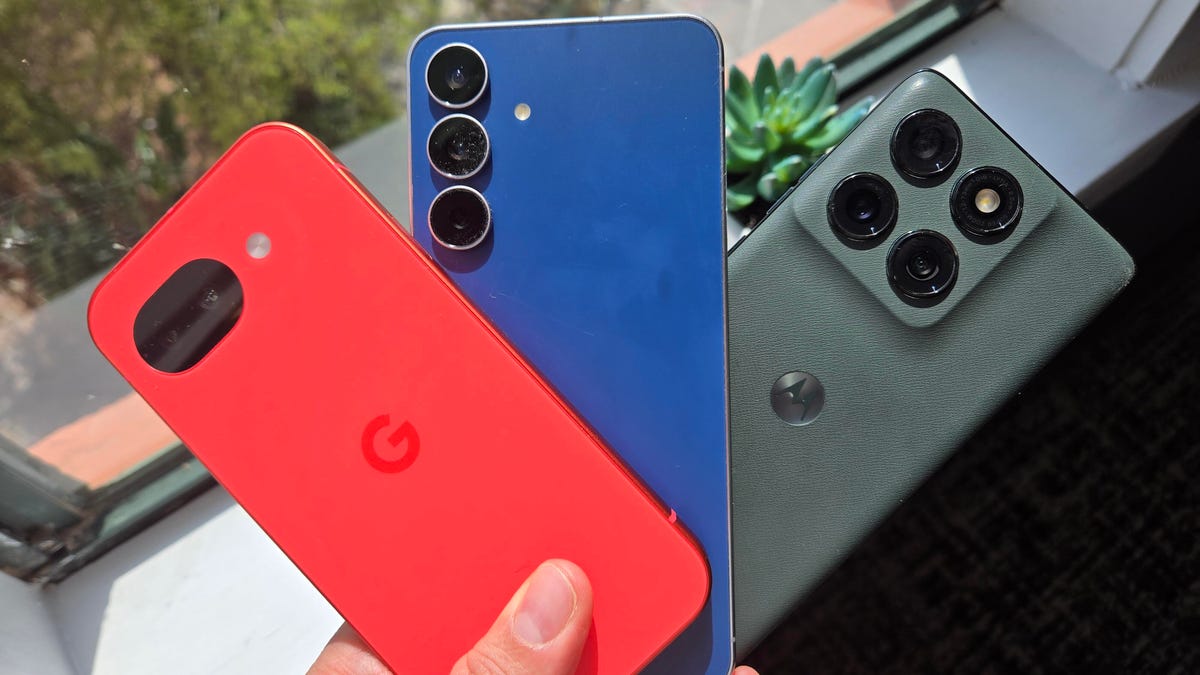
You can now file a claim in the $135 million Google data settlement. The case centers on claims that Android devices transmitted user data without consent. Specifically, the class action lawsuit Taylor v. Google LLC contends that Google’s Android devices passively transferred cellular data to Google without user permission, even when the devices were idle. While not admitting fault, Google reached a preliminary settlement in January, agreeing to pay $135 million to about 100 million US Android phone users.
The official settlement website for the lawsuit is now live. The final approval hearing won’t occur until June 23, when the court will consider whether Google’s settlement is fair and listen to objections. After that, the court will decide whether to approve the $135 million settlement.
In the meantime, if you qualify and want to be paid as part of the settlement, you can select your preferred payment method on the official website. There, you can find information on speaking at the June 23 court hearing and on how to exclude yourself or write to the court to object by May 29.
As part of the settlement, Google will update its Google Play terms of service to clarify that certain data transfers do occur passively even when you’re not using your Android device, and that cellular data may be relied upon when not connected to Wi-Fi. This can’t always be disabled, but users will be asked to consent to it when setting up their device.
Google will also fully stop collecting data when its «allow background data usage» option is toggled off.
Who can be part of the settlement?
In order to join the Taylor v. Google LLC settlement, you must meet four qualifications:
- Be a living, individual human being in the US.
- Have used an Android mobile device with a cellular data plan.
- Have used the aforementioned device at any time from Nov. 12, 2017, to the date when the settlement receives final approval.
- You’re not a class member in the Csupo v. Google LLC lawsuit, which is similar but specifically for California residents.
The final approval hearing is on June 23, so you can add your payment method until then. The hearing’s date and time may change, and any updates will be posted on the settlement website.
If you choose to do nothing, you will still be issued a settlement payment, but you may not receive it if you don’t select a payment method.
How much will I get paid?
It’s not currently known exactly how much each settlement class member will receive, but the cap is $100. Payments will be distributed after final court approval and after any appeals are resolved.
After all administrative, tax and attorney costs are paid, the settlement administrator will attempt to pay each member an equal amount. If any funds remain after payments are sent, and it’s economically feasible, they will be redistributed to members who were previously and successfully paid. If it’s not economically feasible, the funds will go to an organization approved by the court.
Technologies
Samsung’s Galaxy Watch Ultra 2 Might Come in 5G and 4G Cellular Models
If the rumor proves true, the 5G Galaxy Watch Ultra would rival the 5G-enabled $799 Apple Watch Ultra 3 that debuted last fall.
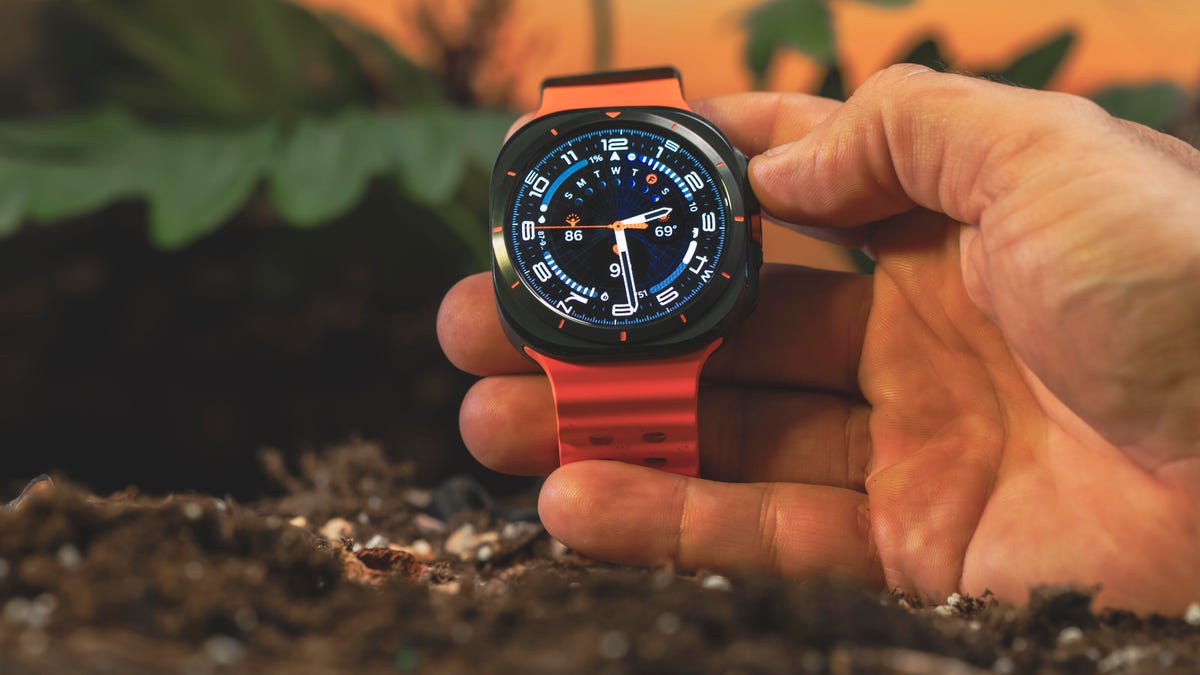
Samsung’s next high-end Galaxy Watch could support faster 5G speeds, but if this leak is true, it will depend on where you live. The rumored Samsung Galaxy Watch Ultra 2 might come in 5G and 4G cellular models, with availability for each smartwatch depending on the country.
According to the Dutch website Galaxy Club (and spotted by SamMobile), Samsung’s servers may have revealed a series of model numbers that point to 5G, 4G and Wi-Fi-enabled editions of the next Galaxy Watch Ultra, which would succeed the original model that debuted in 2024.
A representative for Samsung did not immediately respond to a request for comment.
The Galaxy Club website speculates that the 5G edition would be sold in the US and Korean markets, while the 4G edition would sell in the rest of the world. In the US, a 5G version of the Galaxy Watch Ultra would rival the 5G-enabled $799 Apple Watch Ultra 3, which debuted last fall. The 4G edition would have broader compatibility worldwide, since the earlier network is far more established.
It will likely be a few months until we hear anything official about the Galaxy Watch Ultra 2. Samsung typically unveils its new watches in the summer alongside its Galaxy Z Fold and Z Flip foldable phones. Last year, Samsung unveiled the Galaxy Watch 8 and the Galaxy Watch 8 Classic, but otherwise left the prior 2024 Ultra in the lineup for those looking for a larger 47mm smartwatch.
-
 Technologies3 года ago
Tech Companies Need to Be Held Accountable for Security, Experts Say
-
 Technologies3 года ago
Best Handheld Game Console in 2023
-
 Technologies3 года ago
Tighten Up Your VR Game With the Best Head Straps for Quest 2
-
 Technologies4 года ago
Black Friday 2021: The best deals on TVs, headphones, kitchenware, and more
-
 Technologies5 лет ago
Google to require vaccinations as Silicon Valley rethinks return-to-office policies
-
 Technologies5 лет ago
Verum, Wickr and Threema: next generation secured messengers
-
 Technologies4 года ago
Olivia Harlan Dekker for Verum Messenger
-
 Technologies4 года ago
The number of Сrypto Bank customers increased by 10% in five days