
Technologies
I Grew Up on Atari. Now I’m Reliving My Childhood on the Gamestation Go
Commentary: Wander down Gen X gamer memory lane with 200 games, including Pac-Man, Asteroids, Berserk and Centipede.
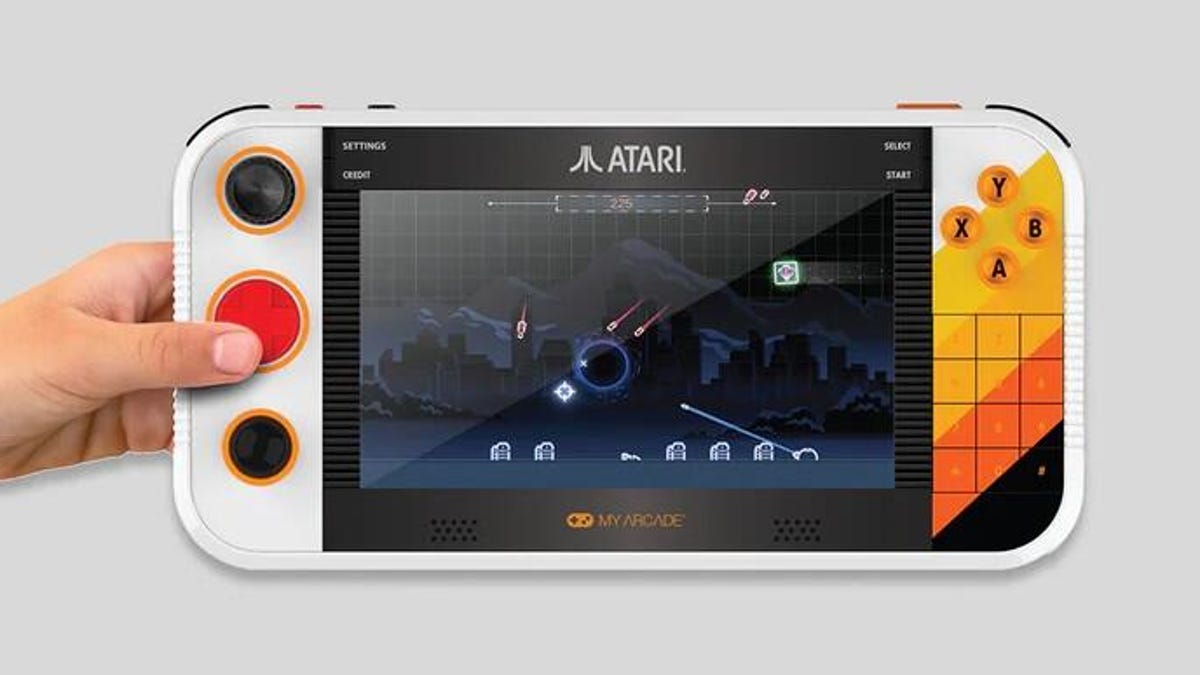
On Christmas Day, 1982, I unwrapped my very first video game console, an Atari 2600. Although it was released in 1977, it was new to me, and I’m pretty sure the reason my parents got it for me was because of a 2600 game released around that time: E.T.: The Extra-Terrestrial. My parents knew I was obsessed with the movie, a transformative film that I almost missed because I was so scared to watch it.
Don’t miss any of our unbiased tech content and lab-based reviews. Add CNET as a preferred Google source.
Seven-year-old me was ecstatic. With my gigantic brown glasses atop my nose, wearing a red E.T. shirt, I had one of the best Christmases ever. Despite my love for the movie, I didn’t get far in the game, which left me frustrated and confused. I had no idea it wasn’t because I was unskilled, but because it was bad. Even today, people find the game overly complex and impenetrable to play.
(How bad? Copies of the game were literally buried for decades because it sold so poorly.)
The Atari 2600 came bundled with Combat and two controllers. I played it for years, starting down the road of becoming a dedicated gamer like millions of other kids of the era. If you had asked me a few months ago how many games I remembered from the 2600 or its subsequent successors, the Atari 5200 and 7800, I would have had a hard time answering. I could have named maybe a dozen titles at most.
So, when Atari lent me a Gamestation Go handheld gaming console to try out, I was shocked that dozens of titles came rushing back to me. The moment I saw their cover art, animated screenshots, or just their titles, memories flooded back quickly. I played so many of these.
And the ones I didn’t get to own or try, I pined over, pointing at them at the store or poring over whatever game magazines I could get my hands on.
Asteroids and Berserk and Centipede and Night Driver and Yar’s Revenge — so, so many games.
Old games, new console
The Gamestation Go, which sells for $179, collects about 200 of those Atari home console games. But it also includes versions of arcade games, including Crystal Castles, Food Fight and Tempest, plus seven Balls of Steel pinball tables, Classic and 2600 versions of Pac-Man, and games from Jaleco and Piko Interactive such as Bases Loaded and Bad Street Brawler. Many of the games can be enjoyed in multiplayer mode by connecting a game controller.
It’s a wide-ranging set of games, and Atari packages it in a nice hardware setup with a larger screen than the original Nintendo Switch.
There are no detachable controllers like on the Switch, but the crazy array of controller options makes up for it: the usual D-pad and shoulder buttons, but also a dial you can rotate (good for games like Breakout), a trackball wheel (for games like Centipede and Crystal Castles) and even a physical number pad, handy for some Atari 5200 games and if Mattel’s Intellivision titles ever get added.
It features an HDMI port, three USB-C ports, a headphone jack, and a micro-SD slot for side-loading additional games. A solid, but flimsy-looking kickstand can prop up the system. An extra set of small buttons gets you Settings, Credit, Select and Start. Instructions for using the game system, such as navigating in and out of titles, are clear and available from the main menu.
You can perform system updates via built-in Wi-Fi, but there’s no app store to buy or download additional games.
Retro vs. modern
The biggest challenge I faced during my time with the Gamestation Go was devoting time to games from eras past, and ignoring the siren call of modern games on modern consoles and computers.
Did I really want to blast an endless downward cascade of Centipedes or play very slow-paced stick-figure Tennis when I could be finishing Act II of Clair Obscur: Expedition 33 or hopping onto a Marvel Rivals match with my friends?
Some of the gameplay of the old Atari games, and a few of their Recharged revamps, still hold up incredibly well. Missile Command still raises your pulse no matter which version you try, and it’s fun to control with the included trackball, even if its marble size makes it a challenge to use with as much precision as the larger one you might remember from the arcade.
The Balls of Steel pinball tables look and play great, even if viewing them on a horizontal screen presents a challenge to gameplay. Tempest with the dial or trackball controls is still a twisted joy. I found myself particularly drawn to arcade games I either missed entirely, such as Cisco Heat All American, or that I remember dropping many, many quarters into, like Asteroids.
Missing in action? E.T., the game that started it all for me. But there’s Steeplechase, with its sorta-horse animations, and Ninja Golf, which is as weird as it sounds.
Getting bogged down with E.T.
I’m not a big emulation player, though I’ve been curious about the possibilities of home arcade cabinets that allow you to add many more games than those that come standard.
The Gamestation Go makes it easy to access retro games, provided you have access to ROM files and a microSD card to store them on. The process involves creating a set of folders to store the files in and then booting from the microSD card when the Gamestation starts up.
In my testing, the Gamestation handled Sega Genesis and Atari 2600 titles like a champ. However, online reports vary about how well it reproduces games from more advanced consoles, such as the original Sony PlayStation or the Sega Dreamcast.
There’s some controversy over ROMs, digital copies of game software. Most ROMs are copies of games that are still under copyright, meaning the original creators, such as Nintendo or Sega, legally own them. Downloading or distributing ROMs without permission is illegal in many countries, even if you own the original game. That said, some ROMS have been available on the Internet Archive, and there’s no shortage of sites that collect files and descriptions for games across many game consoles.
Atari offers this capability to play ROMs in the hopes that you will find legal means to purchase ROMs or only use ROMs from games where you already own a cartridge of a digitally purchased version.
For the sole purpose of seeing whether E.T. was what I remembered as a young boy, I found a copy of the game after trying unsuccessfully to find a way to purchase it as a digital file or even a physical copy with a ROM included.
E.T.’s visage shows up on the title screen as a chiptune version of the John Williams theme plays. When I started it up, I got goosebumps.
But that tingly feeling was gone almost instantly when the game started. I instantly fell into a bog. I tried to chase down tiny dots meant to represent Reese’s Pieces candies, but got repeatedly accosted by FBI agents and scientists. Down the bog I went. Again and again. Soon, I was dead, my alien body turned white to indicate loss of life. The frustration I felt back then was now combined with an adult’s annoyance at how poorly the game was designed. How dare they rush this game out to entice parents of kids like 1980s me? Who thought this might be fun?
After a few more annoyed minutes, I shut the game off. There’s probably an online walkthrough on how to easily beat E.T., but I didn’t even bother. I was done for another few decades, at least.
E.T. for Atari 2600, like so many other things, belongs in the past.
Should you buy a Gamestation Go?
As E.T. proves, not all the early games were good. Many of them were and continue to be garbage. (Sorry, Swordquest.)
But there are lots of gems bundled into the Gamestation Go that draw you in, even if it’s only for short bursts of time before you get tired of the repetition and want to play something from this century.
But what a warm wave of feelings the Gamestation Go will give you the first time you boot up and look at that long list of titles, games you once may have wished and wished for and spent weeks trying to master!
Is it worth buying? It really depends on how much nostalgia is worth to you these days, or whether kids in your family are curious about retro gaming and emulation.
My inner 7-year-old, the one who would have been in 8-bit heaven with so many games to play, says you’d be a fool not to. But grown-up me has some reservations.
Technologies
Today’s NYT Strands Hints, Answers and Help for March 25 #752
Here are hints and answers for the NYT Strands puzzle for March 25, No. 752.
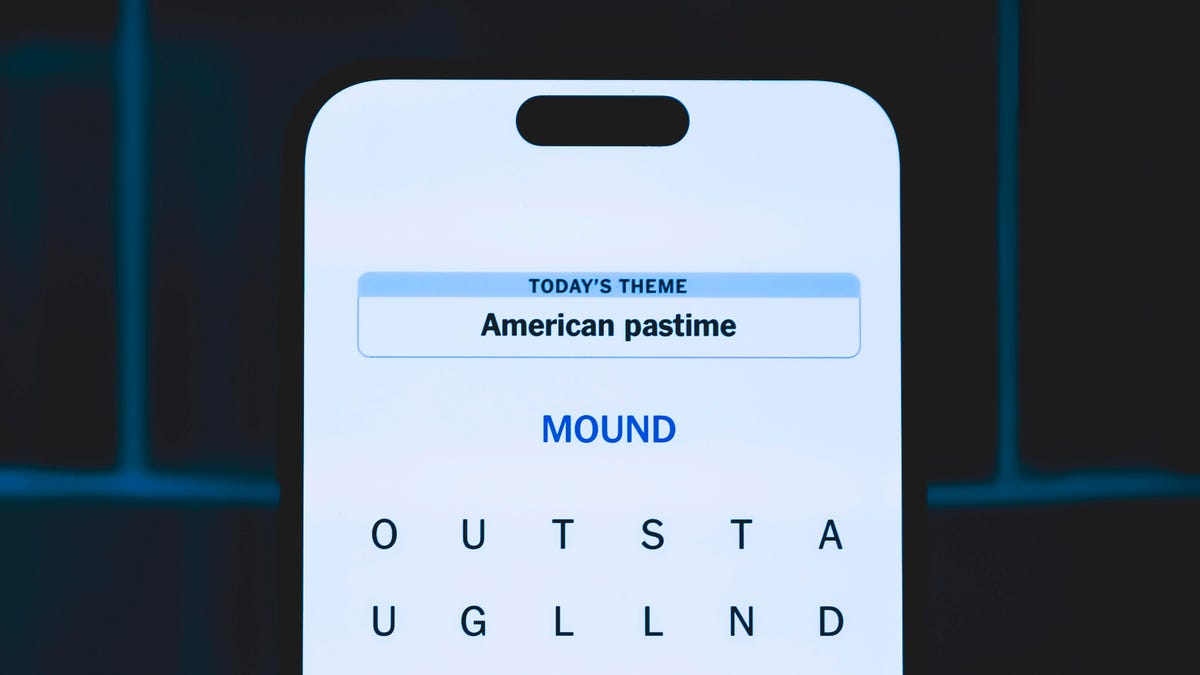
Looking for the most recent Strands answer? Click here for our daily Strands hints, as well as our daily answers and hints for The New York Times Mini Crossword, Wordle, Connections and Connections: Sports Edition puzzles.
Today’s NYT Strands puzzle is a fun one, but it might make you hungry. Some of the answers are difficult to unscramble, so if you need hints and answers, read on.
I go into depth about the rules for Strands in this story.
If you’re looking for today’s Wordle, Connections and Mini Crossword answers, you can visit CNET’s NYT puzzle hints page.
Read more: NYT Connections Turns 1: These Are the 5 Toughest Puzzles So Far
Hint for today’s Strands puzzle
Today’s Strands theme is: Intermission mission.
If that doesn’t help you, here’s a clue: Movie candy.
Clue words to unlock in-game hints
Your goal is to find hidden words that fit the puzzle’s theme. If you’re stuck, find any words you can. Every time you find three words of four letters or more, Strands will reveal one of the theme words. These are the words I used to get those hints but any words of four or more letters that you find will work:
- ROBE, BORE, WEEDS, WEED, RENT, RIND, CORN, SCAN, SPAN, SPANS, SAND, CANE, CANT, CROSS, COIN
Answers for today’s Strands puzzle
These are the answers that tie into the theme. The goal of the puzzle is to find them all, including the spangram, a theme word that reaches from one side of the puzzle to the other. When you have all of them (I originally thought there were always eight but learned that the number can vary), every letter on the board will be used. Here are the nonspangram answers:
- BEER, SODA, CANDY, FRIES, WATER, POPCORN, PRETZEL
Today’s Strands spangram
Today’s Strands spangram is CONCESSIONS. To find it, start with the C that’s three letters to the right on the top row, and wind down.
Toughest Strands puzzles
Here are some of the Strands topics I’ve found to be the toughest.
#1: Dated slang. Maybe you didn’t even use this lingo when it was cool. Toughest word: PHAT.
#2: Thar she blows! I guess marine biologists might ace this one. Toughest word: BALEEN or RIGHT.
#3: Off the hook. Again, it helps to know a lot about sea creatures. Sorry, Charlie. Toughest word: BIGEYE or SKIPJACK.
Technologies
Today’s NYT Connections: Sports Edition Hints and Answers for March 25, #548
Here are hints and the answers for the NYT Connections: Sports Edition puzzle for March 25 No. 548.
Looking for the most recent regular Connections answers? Click here for today’s Connections hints, as well as our daily answers and hints for The New York Times Mini Crossword, Wordle and Strands puzzles.
Today’s Connections: Sports Edition features a fun yellow category that’s really more games-centered than sports-focused. If you’re struggling with today’s puzzle but still want to solve it, read on for hints and the answers.
Connections: Sports Edition is published by The Athletic, the subscription-based sports journalism site owned by The Times. It doesn’t appear in the NYT Games app, but it does in The Athletic’s own app. Or you can play it for free online.
Read more: NYT Connections: Sports Edition Puzzle Comes Out of Beta
Hints for today’s Connections: Sports Edition groups
Here are four hints for the groupings in today’s Connections: Sports Edition puzzle, ranked from the easiest yellow group to the tough (and sometimes bizarre) purple group.
Yellow group hint: Rec room staples.
Green group hint: Footwear.
Blue group hint: Same team.
Purple group hint: Hoops league.
Answers for today’s Connections: Sports Edition groups
Yellow group: Games played on a table.
Green group: Nike shoes.
Blue group: Giants greats.
Purple group: NBA ____.
Read more: Wordle Cheat Sheet: Here Are the Most Popular Letters Used in English Words
What are today’s Connections: Sports Edition answers?
The yellow words in today’s Connections
The theme is games played on a table. The four answers are air hockey, foosball, pool and snooker.
The green words in today’s Connections
The theme is Nike shoes. The four answers are Air Force 1, Blazer, Pegasus and Shox.
The blue words in today’s Connections
The theme is Giants greats. The four answers are Bonds, Mays, Ott and Posey.
The purple words in today’s Connections
The theme is NBA ____. The four answers are All-Star Game, Cup, Draft and Finals.
Toughest Connections: Sports Edition categories
The Connections: Sports Edition puzzle can be tough, but it really depends on which sports you know the most about. My husband aces anything having to do with Formula 1, my best friend is a hockey buff, and I can answer any question about Minnesota teams.
That said, it’s hard to pick the toughest Connections categories, but here are some I found exceptionally mind-blowing.
#1: Serie A Clubs. Answers: Atalanta, Juventus, Lazio, Roma.
#2: WNBA MVPs. Answers: Catchings, Delle Donne, Fowles and Stewart.
#3: Premier League team nicknames. Answers: Bees, Cherries, Foxes and Hammers.
#4: Homophones of NBA player names. Answers: Barns, Connect, Heart and Hero.
Technologies
Go iPhone-Free This Spring Sale With $400 Off a Cellular Apple Watch
This might not be the latest model, but it’s still a great smartwatch at a fantastic price during Amazon’s Big Spring Sale.
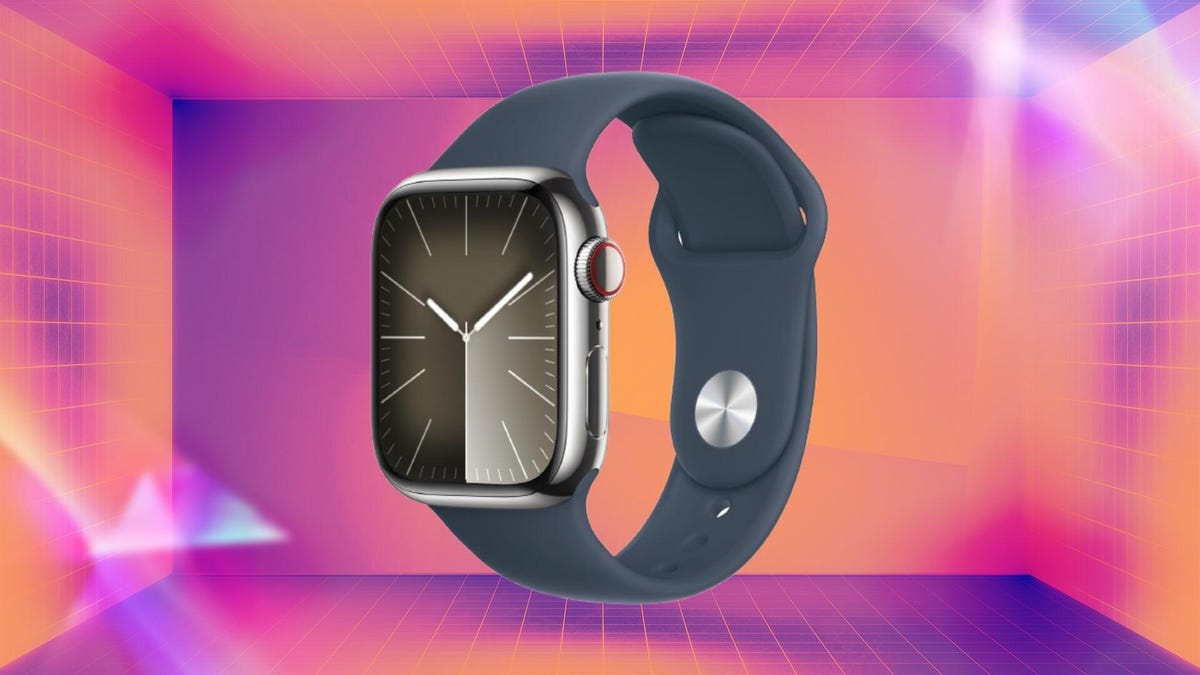
Amazon’s Big Spring Sale is now officially underway, and that means that the deals are coming thick and fast. One of those deals gets you a 41mm stainless steel cellular Apple Watch Series 9 for just $299, a massive $400 off the usual asking price. You’ll need to act fast, though, because this deal will only be available for a few more hours.
This lightning deal is selling fast, so we definitely recommend ordering your new Apple Watch sooner rather than later, otherwise you really do risk missing out.
In her Apple Watch Series 9 review, Lisa Eadicicco lauded the wearable’s improved performance when using Siri as well as its «wide variety of health and fitness features.» And with the added cellular support thrown in, you can continue to use your Apple Watch even when your iPhone isn’t nearby. That alone is worth the price of admission here.
As for the rest of the package, this model comes in the 41mm case size, so it won’t take over your wrist. Prefer the larger 45mm model? No problem, that’s also available at a discount — you’ll pay just $349, but again, time is running out.
Read more: Should You Upgrade to Apple Watch Series 11? Here Are the Key Features You Get
This model also features the popular always-on display feature, so you can always see the time even when your wrist isn’t raised. That might sound like table stakes, but it’s a feature that the Apple Watch didn’t have for far too long.
SMARTWATCH DEALS OF THE WEEK
-
$359 (save $70)
-
$250 (save $100)
-
$300 (save $50)
-
$150 (save $100)
-
$120 (save $80)
Why this deal matters
A great smartwatch can be a huge deal in your quest for better fitness. Whether you’re getting fit or staying that way, the Apple Watch is hard to beat, but prices can be steep for the latest models. Getting this previous-gen model gets you in the door for cheap, while still nabbing a premium stainless steel finish and cellular connectivity that you’d usually pay a lot more for.
-
 Technologies3 года ago
Tech Companies Need to Be Held Accountable for Security, Experts Say
-
 Technologies3 года ago
Best Handheld Game Console in 2023
-
 Technologies3 года ago
Tighten Up Your VR Game With the Best Head Straps for Quest 2
-
 Technologies4 года ago
Black Friday 2021: The best deals on TVs, headphones, kitchenware, and more
-
 Technologies5 лет ago
Google to require vaccinations as Silicon Valley rethinks return-to-office policies
-
 Technologies5 лет ago
Verum, Wickr and Threema: next generation secured messengers
-
 Technologies4 года ago
Olivia Harlan Dekker for Verum Messenger
-
 Technologies4 года ago
The number of Сrypto Bank customers increased by 10% in five days