
Technologies
I Saw the Sequel to The Witness, and Its World-Merging Puzzles Look Masterful
Order of the Sinking Star serves players plenty of brainteasers, while a background story grapples with what it means to be happy.
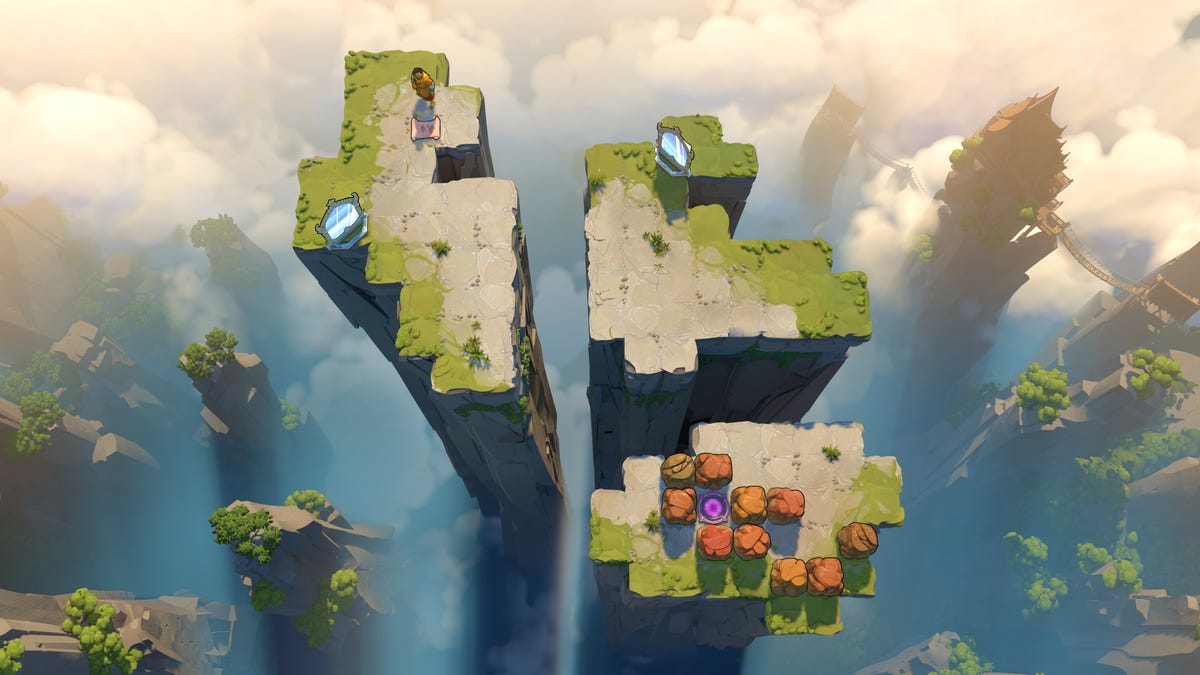
Jonathan Blow, creator of the 2008 platforming game Braid and the 2016 critically acclaimed puzzle title The Witness, has revealed his third game: Order of the Sinking Star. Over a video chat ahead of The Game Awards 2025, where the game was announced, Blow showed me his next clockwork world.
The new title from Blow’s personal studio Thekla, Inc. will be yet another puzzle game, but like his first two successes, Order of the Sinking Star has its own idiosyncratic rules and layers of depth. In it, players wander an overworld of islands that host myriad little puzzles to hop into. Each is a single screen of squares on a grid filled with doors with obstacles and enemies to navigate. Beat those to unlock islands with more brain-teasing challenges, and soon, you’ll even run into puzzles on the overworld.
Like Blow’s other games, Order of the Sinking Star is designed to reveal layers of meta-mechanics to the players as they dive deeper. Each of the four quadrants of the overworld map contains a different story, characters and basic mechanics — for instance, a trio of characters pushing, pulling and teleporting blocks around to reach the exit. But more heroes with different powers — even dragons — complicate the many puzzles as they go on.
And that’s just one of the four quadrants in the game, which have their own unique flavors of spatial challenge — all of which skyrockets in complexity in the places where they merge.
Order of the Sinking Star was partially inspired by the Japanese subgenre of Sokobon games, in which players carefully move boxes around a room (typically a warehouse) to avoid blocking themselves in a corner. The new game’s puzzles look to be thoughtful affairs, with simple levels giving way to more complex brainteasers and a background story trickling to the player in bits and pieces. Order of the Sinking Star will come out in 2026, and it looks promising.
Try making a game engine demo, end up with a whole game
After making The Witness, Blow was tired of developing in the C++ programming language, so he decided to make his own called Jai. But his team didn’t stop there and diverted to making their own specialized game engine. Order of the Sinking Star was intended to be a small proof of concept that would showcase the kinds of games possible to make with it. But Blow and his team couldn’t resist adding more and more puzzle dynamics.
«It was supposed to be a small game, but for some reason, it’s kind of stupid to build a game that’s about a combinatorial explosion and expect it to be small,» Blow said. «So for this game, that ended up meaning it’s really, really big. I probably will never do something this big again unless somehow I have a much bigger team.»
Order of the Sinking Star has a slight cartoonish look to it, at least from what was finished — I saw a good number of unfinished graphics, as Blow was eager to show off certain later game mechanics that hadn’t gotten finalized visuals. The complexity of the game won’t be in pushed pixels and lifelike graphics. But that’s likely for the best, as the simpler style makes the obstacles and map components as clear as possible to the players.
However, while players can proceed in any direction of the overworld, mechanics can get complicated pretty quickly. Blow showed me the first area, the northern quadrant, styled after a traditional swords-and-sorcery fantasy world. Players control three characters, each with different abilities: a warrior who can push objects, a thief who can’t help stealing and drags the last thing they touch behind them, and a wizard who teleports to swap places with the object they’re facing. Some puzzles have just one character, while more advanced ones will require players to swap between all three.
Players are dropped into the game without much preamble so they can get to puzzling, but text hints and audio logs (which Blow is an avowed fan of) will share the contextual story. The story consists of a queen who is using the heroes to help delve deeper into her land of puzzles in the northern section of the game.
Teleporters will enable players to hop around the different quadrants; if they get stuck, they can pop back to another area with different dynamics. The eastern quadrant, for instance, is all about using a magical mirror that beams a clone of the player’s character at a 90-degree angle to them, moving back and forth in tandem. In this land’s puzzles, players can swap from character to clone and back again to hop across islands.
But Blow and his team didn’t spend all this time just making four different puzzle biomes. On the overworld border where any of these quadrants collide, players will find levels that merge their mechanics. Following along the northeastern border, players will find maps with both fantasy hero and mirror puzzle mechanics mashed together.
Considering how long Blow’s team spent on the game and what little I saw, I only expect these complexities to grow and expand, surprising players with sophisticated alterations of these basic rules. That’s what made The Witness so compelling for me to explore deeper, as the game’s puzzles began to impact each other. Well, that and the philosophical underpinnings as the game’s setting and lore revealed its message.
The philosophy of Blow’s next game
After the storytelling depth layered into Blow’s previous blockbuster successes, it’s smart to expect similar meaning weaved into Order of the Sinking Star. Like Blow’s other games, the secrets are in the structure.
In Order of the Sinking Star’s case, the mystery lies in the overworld that players return to and explore between puzzles. What is it, who made it, and why? As the player drops into puzzles, the characters they control give a few lines of dialogue, which combine with audio logs to tell a bigger story: 500 years in the future, humanity exists in a postscarcity world.
«If you have no problems and everybody’s essentially infinitely rich, what is the point of life at that point?» Blow said. «Do people still interact in a normal way? Do they even talk to each other? How do they feel from day to day about themselves?»
Despite a true postscarcity society being far in the future, we’re also the richest society in the history of the world, Blow noted — and we already show plenty of rich society problems. He was quick to say that not everyone in the US feels wealthy right now. But even those with roofs over their heads who have jobs and live with someone in conditions where they’re generally taken care of are still challenged by questions a postscarcity civilization would have, which Blow quickly rattled off.
«How do I spend my days, and do I spend them being happy? What does being happy mean to me — is it a shallow form of being happy or a deep form? What are those two different things? Should one have judgment about that, and what kind of judgment?» Blow said.
The game’s story and art aren’t finished, so the delivery of these themes hasn’t been finalized. But Blow did confirm that Order of the Sinking Star has «way, way more story in it than either of my previous games — so I’m just really concerned with making sure it’s good.»
Making games that stretch past what’s out there — and what’s next for Blow
Though the 1993 classic first-person puzzle game Myst partially inspired (and was compared to) The Witness, there weren’t many games like it when it came out in 2016. Blow wasn’t sure folks would play the game, but plenty did. That supported his philosophy that you may have some idea what people would buy based on what’s out there, but nobody can tell how a game with an unknown design would land.
«That’s one interesting thing for a designer to do, and that’s what I try to do: make things that are a little bit outside the scope of what currently exists, and then hopefully other people appreciate those things as well,» Blow said.
Plenty has changed since his last game came out in 2016, including the noise of an increasing number of games jostling for attention upon release. Blow plays some of these, especially in his favored genre of puzzle games, which he still believes can be «really magical» when they have a mind-expanding idea. But too many other games are made by designers who don’t set their sights high, and their central idea is more of a tricky gimmick.
When I ask him about recent puzzle games he’s enjoyed, his tastes skew esoteric, like last year’s Shogun Showdown. Even a 20-minute demo for a game that hasn’t come out yet, Trifolium: The Adventures of Gary Pretzelneck, comes to Blow’s mind ahead of other popular puzzle games like this year’s The Blue Prince.
Yet he notes that The Blue Prince proves his point that games defying player tastes can make them desire the unexpected.
«If you asked people in January 2025, ‘What game do you most want to play this year,’ none of them would have described Blue Prince probably because they didn’t know that they wanted to play that, right?» Blow said.
Developing the game engine was a lengthy process that Blow and his team hope will translate to less time to develop their next game. He’s already got an idea of what he wants to do. Though it’s one of several potential game ideas he and his team could dig into, he already prototyped it privately — back before The Witness even came out.
«It’s not a puzzle game; I’ll drop a hint about that,» Blow said. «I’m looking forward to working on a nonpuzzle game.»
We’ll have to see whether Blow can resist avoiding the clockwork mechanics that have made his games irresistible to puzzle brains.
Technologies
Ring Finally Goes Wire-Free for Its Latest 4K Video Doorbells
The launch of battery-powered versions of the company’s powerful AI doorbells has been highly anticipated.
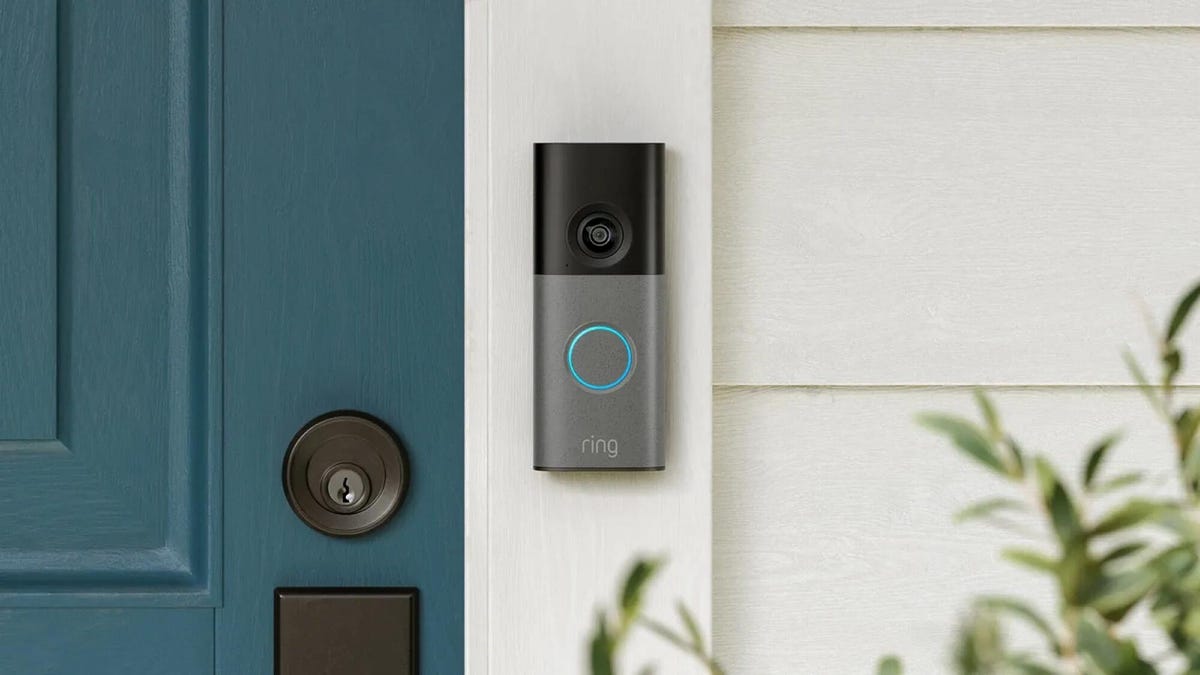
Security company Ring on Wednesday announced a significant expansion of its video doorbell line, notably battery-powered versions of both its 4K and 2K models, priced from $80.
Both Amazon’s Ring and Google Nest debuted high-resolution video doorbells with new AI features in the fall of 2025. But they were wired only, and in my tests, I kept thinking, «I sure wish there were battery models available.»
Wireless video doorbells are far better for most front doors than models that require connecting to your existing doorbell wiring, which is often poorly positioned for a security camera. Mine, for example, is located on a wall beside my door that’s useless for any kind of video views, no matter how you angle a lens.
«Enhancing image quality in battery-powered doorbells means customers can enjoy reliable performance with the flexibility to install devices in a way that suits their space, whether renting or living in homes without existing wiring,» a Ring spokesperson said.
At first, I wondered whether the higher 4K resolutions and more advanced AI features would use too much power to support batteries. If so, Ring is the first to fix that issue with this suite of doorbells, including these models available for preorder right now:
- Ring Battery Doorbell Pro — $250: This model offers up to 4K resolution and 10x zoom, and Ring says it features a redesigned internal architecture to support battery power.
- Ring Battery Doorbell Plus (2nd-gen) — $180: This model includes a quick-release battery pack along with 2K video.
- Ring Battery Doorbell (2nd-gen) — $100: This video doorbell includes 2K video, a 6x zoom and what Ring calls a «streamlined, rechargeable design,» which means you take the entire video doorbell to charge it, not just the battery — a design I greatly prefer, since Ring’s battery packs can get fiddly.
There’s also a new version of a Ring wired doorbell with 2K resolution, starting at $80. It wouldn’t be Ring without a plethora of doorbell devices to confuse newcomers, which is why I have a guide specifically for Ring video doorbells that will need some updating once I finish testing these new models.
Resolution plus an intelligence upgrade
Ring’s ordinary subscriptions of the Ring Protect plan give you cloud video storage and intelligent alerts for people, packages and vehicles, which are important but not really advanced AI. But spring for the $20-per-month Ring AI Pro cam, and this new generation of cameras opens up other capabilities.
Ring’s AI features include AI video descriptions, so if you get an alert, you can also get a summary of what the doorbell saw, including people and activities. A similar feature lets you search your video history with specific terms, such as «bike,» «truck» and so on. You also get the beta version of Ring’s Familiar Faces feature, which can ID logged faces of people who approach.
If these AI features make you uneasy and you’d rather protect your privacy, the best option is to avoid a subscription altogether or choose a lower-tier plan that gives you cloud storage without AI.
I also have a guide on how to turn off Ring’s detection and data-sharing features that might make you nervous, so you can keep what you like while ditching what you don’t.
Technologies
Today’s NYT Mini Crossword Answers for Thursday, March 26
Here are the answers for The New York Times Mini Crossword for March 26.
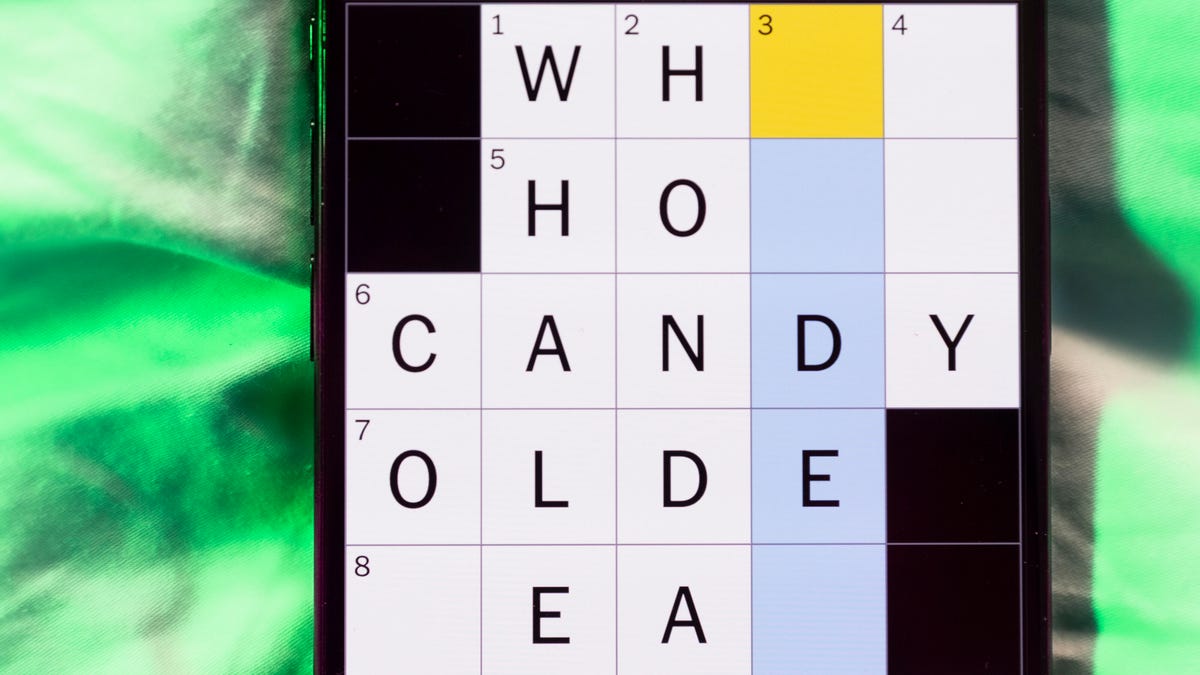
Looking for the most recent Mini Crossword answer? Click here for today’s Mini Crossword hints, as well as our daily answers and hints for The New York Times Wordle, Strands, Connections and Connections: Sports Edition puzzles.
Baseball is back! You’ll see baseball images patterned throughout today’s Mini Crossword grid, and when you solve the puzzle, they’ll spell out a certain word. Play ball! Er, read on for all the answers. And if you could use some hints and guidance for daily solving, check out our Mini Crossword tips.
If you’re looking for today’s Wordle, Connections, Connections: Sports Edition and Strands answers, you can visit CNET’s NYT puzzle hints page.
Read more: Tips and Tricks for Solving The New York Times Mini Crossword
Let’s get to those Mini Crossword clues and answers.
Mini across clues and answers
1A clue: Degrees for boardroom execs
Answer: MBAS
5A clue: «___ want for Christmas …»
Answer: ALLI
6A clue: What Hamlet holds while giving his «Alas, poor Yorick!» speech
Answer: SKULL
7A clue: Wild, as an animal
Answer: FERAL
8A clue: Sphere
Answer: ORB
Mini down clues and answers
1D clue: Word after «match» or «mischief»
Answer: MAKER
2D clue: Bit of writing on a book jacket
Answer: BLURB
3D clue: Penne ___ vodka
Answer: ALLA
4D clue: Window ledge
Answer: SILL
6D clue: Bay Area airport, for short
Answer: SFO
Technologies
McDonald’s KPop Demon Hunter Meals Include Bright Purple Nugget Sauce
The Derpy McFlurry mixes popping boba pearls and berry sauce into a soft-serve dessert.

McDonald’s has seen success with themed combo meals, including its holiday Grinch Meal. Now, the fast-food chain is capitalizing on Netflix’s Oscar-winning animated film, KPop Demon Hunters, with new upcoming menu items and both a breakfast meal and a lunch/dinner offering. Let’s hope you like the color purple.
The HUNTR/X Meal, named for the K-pop girl group in the movie, is a 10-piece chicken McNuggets meal that includes a medium drink and three special menu items.
Ramyeon McShaker fries come with a small bag of soy, garlic, sesame and spice seasoning, along with regular McDonald’s french fries. You sprinkle the seasoning into the provided bag, dump in the fries, shake it all up and eat.
The meal includes two new sauces for the fries and nuggets. Hunter sauce is a sweet chili sauce mixing notes of chili, garlic and pepper. But my favorite item on this new menu is Demon sauce, a bold mustard sauce with some heat and a bold purple color. There’s just not enough dark purple food out there.
There’s also a new dessert, the Derpy McFlurry, which blends creamy vanilla soft serve with berry-flavored popping boba pearls, served with a swirl of wild berry sauce. McDonald’s named it for the supernatural feline, Derpy Tiger, from the movie.
If breakfast is your bag, the new morning meal is the Saja Boys Breakfast Meal, named for the movie’s boy band.
It includes a Spicy Saja McMuffin sandwich, which is a sausage McMuffin with egg and a spicy Saja sauce, hash browns and a small drink.
Both meals come with a photocard for one of the bands and a Derpy card. The Derpy card includes a QR code you can scan to unlock online content about the film.
The full KPop Demon Hunters menu should be available at participating McDonald’s beginning March 31.
The McDonald’s Grinch meal (and its accompanying patterned socks) sold out quickly, so KPop Demon Hunters fans may want to mark their calendars and nab a meal when they are released.
-
 Technologies3 года ago
Tech Companies Need to Be Held Accountable for Security, Experts Say
-
 Technologies3 года ago
Best Handheld Game Console in 2023
-
 Technologies3 года ago
Tighten Up Your VR Game With the Best Head Straps for Quest 2
-
 Technologies4 года ago
Black Friday 2021: The best deals on TVs, headphones, kitchenware, and more
-
 Technologies5 лет ago
Google to require vaccinations as Silicon Valley rethinks return-to-office policies
-
 Technologies5 лет ago
Verum, Wickr and Threema: next generation secured messengers
-
 Technologies4 года ago
Olivia Harlan Dekker for Verum Messenger
-
 Technologies4 года ago
The number of Сrypto Bank customers increased by 10% in five days