

Technologies
Thin Phone Duel: iPhone Air vs. Galaxy S25 Edge
Does a thin design really make that much of a difference? Here’s the skinny on the slim phones from Apple and Samsung.

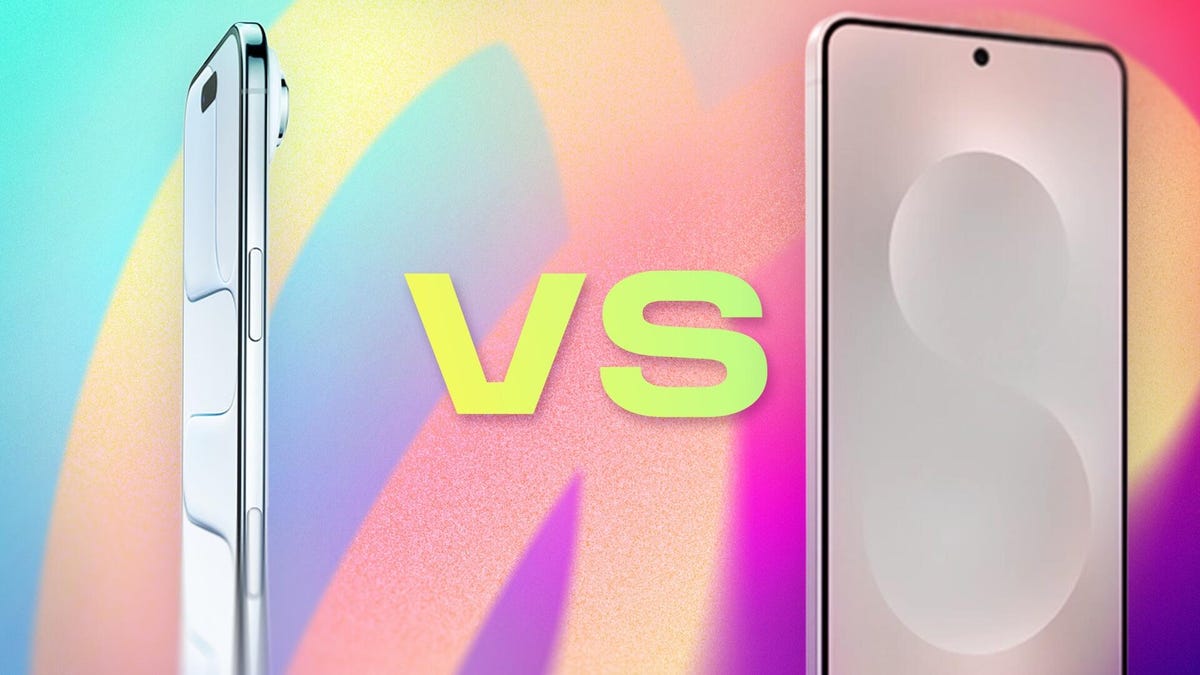
If you’re looking for a new phone for the holidays or for 2026, this year’s options have taken a tight turn. Both Apple and Samsung include extra-thin phones in their lineups, bringing up the question of whether a slim design is preferable to the roughly standard sizes we’ve gotten used to. And if you do decide you want to shave some thickness from your everyday phone, which one comes out on top: the Apple iPhone Air or the Samsung Galaxy S25 Edge?
So let’s compare the features of these thin phones. If you press them together, are they much thicker combined than a regular iPhone 17 or Galaxy S25? And do they overcome tradeoffs in battery life, camera and sound quality that come with a thinner design? I’m here to do the math and compare features for you.
Looking to order the iPhone Air? Check out our order guide to learn if you can get it free and other great deals.
Want to buy the Samsung Galaxy S25 Edge? Find out which carriers and retailers are offering the best deals on Samsung’s slim phone.
Don’t miss any of our unbiased tech content and lab-based reviews. Add CNET as a preferred Google source.
iPhone Air vs. S25 Edge price comparison
-
iPhone Air: $999. The iPhone Air takes the place formerly held by the iPhone 16 Plus, making it the only model with a screen larger than the iPhone 17 that isn’t an iPhone 17 Pro.
-
Galaxy S25 Edge: $1,100. The S25 Edge joins the S25 and S25 Ultra in this year’s Galaxy lineup.
The iPhone Air includes fewer features than the iPhone 17, such as the number of cameras. However, it features a larger display, an A19 Pro processor, and is equipped with 256GB of storage to begin with. Additionally, Apple has consistently applied premium pricing for minor design changes. The original MacBook Air fit into an inter-office envelope and cost $1,799, despite being underpowered compared to the rest of the MacBook line. (Over a few generations, it would eventually become Apple’s entry-level affordable laptop at $999, where it still resides.)
The Galaxy S25 Edge’s higher price ($101) could be an attempt to capture more dollars from customers looking for a phone that sets them apart, but we’re already seeing occasional steep discounts on it.
In both cases, it’s worth noting that the pricing has held up against the Trump administration tariffs so far.
iPhone Air vs. S25 Edge dimensions and weight
Now it’s time to go deep — as in, just how thin is the depth of each phone?
No phone manufacturer describes its phones as bulky or chunky, even for extra-large models like the iPhone Pro Max. Yet, the difference between the depths of the iPhone Air and the S25 Edge, as well as the standard phones of each respective family, is stark.
Not counting the camera assembly, which Apple refers to as the «plateau,» most of the iPhone Air’s body is 5.64mm thick. The S25 Edge, at its narrowest point, is a hair thicker at 5.8mm. (Both companies list only the thinnest measurement, not including the cameras.) Compare that to 7.9mm for the iPhone 17 and 7.2mm for the Galaxy S25.
The Galaxy Z Fold 7 is actually thinner when open, at 4.2mm, but it also has a larger surface area to accommodate its battery and other components. Other foldables from Chinese companies, such as Huawei, Oppo and Honor, also boast thinner bodies than the iPhone Air or S25 Edge, but only when opened.
And when you press the two thin phones together, do they really match up to the typical phone slab you’re carrying now? Combined (and again, excluding the camera bumps), the iPhone Air and S25 Ultra are 11.44mm thick, which is thicker than either the iPhone 17 or Galaxy S25, and even the iPhone 17 Pro Max at 8.75mm. However, if you want to achieve a more vintage feel, the original first-generation iPhone, released in 2007, measured 11.6mm.
Surprisingly, the less depth translates to only a slight decrease in weight compared to the other models in each lineup. The iPhone Air weighs 165 grams versus 177 grams for the iPhone 17, while the S25 Edge pips in at just 163 grams but gets barely undercut by the Galaxy S25 at 162 grams.
How big is each phone in the hand? While both are similar, the iPhone Air is slightly shorter and narrower, measuring 156.2mm tall and 74.7mm wide, compared to the S25 Edge’s dimensions of 158.2mm tall and 75.6mm wide.
iPhone Air vs. S25 Edge displays
Apple calls the iPhone Air’s 6.5-inch OLED screen a Super Retina XDR display. It features a high resolution of 2,736×1,260 pixels at a density of 460 ppi (pixels per inch) and can output a maximum of 3,000 nits of brightness outdoors, as well as a minimum of 1 nit in the dark.
Samsung packed a larger 6.7-inch QHD+ Dynamic AMOLED 2X screen into the S25 Edge, which translates to a high-resolution display measuring 3,120×1,440 pixels at 513 ppi. Its brightness goes up to 2,600 nits.
Both phones’ screens feature adaptive 120Hz refresh rates for smoother performance.
Comparing the iPhone Air and S25 Edge cameras
So far, many of the specs have been close enough to weigh each phone fairly evenly. Then, we get to the cameras.
The iPhone Air includes a single rear-facing 48-megapixel wide camera with a 26mm-equivalent field of view and a constant f/1.6 aperture. In its default mode, the camera outputs 24-megapixel «fusion» photos that result from an imaging process where the camera captures a 12-megapixel image (using groups of four pixels acting as one larger pixel for improved light gathering, known as «binning») and a 48-megapixel reference for additional detail.
Apple also claims the iPhone Air can capture 2x-zoomed (52mm-equivalent) telephoto images that are 12 megapixels in dimension and represent a crop of the center of the image sensor.
The S25 Edge features two built-in rear cameras: a 200-megapixel wide-angle lens and a 12-megapixel ultrawide lens. There’s no dedicated telephoto camera, so the S25 Edge also offers a 2x-zoomed crop that shoots photos at 12 megapixels in size.
The front-facing selfie cameras on each phone differ significantly. The iPhone Air introduces a new 18-megapixel camera with an f/1.9 aperture. But the increased resolution over the S25 Edge’s 12-megapixel selfie camera isn’t what’s notable.
Apple calls it a Center Stage camera because it features a square sensor that can capture tall or wide shots without requiring the user to physically turn the phone, unlike the 4:3 ratio sensors found in typical selfie cameras. It can adapt the aspect ratio based on the number of people it detects in front of the camera: a traditional portrait orientation when you’re snapping a photo of yourself, for example, or switch to a landscape orientation when two friends stand next to you in the frame.
iPhone Air vs. S25 Edge batteries
When it comes to concerns, the battery life of thin phones is at the top of the list. The insides of most phones are packed with as much battery as will fit, so making a phone slimmer naturally means removing space for the battery. With either model, you end up sacrificing battery power for design. But how much?
Apple doesn’t list the iPhone Air’s battery capacity, but claims «all-day battery life» and up to 27 hours of video playback. It also sells a special iPhone Air MagSafe Battery add-on that magnetically snaps to the back of the phone and works only with the iPhone Air. In her review, CNET’s Senior Tech Reporter Abrar Al-Heeti drained the battery in 12 hours over a phone-intensive day, but did end a more typical day with 20% remaining.
The S25 Edge features a 3,900-mAh battery, which Samsung claims will support up to 24 hours of video playback. (Come on, phone manufacturers, our phones aren’t televisions left running in the background.)
In her S25 Edge review, Al-Heeti noted that the phone also generally lived up to Samsung’s own «all-day battery life» boast, saying, «Ultimately, you’ll get less juice out of that slimmer build, but S25 Edge offers just enough battery life to make me happy…But the S25 Edge has shifted my priorities. I’m enjoying the sleek form factor so much that I’m willing to make some compromises, even if that means I have to be sure to charge my phone each night, which is something I tend to do anyway.»
It’s worth noting that both phones support fast charging when used with a 20-watt or higher wired power adapter, allowing them to reach around 50% charge in 30 minutes from a completely discharged state.
iPhone Air vs. S25 Edge processor, storage and operating system
The iPhone Air is powered by Apple’s latest A19 Pro processor, the same one found in the iPhone 17 Pro models (compared to the A19 in the stock iPhone 17). Apple doesn’t list the built-in memory, but we suspect it includes 8GB of RAM (which is recognized as the minimum amount to run AI features such as Apple Intelligence). The base storage configuration is 256GB, with options to order the iPhone Air with 512GB or 1TB capacity. It ships with iOS 26, the latest version of the operating system that Apple released widely this week.
The S25 Edge is powered by a Snapdragon 8 Elite processor, the same one that powers the other S25 models. It includes 12GB of RAM and is available in storage capacities of 256GB and 512GB. The phone comes preinstalled with Android 15.
iPhone Air vs. S25 Edge all specs
Apple iPhone Air vs. Samsung Galaxy S25 Edge
| Apple iPhone Air | Samsung Galaxy S25 Edge | |
| Display size, tech, resolution, refresh rate | 6.5-inch OLED; 2,736 x 1,260 pixel resolution; 1-120Hz variable refresh rate | 6.7-inch QHD+ AMOLED display; 120Hz refresh rate |
| Pixel density | 460ppi | 513 ppi |
| Dimensions (inches) | 6.15 x 2.94 x 0.22 in | 2.98 x 6.23 x 0.23 inches |
| Dimensions (millimeters) | 156.2 x 74.7 x 5.64 mm | 75.6 X 158.2 X 5.8mm |
| Weight (grams, ounces) | 165 g (5.82 oz) | 163g (5.75 oz) |
| Mobile software | iOS 26 | Android 15 |
| Camera | 48-megapixel (wide) | 200-megapixel (wide), 12-megapixel (ultrawide) |
| Front-facing camera | 18-megapixel | 12-megapixel |
| Video capture | 4K | 8K |
| Processor | Apple A19 Pro | Snapdragon 8 Elite |
| RAM + storage | RAM N/A + 256GB, 512GB, 1TB | 12GB RAM + 256GB, 512GB |
| Expandable storage | None | No |
| Battery | Up to 27 hours video playback; up to 22 hours video playback (streamed).Up to 40 hours video playback, up to 35 hours video playback (streamed) with iPhone Air MagSafe Battery | 3,900 mAh |
| Fingerprint sensor | None (Face ID) | Under display |
| Connector | USB-C | USB-C |
| Headphone jack | None | None |
| Special features | Apple N1 wireless networking chip (Wi-Fi 7 (802.11be) with 2×2 MIMO), Bluetooth 6, Thread. Action button. Apple C1X cellular modem. Camera Control button. Dynamic Island. Apple Intelligence. Visual Intelligence. Dual eSIM. 1 to 3,000 nits brightness display range. IP68 resistance. Colors: space black, cloud white, light gold, sky blue. Fast charge up to 50% in 30 minutes using 20W adapter or higher via charging cable. Fast charge up to 50% in 30 minutes using 30W adapter or higher via MagSafe Charger. | IP88 rating, 5G, One UI 7, 25-watt wired charging, 15-watt wireless charging, Galaxy AI, Gemini, Circle to Search, Wi-Fi 7. |
| US price starts at | $999 (256GB) | $1,100 (256GB) |
Technologies
Nvidia Expands AI Investment Strategy, Surpassing $40 Billion in Equity Commitments This Year
Nvidia’s equity investments have surpassed $40 billion this year as the chipmaker expands its financial footprint across the AI supply chain, raising questions about market sustainability and circular investment strategies.


Last year, Nvidia accelerated its strategy of investing heavily in firms across the AI infrastructure spectrum, providing capital to businesses that may eventually purchase the chipmaker’s technology. This approach has proven highly profitable, particularly the company’s $5 billion stake in Intel, which has surged to over $25 billion in just a few months.
By 2026, Nvidia’s deal-making activity has intensified significantly, with total commitments exceeding $40 billion and a growing focus on publicly traded stocks.
Earlier this week, Nvidia announced a $2.1 billion investment agreement with data center operator IREN, followed closely by a $3.2 billion pact with Corning, a century-old glass manufacturer. Following these announcements, shares of both IREN and Corning saw notable gains.
Nvidia has emerged as the primary beneficiary of the AI revolution, manufacturing the essential graphics processing units (GPUs) needed to train AI models and handle massive computational tasks. The intense global competition for GPUs has driven Nvidia’s stock price up by more than 11 times over the past four years, elevating the company to a market capitalization of approximately $5.2 trillion and making it the world’s most valuable enterprise.
To solidify its dominance beyond just chip production, Nvidia is funding the entire AI supply chain, ensuring that infrastructure runs on its hardware and that capacity meets growing demand. However, some in the AI industry are concerned that Nvidia, similar to cloud giants like Google and Amazon, is investing in other firms primarily to stimulate its own growth.
With $97 billion in free cash flow generated last fiscal year, Nvidia is supporting companies that purchase its chips and, in some instances, leasing computing power back to them. Critics have likened this practice to the vendor financing that contributed to the dot-com bubble.
Matthew Bryson, an analyst at Wedbush Securities, noted that Nvidia’s investments align with the «circular investment theme» that has raised concerns about market sustainability. Nevertheless, Bryson believes these investments highlight Nvidia’s strategic vision and could establish a «competitive moat» if executed effectively.
An Nvidia spokesperson did not respond to requests for comment.
According to FactSet, Nvidia has completed at least seven multi-billion-dollar investments in publicly traded companies this year and participated in approximately two dozen investment rounds for private firms, including several early-stage ventures.
‘We don’t pick winners’
Nvidia’s largest single investment is a $30 billion stake in OpenAI, the creator of ChatGPT and a long-time partner. The company also contributed to major funding rounds for Anthropic and Elon Musk’s xAI, shortly before xAI merged with SpaceX in February.
«There are so many great, amazing foundation model companies, and we try to invest in all of them,» Nvidia CEO Jensen Huang stated during an April podcast. «We don’t pick winners. We need to support everyone.»
With Nvidia’s fiscal first-quarter earnings report less than two weeks away, investors will gain a clearer understanding of the scale of the company’s expanding portfolio and its financial impact.
During the previous fiscal year, Nvidia invested $17.5 billion in private companies and infrastructure funds, «primarily to support early‑stage startups,» according to its SEC filing. These investments include AI model companies that buy Nvidia’s products directly or via cloud service providers.
Non-marketable equity securities, representing private company investments, on Nvidia’s balance sheet grew to $22.25 billion by the end of January, up from $3.39 billion a year prior. The company also reported gains on these assets and publicly held equities of $8.92 billion, up from $1.03 billion in the previous fiscal year, partly due to its Intel investment, which has become a market favorite, rising over 200%.
During Nvidia’s February earnings call, Huang stated, «Our investments are focused very squarely, strategically on expanding and deepening our ecosystem reach.»
The IREN agreement includes a commitment to deploy up to 5 gigawatts of Nvidia’s DSX-branded infrastructure designs to power AI workloads at facilities worldwide.
Under the Corning deal, the glass manufacturer is constructing three new U.S. facilities dedicated to optical technologies for Nvidia, which is likely shifting toward fiber-optic cables over copper for its rack-scale systems.
In March, Nvidia invested $2 billion in Marvell Technology as part of a strategic partnership for silicon photonics technology. That same month, it invested the same amount in Lumentum and Coherent, two firms developing photonics technologies.
Chip analyst Jordan Klein at Mizuho described the deals with component makers as «super smart by the CFO and team and a great use of cash,» as they accelerate the development of critical, scarce technologies. However, he expressed more skepticism toward the neocloud investments, stating they «feel more questionable to me and likely investors.»
«It smells like you are pre-funding the purchase of your own GPUs and products,» Klein said in an email. Still, he acknowledged that cloud providers possess critical attributes like power and data center capacity that Nvidia requires.
Ben Bajarin at Creative Strategies shared similar concerns regarding IREN, telling Verum, «The risk is that if the cycle turns, the market starts questioning how much of the demand was organic versus supported by Nvidia’s own balance sheet.»
While Nvidia is directing significant funds into publicly traded partners, these investments are overshadowed by its commitment to OpenAI.
Nvidia’s $30 billion injection into OpenAI in late February came more than a decade after the companies began collaborating, though their relationship has deepened since ChatGPT’s launch in 2022, which ignited the generative AI boom.
Nvidia’s initial investment in OpenAI was intended to be much larger. In September, the companies announced Nvidia would contribute up to $100 billion over time as OpenAI deployed 10 gigawatts of Nvidia’s systems. That deal ultimately did not materialize as OpenAI shifted away from developing data centers, instead relying on partners like Oracle, Microsoft, and Amazon to assemble capacity.
Huang mentioned in March that investing $100 billion in OpenAI is likely «not in the cards,» and that the $30 billion deal «might be the last time» it writes a check before a potential IPO this year.
WATCH: Nvidia’s AI supply chain empire: Here’s what you need to know
Technologies
Why Privacy Begins Where Even the Service Creator Can’t See Anything
Why Privacy Begins Where Even the Service Creator Can’t See Anything


Today, almost every messenger promises “security” and “encryption.” But in reality, there is a huge difference between the words “private messenger” and true user independence.
Most modern platforms are still built around trust in the company. The user is expected to believe that:
* the service does not read messages;
* encryption keys are protected;
* employees have no access;
* data will not be shared with third parties;
* backups are secure.
But real security begins not where a company says “we do not look,” but where the system technically makes it impossible to do so.
This is exactly the principle behind Verum Messenger.
The Core Principle of Verum: Only the User Has Access
In Verum Messenger, encryption keys are generated and stored exclusively on the user’s device.
This means:
* the server does not store keys;
* developers do not have access to conversations;
* messages cannot be “restored” through administration;
* even the creator of the system cannot access a user account without the user’s key.
The key belongs only to the owner.
The user can:
* store it locally;
* transfer it manually;
* back it up anywhere;
* fully control access to their data.
The system is not built around trust in a company. It is built around eliminating the need to trust anyone at all.
Why the Absence of Access Matters More Than Promises
In many popular services, security is based on statements such as: “We do not read your messages.”
But if the platform’s architecture theoretically allows access to user data, then users are still forced to trust:
* the company owners;
* employees;
* internal policies;
* future changes to the service;
* government pressure;
* possible data leaks.
Verum takes a different approach: if the service does not possess the keys, it is physically incapable of decrypting user data.
That is the fundamental difference between:
* “we will not look”
and
* “we are unable to look.”
Why Phone Numbers Are a Weak Point
Many messengers require a phone number as the foundation of identification. But a phone number is not just a registration method.
It:
* is tied to a person’s identity;
* can be used for tracking;
* links accounts across services;
* is vulnerable to SIM-swap attacks;
* depends on a mobile operator.
Verum removes this dependency.
Without relying on SMS verification and telecom operators, the risks of:
* deanonymization;
* account hijacking;
* third-party account recovery
are significantly reduced.
Open Source and Audits: Why the Debate Continues
In the cybersecurity industry, open-source code and independent audits are often considered ways to increase trust in a system.
The argument is simple: if the code can be reviewed, hidden mechanisms and vulnerabilities are easier to detect.
But there is another perspective.
Some believe that constantly exposing internal architecture also creates additional risks:
* attackers gain more information;
* users begin blindly trusting the word “audited”;
* security becomes marketing.
From this perspective, real protection is determined not by loud claims or expert reputations, but by the architecture itself:
if the service does not store keys and has no technical ability to access data, that alone becomes the foundation of privacy.
Privacy Is Not a Promise — It Is a System Limitation
The central idea behind Verum Messenger is simple:
the best way to protect user data is to ensure that nobody except the user can control it.
Even the platform owner.
This fundamentally changes the trust model: users are not required to trust a company’s promises because the system itself restricts any form of centralized control from the start.
In this approach, privacy stops being a feature.
It becomes an architectural principle.
Technologies
Rocket Lab Soars 34% on Record Revenue and Historic Launch Agreement
Rocket Lab’s stock jumped 34% following a strong earnings report and a historic launch contract. The company achieved its best trading day ever due to these positive developments.
<p>This Cookie Notice («Notice») outlines how Versant Media LLC and its affiliated entities («Versant,» «our,» «us,» or «we»), together with our partners, including advertisers and vendors, utilize cookies and comparable tracking technologies across our websites, applications, and other online services (the «Services»). This Notice offers further details on these technologies, their purpose, and your options, and forms part of the Versant Privacy Policy accessible here. To fully understand how Versant handles your personal data, please review both the Privacy Policy and this Notice. Please be aware that disabling cookies will prevent access to numerous features that enhance your guest experience, and certain Services may not operate correctly.
WHAT ARE COOKIES?
Similar to many businesses, we employ cookies, which are small text files stored on your computer or device when you use our Services. We may utilize various types of cookies, including HTTP cookies, HTML5, and Flash local storage/flash cookies. Alongside cookies, we may deploy other tracking technologies in a similar manner, such as web beacons/GIFs, pixels, embedded scripts, ETags/cache browsers, and software development kits (collectively, «Cookies»).
Cookies may automatically gather and store information like your IP address, a unique identifier, and/or other data regarding you and your device. Cookies might also be used to share your information with: Versant; another party acting on our behalf; and/or a third party (e.g., an advertising or marketing partner) in line with its privacy policy. Cookies also allow us and third parties to identify you or consolidate information about you from and across different sources.
HOW ARE COOKIES USED?
As detailed below, Versant, our partners, and other third parties use Cookies for various purposes on our Services:
Strictly Necessary: These Cookies are essential for Service functionality, including system administration, delivering requested content and features, security and fraud prevention, identifying and resolving technical issues, authenticating your identity, and enabling purchasing capabilities. You can configure your browser to block these Cookies, but some parts of the Services may not function properly.
Information Storage and Access: These Cookies allow the storage and access of information on and across your devices, such as device identifiers and your preferences (e.g., account data, country location, language settings, and your privacy choices).
Measurement and Analytics: These Cookies enable us, our vendors, and third parties to collect data for statistical analysis, such as regarding your usage and performance of the Services (e.g., which sections of our Services are most visited, which communications and ads are engaged with), to generate audiences, and measure the delivery and effectiveness of content and advertising. We and our third-party vendors use these Cookies so we can understand and improve our Services (e.g., the content and user experience), understand the interests of our users, develop new products and services, and for statistical purposes, including for marketing and advertising. They are also used to recognize you and provide further insights across platforms and devices for the above purposes.
Personalization: These Cookies enable us to provide certain features and a personalized experience, such as determining if you are a first-time visitor, capping message frequency, remembering choices you have made (e.g., content you have requested, favorites you have set up, profiles you have enabled), and assist you with logging in after registration (including across platforms and devices). These Cookies also allow your device to receive and send information, so you can see and interact with ads and content.
Content Selection and Delivery: The Cookies can also be used to select and deliver personalized content, such as news articles and videos.
Ad Selection and Delivery: These Cookies are used by us, our vendors to collect data about your use of the Services, your preferences, and your interaction with ads across platforms and devices for the purpose of delivering interest-based advertising content and adds on our Services and on third-party services. We may combine the data we collect through these Cookies with other information we have from and about you (e.g., your account data) for these purposes.
Third parties (e.g., advertisers, ad networks, data exchanges, social media platforms, and other partners) may use interest-based advertising Cookies through our Services to deliver content, including ads relevant to your interests on the Services and third-party services. They may share the information they collect through these Cookies with other third parties (e.g., advertisers) according to their privacy policy.
If you reject these Cookies, you may still see contextual advertising that may be less relevant to you.
Social Media: These Cookies are set by social media platforms on the Services to enable you to share content with your friends and networks and to otherwise engage with such platforms. Social media platforms have the ability to track your online activity outside of the Services. This may impact the content and messages you see on other services.
We and third parties may associate data collected through all of the Cookies identified above with other information we may have collected or received from and about you.
HOW DO I MANAGE COOKIES?
Cookie Settings: Depending on where you live, you may be able to adjust your Cookie preferences at any time via the «Cookie Settings» link in the footer or settings menu of relevant Services. You must adjust your settings on each browser or device that you use. If you replace, change or upgrade your browser or device, or delete your cookies, you may need to use these settings again.
Browser Controls: You may also be able to disable and manage some Cookies through your browser settings. If you use multiple browsers on the same device, you will need to manage your settings for each browser. Please click on any of the below browser links for instructions:
If the browser you use is not listed above, please refer to your browser’s help menu for information on how to manage cookies. Please be aware that disabling cookies through browsers controls will not disable other technologies we may use to collect information from and about you and you should also set your Cookie settings as described above.
Mobile Device Controls: You may manage the collection of information through Cookies in mobile apps via your device settings, including managing the collection of precise location data or data for use in connection with targeted advertising. Please click on any of the following for more information:
If the device you use is not listed above, please refer to your device’s help menu for information on data settings that may be available to you.
Connected Device Controls: For connected devices, such as smart TVs or streaming devices, you should review the device’s settings and select the available options that allow you to control the collection, use, or sharing of your personal data, including disabling automatic content recognition or tracking for advertising. Typically, to opt out, such devices require you to select options like “limit ad tracking” or to disable options such as “interest-based advertising,” “interactive TV,” or “smart interactivity”. These settings vary by device type.
Certain Partner-Specific Controls: Some vendors and partners we work with (including in connection with advertising, marketing, and analytics) provide individual information on their data practices and provide individual mechanisms that allow you to control your data, including:
The above are examples of our vendors and partners and this is not an exhaustive list. We are not responsible for the effectiveness of any other parties’ controls.
Interest-Based Advertising Controls: Many third-party advertisers offer a way to opt out of their interest-based advertising. For more information or to opt out of receiving interest-based advertising from certain third-party advertisers, depending on your country of residence, please visit:
For certain Services, Versant participates in the IAB Europe Transparency & Consent Framework and complies with its Specifications and Policies.
Consequences of Deactivation of Cookies: If you disable or remove Cookies, some parts of the Services may not function properly. Information may still be collected and used for other purposes, such as research, online services analytics or internal operations, and to remember your opt-out preferences.
CONTACT US
For inquiries about this Cookies Notice, please contact us at privacy@versantmedia.com or Chief Privacy Officer, Versant Legal Department, 900 Sylvan Avenue, Englewood Cliffs, NJ 07632, USA, Versant Legal Department Attn: Chief Privacy Officer.
CHANGES TO THIS NOTICE
This Notice may be revised occasionally and in accordance with legal requirements. Please revisit this Cookie Notice regularly to stay informed about our and our analytic and advertising partners’ use of Cookies.</p>
-
 Technologies3 года ago
Tech Companies Need to Be Held Accountable for Security, Experts Say
-
 Technologies3 года ago
Best Handheld Game Console in 2023
-
 Technologies3 года ago
Tighten Up Your VR Game With the Best Head Straps for Quest 2
-
 Technologies4 года ago
Black Friday 2021: The best deals on TVs, headphones, kitchenware, and more
-
 Technologies5 лет ago
Google to require vaccinations as Silicon Valley rethinks return-to-office policies
-
 Technologies5 лет ago
Verum, Wickr and Threema: next generation secured messengers
-
 Technologies4 года ago
The number of Сrypto Bank customers increased by 10% in five days
-
 Technologies5 лет ago
Olivia Harlan Dekker for Verum Messenger


