

Technologies
Motorola Moto G (2026): 3 Things I Like and 2 That I Don’t
For a $200 phone, the latest Moto G has a lot going for it — but there are some quirks that budget shoppers should keep in mind.

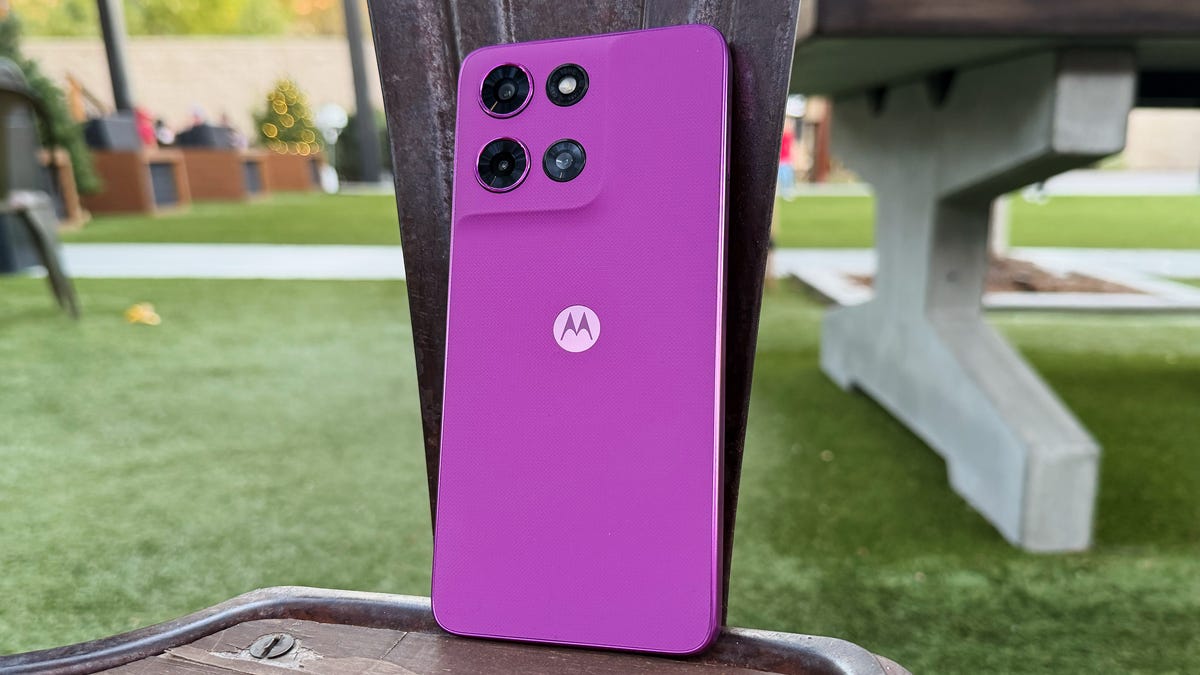
The Moto G (2026) is Motorola’s latest affordable phone that isn’t the very cheap G Play or the slightly beefier G Power variant. The humble Moto G is a down-the-center handset with acceptable performance and admirable style. It doesn’t innovate too much from last year’s Moto G (2025), but it’s a nice-looking phone, even if it’s less powerful.
Motorola has refined its budget phones over the years, gradually incorporating features from premium handsets while making strategic compromises to keep the price low. However, at $200, this year’s Moto G is a decent value that, fortunately, doesn’t resemble a cheap device. It’s nice to bring out an affordable phone that doesn’t look like it’s sheathed in thin plastic that could break at the slightest drop.
Three things I like about the Moto G (2026)
1. Colorful rubber design
I’ve already spoiled it, but the Moto G’s design sets it apart from other $200 phones and is the first thing I like about it. The shiny metal sides are too reflective for my taste, but they blend well with the textured rubber material layered over the back of the phone. With a tasteful curve around the camera block and a subtle pattern, the material has a nice look and feel. Plus — and this is rare for a bold color — I actually like the fuchsia color and would pick it over the simpler black hue that the phone also comes in.
2. One decent camera
I also like the cameras. Although there’s essentially just the main 50-megapixel shooter, augmented by a 2-megapixel depth camera and an ambient light sensor, these components combine to produce good daylight photos and respectable low-light performance. I took some shots of an outdoor market as the sun set and a hotel lobby as daylight filtered in through the windows, both of which captured foreground detail and background sky. While I’d love the utility of an ultrawide camera, it’s far more important for the main camera to be refined to take good shots with decent light balance. The 32-megapixel front-facing camera is a nice upgrade on last year’s model, capturing selfies with light and a lot of detail.
3. OK software support for a $200 phone
Motorola has continued to support the Moto G with two years of Android updates and three years of security updates. While longer is always better, at least it gives owners a slightly longer runway to keep their phones for a few years until they need to upgrade to another safe option. It is, however, much shorter than Samsung’s six-year commitment on its comparably priced Galaxy A series. But then again, this phone costs $200 before discounts.
Two things I don’t like about the Moto G (2026)
1. An out-of-date-looking display
Some of the compromises that Motorola made to hit that $200 price genuinely inhibit the phone’s quality. First is the 6.7-inch display, which is actually respectably bright and shows good color, but the HD Plus resolution (1,604×720 pixels) is too low for modern phones. While nothing is blurry, the 720p maximum means text on apps and games can be noticeably pixelated. It’s rough to play a game like Dead Cells, which already has a pixelated visual style, when the low-resolution screen results in blocky on-screen text.
2. Not enough power
The second thing I dislike is the Moto G’s specs — specifically, the underpowered Dimensity 6300 chip and 4GB of RAM. Even doing something as simple as scrolling posts on X becomes choppy, ruining the smooth 120Hz maximum screen refresh rate. This can be mitigated somewhat by using the RAM boost option (Settings > System > Performance > RAM Boost), which borrows some of the included 128GB of storage to use as temporary memory — while it’s automatically on by default, it’s worth toggling it to manually use its maximum setting of 8GB. Even so, there’s still some choppiness in scrolling through content.
While there isn’t too much new in this year’s Moto G, camera upgrades and a svelte new exterior make it a phone that you won’t be embarrassed to pull out around company — nor to snap a pic of a friendly get-together. There’s always room for Motorola to improve on the basics, but for a $200 phone, the Moto G has a lot to offer budget-minded buyers.
Technologies
Prime Video Hits Pause on Error-Filled AI Recaps
People reported the AI tool struggling with interpreting key scenes properly.
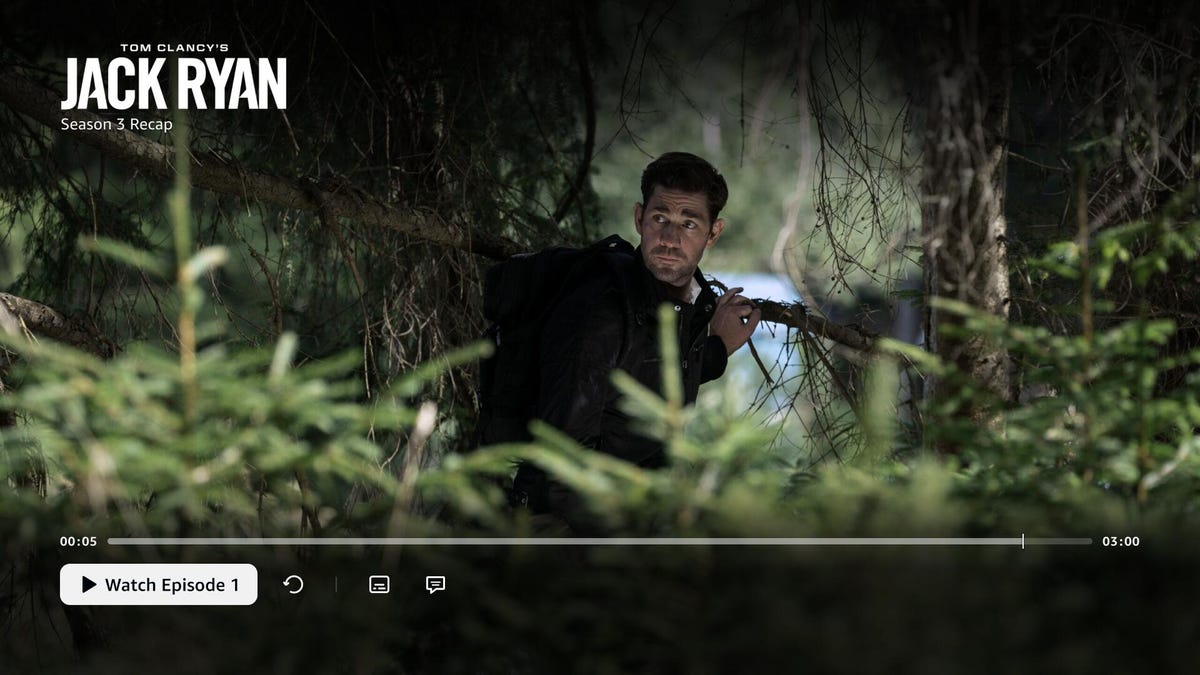
Amazon launched a limited beta of AI-generated Video Recaps for selected in-house Prime Video shows last month — titles like Fallout, Jack Ryan, The Rig, Upload and Bosch. But now the feature has made a generative AI about-face, with reports of it being removed from the app after fans found errors in the Fallout recap and posted about them online.
Don’t miss any of our unbiased tech content and lab-based reviews. Add CNET as a preferred Google source.
The Video Recaps feature stitches together video clips, audio effects, snippets of dialog, music and an AI-generated voiceover narration. According to Amazon, it «analyzes a season’s key plot points and character arcs to deeply understand the most pivotal moments that will resonate with viewers as they enter the next season.»
But as reported earlier by GamesRadar, a viewer recently posted in the r/Fallout subreddit that the season one recap incorrectly dated Cooper Howard’s flashbacks to 1950 when they were actually set in 2077.
«‘Cooper offers Lucy a choice in the finale: die, or join him’ phrased as if he’d be the one to kill her,» another viewer posted on X, describing one of the other AI errors in the recap.
Several outlets then noted that the recap option in the app seems to have disappeared. CNET Senior Editor Corinne Reichert’s app still displays the recap option, but nothing happens when it’s clicked.
As someone with a terrible memory, I would really, really like these types of features to work. Hope springs eternal, I guess.
Amazon did not immediately respond to a request for comment.
Technologies
Today’s NYT Mini Crossword Answers for Saturday, Dec. 13
Here are the answers for The New York Times Mini Crossword for Dec. 13.
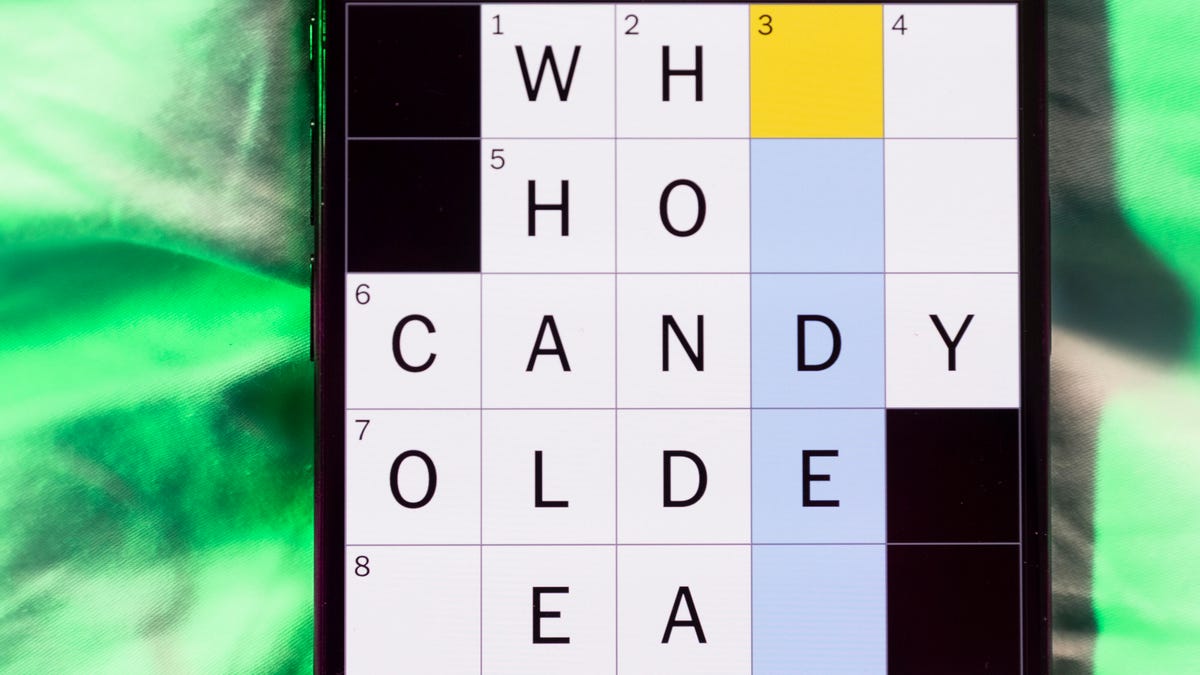
Looking for the most recent Mini Crossword answer? Click here for today’s Mini Crossword hints, as well as our daily answers and hints for The New York Times Wordle, Strands, Connections and Connections: Sports Edition puzzles.
Need some help with today’s Mini Crossword? It’s so long, it’s almost not a mini version today. Read on for the answers. And if you could use some hints and guidance for daily solving, check out our Mini Crossword tips.
If you’re looking for today’s Wordle, Connections, Connections: Sports Edition and Strands answers, you can visit CNET’s NYT puzzle hints page.
Read more: Tips and Tricks for Solving The New York Times Mini Crossword
Let’s get to those Mini Crossword clues and answers.
Mini across clues and answers
1A clue: Field trip vehicle
Answer: BUS
4A clue: Peter’s antagonist, in a musical tale
Answer: WOLF
8A clue: «Keep me posted,» in texts
Answer: LMK
9A clue: Opera solo
Answer: ARIA
10A clue: ___Pen (emergency device)
Answer: EPI
11A clue: With 12-Across, gets in order
Answer: SETS
12A clue: With 14-Across, what a tennis champ might win a match in
Answer: STRAIGHT
14A clue: See 12-Across
Answer: SETS
15A clue: «A long time ___ in a galaxy far, far away …»
Answer: AGO
16A clue: Shy and gentle
Answer: MEEK
17A clue: Prefix with apology or answer
Answer: NON
18A clue: Comes to a close
Answer: ENDS
19A clue: Have to pay
Answer: OWE
Mini down clues and answers
1D clue: «Goodness gracious!»
Answer: BLESSME
2D clue: Indefinitely many, informally
Answer: UMPTEEN
3D clue: Avoided, as an issue
Answer: SKIRTED
4D clue: «Now, where ___?»
Answer: WASI
5D clue: Green topping at a pizza parlor
Answer: OREGANO
6D clue: John who played Churchill on «The Crown»
Answer: LITHGOW
7D clue: Sneaky trick to «pull»
Answer: FASTONE
13D clue: Doesn’t just assume one has permission
Answer: ASKS
Don’t miss any of our unbiased tech content and lab-based reviews. Add CNET as a preferred Google source.
Technologies
Apple Watch Series 11 vs. Series 10: Are the Differences Enough to Justify Upgrading?
At first glance, the new Apple Watch Series 11 looks a lot like its previous-year model. We compare the specs to see what’s changed.
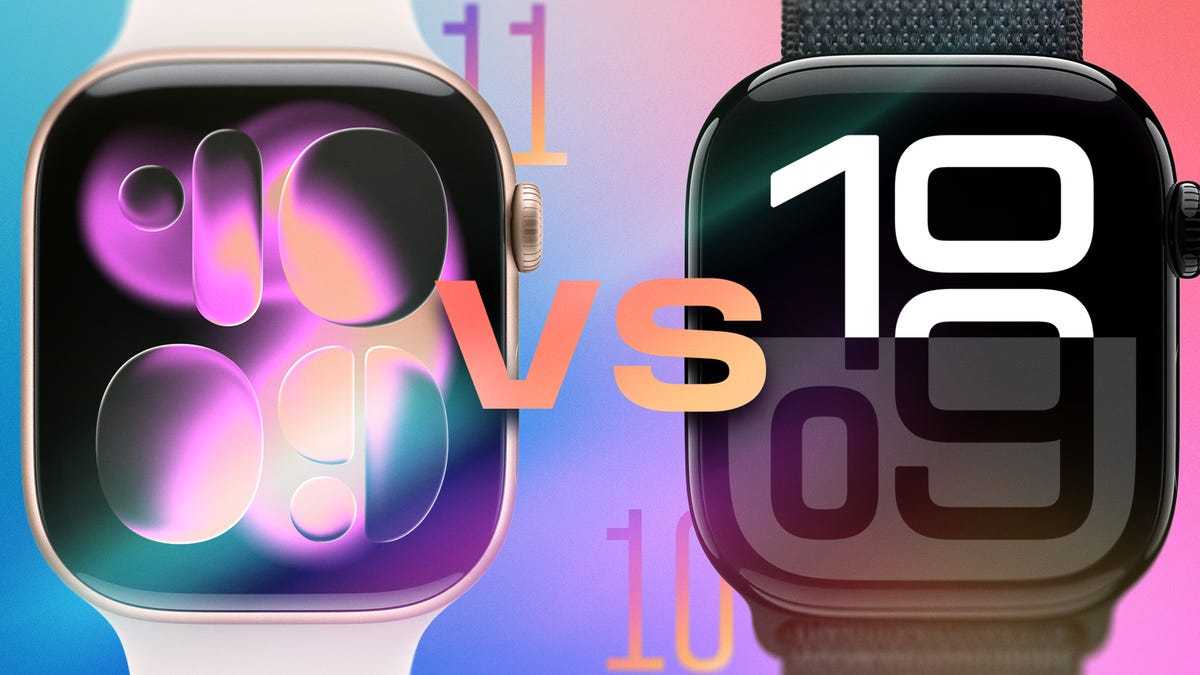
If you’re looking at getting an Apple Watch this holiday season, you have a tough choice: Should you buy the latest Apple Watch Series 11, or find a Series 10 that has most of the same features at a lower cost? Apple made incremental changes to its flagship smartwatch, while also introducing significant improvements to the Apple Watch Ultra 3 and Apple Watch SE 3.
There are still enough differences to make you look twice at moving up (especially if you’re coming from an older model). Let’s compare the models side by side and tease out the finer details.
Don’t miss any of our unbiased tech content and lab-based reviews. Add CNET as a preferred Google source.
Pricing the Apple Watch Series 11
The Series 11 has kept the same price as the Series 10. It starts at $399 for the model with an aluminum body or $699 for one made of titanium.
Add $30 for the larger 46mm case size in aluminum, or $50 for titanium. Opting for a model with a cellular radio that connects independently to networks adds $100. And if you choose a band made of something other than rubber or textile — a stainless steel link bracelet, for example — the price climbs further. Unfortunately, you can’t order just the watch case; you have to select a new band, even if it ends up in your drawer in favor of one you already own and prefer.
There’s also a titanium Apple Watch Hermès model available in silver titanium in both sizes that starts at $1,249.
Apple no longer sells the Series 10, since the Series 11 replaces it, but you can still find refurbished Series 10 models for less from Apple, and new models from other retailers while supplies last.
Apple Watch Series 11 vs. Series 10: Outward design
The Series 11 and Series 10 share the same case design and materials. The larger model measures 46mm tall by 39mm wide, while the smaller comes in at 42mm by 36mm. (Kudos to Apple for continuing to offer two sizes to accommodate people with different-sized wrists.) They’re also both 1mm slimmer than the Apple Watch models that came before, at 9.7mm.
Despite being mostly the same in dimensions, the Series 11 is slightly heavier than the Series 10. For example, the 46mm aluminum GPS Series 11 weighs 37.8 grams, up slightly from 36.4 grams for the Series 10. The 42mm versions come in at 30.3 grams and 30.0 grams, respectively.
For colors, the Series 11 adds a space gray aluminum option to go along with rose gold, silver and jet black. Both models are also available in titanium finishes of slate, gold and natural.
The physical controls are unchanged: the dial that Apple calls the Digital Crown and a side button (that Apple cleverly calls the «side button»). Only the Apple Watch Ultra includes a third physical control: the Action button.
Also noteworthy: The titanium Series 11 is made of 100% recycled titanium, up from 95% recycled material in the titanium Series 10. The display glass is made of 40% recycled glass in the Series 11; no amount is listed for the Series 10. And the battery in the Series 11 uses 100% recycled cobalt and 95% recycled lithium. (The Series 10 lists only 100% recycled cobalt.)
Series 11 vs. Series 10 screens
The screens on both the Series 11 and Series 10 watches have a wide-angle LTPO 3 OLED display. That means it’s easier to see the contents from an angle, and the always-on display refreshes once per second, allowing the seconds counter to move even when the watch is in inactive mode.
LTPO3 screens are also more power efficient. The screens reach up to 2,000 nits for clear visibility in sunlight and dim down to just 1 nit in darkness.
The key difference between the Series 11 and Series 10 screens lies in the glass covering. On the Series 11 aluminum models, Apple uses Ion-X glass, which it claims is twice as scratch-resistant as the glass on previous aluminum versions. The titanium Series 11 uses a sapphire crystal display.
Apple Watch processor and chips
Normally we’d highlight how the new processor improves on its predecessor, but for 2025 Apple stuck with the same S10 processor found in the Series 10. That also means the other chips remain the same, too: the W3 Apple Wireless chip, the second-generation Ultra Wideband chip (for precise Find My location tracking), a four-core Neural Engine and 64GB of storage.
Battery power: Series 11 vs. Series 10
Battery life is where the two models get really interesting. Apple doesn’t reveal how large the built-in lithium-ion battery is or its capacity, but it is claiming up to 24 hours for the Series 11 compared to 18 hours for the Series 10. In Low Power Mode, that’s up to 38 hours for the Series 11, up from 36 hours in the Series 10.
It’s not entirely clear where Apple squeezed an extra six hours of battery life out of what appears to be mostly identical hardware. Both phones use the same S10 processor, though there are likely software optimizations in WatchOS 26. CNET lead writer Vanessa Hand Orellana found that, at least initially, Apple may be undercounting the battery performance, writing in her review, «With notifications turned on (heavy Slack-ing and texting), at least one 30- to 45-minute outdoor workout a day, a full night of sleep tracking and some mild flashlight use, I’ve consistently managed to squeeze between 27 and 32 hours per charge.»
As for charging the watches, both the Series 11 and Series 10 can be charged up to 80% in about 30 minutes. Apple says that with a 20W power adapter, 15 minutes of fast charging provides up to 8 hours of regular use, while just five minutes is enough for eight hours of sleep tracking — thanks to the watch’s much lower power demands while you’re asleep. Apple’s comparison information for the Series 10 doesn’t list those last two metrics, but that seems more due to it being a marketing point last year versus a new capability in the Series 11.
Comparing the sensors of the Series 11 and Series 10
The Apple Watch’s sensors power health features that range from heart-rate monitoring to depth sensing to precise location tracking. That said…
They’re identical in the Series 11 and Series 10. No changes here.
Another change: Connectivity in the Series 11 and Series 10
One of the more notable changes in the cellular models of the Series 11 is support for 5G networks, specifically a power-efficient type called 5G Reduced Capacity (or 5G RedCap). That allows it to connect to both 5G and LTE networks without having to go through a connected iPhone, and the 5G speeds should be better. By comparison, the cellular Series 10 supports LTE and UMTS (3G).
Part of incorporating 5G into the Series 11 models is a redesigned cellular antenna and an algorithm that «simultaneously engages the two system antennas when needed, significantly increasing the signal strength,» according to Apple’s Series 11 press release. That algorithm is exclusive to the Series 11 and Apple Watch Ultra 3, per Apple.
Both Apple Watch models support Wi-Fi 4 (802.11n) at 2.5GHz and 5GHz speeds. (Apple’s comparison page only lists the speeds for the Series 11, but an Apple Watch Wi-Fi support page notes 5GHz has been supported since the Series 6 watches.)
Both watches talk to the iPhone and other peripherals using Bluetooth 5.3.
WatchOS 26 on the Apple Watch Series 11 and Series 10
The new features of WatchOS 26 come to both watch models, including hypertension notifications, Sleep Score and the Blood Oxygen app (making its reappearance in the US amid an ongoing legal dispute). Apple’s comparison page lists the new Wrist Flick gesture for the Series 11 but not the Series 10, but that must be a typo because I can confirm that it works on my Series 10 watch.
Apple Watch Series 11 vs. Apple Watch Series 10
| Apple Watch Series 11 | Apple Watch Series 10 | |
| Design & sizes | Rectangular, 42mm, 46mm | Rectangular, 42mm, 46mm |
| Display | 42mm: 446 x 374 pixels, LTPO3 OLED Retina display, Wide-angle OLED 46mm: 416 x 496 pixels, LTPO3 OLED Retina display, Wide-angle OLED | 446 x 374 ppi, LTPO3 OLED Retina display, Wide-angle OLED |
| Brightness | Between 1 and 2000 nits | 2000 nits |
| Thickness & weight | 46mm size: 9.7mm; 37.8g (aluminum), 36.9g (aluminum GPS+Cellular), 43.1g (titanium) 42mm size: 9.7mm; 30.3g (aluminum), 29.7g (aluminum GPS+Cellular), 34.6g (titanium) | 9.7mm; 30-41.7g (46mm titanium model) |
| Material & finish | Aluminum: jet black, rose gold or silver finish; titanium: slate, gold or natural finish | Aluminum: jet black, rose gold or silver finish; titanium: slate, gold or natural finish |
| Durability | 5ATM Water + IP6X (dust) | 5ATM Water + IP6X (dust) |
| Battery life | Up to 24 hours, up to 38 hours Low Power (always-on) + Fast charge: 80% in 30 min, 100% in 60 min | 24-30 (always-on) + Fast charge: 80% in 30 min, 100% in 60 min |
| Sensors | ECG, 3rd-gen optical heart sensor, skin temp, depth gauge, SpO2, Noise monitoring, water temperature, compass | ECG, heart rate, skin temp, depth gauge, SpO2, Noise monitoring |
| Emergency features | Satellite SOS, Emergency SOS, Fall detection, Crash detection, Check in and Backtrack | Emergency SOS, Fall detection, Crash detection, Check in and Backtrack |
| AI & coaching | Siri (voice assistant); Workout Buddy | Siri (voice assistant); Workout Buddy |
| Processor | S10 SiP with 64-bit dual-core processor, W3 Apple wireless chip | S10 SiP with 64-bit dual-core processor, W3 Apple wireless chip |
| RAM/Storage | 64GB (storage) | 64GB (storage) |
| Payments | Apple Pay | Apple Pay |
| Price (US) | $399-$750 (titanium) | $399-$750 (titanium) |
-
 Technologies3 года ago
Tech Companies Need to Be Held Accountable for Security, Experts Say
-
 Technologies3 года ago
Best Handheld Game Console in 2023
-
 Technologies3 года ago
Tighten Up Your VR Game With the Best Head Straps for Quest 2
-
 Technologies4 года ago
Black Friday 2021: The best deals on TVs, headphones, kitchenware, and more
-
 Technologies4 года ago
Verum, Wickr and Threema: next generation secured messengers
-
 Technologies4 года ago
Google to require vaccinations as Silicon Valley rethinks return-to-office policies
-
 Technologies4 года ago
Olivia Harlan Dekker for Verum Messenger
-
 Technologies4 года ago
iPhone 13 event: How to watch Apple’s big announcement tomorrow


