

Technologies
Don’t Miss Out: Northern Lights to Shine Bright Monday and Tuesday Night
NOAA is predicting a moderate geomagnetic storm on Monday and Tuesday, which will light up northern skies with the aurora borealis.


Northern US residents, go ahead and brave the outdoor chill this Monday or Tuesday night to catch a glimpse of the breathtaking aurora borealis. NOAA is currently predicting that a geomagnetic storm will impact Earth on Monday and Tuesday, which will push the northern lights down into the northern US.
This bout of aurora comes to Earth courtesy of a coronal mass ejection from the sun on Dec. 6. Coronal mass ejections are massive bursts of plasma and other solar materials that are forcibly blasted from the star. These events occur fairly consistently when the sun is at its solar maximum, which it will be through the end of the year and into 2026. The M8-class solar flare is expected to hit Earth in the early hours of Dec. 9.
How far will the aurora reach?
NOAA is predicting that the aurora will be visible in Washington state, Idaho, Montana, North Dakota, South Dakota, Wisconsin, Minnesota and Michigan’s Upper Peninsula. It may also be visible in Oregon, Nebraska, Wyoming, Iowa, Vermont, New Hampshire and Maine, if you can get high enough and look north. The very northern reaches of Indiana, Illinois and New York may also see some action. As always, Alaska and Canada offer the best view.
Tuesday night’s aurora will be weaker than Monday night’s, but it will still be largely visible in the same list of states.
This round of aurora borealis isn’t predicted to be quite as far-reaching as the massive aurora that hit in early November. Those were caused by X-Class coronal mass ejections, which are a level above the M-Class that is expected to hit Earth on Monday and Tuesday. Aurora predictions are much like the weather, so they may change depending on whether the geomagnetic storm is weaker or stronger than its current forecast.
Don’t miss any of our unbiased tech content and lab-based reviews. Add CNET as a preferred Google source.
Tips for watching the aurora borealis
Your standard aurora-watching tips all apply for this one. You’ll want to get as high as you can and face north to get your best view of the aurora from your location. The further away you are from the Canadian border, the higher up you’ll need to go to see it. You will also want to get out of the city and suburbia to minimize light pollution.
The bad news is that December’s full moon, which was also a supermoon, was just a few days ago, so it’s still mostly full in the night sky. The light pollution from the moon will almost certainly harm your ability to see the northern lights, especially if you’re in one of the southernmost states in NOAA’s prediction area.
Should you decide to head out, keep an eye out for meteors as well. The Geminids meteor shower began on Dec. 4 and is nearing its peak on Dec. 13 to 14, so you may see a few shooting stars while you’re out looking for the aurora.
Technologies
Today’s Wordle Hints, Answer and Help for Dec. 9, #1634
Here are hints and the answer for today’s Wordle for Dec. 9, No. 1,634.

Looking for the most recent Wordle answer? Click here for today’s Wordle hints, as well as our daily answers and hints for The New York Times Mini Crossword, Connections, Connections: Sports Edition and Strands puzzles.
Today’s Wordle puzzle is a little tricky. If you need a new starter word, check out our list of which letters show up the most in English words. If you need hints and the answer, read on.
Today’s Wordle hints
Before we show you today’s Wordle answer, we’ll give you some hints. If you don’t want a spoiler, look away now.
Wordle hint No. 1: Repeats
Today’s Wordle answer has no repeated letters.
Wordle hint No. 2: Vowels
Today’s Wordle answer has two vowels.
Wordle hint No. 3: First letter
Today’s Wordle answer begins with S.
Wordle hint No. 4: Last letter
Today’s Wordle answer ends with E.
Wordle hint No. 5: Meaning
Today’s Wordle answer can refer to being insulting or derogatory.
TODAY’S WORDLE ANSWER
Today’s Wordle answer is SNIDE.
Yesterday’s Wordle answer
Yesterday’s Wordle answer, Dec. 8, No. 1633 was GRAVY.
Recent Wordle answers
Dec. 4, No. 1629: TULIP
Dec. 5, No. 1630: AMONG
Dec. 6, No. 1631: WAIST
Dec. 7, No. 1632: FLUTE
Don’t miss any of our unbiased tech content and lab-based reviews. Add CNET as a preferred Google source.
Technologies
Today’s NYT Mini Crossword Answers for Tuesday, Dec. 9
Here are the answers for The New York Times Mini Crossword for Dec. 9.
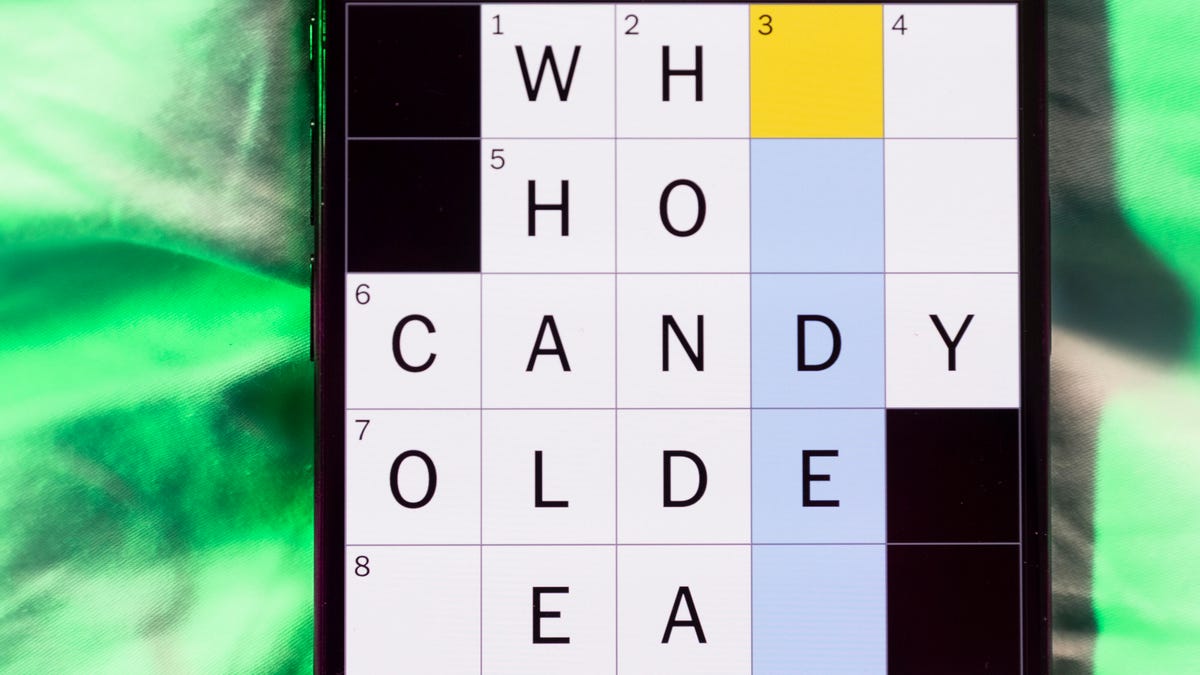
Looking for the most recent Mini Crossword answer? Click here for today’s Mini Crossword hints, as well as our daily answers and hints for The New York Times Wordle, Strands, Connections and Connections: Sports Edition puzzles.
Need some help with today’s Mini Crossword? It’s a tough one today, and might take longer than usual. Read on for the answers. And if you could use some hints and guidance for daily solving, check out our Mini Crossword tips.
If you’re looking for today’s Wordle, Connections, Connections: Sports Edition and Strands answers, you can visit CNET’s NYT puzzle hints page.
Read more: Tips and Tricks for Solving The New York Times Mini Crossword
Let’s get to those Mini Crossword clues and answers.
Mini across clues and answers
1A clue: Apt profession for someone named Rosemary or Ginger
Answer: CHEF
5A clue: Get to go, as leftovers
Answer: BOXUP
7A clue: Word that can precede Bowl or Glue
Answer: SUPER
8A clue: Intense anger
Answer: RAGE
9A clue: «Cut that out!»
Answer: STOP
Mini down clues and answers
1D clue: Stephen Colbert’s network
Answer: CBS
2D clue: Noted group of 24
Answer: HOURS
3D clue: One living abroad, informally
Answer: EXPAT
4D clue: Spanish for «fire»
Answer: FUEGO
6D clue: Do some kitchen work
Answer: PREP
Don’t miss any of our unbiased tech content and lab-based reviews. Add CNET as a preferred Google source.
Technologies
AI Saves Workers Less Than an Hour Each Day, New OpenAI Report Shows
AI adoption is rapidly expanding across industries, but workers are saving only 40 to 60 minutes per day, on average.

OpenAI’s 2025 ‘The State of Enterprise AI’ report provides an in-depth look at how businesses are using AI tools within real companies. Drawing on anonymized usage data from more than 1 million business customers, along with a survey of 9,000 workers at nearly 100 organizations, the report presents a picture of increased AI adoption and integration in the workplace.
«Across surveyed enterprises, 75% of workers report that using AI at work has improved either the speed or quality of their output,» the report states. Also, the report says that «75% of users report being able to complete new tasks they previously could not perform.»
However, the productivity gains might not be as universal and widespread as anticipated: on average, ChatGPT Enterprise users save less than an hour of time per day, according to the report.
Below is a breakdown of the report’s major findings.
Don’t miss any of our unbiased tech content and lab-based reviews. Add CNET as a preferred Google source on Chrome.
Report shows productivity gains, but it’s not universal
Despite the hype surrounding AI at work, the latest data from OpenAI suggests that the reality for most employees is modest. In its report, the company says that on average, ChatGPT Enterprise users save only about 40 to 60 minutes per active workday.
That’s not nothing, but it’s nowhere near the sweeping productivity overhaul that many hoped for. In a workday filled with meetings, emails and tool overload, an hour reclaimed can feel like a minimal benefit rather than a tidal shift in productivity.
(Disclosure: Ziff Davis, CNET’s parent company, in April filed a lawsuit against OpenAI, alleging it infringed Ziff Davis copyrights in training and operating its AI systems.)
A few key findings
The report finds AI adoption within companies is growing fast. Weekly messages in ChatGPT Enterprise have increased nearly eightfold in the past year, and the use of structured workflows, such as custom GPTs, has risen 19 times. Companies are pushing more complex prompts, too, with reasoning-token usage increasing more than 320-fold.
But the outcomes don’t scale at the same rate. Workers say they complete certain tasks more quickly — like IT troubleshooting, campaign creation and coding improvements — yet the day-to-day gains still add up to roughly an hour on average.
A divide between heavy AI users and everyone else
OpenAI’s data shows a widening gap between «frontier» users — defined by OpenAI as those in the 95th percentile of adoption intensity — and the average worker, however.
Frontier employees send about six times more messages than average users. Unsurprisingly, these heavy users report bigger gains of over 10 hours a week. They build workflows around AI, automate routine tasks and turn the tool into a dependable co-worker instead of an occasional assistant. Though arguably, around 2 hours per day of saved time is still relatively moderate.
OpenAI frames the report as a snapshot of where enterprise AI stands today, rather than a final verdict. The company suggests that future gains could come not from the model itself, but from how organizations reshape processes and workflows around it.
But for most workers, AI is still a sidekick. Useful, but not transformative. It helps speed things up. It may even make some work less tedious. But the typical worker saving under an hour a day points to a technology that is powerful, yet still limited. The big question now is whether those numbers will keep climbing, or whether an hour a day is closer to the ceiling than AI enthusiasts want to admit.
-
 Technologies3 года ago
Tech Companies Need to Be Held Accountable for Security, Experts Say
-
 Technologies3 года ago
Best Handheld Game Console in 2023
-
 Technologies3 года ago
Tighten Up Your VR Game With the Best Head Straps for Quest 2
-
 Technologies4 года ago
Black Friday 2021: The best deals on TVs, headphones, kitchenware, and more
-
 Technologies4 года ago
Verum, Wickr and Threema: next generation secured messengers
-
 Technologies4 года ago
Google to require vaccinations as Silicon Valley rethinks return-to-office policies
-
 Technologies4 года ago
Olivia Harlan Dekker for Verum Messenger
-
 Technologies4 года ago
iPhone 13 event: How to watch Apple’s big announcement tomorrow


