

Technologies
A Month With the Pixel Watch 4: I’m Still a Fan, but It’s Showing Signs of Wear
From screen scratches to unwelcome Gemini pop-ups, here’s how it holds up after the honeymoon period.

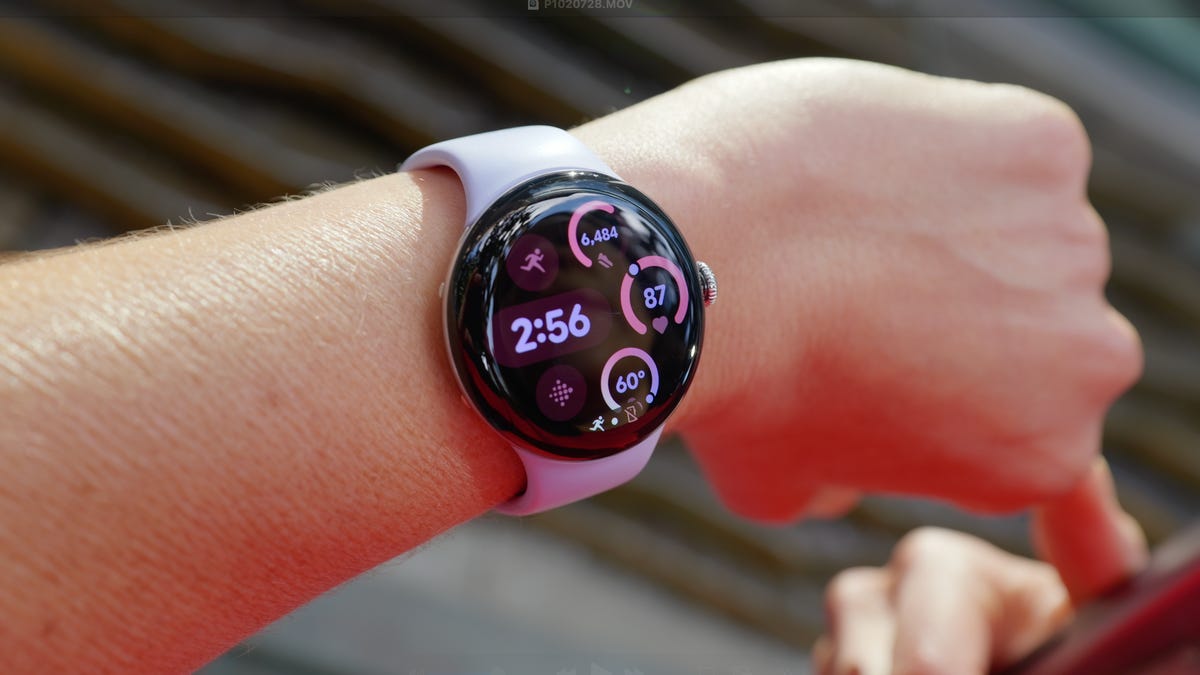
I’ve spent over a month wearing the Pixel Watch 4 as my daily (and nightly) companion. While it’s still one of my favorite Android watches out there, the honeymoon phase is officially over and some of its quirks (and scratches) have started to surface.
The look and feel still hold up to the test of time; it’s sleek, understated and comfortable to wear. But it’s the intuitive UI, the seamless syncing with my phone and the way it fits so naturally into the Android ecosystem that keep me coming back to it. Paired with my Pixel 9 Pro, notifications arrive instantly, health data syncs the moment I open the app and Wear OS updates are delivered faster than on most other watches.
Although the Pixel Watch 4 remains one of my favorite Android watches of 2025, there are some literal kinks in its armor that have started to surface with long-term, real-world use.
Gemini butts into my conversations
I’ve already raved about how useful Google’s new AI assistant is on a smartwatch. It handles complex requests in natural language (no robo-voice needed), understands follow-up prompts without requiring me to repeat the original question and it can even translate text on the fly. On a tiny watch screen, where typing and reading long responses is tedious, Gemini really does deliver a more seamless hands-free experience.
Gemini isn’t exclusive to the Pixel Watch 4 (it comes to newer Android watches with Wear OS 6), but it does it a step further by letting you talk to it instantly: no buttons, no wake words.
During the first week, I went full-on Dick Tracy, asking my wrist every stray thought that crossed my mind. I loved that it read answers aloud so I could keep cooking or wrangling kids without stopping to look down. That was short-lived.
A few weeks later, Gemini has mostly faded into the background. Part of that is from the novelty wearing off, but mostly it’s because Gemini keeps missing the mark when I actually need it. It turns out that having an assistant so readily available isn’t always as convenient as it sounds.
Sometimes I have to exaggerate the wrist-raise that triggers it to listen, while other times it wakes up unprompted because I’m emphatically gesturing with my hands like the spirited Latin woman that I am. Often, there’s a noticeable delay before it responds, too. Case in point: I was on a video call with my manager when Gemini suddenly chimed in with an answer to… absolutely nothing either of us asked. It makes the watch feel like it’s eavesdropping, and ready to interject at the worst possible moment.
You can turn off raise-to-wake and switch to a button press or on-screen activation. But for now, I’m leaving it on, hoping that with more time Gemini and I figure out a rhythm — and it’ll learn not to butt into my conversations.
Apparently, I’m a walking durability test
I love the Pixel Watch 4’s domed circular screen. It’s understated and elegant and looks good with just about any watch band (elegant or sporty). The near-180-degree visibility makes it easy to read at a glance without needing to angle your wrist, and the 4,000-nit display is legible on bright midday runs. I’ve been using the 41mm model (also comes in 45mm), and it’s comfortable enough to wear 24/7. During the day, I’d forget I was wearing it because it’s so slim; at night, the bubble screen is a touch more noticeable against the pillow, but not enough to disturb my sleep.
The downside to a watch that’s basically all screen is that it’s more exposed to the realities of life (mine, in particular). As an outdoor enthusiast and a mom of three kids whose personal hobbies include testing the limits of gravity, I can’t afford to be precious about my tech, jewelry or anything. Function over form is the stage I’m in.
So yes, I’ve already managed to scrape the custom 3D Gorilla Glass 5. I wish I could tell you what epic adventure caused it, but I genuinely didn’t notice until I was filming the review video. The scratch is definitely visible and worth considering if you plan to use the watch for more rugged activities. You may want to invest in a screen protector, which admittedly defeats the whole sleek, minimalistic aesthetic, but here we are.
The strap system requires a learning curve. It’s the same mechanism as the previous model, but pressing the release button while sliding the band out takes coordination. If you’re planning to swap in third-party bands to dress it up (or down), just know it takes a few tries before it feels natural.
Fitbit’s app is a joy, but I’m still not sold on Coach
The Pixel Watch 4 packs every major health and safety feature you’d expect: ECG, irregular heart rhythm detection, crash and fall alerts and an FDA-approved low pulse detection feature. But none of those are what I interact with day-to-day.
The Fitbit ecosystem is where the watch really shines. The UI is clean, intuitive and breaks down your data into easy-to-digest snippets on both the watch and in the app. I love waking up to my health summary, which has my sleep and readiness scores (even if they’re occasionally depressing). It has misread a late-night couch session as sleep once or twice, but overall, its tracking feels accurate. It even flagged a dip in my HRV on a night I was clearly fighting some kind of bug. Paired with a low readiness score, it gave me the nudge I needed to take it easy and recover. It never fully developed into anything serious, which I credit the Pixel Watch for.
The Pixel Watch 4 does all the fitness basics, but goes above and beyond on the details. For example, instead of making me hunt through screens for my heart rate zone, the watch simply changes the interface color of my workout to match my heart rate zone so I can quickly see where I’m at in my training without breaking my stride.
I’ve always thought the Fitbit app was one of the most intuitive in the wearable space, but after testing the redesigned version (rolling out publicly next year), it might be the best. Instead of focusing on a single day, it now gives you a full week’s view of your fitness data, which feels far more realistic. If I skip a workout, the broader context keeps me from feeling defeatist and, weirdly, makes me more motivated.
The biggest update, though, lies behind the $10/month Fitbit Premium paywall: Fitbit Coach, an AI chatbot that’s supposed to help translate your data into actionable guidance.
Setup requires answering a series of questions about your goals, equipment and time commitment. My goal was to get the most bang for my buck out of workouts within my time constraints. Coach generated a custom plan to match my needs, although plugging similar info into the free version of Gemini on my phone produced almost identical suggestions. The difference is that Coach gave me video examples of the workout moves, which was a nice touch.
Coach also has access to your habits and health data to make tweaks on the fly, which is genuinely useful. It flagged that working out past 9 p.m. is counterproductive for me based on my sleep patterns and energy scores. It also recommended skipping my workout on that bad sleep day and opting for a nap instead (which I didn’t have time for, but still appreciated the permission to rest).
But there are limitations. Unlike Gemini, which I can summon at any time on my watch, Coach is only available in the Fitbit app on my phone, making the experience feel oddly passive. I wish it coached me during workouts and nudged me to hit a target zone or told me when it’s time to move to the next exercise in my training plan.
Coach also can’t offer medical advice (which is a good thing), and when I tried to bait it into doing so, it correctly told me to talk to a doctor. Still, handing over so much health data to an AI makes me a little uneasy because I’m not exactly sure what it can be used for down the line.
To be fair, Coach is still in beta and is supposed to adapt as it learns your habits. So, it may improve over time, and the version you eventually receive could look very different from what I’ve been previewing.
Battery life is just OK
Over the past month, my take on the battery hasn’t changed much. It’s a welcome improvement over the last generation, but that 30-hour mark still arrives fast — usually right in the middle of my second day when I’m nowhere near a charger. I’ve fallen into a routine of micro-charging for 10 minutes before bed or right when I wake up. That’s usually all it needs to get through a full night of sleep tracking.
Google claims it takes 60 minutes to fully charge, but in my experience, it’s closer to 40 minutes.
Some of its best features are ones I haven’t had to use yet
Even if I’d managed to scratch the screen into oblivion or crack it outright, I have the peace of mind knowing Google made this watch easy to repair. The display, battery and other components can all be swapped without buying a whole new device — just don’t try to DIY it. That level of repairability is rare in the smartwatch world, and it might save me from having to shell out for a brand-new watch down the line.
I’ve been testing the LTE model, which can contact emergency services via satellite if you’re off the grid and need help. I haven’t been without a cell signal (or in distress, thankfully), but it’s a nice safety net, especially for the price. Similar satellite-enabled watches, like the Apple Watch Ultra 3 or Garmin’s Fenix 8 Pro, cost more than $700, while the LTE version of the Pixel Watch 4 starts at $450.
Closing thoughts
After a solid month together, here’s where I’ve landed: If you’re looking for an Android watch that does pretty much everything well, the Pixel Watch 4 is a solid pick. The 41mm battery still needs work (the 45mm should be better), and if you’re buying it just for Fitbit Coach, I’d hold off: it’s promising, but not quite there yet.
Even without Coach, though, the redesigned Fitbit app alone is enough to get excited about. Add in the sleek design, ease of use and seamless integration, and the Pixel Watch 4 keeps this watch at the top of my list. And if Google does eventually nail the coaching side, it’ll be the cherry on top of an already well-rounded sundae.
I’m sure in another month I’ll have even more gems and quirks to report. That’s just how it goes with wearables you live with day in and day out, especially now that they’re constantly adapting to your habits.
Technologies
Today’s Wordle Hints, Answer and Help for Dec. 9, #1634
Here are hints and the answer for today’s Wordle for Dec. 9, No. 1,634.
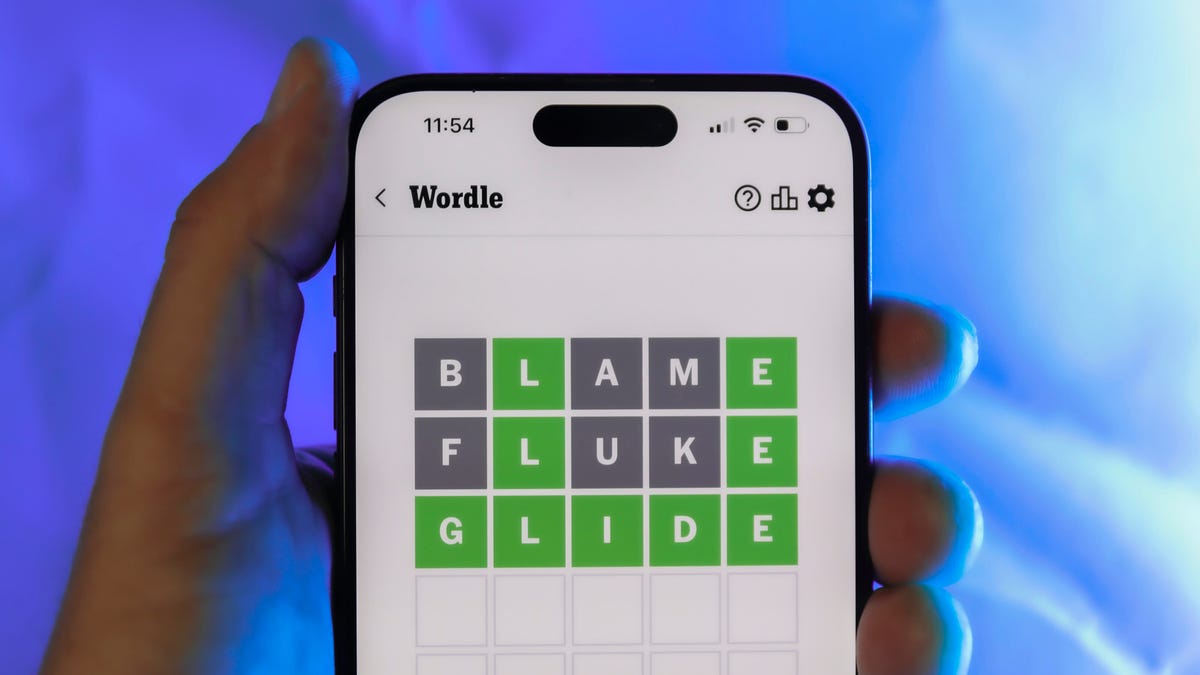
Looking for the most recent Wordle answer? Click here for today’s Wordle hints, as well as our daily answers and hints for The New York Times Mini Crossword, Connections, Connections: Sports Edition and Strands puzzles.
Today’s Wordle puzzle is a little tricky. If you need a new starter word, check out our list of which letters show up the most in English words. If you need hints and the answer, read on.
Today’s Wordle hints
Before we show you today’s Wordle answer, we’ll give you some hints. If you don’t want a spoiler, look away now.
Wordle hint No. 1: Repeats
Today’s Wordle answer has no repeated letters.
Wordle hint No. 2: Vowels
Today’s Wordle answer has two vowels.
Wordle hint No. 3: First letter
Today’s Wordle answer begins with S.
Wordle hint No. 4: Last letter
Today’s Wordle answer ends with E.
Wordle hint No. 5: Meaning
Today’s Wordle answer can refer to being insulting or derogatory.
TODAY’S WORDLE ANSWER
Today’s Wordle answer is SNIDE.
Yesterday’s Wordle answer
Yesterday’s Wordle answer, Dec. 8, No. 1633 was GRAVY.
Recent Wordle answers
Dec. 4, No. 1629: TULIP
Dec. 5, No. 1630: AMONG
Dec. 6, No. 1631: WAIST
Dec. 7, No. 1632: FLUTE
Don’t miss any of our unbiased tech content and lab-based reviews. Add CNET as a preferred Google source.
Technologies
Today’s NYT Mini Crossword Answers for Tuesday, Dec. 9
Here are the answers for The New York Times Mini Crossword for Dec. 9.
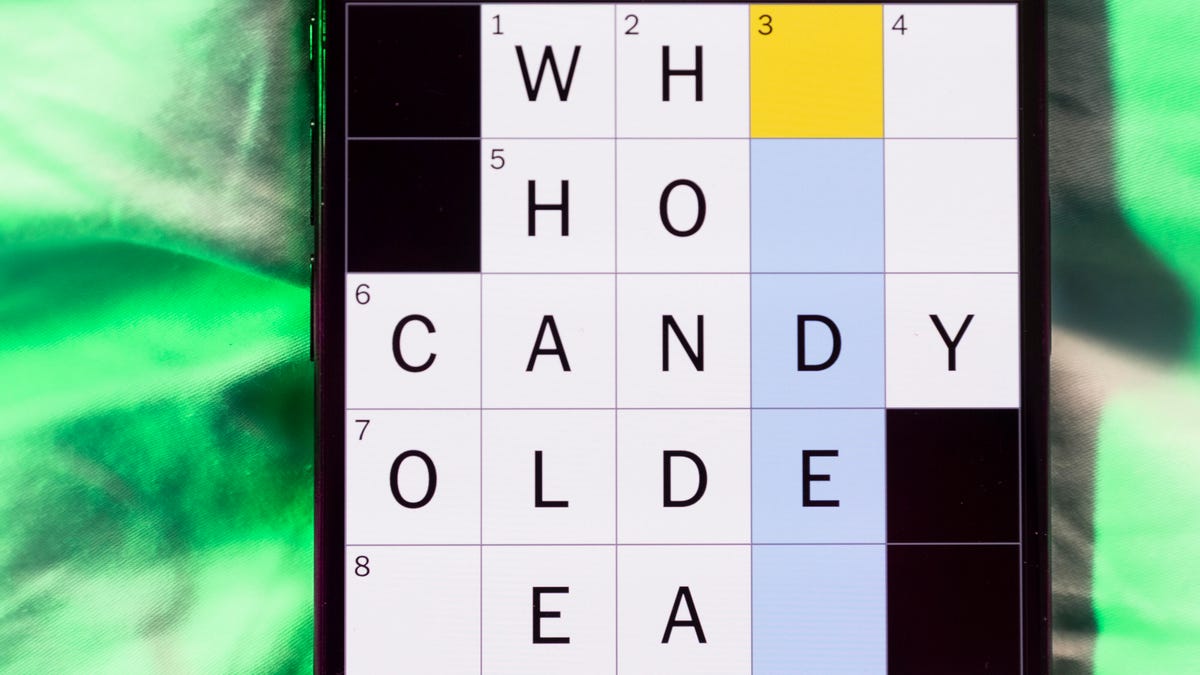
Looking for the most recent Mini Crossword answer? Click here for today’s Mini Crossword hints, as well as our daily answers and hints for The New York Times Wordle, Strands, Connections and Connections: Sports Edition puzzles.
Need some help with today’s Mini Crossword? It’s a tough one today, and might take longer than usual. Read on for the answers. And if you could use some hints and guidance for daily solving, check out our Mini Crossword tips.
If you’re looking for today’s Wordle, Connections, Connections: Sports Edition and Strands answers, you can visit CNET’s NYT puzzle hints page.
Read more: Tips and Tricks for Solving The New York Times Mini Crossword
Let’s get to those Mini Crossword clues and answers.
Mini across clues and answers
1A clue: Apt profession for someone named Rosemary or Ginger
Answer: CHEF
5A clue: Get to go, as leftovers
Answer: BOXUP
7A clue: Word that can precede Bowl or Glue
Answer: SUPER
8A clue: Intense anger
Answer: RAGE
9A clue: «Cut that out!»
Answer: STOP
Mini down clues and answers
1D clue: Stephen Colbert’s network
Answer: CBS
2D clue: Noted group of 24
Answer: HOURS
3D clue: One living abroad, informally
Answer: EXPAT
4D clue: Spanish for «fire»
Answer: FUEGO
6D clue: Do some kitchen work
Answer: PREP
Don’t miss any of our unbiased tech content and lab-based reviews. Add CNET as a preferred Google source.
Technologies
AI Saves Workers Less Than an Hour Each Day, New OpenAI Report Shows
AI adoption is rapidly expanding across industries, but workers are saving only 40 to 60 minutes per day, on average.

OpenAI’s 2025 ‘The State of Enterprise AI’ report provides an in-depth look at how businesses are using AI tools within real companies. Drawing on anonymized usage data from more than 1 million business customers, along with a survey of 9,000 workers at nearly 100 organizations, the report presents a picture of increased AI adoption and integration in the workplace.
«Across surveyed enterprises, 75% of workers report that using AI at work has improved either the speed or quality of their output,» the report states. Also, the report says that «75% of users report being able to complete new tasks they previously could not perform.»
However, the productivity gains might not be as universal and widespread as anticipated: on average, ChatGPT Enterprise users save less than an hour of time per day, according to the report.
Below is a breakdown of the report’s major findings.
Don’t miss any of our unbiased tech content and lab-based reviews. Add CNET as a preferred Google source on Chrome.
Report shows productivity gains, but it’s not universal
Despite the hype surrounding AI at work, the latest data from OpenAI suggests that the reality for most employees is modest. In its report, the company says that on average, ChatGPT Enterprise users save only about 40 to 60 minutes per active workday.
That’s not nothing, but it’s nowhere near the sweeping productivity overhaul that many hoped for. In a workday filled with meetings, emails and tool overload, an hour reclaimed can feel like a minimal benefit rather than a tidal shift in productivity.
(Disclosure: Ziff Davis, CNET’s parent company, in April filed a lawsuit against OpenAI, alleging it infringed Ziff Davis copyrights in training and operating its AI systems.)
A few key findings
The report finds AI adoption within companies is growing fast. Weekly messages in ChatGPT Enterprise have increased nearly eightfold in the past year, and the use of structured workflows, such as custom GPTs, has risen 19 times. Companies are pushing more complex prompts, too, with reasoning-token usage increasing more than 320-fold.
But the outcomes don’t scale at the same rate. Workers say they complete certain tasks more quickly — like IT troubleshooting, campaign creation and coding improvements — yet the day-to-day gains still add up to roughly an hour on average.
A divide between heavy AI users and everyone else
OpenAI’s data shows a widening gap between «frontier» users — defined by OpenAI as those in the 95th percentile of adoption intensity — and the average worker, however.
Frontier employees send about six times more messages than average users. Unsurprisingly, these heavy users report bigger gains of over 10 hours a week. They build workflows around AI, automate routine tasks and turn the tool into a dependable co-worker instead of an occasional assistant. Though arguably, around 2 hours per day of saved time is still relatively moderate.
OpenAI frames the report as a snapshot of where enterprise AI stands today, rather than a final verdict. The company suggests that future gains could come not from the model itself, but from how organizations reshape processes and workflows around it.
But for most workers, AI is still a sidekick. Useful, but not transformative. It helps speed things up. It may even make some work less tedious. But the typical worker saving under an hour a day points to a technology that is powerful, yet still limited. The big question now is whether those numbers will keep climbing, or whether an hour a day is closer to the ceiling than AI enthusiasts want to admit.
-
 Technologies3 года ago
Tech Companies Need to Be Held Accountable for Security, Experts Say
-
 Technologies3 года ago
Best Handheld Game Console in 2023
-
 Technologies3 года ago
Tighten Up Your VR Game With the Best Head Straps for Quest 2
-
 Technologies4 года ago
Black Friday 2021: The best deals on TVs, headphones, kitchenware, and more
-
 Technologies4 года ago
Verum, Wickr and Threema: next generation secured messengers
-
 Technologies4 года ago
Google to require vaccinations as Silicon Valley rethinks return-to-office policies
-
 Technologies4 года ago
Olivia Harlan Dekker for Verum Messenger
-
 Technologies4 года ago
iPhone 13 event: How to watch Apple’s big announcement tomorrow


