
Technologies
Oura’s CEO Has Some Chill Advice for Avoiding Health-Tracking Anxiety
For the leading smart ring maker, «calm tech» seems to be the winning strategy.
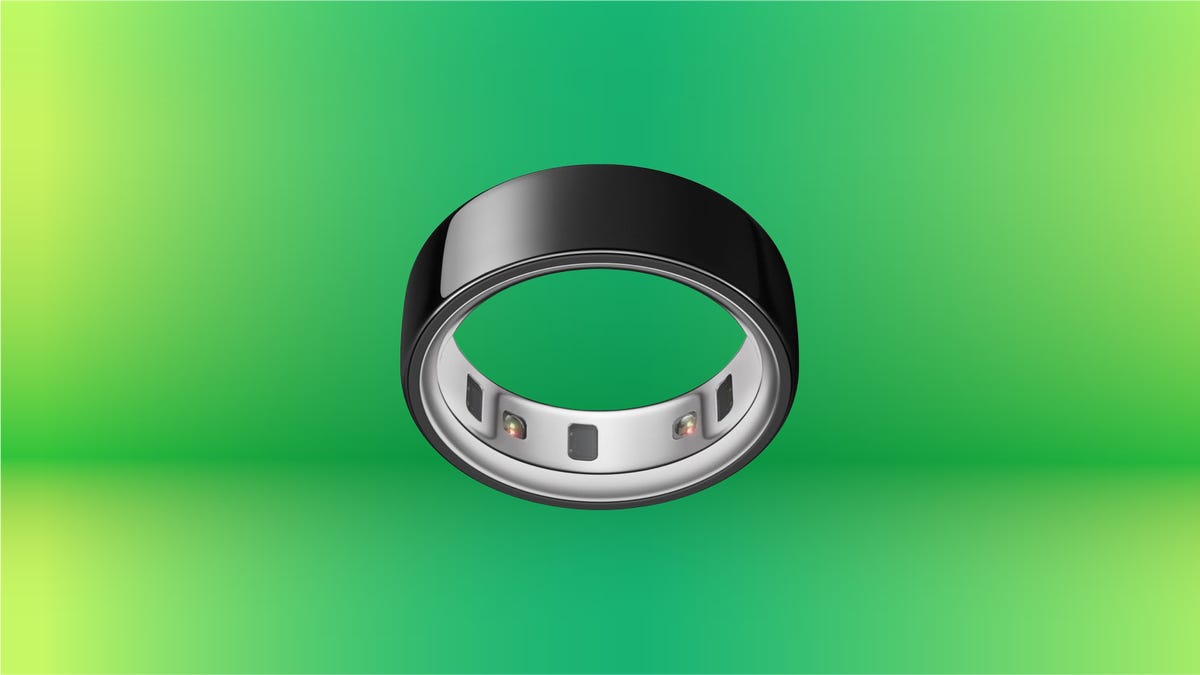
When I sit down with Oura’s CEO, Tom Hale, in a quiet wooden booth on the outskirts of the Web Summit technology conference in Lisbon, I notice that he’s wearing two smart rings. Is he conducting competitor analysis? No, it turns out. Both of the rings are his own company’s devices.
One, he explains, is his personal ring, which contains all his data from the past four years. The second is linked to his beta account and shows him what’s coming in the next software update.
For Hale, wearing two rings that run two sets of software allows him to be plugged into every minuscule variation in data. This type of hyperfocus, essential for his job with the world’s leading smart ring maker, enables him to understand the ever-evolving experience of Oura customers before they do.
But being on high alert is not what he wants for the rest of us. Quite the opposite, in fact.
«Our philosophy very much is about being in the background,» says Hale. «We think of ourselves as calm tech.»
Don’t miss any of our unbiased tech content and lab-based reviews. Add CNET as a preferred Google source.
Calm tech is a departure from the majority of other wearable devices on the market, and it seems to be resonating. Over the past year, smart rings, which primarily measure activity and sleep, have surged in popularity, with sales more than doubling to 1.8 million units in 2024, and expected to hit around 4 million units this year, according to Omdia.
Many of us are choosing them over the best fitness trackers. Smart rings accounted for 75% of all fitness tracker revenue in the US this year, up from 46% the previous year, according to Circana.
Unlike standard fitness trackers, smart rings can’t provide real-time feedback, stats and coaching on your wrist. Instead, they record and synthesize your activity and sleep data for viewing on your phone at a later time. That’s enough for most people. The trade-off is especially worth it for those of us who want to nurture a less anxious attachment style to our personal tech and prioritize a real-world focus.
The majority of other wearables on the market aren’t conducive to this «passive» relationship. Smartwatches — and, for the most part, smart glasses — are body-worn screens, contributing to the ever-increasing and omnipresent information overload that tech subjects us to.
Easing health tech anxiety
Smart rings are, by their very nature, screen-free devices, and Oura wants to keep it that way. The Oura Ring 4 doesn’t include any flashing lights and indicators (it does have LEDs on the inside for measuring heart rate and blood oxygen). That decision was geared toward maintaining peace of mind, according to Hale.
«A lot of the most engaging and demanding applications are ones notifying you and creating anxiety where it doesn’t need to be there,» he says. «‘Oh, your heart rate’s elevated. You’re dying.’ Who needs that message? I don’t need that message.»
I don’t need it either. I’m far from alone in feeling that unfettered health tracking can quickly descend into an anxiety-inducing nightmare that causes more harm than good. Obsessing over not getting enough sleep has been known to induce insomnia. Intensive calorie tracking can cause people to disregard their bodies’ signals and ignore hunger cues.
This, Hale tells me, is what Oura strives to avoid. When the company introduced meal tracking into its app earlier this year, it was careful about how it framed the feedback, focusing on «gentle» advice.
The feature allows you to upload a picture of your food and input a brief description, before it’s scanned by AI and given a rating: nutritious, good, fair or limited. I raise my eyebrow at the inclusion of «good» as a rating. It could read as assigning a moral value to the food you’ve eaten. But Oura chose not to include a «bad» rating, which takes some of the sting out of it.
Oura also tries to steer people away from focusing on assigning a numerical value to their food, «which I think lends itself to sort of obsessive behaviors,» says Hale. You can see caloric intake if you wish, but Oura also offers a switch to let you turn off any mention of calories.
«For some people, counting calories is really triggering,» says Hale. «We try to be very sensitive to that, because we don’t want to create an unhealthy relationship with it, and we don’t want to shame people.»
For Oura customers to get the most out of their ring and subscription, Hale’s No. 1 tip is not to put too much value on a single health metric, but instead to take a holistic approach to the information to guide their actions. (Oura provides data on 40 different activities under its $6/£6 per month fee. By contrast, the Samsung Ring offers more limited tracking, free of charge.)
Hale says the company is not focused on measuring bodies. «We’re in the behavior-change business,» he says.
In the case of food, this might work by observing how your body reacts to what you’re eating and then examining how that reaction intersects with other factors, such as whether you’re rested, stressed or have exercised earlier that day.
Hale shows me a picture of the Portuguese flan he’d eaten the night before while in Lisbon. «Shocker,» he says, «look at my blood sugar spike.»
There’s nothing wrong with having the flan — it certainly doesn’t seem to have subdued Hale, who is animated and full of energy throughout our conversation. But seeing the impact of a rich, sugar-heavy meal late in the evening after a busy day at a tech event might help you understand how you feel, or even nudge you into eating differently the next day to balance things out.
‘It’s going to be OK’
Oura’s goal is to build context around why your body might be behaving a certain way, and increasingly, provide personalized, generative AI support via an LLM-powered chatbot that you can talk to about injuries and offer tailored advice. This, too, can help relieve any stress you might be feeling about your health, says Hale.
«One of the things that we try to do is strike a supportive tone in the AI, to kind of be like: ‘You had a bad night’s sleep, but it’s going to be OK.'» he says.
The AI Oura Advisor, which the company launched in summer 2024, can prompt the kind of behavior change Hale wants for Oura customers, such as suggesting you take a walk after a heavy meal to aid digestion. It even takes into account one frequently overlooked element of long-term health — social connection — and will prompt you to spend time with friends and family.
Over the past few years, there has been an explosion in longevity culture, with people investing money in products and services, like supplements and wellness services, that promise to extend their life and health spans.
The «moral hazard» of these products, says Hale, is that there’s no accountability. «If it works, great,» he says. «If it doesn’t work, you’re not gonna call me. You know why? Because you’re dead.»
Oura doesn’t exclude itself entirely from the conversation around longevity. Back in May, it released an ad that Hale calls «cheeky,» featuring older adults wearing Oura rings and living their best lives. But it didn’t promise we’d all become centenarians.
«Our premise is not: Hey, buy our supplement because you want to live forever,» says Hale. «Our premise is: Change your behavior today to make healthy choices, because then you’ll live a better life.»
It’s a convincing pitch, which might explain why Oura surpassed 5.5 million total rings sold back in September, putting it on track to hit $1 billion in revenue for the first time this year. According to the latest stats shared by the International Data Corporation, published in 2024, the company boasted an 80% market share.
Last month, the company scored a «decisive victory» in a patent infringement lawsuit against two of its competitors, Ringconn and Ultrahuman. So when Hale tells me he doesn’t test rivals’ rings «as much as he used to» because they’re «copying us,» I know it’s more than bravado.
Thanks to its intellectual property and growing troves of health data that enable it to refine its software, Oura has a clear competitive advantage in this rapidly growing market.
«I’m looking not for other things that other people are doing,» Hale says. «I’m looking for the stuff that we should do that’s really innovative.»
Disclosure: Katie Collins traveled to Lisbon as a guest of Web Summit to serve as a panel moderator. Her reporting from the event was independent of that role.
Technologies
Tubi App Goes Live in ChatGPT to Give You TV and Movie Recommendations
Like the ultra-customized feel of a Tubi rec? The streamer aims to make it even more personalized.
Tubi, the free streaming platform known for its vast library of cult classics and indie movies, has added an app to ChatGPT. You can now use the chatbot to find content recommendations for TV shows and movies on Tubi, the streamer announced on Tuesday.
You may already have your own search strategy when using Tubi, but the addition of the native app within ChatGPT allows you to strike up a conversation and ask for uber-specific, personalized title suggestions. If you see a film or show that captures your interest, you have the option to click «Watch on Tubi» to stream it on a mobile device or the web. In the mood for scary movies about yetis? Use @Tubi for your prompt in the chatbot and request something like, «horror movies with aggressive yetis» and expect to see a selection of titles that fit your wish list.
«Streaming should feel effortless, and as chatbots and AI agents are becoming a common way people navigate the internet, Tubi is expanding its discovery experience to meet viewers in the moment they’re expressing intent in their own words,» Mike Bidgoli, Tubi’s chief of product and technology, said in a statement.
ChatGPT opened its app store this past December. It currently includes apps for Apple Music, Zillow, Spotify and Canva, offering the ability to connect your accounts to search, design or ask for recommendations. Back in 2023, Tubi created its own AI-powered tool called Rabbit AI for mobile users to help audiences find content to watch. The company later shuttered the feature, which used Open AI’s Chat GPT-4. With today’s launch, it’s the first video streaming service to add an app within ChatGPT.
(Disclosure: Ziff Davis, CNET’s parent company, in April filed a lawsuit against OpenAI, alleging it infringed Ziff Davis copyrights in training and operating its AI systems.)
Technologies
PlayStation Plus Subscribers Can Play Tomb Raider and More All April Long
Subscribers can also explore a Soulslike game that just got a big update.

PlayStation Plus, which is Sony’s version of Xbox Game Pass, offers a large, constantly expanding library of games. Subscribers can choose from the Essential, Extra and Premium tiers, each with unique perks and benefits. Starting at $10 a month, the plans give subscribers access to games and rewards, and each month, all subscribers can play a handful of new games at no additional charge. And some people on Reddit are pretty excited for a few of the games Sony is offering subscribers throughout April.
One user wrote how they are «buzzing» for the remastered Tom Raider games, while another user is willing to replay the Soulslike game Lords of the Fallen. «April fools’ joke? Because they’re actually good,» a third user wrote.
If you’re a PlayStation Plus subscriber, you can play these games now until May 4.
Lords of the Fallen
If you played Elden Ring and thought, «I wish this game had even more grimdark elements to it, like Bloodborne,» Lords of the Fallen might be for you. Choose one of nine classes to play as while you traverse the lands of the living and the dead in order to overthrow the demon god Adyr. You’ll fight all manner of monstrosities along the way, like a colossal humanoid with an arm protruding from its mouth or a giant carrion crow that wears a human skull.
HexWorks, the gaming studio behind Lords of the Fallen, also released a patch for the game on April 3. The patch is intended to make co-op sessions feel more rewarding for hosts and guests, so you and your friends should have even more fun in this game.
Tomb Raider 1-3 Remastered
Experience these classic Tomb Raider games from the 90s all over again — or for the first time — with the remastered trilogy. You’ll explore jungles, solve puzzles in the desert and tackle mercenaries and monsters along the way. While you can enjoy the boosted graphics of the remastered edition, you can also enable low-poly mode to experience these games as you would have almost 30 years ago.
Sword Art Online Fractured Daydream
A system called Galaxia has been added to Alfheim Online, allowing players to relive the past. But the system has spun out of control, displacing players throughout time. To set things right, you’ll have to work with friends and foes alike in this co-op raid battle game. But if you want to go solo, you can play story mode as characters from across space and time confront the anomaly in the VR world.
For more on PlayStation Plus, here’s what to know about the service. You can also check out other games on PlayStation Plus and games on Xbox Game Pass.
Technologies
Get Organized for Just $28 With This 6-in-1 Baseus Charging Station Deal
Ditch the cluttered cables and upgrade to this sleek USB power strip while it’s on sale for a record-low price.

For just $28, this six-in-one Baseus charging station can help you keep your desk organized. That’s 20% off and the all-time lowest price we’ve seen for this 120-watt USB power strip. We don’t expect this limited-time deal to last for long, however, so you’ll want to get your order in sooner rather than later.
You can use this charging station for just about all of your devices, including phones, tablets, headphones and laptops. It’s equipped with four USB-C ports and two USB-A ports, so you can charge up to six devices at once. It also boasts a 65-watt single-port output, enough to fully recharge a MacBook Air in less than 2 hours. And at just 323 grams, it’s light enough to take on the go, making it a great buy for frequent travelers.
Why this deal matters
This sleek Baseus charging station can connect to up to six devices at once, and is still small enough that you can take it on the go. Plus, this is the all-time lowest price we’ve seen, making it a pretty great value.
-
 Technologies3 года ago
Tech Companies Need to Be Held Accountable for Security, Experts Say
-
 Technologies3 года ago
Best Handheld Game Console in 2023
-
 Technologies3 года ago
Tighten Up Your VR Game With the Best Head Straps for Quest 2
-
 Technologies4 года ago
Black Friday 2021: The best deals on TVs, headphones, kitchenware, and more
-
 Technologies5 лет ago
Google to require vaccinations as Silicon Valley rethinks return-to-office policies
-
 Technologies5 лет ago
Verum, Wickr and Threema: next generation secured messengers
-
 Technologies4 года ago
Olivia Harlan Dekker for Verum Messenger
-
 Technologies4 года ago
The number of Сrypto Bank customers increased by 10% in five days