
Technologies
Analogue 3D Review: The Purest Nintendo 64 Experience You Can Have on a 4K TV
There are plenty of ways to play Nintendo 64 games in 2025. The Analogue 3D is made for purists.
Our Experts


Pros
- Perfect playback
- Incredible sound reproduction
- Beautiful design
- Competitively priced
- Overclocking
Cons
- Wireless controllers need direct line-of-sight
- Barebones UI
- Missing screenshot feature
- No Wi-Fi
- Doesn’t support flash carts
As a kid, my parents promised to buy me a Nintendo 64 if I brought home straight A’s on my report card. I was having trouble staying motivated in class, but playing Mario Kart 64 at my cousin’s house lit a fire under me, one that was in awe of speed-boosting mushrooms and spiny blue shells. I’d never experienced anything like it, and I wanted it for myself.
I didn’t get the Nintendo 64. I ended up depositing my report card console credit for a Sega Dreamcast instead, lured by a gory late-night commercial for Sonic Adventure 2.
In the 25 years since then, I’ve wondered how my gaming journey would have evolved if I’d opted for the Nintendo 64. Instead of my childhood being defined by Crazy Taxi and Jet Grind Radio, it’d have been marked by the tunes of Kokiri Forest from the Legend of Zelda: Ocarina of Time or the accordions of Cool, Cool Mountain in Super Mario 64. I’d certainly be listening to less of The Offspring.
Luckily for myself and others like me, Analogue, the retro video game company known for releasing modern versions of old-school consoles, believes it’s time for the Nintendo 64 to make a comeback. In creating the Analogue 3D, as the new console is called, the company shuns the corners cut by all the knock-off emulation handhelds flooding AliExpress and TikTok Shop in its aim for absolute purity.
The Nintendo 64 was Nintendo’s third at-home video game console (if you don’t count the Japan-only Color TV-Game), and the first to go all-in on 3D. Despite commendations from gamers for its genre-defining titles, it wasn’t a tremendous seller, with only 32.93 million units sold worldwide. By comparison, the original Nintendo Entertainment System sold 61 million units, and the Wii sold 101 million. The highest-selling Nintendo home console is the Switch, which sits at 154 million machines sold to date. But it looms large in the minds of Millennial gamers like myself as the technological turning point when Mario and other iconic characters made the leap to 3D.
In the years since the Nintendo 64 was surpassed by newer, more advanced consoles, most gamers wanting to get back into N64 gaming have had to do so either by finding old systems at garage sales, downloading emulators or playing titles via the Nintendo Switch Online service. Each of these methods has specific drawbacks, from availability to compatibility with today’s 4K TVs, making it difficult to find the definitive Nintendo 64 experience in 2025.
The Analogue 3D aims to solve the conundrum of playing N64 games — from the cartridges themselves, if desired — on modern televisions, just as modders have been finding new ways to make old hardware work with today’s TVs. Products like the N64 HDMI Retro GEM modify an existing Nintendo 64 by inserting native HDMI output and scaling the signal for higher-resolution screens. This mod bypasses the need for flimsy composite-to-HDMI video adapters or other expensive scaling devices while also delivering a pure digital video signal. The problem is that at $210, the kit is expensive and requires intermediate-level soldering.
By contrast, the Analogue 3D is ready to go out of the box, natively supports HDMI output and internal scaling and forgoes the need to make risky modifications to an old console. And at $250, Analogue’s device is a clean, headache-free, competitively priced all-in-one solution. It also includes a wireless controller. Although ModRetro, which released the Chromatic Game Boy handheld earlier this year, is working on its own modern Nintendo 64 and says it’ll be priced at $200.
Like past Analogue devices, the Analogue 3D has a clean design that evokes the refinement and sophistication of an Apple product. But in an era where playing N64 games can be done with little hassle via software emulators, the Analogue 3D will appeal to only the most hard-core of retro enthusiasts – or those that don’t want to fiddle with installing apps and hunting down ROMs via dubious websites.
4K Nintendo 64 sounds awesome but turns into a blocky mess
The Analogue 3D is easy to use. It quickly boots up, and the UI, while spartan, cleanly displays your collection of games and plays them as intended.
The 3D uses FPGA technology to re-create the original system’s hardware, down to the transistor level. This means when you plug in an old N64 cartridge, the new console runs the code as originally intended. There’s no software emulation here. The images you see and the sounds you hear are unfiltered, which, for purists, is the ultimate expression of their chunky gray cartridges that have been lying dormant for the past 30 years.
Because there is no software trickery, you can’t leverage some features found in software emulators. The in-game models in Mario Kart 64 still retain the same blocky pixels, whereas Project64, a popular open-source N64 emulator, can internally render games at higher resolutions, which makes the textures and geometry look sharper and clearer. There are other enhancements that users can implement to make the image look cleaner. Fans have also made 4K texture packs that make the 29-year-old kart racer look as if it were made for modern systems.
While the raw, unfiltered image coming out of the Analogue 3D might not compare with what software emulation can achieve, it does include a slew of filters.
Video game hardware from the 1990s and 2000s was made to work with televisions of that era. The N64’s original 320×240-pixel video output was designed to scale on lower-resolution TVs that had scanlines running across them. This softened the image and helped blur the jagged pixels. Analogue has included multiple filters and scaling solutions that faithfully showcase N64 games as they were meant to be seen. On-board filters can simulate the screens of broadcast video monitors, production video monitors and cathode ray tube televisions. I personally prefer the image from BVM or PVM.
This, I feel, is where the divide will lie between purists and emulation enthusiasts. The purist doesn’t want to play with a clean, unfiltered image and prefers some kind of filter that portrays N64 games on the medium they were originally intended for. For those who grew up with emulation, however, they might prefer the cleaner upscaled image, which presents better on modern televisions and displays. For this latter group, sticking to Project64 or Nintendo Switch Online might be the more ideal option.
N64 emulation on Nintendo Switch can’t match the Analogue 3D’s sound
In jumping back and forth between my copy of Mario Kart 64 on the Analogue 3D and the version available via Nintendo Switch Online, one thing that immediately struck me was the depth and richness of sound through the former solution.
When playing on the 3D, the music was fuller, and, to my surprise, had surround sound support. Bass had a pronounced umph and speakers reverberated tonal clarity that the Switch Online couldn’t match. Honestly, the N64 games available on Switch sounded meek in comparison.
When researching online, the N64 could output stereo audio (and Dolby Pro Logic surround) at 44.1kHz at 16-bit. This sample rate, however, was computationally expensive and games would often lower the audio quality as a result. The Analogue 3D can push audio out at 48kHz/16-bit PCM.
Analogue says it sourced high-quality HiFi components that cost dollars each, versus cheaper ones that only run a few cents. In springing for pricier parts, the company compared the console’s more impressive audio output to the difference between Spotify’s standard 128kbps playback to full-sound lossless audio formats. According to Analogue, its console is the first HiFi N64.
Considering how wildly better games sounded via the 3D, I’m inclined to believe Analogue.
Lowest latency
Input latency has long plagued N64 software emulation. It’s a problem that Nintendo itself ran into when it added N64 games to its Nintendo Switch Online service (along with a slew of other issues). Since the Analogue 3D isn’t doing software emulation, input latency is virtually non-existent.
When playing Mario Kart or Super Smash Bros., input quality was generally fast via the included 8BitDo 64 Bluetooth Controller. We didn’t have an original wired N64 controller on hand to test wired input.
Oddly, it seems that the Analogue 3D itself needs a clear line of sight with a connected controller, or else it’ll lag badly. I’m unsure why this is, but prospective buyers should make sure that the 3D is clearly visible under their television or else they’ll run into issues.
Yes, the Analogue 3D overclocks
Toward the end of the Nintendo 64 lifecycle, a few games were released that really pushed the original hardware. This includes iconic titles like Perfect Dark, Donkey Kong 64 and Conker’s Bad Fur Day. For our testing, we didn’t have access to these games. But the Analogue 3D does have overclock options to eke out some extra horsepower for smoother gameplay.
This technically isn’t cheating on Analogue’s part. Nintendo actually sent out more powerful development kits to developers toward the end of the N64 lifecycle, according to Analogue. Some of these games never came to light, but some titles did suffer from choppy framerates as a result.
The games we had on hand weren’t as technically demanding. But upping the horsepower on the 3D on more visually complex tracks in Mario Kart, like Sherbet Land, played without issue.
PilotWings 64 is another game that had frame rate issues when it launched in 1996. The game itself runs at an uncapped frame rate. In our testing, the game was smooth when the 3D was in its experimental overclocked mode.
Sorry, no flash carts… yet?
Some Nintendo 64 games are expensive. Obscure titles like Clay Fighters and Super Bowling can cost north of $500 on eBay or other online secondary markets. More in-demand titles with greater availability, like The Legend of Zelda: Majora’s Mask and Pokemon Stadium 2, can run for between $40 and $60. Unless you’re already sitting on a decent N64 collection, getting the most out of an Analogue 3D will cost money.
Over the years, however, flash cartridges have emerged, letting gamers load dumped ROMs onto a single cartridge via an SD card. This allows one cartridge to be able to play an entire library of backed-up titles. The Everdrive 64 X7, made by Ukrainian developer Krikzz, is considered to be the gold standard of N64 flashcarts. However, unofficial cartridges don’t work with the Analogue 3D.
Analogue documentation says it’s up to the vendor to allow for Analogue 3D support. When contacted, Krikzz support said Analogue didn’t reach out regarding compatibility and isn’t sure why the Everdrive 64 X7 isn’t working, but he hopes to get it figured out soon.
No regrets
Even though it had a short life, the Sega Dreamcast was an awesome video game system. I don’t regret getting it over the N64. Sure, it didn’t feature Mario or Zelda, but it did offer memorable experiences that shaped my video game journey.
Over the years, I have been able to play many of the Nintendo 64’s best titles, most of which were ported to subsequent Nintendo systems. But those ports sometimes came with odd quirks and compromises. The Legend of Zelda: Majora’s Mask 3D for the Nintendo 3DS apparently had some odd jump timing, which made traversing the game more of a hassle. It was also less challenging. This is an instance where I’d like to hunt down an original N64 version of the game and play it as it was originally designed.
Given the overall quality, I do believe the Analogue 3D is worth the $250 price tag. I don’t think it’ll appeal to all buyers, however. There will be a contingent of gamers who will be content with playing the handful of titles via Nintendo Switch Online or through an emulator on their computer. Given the level of enhancements available on the emulation side of things via modders, it might even be better. The Analogue 3D is specifically catered toward purists, those who want to play on original hardware. For this reviewer, there really isn’t anything else like the Analogue 3D. Well, not yet.
While I didn’t get to extensively experience the Nintendo 64 as a kid, the Analogue 3D is giving me back what I missed out on. And in that sense, given how good the new 3D console is, maybe opting to get a Dreamcast back in 2001 gave me the opportunity to experience N64 games at their best — even if it took a few decades.
Technologies
Tubi App Goes Live in ChatGPT to Give You TV and Movie Recommendations
Like the ultra-customized feel of a Tubi rec? The streamer aims to make it even more personalized.
Tubi, the free streaming platform known for its vast library of cult classics and indie movies, has added an app to ChatGPT. You can now use the chatbot to find content recommendations for TV shows and movies on Tubi, the streamer announced on Tuesday.
You may already have your own search strategy when using Tubi, but the addition of the native app within ChatGPT allows you to strike up a conversation and ask for uber-specific, personalized title suggestions. If you see a film or show that captures your interest, you have the option to click «Watch on Tubi» to stream it on a mobile device or the web. In the mood for scary movies about yetis? Use @Tubi for your prompt in the chatbot and request something like, «horror movies with aggressive yetis» and expect to see a selection of titles that fit your wish list.
«Streaming should feel effortless, and as chatbots and AI agents are becoming a common way people navigate the internet, Tubi is expanding its discovery experience to meet viewers in the moment they’re expressing intent in their own words,» Mike Bidgoli, Tubi’s chief of product and technology, said in a statement.
ChatGPT opened its app store this past December. It currently includes apps for Apple Music, Zillow, Spotify and Canva, offering the ability to connect your accounts to search, design or ask for recommendations. Back in 2023, Tubi created its own AI-powered tool called Rabbit AI for mobile users to help audiences find content to watch. The company later shuttered the feature, which used Open AI’s Chat GPT-4. With today’s launch, it’s the first video streaming service to add an app within ChatGPT.
(Disclosure: Ziff Davis, CNET’s parent company, in April filed a lawsuit against OpenAI, alleging it infringed Ziff Davis copyrights in training and operating its AI systems.)
Technologies
PlayStation Plus Subscribers Can Play Tomb Raider and More All April Long
Subscribers can also explore a Soulslike game that just got a big update.
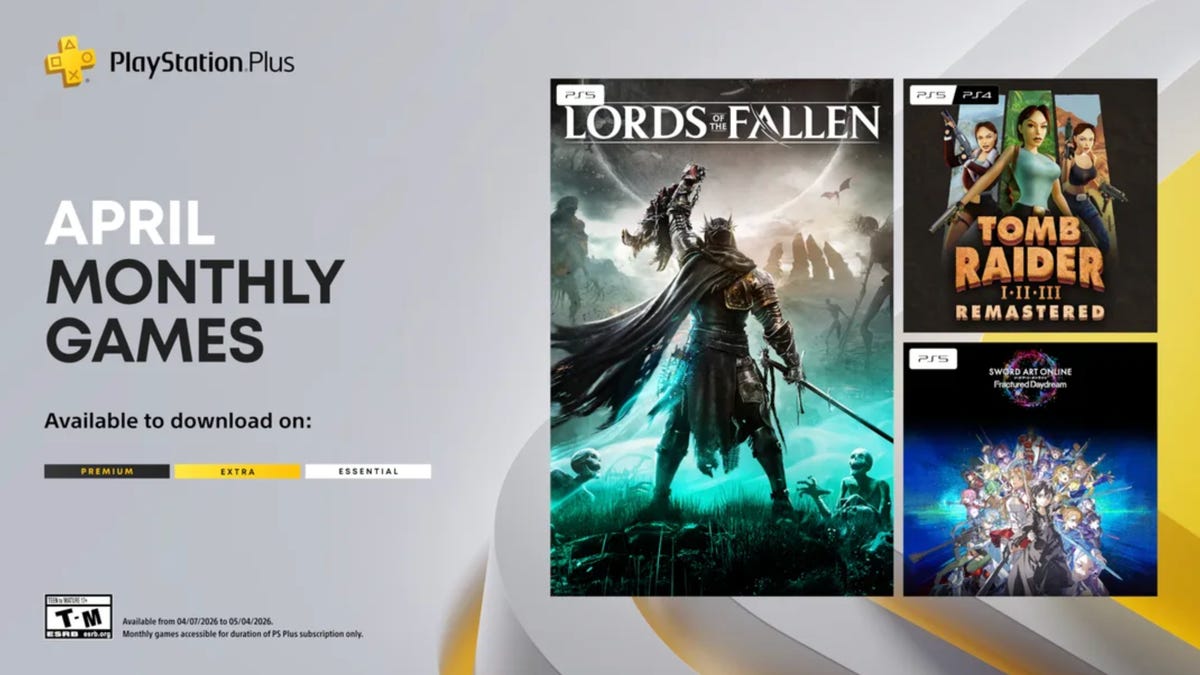
PlayStation Plus, which is Sony’s version of Xbox Game Pass, offers a large, constantly expanding library of games. Subscribers can choose from the Essential, Extra and Premium tiers, each with unique perks and benefits. Starting at $10 a month, the plans give subscribers access to games and rewards, and each month, all subscribers can play a handful of new games at no additional charge. And some people on Reddit are pretty excited for a few of the games Sony is offering subscribers throughout April.
One user wrote how they are «buzzing» for the remastered Tom Raider games, while another user is willing to replay the Soulslike game Lords of the Fallen. «April fools’ joke? Because they’re actually good,» a third user wrote.
If you’re a PlayStation Plus subscriber, you can play these games now until May 4.
Lords of the Fallen
If you played Elden Ring and thought, «I wish this game had even more grimdark elements to it, like Bloodborne,» Lords of the Fallen might be for you. Choose one of nine classes to play as while you traverse the lands of the living and the dead in order to overthrow the demon god Adyr. You’ll fight all manner of monstrosities along the way, like a colossal humanoid with an arm protruding from its mouth or a giant carrion crow that wears a human skull.
HexWorks, the gaming studio behind Lords of the Fallen, also released a patch for the game on April 3. The patch is intended to make co-op sessions feel more rewarding for hosts and guests, so you and your friends should have even more fun in this game.
Tomb Raider 1-3 Remastered
Experience these classic Tomb Raider games from the 90s all over again — or for the first time — with the remastered trilogy. You’ll explore jungles, solve puzzles in the desert and tackle mercenaries and monsters along the way. While you can enjoy the boosted graphics of the remastered edition, you can also enable low-poly mode to experience these games as you would have almost 30 years ago.
Sword Art Online Fractured Daydream
A system called Galaxia has been added to Alfheim Online, allowing players to relive the past. But the system has spun out of control, displacing players throughout time. To set things right, you’ll have to work with friends and foes alike in this co-op raid battle game. But if you want to go solo, you can play story mode as characters from across space and time confront the anomaly in the VR world.
For more on PlayStation Plus, here’s what to know about the service. You can also check out other games on PlayStation Plus and games on Xbox Game Pass.
Technologies
Get Organized for Just $28 With This 6-in-1 Baseus Charging Station Deal
Ditch the cluttered cables and upgrade to this sleek USB power strip while it’s on sale for a record-low price.
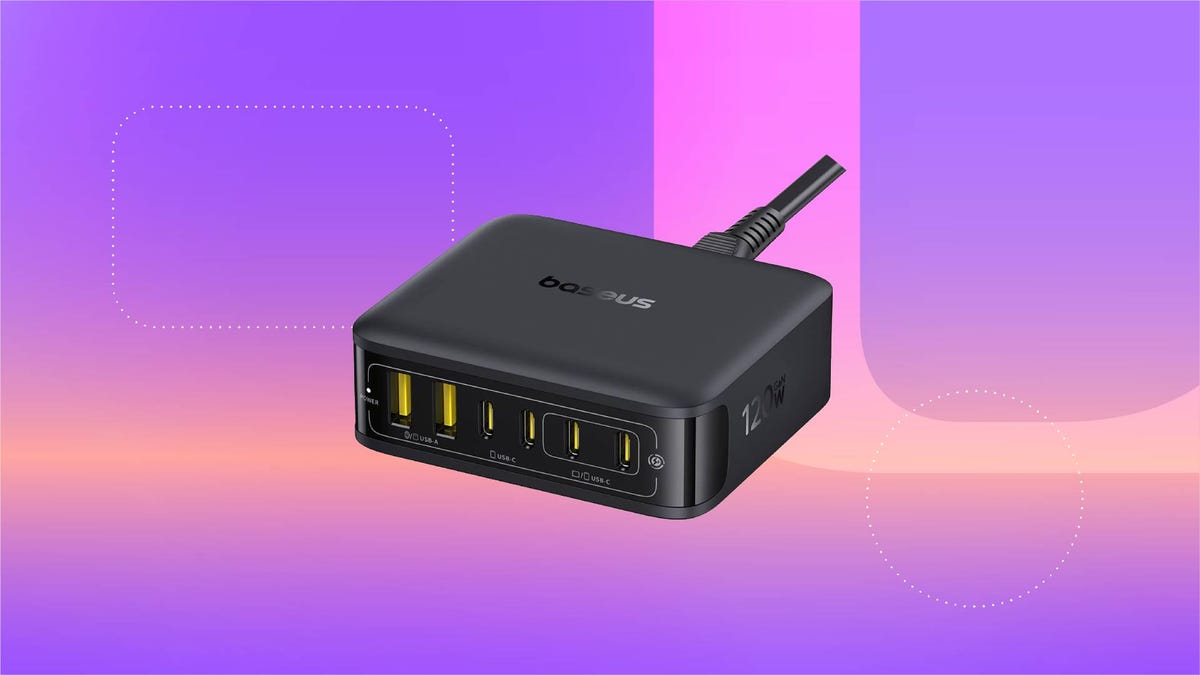
For just $28, this six-in-one Baseus charging station can help you keep your desk organized. That’s 20% off and the all-time lowest price we’ve seen for this 120-watt USB power strip. We don’t expect this limited-time deal to last for long, however, so you’ll want to get your order in sooner rather than later.
You can use this charging station for just about all of your devices, including phones, tablets, headphones and laptops. It’s equipped with four USB-C ports and two USB-A ports, so you can charge up to six devices at once. It also boasts a 65-watt single-port output, enough to fully recharge a MacBook Air in less than 2 hours. And at just 323 grams, it’s light enough to take on the go, making it a great buy for frequent travelers.
Why this deal matters
This sleek Baseus charging station can connect to up to six devices at once, and is still small enough that you can take it on the go. Plus, this is the all-time lowest price we’ve seen, making it a pretty great value.
-
 Technologies3 года ago
Tech Companies Need to Be Held Accountable for Security, Experts Say
-
 Technologies3 года ago
Best Handheld Game Console in 2023
-
 Technologies3 года ago
Tighten Up Your VR Game With the Best Head Straps for Quest 2
-
 Technologies4 года ago
Black Friday 2021: The best deals on TVs, headphones, kitchenware, and more
-
 Technologies5 лет ago
Google to require vaccinations as Silicon Valley rethinks return-to-office policies
-
 Technologies5 лет ago
Verum, Wickr and Threema: next generation secured messengers
-
 Technologies4 года ago
Olivia Harlan Dekker for Verum Messenger
-
 Technologies4 года ago
The number of Сrypto Bank customers increased by 10% in five days