Technologies
Controversy Brews: US Government Targets Banning Top Wi-Fi Router
Federal departments and agencies are joining forces in an effort to ban TP-Link routers due to concerns about national security risks.
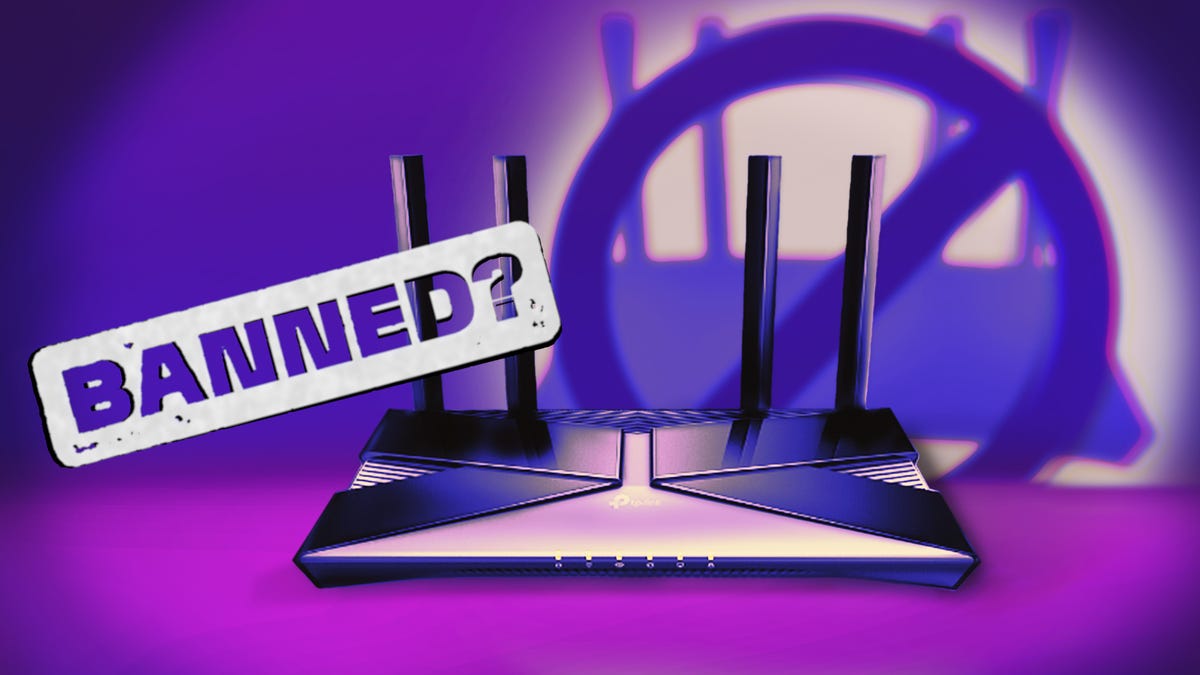
TP-Link routers might not be available for much longer in the US, according to a Washington Post report last week. A potential ban is looking increasingly likely, as more than half a dozen federal departments and agencies back the proposal,
The news first broke in December of last year, when The Wall Street Journal reported that investigators at the Departments of Commerce, Defense and Justice had all opened probes into the company due to national security risks stemming from its ties to China. Since then, news on the TP-Link front has been relatively quiet.
Now, the proposal has gained interagency approval.
Read more: I Asked 4 Cybersecurity Experts If They Would Still Use a TP-Link Router
Why are plans to ban TP-Link routers being pushed?
«Commerce officials concluded TP-Link Systems products pose a risk because the US-based company’s products handle sensitive American data and because the officials believe it remains subject to jurisdiction or influence by the Chinese government,» the Washington Post reported.
TP-Link’s ties to the Chinese government are only allegations. The company — technically called TP-Link Systems — has strenuously denied to me in the past that it’s a Chinese company.
«As an independent US company, no foreign country or government, including China, has access to or control over the design and production of our products,» a TP-Link spokesperson told CNET.
The history of the TP-Link routers
TP-Link was founded in Shenzhen, China, in 1996 by two brothers, Jeffrey (Jianjun) Chao and Jiaxing Zhao. In October 2024, two months after members of the House Select Committee called for an investigation into TP-Link routers, the company split into two: TP-Link Technologies and TP-Link Systems.
The latter is headquartered in Irvine, California, and has approximately 500 employees in the US and 11,000 in China, according to the Washington Post report. TP-Link Systems is owned by Chao and his wife.
«TP-Link’s unusual degree of vulnerabilities and required compliance with [Chinese] law are in and of themselves disconcerting,» the lawmakers wrote in October 2024. «When combined with the [Chinese] government’s common use of [home office] routers like TP-Link to perpetrate extensive cyberattacks in the United States, it becomes significantly alarming.»
The company has become a dominant force in the US router market since the pandemic. According to the Journal report, it grew from 20% of total router sales in 2019 to around 65% this year. TP-Link disputed these numbers to CNET, and a separate analysis from the IT platform Lansweeper found that 12% of home routers currently used in the US are made by TP-Link. More than 300 internet providers issue TP-Link routers to their customers, according to the Wall Street Journal report.
Why are TP-Link routers being investigated?
Separately, the Department of Justice’s antitrust division is investigating whether TP-Link engaged in predatory pricing tactics by artificially lowering its prices to muscle out competitors.
CNET has several TP-Link models on our lists of the best Wi-Fi routers and will monitor this story closely to see if we need to reevaluate those choices.
«We do not sell products below cost. Our pricing is not only above cost but contributes a healthy profit to the business,» a TP-Link spokesperson told CNET.
The potential ban has been through an interagency review and is currently in the hands of the Department of Commerce. According to the Washington Post report, sources familiar with the details of the ban said the Trump administration’s ongoing negotiations with China have made the chances of a ban less likely in the near future.
«Any concerns the government may have about TP-Link are fully resolvable by a common-sense mix of measures like onshoring development functions, investing in cybersecurity, and being transparent,» the spokesperson said. «TP-Link will continue to work with the US Department of Commerce to ensure we understand and can respond to any concerns the government has.»
Don’t miss any of our unbiased tech content and lab-based reviews. Add CNET as a preferred Google source.
How worried should you be about your TP-Link router?
I wrote a few months ago that I wasn’t in any rush to replace my own TP-Link router, and that’s essentially how I still feel today.
When the news first broke last December, I asked four cybersecurity experts whether they would still use a TP-Link router. One gave a strong «no.» Another said there is «risk for a consumer.» And two declined to answer the question directly.
Itay Cohen was one of the authors of a 2023 report that identified a firmware implant in TP-Link routers linked to a Chinese state-sponsored hacking group. He told me in a previous interview that similar implants have been found on other router brands manufactured all over the world.
«I don’t think there’s enough public evidence to support avoiding routers from China outright,» Cohen said. «The vulnerabilities and risks associated with routers are largely systemic and apply to a wide range of brands, including those manufactured in the US.»
I heard a version of that from every cybersecurity expert I spoke with. TP-Link has security flaws, but so do all routers, and I couldn’t point to any that showed collaboration with the Chinese government specifically.
«We’ve analyzed an astonishing amount of TP-Link firmware. We find stuff, but we find stuff in everything,» said Thomas Pace, CEO of cybersecurity firm NetRise and former security contractor for the Department of Energy.
That said, it’s entirely possible that the government is aware of vulnerabilities that the public is not.
For now, I’m still comfortable using a TP-Link router knowing I follow some basic best practices for network security, but my risk tolerance may be higher than it is for others.
How to protect your network if you have a TP-Link router
If you’re one of the millions of Americans who uses a TP-Link router, the news of a potential ban might be unnerving.
A Microsoft report from last year found that TP-Link routers have been used in «password spray attacks» since August 2023, which typically occur when the router is using a default password.
Here’s what you can do to protect yourself right now:
Update your login credentials. A shocking amount of router attacks occur because the user never changed the default login credentials set by the router manufacturer. Most routers have an app that lets you update your login credentials, but you can also type your router’s IP address into a URL. These credentials are different from your Wi-Fi name and password, which should also be changed every six months or so. As always with passwords, avoid common words and character combinations, longer passwords are better and don’t reuse passwords from other accounts.
Use a VPN. If you’re worried about prying eyes from the Chinese government or anyone else, the single best thing you can do to ensure your connection remains private is to use a quality VPN. Privacy-minded folks should look for advanced features like obfuscation, Tor over VPN and a double VPN, which uses a second VPN server for an added layer of encryption. You can even install a VPN on your router directly so that all your traffic is encrypted automatically.
Turn on the firewall and Wi-Fi encryption. These are typically on by default, but now is a good time to make sure they’re activated. This will make it harder for hackers to access the data sent between your router and the devices that connect to it. You can also find these settings by logging into your router from its app or website.
Consider buying a new router. I always recommend buying your own router instead of renting one from your internet service provider. This is mostly a cost-saving measure, but if your ISP uses TP-Link equipment, now might be a good time to switch to another brand. The main thing to look for is WPA3 certification — the most up-to-date security protocol for routers.
Update your firmware. TP-Link’s spokesperson told me last year that customers should regularly check for firmware updates to keep their router secure. «To do this, customers with TP-Link Cloud accounts may simply click the ‘Check for Updates’ button in their product’s firmware menu,» the spokesperson said. «All other customers can find the latest firmware on their product’s Downloads page on TP-Link.com.»
Technologies
Exodus, the Upcoming Sci-Fi Game, Merges Mass Effect With the Drama of Interstellar
Ahead of The Game Awards, the developers of the action RPG talk about time dilation, romanceable companions and other hard sci-fi effects.
Exodus, the upcoming game made by former BioWare developers who worked on the Mass Effect series, has been a long-awaited follow-up to the venerable action RPG. Now, a new trailer shown off at The Game Awards 2025 on Thursday night introduces the game’s characters, teases the dramatic, star-spanning story, and gives sci-fi gamers what they want most: the news that the game will be released in 2027.
First introduced at The Game Awards two years ago, Exodus will be the debut game from studio Archetype Entertainment, operating under Wizards of the Coast. Early trailers laid the groundwork of the game’s universe, a hard science fiction adventure where travel across the stars can take moments for one person or decades for another. Now that the game is closer to its release, I sat down with Exodus’ developers to chat about what’s in store for their newly revealed hero, Jun. We also chatted about companions, big choices and Matthew McConaughey.
McConaughey, previously confirmed to be in the game, plays a mysterious character named C.C. Orlev, explained Chad Robertson, co-founder and general manager at Archetype. He’s a blend of teacher and voice of the people, meaning players will likely hear a lot from the famed actor during their playthrough as Jun.
«Jun doesn’t really fully understand the origins of how C.C. comes into his life, effectively. And C.C. still serves as a bit of a mentor and advisor to Jun,» Robertson said.
McConaughey’s role in the hard sci-fi film Interstellar thematically aligns with Exodus’ implementation of time dilation — the physics theory that as objects go faster (like a ship approaching the speed of light), time slows down for them. Since there are no wormholes or teleporters in the game’s universe, explained Drew Karpyshyn, narrative director of Exodus at Archetype, players will have to make some tough calls. If they head out on a mission that’s 10 years away and takes 10 years to come back, that’s 20 years passing on the planet they left.
«Everybody’s aged. The world has moved on. Things have changed, and that puts some really interesting opportunities and some really interesting conflicts and dilemmas for the players to deal with, the emotional impact of what happens to the people you leave behind — your friends, your companions, the people you care about,» Karpyshyn said.
Time dilation is just one of the mechanics that sets Exodus apart from other sci-fi games. In Exodus, humanity left an uninhabitable Earth thousands of years ago to find refuge in the Centauri system, but their colony ships staggered in their arrival. The latest humans to make it, like Jun, are met by civilizations that have evolved over the millennia into other humanoids alongside «Awakened animals,» explained Chris King, game director of Exodus at Archetype.
«I think there’s similarities to games we’ve worked on in the past, but there’s a ton of things we’re doing that are pretty different,» King said.
Archetype has leaned heavily on player decisions in Exodus, which isn’t a surprise since its developers were behind the choice-heavy BioWare games. Expect plenty of morally ambiguous choices in the game that won’t make everyone happy, King said. Players will just have to go on Exodus missions — the titular sojourns that leave family and friends behind for years at a time — and see how they play out.
«For us, it’s all about trying to give players as much agency as possible. We think of them as co-authors in the story and experience,» King said. «We’re basically trying to cram in as many choices and consequential gameplay so that they can customize the experience and compare notes with a friend who’s playing the same game. Their experience can be pretty drastically different.»
Unlike the pure good and evil choices of games like Knights of the Old Republic or Mass Effect, Exodus will veer away from a specific alignment system, Karpyshyn said. There will be mechanics in the game that honor and reflect choices, though the developers are trying to avoid the more artificial feel of picking options for, say, goodness points in favor of picking what’s best for their character. Gameplay choices, interactions and how players upgrade their hero will give them a reputation.
Companions also play a big part, and some of them will be romanceable, but not all. In the new trailer, we meet Salt, an Awakened octopus piloting a mech suit who simply isn’t interested in humans like Jun. These companion characters have their own stories and motivations that players can choose to explore, and they won’t always see eye-to-eye with each other.
While we’ll have to wait and see how Archetype incorporates all these sci-fi RPG elements, it’s clear that Mass Effect’s shadow looms large over Exodus. How much the new game resembles its spiritual predecessor will be clarified as more of it is revealed, but a clear divergence lies in inspiration. In addition to Interstellar, Archetype’s developers looked to another iconic sci-fi saga to pattern its new game after: Frank Herbert’s epic Dune novels, which were recently adapted to the screen by Denis Villeneuve.
Archetype took specific inspiration from «the scope and timelines of consequences, the idea of dynasties, family politics, rising up to become a leader and sort of savior of your people,» Karpyshynsaid.
At Archetype’s studio space in Austin, Texas, posters line the walls from films and media that also inspired the game, like Interstellar and Edge of Tomorrow. Other properties, like the Star Wars show The Mandalorian, evoke the desperate fights players will find themselves in in Exodus — outnumbered, outgunned and flanked by a couple of companions. The developers took a page out of Horizon Zero Dawn’s elemental combat, too.
For all that they’re working to step out from Mass Effect’s shadow, the developers acknowledge its impact on fans — and their desire that Exodus rise to a similar place in gamers’ esteem.
«Mass Effect gets brought up pretty frequently for us. We humbly aspire to deliver something that will resonate with fans at the scale of Mass Effect. We’re super excited and confident that what we’re building is going to put us in that direction, but we’ve got to earn that with fans and deliver something that they’re excited about,» Robertson said.
Technologies
Thin Phone Duel: iPhone Air vs. Galaxy S25 Edge
Does a thin design really make that much of a difference? Here’s the skinny on the slim phones from Apple and Samsung.
If you’re looking for a new phone for the holidays or for 2026, this year’s options have taken a tight turn. Both Apple and Samsung include extra-thin phones in their lineups, bringing up the question of whether a slim design is preferable to the roughly standard sizes we’ve gotten used to. And if you do decide you want to shave some thickness from your everyday phone, which one comes out on top: the Apple iPhone Air or the Samsung Galaxy S25 Edge?
So let’s compare the features of these thin phones. If you press them together, are they much thicker combined than a regular iPhone 17 or Galaxy S25? And do they overcome tradeoffs in battery life, camera and sound quality that come with a thinner design? I’m here to do the math and compare features for you.
Looking to order the iPhone Air? Check out our order guide to learn if you can get it free and other great deals.
Want to buy the Samsung Galaxy S25 Edge? Find out which carriers and retailers are offering the best deals on Samsung’s slim phone.
Don’t miss any of our unbiased tech content and lab-based reviews. Add CNET as a preferred Google source.
iPhone Air vs. S25 Edge price comparison
-
iPhone Air: $999. The iPhone Air takes the place formerly held by the iPhone 16 Plus, making it the only model with a screen larger than the iPhone 17 that isn’t an iPhone 17 Pro.
-
Galaxy S25 Edge: $1,100. The S25 Edge joins the S25 and S25 Ultra in this year’s Galaxy lineup.
The iPhone Air includes fewer features than the iPhone 17, such as the number of cameras. However, it features a larger display, an A19 Pro processor, and is equipped with 256GB of storage to begin with. Additionally, Apple has consistently applied premium pricing for minor design changes. The original MacBook Air fit into an inter-office envelope and cost $1,799, despite being underpowered compared to the rest of the MacBook line. (Over a few generations, it would eventually become Apple’s entry-level affordable laptop at $999, where it still resides.)
The Galaxy S25 Edge’s higher price ($101) could be an attempt to capture more dollars from customers looking for a phone that sets them apart, but we’re already seeing occasional steep discounts on it.
In both cases, it’s worth noting that the pricing has held up against the Trump administration tariffs so far.
iPhone Air vs. S25 Edge dimensions and weight
Now it’s time to go deep — as in, just how thin is the depth of each phone?
No phone manufacturer describes its phones as bulky or chunky, even for extra-large models like the iPhone Pro Max. Yet, the difference between the depths of the iPhone Air and the S25 Edge, as well as the standard phones of each respective family, is stark.
Not counting the camera assembly, which Apple refers to as the «plateau,» most of the iPhone Air’s body is 5.64mm thick. The S25 Edge, at its narrowest point, is a hair thicker at 5.8mm. (Both companies list only the thinnest measurement, not including the cameras.) Compare that to 7.9mm for the iPhone 17 and 7.2mm for the Galaxy S25.
The Galaxy Z Fold 7 is actually thinner when open, at 4.2mm, but it also has a larger surface area to accommodate its battery and other components. Other foldables from Chinese companies, such as Huawei, Oppo and Honor, also boast thinner bodies than the iPhone Air or S25 Edge, but only when opened.
And when you press the two thin phones together, do they really match up to the typical phone slab you’re carrying now? Combined (and again, excluding the camera bumps), the iPhone Air and S25 Ultra are 11.44mm thick, which is thicker than either the iPhone 17 or Galaxy S25, and even the iPhone 17 Pro Max at 8.75mm. However, if you want to achieve a more vintage feel, the original first-generation iPhone, released in 2007, measured 11.6mm.
Surprisingly, the less depth translates to only a slight decrease in weight compared to the other models in each lineup. The iPhone Air weighs 165 grams versus 177 grams for the iPhone 17, while the S25 Edge pips in at just 163 grams but gets barely undercut by the Galaxy S25 at 162 grams.
How big is each phone in the hand? While both are similar, the iPhone Air is slightly shorter and narrower, measuring 156.2mm tall and 74.7mm wide, compared to the S25 Edge’s dimensions of 158.2mm tall and 75.6mm wide.
iPhone Air vs. S25 Edge displays
Apple calls the iPhone Air’s 6.5-inch OLED screen a Super Retina XDR display. It features a high resolution of 2,736×1,260 pixels at a density of 460 ppi (pixels per inch) and can output a maximum of 3,000 nits of brightness outdoors, as well as a minimum of 1 nit in the dark.
Samsung packed a larger 6.7-inch QHD+ Dynamic AMOLED 2X screen into the S25 Edge, which translates to a high-resolution display measuring 3,120×1,440 pixels at 513 ppi. Its brightness goes up to 2,600 nits.
Both phones’ screens feature adaptive 120Hz refresh rates for smoother performance.
Comparing the iPhone Air and S25 Edge cameras
So far, many of the specs have been close enough to weigh each phone fairly evenly. Then, we get to the cameras.
The iPhone Air includes a single rear-facing 48-megapixel wide camera with a 26mm-equivalent field of view and a constant f/1.6 aperture. In its default mode, the camera outputs 24-megapixel «fusion» photos that result from an imaging process where the camera captures a 12-megapixel image (using groups of four pixels acting as one larger pixel for improved light gathering, known as «binning») and a 48-megapixel reference for additional detail.
Apple also claims the iPhone Air can capture 2x-zoomed (52mm-equivalent) telephoto images that are 12 megapixels in dimension and represent a crop of the center of the image sensor.
The S25 Edge features two built-in rear cameras: a 200-megapixel wide-angle lens and a 12-megapixel ultrawide lens. There’s no dedicated telephoto camera, so the S25 Edge also offers a 2x-zoomed crop that shoots photos at 12 megapixels in size.
The front-facing selfie cameras on each phone differ significantly. The iPhone Air introduces a new 18-megapixel camera with an f/1.9 aperture. But the increased resolution over the S25 Edge’s 12-megapixel selfie camera isn’t what’s notable.
Apple calls it a Center Stage camera because it features a square sensor that can capture tall or wide shots without requiring the user to physically turn the phone, unlike the 4:3 ratio sensors found in typical selfie cameras. It can adapt the aspect ratio based on the number of people it detects in front of the camera: a traditional portrait orientation when you’re snapping a photo of yourself, for example, or switch to a landscape orientation when two friends stand next to you in the frame.
iPhone Air vs. S25 Edge batteries
When it comes to concerns, the battery life of thin phones is at the top of the list. The insides of most phones are packed with as much battery as will fit, so making a phone slimmer naturally means removing space for the battery. With either model, you end up sacrificing battery power for design. But how much?
Apple doesn’t list the iPhone Air’s battery capacity, but claims «all-day battery life» and up to 27 hours of video playback. It also sells a special iPhone Air MagSafe Battery add-on that magnetically snaps to the back of the phone and works only with the iPhone Air. In her review, CNET’s Senior Tech Reporter Abrar Al-Heeti drained the battery in 12 hours over a phone-intensive day, but did end a more typical day with 20% remaining.
The S25 Edge features a 3,900-mAh battery, which Samsung claims will support up to 24 hours of video playback. (Come on, phone manufacturers, our phones aren’t televisions left running in the background.)
In her S25 Edge review, Al-Heeti noted that the phone also generally lived up to Samsung’s own «all-day battery life» boast, saying, «Ultimately, you’ll get less juice out of that slimmer build, but S25 Edge offers just enough battery life to make me happy…But the S25 Edge has shifted my priorities. I’m enjoying the sleek form factor so much that I’m willing to make some compromises, even if that means I have to be sure to charge my phone each night, which is something I tend to do anyway.»
It’s worth noting that both phones support fast charging when used with a 20-watt or higher wired power adapter, allowing them to reach around 50% charge in 30 minutes from a completely discharged state.
iPhone Air vs. S25 Edge processor, storage and operating system
The iPhone Air is powered by Apple’s latest A19 Pro processor, the same one found in the iPhone 17 Pro models (compared to the A19 in the stock iPhone 17). Apple doesn’t list the built-in memory, but we suspect it includes 8GB of RAM (which is recognized as the minimum amount to run AI features such as Apple Intelligence). The base storage configuration is 256GB, with options to order the iPhone Air with 512GB or 1TB capacity. It ships with iOS 26, the latest version of the operating system that Apple released widely this week.
The S25 Edge is powered by a Snapdragon 8 Elite processor, the same one that powers the other S25 models. It includes 12GB of RAM and is available in storage capacities of 256GB and 512GB. The phone comes preinstalled with Android 15.
iPhone Air vs. S25 Edge all specs
Apple iPhone Air vs. Samsung Galaxy S25 Edge
| Apple iPhone Air | Samsung Galaxy S25 Edge | |
| Display size, tech, resolution, refresh rate | 6.5-inch OLED; 2,736 x 1,260 pixel resolution; 1-120Hz variable refresh rate | 6.7-inch QHD+ AMOLED display; 120Hz refresh rate |
| Pixel density | 460ppi | 513 ppi |
| Dimensions (inches) | 6.15 x 2.94 x 0.22 in | 2.98 x 6.23 x 0.23 inches |
| Dimensions (millimeters) | 156.2 x 74.7 x 5.64 mm | 75.6 X 158.2 X 5.8mm |
| Weight (grams, ounces) | 165 g (5.82 oz) | 163g (5.75 oz) |
| Mobile software | iOS 26 | Android 15 |
| Camera | 48-megapixel (wide) | 200-megapixel (wide), 12-megapixel (ultrawide) |
| Front-facing camera | 18-megapixel | 12-megapixel |
| Video capture | 4K | 8K |
| Processor | Apple A19 Pro | Snapdragon 8 Elite |
| RAM + storage | RAM N/A + 256GB, 512GB, 1TB | 12GB RAM + 256GB, 512GB |
| Expandable storage | None | No |
| Battery | Up to 27 hours video playback; up to 22 hours video playback (streamed).Up to 40 hours video playback, up to 35 hours video playback (streamed) with iPhone Air MagSafe Battery | 3,900 mAh |
| Fingerprint sensor | None (Face ID) | Under display |
| Connector | USB-C | USB-C |
| Headphone jack | None | None |
| Special features | Apple N1 wireless networking chip (Wi-Fi 7 (802.11be) with 2×2 MIMO), Bluetooth 6, Thread. Action button. Apple C1X cellular modem. Camera Control button. Dynamic Island. Apple Intelligence. Visual Intelligence. Dual eSIM. 1 to 3,000 nits brightness display range. IP68 resistance. Colors: space black, cloud white, light gold, sky blue. Fast charge up to 50% in 30 minutes using 20W adapter or higher via charging cable. Fast charge up to 50% in 30 minutes using 30W adapter or higher via MagSafe Charger. | IP88 rating, 5G, One UI 7, 25-watt wired charging, 15-watt wireless charging, Galaxy AI, Gemini, Circle to Search, Wi-Fi 7. |
| US price starts at | $999 (256GB) | $1,100 (256GB) |
Technologies
I Broke Up With My AirPods for the Beats Studio Pro and With This Huge Discount You Might, Too
Shopping for over‑ear headphones for yourself or as a holiday gift? This is one deal you don’t want to miss.
I was an Apple AirPods loyalist for years, convinced I’d stick with them forever. But after mine suddenly gave out, I picked up the Beats Studio Pro headphones on a whim because I needed something comfortable for hours of daily use. Honestly, I’ve never looked back.
Normally priced at $350, these headphones are now available for just $150, more than half off and perfectly timed for gifting season. Keep in mind, the deal expires in three days, so it’s worth moving fast. If you’re particular about color options, Amazon has six variants available for $180. Whether you’re hunting for the ideal holiday gift or upgrading your own listening experience, now’s the time to scoop these up. This offer won’t stick around for long, so don’t wait.
HEADPHONE DEALS OF THE WEEK
-
$248 (save $152)
-
$170 (save $181)
-
$398 (save $62)
-
$200 (save $250)
Why my Beats never leave my side
I didn’t expect to fall in love with a pair of headphones so quickly, especially after years of loyalty to Apple earbuds. I was just hoping for solid noise cancellation and good sound quality.
The Beats delivered so much more. Today, they’re an essential part of my daily routine, practically an extension of my ears. Whether I’m writing, commuting, doing chores or walking my pup, the Beats Studio Pro are always with me.
Don’t miss any of our unbiased tech content and lab-based reviews. Add CNET as a preferred Google source.
Here’s how the Beats Studio Pro work
Let’s start with the specs. The Beats Studio Pro are premium over-ear headphones that bring serious upgrades to the iconic Beats design. Think of these as the grown-up, more refined cousin of the Beats Solo series. They’re still stylish and punchy, but with significantly improved sound quality and comfort. Here are some key features of the Beats Studio Pro:
- Active noise cancellation and transparency mode: Two core features that let you tune out the world or stay aware, depending on your mood. The ANC is excellent, especially for this price, and it’s great for navigating travel, open offices or city streets.
- USB-C lossless audio: A game-changer for audiophiles. With USB-C, you can listen to lossless audio directly from your device — no compression, just crystal-clear sound.
- Spatial audio with dynamic head tracking: This creates an immersive, surround-sound-like experience.
- Custom 40mm drivers: Deliver balanced sound, with punchy bass, crisp mids and smooth highs.
- Battery: Up to 40 hours with ANC off or 24 hours with it turned on. That’s more than enough to get you through several workdays or even a full international flight without scrambling for a charger.
- Built-in microphones and voice-targeting beamforming tech: Your voice will sound clear on calls, even in a noisy space.
They also pair effortlessly with both Apple and Android devices, thanks to support for Find My, Google Fast Pair and one-touch pairing.
CNET’s audio expert, David Carnoy, reviewed these earphones and found both the sound quality and voice-calling performance to be impressive.
«The noise canceling is quite effective,» Carnoy wrote in his review. «It’s the adaptive variety, so it’s not a fixed setting, and occasionally I’d hear it shift in strength as it adjusted to the ambient noise around me, whether I was on the subway or walking the streets of New York.»
Why I’m obsessed with my Beats
There are plenty of great headphones out there. So what sets these apart for me?
First and foremost, I love the comfort. I’ve worn lots of over-ear headphones that start to ache or feel heavy after an hour or so. I also have several ear piercings — five in my left ear and three in my right — and many over-ear headphones push the earring into my skin, digging in until it’s quite painful.
Not these. The earcups are plush, the clamping force is just right, and the memory foam actually makes a difference. I can wear them for hours without fatigue, which is impressive considering I log multiple hours a day in them.
The sound quality is also great. Beats used to have a reputation for overly bass-heavy tuning, but the Studio Pro strikes a beautiful balance. There’s still that satisfying low-end thump when I’m listening to pop, hip hop or K-pop, but it doesn’t overpower the vocals or mids. Whether I’m streaming Hozier for the umpteenth hour, catching up on podcasts or listening to a new audiobook, everything sounds great.
Finally, the ANC and transparency mode are shockingly good. I’ve used my Beats in loud coffee shops, on airplanes and while vacuuming, and they efficiently block out noise like a champ. But when I need to hear what’s going on (like when I run into one of my neighbors while I’m walking my dog), a quick button press switches me into transparency mode, and I can hear them clearly. It’s seamless.
I would also be remiss if I didn’t mention their style. Frankly, they just look cool. I know that’s not the most important thing, but the sleek matte finish, minimalist design and range of colors make these headphones feel like a fashion accessory as much as a tech device. I have the «earth» color headphones, and they look gorgeous with any outfit. My one request (Beats execs, I’m sure you’re reading this!) would be to make these in a sage green color. Pretty please?
They’d make a great holiday gift for any audiophile
Buying tech for someone else can be tricky, but the Beats Studio Pro are a pretty safe bet.
For one, they work across platforms, so it doesn’t matter whether your gift recipient is an iPhone user or an Android user. The intuitive pairing process, native device integration and wide compatibility make these user-friendly for just about anyone.
They’re also suitable for various use cases. Daily commuters? Check. Frequent flyers? Definitely. College students pulling all-nighters, or music lovers who want to hear every nuance of a track? Absolutely. These can suit almost anyone, day in and day out.
The Beats just feel premium, too. This is the kind of tech someone might not splurge on for themselves, but they would certainly be grateful to receive as a gift. If you’re in the midst of planning your holiday shopping, these are a hit waiting to happen.
Why this Beats deal matters
Let’s get down to numbers. The Beats Studio Pro normally sell for $350 or $450, depending on the color you select. That’s pretty pricey. But right now, several colors are down to $150.
I keep a pretty close eye on tech deals, and huge discounts don’t come around often, especially on newer, high-demand models. I don’t expect a much bigger sale on this product anytime soon. Considering the quality, durability and features packed into these headphones, you’re getting a lot for your investment, including flagship-level ANC, excellent sound and cross-platform support for less than the cost of most premium earbuds.
My final thoughts on my Beats Studio Pro headphones
In a world full of flashy gadgets and fleeting trends, the Beats Studio Pro are the real deal. They’ve become an essential part of my everyday life, not because they’re trendy or hyped, but because they work. They’re reliable, comfortable and sound fantastic. If this discount falls within your price range, it’s a great time to buy them.
-
Technologies3 года agoTech Companies Need to Be Held Accountable for Security, Experts Say
-
Technologies3 года agoBest Handheld Game Console in 2023
-
Technologies3 года agoTighten Up Your VR Game With the Best Head Straps for Quest 2
-

Technologies4 года agoBlack Friday 2021: The best deals on TVs, headphones, kitchenware, and more
-

Technologies4 года agoVerum, Wickr and Threema: next generation secured messengers
-
Technologies4 года agoGoogle to require vaccinations as Silicon Valley rethinks return-to-office policies
-

Technologies4 года agoOlivia Harlan Dekker for Verum Messenger
-

Technologies4 года agoiPhone 13 event: How to watch Apple’s big announcement tomorrow