
Technologies
Call-Recording App Neon Disappeared Abruptly. Now It’s Back for Another Try
The app stirred privacy and security questions offering to pay people for recordings of their phone calls to train AI models. A security flaw didn’t help.
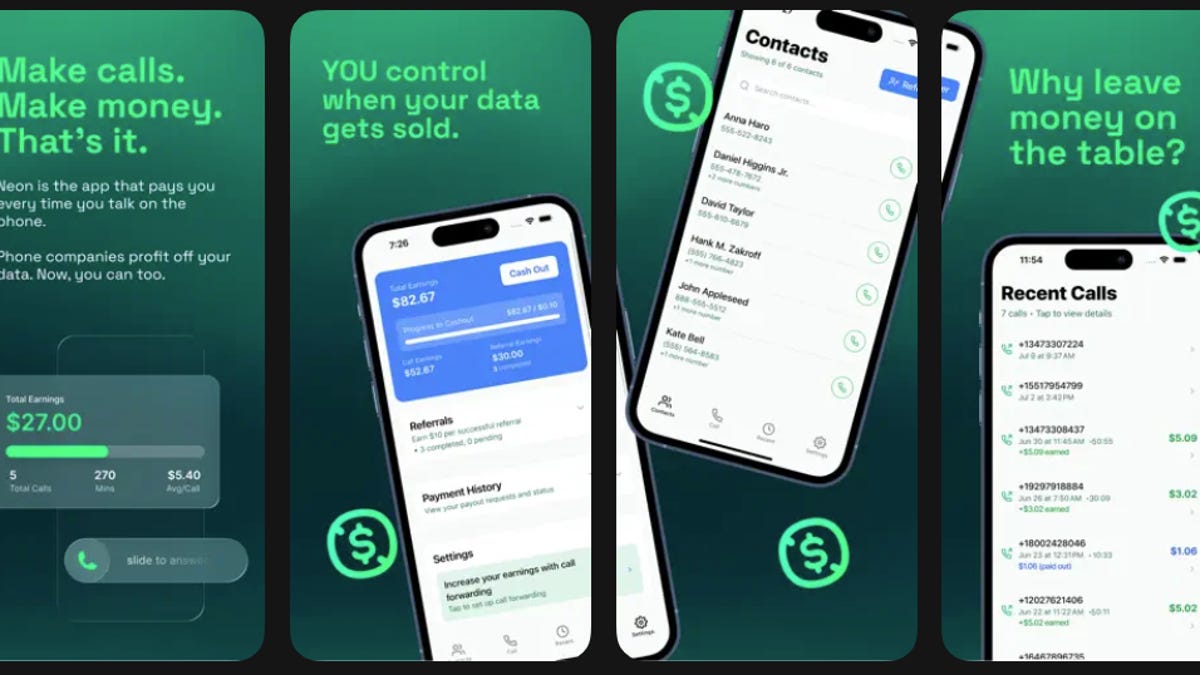
In September, the Neon app briefly became a sensation on app download charts by promising to pay users for recording and sharing their phone calls. Then it abruptly went offline amid controversy over its security practices, privacy protections and payment structure.
More than a month later, Neon has returned to the iOS App Store and the Google Play Store, and the New York-based companyfollowed up a few days later with a new payout formula. Its founder, Alex Kiam, says the security issues have been resolved, but without offering much detail.
How far the company has progressed remains unclear. An email from Kiam to users on Thursday was sprinkled with phrasing like «while we prepare this new version of the app» and «once the new version of the app launches.»
In our own tests, we were unable to get the new version of Neon to work on iOS. A screen that asks to verify a phone number for signup didn’t trigger a phone call as expected.
Neon sells the recordings of user calls to companies training AI models, which are hungry for real-world input, such as how people speak conversationally. The company says it anonymizes call information.
Privacy experts CNET spoke to warned against using the app in its previous incarnation due to concerns over call consent laws, and also noted that AI could infer user information or identities even if call data is anonymized.
Don’t miss any of our unbiased tech content and lab-based reviews. Add CNET as a preferred Google source.
What’s changed with the Neon app?
Shortly after Neon soared on the app store charts, the news site TechCrunch discovered a security flaw that allowed people to access calls from other users, including transcripts and metadata about the calls. After the app went dark, Kiam said that the company would address the issue and that the app would return with a bonus for users.
At that time, users of the app could call anyone and get paid. According to the company, only the app user’s side of the call was sold, since in some states, it’s not legal to record a conversation without permission.
The new version is attempting to circumvent these state issues with a new app-to-app setup: Both parties to the call must have the Neon app installed, essentially making it an opt-in service. Only calls from one Neon user to another Neon user are paid, meaning both people on the call have signed up with the company.
In his email on Thursday, Kiam list details of the updated formula for payments. It starts out with pay to users of 20 cents per minute for the first 20 minutes of call time per day, to a maximum of $4 a day. The plan also describes payments for referrals to the app, up to $50 a day from referral earnings — as long as users «don’t try to game the system with fake calls» — with the potential for a higher daily maximum for users «who have referred a lot of people.»
That is, earning potential is based largely on users getting other people to sign up and use the app.
Users posting comments on the Google Play Store have given the company low ratings, complaining that referral rates have dropped to as low as $1 and that call payment rates may be as low as 5 cents per minute. The app currently has a rating of 2.2 stars out of 5 on the Google Play Store and 2.7 stars out of 5 on the App Store for iOS.
Security concerns with Neon
When Neon went offline, it was with the expectation that the company would fix the vulnerability that could have allowed someone to access calls from other users.
Kiam told CNET via email that the company «engaged with» three cybersecurity firms after the security hole was found and engaged a contractor to perform a code review to address security concerns. He said that Neon later hired that contractor as its chief technology officer. He didn’t name the contractor, but said the person is «the former CTO of a reasonably large tech company who has 20 years of experience building secure platforms.»
Neon addressed the underlying issue TechCrunch found, Kiam said, and didn’t discover any evidence of «malicious actors» accessing its database. He didn’t elaborate on how the company addressed that issue.
The delay in bringing Neon back to iOS was not intentional, he said. «I wanted to bring Neon back quickly, but it was important that we did this right.»
Neon’s updated terms of service
As part of its relaunch, Neon has waived the $30-per-day limit on pending payouts. Kiam said the company plans «a future pleasant surprise» for those who were already using the app.
According to the updated terms of service from Nov. 3, those who sign up for the app agree that Neon can «sell and offer for sale» call recordings «for the purpose of developing, training, testing, and improving machine learning models, artificial intelligence tools and systems, and related technologies.»
There is still concerning language regarding Neon’s rights and licenses that grant the company the authority to publicly display, reproduce and distribute call recordings «in any media formats and through any media channels.»
The appeal of earning a few extra bucks for very little effort is understandable, especially when many people are worried about money amid tech industry layoffs, the US government shutdown and the suspension of services like the SNAP food assistance program.
Still, security concerns, the ethics of turning over personal conversations to AI companies, the lack of clarity about payments and complaints in user reviews should give users pause.
In an interview with CNET in early October, Kiam said his company was overwhelmed by the sudden popularity of Neon, but not completely surprised.
«I expected things to grow pretty quickly because … we’re getting people money for something that they would do anyway,» Kiam said. «We felt confident that there was real demand for something like this.»
Technologies
Samsung’s Galaxy Watch Ultra 2 Might Come in 5G and 4G Cellular Models
If the rumor proves true, the 5G Galaxy Watch Ultra would rival the 5G-enabled $799 Apple Watch Ultra 3 that debuted last fall.
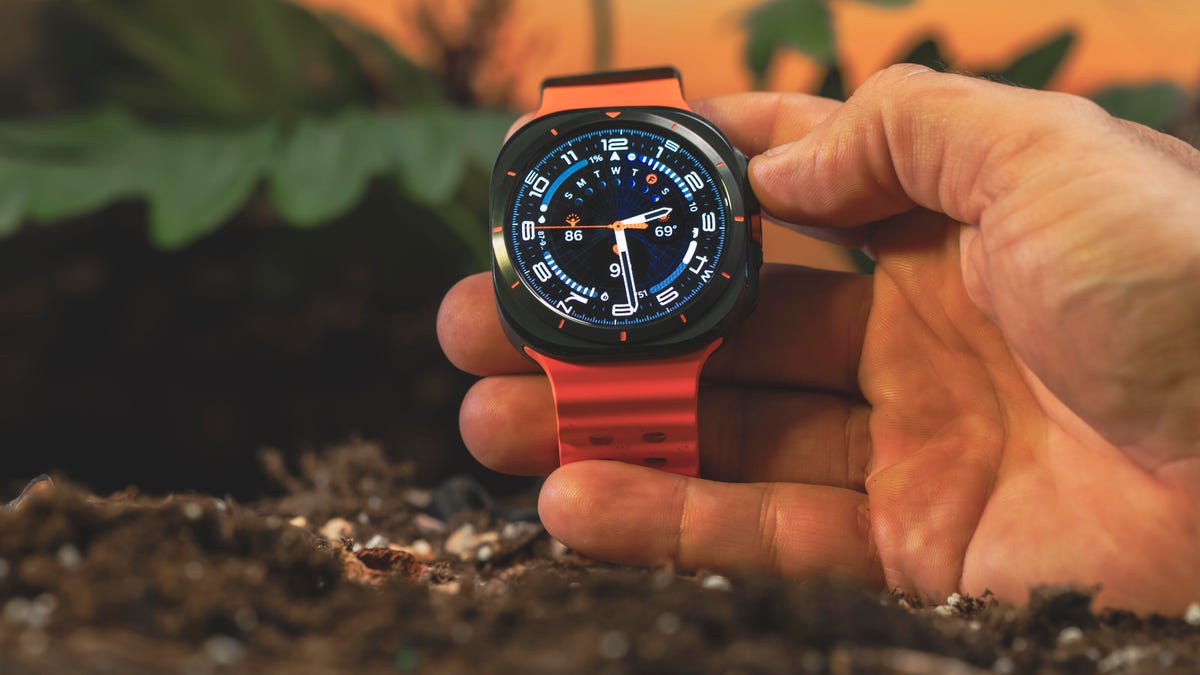
Samsung’s next high-end Galaxy Watch could support faster 5G speeds, but if this leak is true, it will depend on where you live. The rumored Samsung Galaxy Watch Ultra 2 might come in 5G and 4G cellular models, with availability for each smartwatch depending on the country.
According to the Dutch website Galaxy Club (and spotted by SamMobile), Samsung’s servers may have revealed a series of model numbers that point to 5G, 4G and Wi-Fi-enabled editions of the next Galaxy Watch Ultra, which would succeed the original model that debuted in 2024.
A representative for Samsung did not immediately respond to a request for comment.
The Galaxy Club website speculates that the 5G edition would be sold in the US and Korean markets, while the 4G edition would sell in the rest of the world. In the US, a 5G version of the Galaxy Watch Ultra would rival the 5G-enabled $799 Apple Watch Ultra 3, which debuted last fall. The 4G edition would have broader compatibility worldwide, since the earlier network is far more established.
It will likely be a few months until we hear anything official about the Galaxy Watch Ultra 2. Samsung typically unveils its new watches in the summer alongside its Galaxy Z Fold and Z Flip foldable phones. Last year, Samsung unveiled the Galaxy Watch 8 and the Galaxy Watch 8 Classic, but otherwise left the prior 2024 Ultra in the lineup for those looking for a larger 47mm smartwatch.
Technologies
2 Cases Show Supreme Court Isn’t Holding ISPs Responsible for Piracy
Technologies
Today’s NYT Connections Hints, Answers and Help for April 8, #1032
Here are some hints and the answers for the NYT Connections puzzle for April 8, No. 1032.
Looking for the most recent Connections answers? Click here for today’s Connections hints, as well as our daily answers and hints for The New York Times Mini Crossword, Wordle, Connections: Sports Edition and Strands puzzles.
Today’s NYT Connections puzzle is kind of tough. The purple category is a fun one, once you see the connection. Read on for clues and today’s Connections answers.
The Times has a Connections Bot, like the one for Wordle. Go there after you play to receive a numeric score and to have the program analyze your answers. Players who are registered with the Times Games section can now nerd out by following their progress, including the number of puzzles completed, win rate, number of times they nabbed a perfect score and their win streak.
Read more: Hints, Tips and Strategies to Help You Win at NYT Connections Every Time
Hints for today’s Connections groups
Here are four hints for the groupings in today’s Connections puzzle, ranked from the easiest yellow group to the tough (and sometimes bizarre) purple group.
Yellow group hint: In the group.
Green group hint: Appearance details.
Blue group hint: Often found in gyms.
Purple group hint: They help you see.
Answers for today’s Connections groups
Yellow group: Cohort member.
Green group: Aesthetic.
Blue group: Kinds of bar apparatuses.
Purple group: Eyewear in the singular.
Read more: Wordle Cheat Sheet: Here Are the Most Popular Letters Used in English Words
What are today’s Connections answers?
The yellow words in today’s Connections
The theme is cohort member. The four answers are associate, colleague, fellow and peer.
The green words in today’s Connections
The theme is aesthetic. The four answers are design, look, scheme and style.
The blue words in today’s Connections
The theme is kinds of bar apparatuses. The four answers are monkey, parallel, pull-up and uneven.
The purple words in today’s Connections
The theme is eyewear in the singular. The four answers are contact, goggle, shade and spectacle.
-
 Technologies3 года ago
Tech Companies Need to Be Held Accountable for Security, Experts Say
-
 Technologies3 года ago
Best Handheld Game Console in 2023
-
 Technologies3 года ago
Tighten Up Your VR Game With the Best Head Straps for Quest 2
-
 Technologies4 года ago
Black Friday 2021: The best deals on TVs, headphones, kitchenware, and more
-
 Technologies5 лет ago
Google to require vaccinations as Silicon Valley rethinks return-to-office policies
-
 Technologies5 лет ago
Verum, Wickr and Threema: next generation secured messengers
-
 Technologies4 года ago
Olivia Harlan Dekker for Verum Messenger
-
 Technologies4 года ago
The number of Сrypto Bank customers increased by 10% in five days