
Technologies
Amazon’s Ring Cameras Push Deeper Into Police and Government Surveillance
Ring has partnered with Flock Safety, making it easier for law enforcement to reach out to Ring doorbell and security camera owners to request footage.
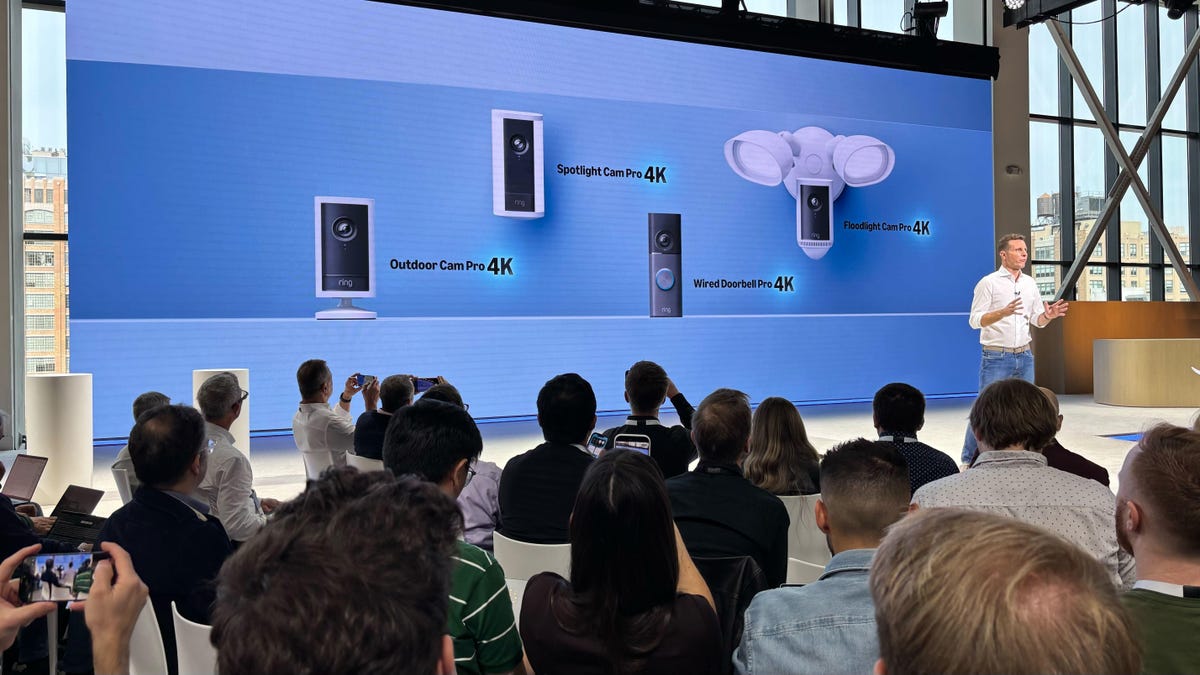
Less than two years after removing a feature that made it easier for law enforcement agencies to request footage from owners of Ring doorbells and other security products, Amazon has partnered with two companies that will help facilitate the same kinds of requests.
Two weeks after rolling out a new product line for 2025, Ring, owned by Amazon, announced a partnership with Flock Safety, as part of its expansion of the Community Requests feature in the Ring Neighbors app. Atlanta-based Flock is a police technology company that sells surveillance technology, including drones, license-plate reading systems and other tools. The announcement follows a partnership Ring entered into with Axon, previously Taser International, which also builds tools for police and military applications.
Don’t miss any of our unbiased tech content and lab-based reviews. Add CNET as a preferred Google source.
Taken together, the two partnerships point to Amazon’s Ring division not only reintroducing tools for police to request images or video from Ring customers without a warrant but also to a closer alignment with companies that have ties to police departments, ICE, the Secret Service and branches of the military.
Ring described the process for Community Requests in one of its blog posts. It said an agency that is verified with Axon Evidence, which Axon owns, could submit a community request that includes a specific location and timeframe of an incident and details about what’s being investigated.
The request would appear publicly in the Neighbors feed for people in that area, notifying them with the option to provide footage for that incident.
«If you ignore the request, the agency will not know; your anonymity and videos are protected. The choice is entirely yours,» Ring said in the post.
According to the post, video footage submitted goes directly to Axon Evidence, where it is verified for authenticity.
Community Requests are ‘local,’ according to Ring
In an email responding to our questions, a representative for Ring reiterated the process for Community Requests, adding that «only local public safety agencies can initiate Community Requests.»
The localized area submitted is limited to half a square mile, and those agencies don’t have access to information on who will receive a request to share footage or how many Ring users are in a given area, according to Ring. The company says those requesting information must follow community guidelines.
According to Ring’s website, only local and county entities — whether they’re law enforcement, nonprofits, or local government — can set up a Neighbors Verified account. While federal agencies or local branches of federal agencies might be customers of Axon or Flock, they wouldn’t be eligible for a Neighbors Verified account and would not be eligible to file a Community Request, even if it were done on their behalf by a third party such as Axon or Flock, the Ring representative confirmed to CNET.
The partnerships would give those agencies more entry points for creating these requests. Amazon hinted in one of its blog posts that it may add partnerships with other companies. Community Requests can only come from agencies that have been verified by a third party, such as Flock or Axon, and by Ring as well.
Back in 2018, when Flock Safety was a nascent startup, it set up its own cameras in neighborhoods to provide surveillance to fight crime.
Surveillance bystanders
While the footage from Ring devices is only given to local organizations by permission of the footage’s owner, that doesn’t mean other people — such as someone walking their dog or children playing in a neighborhood — are free from potential privacy issues if they’re captured on camera.
«This arrangement creates a tricky problem from a privacy standpoint for consumers because the people who never signed up for surveillance in the first place could be watched, and they never agreed to that,» said Erik Avakian, a technical counselor at Info-Tech Research Group and the former chief information security officer for the Commonwealth of Pennsylvania.
Avakian said that making Ring footage availability opt-in still doesn’t address the issue of what happens to footage once it’s in the hands of law enforcement or other groups.
«It could be used for other investigations, shared with others, or perhaps even used to capture biometrics and personal information like facial recognition features,» he said. «The videos might also end up revealing more about neighbors, visitors, or passersby than about the actual incident itself.»
He said one solution would be to blur out any individuals or identifiable artifacts from footage if it’s not part of the investigation. Regardless of whether that’s possible or not, Avakian said that companies such as Ring and those requesting footage should be transparent about how videos or images will be used, how long data will be stored, and if it’s shared with anyone else.
Mesh policing
What Ring and local law enforcement are doing with Community Requests may create some efficiencies for agencies that are stretched thin and don’t have the resources to gather as much evidence as what doorbell and security camera owners may be able to provide.
«Crime isn’t slowing down, but police resources are stretched thinner than ever,» said Ryan Schonfeld, co-founder and CEO of HiveWatch, which uses AI technology to create security ecosystems.
«Technology integration gives a single officer access to necessary data that was previously unavailable, doing the work that would have required an entire team,» Schonfeld said. «If we want crimes solved and public safety maintained, we need to embrace the interoperability that makes it possible with the resources we actually have.»
Technologies
Google’s Pixel 10A Is Coming to Japan With an Exclusive Blue Edition and Special Wallpaper
This model comes with creatively designed stickers and a special look for Pixel’s 10th anniversary.
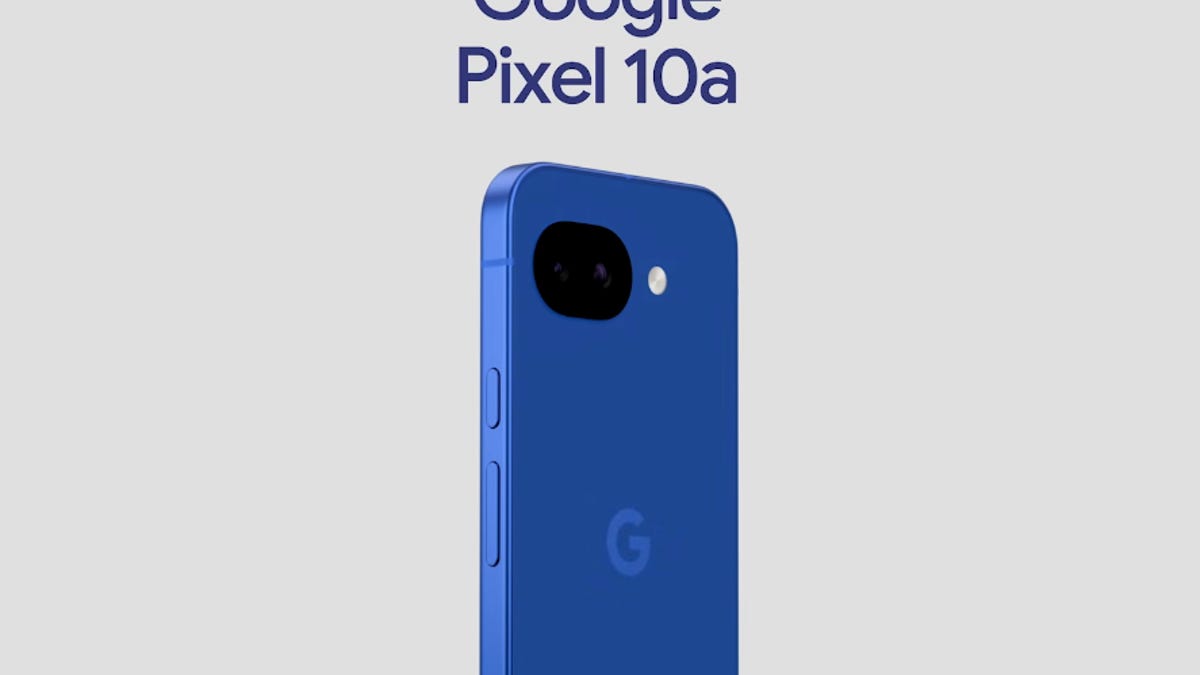
Don’t be blue: Google is releasing an Isai blue edition of the Pixel 10A to celebrate the Android phone line’s 10th anniversary, setting it apart with its own sticker set, specialized wallpaper and custom icons. But it’ll only be available in Japan.
Announced Tuesday on the Google Japan blog, the Isai blue Pixel 10A has a dark blue look and includes bonus decorations designed in collaboration with Japan’s Heralbony art company. These include an exclusive bumper case and stickers for customization.
This edition of the Pixel 10A will arrive in Japan on May 20, following the April 14 release of the Pixel 10A in its original colors of lavender, berry, fog and obsidian. The Isai blue model costs 94,900 yen, which roughly translates to $595, and includes 256GB of storage.
This makes it slightly less expensive than the US model’s 256GB edition, but it comes with a number of fun extras at no additional cost.
Google’s creation of a country-specific model for Japan may also reflect strong sales in that market. In 2023, the IDC analytics firm (via 9to5Google) reported that the Pixel 7 series accounted for 10.7% of the country’s market share, a 527% increase from 2022.
Technologies
Can’t Wait for New Emoji? Here’s How to Create Your Own on iPhone
Apple Intelligence-enabled iPhones can create custom emoji in a few easy steps.
Apple brought new emoji to all iPhones when the company released iOS 26.4 on March 24. The new emoji include «» orca, «» distorted face and «» hairy creature — or as we might normally call it, Sasquatch. According to Emojipedia, there are 3,953 emoji with more on the way, including a pickle. But there’s no emoji for a dog wearing pajamas, a plate with burgers and fries and many other things. But if you have Genmoji on your iPhone you can create these emoji and many more.
Apple released iOS 18.2 in 2024 and the company introduced its own emoji generator, called Genmoji, to Apple Intelligence-capable iPhones at that time. The Unicode Standard, a universal character encoding standard, is responsible for creating new emoji, and approved emoji are added to all devices once a year. With Genmoji, you don’t have to wait for new emoji to appear on your iPhone each year. You can just create them as you need them.
Read on to learn how to use Genmoji on iPhone to create your own custom emoji. Just note that only iPhones with Apple Intelligence, like the iPhone 17 lineup, can use Genmoji at this time.
Note: The new emoji may not display correctly for Apple users whose devices aren’t on a 26.4 software version.
How to make custom emoji
1. Open Messages and go into a chat.
2. Tap the plus (+) button next to your text box.
3. Tap Genmoji.
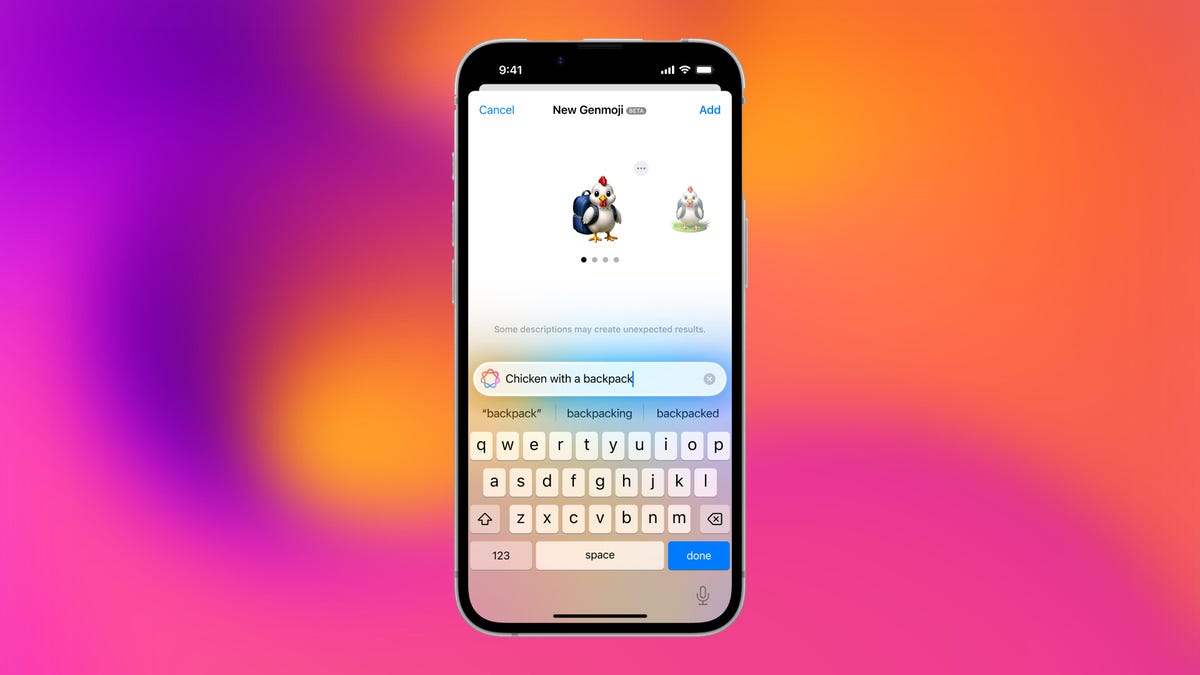
You can then type a description of an emoji into the text box near the bottom of your screen and tap the check mark on your keyboard to enter that description into Genmoji. You can also tap different suggestions and themes that are right above the text box. And with iOS 26 or later, you can also combine and use emoji to create others rather than describing a new emoji or using suggestions.
Your iPhone will generate a series of new emoji for you to pick from according to your description, and you can swipe through these new emoji. When you find the one you want, tap Add in the top right corner of your screen and the new emoji will be available to use as an emoji, tapback or a sticker. Now you don’t have to wait for the Unicode Standard to propose, create and bring new emoji to devices.
For more iOS news, here’s what to know about iOS 26.4 and iOS 26.3. You can also check out our iOS 26 cheat sheet for other tips and tricks.
Technologies
Save Over 20% on This Handy 10,000-mAh Anker Nano Power Bank
Keep your devices charged on the go with this Anker Nano power bank, now down to just $46.
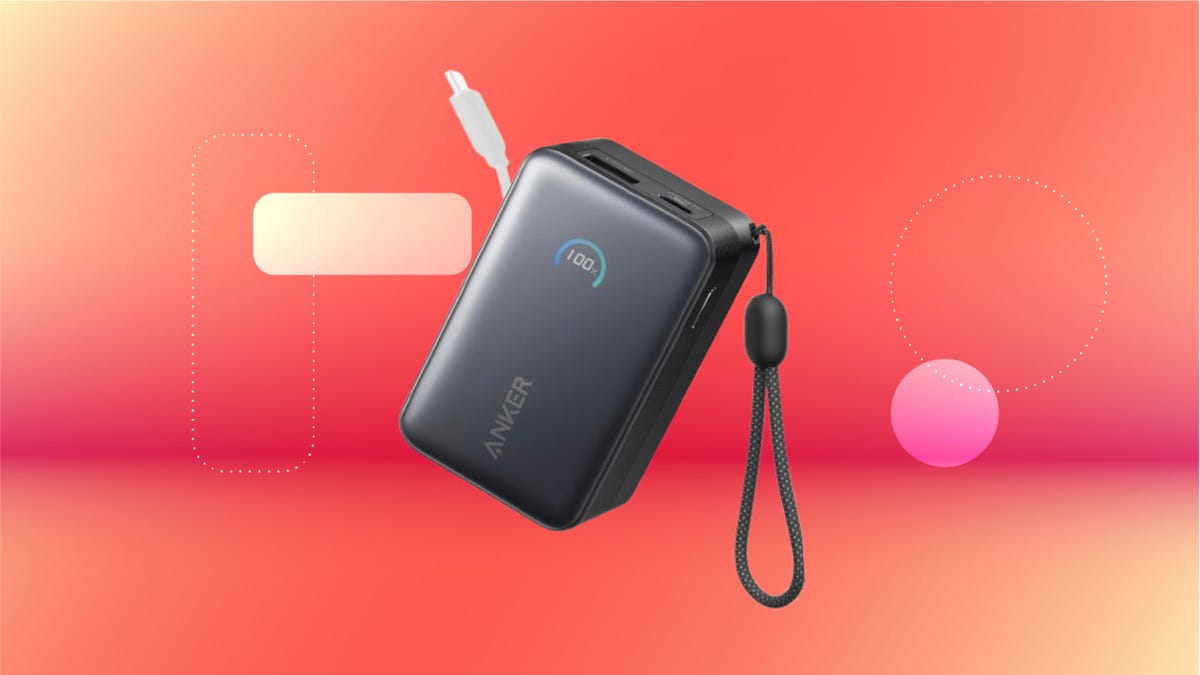
We’ve just spotted the Anker Nano 45-watt portable power bank for just $46 at Amazon right now. This saves you $14 — a 23% discount on its list price. Though it’s $6 more than the lowest-ever price we saw during Black Friday, it’s still a solid discount when you take the rising cost of tech accessories into account. It also matches the lowest price we’ve seen in 2026. It comes in four colors: black, green, pink and white. They’re all on sale for the same price.
This Anker Nano portable charger weighs approximately 8.2 ounces and measures a compact 3.21×1.99×1.42 inches. Despite its small size, it has a retractable cable and supports fast charging in compatible Apple, Samsung, Google Pixel and other smartphones. It also has a large 10,000-mAh capacity and a smart display so you always know how much juice is left in your power bank.
The Nano can charge an iPhone 17 to up to 50% battery in an estimated 20 minutes, and is powerful enough to charge tablets and laptops. Need to charge your devices while charging your power bank? You can do so safely thanks to pass-through charging so you’ll never have to go without battery life.
We’ve also compiled a list of the best power banks for iPhones and for Android, in case this deal isn’t quite a fit for you.
Why this deal matters
If you travel, have a long commute time or are otherwise always on the go, a portable charger can help you keep your devices fully powered. This 45-watt Anker Nano power bank is compact, includes a loop that lets you keep track of it easily and has a built-in cable so you don’t have to keep up with extra cords. Amazon’s $14 discount makes this a solid deal for anyone looking for a compact power bank.
-
 Technologies3 года ago
Tech Companies Need to Be Held Accountable for Security, Experts Say
-
 Technologies3 года ago
Best Handheld Game Console in 2023
-
 Technologies3 года ago
Tighten Up Your VR Game With the Best Head Straps for Quest 2
-
 Technologies4 года ago
Black Friday 2021: The best deals on TVs, headphones, kitchenware, and more
-
 Technologies5 лет ago
Google to require vaccinations as Silicon Valley rethinks return-to-office policies
-
 Technologies5 лет ago
Verum, Wickr and Threema: next generation secured messengers
-
 Technologies4 года ago
Olivia Harlan Dekker for Verum Messenger
-
 Technologies4 года ago
The number of Сrypto Bank customers increased by 10% in five days