
Technologies
Nacon’s Revolution X Unlimited Xbox Controller Equips You With Pro-Level Tuning
Incredible levels of customization set this controller apart from the pack. For a price.

Pros
- Extremely customizable for fine-tuned performance
- LCD screen for software customization
- 1ms wired latency
Cons
- Expensive
- Only comes in Black
- Back buttons take a bit to get used to
When Microsoft dropped the Xbox Elite Wireless Controller almost exactly a decade ago, it set a new standard for professional-style controllers, and more importantly, it made them much more accessible to all gamers.
The best part for us is that the popularity of the Elite Series controller, and others like it, has spawned a whole range of excellent, pro-grade Xbox controllers like the $200 Revolution X Unlimited from Nacon.
Designed for play
I really dig the look of the Revolution X Unlimited. I wish there were more color options, but the matte black with subtle green trim looks quite nice. I don’t like controllers that try too hard to stand out with their designs, so the understated yet quality look of the Revolution X is great.
It’s a bit flatter and more squared off than most other Xbox controllers, including the Elite, and I was worried that it would feel too big in my small hands. But it doesn’t: It sits comfortably in my grip, and I don’t need any crazy finger gymnastics to reach the buttons. I was even surprised that I could easily reach the two additional middle bumpers without having to switch to a claw grip.
The face buttons are pretty flat, which makes them much easier for me to press, and the larger surface area makes them a bigger (and easier to hit) target. The XYAB buttons, eight-way D-pad, trigger stops and four back buttons are all microswitches, and they feel very solid. The Hall Effect triggers and joysticks have a bit more tension than I’m used to, but they are extremely responsive andquite solid.
I only have a couple issues with the hardware. For one, there are only two stages to the trigger stops, but at least it’s a full stop instead of halfway like on the Revolution X Ulimited’s PlayStation sibling, the Nacon Revolution 5 Pro, and you can customize it more in the software.
My other frustration is with the back buttons. They’re nice, but if you tend to tightly clutch the grip, like during an intense match or boss fight, it’s quite easy to accidentaly press the bottom ones with your pinky. Thankfully, you can disable them if it becomes a problem. I prefer paddles to buttons, anyway.
Nacon claims 10-plus hours of battery life on its website, which initially disappointed me — that’s pretty bad. But during my testing, I was extremely impressed. It lasted well over 10 hours without needing a charge and is honestly some of the best battery life I’ve seen in a controller.
Neither of these gripes would keep me from recommending the controller; they’re just things to note if you’re going to spend $200 on a controller.
Fine-tuned feel
Customization is Revolution X’s biggest strength: It gives you the most granular hardware and software options I’ve ever seen. You can insert a set of 10-, 14- or 16-gram weights (included in the box) for the exact in-hand feel that you want. You also get extra joystick caps and little metal rings intended to increase the physical thickness of the joystick. Nacon also gives you a traditional four-way D-pad for games where you need it.
Nacon has a free PC app for all the standard software modifications you’d expect, like button remapping, multiple profiles, joystick dead zones and trigger response. You might not expect that the joysticks and triggers can be adjusted via a linear graph for extremely fine-tuned responsiveness. Other controllers I’ve used let you choose from a few pre-selected ranges, but Nacon lets you set it precisely for split-second response.
It comes with four built-in profiles, but you can create as many as you want (only four active at a time), and Nacon makes it easy to export and import them across your Nacon controllers, or switch among them. An LCD screen on the controller helps streamline the selection process and to remind you want the current settings are.
I was also impressed by the bundled accessories. In addition to all the stuff I already mentioned, you also get a charging base (that also houses the wireless dongle), and the carrying case is top-notch (including the zipper). It’s nice to see a company pay attention to details.
No matter how you look at it, $200 is a lot of money for a game controller. Especially when you can get great controllers like the Elite Wireless 2 or the Victrix Pro BFG for as low as $140-$150. But if you want solid hardware with granular customization for tuned performance, the Revolution X Unlimited is one of the best.
Technologies
TikTok to Let Apple Music Users Stream Full Songs Without Ever Leaving the App
TikTok and Apple Music come together to introduce two new features to the music listening experience.
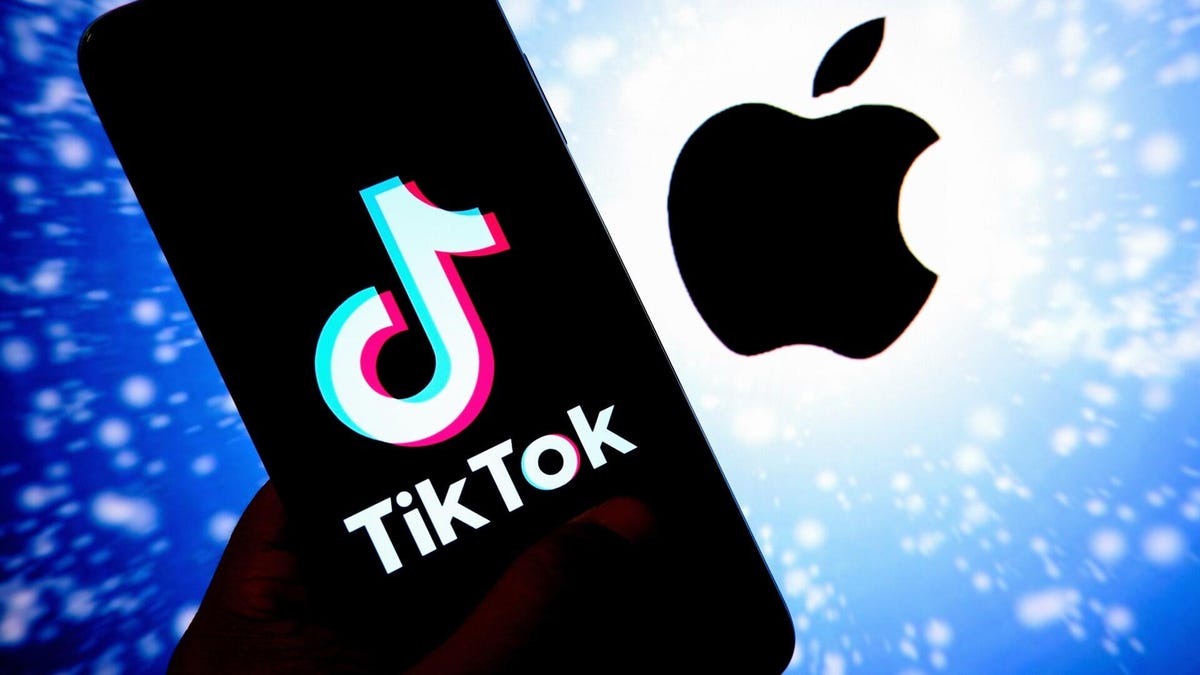
If you’ve ever scrolled TikTok, caught a snippet of a tune, and thought, «I wish I could play this song all the way through,» this is for you. TikTok and Apple Music announced on Wednesday that they have partnered on two new features, Play Full Song and Listening Party. The goal is to offer listeners a seamless music listening experience without ever leaving the social media app.
Apple Music subscribers who discover a song on their TikTok For You Page or on the Sound Detail Page will be able to click Play Full Song to open the Apple Music player and listen to the track in its entirety. From there, subscribers to the music streaming service will be able to save the song as a favorite, add it to a playlist on Apple Music and listen to a customized stream of recommended songs.
When a full-length song is played, the stream will pay artists through Apple Music.
«Tapping into the music you love should feel effortless,» Ole Obermann, co-head of Apple Music, said in a statement. «With Play Full Song, Apple Music subscribers can move easily from discovering a track on TikTok to listening to it in full instantly, without breaking the flow. This integration not only makes it easier for fans to discover, listen to, and engage with the artists they love, but also creates a powerful new pathway for artists — turning moments of discovery into deeper connection and sustained engagement in one simple, seamless experience.»
Listening Party sounds somewhat like Spotify‘s feature of the same name. Fans join a shared, real-time session where they listen to the same tracks together and interact live, with the songs streamed through Apple Music inside TikTok. Musicians can also join and chat with their fans.
«TikTok is where music discovery and culture move at the speed of the community,» Tracy Gardner, global head of music business development at TikTok, said in a statement. «Thanks to Apple Music, Play Full Song gives fans a seamless way to go from discovery to full-length listening, and Listening Party provides a shared place to experience music together in real time. It’s all about bringing artists and fans closer, and turning shared moments into lasting connections.»
Play Full Song and Listening Party will launch globally on TikTok over the next few weeks.
Technologies
AI Chatbots Are Making People All Think the Same, Study Says
A new paper argues that humans are losing varied ways of thinking due to the use of chatbots, and that’s concerning.

Part of what makes us human is the unique ways we think and solve problems. But using large language models like ChatGPT might be eroding this uniqueness and leading humans to think and communicate the same way, according to a group of scientists and psychologists who have co-authored a new opinion paper.
«Individuals differ in how they write, reason, and view the world,» Zhivar Sourati, a computer scientist of the University of Southern California and first author for the paper, said in a statement.
«When these differences are mediated by the same LLMs, their distinct linguistic style, perspective and reasoning strategies become homogenized, producing standardized expressions and thoughts across users,» Sourati continued.
The paper, published Wednesday in the journal Trends in Cognitive Sciences, examines how hundreds of millions of people worldwide use the same handful of chatbots and what that means for our individuality.
Thinking inside the box
Pew Research found that one-third of all Americans used ChatGPT last year, double the 2023 figure. And chatbot use is much more common among teens: Two-thirds say they use chatbots, and almost a third use them daily.
Businesses are also going all in on artificial intelligence. Stanford found that 78% of organizations reported using AI in 2024, up from 55% in 2023.
So we’re using AI a lot. But the danger is that we could lose the diversity in the ways we think. The team points out that LLMs generate writing that varies less than what people come up with on their own.
Part of the reason LLMs may be pushing homogenized thought, according to the paper’s authors, is the data used to train them.
«Because LLMs are trained to capture and reproduce statistical regularities in their training data, which often overrepresent dominant languages and ideologies, their outputs often mirror a narrow and skewed slice of human experience,» Sourati says.
Why diverse thinking matters
There’s a good reason why the authors warn against this trend. Homogenized thought reduces pluralism, which is essentially the idea that multiple perspectives are good for society as a whole.
«This value of pluralism is rooted in the long-held principle that sound judgment requires exposure to varied thought,» the authors write in the paper. «Unchecked, this homogenization risks flattening the cognitive landscapes that drive collective intelligence and adaptability,»
So we use different ways of thinking to figure out more solutions to a problem. If we lose the ability to think and communicate differently, it could affect how we adapt to new situations.
«The concern is not just that LLMs shape how people write or speak, but that they subtly redefine what counts as credible speech, correct perspective, or even good reasoning,» Sourati says.
The authors also say that this trend even impacts people who don’t use chatbots.
«If a lot of people around me are thinking and speaking in a certain way, and I do things differently, I would feel a pressure to align with them, because it would seem like a more credible or socially acceptable way of expressing my ideas,» Sourati says.
Technologies
SXSW 2026 Updates: What We Expect on Tech and Culture From Austin
-
 Technologies3 года ago
Tech Companies Need to Be Held Accountable for Security, Experts Say
-
 Technologies3 года ago
Best Handheld Game Console in 2023
-
 Technologies3 года ago
Tighten Up Your VR Game With the Best Head Straps for Quest 2
-
 Technologies4 года ago
Black Friday 2021: The best deals on TVs, headphones, kitchenware, and more
-
 Technologies5 лет ago
Google to require vaccinations as Silicon Valley rethinks return-to-office policies
-
 Technologies5 лет ago
Verum, Wickr and Threema: next generation secured messengers
-
 Technologies4 года ago
Olivia Harlan Dekker for Verum Messenger
-
 Technologies4 года ago
iPhone 13 event: How to watch Apple’s big announcement tomorrow