

Technologies
AT&T Is Using an Advanced Video Game Feature to Improve Your Phone Coverage
«Whatever Nvidia is doing for games, whatever Disney is doing … we are doing at a much bigger scale,» said AT&T’s Velin Kounev about using ray tracing to improve its network.


When you think of cellular networks, you probably envision radio towers and invisible data streams. But AT&T, by necessity, needs to see everything in between: buildings, trees and the multitude of obstacles that can interfere with wireless signals getting to your phone.
The cellular provider is turning to a key technology from gaming and computer graphics to get an accurate picture. AT&T Wireless Geo Modeler is a new system that uses ray tracing and AI to generate detailed representations of the areas covered by its network and improve connectivity. In doing so, AT&T says it can react to service interruptions quickly and also better predict how its network can be configured in response to large social events or during natural disasters.
Don’t miss any of our unbiased tech content and lab-based reviews. Add CNET as a preferred Google source.
How ray tracing works in a cellular context
In computer graphics, ray tracing is a technique for rendering three-dimensional scenes. Software simulates light beams emanating from a virtual camera and calculates how the light affects objects and materials in the scene. Ray tracing is notable for rendering shadows and reflections, leading to more realistic-looking environments.
In the past, ray tracing was computationally challenging. Early examples, such as the original Toy Story movie, required rooms full of processing hardware and up to 24 hours to render a single frame of footage. The graphics processor in high-end smartphones can now render photorealistic, ray-traced scenes in games in real time.
According to Velin Kounev, lead inventive scientist at AT&T Labs, the technology’s cellular application works the same way. «Whatever Nvidia is doing for games, whatever Disney is doing… we are doing at a much bigger scale,» he said.
In the context of AT&T’s Geo Modeler, Kounev explained, radio propagation from cellular towers is high-frequency light that our eyes cannot see. The towers measure how the rays react to the surrounding environment, such as colliding with structures or reflecting off surfaces. That collected data is processed and analyzed by several internal AT&T systems and machine learning models to determine if changes or optimizations need to be made, in what AT&T calls «near scale time.»
Those changes can include everyday adjustments to the angle of nearby antennas or compensating for a tower that has gone offline during a natural disaster. Modifications can be deployed automatically in seconds or minutes, ideally in a way that doesn’t impact customers.
«We don’t want [customers] to notice,» said Jennifer Yates, assistant vice president of inventive science, network and service automation at AT&T Labs. «The network is self-healing [and] autonomous behind the scenes so they don’t have to think about it.»
The benefit can also be a technical challenge that you would never notice as an AT&T subscriber. «When you hit Lincoln Tunnel traffic at 5 o’clock in the afternoon and you can get your website loaded, that’s when we come in,» said Kounev. «We’re optimizing the network traffic … in rush hour, where you’re able to get your connection.»
Predicting where to deploy resources
Although day-to-day network optimization is one advantage of using the Geo Modeler, it’s also a tool for determining how and where the company should deploy resources during situations such as weather events. For instance, if a prominent tree is blown over during a storm, ray tracing can quickly build a new representation of how towers should compensate.
For large events like music festivals, where tens of thousands of phones are accessing the network or impending natural disasters, the technology can be used to predict upcoming changes that are needed; Kounev mentioned Geo Modeler was applied in April at the Coachella festival.
Kounev also explained that if a hurricane is coming, for example, knowing its estimated size and timing, «we can go in and within two minutes remove [within the model] the towers that we think are going to be affected, and then see what the network coverage is going to look like.» Knowing where to expect holes in the network allows AT&T to position resources, such as generators or mobile cellular towers, in place before the hurricane strikes.
Most predictive tools, said Kounev, rely on existing measurement data. «Because we use ray tracing, we can predict in places where there’s no measurement data.»
AT&T has been building the Geo Modeler for a year and has accumulated enough data from different use cases over that time to be confident about deploying it more broadly. Yates said that AT&T has performed extensive validation of data, comparing the modeler’s results with measurements in the field.
«Over the last year,» said Kounev, «we had to convince people that this thing can actually work in real time with the many tower stations they have.»
Technologies
This $199 Bose QuietComfort Headphones Deal Is the Best I’ve Seen
With a $150 discount, this Bose QuietComfort headphones deal is impossible to beat.
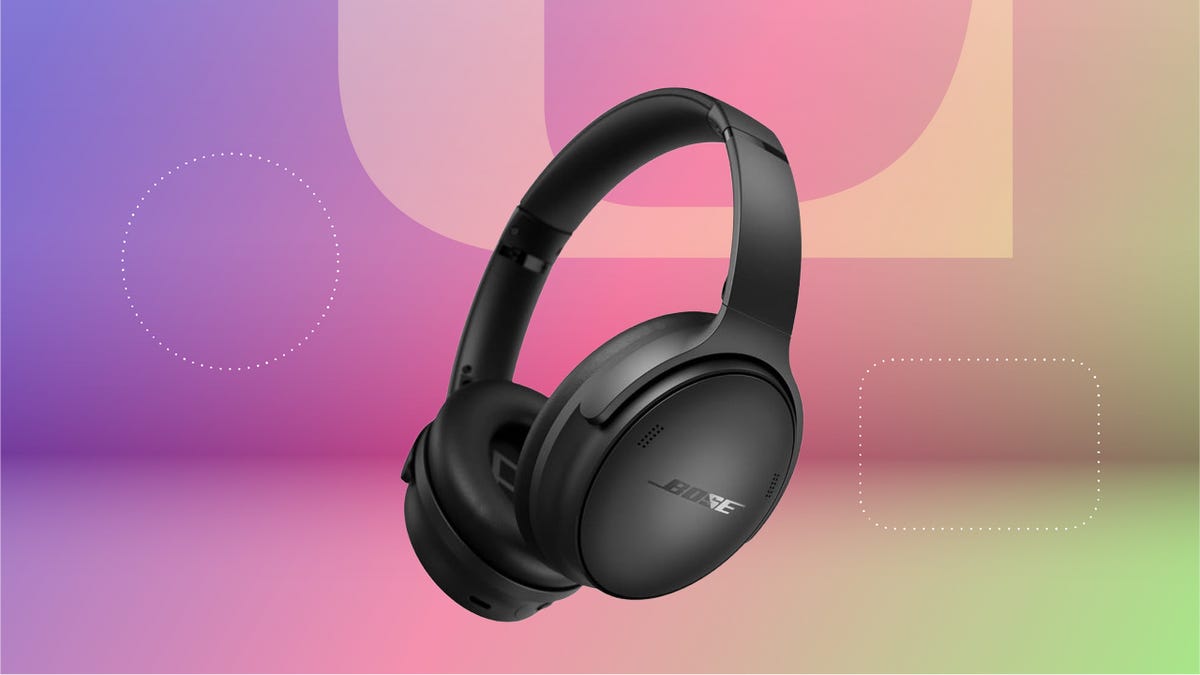
We’re big fans of personal audio gear, especially high-quality headphones. The Bose QuietComfort headphones definitely fall into that category. In fact, CNET’s expert editors rank them as some of the best noise-canceling headphones on the market today. But that doesn’t mean you have to pay the retail price — right now, both Amazon and Walmart are offering them for a best-ever price.
Strike now and you’ll snag a pair of Bose QuietComfort wireless headphones at a great discount of $150. Walmart is offering them for just $199 in select colors. But if you want more variety, Amazon is price-matching across the entire color range. Just keep in mind that I can’t promise that either of these deals will last for long.
The QuietComfort headphones include noise cancellation and have Quiet and Aware modes, so you can focus as needed or let some ambient sound in when you’re taking walks or need to know what’s happening around you.
Hey, did you know? CNET Deals texts are free, easy and save you money.
Adjustable EQ lets you customize your sound preferences, and a battery life of up to 24 hours makes these headphones the perfect travel companion. Need a battery boost? It only takes a 15-minute charge to get an extra battery life of up to 2.5 hours.
If this isn’t quite the product you’re looking for, check out our list of the best wireless headphones to find the right pair for you. There are plenty of different options from various manufacturers, with something for everyone.
HEADPHONE DEALS OF THE WEEK
-
$300 (save $51)
-
$299 (save $151)
-
$220 (save $180)
Why this deal matters
Bose makes some of the best headphones on the market. This deal offers QuietComfort headphones for just $199 after slashing $150 off the regular price. That’s the lowest price I’ve seen on these headphones, and a massive discount. Just be sure to get your order in soon.
Join Our Daily Deals Text Group!
Get hand-picked deals from CNET shopping experts straight to your phone.
By signing up, you confirm you are 16+ and agree to receive recurring marketing messages at the phone number provided. Consent is not a condition of purchase. Reply STOP to unsubscribe. Msg & data rates may apply. View our Privacy Policy and Terms of Use.
Technologies
The Best Earbuds for Samsung Users Are Just $165, but for How Long?
The Samsung Galaxy Buds 3 look and sound great, and this deal smashes the usual $250 asking price.
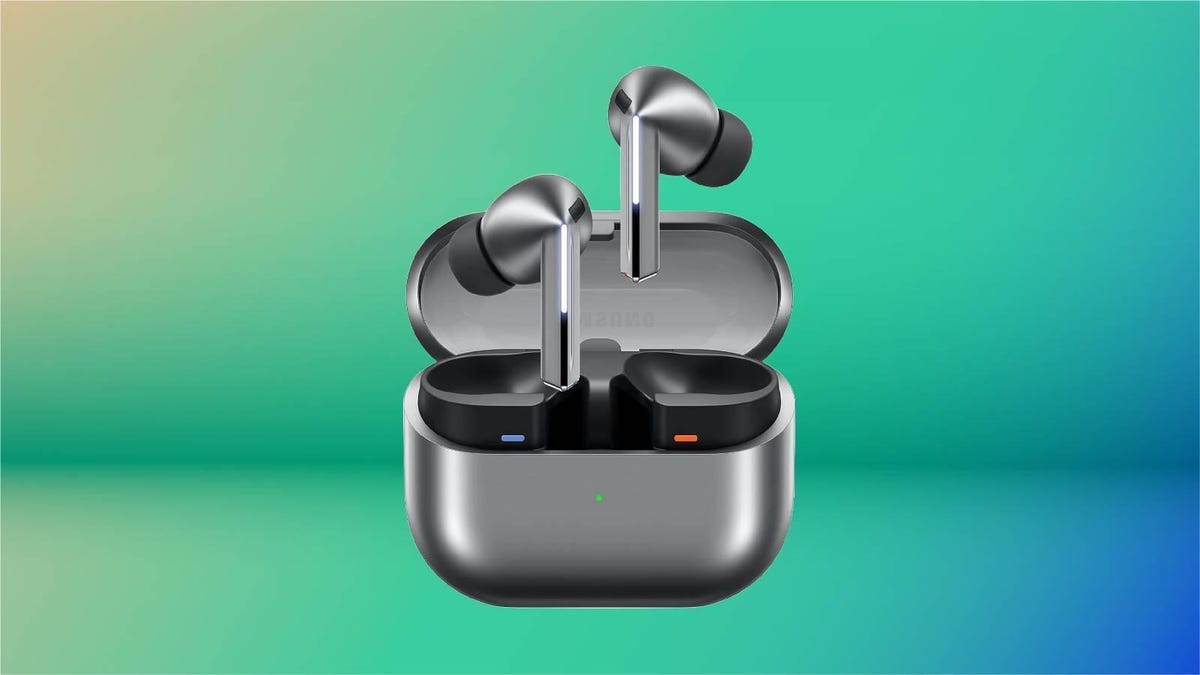
While it’s true that Apple’s latest AirPods Pro 3 tend to dominate the conversation when discussing premium Bluetooth earbuds, they aren’t the only option. In fact, if you’re ensconced in Samsung’s ecosystem, they’re obviously not going to be a great fit. The solution? Samsung’s Galaxy Buds 3 Pro, which you can get on sale right now for just $165 on Amazon.
It isn’t quite the cheapest price we’ve seen, but it isn’t all that far off. And while they might fall slightly during the upcoming Black Friday sales, we don’t expect them to go far beyond their lowest price of around $150.
There are plenty of options out there for non-Apple users looking for a good pair of wireless earbuds. To give you one example, CNET’s own list of the best wireless earbuds named Sony’s WF-1000XM5 as the best pair on the market. Elsewhere on that list, though, CNET also named the Galaxy Buds 3 Pro as the best option for Samsung users, and it’s not hard to see why.
Hey, did you know? CNET Deals texts are free, easy and save you money.
These earbuds boast a number of features tailored to folks with Samsung Galaxy or any other sort of Android smartphone, most notably support for the «high-resolution» Samsung Seamless Codec for audio quality. Those users will also have access to the Galaxy Wear app, which is the exclusive method the company uses to push through updates. While you can technically connect these buds to an iPhone, you won’t find the Wear app in Apple’s App Store, leaving the experience far from ideal.
Beyond those exclusive perks for Android users, CNET’s audio guru Dave Carnoy said in his review of the Galaxy Buds 3 Pro that you can expect a «lightweight and comfortable» feel, excellent audio and call quality, and some solid noise-cancellation to boot. The primary flaw he noted was the price, which this deal definitely helps with.
Why this deal matters
The Galaxy Buds 3 Pro are the top-of-the-line when it comes to Samsung earbuds, which means that most of the time you can expect a top-of-the-line price tag to match. Now, however, you can grab yourself a pair for considerably less.
Technologies
Today’s NYT Mini Crossword Answers for Friday, Oct. 31
Here are the answers for The New York Times Mini Crossword for Oct. 31.
Looking for the most recent Mini Crossword answer? Click here for today’s Mini Crossword hints, as well as our daily answers and hints for The New York Times Wordle, Strands, Connections and Connections: Sports Edition puzzles.
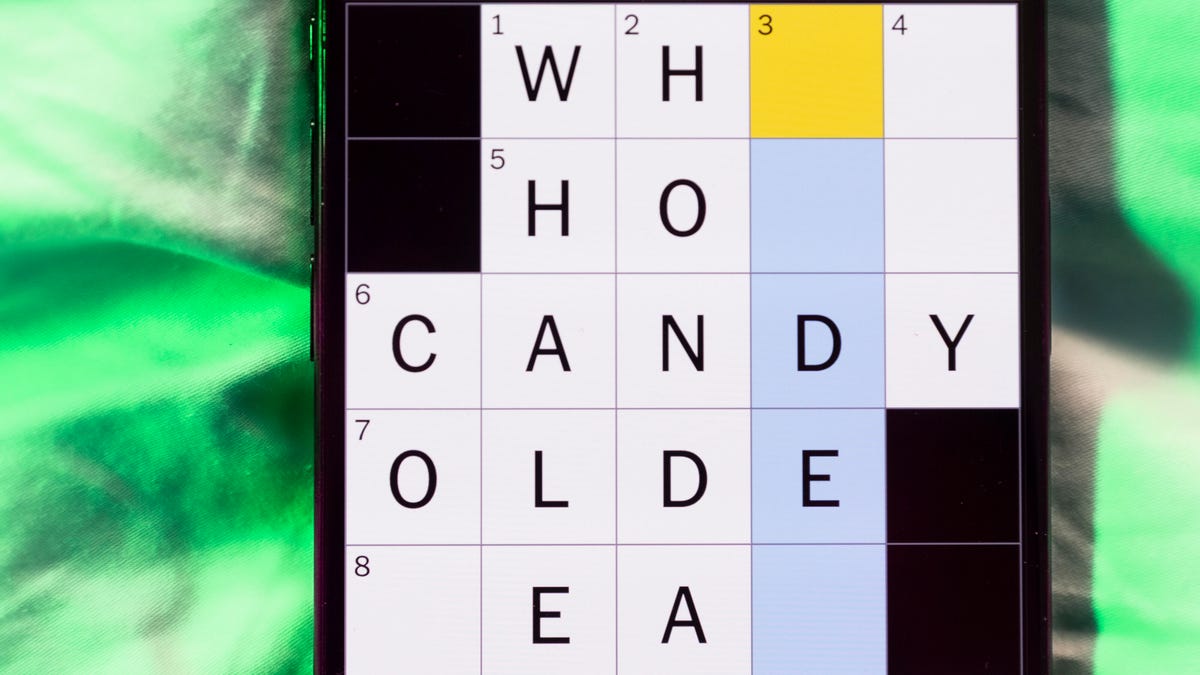
Happy Halloween! Today’s NYT Mini Crossword features the word «BOO!» in a square on the last line of the grid. That’s not just a Halloween greeting, it’s part of the answer that spans both 9-Across and 10-Across, so read the answers to both those with the «boo» in the middle to solve it. And then, the puzzle-makers use that «BOO!» again, to help make the answer to 3-Down. Read on for all the answers, complete with added boos. And if you could use some hints and guidance for daily solving, check out our Mini Crossword tips.
If you’re looking for today’s Wordle, Connections, Connections: Sports Edition and Strands answers, you can visit CNET’s NYT puzzle hints page.
Read more: Tips and Tricks for Solving The New York Times Mini Crossword
Let’s get to those Mini Crossword clues and answers.
Mini across clues and answers
1A clue: Buffalo hockey player
Answer: SABRE
6A clue: «I’ll have the ___» (frequent customer’s order)
Answer: USUAL
7A clue: Contents of a volcano
Answer: MAGMA
8A clue: Adjust to a new environment
Answer: ADAPT
9A clue: With 10-Across, last car on a train
Answer: CA
10A clue: See 9-Across
Answer: SE
(The «Boo!» shown in the grid helps make the word CABOOSE)
Mini down clues and answers
1D clue: «Poison» shrub
Answer: SUMAC
2D clue: Carne ___
Answer: ASADA
3D clue: Imaginary cause of fear
Answer: BUGA
(The «Boo!» shown in the grid helps make the word BUGABOO)
4D clue: Accessible alternatives to staircases
Answer: RAMPS
5D clue: Make extremely happy
Answer: ELATE
-
 Technologies3 года ago
Tech Companies Need to Be Held Accountable for Security, Experts Say
-
 Technologies3 года ago
Best Handheld Game Console in 2023
-
 Technologies3 года ago
Tighten Up Your VR Game With the Best Head Straps for Quest 2
-
 Technologies4 года ago
Verum, Wickr and Threema: next generation secured messengers
-
 Technologies4 года ago
Black Friday 2021: The best deals on TVs, headphones, kitchenware, and more
-
 Technologies4 года ago
Google to require vaccinations as Silicon Valley rethinks return-to-office policies
-
 Technologies4 года ago
Olivia Harlan Dekker for Verum Messenger
-
 Technologies4 года ago
iPhone 13 event: How to watch Apple’s big announcement tomorrow


