
Technologies
A Pricey PlayStation Controller That’s Perfect for Professional-Level Performance
The Nacon Revolution 5 Pro is expensive but offers unmatched performance tuning.

Pros
- Lots of hard customization options
- Solid feel in the hand
- Granular software customizations
Cons
- Expensive
- Non-standard layout
One of the great things about gaming is that there are typically tons of options to choose from, both in the games you play and in the hardware you use to play those games –- that is, unless you’re a PlayStation gamer.
Sadly, Sony is quite sparing in granting licenses for third-party controllers, so your options for upgrading from Sony’s DualSense controller to a pro controller are limited. Aside from Sony’s own DualSense Edge, there aren’t many choices, which is why I jumped at the chance to try the Revolution 5 Pro from Nacon. It’s definitely one of the best, but also one of the most unique PlayStation controllers I’ve used.
Designed different
The first thing I noticed about the Revolution 5 Pro is the asymmetrical joystick layout. It’s the only official PlayStation 5 controller I’m aware of laid out like it, which could be good or bad depending on your preferences. If you’re coming from Xbox or use an Xbox controller with your PC, you’ll feel right at home. But if you’re upgrading from something with the traditional PlayStation layout, like the DualSense or DualSense Edge, it might take some getting used to.
That’s not the only difference from a standard DualSense. The Nacon’s a bit taller, with straighter sides, and the face buttons are much larger and flatter. The grip material also features a more rubberized, distinct texture, which I prefer over most other controllers I’ve used. The triggers are also longer, feeling more like Xbox triggers than DualSense,which might take some getting used to for those who’ve never used one.
It also incorporates Hall Effect joysticks and triggers with two-stage trigger stops — the latter, honestly, is a bit disappointing. The second stage only stops the trigger pull halfway, and I’d much rather it be short or long instead of long and half-short: I couldn’t get the muscle memory down of having to pull the trigger deeper to activate it and kept missing shots. You can customize it in the app, but I’d rather have the hardware option.
To be fair, shorter trigger stops can cause issues in games with draw weapons like bows, such as the Horizon series, but I’d rather have it and turn it off than not have it.
The four remappable buttons on the back are solid and feel great, but I sometimes found myself preferring paddles like on the DualSense Edge. That controller only has two back buttons, though, and I’d much rather have four buttons than two paddles any day.
Weighty grips
The Revolution 5 Pro has one novel feature that I haven’t yet seen on any other controller (it’s available in some gaming mice). Inside the grips is space to add different-size weights, depending on your gaming preference. Nacon provides a pair of 10, 14, and 16 gram weights that you can add to deliver just the right heaviness for your play style.
A platform switch on the back lets you hop between PS5, PS4 and PC, and there’s also a button for quickly switching profiles and a switch to change from Classic to Advanced mode. In Classic mode, the controller performs like a standard controller, with a few options (like remapping the buttons) that you can customize without the app. Advanced mode lets you use the PC app for some really granular customization.
The PC app deserves a callout because it has the most granular customization options I’ve seen in a controller app. In addition to the standard set of settings you’d expect, like button remapping, profile support (up to four active), as well as joystick dead zones and trigger response times. But what sets Nacon apart is that it displays a linear graph for the dead zones and trigger responses so you can fine-tune the performance. It’s great if you want to create the perfect gameplay experience for your favorite games.
Some trade-offs
Battery life on the Revolution 5 Pro has been pretty stellar for me. Nacon promises a very conservative «more than 10 hours,» but I’ve gotten significantly longer. I’ve been able to use it for about five days in a row, with about two to three hours per day, without having to recharge. The lack of haptics and adaptive triggers certainly helps prolong battery life, but I don’t mind the tradeoff.
It comes in a few decent color choices, although the panda is my favorite, and you get some nice accessories with it, including a Bluetooth adapter for wireless headphones.
You might find $200 is a tad expensive for any controller, but I think it’s worth it, especially if you want a pro-level controller with great hardware and fine-tuning options. The asymmetrical joystick layout and lack of haptics and adaptive triggers might, understandably, be a deal breaker for some, but for me, those compromises are well worth it.
Technologies
Today’s NYT Connections: Sports Edition Hints and Answers for April 8, #562
Here are hints and the answers for the NYT Connections: Sports Edition puzzle for April 8 No. 562.
Looking for the most recent regular Connections answers? Click here for today’s Connections hints, as well as our daily answers and hints for The New York Times Mini Crossword, Wordle and Strands puzzles.
Today’s Connections: Sports Edition is a tough one. If you’re struggling with today’s puzzle but still want to solve it, read on for hints and the answers.
Connections: Sports Edition is published by The Athletic, the subscription-based sports journalism site owned by The Times. It doesn’t appear in the NYT Games app, but it does in The Athletic’s own app. Or you can play it for free online.
Read more: NYT Connections: Sports Edition Puzzle Comes Out of Beta
Hints for today’s Connections: Sports Edition groups
Here are four hints for the groupings in today’s Connections: Sports Edition puzzle, ranked from the easiest yellow group to the tough (and sometimes bizarre) purple group.
Yellow group hint: Working out.
Green group hint: Cover your face.
Blue group hint: NFL players.
Purple group hint: Leap.
Answers for today’s Connections: Sports Edition groups
Yellow group: Exercises in singular form.
Green group: Sporting jobs that require masks.
Blue group: Hall of Fame defensive ends.
Purple group: ____ jump.
Read more: Wordle Cheat Sheet: Here Are the Most Popular Letters Used in English Words
What are today’s Connections: Sports Edition answers?
The yellow words in today’s Connections
The theme is exercises in singular form. The four answers are crunch, plank, situp and squat.
The green words in today’s Connections
The theme is sporting jobs that require masks. The four answers are catcher, fencer, football player and goaltender.
The blue words in today’s Connections
The theme is Hall of Fame defensive ends. The four answers are Dent, Peppers, Strahan and Youngblood.
The purple words in today’s Connections
The theme is ____ jump. The four answers are broad, high, long and triple.
Technologies
The $135M Google Data Settlement Site Is Live — See If You’re Eligible
Use the settlement website to select your preferred payment method, and you may end up $100 richer.
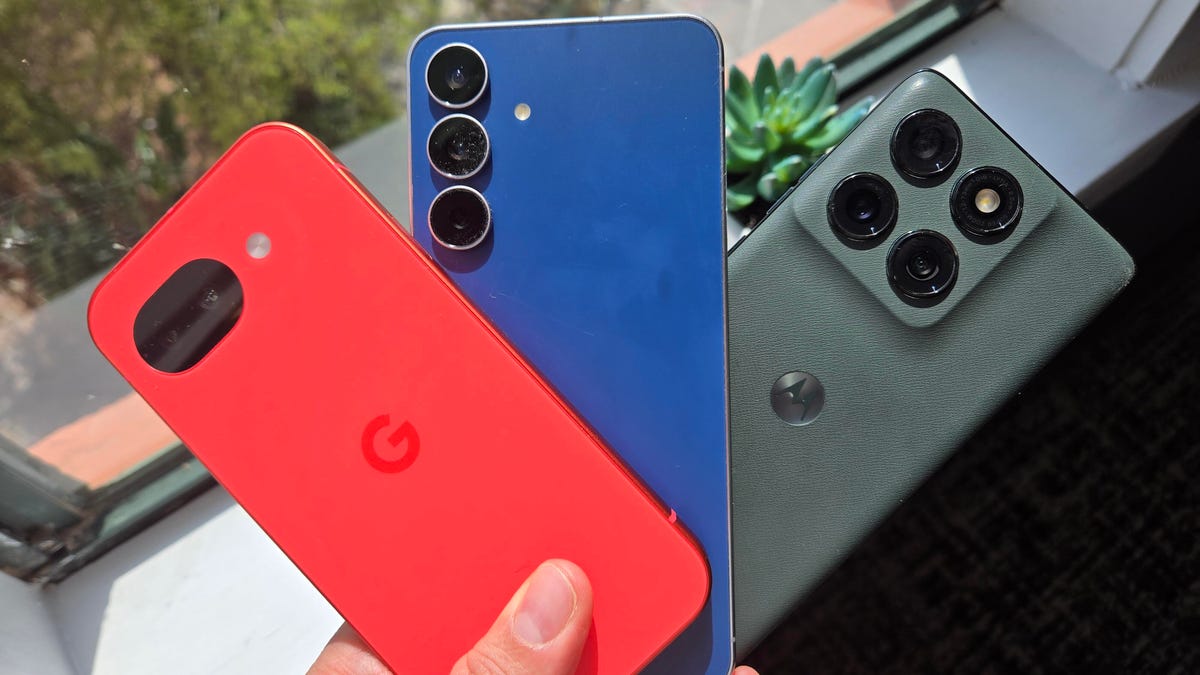
You can now file a claim in the $135 million Google data settlement. The case centers on claims that Android devices transmitted user data without consent. Specifically, the class action lawsuit Taylor v. Google LLC contends that Google’s Android devices passively transferred cellular data to Google without user permission, even when the devices were idle. While not admitting fault, Google reached a preliminary settlement in January, agreeing to pay $135 million to about 100 million US Android phone users.
The official settlement website for the lawsuit is now live. The final approval hearing won’t occur until June 23, when the court will consider whether Google’s settlement is fair and listen to objections. After that, the court will decide whether to approve the $135 million settlement.
In the meantime, if you qualify and want to be paid as part of the settlement, you can select your preferred payment method on the official website. There, you can find information on speaking at the June 23 court hearing and on how to exclude yourself or write to the court to object by May 29.
As part of the settlement, Google will update its Google Play terms of service to clarify that certain data transfers do occur passively even when you’re not using your Android device, and that cellular data may be relied upon when not connected to Wi-Fi. This can’t always be disabled, but users will be asked to consent to it when setting up their device.
Google will also fully stop collecting data when its «allow background data usage» option is toggled off.
Who can be part of the settlement?
In order to join the Taylor v. Google LLC settlement, you must meet four qualifications:
- Be a living, individual human being in the US.
- Have used an Android mobile device with a cellular data plan.
- Have used the aforementioned device at any time from Nov. 12, 2017, to the date when the settlement receives final approval.
- You’re not a class member in the Csupo v. Google LLC lawsuit, which is similar but specifically for California residents.
The final approval hearing is on June 23, so you can add your payment method until then. The hearing’s date and time may change, and any updates will be posted on the settlement website.
If you choose to do nothing, you will still be issued a settlement payment, but you may not receive it if you don’t select a payment method.
How much will I get paid?
It’s not currently known exactly how much each settlement class member will receive, but the cap is $100. Payments will be distributed after final court approval and after any appeals are resolved.
After all administrative, tax and attorney costs are paid, the settlement administrator will attempt to pay each member an equal amount. If any funds remain after payments are sent, and it’s economically feasible, they will be redistributed to members who were previously and successfully paid. If it’s not economically feasible, the funds will go to an organization approved by the court.
Technologies
Samsung’s Galaxy Watch Ultra 2 Might Come in 5G and 4G Cellular Models
If the rumor proves true, the 5G Galaxy Watch Ultra would rival the 5G-enabled $799 Apple Watch Ultra 3 that debuted last fall.
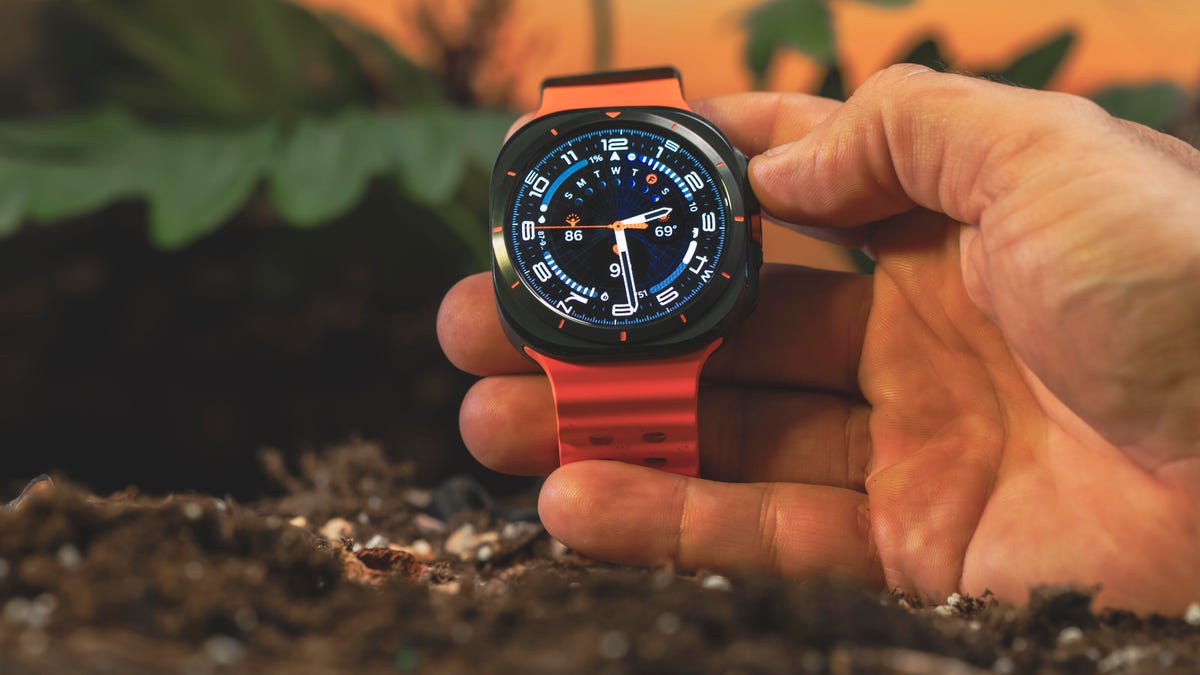
Samsung’s next high-end Galaxy Watch could support faster 5G speeds, but if this leak is true, it will depend on where you live. The rumored Samsung Galaxy Watch Ultra 2 might come in 5G and 4G cellular models, with availability for each smartwatch depending on the country.
According to the Dutch website Galaxy Club (and spotted by SamMobile), Samsung’s servers may have revealed a series of model numbers that point to 5G, 4G and Wi-Fi-enabled editions of the next Galaxy Watch Ultra, which would succeed the original model that debuted in 2024.
A representative for Samsung did not immediately respond to a request for comment.
The Galaxy Club website speculates that the 5G edition would be sold in the US and Korean markets, while the 4G edition would sell in the rest of the world. In the US, a 5G version of the Galaxy Watch Ultra would rival the 5G-enabled $799 Apple Watch Ultra 3, which debuted last fall. The 4G edition would have broader compatibility worldwide, since the earlier network is far more established.
It will likely be a few months until we hear anything official about the Galaxy Watch Ultra 2. Samsung typically unveils its new watches in the summer alongside its Galaxy Z Fold and Z Flip foldable phones. Last year, Samsung unveiled the Galaxy Watch 8 and the Galaxy Watch 8 Classic, but otherwise left the prior 2024 Ultra in the lineup for those looking for a larger 47mm smartwatch.
-
 Technologies3 года ago
Tech Companies Need to Be Held Accountable for Security, Experts Say
-
 Technologies3 года ago
Best Handheld Game Console in 2023
-
 Technologies3 года ago
Tighten Up Your VR Game With the Best Head Straps for Quest 2
-
 Technologies4 года ago
Black Friday 2021: The best deals on TVs, headphones, kitchenware, and more
-
 Technologies5 лет ago
Google to require vaccinations as Silicon Valley rethinks return-to-office policies
-
 Technologies5 лет ago
Verum, Wickr and Threema: next generation secured messengers
-
 Technologies4 года ago
Olivia Harlan Dekker for Verum Messenger
-
 Technologies4 года ago
The number of Сrypto Bank customers increased by 10% in five days